MEDICAL EMERGENCIES
SUMAIRA SAEED
319
3RD YEAR BDS
RENAL DISORDERS
 Diseases of hydrogen ion concentration
and electrolytes
 Glomerular diseases
 Acute renal failure
 Chronic renal failure
 End stage renal failure or uremic
syndrome
 RENAL transplants
CLASSIFICATION
 Ammonia like taste and smell
 Uremic stomatitis
 Gingivitis
ORAL MANIFESTATIONS WITH
IMPAIRED RENAL FUNCTION
Xerostomia
Parotitis
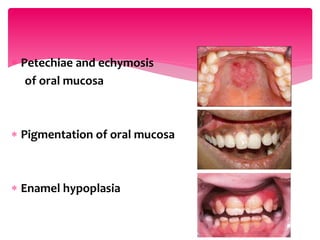
 Petechiae and echymosis
of oral mucosa
 Pigmentation of oral mucosa
 Enamel hypoplasia
 Candidiasis
 Osteodystrophy
(radiolucent jaw lesion)
 An inflammation of the glomerular
capillaries
 Acute nephritic syndrome
 Chronic glomerulonephritis
 Nephrotic syndrome
GLOMERULAR DISEASES
 Acute and reversible deterioration of
renal function which develops over a
period of days, or rarely weeks and
results in uremia is called acute renal
failure
ACUTE RENAL FAILURE
 Hypovolemia
 Hypotension
 Reduced cardiac output and heart
failure
 Obstruction of renal arteries or veins
 Obstruction of the kidney or lower
urinary tract
CAUSES
 Chronic renal failure is the irreversible
deterioration in renal function which results
from a diminished mass of the excretory,
metabolic and endocrine functions of the
kidney which leads to the development of
the clinical syndrome of uremia
CHRONIC RENAL FAILURE
 Diabetes mellitus
 Hypertension
 Chronic glomerulonephritis,
 Pyelonephritis or other infections
 Obstruction of urinary tract
 Hereditary lesions
 Vascular disorders
 Medications or toxic agents
CAUSES
MANAGEMENT
 Consultation with patient’s physician
 Avoid dental treatment if disease is unstable
 Monitor blood pressure closely
 Pay meticulous attention to good surgical
technique
 Avoid nephrotoxic drugs
 Adjust doses of drugs metabolized by the
kidney
UNDER CONSERVATIVE
CARE
 If medical parameters permit
 Try to eliminate all foci of infection
 Keep only the easily maintainable teeth
 Insist on keeping a good oral hygiene
 If patient is in advance stages, dental care may
best be provided after physician’s consultation
and in a hospital like setting
 Because of the potential for bleeding
problems:
1. Pretreatment screening for bleeding
time and platelet count
2. A hematocrit level and hemoglobin
count should be obtained to assess
the status of anemia
If an oro facial infection exists,
aggressive management is
necessary using culture and
sensitive tests and appropriate
antibiotics
Consider corticosteroid
supplementation as
indicated
 Tetracyclines
 Streptomycin
 Vancomycin
 Gentamycin
 Acyclovir
 Acetaminophen
 Phenacetine
 NSAIDs
 Asprin
 Antihistamines,
 Phenobarbitones
NEPHROTOXIC DRUGS
Cephalosporins
Penicillins
Ampicillin
Metronidazole
Acyclovir
Paracetamol
Benzodiazpine
DECREASED DOSES
Cloxacillin
Erythromycin
Minocycline
Codiene
Diazepam
Lidocaine
NORMAL DOSE
 Same as conservative care conditions
 Beware of concerns of arteriovenous shunt
 Consult with the physician about risk for
infective endocarditis
 Avoid blood pressure cuff and IV medications
in arm with shunt
 Avoid dental care on day of treatment; best
to treat on day after
 Consider antimicrobial prophylaxis
PATIENT RECEIVING
DIALYSIS
 Consider corticosteroid supplementation as
indicated
 Assess status of liver function and presence
of opportunistic infection in these patients
because of increased risk for carrier state of
hepatitis B and C viruses and human
immunodeficiency virus
 Infection in such patients is life –threatening
 Before transplantation easily only maintained
teeth should be determined by dental team
approach
 Teeth with furcation involvement, periodontal
abscesses, or extensive surgical requirements
should be extracted
RENAL TRANSPLANT
PATIENT
1- Emergency treatment only for 1st 6 month
2-Prophylactic antibiotics according to AHA
recommendations
3- Erythromycin is contraindicated in patients on
cyclosporins
4-Cyclosporin causes gingival overgrowth
5-Immunosuppressed patient requires
supplemental corticosteroids
MANAGEMENT
THANK YOU!!

dental management of a renal disorder patient

  • 1.
  • 2.
  • 3.
     Diseases ofhydrogen ion concentration and electrolytes  Glomerular diseases  Acute renal failure  Chronic renal failure  End stage renal failure or uremic syndrome  RENAL transplants CLASSIFICATION
  • 4.
     Ammonia liketaste and smell  Uremic stomatitis  Gingivitis ORAL MANIFESTATIONS WITH IMPAIRED RENAL FUNCTION
  • 5.
  • 6.
     Petechiae andechymosis of oral mucosa  Pigmentation of oral mucosa  Enamel hypoplasia
  • 7.
  • 8.
     An inflammationof the glomerular capillaries  Acute nephritic syndrome  Chronic glomerulonephritis  Nephrotic syndrome GLOMERULAR DISEASES
  • 9.
     Acute andreversible deterioration of renal function which develops over a period of days, or rarely weeks and results in uremia is called acute renal failure ACUTE RENAL FAILURE
  • 10.
     Hypovolemia  Hypotension Reduced cardiac output and heart failure  Obstruction of renal arteries or veins  Obstruction of the kidney or lower urinary tract CAUSES
  • 11.
     Chronic renalfailure is the irreversible deterioration in renal function which results from a diminished mass of the excretory, metabolic and endocrine functions of the kidney which leads to the development of the clinical syndrome of uremia CHRONIC RENAL FAILURE
  • 12.
     Diabetes mellitus Hypertension  Chronic glomerulonephritis,  Pyelonephritis or other infections  Obstruction of urinary tract  Hereditary lesions  Vascular disorders  Medications or toxic agents CAUSES
  • 13.
  • 14.
     Consultation withpatient’s physician  Avoid dental treatment if disease is unstable  Monitor blood pressure closely  Pay meticulous attention to good surgical technique  Avoid nephrotoxic drugs  Adjust doses of drugs metabolized by the kidney UNDER CONSERVATIVE CARE
  • 15.
     If medicalparameters permit  Try to eliminate all foci of infection  Keep only the easily maintainable teeth  Insist on keeping a good oral hygiene  If patient is in advance stages, dental care may best be provided after physician’s consultation and in a hospital like setting
  • 16.
     Because ofthe potential for bleeding problems: 1. Pretreatment screening for bleeding time and platelet count 2. A hematocrit level and hemoglobin count should be obtained to assess the status of anemia
  • 17.
    If an orofacial infection exists, aggressive management is necessary using culture and sensitive tests and appropriate antibiotics
  • 18.
  • 19.
     Tetracyclines  Streptomycin Vancomycin  Gentamycin  Acyclovir  Acetaminophen  Phenacetine  NSAIDs  Asprin  Antihistamines,  Phenobarbitones NEPHROTOXIC DRUGS
  • 20.
  • 21.
  • 22.
     Same asconservative care conditions  Beware of concerns of arteriovenous shunt  Consult with the physician about risk for infective endocarditis  Avoid blood pressure cuff and IV medications in arm with shunt  Avoid dental care on day of treatment; best to treat on day after  Consider antimicrobial prophylaxis PATIENT RECEIVING DIALYSIS
  • 23.
     Consider corticosteroidsupplementation as indicated  Assess status of liver function and presence of opportunistic infection in these patients because of increased risk for carrier state of hepatitis B and C viruses and human immunodeficiency virus
  • 24.
     Infection insuch patients is life –threatening  Before transplantation easily only maintained teeth should be determined by dental team approach  Teeth with furcation involvement, periodontal abscesses, or extensive surgical requirements should be extracted RENAL TRANSPLANT PATIENT
  • 25.
    1- Emergency treatmentonly for 1st 6 month 2-Prophylactic antibiotics according to AHA recommendations 3- Erythromycin is contraindicated in patients on cyclosporins 4-Cyclosporin causes gingival overgrowth 5-Immunosuppressed patient requires supplemental corticosteroids MANAGEMENT
  • 26.