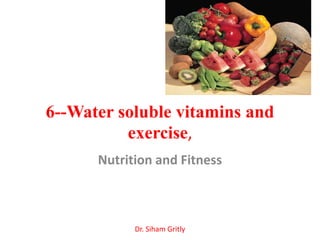
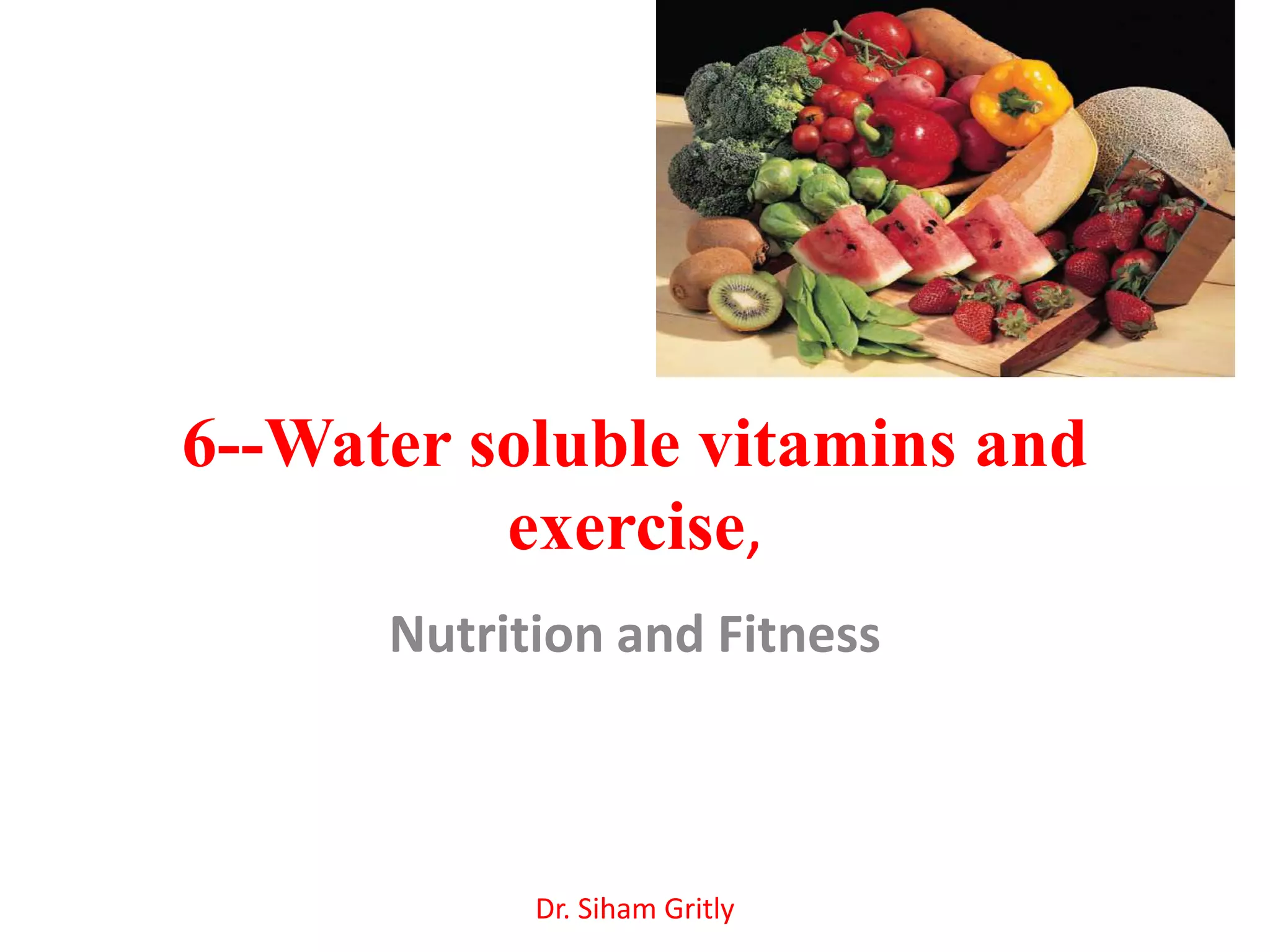
6--Water soluble vitamins and
          exercise,
      Nutrition and Fitness


            Dr. Siham Gritly
Vitamins
• vitamins are organic compound needed in
  small quantities for normal body metabolism
• *Vitamins are essential nutrients your body
  needs in small amounts for various roles in the
  human body.
• *Vitamins are divided into two groups: water-
  soluble (B-complex and C) and fat-soluble (A,
  D, E and K).

                     Dr. Siham Gritly
• *they can not be manufactured in human body
  so they should be provided through intake of
  food.

• *vitamins do not provide energy but some are
  necessary for production of energy

• *some are important for vital metabolism and
  building of structural units
                    Dr. Siham Gritly
Water soluble vitamins

• -soluble in water, consist of carbon, hydrogen,
  oxygen nitrogen, sulfur, cobalt,

• -deficiency usually occur more than fat soluble
  vitamins

• -Water-soluble vitamins that body cannot store
  in the body
                      Dr. Siham Gritly
• -enter in energy production and in essential
  enzyme system

• -activate chemical reaction inside the body

• -excretion in urine through urination

• -the most important water soluble vitamins are B
  complex and vitamin C

                       Dr. Siham Gritly
Role of vitamin in exercises

• The vitamin relationship with exercise
  involves;

• their role as coenzymes in the oxidative
  process of cells

• in the production and protection of red
  blood cells.
                     Dr. Siham Gritly
B vitamins and Exercises (energy releasing)
• During exercise or during physical activities the
  need of B complex is required for good
  performances.

• Exercise may increase the requirements for
  riboflavin and vitamin B-6,

• The B-vitamins (thiamin, riboflavin, and vitamin
  B-6) are necessary in the energy-producing
  pathways of the body and have direct role in
  energy metabolism and cell regeneration,
                       Dr. Siham Gritly
• folate and vitamin B-12 are required for the
  synthesis of new cells, such as the red blood
  cells, and for the repair of damaged cells.

• Researchers suggested that athletes who have
  poor diets, especially those restricting energy
  intakes or eliminating food groups from the
  diet, should consider supplementing with a
  multivitamin/mineral supplement

                      Dr. Siham Gritly
Thiamine or vitamin B1
• -sulfur containing water soluble vitamin of B
  complex, exist in tissues in the form of
  Thiamine Pyrophosphate (TPP)
• - Thiamine Pyrophosphate (TPP) is essential
  co-enzyme involve in energy extraction and
  cellular process in catabolism of sugar and
  amino acid
• -human and other animal obtain it through diet

                     Dr. Siham Gritly
Absorption
• Thiamine is released by the action of phosphatase
  and pyrophosphatase in the upper small intestine.
• The majority of thiamine present in the intestine
  is in the pyrophosphorylated form, but when
  thiamine arrives on the side of the intestine it is
  often in the free form.
• The majority of thiamine in serum is bound to
  proteins, mainly albumin. Approximately 90% of
  total thiamine in blood is in erythrocytes (red
  blood cell).
                       Dr. Siham Gritly
• A specific binding protein called thiamine-
  binding protein (TBP) has a hormone-
  regulated carrier protein important for tissue
  distribution of thiamine.
• Uptake of thiamine by cells of the blood and
  other tissues occurs via active transport and
  passive diffusion.
• The brain requires a much greater amount of
  thiamine than in other cells of the body.

                     Dr. Siham Gritly
Thiamin and exercises

• -the main function of thiamine is its role in
  metabolic reaction acting as co-enzyme for
  energy and carbohydrate metabolism

• -its deficiency in tissues affect energy
  metabolism and thus affect nerve and cardiac
  functions


                      Dr. Siham Gritly
• -involve of oxidative reaction by which
  pyruvate of glycolysis change to acetyl-C0-
  enzyme A (decarboxylase enzyme)
• -thiamine involved in decarboxylation of alph
  ketoglutrate to succinate in krebs cycle
• -deficiency of thiamine lead to accumulation
  of pyruvate in the blood


                     Dr. Siham Gritly
Deficiency of thiamin

• -thiamin deficiency affect peripheral nervous
  system and heart if high carbohydrates consume
  due to the absence of thiamin enezymes
• -two different diseases may result as deficiency of
  thiamin
• 1-Beri Beri (wet and dry beri beri) Usually beri
  beri diseases result due to long term deficiency
  and high intake of carbohydrates

• -Korsakoff syndrome (psychosis)

                       Dr. Siham Gritly
• - Wet beriberi is associated with mental
  confusion, muscular atrophy, edema,
  tachycardia, caridomegaly and congestive
  heart failure in addition to peripheral
  neuropathy
• - Dry beriberi is characterized principally by
  peripheral neuropathy. Muscle become waste
  and week, difficult walking, patient become
  bedridden and may die.

                     Dr. Siham Gritly
• - Wernicke Korsakoff syndrome result among
  alcoholics and narcotic addicts. In this case
  deficiency lead to damage the central nervous
  system


                    Dr. Siham Gritly
Riboflavin, vitamin B2 and exercises
• Active form of riboflavin is Riboflavin Phosphate
• It is the central component of the cofactor FAD and
  FMN, and is therefore required for energy
  metabolism

• vitamin B2 is required for a wide variety of cellular
  processes transferring oxygen from plasma to the
  tissues.

• It plays a key role in energy metabolism, and for the
  metabolism of fats, ketone bodies, carbohydrates and
  proteins.
                         Dr. Siham Gritly
Deficiency of Riboflavin
• Riboflavin is continuously excreted in the
  urine of healthy individuals, making deficiency
  relatively common when dietary intake is
  insufficient.

• riboflavin deficiency is always accompanied
  by deficiency of other vitamins


                     Dr. Siham Gritly
• In humans, signs and symptoms of riboflavin
  deficiency
• -include cracked and red lips, inflammation of the
  lining of mouth and tongue, mouth ulcers, cracks
  at the corners of the mouth (Angular cheilitis),
  and a sore throat.
• -A deficiency may also cause dry and scaling
  skin, fluid in the mucous membranes, and iron-
  deficiency anemia. The eyes may also become
  bloodshot, itchy, watery and sensitive to bright
  light.

                       Dr. Siham Gritly
• milk, yogurt, meat, egg, fish green beans,
  green leafy vegetable, liver, kidneys main
  sources ,


                     Dr. Siham Gritly
Niacin and exercises
   nicotinic acid, nicotinamide, niacinamide
• Niacin known as Pellagra preventing the main
  leading causes of mental illness

• nicotinic acid, nicotinamide, niacinamide Are
  names given to niacin

• Niacinamid occur in animal tissues and more
  soluble in water


                       Dr. Siham Gritly
Niacin is the main components of important
  two Co- enzymes
1-nicotin-amide Dinucleotide (NAD)
2-nicotin-amide Adenin Dinucleotide
Act as co-enzyme for reactions involved
  dehydrogenase enzymes
Main function act as electron transport and
  hydrogen carrier involved in fats,
  carbohydrates and protein metabolism
                    Dr. Siham Gritly
Functions

1-reaction of transport hydrogen atom from one
  part to another, occur in mitochondria and
  cytoplasm of the cells –oxidative reactions of
  NAD------NADH
*glycolysis -------glyceraldehyde 3P to 1,3
  diphosphglycerate
*oxidative decarboxylation of pyruvate to lactate


                     Dr. Siham Gritly
*oxydation of acetyl Co A in TCA cycle
-malate to oxaloacetate
-glutamate to α ketoglutrate
*β oxidation of fatty acid

2-NAD----dehydrogenase for catabolism of
  vitamin B6 pyridoxal to its excretory product
  (pyridoxin acid)
                     Dr. Siham Gritly
3-NADPH (reduced form) involved in;
Fatty acid synthesis
Cholesterol synthesis
Deoxy-ribonucleotide molecules (DNA)

4-NADPH--- convert folate to dihydrofolate (DHF)
  and dihydrofolate and synthesis of 5 methyl-
  tetrahydrofolate the active form of folic acid

                     Dr. Siham Gritly
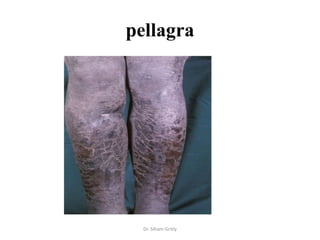
Deficiency of niacin
• Severe deficiency of niacin in the diet causes the
  disease pellagra characterized by three Ds;
Diarrhea, loss of fluids

Dermatitis, hyperpigmentation, thickening of the skin,
  inflammation of the mouth and tongue, digestive
  disturbances,

Dementia, (mental symptoms) such as irritability, poor
  concentration, anxiety, fatigue, restlessness, apathy, and
  depression

Could lead to death
                          Dr. Siham Gritly
pellagra


  Dr. Siham Gritly
digestion of niacin
• Glycohydrolase enzyme in intestinal tract free
  niacin to nicotinamide and nicotinic acid
  which absorbed and enter plasma blood

• Niacin is found in variety of foods, including
  liver, chicken, beef, fish, cereal, peanuts and
  legumes,


                      Dr. Siham Gritly
Pantothenic acid and exercises

• Pantothenic acid is used in the synthesis of co-
  enzyme A (CoA).
• Coenzyme A may act as an acyl group carrier
  to form acetyl-CoA and other related
  compounds; this is a way to transport carbon
  atoms within the cell.
•


                      Dr. Siham Gritly
• CoA is also important in the biosynthesis of
  many important compounds such as fatty
  acids, cholesterol.
• CoA is important in energy metabolism for
  pyruvate to enter theKerbs cycleor
  tricarboxylic acid cycle (TCA cycle) as acetyl-
  CoA, and for α-ketoglutarate to be transformed
  to succinyl-CoA in the cycle.

                     Dr. Siham Gritly
• The major food source of pantothenic acid is in
  meats,
• Whole grains are another good source of the
  vitamin, but milling often removes much of the
  pantothenic acid, as it is found in the outer
  layers of whole grains.
• Vegetables, such as broccoli and avocados
  also have an abundance of the acid.

                     Dr. Siham Gritly
Pyridoxine vitamin B6

• Active form of pyridoxine is pyridoxal
  phosphate
• Act as co-enzyme in different metabolic
  reactions
• Found naturally in three related compounds
1-pyridoxal; animal origin
2-pyridoxine found only in plant origin
3-pyridoxamine; animal origin
                    Dr. Siham Gritly
• The three forms equal vital activities in their
  active forms
• -pyridoxal phosphate
• -pyridoxine phosphate
• -pyridoxamine phosphate
• All forms of B6 absorbed from intestinal tract
  inter the blood as pyridoxal phosphate


                      Dr. Siham Gritly
• Act as co-enzyme needed in amino acid
  metabolism such as conversion of essential
  amino acid tryptophan to vitamin niacin

• Vitamin B6 is involved in over 100 metabolic
  reactions in the body, including the production of
  energy and hemoglobin, a protein in red blood
  cells. Intakes below the DRI can hurt
  performance.


                       Dr. Siham Gritly
vitamin B6 and exercises
• including the role that vitamin B6 plays in
  gluconeogenesis and glycogenolysis and changes
  in vitamin B6 metabolism during exercise.

• Most studies report that male athletes have
  adequate dietary intakes of vitamin B6, whereas
  some females, especially those with low energy
  intakes, appear to have low vitamin B6 intakes.


                      Dr. Siham Gritly
• Pyridoxine assists in the balancing of sodium and
  potassium.

• promoting red blood cell production.

• Pyridoxine may help balance hormonal changes in
  women and aid the immune system

• Lack of pyridoxine may cause anemia, nerve damage,
  seizures, skin problems, and sores in the mouth.

                         Dr. Siham Gritly
Folic acid and exercises

• The human body needs folate to synthesize
  DNA, as well as to act as a cofactor in
  biological reactions.
• It is especially important in aiding rapid cell
  division and growth, such as in infancy and
  pregnancy.
• production of red blood cells and thus prevent
  anemia.

                      Dr. Siham Gritly
Deficiency of folic acid

• Folate deficiency may lead to glossitis,
  diarrhea, depression, confusion, anemia, and
  fetal neural tube defects and brain defects

• found mainly in green leafy vegetables, in
  Legumes such as dried or fresh beans, peas
  and lentils, Egg yolks, cereals, yeast


                      Dr. Siham Gritly
vitamin B12, cobalamin
                  and exercises

• vitamin B12, or cobalamin, is a water soluble
  vitamin main function normal functioning of the
  brain and nervous system, and for the formation of
  blood

• It is normally involved in the metabolism of every
  cell of the human body, involved in DNA synthesis
  and regulation,

• Involve in fatty acid synthesis and energy production.

                        Dr. Siham Gritly
• Because of its role in red blood cell formation,
  B12 is vital for getting oxygen to tissues.

• B12 is only found in animal products, putting
  vegan and vegetarian athletes at risk for
  anemia.


                      Dr. Siham Gritly
• Vitamin B12 deficiency can cause severe and
  irreversible damage, especially to the brain and
  nervous system.

• At levels only slightly at lower level than
  normal, a range of symptoms such as fatigue,
  depression and poor memory may be result


                      Dr. Siham Gritly
Vitamin C and exercises
• Ascorbic acid or vitamin C is involved in a
  number of biochemical pathways that are
  important to exercise metabolism and the
  health of exercising individuals
• protecting the body from infection and damage
  to body cells,
• helping produce collagen (the connective
  tissue that holds bones and muscles together),
• helping in the absorption of iron and folate.
                     Dr. Siham Gritly
• Exercise increases the generation of oxygen
  free radicals and lipid peroxidation.
• Strenuous exercise in a person who is
  untrained or unaccustomed to exercise will
  induce oxidative damage and result in muscle
  injury.
• aerobic exercise training strengthens the
  antioxidant defense system by increasing
  superoxide dismutase.

                    Dr. Siham Gritly
• Exercise generally causes a transient increase
  in circulating ascorbic acid in the hours
  following exercise, but a decline below pre-
  exercise levels occurs in the days after
  prolonged exercise.
• Vitamin C and, especially, vitamin E are
  shown to decrease the exercise-induced
  increase in the rate of lipid peroxidation (free
  radicals).

                      Dr. Siham Gritly
references

• Sareen S. Gropper, Jack L.Smithh and James L. Groff; 2007. advanced
  Nutrition and Human Metabolism, fifth ed. Wadsworth CENGAGE
  learning

• Melvin H Williams 2010; Nutrition for Health, Fitness and Sport. 9th ed,
  McGraw Hill

• WoolfK, Manore MM B-vitamins and exercise: does exercise alter
  requirements? Dept of Nutrition, Arizona State University, Mesa 85212,
  USA. [PubMed - indexed for MEDLINE]

• William J Evans Vitamin E, vitamin C, and exercise1,2,3


                                 Dr. Siham Gritly
References


Manore MM; Vitamin B6 and exercise. Department of Family Resources
  and Human Development, Arizona State University, Tempe 85287-2502.
  [PubMed - indexed for MEDLINE]

Lieberman, S, Bruning, N (1990). The Real Vitamin & Mineral Book. NY: Avery
   Group, 3, ISBN 0895297698

    Maton, Anthea; Jean Hopkins, Charles William McLaughlin, Susan Johnson,
      Maryanna Quon Warner, David LaHart, Jill D. Wright (1993). Human
      Biology and Health. Englewood Cliffs, New Jersey, USA: Prentice Hall.

    Davidson, Michael W. (2004) Anthranilic Acid (Vitamin L) Florida State
      University
•


                                      Dr. Siham Gritly

6 -water soluble vitamins and exercises

  • 1.
    6--Water soluble vitaminsand exercise, Nutrition and Fitness Dr. Siham Gritly
  • 2.
    Vitamins • vitamins areorganic compound needed in small quantities for normal body metabolism • *Vitamins are essential nutrients your body needs in small amounts for various roles in the human body. • *Vitamins are divided into two groups: water- soluble (B-complex and C) and fat-soluble (A, D, E and K). Dr. Siham Gritly
  • 3.
    • *they cannot be manufactured in human body so they should be provided through intake of food. • *vitamins do not provide energy but some are necessary for production of energy • *some are important for vital metabolism and building of structural units Dr. Siham Gritly
  • 4.
    Water soluble vitamins •-soluble in water, consist of carbon, hydrogen, oxygen nitrogen, sulfur, cobalt, • -deficiency usually occur more than fat soluble vitamins • -Water-soluble vitamins that body cannot store in the body Dr. Siham Gritly
  • 5.
    • -enter inenergy production and in essential enzyme system • -activate chemical reaction inside the body • -excretion in urine through urination • -the most important water soluble vitamins are B complex and vitamin C Dr. Siham Gritly
  • 6.
    Role of vitaminin exercises • The vitamin relationship with exercise involves; • their role as coenzymes in the oxidative process of cells • in the production and protection of red blood cells. Dr. Siham Gritly
  • 7.
    B vitamins andExercises (energy releasing) • During exercise or during physical activities the need of B complex is required for good performances. • Exercise may increase the requirements for riboflavin and vitamin B-6, • The B-vitamins (thiamin, riboflavin, and vitamin B-6) are necessary in the energy-producing pathways of the body and have direct role in energy metabolism and cell regeneration, Dr. Siham Gritly
  • 8.
    • folate andvitamin B-12 are required for the synthesis of new cells, such as the red blood cells, and for the repair of damaged cells. • Researchers suggested that athletes who have poor diets, especially those restricting energy intakes or eliminating food groups from the diet, should consider supplementing with a multivitamin/mineral supplement Dr. Siham Gritly
  • 9.
    Thiamine or vitaminB1 • -sulfur containing water soluble vitamin of B complex, exist in tissues in the form of Thiamine Pyrophosphate (TPP) • - Thiamine Pyrophosphate (TPP) is essential co-enzyme involve in energy extraction and cellular process in catabolism of sugar and amino acid • -human and other animal obtain it through diet Dr. Siham Gritly
  • 10.
    Absorption • Thiamine isreleased by the action of phosphatase and pyrophosphatase in the upper small intestine. • The majority of thiamine present in the intestine is in the pyrophosphorylated form, but when thiamine arrives on the side of the intestine it is often in the free form. • The majority of thiamine in serum is bound to proteins, mainly albumin. Approximately 90% of total thiamine in blood is in erythrocytes (red blood cell). Dr. Siham Gritly
  • 11.
    • A specificbinding protein called thiamine- binding protein (TBP) has a hormone- regulated carrier protein important for tissue distribution of thiamine. • Uptake of thiamine by cells of the blood and other tissues occurs via active transport and passive diffusion. • The brain requires a much greater amount of thiamine than in other cells of the body. Dr. Siham Gritly
  • 12.
    Thiamin and exercises •-the main function of thiamine is its role in metabolic reaction acting as co-enzyme for energy and carbohydrate metabolism • -its deficiency in tissues affect energy metabolism and thus affect nerve and cardiac functions Dr. Siham Gritly
  • 13.
    • -involve ofoxidative reaction by which pyruvate of glycolysis change to acetyl-C0- enzyme A (decarboxylase enzyme) • -thiamine involved in decarboxylation of alph ketoglutrate to succinate in krebs cycle • -deficiency of thiamine lead to accumulation of pyruvate in the blood Dr. Siham Gritly
  • 14.
    Deficiency of thiamin •-thiamin deficiency affect peripheral nervous system and heart if high carbohydrates consume due to the absence of thiamin enezymes • -two different diseases may result as deficiency of thiamin • 1-Beri Beri (wet and dry beri beri) Usually beri beri diseases result due to long term deficiency and high intake of carbohydrates • -Korsakoff syndrome (psychosis) Dr. Siham Gritly
  • 15.
    • - Wetberiberi is associated with mental confusion, muscular atrophy, edema, tachycardia, caridomegaly and congestive heart failure in addition to peripheral neuropathy • - Dry beriberi is characterized principally by peripheral neuropathy. Muscle become waste and week, difficult walking, patient become bedridden and may die. Dr. Siham Gritly
  • 16.
    • - WernickeKorsakoff syndrome result among alcoholics and narcotic addicts. In this case deficiency lead to damage the central nervous system Dr. Siham Gritly
  • 17.
    Riboflavin, vitamin B2and exercises • Active form of riboflavin is Riboflavin Phosphate • It is the central component of the cofactor FAD and FMN, and is therefore required for energy metabolism • vitamin B2 is required for a wide variety of cellular processes transferring oxygen from plasma to the tissues. • It plays a key role in energy metabolism, and for the metabolism of fats, ketone bodies, carbohydrates and proteins. Dr. Siham Gritly
  • 18.
    Deficiency of Riboflavin •Riboflavin is continuously excreted in the urine of healthy individuals, making deficiency relatively common when dietary intake is insufficient. • riboflavin deficiency is always accompanied by deficiency of other vitamins Dr. Siham Gritly
  • 19.
    • In humans,signs and symptoms of riboflavin deficiency • -include cracked and red lips, inflammation of the lining of mouth and tongue, mouth ulcers, cracks at the corners of the mouth (Angular cheilitis), and a sore throat. • -A deficiency may also cause dry and scaling skin, fluid in the mucous membranes, and iron- deficiency anemia. The eyes may also become bloodshot, itchy, watery and sensitive to bright light. Dr. Siham Gritly
  • 20.
    • milk, yogurt,meat, egg, fish green beans, green leafy vegetable, liver, kidneys main sources , Dr. Siham Gritly
  • 21.
    Niacin and exercises nicotinic acid, nicotinamide, niacinamide • Niacin known as Pellagra preventing the main leading causes of mental illness • nicotinic acid, nicotinamide, niacinamide Are names given to niacin • Niacinamid occur in animal tissues and more soluble in water Dr. Siham Gritly
  • 22.
    Niacin is themain components of important two Co- enzymes 1-nicotin-amide Dinucleotide (NAD) 2-nicotin-amide Adenin Dinucleotide Act as co-enzyme for reactions involved dehydrogenase enzymes Main function act as electron transport and hydrogen carrier involved in fats, carbohydrates and protein metabolism Dr. Siham Gritly
  • 23.
    Functions 1-reaction of transporthydrogen atom from one part to another, occur in mitochondria and cytoplasm of the cells –oxidative reactions of NAD------NADH *glycolysis -------glyceraldehyde 3P to 1,3 diphosphglycerate *oxidative decarboxylation of pyruvate to lactate Dr. Siham Gritly
  • 24.
    *oxydation of acetylCo A in TCA cycle -malate to oxaloacetate -glutamate to α ketoglutrate *β oxidation of fatty acid 2-NAD----dehydrogenase for catabolism of vitamin B6 pyridoxal to its excretory product (pyridoxin acid) Dr. Siham Gritly
  • 25.
    3-NADPH (reduced form)involved in; Fatty acid synthesis Cholesterol synthesis Deoxy-ribonucleotide molecules (DNA) 4-NADPH--- convert folate to dihydrofolate (DHF) and dihydrofolate and synthesis of 5 methyl- tetrahydrofolate the active form of folic acid Dr. Siham Gritly
  • 26.
    Deficiency of niacin •Severe deficiency of niacin in the diet causes the disease pellagra characterized by three Ds; Diarrhea, loss of fluids Dermatitis, hyperpigmentation, thickening of the skin, inflammation of the mouth and tongue, digestive disturbances, Dementia, (mental symptoms) such as irritability, poor concentration, anxiety, fatigue, restlessness, apathy, and depression Could lead to death Dr. Siham Gritly
  • 27.
    pellagra Dr.Siham Gritly
  • 28.
    digestion of niacin •Glycohydrolase enzyme in intestinal tract free niacin to nicotinamide and nicotinic acid which absorbed and enter plasma blood • Niacin is found in variety of foods, including liver, chicken, beef, fish, cereal, peanuts and legumes, Dr. Siham Gritly
  • 29.
    Pantothenic acid andexercises • Pantothenic acid is used in the synthesis of co- enzyme A (CoA). • Coenzyme A may act as an acyl group carrier to form acetyl-CoA and other related compounds; this is a way to transport carbon atoms within the cell. • Dr. Siham Gritly
  • 30.
    • CoA isalso important in the biosynthesis of many important compounds such as fatty acids, cholesterol. • CoA is important in energy metabolism for pyruvate to enter theKerbs cycleor tricarboxylic acid cycle (TCA cycle) as acetyl- CoA, and for α-ketoglutarate to be transformed to succinyl-CoA in the cycle. Dr. Siham Gritly
  • 31.
    • The majorfood source of pantothenic acid is in meats, • Whole grains are another good source of the vitamin, but milling often removes much of the pantothenic acid, as it is found in the outer layers of whole grains. • Vegetables, such as broccoli and avocados also have an abundance of the acid. Dr. Siham Gritly
  • 32.
    Pyridoxine vitamin B6 •Active form of pyridoxine is pyridoxal phosphate • Act as co-enzyme in different metabolic reactions • Found naturally in three related compounds 1-pyridoxal; animal origin 2-pyridoxine found only in plant origin 3-pyridoxamine; animal origin Dr. Siham Gritly
  • 33.
    • The threeforms equal vital activities in their active forms • -pyridoxal phosphate • -pyridoxine phosphate • -pyridoxamine phosphate • All forms of B6 absorbed from intestinal tract inter the blood as pyridoxal phosphate Dr. Siham Gritly
  • 34.
    • Act asco-enzyme needed in amino acid metabolism such as conversion of essential amino acid tryptophan to vitamin niacin • Vitamin B6 is involved in over 100 metabolic reactions in the body, including the production of energy and hemoglobin, a protein in red blood cells. Intakes below the DRI can hurt performance. Dr. Siham Gritly
  • 35.
    vitamin B6 andexercises • including the role that vitamin B6 plays in gluconeogenesis and glycogenolysis and changes in vitamin B6 metabolism during exercise. • Most studies report that male athletes have adequate dietary intakes of vitamin B6, whereas some females, especially those with low energy intakes, appear to have low vitamin B6 intakes. Dr. Siham Gritly
  • 36.
    • Pyridoxine assistsin the balancing of sodium and potassium. • promoting red blood cell production. • Pyridoxine may help balance hormonal changes in women and aid the immune system • Lack of pyridoxine may cause anemia, nerve damage, seizures, skin problems, and sores in the mouth. Dr. Siham Gritly
  • 37.
    Folic acid andexercises • The human body needs folate to synthesize DNA, as well as to act as a cofactor in biological reactions. • It is especially important in aiding rapid cell division and growth, such as in infancy and pregnancy. • production of red blood cells and thus prevent anemia. Dr. Siham Gritly
  • 38.
    Deficiency of folicacid • Folate deficiency may lead to glossitis, diarrhea, depression, confusion, anemia, and fetal neural tube defects and brain defects • found mainly in green leafy vegetables, in Legumes such as dried or fresh beans, peas and lentils, Egg yolks, cereals, yeast Dr. Siham Gritly
  • 39.
    vitamin B12, cobalamin and exercises • vitamin B12, or cobalamin, is a water soluble vitamin main function normal functioning of the brain and nervous system, and for the formation of blood • It is normally involved in the metabolism of every cell of the human body, involved in DNA synthesis and regulation, • Involve in fatty acid synthesis and energy production. Dr. Siham Gritly
  • 40.
    • Because ofits role in red blood cell formation, B12 is vital for getting oxygen to tissues. • B12 is only found in animal products, putting vegan and vegetarian athletes at risk for anemia. Dr. Siham Gritly
  • 41.
    • Vitamin B12deficiency can cause severe and irreversible damage, especially to the brain and nervous system. • At levels only slightly at lower level than normal, a range of symptoms such as fatigue, depression and poor memory may be result Dr. Siham Gritly
  • 42.
    Vitamin C andexercises • Ascorbic acid or vitamin C is involved in a number of biochemical pathways that are important to exercise metabolism and the health of exercising individuals • protecting the body from infection and damage to body cells, • helping produce collagen (the connective tissue that holds bones and muscles together), • helping in the absorption of iron and folate. Dr. Siham Gritly
  • 43.
    • Exercise increasesthe generation of oxygen free radicals and lipid peroxidation. • Strenuous exercise in a person who is untrained or unaccustomed to exercise will induce oxidative damage and result in muscle injury. • aerobic exercise training strengthens the antioxidant defense system by increasing superoxide dismutase. Dr. Siham Gritly
  • 44.
    • Exercise generallycauses a transient increase in circulating ascorbic acid in the hours following exercise, but a decline below pre- exercise levels occurs in the days after prolonged exercise. • Vitamin C and, especially, vitamin E are shown to decrease the exercise-induced increase in the rate of lipid peroxidation (free radicals). Dr. Siham Gritly
  • 45.
    references • Sareen S.Gropper, Jack L.Smithh and James L. Groff; 2007. advanced Nutrition and Human Metabolism, fifth ed. Wadsworth CENGAGE learning • Melvin H Williams 2010; Nutrition for Health, Fitness and Sport. 9th ed, McGraw Hill • WoolfK, Manore MM B-vitamins and exercise: does exercise alter requirements? Dept of Nutrition, Arizona State University, Mesa 85212, USA. [PubMed - indexed for MEDLINE] • William J Evans Vitamin E, vitamin C, and exercise1,2,3 Dr. Siham Gritly
  • 46.
    References Manore MM; VitaminB6 and exercise. Department of Family Resources and Human Development, Arizona State University, Tempe 85287-2502. [PubMed - indexed for MEDLINE] Lieberman, S, Bruning, N (1990). The Real Vitamin & Mineral Book. NY: Avery Group, 3, ISBN 0895297698 Maton, Anthea; Jean Hopkins, Charles William McLaughlin, Susan Johnson, Maryanna Quon Warner, David LaHart, Jill D. Wright (1993). Human Biology and Health. Englewood Cliffs, New Jersey, USA: Prentice Hall. Davidson, Michael W. (2004) Anthranilic Acid (Vitamin L) Florida State University • Dr. Siham Gritly