Nutrition
for Exercise & Sport
Developed by: AQ Khan
Overview
• Nutrient Consumption: Fit & Non-fit
• Dietary Reference Intakes
• Calorie and Macronutrient Needs
– Pre workout (competition) Meal
– Water
– Carbohydrate
– Fat
– Protein
• Adding Mass: Gaining Weight
Nutrient Consumption: Fit
• Active people do not require additional
nutrients beyond those obtained in a
nutritionally well balanced diet.
• What physically fit actually eat.
– Small differences in energy intake (low v high)
– Higher dietary fiber & lower cholesterol intakes
– Diets more closely approach recommendations
• Sound human nutrition represents sound
nutrition for athletes.
Dietary Reference Intakes
• Dietary Reference Intakes (DRIs) is an
umbrella term encompassing an array of
standards: the RDAs, Estimated Average
Requirements (EARs), Adequate Intakes
(AIs), and tolerable Upper intake Levels(UL).
• DRIs differ from predecessor RDAs by
focusing on promoting health maintenance
and risk-reduction for nutrient-related
disease rather than preventing deficiency-
related diseases.
Dietary Reference Intakes
• EAR is average level
of daily nutrient intake
sufficient to meet
requirements of ½
healthy people in
given age/gender
group.
• RDA is average daily
nutrient to meet
requirements of nearly
all people in given
age/gender group.
Dietary Reference Intakes
• Adequate intake (AI) provides a nutritional
goal when no RDA exists.
• Tolerable upper intake level (UL) is highest
average daily nutrient intake likely to pose
no risk or adverse health effects to most
age/gender group.
My Pyramid Replaces Food
Guide
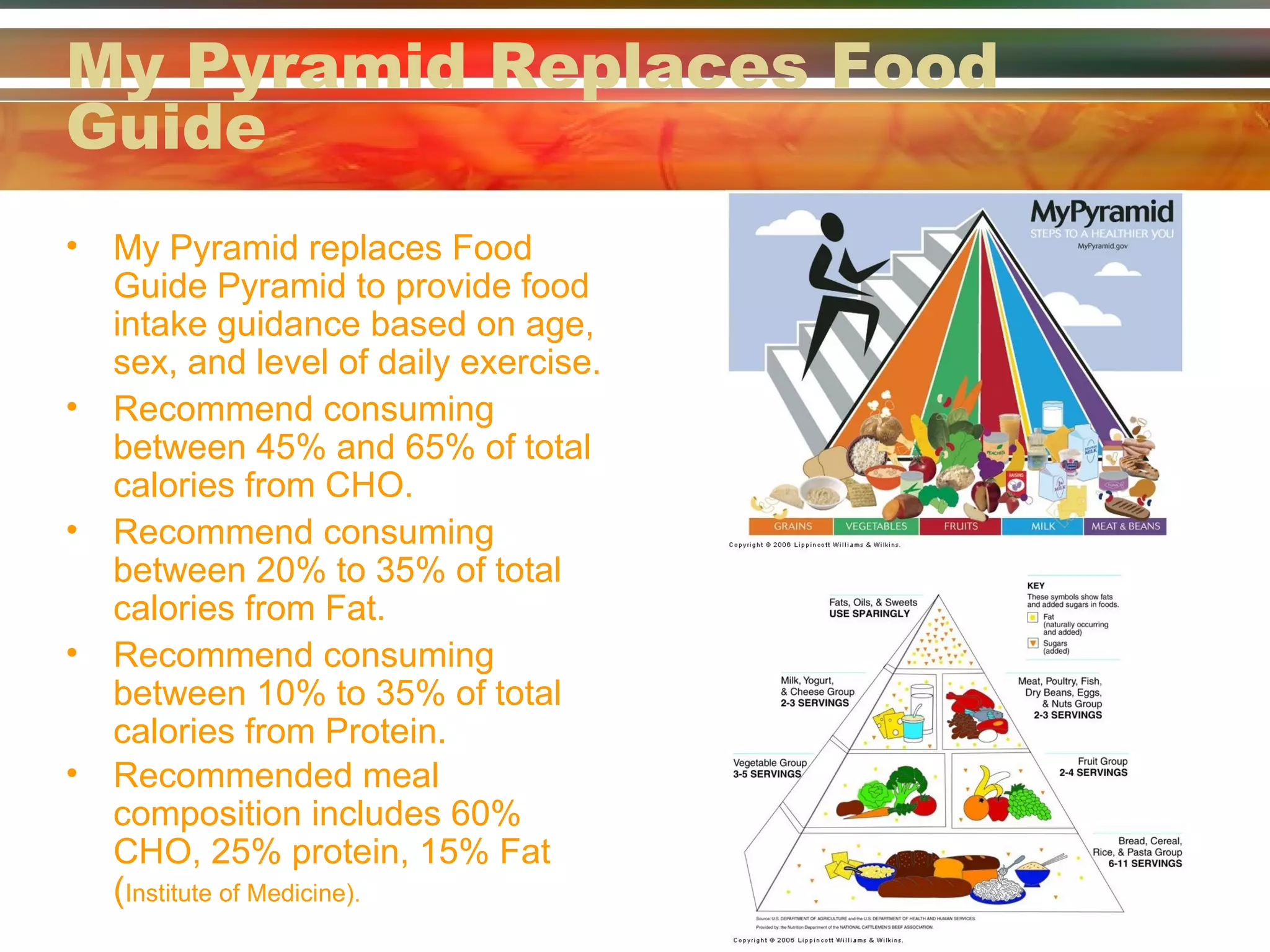
• My Pyramid replaces Food
Guide Pyramid to provide food
intake guidance based on age,
sex, and level of daily exercise.
• Recommend consuming
between 45% and 65% of total
calories from CHO.
• Recommend consuming
between 20% to 35% of total
calories from Fat.
• Recommend consuming
between 10% to 35% of total
calories from Protein.
• Recommended meal
composition includes 60%
CHO, 25% protein, 15% Fat
(Institute of Medicine).
Exercise and Food Intake
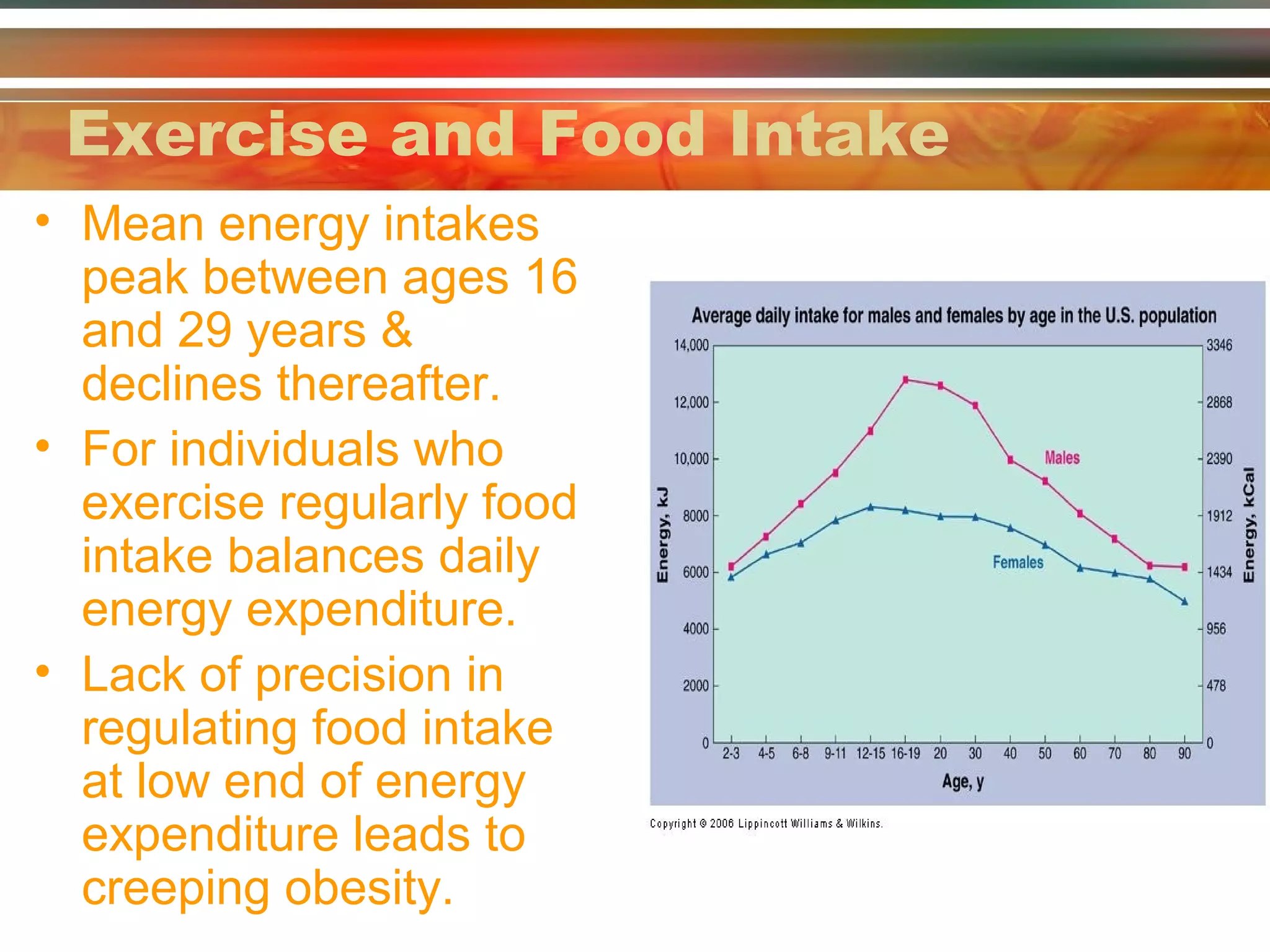
• Mean energy intakes
peak between ages 16
and 29 years &
declines thereafter.
• For individuals who
exercise regularly food
intake balances daily
energy expenditure.
• Lack of precision in
regulating food intake
at low end of energy
expenditure leads to
creeping obesity.
Exercise and Food Intake
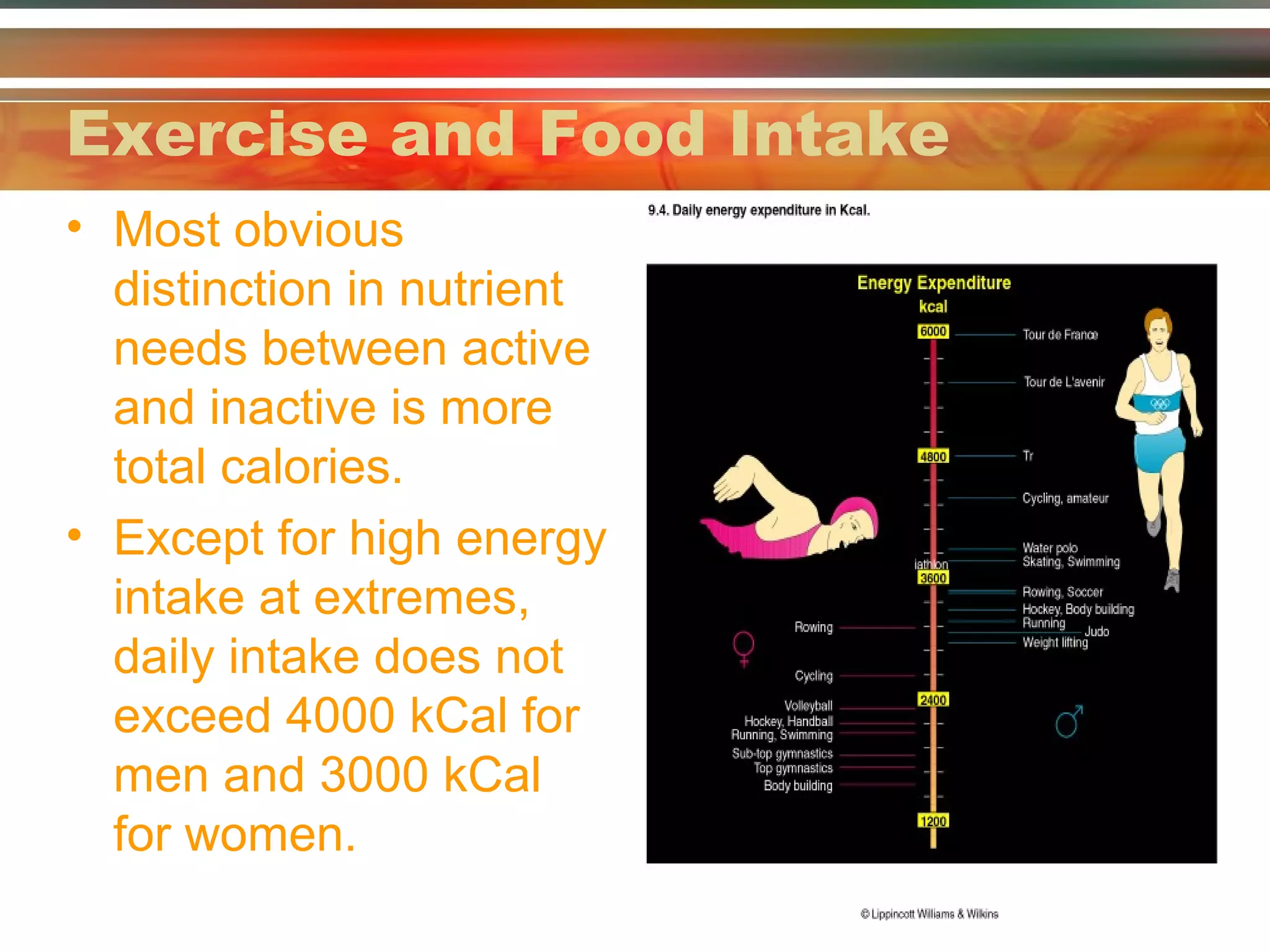
• Most obvious
distinction in nutrient
needs between active
and inactive is more
total calories.
• Except for high energy
intake at extremes,
daily intake does not
exceed 4000 kCal for
men and 3000 kCal
for women.
Exercise and Food Intake
• Phelps told ESPN he
eats roughly 8,000-
10,000 cal/d, including
lots of pizza & pasta.
• Breakfast of champions
– 3 fried egg sandwiches
– 2 cups coffee
– 5-egg omelet
– 1 bowl grits
– 3 slices French toast
– 3 chocolate chip
pancakes
Beijing 4 x 100 freestyle relay, 8-11-08
Exercise and Food Intake
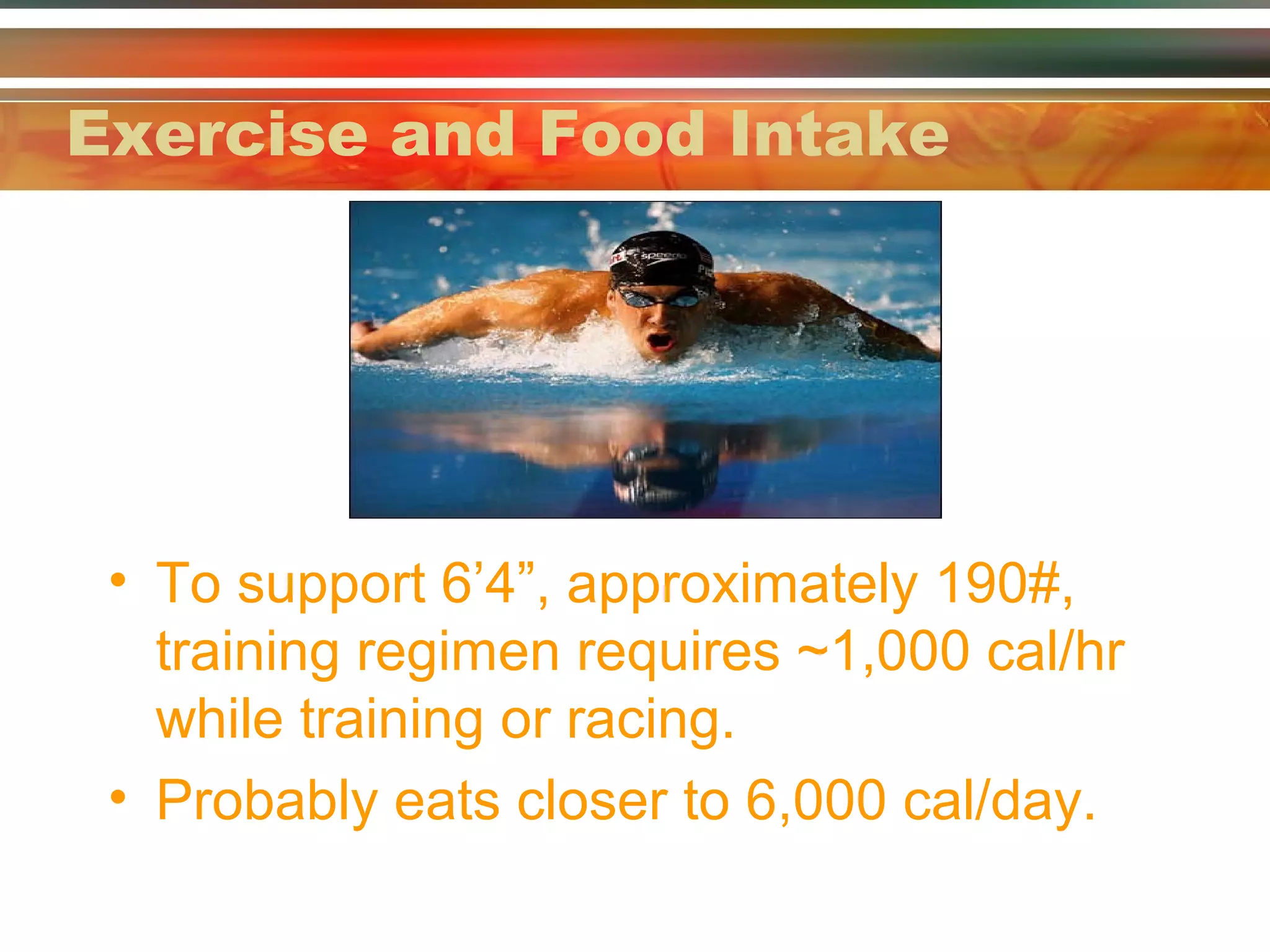
• To support 6’4”, approximately 190#,
training regimen requires ~1,000 cal/hr
while training or racing.
• Probably eats closer to 6,000 cal/day.
Exercise and Food Intake
Minimum: current wt (lb) X 23 = total calories for males
• Current wt (lb) x 20 = total calories for females
• Relatively high caloric intakes of physically
active men & women usually increase
protein, vitamin, and mineral intake above
normal.
• Percentage of calories from energy
nutrients should remain in normal ranges.
Precompetition Meal
Pre-workout meal goal: maximize muscle & liver
glycogen stores providing glucose for intestinal
absorption during exercise & enhance hydration.
– Be consumed within 3-4 hours before exercising
sufficient time to digest & absorb.
– Reasons precompetition meal high in CHO:
• Foods high in lipid & protein digest slowly
• Low CHO meal can hinder performance
– Contain 150 – 300 g CHO in solid or liquid
– Benefits of precomp liquid meal: contribute to fluid
needs, absorb rapidly leaving no residue
Carbohydrate Needs*
• Carbohydrate is the optimal fuel for exercise
• Prolonged and intermittent, intense training
depletes carbohydrate (glycogen) stores
resulting in poor performance and fatigue.
• Consume carbohydrate with every meal.
• In general, carbohydrates (CHO) should
always provide at least 55% of total daily
calorie (TDC) intake. Ideally 60-70% of
TDC.
Carbohydrate Needs*
More intense or prolonged training requires more
carbohydrate
• 3 grams/lb body weight for 1 hour training
• 4.5 grams/lb body weight for 2 hours training.
• 5 grams/lb body weight for 3 hours training.
• 6 grams/lb body weight for 4+ hours training.
How many calories per gram of CHO?
Sources: Bread, Tortillas, Bagels, English Muffins, Cereals,
Rice, Pasta, Vegetables, Potatoes, *Fruit, Fruit Juices,
Sports Drinks, Soda Pop, Crackers, Pita, Pretzels, Popcorn
Carbohydrate Needs
A. Before exercise
– pre-exercise fructose absorbs more slowly, but GI distress
– consuming rapidly absorbed, high glycemic CHO w/i 1 hr
before exercising accelerates glycogen depletion by
causing insulin overshoot & rebound hypoglycemia.
– consuming low glycemic CHO immediately (< 30 min)
allows for relatively slow absorption.
A. During exercise: 30-60 grams per hour, 5-10 oz of 5-8%
CHO electrolyte drink every 15-20 min or 2 gels per
hour; drink contributes to temperature regulation
B. After exercise
– To speed up glycogen replenishment, consume 50-75 g
moderate to high glycemic index w/i 15 minutes.
– Under optimal CHO intake, takes 20 hrs to replenish
glycogen stores at rate of 5% per hour.
Fluid Intake (Chapter 2)*
• Fluid needs = body weight X .67 = ounces you
require daily NOT including exercise
• What should you drink:
– Night before: 16 oz. of water before bed
– Morning of practice: 16 oz. of water ASA get up
– If practice later in day: 16 oz. of water 2 hrs. b4 practice
– Pre-exercise: 6-8 oz. water or sports drink 15 min before
practice, try avoid carbonated beverages or caffeine, NO fruit
juices before exercise – can cause loose bowels & gas
– During exercise: 4-8 oz. every 15 minutes water & sports drink
alternate between two
– Post exercise: 24 oz. for every pound lost w/i 2 hrs. exercise
Fluid, Glucose, and Electrolyte Intake
• Recommendations
– Fluid volume within stomach exerts greatest effect on
rate of gastric emptying.
– To maintain a relatively large fluid volume in stomach
& speed gastric emptying, consume 400-600 ml (13.5-
20.3 oz) [immediately]immediately] 2 hrs before and __?_ 15 min
before exercise;
– With subsequent regular ingestion of [250 ml 8.45 oz]
? every throughout exercise.
– To optimize water & CHO absorption use a 6%
carbohydrate-electrolyte solution (not too dilute or too
concentrated).
– Adding sodium to rehydration beverage maintains
plasma osmolarity, reduces urine output, motivates.
Sodium Potential Benefit*
• Sodium benefits ultraendurance athlete
at risk for hyponatremia.
• Adding sodium to rehydration beverage
maintains plasma osmolarity, reduces
urine output, motivates drinking.
• Theoretically, water absorption across
intestinal mucosa may be enhance by concurrent absorption of
glucose and Na+
.
• Glucose stimulates sodium absorption, sodium is necessary
for glucose absorption, and co-transport stimulates water’s
passive uptake by osmotic action.
Best ways to replace K & Na post-exercise:
• Orange juice & salted pretzels, Baked potato with ketchup or salt
• Nectarine and some Chex mix, Mix of dried apricots and salted nuts
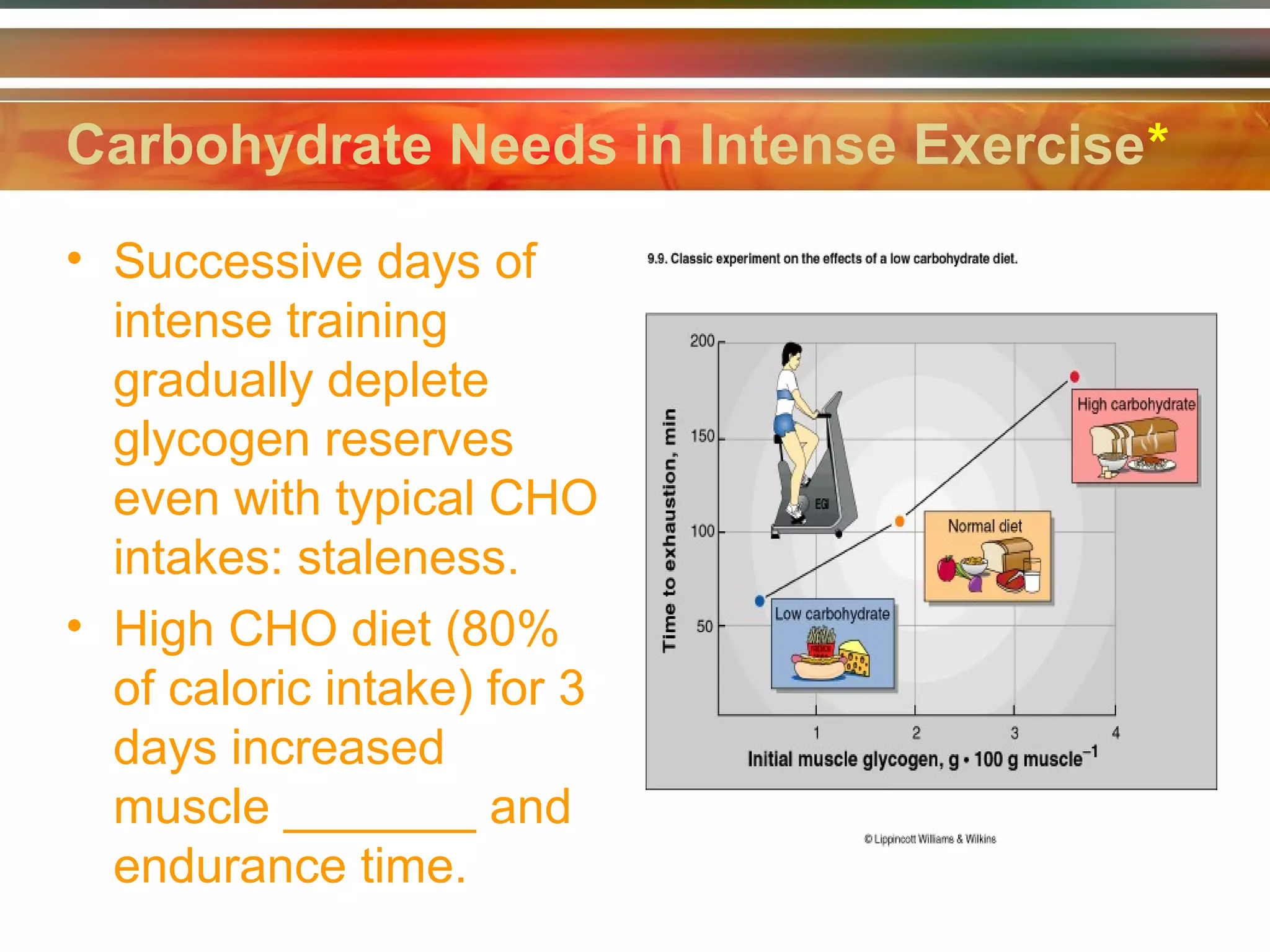
Carbohydrate Needs in Intense Exercise*
• Successive days of
intense training
gradually deplete
glycogen reserves
even with typical CHO
intakes: staleness.
• High CHO diet (80%
of caloric intake) for 3
days increased
muscle _______ and
endurance time.
Carbohydrate Loading
Glycogen Loading: procedure increases muscle
glycogen levels more than normal (1.7 g/100 g).
– Normal amount of glycogen packed in muscle: 5 g
glycogen/ 100 g muscle
• What is major benefit of carbohydrate loading?
– Endurance capacity
– Unless athlete begins competing completely
depleted, exercise < 60 min requires normal
carbohydrate intake
• What is major drawback of glycogen loading?
– Each gram glycogen stores 2.7 grams H2O, makes
“heavy” fuel.
Carbohydrate Loading
• Classic Carbohydrate Loading
– Stage 1: depletion
• Day 1: perform exhaustive exercise to deplete
• Days 2, 3, 4: Maintain low CHO food intake
– Stage 2: loading
• Days 5, 6, 7: maintain high CHO food intake
– Stage 3: competition
• Modified Loading
• Days 1-3: exercise @ 75% VO2 max, 1.5 hrs, 50%
CHO
• Days 4-6: taper exercise duration, 70% CHO
Fat Needs*
• Too much can cause cramps
• Not enough can cause fatigue more quickly
• Try to limit high fat foods before and during
exercise.
• Foods to avoid before & during exercise:
chips, ice cream, nuts, nut butters, french
fries, doughnuts, fried meats, pizza, chocolate,
bologna, salami, pepperoni, burgers
• In general, limit TDC intake < 30% fat.
Protein Needs*
• Body can’t use more than 1 gram of protein
per pound of body weight!
• Not immediately available as an energy
source for exercise.
• Important for recovery and to boost
immune system.
• Sources: chicken, turkey, soy burgers, fish,
eggs, dried beans, beef, cheese, nuts and nut
butters, pork, milk, veal, shellfish
• In general, 15-20% TDC intake.
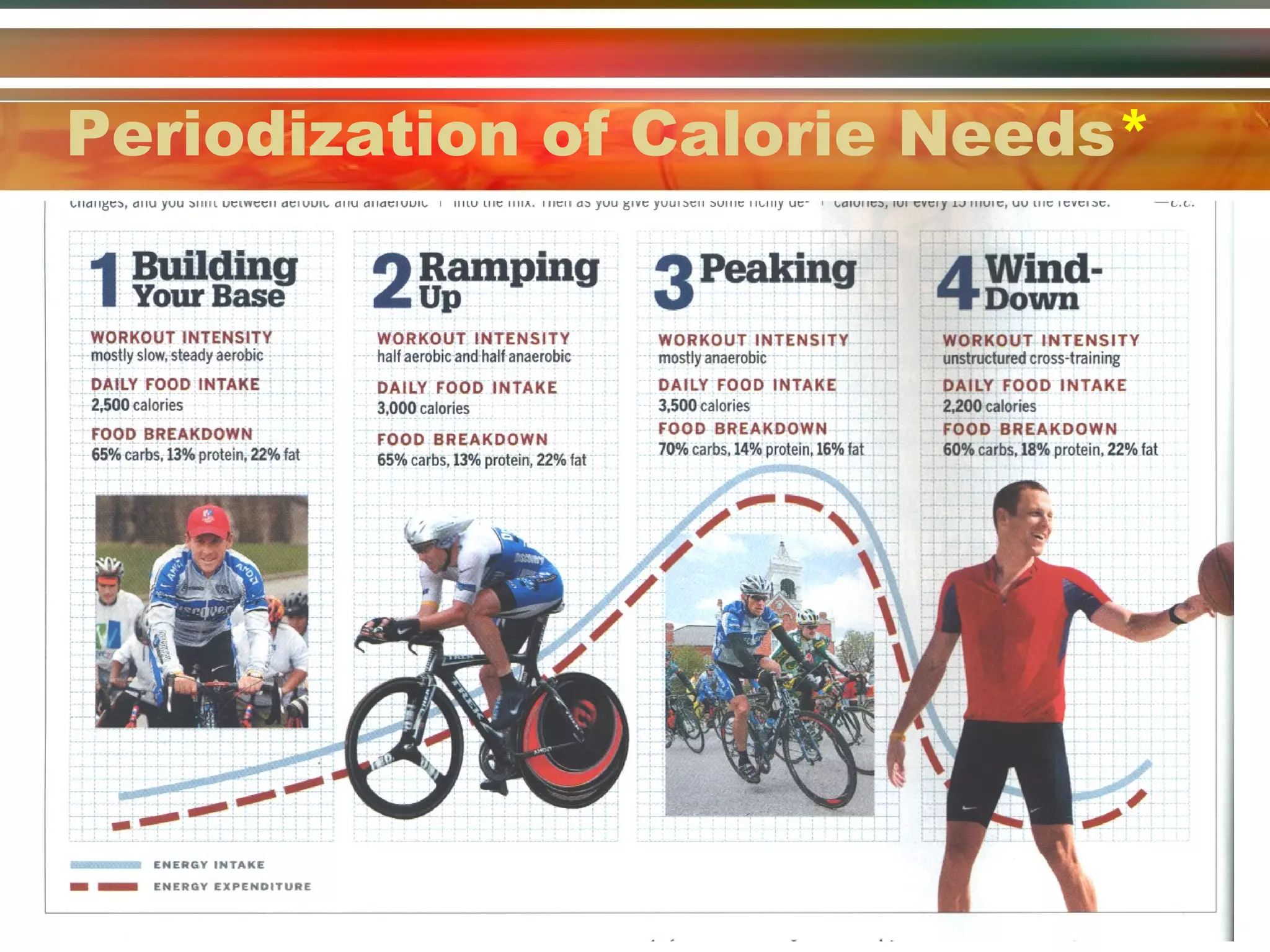
Periodization of Calorie Needs*
Baseball Guidelines*
Off Season
20%
20%60%
Protein
Fat
Carbo
Preseason
55%
25%
20%
Protein
Fat
Carbo
Baseball In Season
55%
15%
30%
Protein Fat Carbo
Basketball Guidelines*
Off & Pre Seasons
60%
20%
20%
Protein Fat Carbo
In Season
55%
20%
25%
Protein Fat Carbo
Football Guidelines*
Pre & In Seasons
55%
30%
15%
Protein Fat Carbo
Off Season
60% 20%
20%
Protein Fat Carbo
Nutrient Timing Resistance Training
• Energy Phase: immediately pre- & during
exercise period consume high glycemic
CHO & rapidly digested PRO supplement.
• Anabolic Phase: consume high glycemic
CHO/PRO in liquid form during 45-minute
post-exercise.
• Growth Phase: from end of anabolic to
beginning next workout, high glycemic
CHO and high PRO intake.
Goals*
Adding Mass
• Goals for weight & strength gain = 1 lb/wk
• 10-14 additional grams protein/day  1 lb
muscle mass/week
• Goals to add 500-100 additional calories/day
• Increase number of meals, not just size meals
• Don’t rely on weight gainers or high protein
powders. Fill you up before get in all calories
Illustration References
• McArdle, William D., Frank I. Katch, and
Victor L. Katch. 2000. Essentials of
Exercise Physiology 2nd
ed. Image
Collection. Lippincott Williams & Wilkins.
• Plowman, Sharon A. and Denise L. Smith.
1998. Digital Image Archive for Exercise
Physiology. Allyn & Bacon.
• Carmichael, Chris. 2005. The Lance
Armstrong Diet, Men’s Journal, Aug. p. 38.

Nutrition for exercise and sport

  • 1.
    Nutrition for Exercise &Sport Developed by: AQ Khan
  • 2.
    Overview • Nutrient Consumption:Fit & Non-fit • Dietary Reference Intakes • Calorie and Macronutrient Needs – Pre workout (competition) Meal – Water – Carbohydrate – Fat – Protein • Adding Mass: Gaining Weight
  • 3.
    Nutrient Consumption: Fit •Active people do not require additional nutrients beyond those obtained in a nutritionally well balanced diet. • What physically fit actually eat. – Small differences in energy intake (low v high) – Higher dietary fiber & lower cholesterol intakes – Diets more closely approach recommendations • Sound human nutrition represents sound nutrition for athletes.
  • 4.
    Dietary Reference Intakes •Dietary Reference Intakes (DRIs) is an umbrella term encompassing an array of standards: the RDAs, Estimated Average Requirements (EARs), Adequate Intakes (AIs), and tolerable Upper intake Levels(UL). • DRIs differ from predecessor RDAs by focusing on promoting health maintenance and risk-reduction for nutrient-related disease rather than preventing deficiency- related diseases.
  • 5.
    Dietary Reference Intakes •EAR is average level of daily nutrient intake sufficient to meet requirements of ½ healthy people in given age/gender group. • RDA is average daily nutrient to meet requirements of nearly all people in given age/gender group.
  • 6.
    Dietary Reference Intakes •Adequate intake (AI) provides a nutritional goal when no RDA exists. • Tolerable upper intake level (UL) is highest average daily nutrient intake likely to pose no risk or adverse health effects to most age/gender group.
  • 7.
    My Pyramid ReplacesFood Guide • My Pyramid replaces Food Guide Pyramid to provide food intake guidance based on age, sex, and level of daily exercise. • Recommend consuming between 45% and 65% of total calories from CHO. • Recommend consuming between 20% to 35% of total calories from Fat. • Recommend consuming between 10% to 35% of total calories from Protein. • Recommended meal composition includes 60% CHO, 25% protein, 15% Fat (Institute of Medicine).
  • 8.
    Exercise and FoodIntake • Mean energy intakes peak between ages 16 and 29 years & declines thereafter. • For individuals who exercise regularly food intake balances daily energy expenditure. • Lack of precision in regulating food intake at low end of energy expenditure leads to creeping obesity.
  • 9.
    Exercise and FoodIntake • Most obvious distinction in nutrient needs between active and inactive is more total calories. • Except for high energy intake at extremes, daily intake does not exceed 4000 kCal for men and 3000 kCal for women.
  • 10.
    Exercise and FoodIntake • Phelps told ESPN he eats roughly 8,000- 10,000 cal/d, including lots of pizza & pasta. • Breakfast of champions – 3 fried egg sandwiches – 2 cups coffee – 5-egg omelet – 1 bowl grits – 3 slices French toast – 3 chocolate chip pancakes Beijing 4 x 100 freestyle relay, 8-11-08
  • 11.
    Exercise and FoodIntake • To support 6’4”, approximately 190#, training regimen requires ~1,000 cal/hr while training or racing. • Probably eats closer to 6,000 cal/day.
  • 12.
    Exercise and FoodIntake Minimum: current wt (lb) X 23 = total calories for males • Current wt (lb) x 20 = total calories for females • Relatively high caloric intakes of physically active men & women usually increase protein, vitamin, and mineral intake above normal. • Percentage of calories from energy nutrients should remain in normal ranges.
  • 13.
    Precompetition Meal Pre-workout mealgoal: maximize muscle & liver glycogen stores providing glucose for intestinal absorption during exercise & enhance hydration. – Be consumed within 3-4 hours before exercising sufficient time to digest & absorb. – Reasons precompetition meal high in CHO: • Foods high in lipid & protein digest slowly • Low CHO meal can hinder performance – Contain 150 – 300 g CHO in solid or liquid – Benefits of precomp liquid meal: contribute to fluid needs, absorb rapidly leaving no residue
  • 14.
    Carbohydrate Needs* • Carbohydrateis the optimal fuel for exercise • Prolonged and intermittent, intense training depletes carbohydrate (glycogen) stores resulting in poor performance and fatigue. • Consume carbohydrate with every meal. • In general, carbohydrates (CHO) should always provide at least 55% of total daily calorie (TDC) intake. Ideally 60-70% of TDC.
  • 15.
    Carbohydrate Needs* More intenseor prolonged training requires more carbohydrate • 3 grams/lb body weight for 1 hour training • 4.5 grams/lb body weight for 2 hours training. • 5 grams/lb body weight for 3 hours training. • 6 grams/lb body weight for 4+ hours training. How many calories per gram of CHO? Sources: Bread, Tortillas, Bagels, English Muffins, Cereals, Rice, Pasta, Vegetables, Potatoes, *Fruit, Fruit Juices, Sports Drinks, Soda Pop, Crackers, Pita, Pretzels, Popcorn
  • 16.
    Carbohydrate Needs A. Beforeexercise – pre-exercise fructose absorbs more slowly, but GI distress – consuming rapidly absorbed, high glycemic CHO w/i 1 hr before exercising accelerates glycogen depletion by causing insulin overshoot & rebound hypoglycemia. – consuming low glycemic CHO immediately (< 30 min) allows for relatively slow absorption. A. During exercise: 30-60 grams per hour, 5-10 oz of 5-8% CHO electrolyte drink every 15-20 min or 2 gels per hour; drink contributes to temperature regulation B. After exercise – To speed up glycogen replenishment, consume 50-75 g moderate to high glycemic index w/i 15 minutes. – Under optimal CHO intake, takes 20 hrs to replenish glycogen stores at rate of 5% per hour.
  • 17.
    Fluid Intake (Chapter2)* • Fluid needs = body weight X .67 = ounces you require daily NOT including exercise • What should you drink: – Night before: 16 oz. of water before bed – Morning of practice: 16 oz. of water ASA get up – If practice later in day: 16 oz. of water 2 hrs. b4 practice – Pre-exercise: 6-8 oz. water or sports drink 15 min before practice, try avoid carbonated beverages or caffeine, NO fruit juices before exercise – can cause loose bowels & gas – During exercise: 4-8 oz. every 15 minutes water & sports drink alternate between two – Post exercise: 24 oz. for every pound lost w/i 2 hrs. exercise
  • 18.
    Fluid, Glucose, andElectrolyte Intake • Recommendations – Fluid volume within stomach exerts greatest effect on rate of gastric emptying. – To maintain a relatively large fluid volume in stomach & speed gastric emptying, consume 400-600 ml (13.5- 20.3 oz) [immediately]immediately] 2 hrs before and __?_ 15 min before exercise; – With subsequent regular ingestion of [250 ml 8.45 oz] ? every throughout exercise. – To optimize water & CHO absorption use a 6% carbohydrate-electrolyte solution (not too dilute or too concentrated). – Adding sodium to rehydration beverage maintains plasma osmolarity, reduces urine output, motivates.
  • 19.
    Sodium Potential Benefit* •Sodium benefits ultraendurance athlete at risk for hyponatremia. • Adding sodium to rehydration beverage maintains plasma osmolarity, reduces urine output, motivates drinking. • Theoretically, water absorption across intestinal mucosa may be enhance by concurrent absorption of glucose and Na+ . • Glucose stimulates sodium absorption, sodium is necessary for glucose absorption, and co-transport stimulates water’s passive uptake by osmotic action. Best ways to replace K & Na post-exercise: • Orange juice & salted pretzels, Baked potato with ketchup or salt • Nectarine and some Chex mix, Mix of dried apricots and salted nuts
  • 20.
    Carbohydrate Needs inIntense Exercise* • Successive days of intense training gradually deplete glycogen reserves even with typical CHO intakes: staleness. • High CHO diet (80% of caloric intake) for 3 days increased muscle _______ and endurance time.
  • 21.
    Carbohydrate Loading Glycogen Loading:procedure increases muscle glycogen levels more than normal (1.7 g/100 g). – Normal amount of glycogen packed in muscle: 5 g glycogen/ 100 g muscle • What is major benefit of carbohydrate loading? – Endurance capacity – Unless athlete begins competing completely depleted, exercise < 60 min requires normal carbohydrate intake • What is major drawback of glycogen loading? – Each gram glycogen stores 2.7 grams H2O, makes “heavy” fuel.
  • 22.
    Carbohydrate Loading • ClassicCarbohydrate Loading – Stage 1: depletion • Day 1: perform exhaustive exercise to deplete • Days 2, 3, 4: Maintain low CHO food intake – Stage 2: loading • Days 5, 6, 7: maintain high CHO food intake – Stage 3: competition • Modified Loading • Days 1-3: exercise @ 75% VO2 max, 1.5 hrs, 50% CHO • Days 4-6: taper exercise duration, 70% CHO
  • 23.
    Fat Needs* • Toomuch can cause cramps • Not enough can cause fatigue more quickly • Try to limit high fat foods before and during exercise. • Foods to avoid before & during exercise: chips, ice cream, nuts, nut butters, french fries, doughnuts, fried meats, pizza, chocolate, bologna, salami, pepperoni, burgers • In general, limit TDC intake < 30% fat.
  • 24.
    Protein Needs* • Bodycan’t use more than 1 gram of protein per pound of body weight! • Not immediately available as an energy source for exercise. • Important for recovery and to boost immune system. • Sources: chicken, turkey, soy burgers, fish, eggs, dried beans, beef, cheese, nuts and nut butters, pork, milk, veal, shellfish • In general, 15-20% TDC intake.
  • 25.
  • 26.
  • 27.
    Basketball Guidelines* Off &Pre Seasons 60% 20% 20% Protein Fat Carbo In Season 55% 20% 25% Protein Fat Carbo
  • 28.
    Football Guidelines* Pre &In Seasons 55% 30% 15% Protein Fat Carbo Off Season 60% 20% 20% Protein Fat Carbo
  • 29.
    Nutrient Timing ResistanceTraining • Energy Phase: immediately pre- & during exercise period consume high glycemic CHO & rapidly digested PRO supplement. • Anabolic Phase: consume high glycemic CHO/PRO in liquid form during 45-minute post-exercise. • Growth Phase: from end of anabolic to beginning next workout, high glycemic CHO and high PRO intake.
  • 30.
    Goals* Adding Mass • Goalsfor weight & strength gain = 1 lb/wk • 10-14 additional grams protein/day  1 lb muscle mass/week • Goals to add 500-100 additional calories/day • Increase number of meals, not just size meals • Don’t rely on weight gainers or high protein powders. Fill you up before get in all calories
  • 31.
    Illustration References • McArdle,William D., Frank I. Katch, and Victor L. Katch. 2000. Essentials of Exercise Physiology 2nd ed. Image Collection. Lippincott Williams & Wilkins. • Plowman, Sharon A. and Denise L. Smith. 1998. Digital Image Archive for Exercise Physiology. Allyn & Bacon. • Carmichael, Chris. 2005. The Lance Armstrong Diet, Men’s Journal, Aug. p. 38.