

The Nature of Secondary Data 
Internal and External Sources of 
Secondary Data
The Sources of Research Data 
1. Secondary Data 
2. Commercial Surveys, Audits, and Panels 
3. Survey Research 
4. Experimentation 
5. Experimental Environment
Define secondary data 
• Secondary data are data that were developed 
for some purpose other than helping to solve 
the problem at hand. 
• Secondary data can be used to target 
potential buyers or for other business 
applications. 
• Population characteristics, values and 
lifestyles.
Advantages of Secondary Data 
• It can be gathered quickly and inexpensively. 
• Such data are already available.
What do you think? 
• If I have seen farther than others, it is 
because I have stood on the shoulders 
of giants.
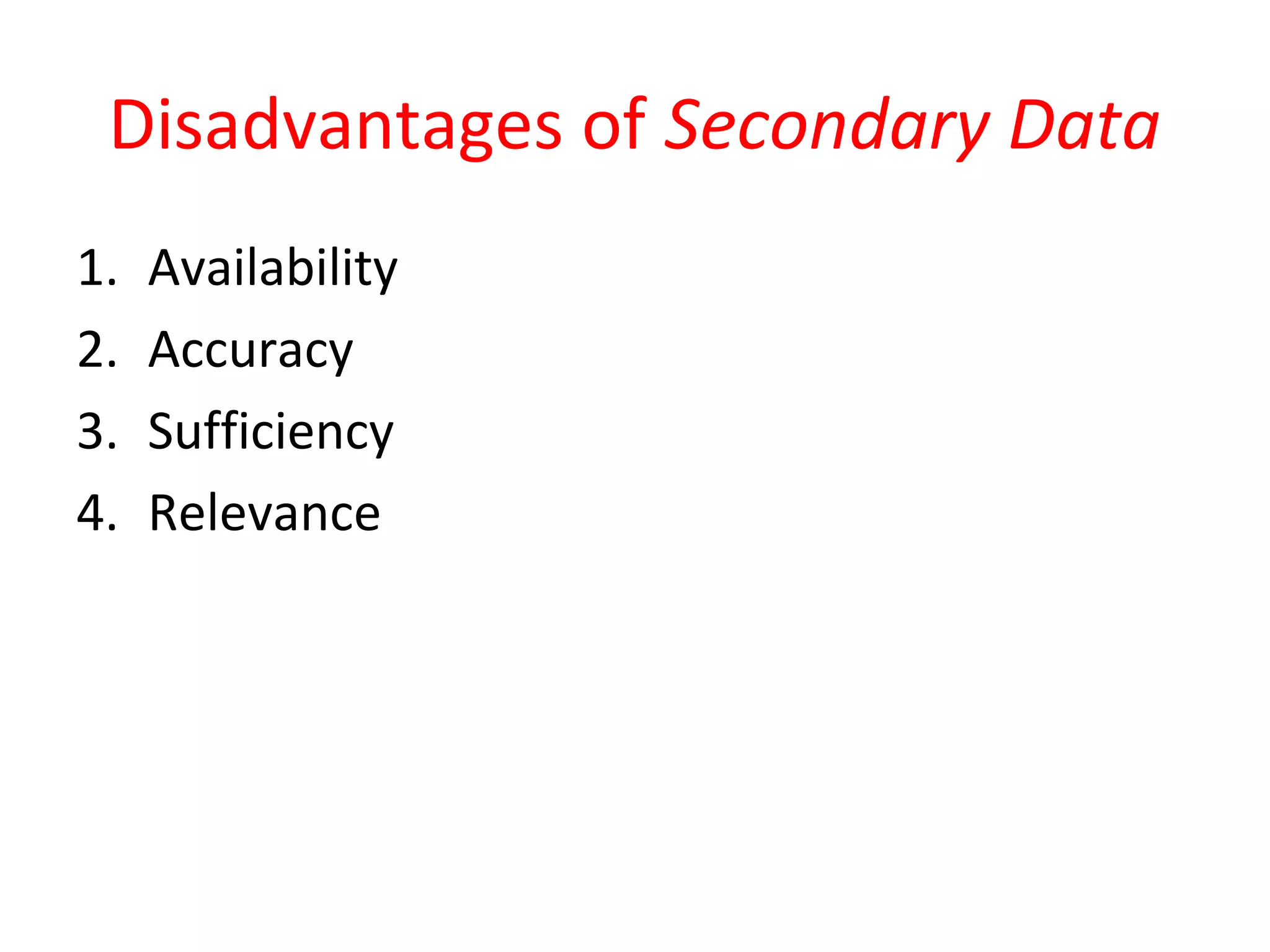
Disadvantages of Secondary Data 
1. Availability 
2. Accuracy 
3. Sufficiency 
4. Relevance
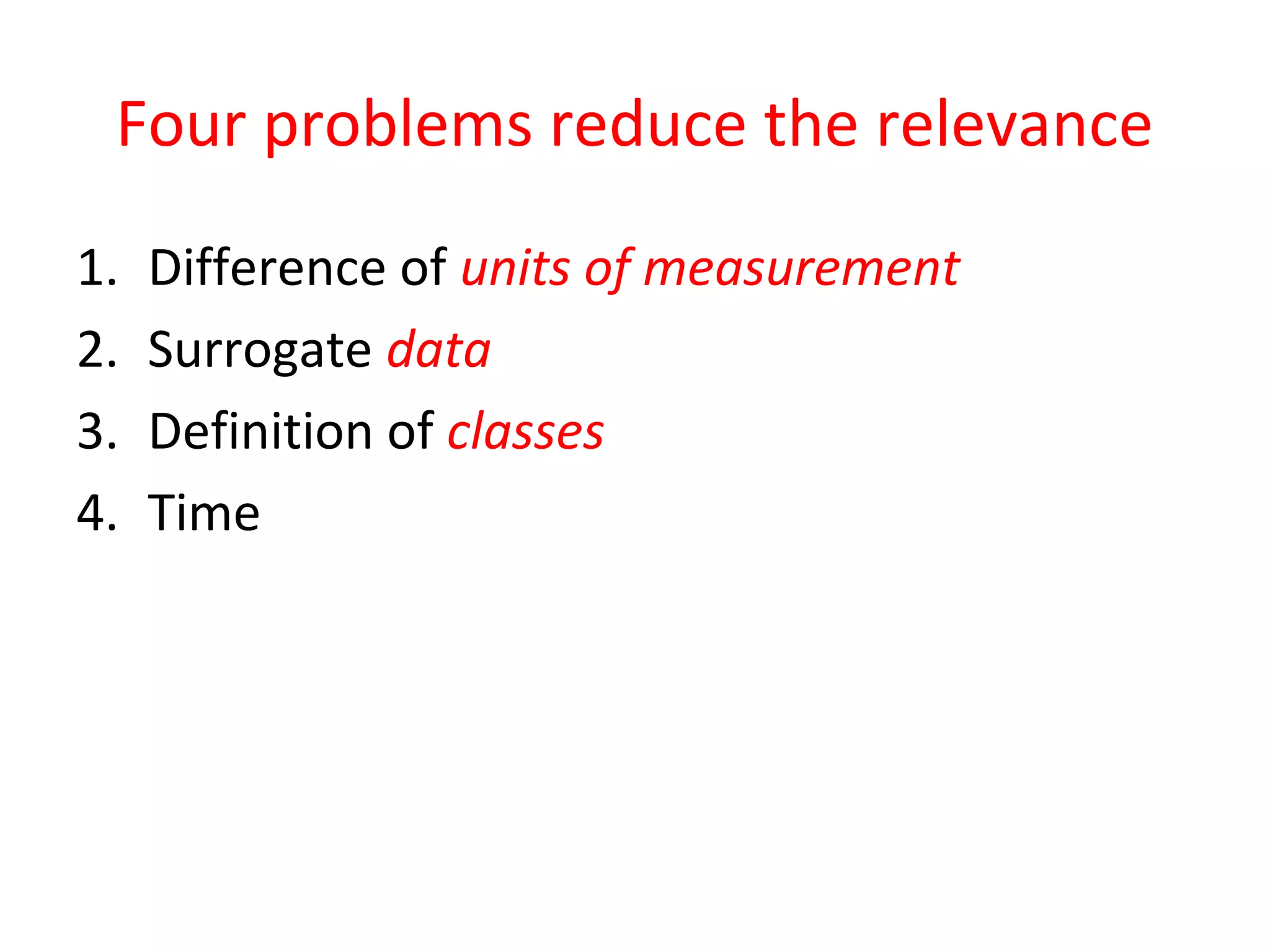
Four problems reduce the relevance 
1. Difference of units of measurement 
2. Surrogate data 
3. Definition of classes 
4. Time
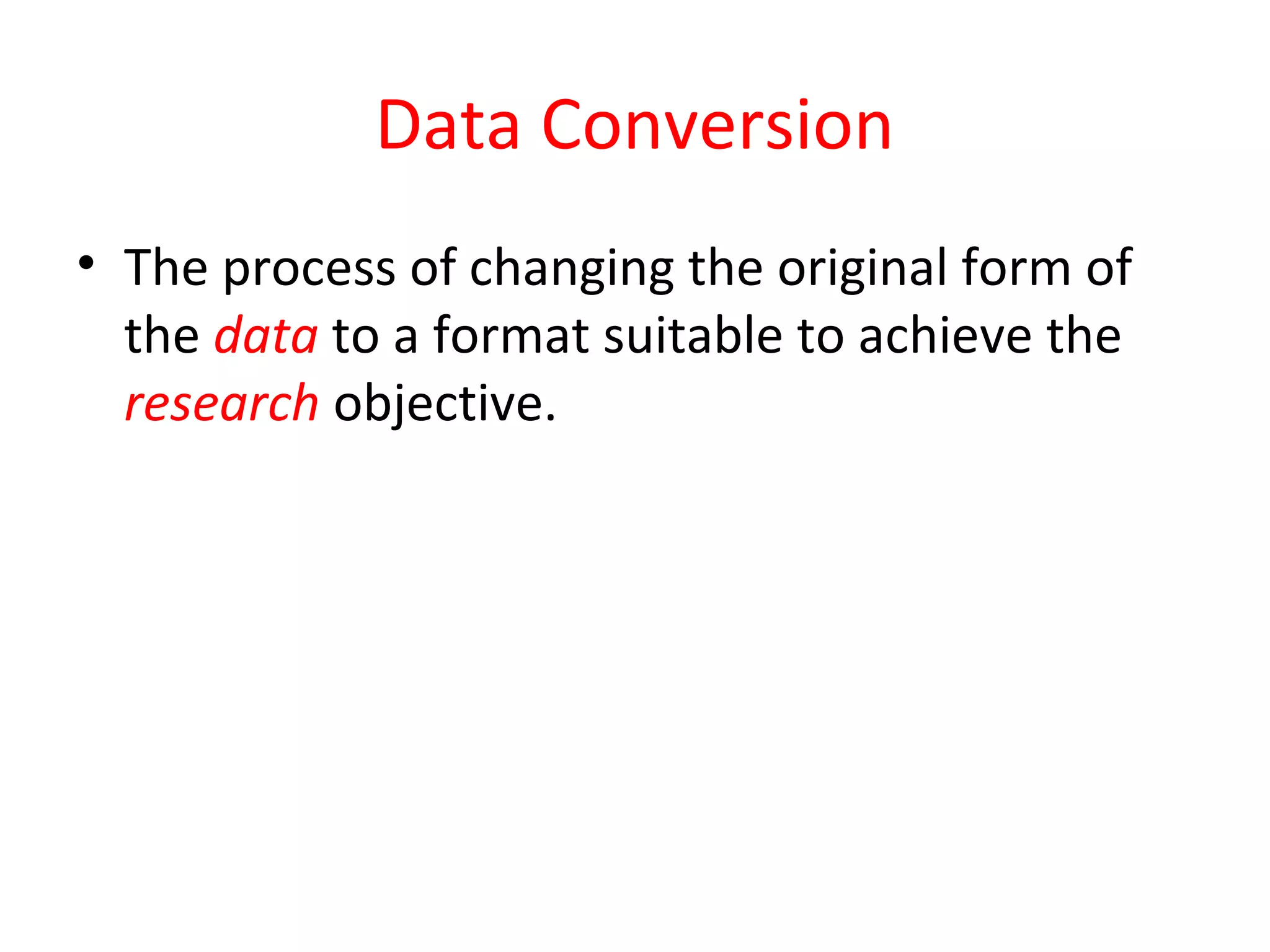
Data Conversion 
• The process of changing the original form of 
the data to a format suitable to achieve the 
research objective.
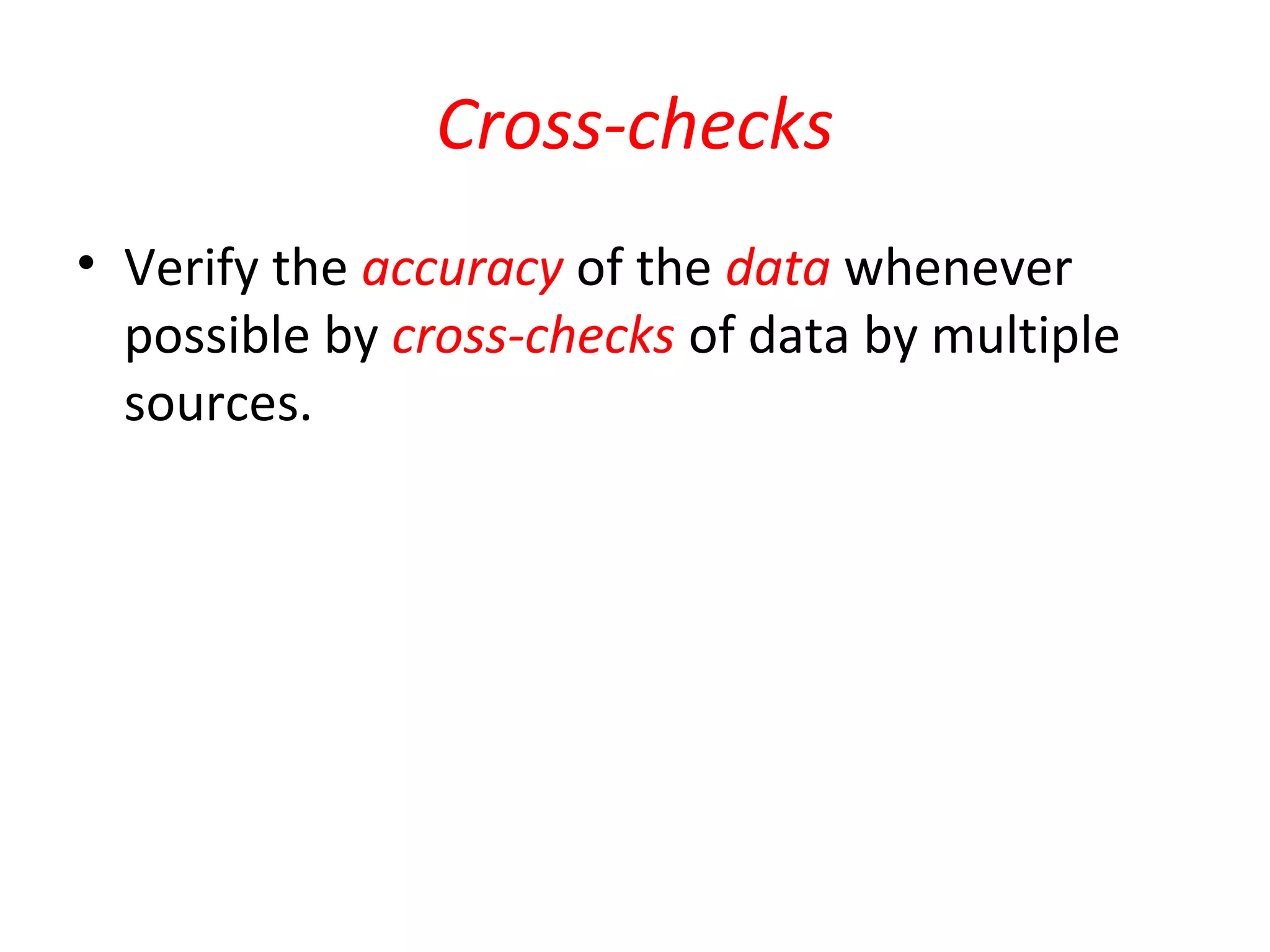
Cross-checks 
• Verify the accuracy of the data whenever 
possible by cross-checks of data by multiple 
sources.
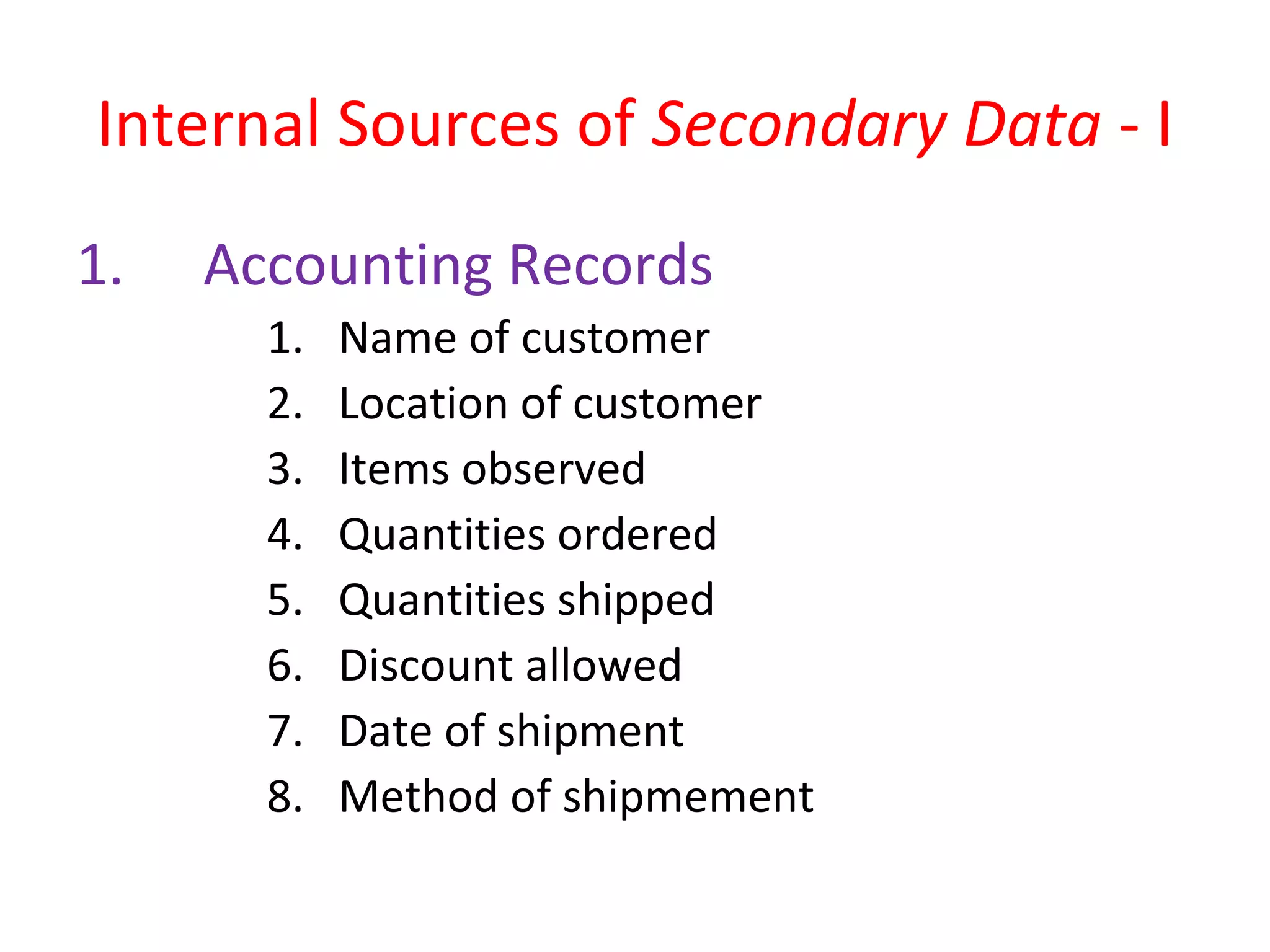
Internal Sources of Secondary Data - I 
1. Accounting Records 
1. Name of customer 
2. Location of customer 
3. Items observed 
4. Quantities ordered 
5. Quantities shipped 
6. Discount allowed 
7. Date of shipment 
8. Method of shipmement
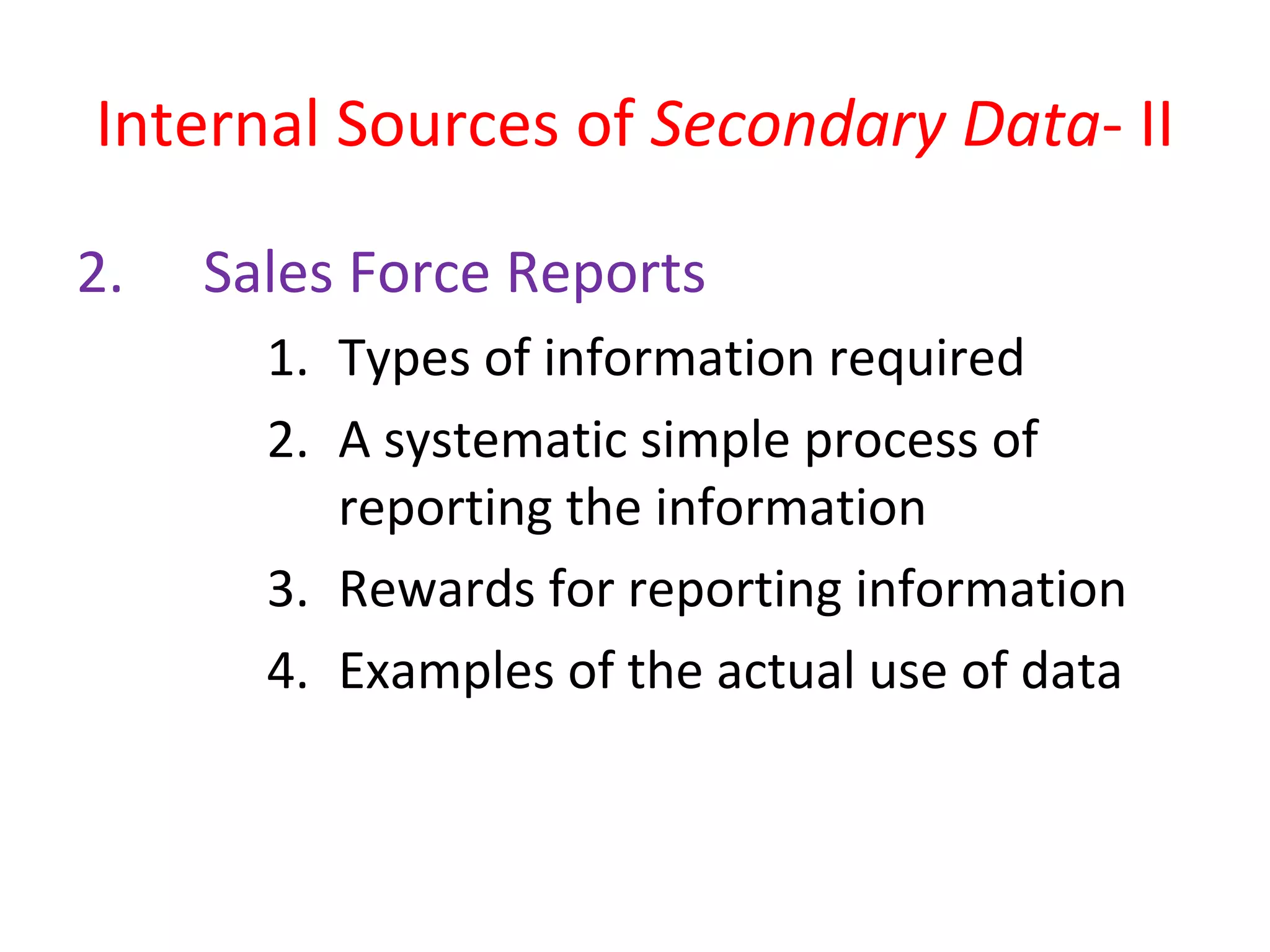
Internal Sources of Secondary Data- II 
2. Sales Force Reports 
1. Types of information required 
2. A systematic simple process of 
reporting the information 
3. Rewards for reporting information 
4. Examples of the actual use of data
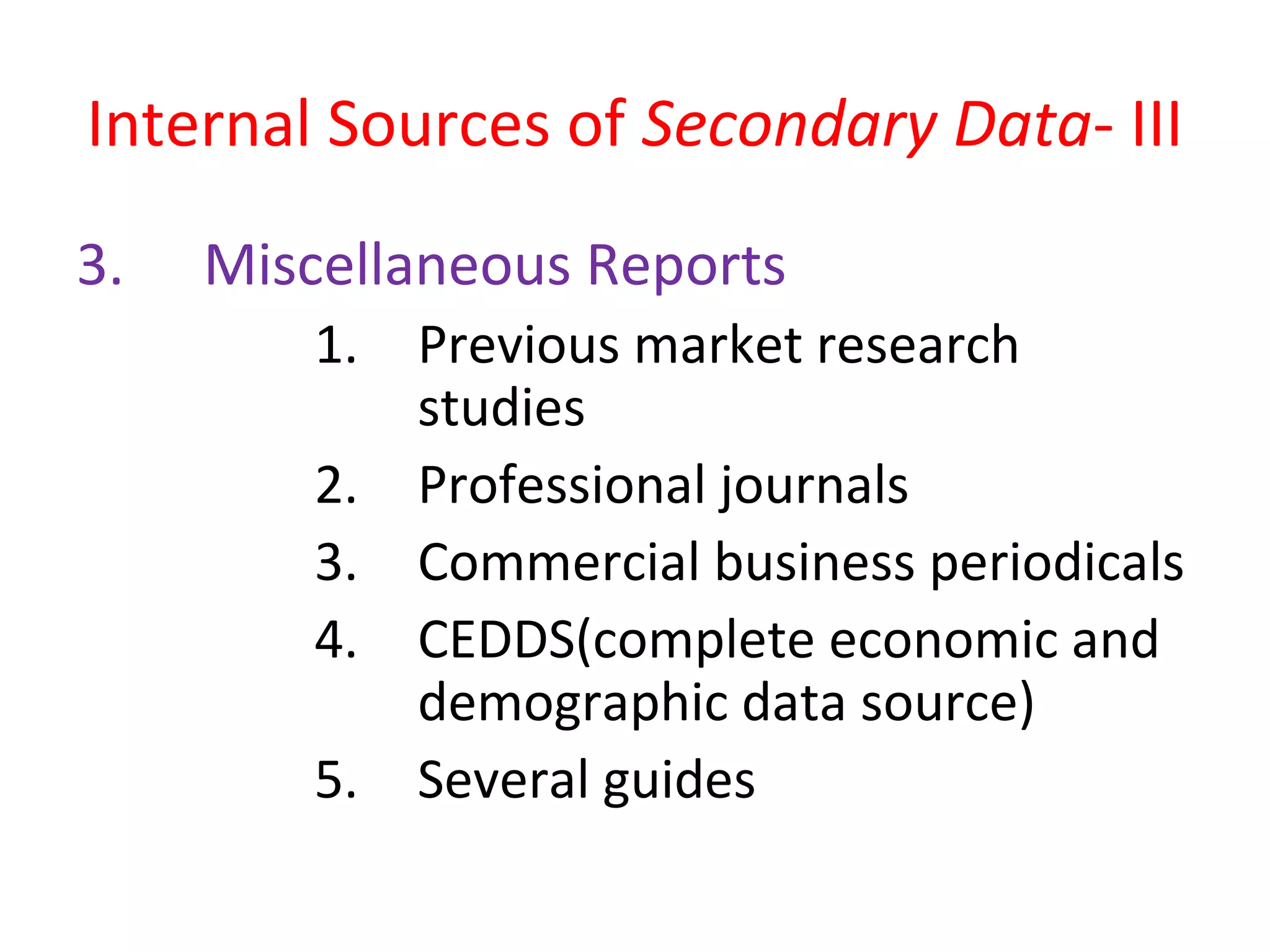
Internal Sources of Secondary Data- III 
3. Miscellaneous Reports 
1. Previous market research 
studies 
2. Professional journals 
3. Commercial business periodicals 
4. CEDDS(complete economic and 
demographic data source) 
5. Several guides
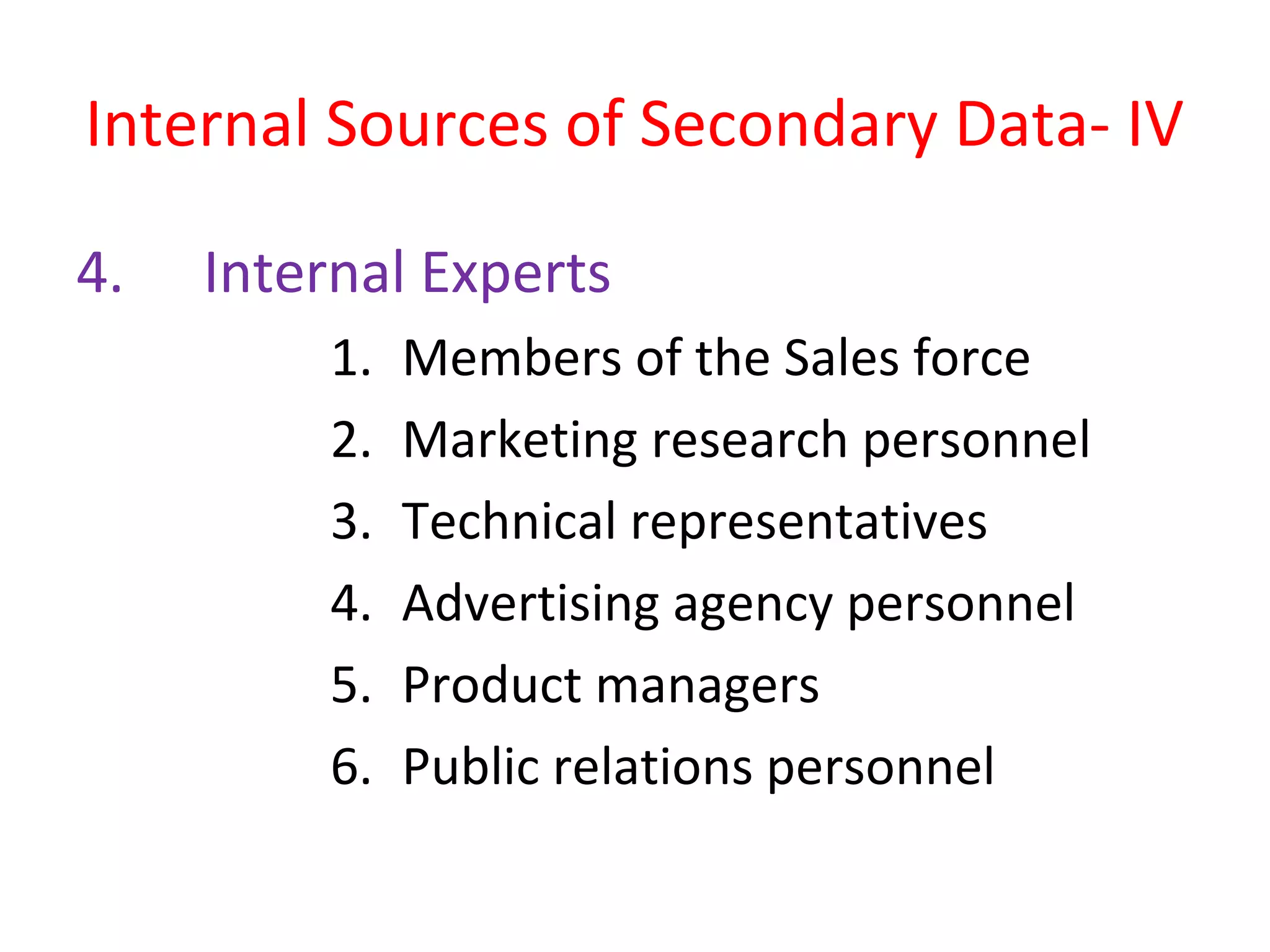
Internal Sources of Secondary Data- IV 
4. Internal Experts 
1. Members of the Sales force 
2. Marketing research personnel 
3. Technical representatives 
4. Advertising agency personnel 
5. Product managers 
6. Public relations personnel
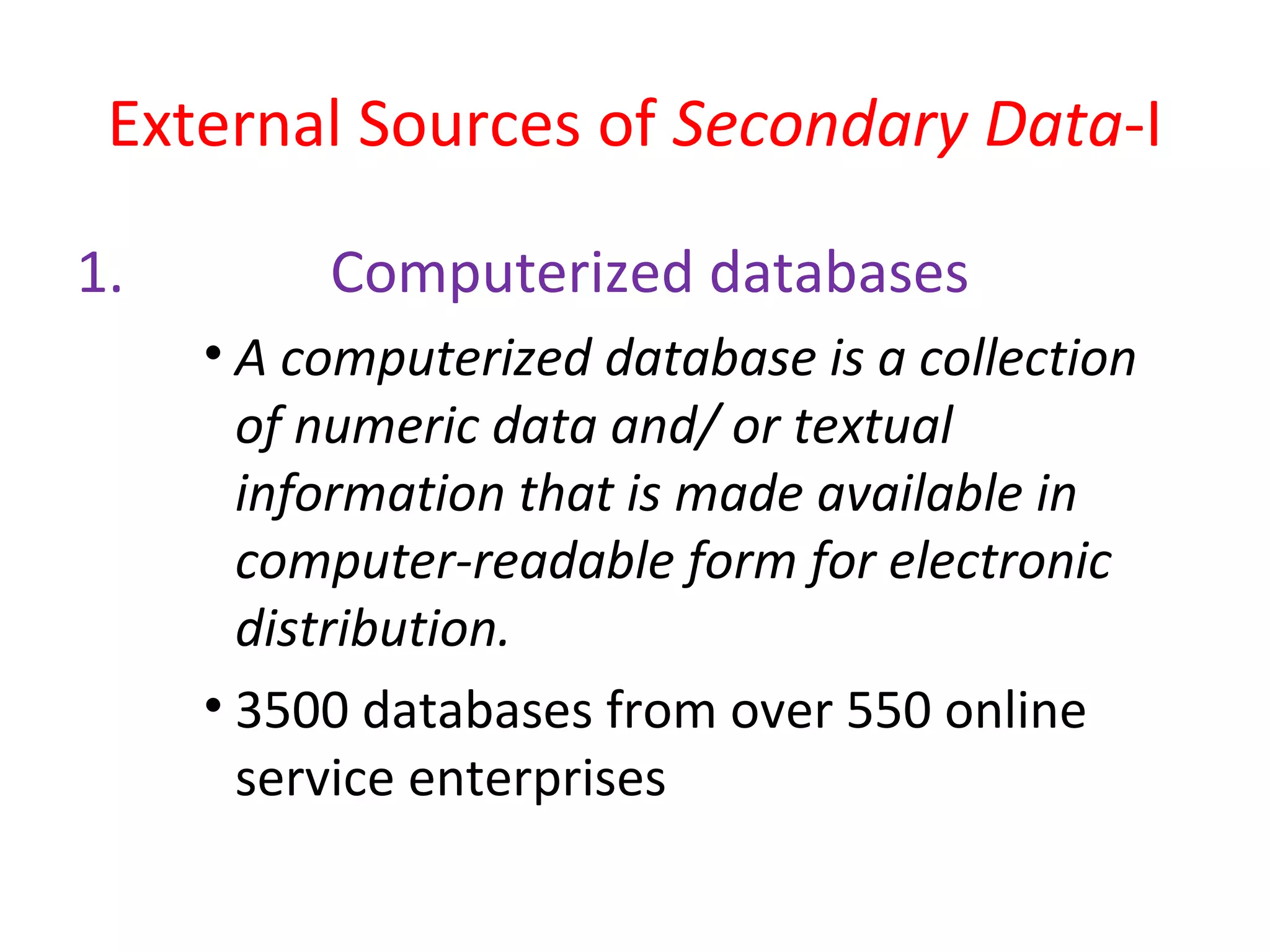
External Sources of Secondary Data-I 
1. Computerized databases 
• A computerized database is a collection 
of numeric data and/ or textual 
information that is made available in 
computer-readable form for electronic 
distribution. 
• 3500 databases from over 550 online 
service enterprises
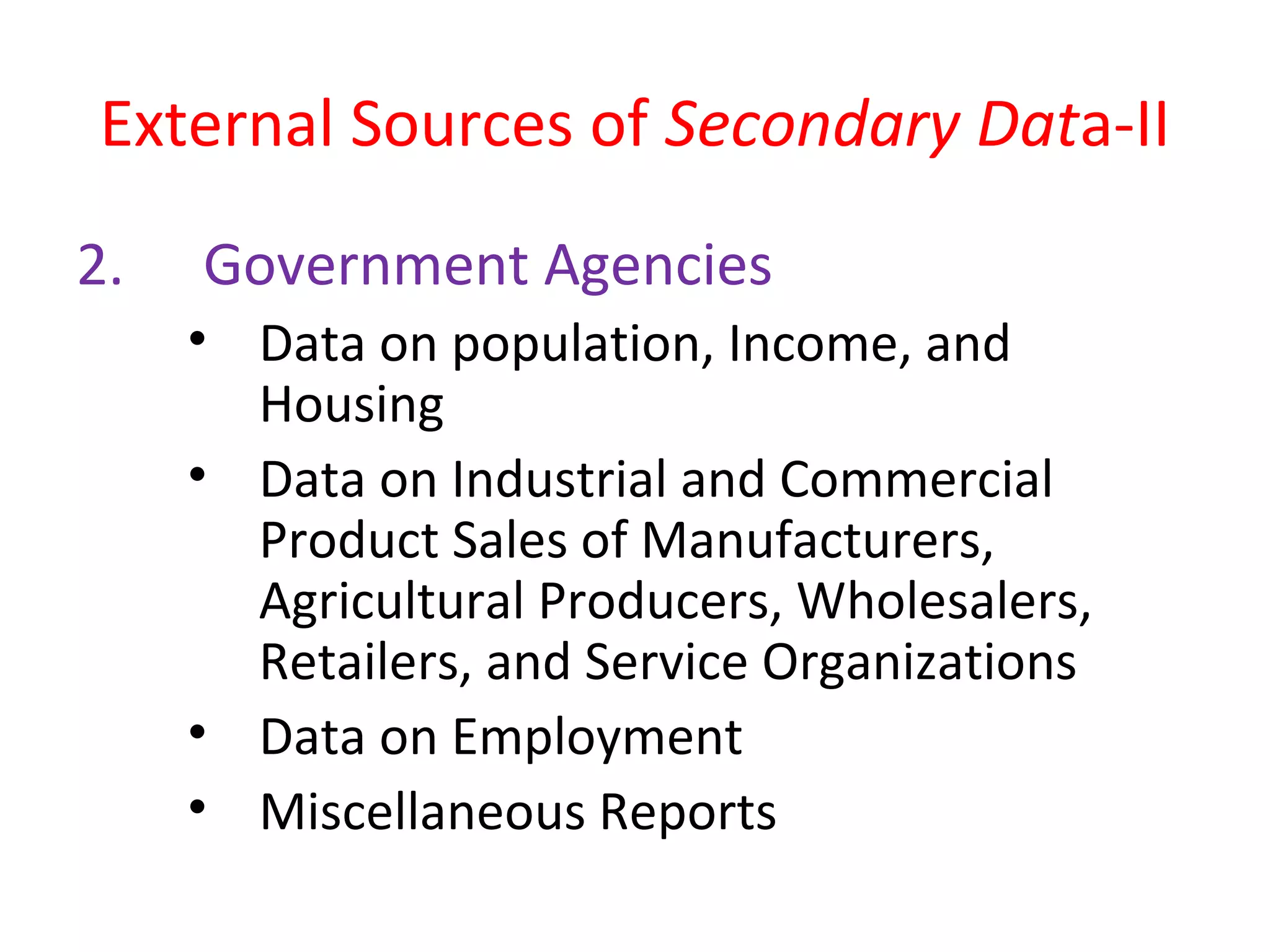
External Sources of Secondary Data-II 
2. Government Agencies 
• Data on population, Income, and 
Housing 
• Data on Industrial and Commercial 
Product Sales of Manufacturers, 
Agricultural Producers, Wholesalers, 
Retailers, and Service Organizations 
• Data on Employment 
• Miscellaneous Reports
External Sources of Secondary Data-III 
3. Syndicated Services 
Data on both consumer and industrial 
markets is collected and sold by 
commercial organizations.
External Sources of Secondary Data-IV 
4. Directories 
1. General industry directory 
2. Specific directories and buyers’ 
guides
External Sources of Secondary Data-V 
5. Other Published Sources 
1. Perodicals 
2. Books 
3. Dissertations 
4. Special reports 
5. Newspapers 
6. Journals
External Sources of Secondary Data-VI 
6. External Experts/Knowledgeable outsiders 
1. People associated with the industry 
2. Trade association officials 
3. Editors and writers for trade and 
business publications 
4. Financial analysists 
5. Government and university 
researchers
Recap
International Secondary Data 
• International secondary data are subject to the 
same advantages and disadvantages as domestic 
secondary data. 
• Many of the disadvantages are multiplied when 
the data involve more than one country. 
• Data availability, recency, accessibility, and 
accuracy vary widely from country to country. 
• Data often reflect political interests. 
• Amount of data depends on the level of 
development.
Internal Sources of International 
Secondary Data 
• Same as for domestic 
• Implementation of global information systems 
• Standardization across countries
External Sources of International 
Secondary Data 
1. Commercial Research Organizations 
2. Databases 
3. Foreign Government Sources 
4. Governments 
5. International Political Organizations 
6. Private databases 
7. Directories/Guides 
8. External Experts
Recap 
1. The sources of research data 
2. Definition of secondary data 
3. Advantages of secondary data 
4. Disadvantages of secondary data 
5. Data Conversion 
6. Cross-checks 
7. Internal sources of secondary data 
8. External sources of secondary data 
9. International secondary data
Assignment 
• Answer all the questions given at page 
number 127 of the book “Marketing Research 
Measurement & Method” by Donald S. Tull 
and Del I. Hawkins.

6) the nature of secondary data

  • 1.
    The Nature ofSecondary Data Internal and External Sources of Secondary Data
  • 2.
    The Sources ofResearch Data 1. Secondary Data 2. Commercial Surveys, Audits, and Panels 3. Survey Research 4. Experimentation 5. Experimental Environment
  • 3.
    Define secondary data • Secondary data are data that were developed for some purpose other than helping to solve the problem at hand. • Secondary data can be used to target potential buyers or for other business applications. • Population characteristics, values and lifestyles.
  • 4.
    Advantages of SecondaryData • It can be gathered quickly and inexpensively. • Such data are already available.
  • 5.
    What do youthink? • If I have seen farther than others, it is because I have stood on the shoulders of giants.
  • 6.
    Disadvantages of SecondaryData 1. Availability 2. Accuracy 3. Sufficiency 4. Relevance
  • 7.
    Four problems reducethe relevance 1. Difference of units of measurement 2. Surrogate data 3. Definition of classes 4. Time
  • 8.
    Data Conversion •The process of changing the original form of the data to a format suitable to achieve the research objective.
  • 9.
    Cross-checks • Verifythe accuracy of the data whenever possible by cross-checks of data by multiple sources.
  • 10.
    Internal Sources ofSecondary Data - I 1. Accounting Records 1. Name of customer 2. Location of customer 3. Items observed 4. Quantities ordered 5. Quantities shipped 6. Discount allowed 7. Date of shipment 8. Method of shipmement
  • 11.
    Internal Sources ofSecondary Data- II 2. Sales Force Reports 1. Types of information required 2. A systematic simple process of reporting the information 3. Rewards for reporting information 4. Examples of the actual use of data
  • 12.
    Internal Sources ofSecondary Data- III 3. Miscellaneous Reports 1. Previous market research studies 2. Professional journals 3. Commercial business periodicals 4. CEDDS(complete economic and demographic data source) 5. Several guides
  • 13.
    Internal Sources ofSecondary Data- IV 4. Internal Experts 1. Members of the Sales force 2. Marketing research personnel 3. Technical representatives 4. Advertising agency personnel 5. Product managers 6. Public relations personnel
  • 14.
    External Sources ofSecondary Data-I 1. Computerized databases • A computerized database is a collection of numeric data and/ or textual information that is made available in computer-readable form for electronic distribution. • 3500 databases from over 550 online service enterprises
  • 15.
    External Sources ofSecondary Data-II 2. Government Agencies • Data on population, Income, and Housing • Data on Industrial and Commercial Product Sales of Manufacturers, Agricultural Producers, Wholesalers, Retailers, and Service Organizations • Data on Employment • Miscellaneous Reports
  • 16.
    External Sources ofSecondary Data-III 3. Syndicated Services Data on both consumer and industrial markets is collected and sold by commercial organizations.
  • 17.
    External Sources ofSecondary Data-IV 4. Directories 1. General industry directory 2. Specific directories and buyers’ guides
  • 18.
    External Sources ofSecondary Data-V 5. Other Published Sources 1. Perodicals 2. Books 3. Dissertations 4. Special reports 5. Newspapers 6. Journals
  • 19.
    External Sources ofSecondary Data-VI 6. External Experts/Knowledgeable outsiders 1. People associated with the industry 2. Trade association officials 3. Editors and writers for trade and business publications 4. Financial analysists 5. Government and university researchers
  • 20.
  • 21.
    International Secondary Data • International secondary data are subject to the same advantages and disadvantages as domestic secondary data. • Many of the disadvantages are multiplied when the data involve more than one country. • Data availability, recency, accessibility, and accuracy vary widely from country to country. • Data often reflect political interests. • Amount of data depends on the level of development.
  • 22.
    Internal Sources ofInternational Secondary Data • Same as for domestic • Implementation of global information systems • Standardization across countries
  • 23.
    External Sources ofInternational Secondary Data 1. Commercial Research Organizations 2. Databases 3. Foreign Government Sources 4. Governments 5. International Political Organizations 6. Private databases 7. Directories/Guides 8. External Experts
  • 24.
    Recap 1. Thesources of research data 2. Definition of secondary data 3. Advantages of secondary data 4. Disadvantages of secondary data 5. Data Conversion 6. Cross-checks 7. Internal sources of secondary data 8. External sources of secondary data 9. International secondary data
  • 25.
    Assignment • Answerall the questions given at page number 127 of the book “Marketing Research Measurement & Method” by Donald S. Tull and Del I. Hawkins.