The Research Design
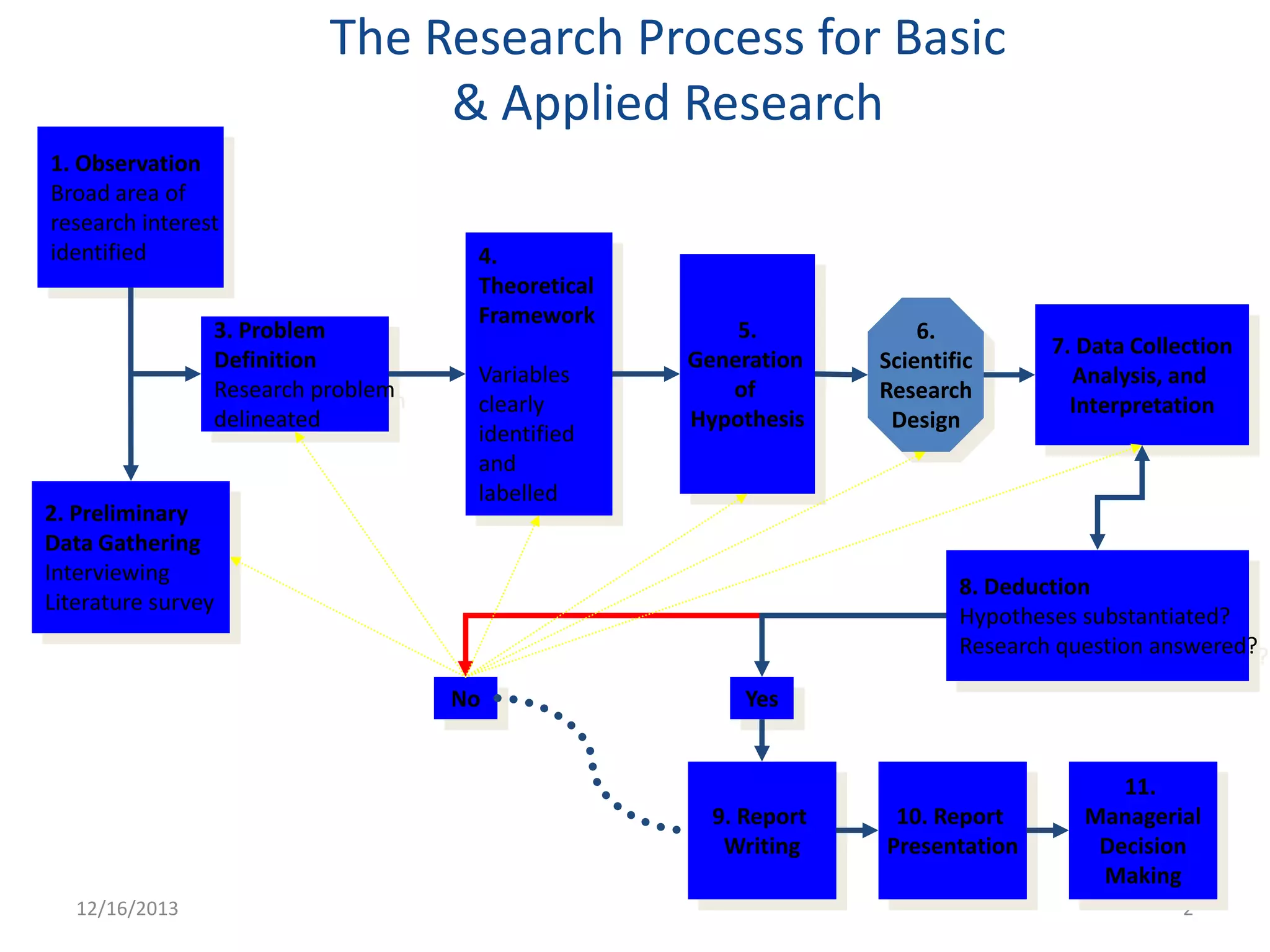
The Research Process for Basic
& Applied Research
1. Observation
Broad area of
research interest
identified
3. Problem
Definition
Research problem
delineated

2. Preliminary
Data Gathering
Interviewing
Literature survey

4.
Theoretical
Framework
Variables
clearly
identified
and
labelled

5.
Generation
of
Hypothesis

7. Data Collection
Analysis, and
Interpretation

8. Deduction
Hypotheses substantiated?
Research question answered?
No

Yes

9. Report
Writing
12/16/2013

6.
Scientific
Research
Design

10. Report
Presentation

11.
Managerial
Decision
Making
2
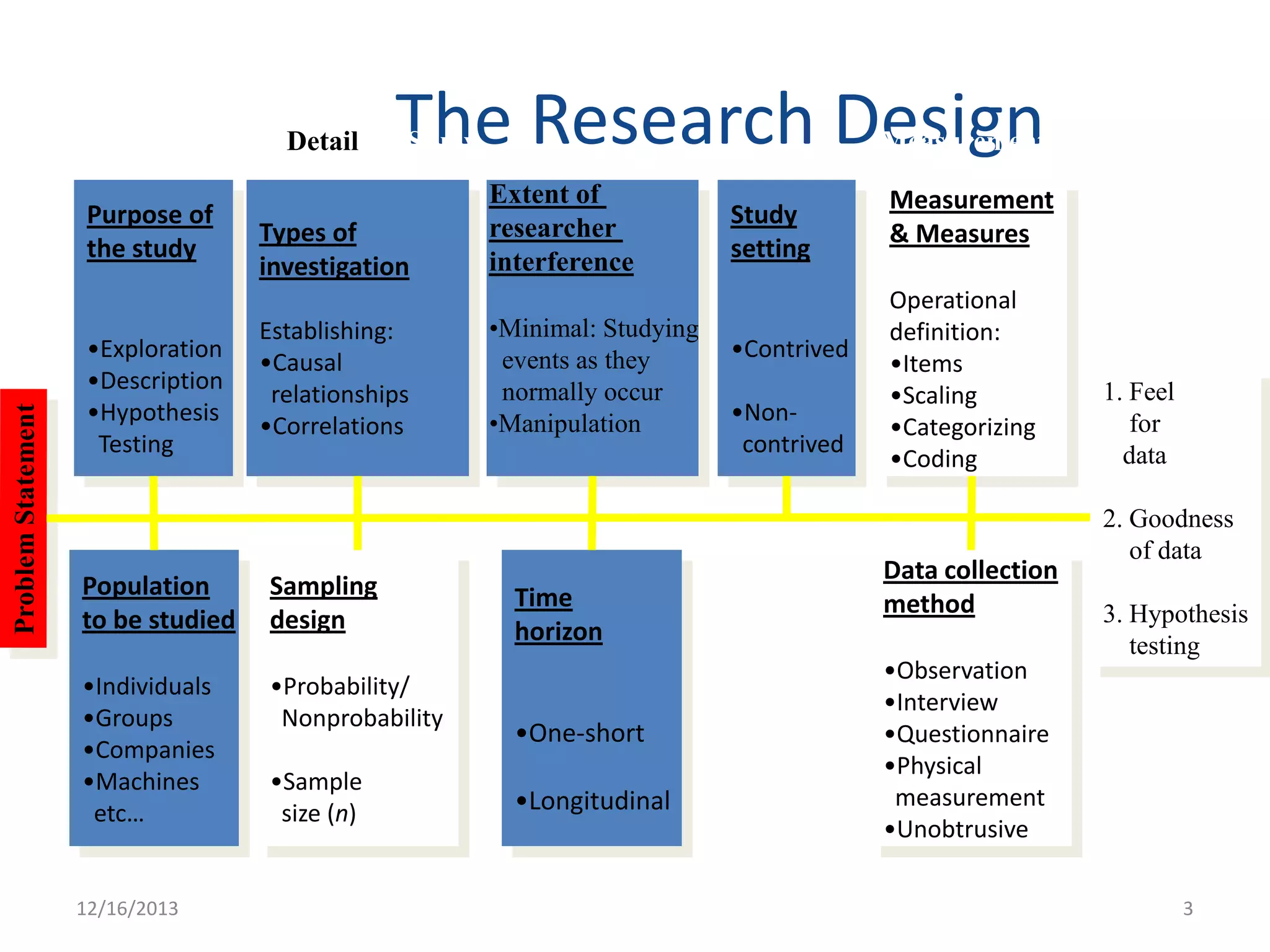
The Research Design

Details of Study
Purpose of
the study

•Exploration
•Description
•Hypothesis
Testing

Types of
investigation
Establishing:
•Causal
relationships
•Correlations

Population
to be studied

Sampling
design

•Individuals
•Groups
•Companies
•Machines
etc…

•Probability/
Nonprobability

12/16/2013

•Sample
size (n)

Measurement

Extent of
researcher
interference
•Minimal: Studying
events as they
normally occur
•Manipulation

Time
horizon

•One-short
•Longitudinal

Study
setting

•Contrived
•Noncontrived

Measurement
& Measures
Operational
definition:
•Items
•Scaling
•Categorizing
•Coding

Data collection
method
•Observation
•Interview
•Questionnaire
•Physical
measurement
•Unobtrusive

Data
Analysis
1. Feel
for
data
2. Goodness
of data
3. Hypothesis
testing

3
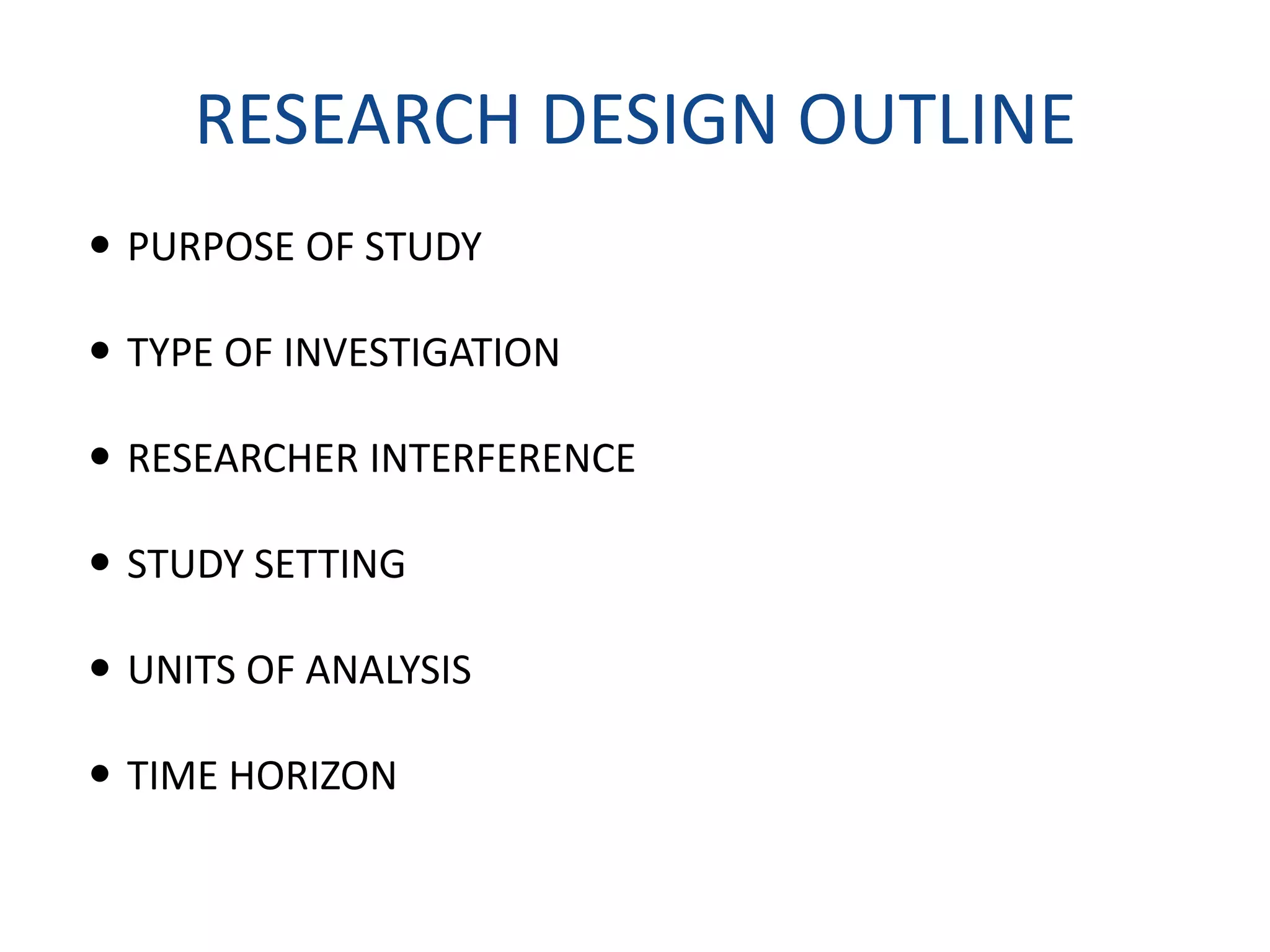
RESEARCH DESIGN OUTLINE
 PURPOSE OF STUDY
 TYPE OF INVESTIGATION
 RESEARCHER INTERFERENCE
 STUDY SETTING
 UNITS OF ANALYSIS

 TIME HORIZON
1. PURPOSE OF STUDY
• EXPLORATORY Study
– Situation unknown
– Preliminary Information for comprehensive study
– Example: Ethical values of different Cultures to
manage workforce diversity
– Focus groups and comprehensive interviews are
appropriate
1. PURPOSE OF STUDY
• DESCRIPTIVE STUDY:
to describe features of a variable
Goal is to offer a profile of the relevant aspects of the
phenomena of interest from an individual, organizational,
industry oriented or other perspective.
Understand characteristics
Think systematically
offer ideas for further probe and research
helps in decision making
Quantitative data in terms of frequencies, means, percentages
and standard deviations are necessary.
12/16/2013

6
1. PURPOSE OF STUDY
• TESTING HYPOTHESIS
– explain nature of relationships, differences and
interdependences among factors
– e.g: sales volume –promotion efforts

• CASE STUDY
– conceptual analysis of similar situations for
generalization
– Difficult to find same type of problem in
comparable setting.
2. TYPE OF INVESTIGATION
• CAUSAL RELATIONSHIP:
– establish definite cause of a problem
– e.g: does smoking causes cancer?

• CORELATION:
identify important factors associated with problem
e.g.: are smoking and cancer related?
3.RESEARCHER INTERFERENCE
• minimal if study in natural setting e.g: training
effectiveness based on data
• manipulation, control or simulation: analyst
controls variables e.g.effect of light on worker
output
4.STUDY SETTING
• NON CONTRIVED
– natural setting-field experiment

– e.g are the rates of interest related to extent of deposits?
• CONTRIVED
– Controlled settings

– independent variable changed to see effect on dependant
–lab experiment e.g.to study relationship of rate of interest
on inclination to save the rates of interest in various
branches are changed
4.STUDY SETTING
• Field Study
– Non-contrived setting as no changes were made

• Field Experiment
– Some factors are manipulated

• Lab Experiment
– Contrived settings and maximum interferences

12/16/2013

11
5. UNITS OF ANALYSIS
• INDIVIDUALS:
e.g: study motivation of employees
• DYADS:
interaction of supervisor-subordinate pair
• GROUP:
e.g: pattern of misuse by various departments
• ORGANIZATIONS:
e.g: Differnces among functions of management in
various organizations
• CULTURES:
e.g. nations as unit of analysis
6. TIME HORIZON
• CROSS SECTIONAL:
one shot study-one time or period e.g data
study of stock market april-june
• LONGITUDINAL:
study of information at more than one period of
time e.g: change in behavior of employees
before and after management change

5. the research design

  • 1.
  • 2.
    The Research Processfor Basic & Applied Research 1. Observation Broad area of research interest identified 3. Problem Definition Research problem delineated 2. Preliminary Data Gathering Interviewing Literature survey 4. Theoretical Framework Variables clearly identified and labelled 5. Generation of Hypothesis 7. Data Collection Analysis, and Interpretation 8. Deduction Hypotheses substantiated? Research question answered? No Yes 9. Report Writing 12/16/2013 6. Scientific Research Design 10. Report Presentation 11. Managerial Decision Making 2
  • 3.
    The Research Design Detailsof Study Purpose of the study •Exploration •Description •Hypothesis Testing Types of investigation Establishing: •Causal relationships •Correlations Population to be studied Sampling design •Individuals •Groups •Companies •Machines etc… •Probability/ Nonprobability 12/16/2013 •Sample size (n) Measurement Extent of researcher interference •Minimal: Studying events as they normally occur •Manipulation Time horizon •One-short •Longitudinal Study setting •Contrived •Noncontrived Measurement & Measures Operational definition: •Items •Scaling •Categorizing •Coding Data collection method •Observation •Interview •Questionnaire •Physical measurement •Unobtrusive Data Analysis 1. Feel for data 2. Goodness of data 3. Hypothesis testing 3
  • 4.
    RESEARCH DESIGN OUTLINE PURPOSE OF STUDY  TYPE OF INVESTIGATION  RESEARCHER INTERFERENCE  STUDY SETTING  UNITS OF ANALYSIS  TIME HORIZON
  • 5.
    1. PURPOSE OFSTUDY • EXPLORATORY Study – Situation unknown – Preliminary Information for comprehensive study – Example: Ethical values of different Cultures to manage workforce diversity – Focus groups and comprehensive interviews are appropriate
  • 6.
    1. PURPOSE OFSTUDY • DESCRIPTIVE STUDY: to describe features of a variable Goal is to offer a profile of the relevant aspects of the phenomena of interest from an individual, organizational, industry oriented or other perspective. Understand characteristics Think systematically offer ideas for further probe and research helps in decision making Quantitative data in terms of frequencies, means, percentages and standard deviations are necessary. 12/16/2013 6
  • 7.
    1. PURPOSE OFSTUDY • TESTING HYPOTHESIS – explain nature of relationships, differences and interdependences among factors – e.g: sales volume –promotion efforts • CASE STUDY – conceptual analysis of similar situations for generalization – Difficult to find same type of problem in comparable setting.
  • 8.
    2. TYPE OFINVESTIGATION • CAUSAL RELATIONSHIP: – establish definite cause of a problem – e.g: does smoking causes cancer? • CORELATION: identify important factors associated with problem e.g.: are smoking and cancer related?
  • 9.
    3.RESEARCHER INTERFERENCE • minimalif study in natural setting e.g: training effectiveness based on data • manipulation, control or simulation: analyst controls variables e.g.effect of light on worker output
  • 10.
    4.STUDY SETTING • NONCONTRIVED – natural setting-field experiment – e.g are the rates of interest related to extent of deposits? • CONTRIVED – Controlled settings – independent variable changed to see effect on dependant –lab experiment e.g.to study relationship of rate of interest on inclination to save the rates of interest in various branches are changed
  • 11.
    4.STUDY SETTING • FieldStudy – Non-contrived setting as no changes were made • Field Experiment – Some factors are manipulated • Lab Experiment – Contrived settings and maximum interferences 12/16/2013 11
  • 12.
    5. UNITS OFANALYSIS • INDIVIDUALS: e.g: study motivation of employees • DYADS: interaction of supervisor-subordinate pair • GROUP: e.g: pattern of misuse by various departments • ORGANIZATIONS: e.g: Differnces among functions of management in various organizations • CULTURES: e.g. nations as unit of analysis
  • 13.
    6. TIME HORIZON •CROSS SECTIONAL: one shot study-one time or period e.g data study of stock market april-june • LONGITUDINAL: study of information at more than one period of time e.g: change in behavior of employees before and after management change