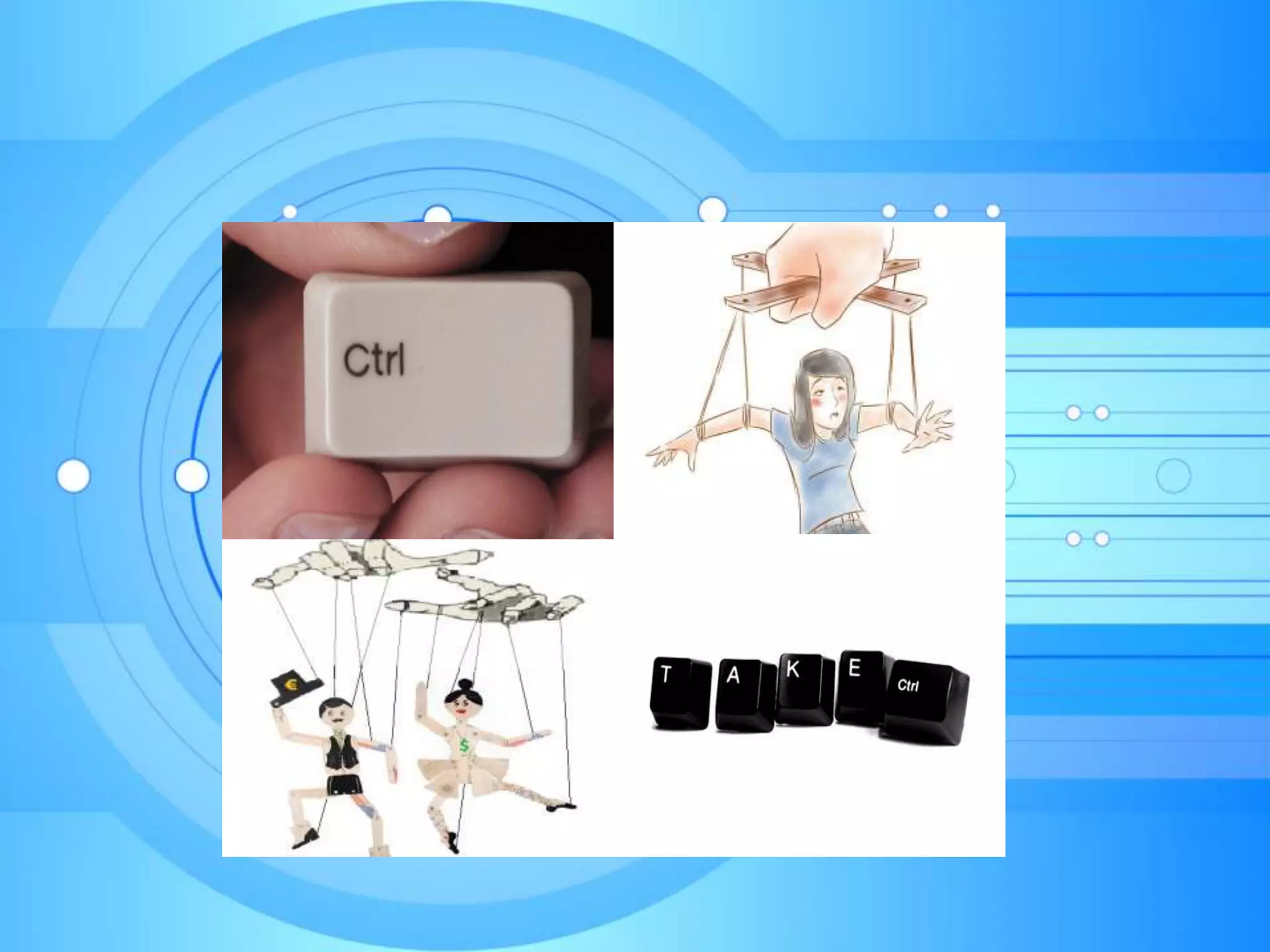
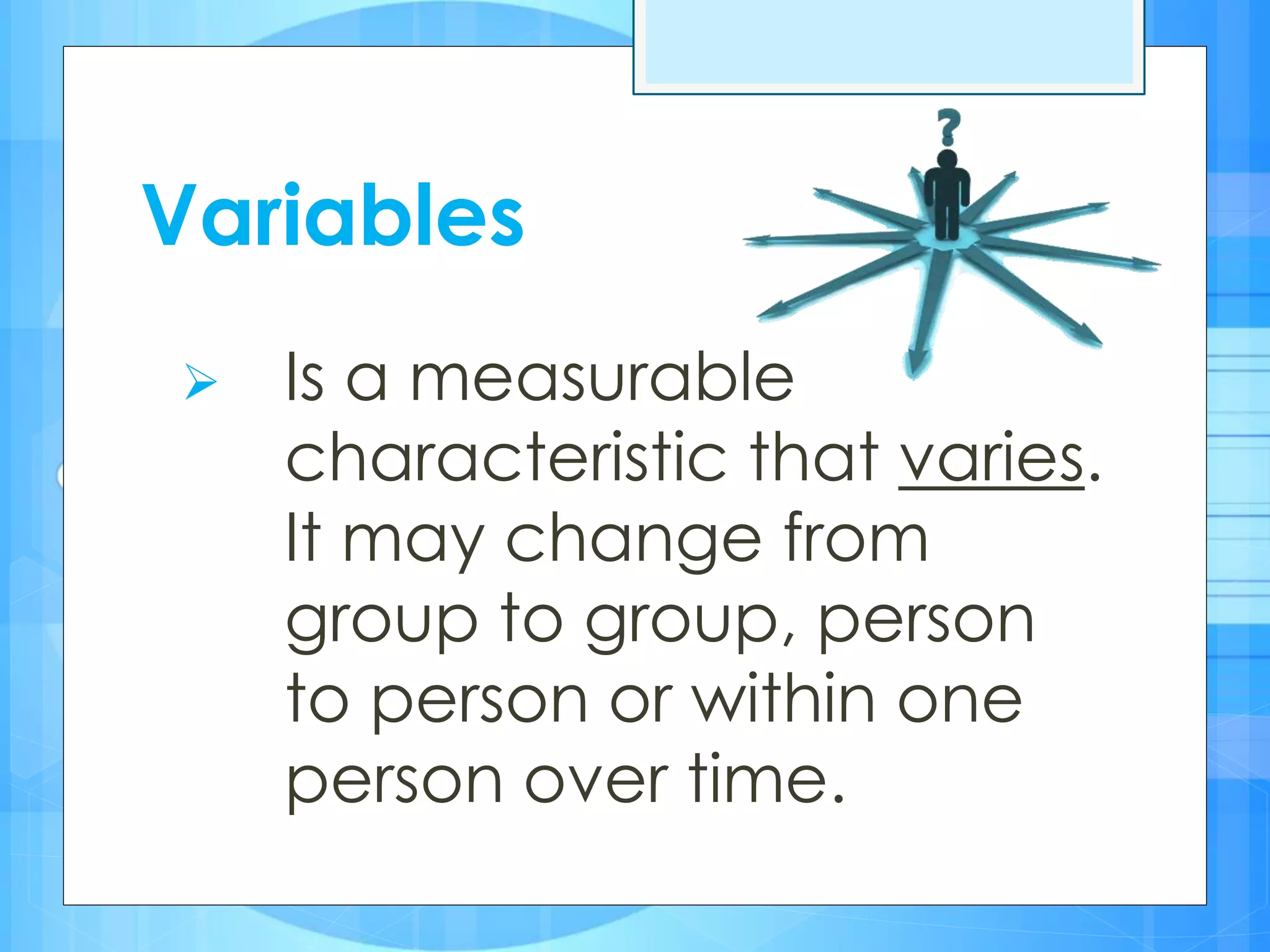
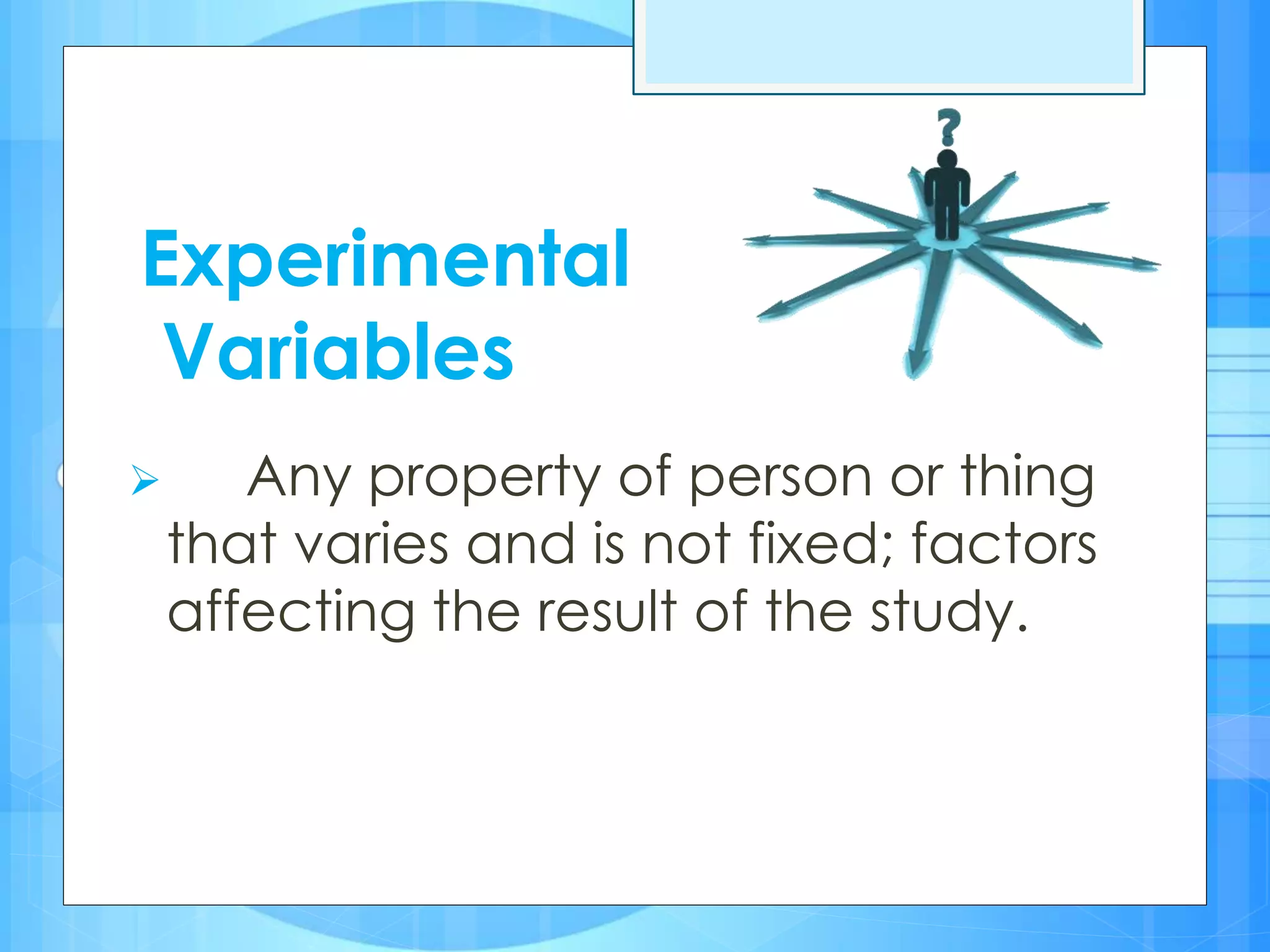
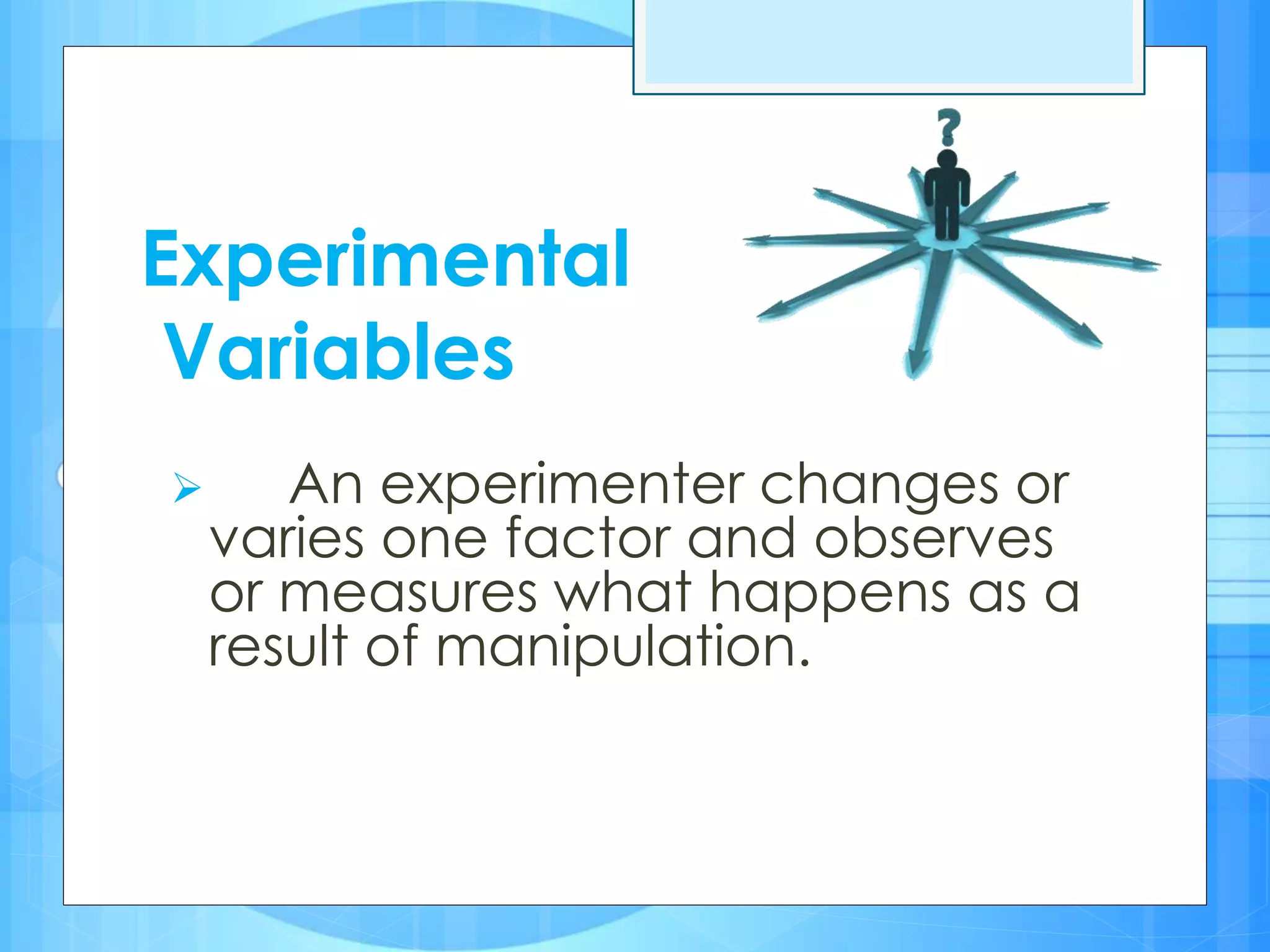
What’s missing?
“CHANGE
IS THE
ONLY
THING
THAT IS
________
IN
THIS
WORLD.”
“CHANGE
IS THE
ONLY
THING
THAT IS
CONSTANT
IN
THIS
WORLD.”
“SUCCESS IS __________ ON EFFORT.”
-Sophocoles
“SUCCESS IS DEPENDENT ON EFFORT.”
-Sophocoles
‘Cause all I know is we said HELLO & your eyes looks like coming home
All I know is a simple name and EVERYTHING HAS __________.
‘Cause all I know is we said HELLO & your eyes looks like coming home
All I know is a simple name and EVERYTHING HAS CHANGED.
Guess what?
INDEPENDENT
VARIABLES
Malene Ysses Ortiz, Zion-Grace Rosareal, Catherine Trespuentes
Variables
 Is a measurable
characteristic that varies.
It may change from
group to group, person
to person or within one
person over time.
Experimental
Variables
 Any property of person or thing
that varies and is not fixed; factors
affecting the result of the study.
Experimental
Variables
 An experimenter changes or
varies one factor and observes
or measures what happens as a
result of manipulation.
Types of
Variables
Independent
Variable
 the factor that is varied or
manipulated.
 the “assumed cause” of a
problem.
There can be only one
independent variable in an
experiment.
 This is the factor manipulated
by the researcher, and it produces
one or more results, known
as dependent variables.
Independent
Variable
Independent
Variable
 If a scientist conducts an experiment to test
the theory that a vitamin could extend a person’s
life-expectancy, then:
The independent variable is the amount of
vitamin that is given to the subjects within
the experiment. This is controlled by the
experimenting scientist.
Dependent
Variable
 The factor that is measured or
observed; the change that is
brought about or is effected by
the change in the independent
variable.
 the “assumed effect” of another
variable.
 If a scientist conducts an experiment to
test the theory that a vitamin could extend a
person’s life-expectancy, then:
Dependent
Variable
The dependent variable, or the variable
being affected by the independent
variable, is the life span.
Controlled
Variable
 The factor that is kept
constant all throughout the
experiment.
Controlled
Variable
Are not measured in a particular study. Must be held
constant so they will not have biasing effect on the other
variables.
Intervening
Variables
 Are abstract processes that
are not directly observable but
that link the independent and
dependent variables.
 In language learning and teaching, they are
usually inside the subject’s heads, including
various language learning processes which the
researcher cannot observe.
For example, if the use of a particular teaching technique
is the independent variable and the mastery of the
objectives is the dependent variable, then the language
learning processes used by the subjects are intervening
variables.
Moderator
Variables
 Affect the relationship between
the independent and dependent
variables by modifying the effect the
effect of the intervening variable(s).
Typical moderator variables in TESL and language
acquisition research (when they are not the major
focus of the study) include the sex, age, culture or
language proficiency of the subjects.
Extraneous
Variables
 are factors in the research
environment which may have
an effect on the dependent
variable(s) but which are not
controlled.
Extraneous variables are dangerous.
They may damage a study’s validity,
making it possible to know whether the
effect were caused by the independent
and moderator variables or some
extraneous factor.
Extraneous
Variables
If they cannot be controlled,
extraneous variables must at least
be taken into consideration when
interpreting results.
THANK
YOU! :D
Resources:
 http://linguistics.byo.edu/faculty/henrichs
enl/ResearchMethods/RM_2_14.html
 http://study.com/academy/lessons
/research-variables-dependent-
independent-control-extraneous-
moderator.html
 Research Guide For High School Students
(compiled and prepared by Mr. Russel N. Gorre)

Research Variables