BIOSYNTHESIS OF
CHOLESTEROL
PREPARED BY; MISS RABIA KHAN BABER
COURSE TITLE : BIOCHEMISTRY
LEARNING OBJECTIVES OF PPT
CHOLESTROL
METABOLISM
STRUCTURE
METABOLISM
AND
BIOSYNTHESIS
VARIATIONIN
SERUM
UTILIZATION
DEGREDATION
REGULATION
FUNCTIONS
AND SOURCES
INTRODUCTION TO
CHOLESTROL METABOLISM
Cholesterol is the major sterol in the animal tissues.
Cholesterol is present in tissues and in plasma either as
free cholesterol or as a storage form, combined with a
long-chain fatty acid as cholesteryl ester.
In plasma, both forms are transported in lipoproteins
removed from tissues by plasma high-density
lipoprotein (HDL) and transported to the liver, where it
is eliminated from the body either unchanged or after
conversion to bile acids in the process known as reverse
cholesterol transport
STRUCTURE OF
CHOLESTROL
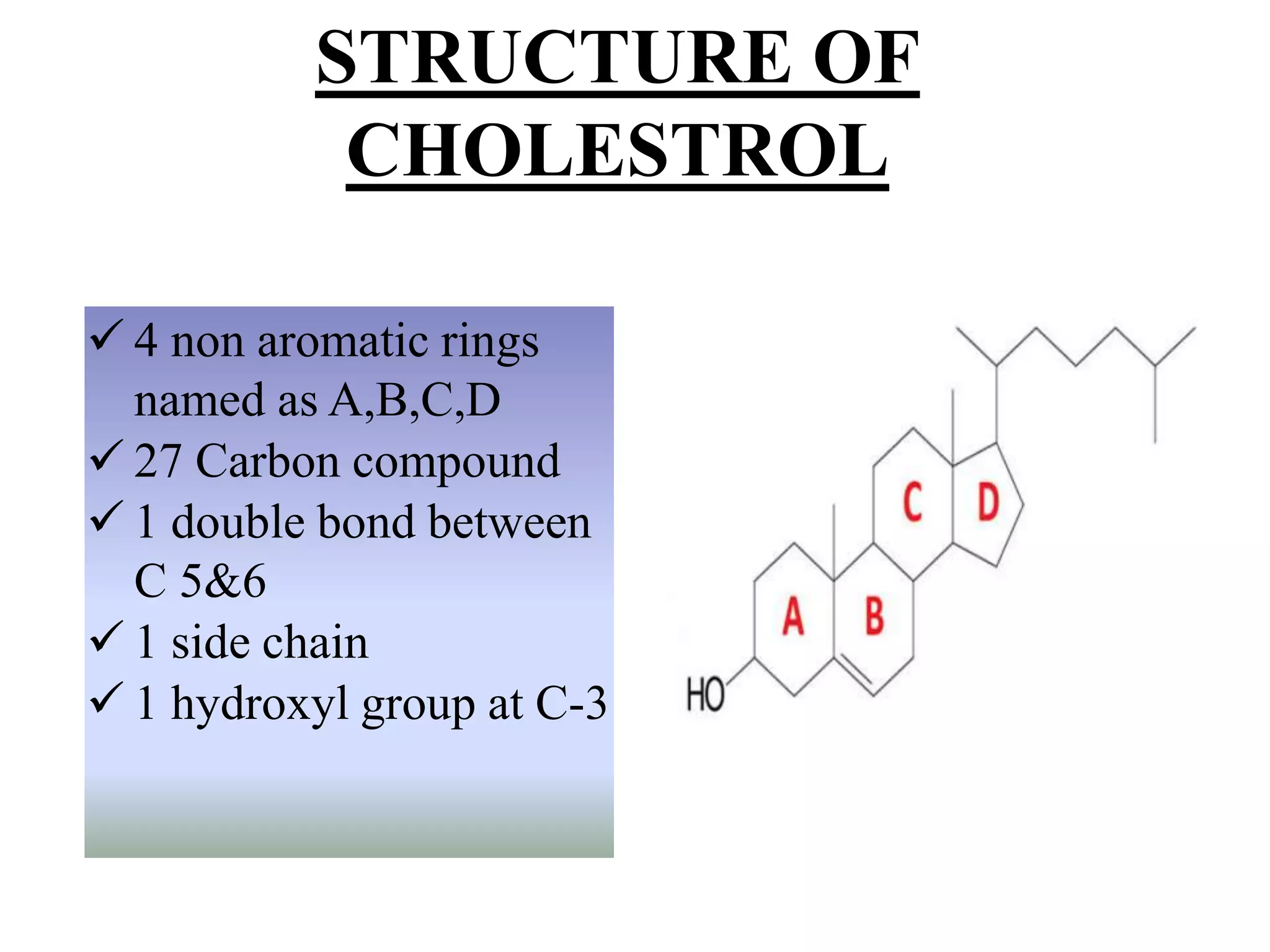
 4 non aromatic rings
named as A,B,C,D
 27 Carbon compound
 1 double bond between
C 5&6
 1 side chain
 1 hydroxyl group at C-3
SOURCES OF CHOLESTROL
Cholesterol is derived from
Diet
 De novo synthesis
From the hydrolysis of cholesteryl esters
The liver and intestine account for approximately
10% each of total synthesis in humans.
Virtually all tissues containing nucleated cells are
capable of cholesterol synthesis, which occurs in
the endoplasmic reticulum and the cytosol.
FUNCTIONS OF
CHOLESTROL
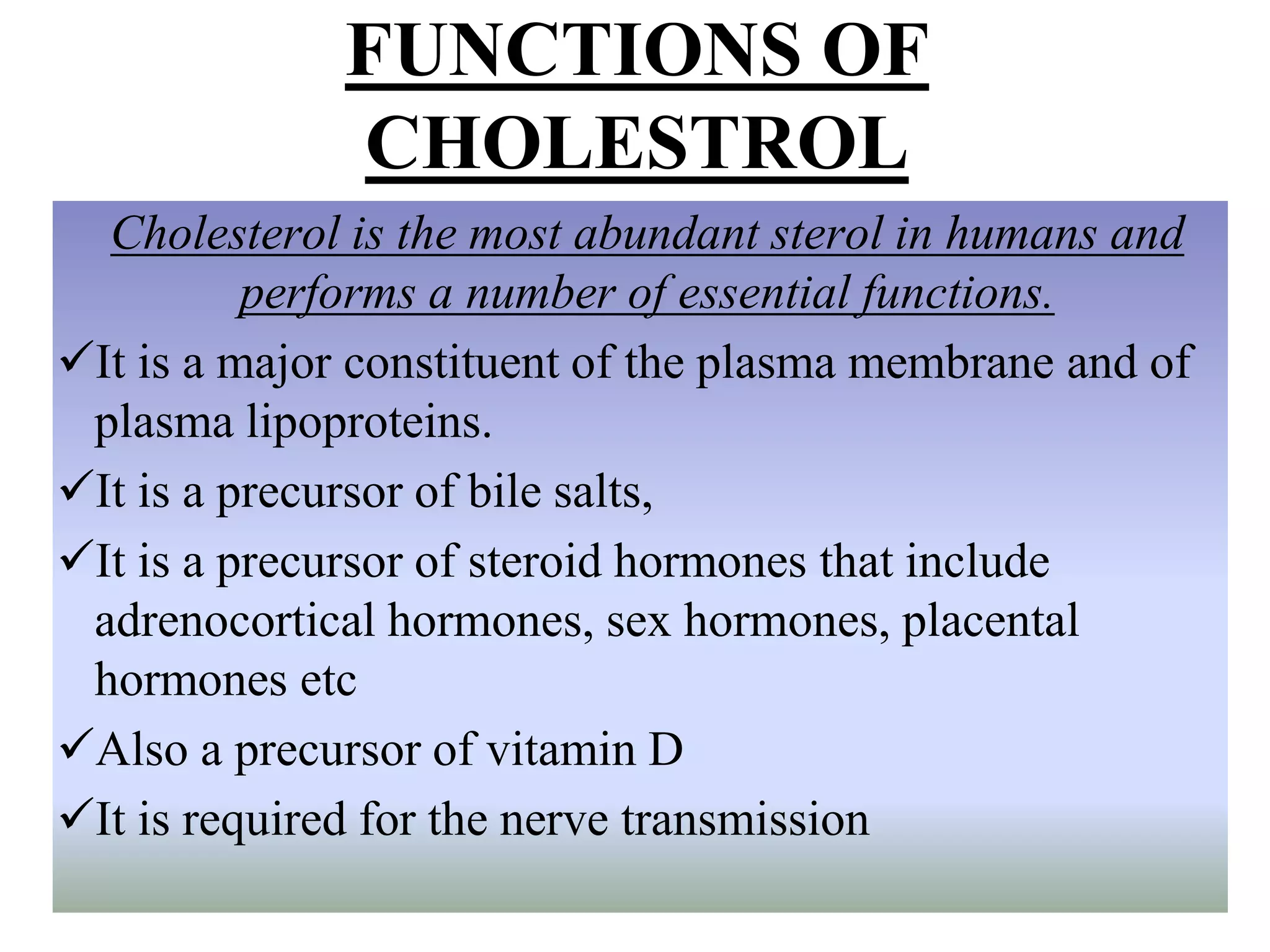
Cholesterol is the most abundant sterol in humans and
performs a number of essential functions.
It is a major constituent of the plasma membrane and of
plasma lipoproteins.
It is a precursor of bile salts,
It is a precursor of steroid hormones that include
adrenocortical hormones, sex hormones, placental
hormones etc
Also a precursor of vitamin D
It is required for the nerve transmission
STEROID HORMONE
PRODUCTION
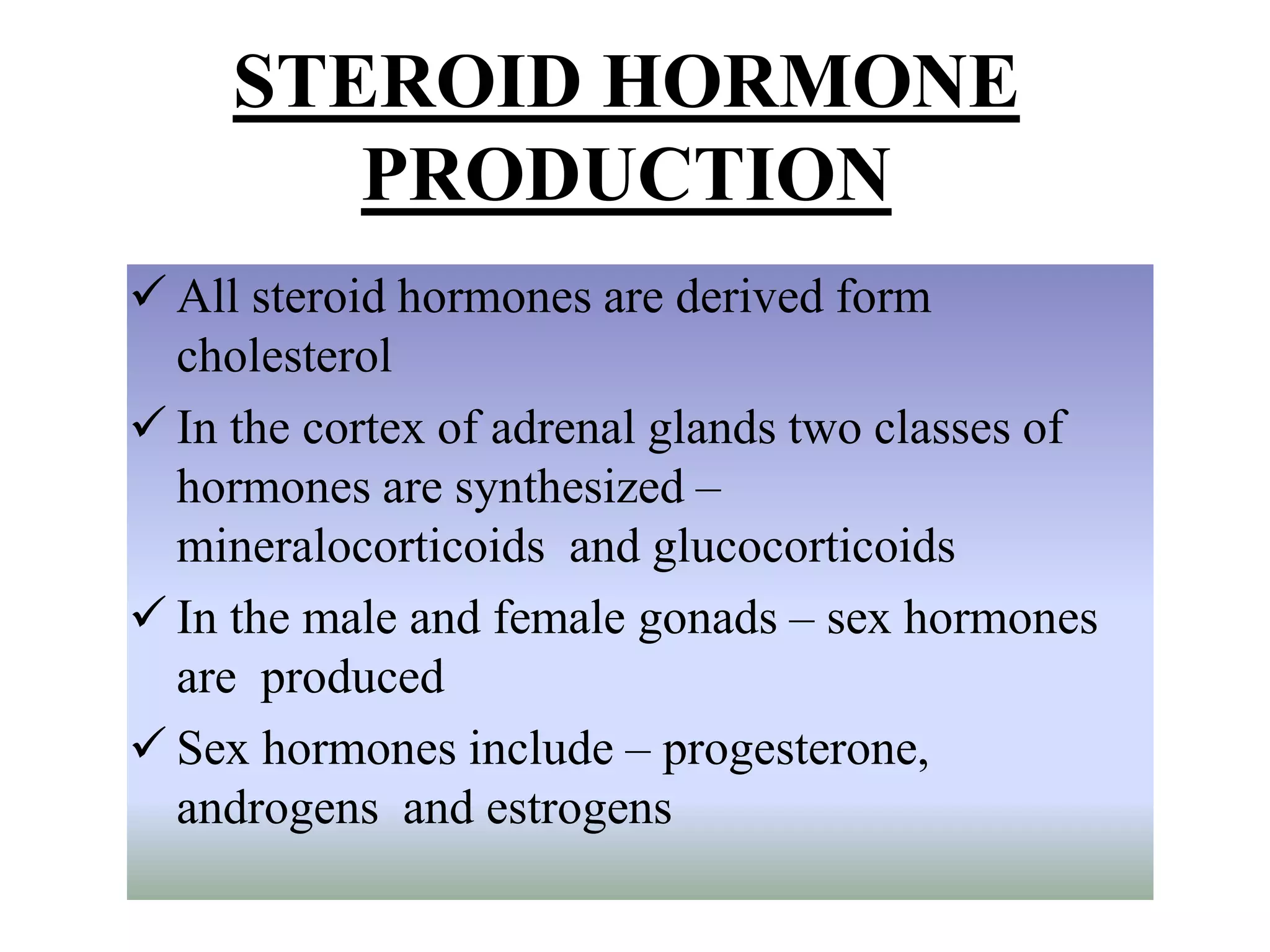
 All steroid hormones are derived form
cholesterol
 In the cortex of adrenal glands two classes of
hormones are synthesized –
mineralocorticoids and glucocorticoids
 In the male and female gonads – sex hormones
are produced
 Sex hormones include – progesterone,
androgens and estrogens
BIOSYNTHESIS OF
CHOLESTROL
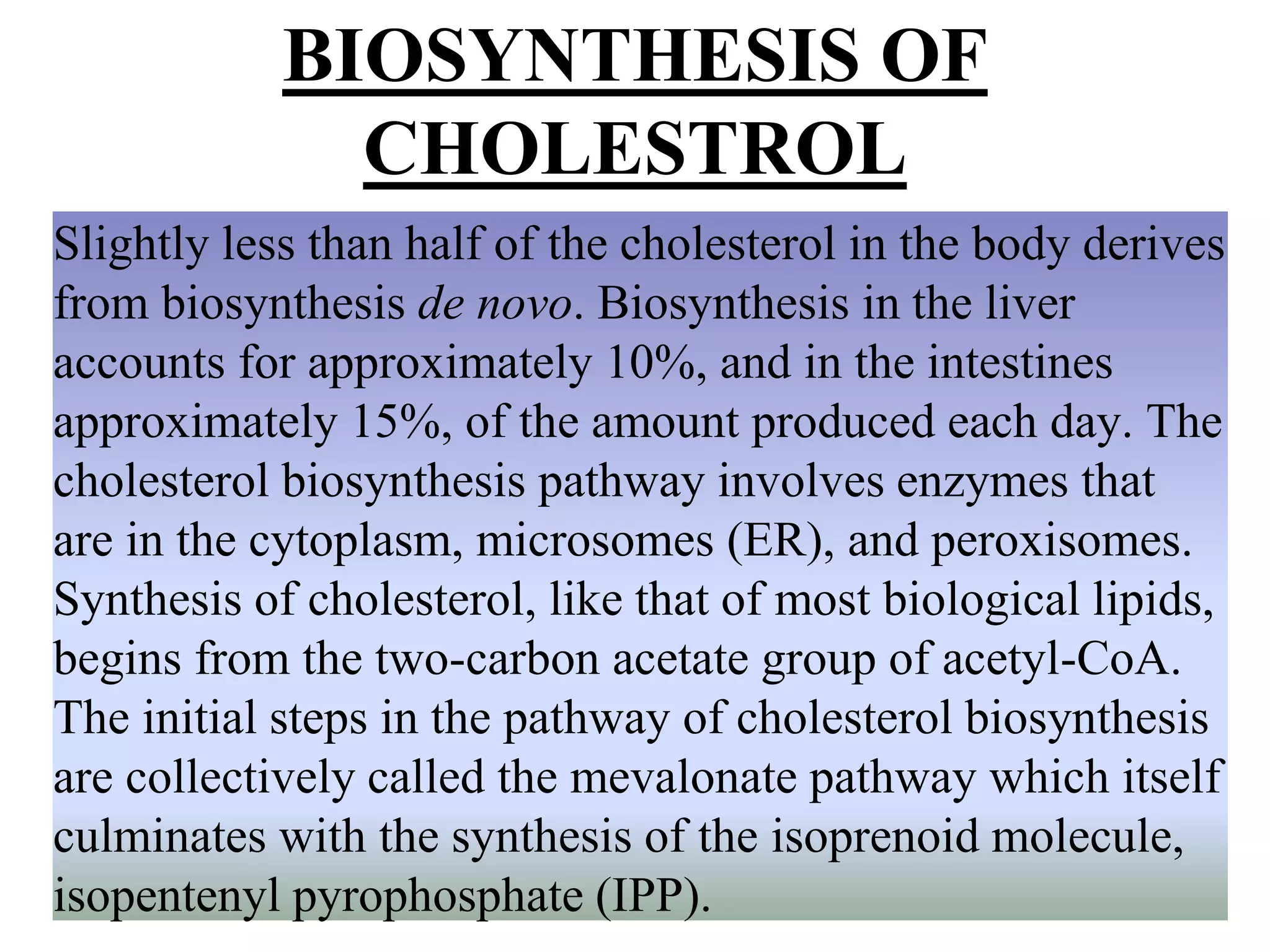
Slightly less than half of the cholesterol in the body derives
from biosynthesis de novo. Biosynthesis in the liver
accounts for approximately 10%, and in the intestines
approximately 15%, of the amount produced each day. The
cholesterol biosynthesis pathway involves enzymes that
are in the cytoplasm, microsomes (ER), and peroxisomes.
Synthesis of cholesterol, like that of most biological lipids,
begins from the two-carbon acetate group of acetyl-CoA.
The initial steps in the pathway of cholesterol biosynthesis
are collectively called the mevalonate pathway which itself
culminates with the synthesis of the isoprenoid molecule,
isopentenyl pyrophosphate (IPP).
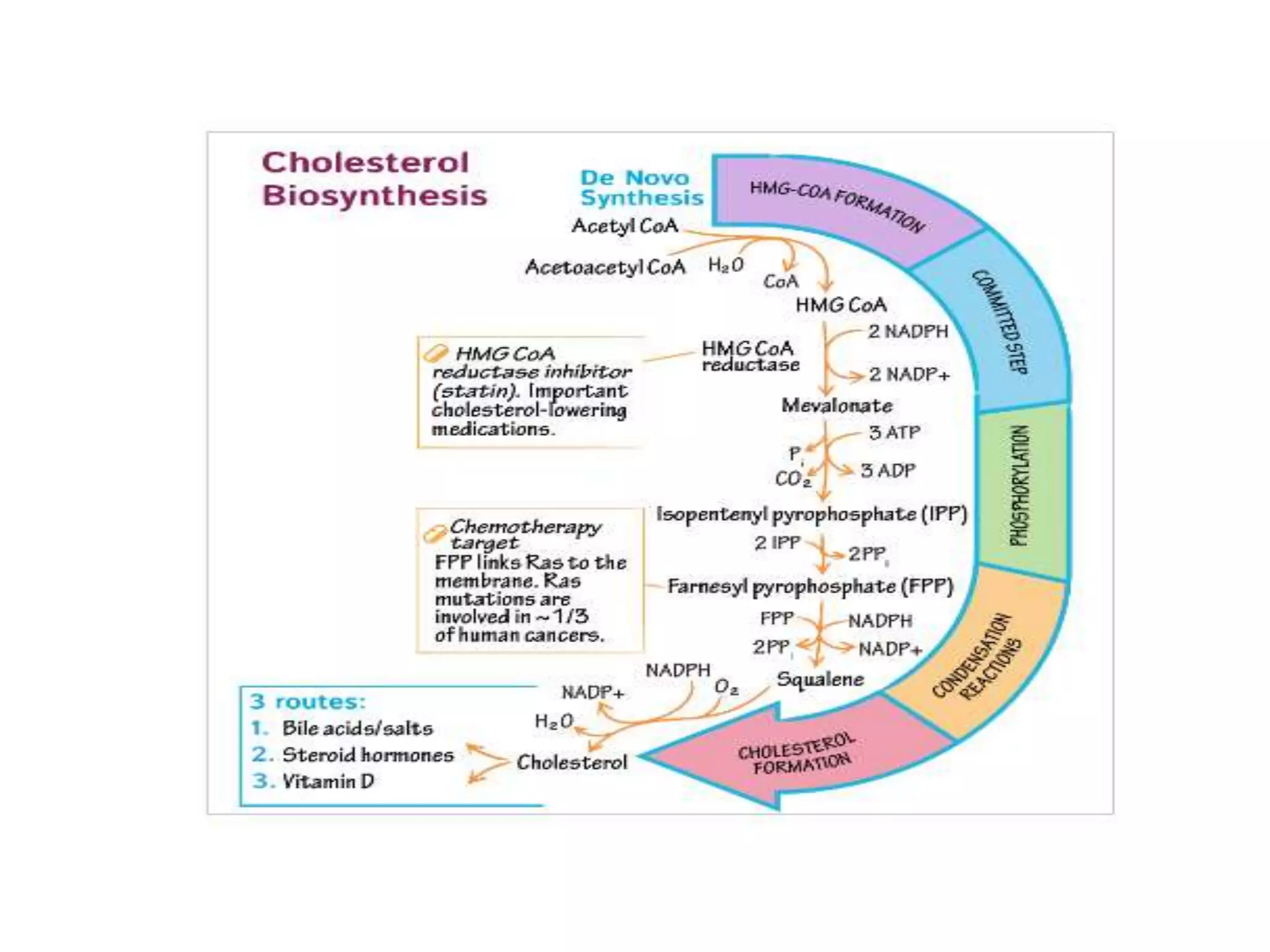
The process of cholesterol synthesis can be considered to be composed of five major
steps where the reactions that culminate in the synthesis of isopentenyl
pyrophosphate, and its isomeric form dimethylallyl pyrophosphate, are commonly
referred to as the mevlonate pathway:
Acetyl-CoAs are converted to 3-hydroxy-3-methylglutaryl-CoA (HMG-CoA)
HMG-CoA is converted to mevalonate
Mevalonate is converted to the isoprene based molecule, isopentenyl pyrophosphate
(IPP)
IPP molecules are converted to squalene
Squalene is converted to cholesterol
STEP#1
HMG-COA SYNTHESIS
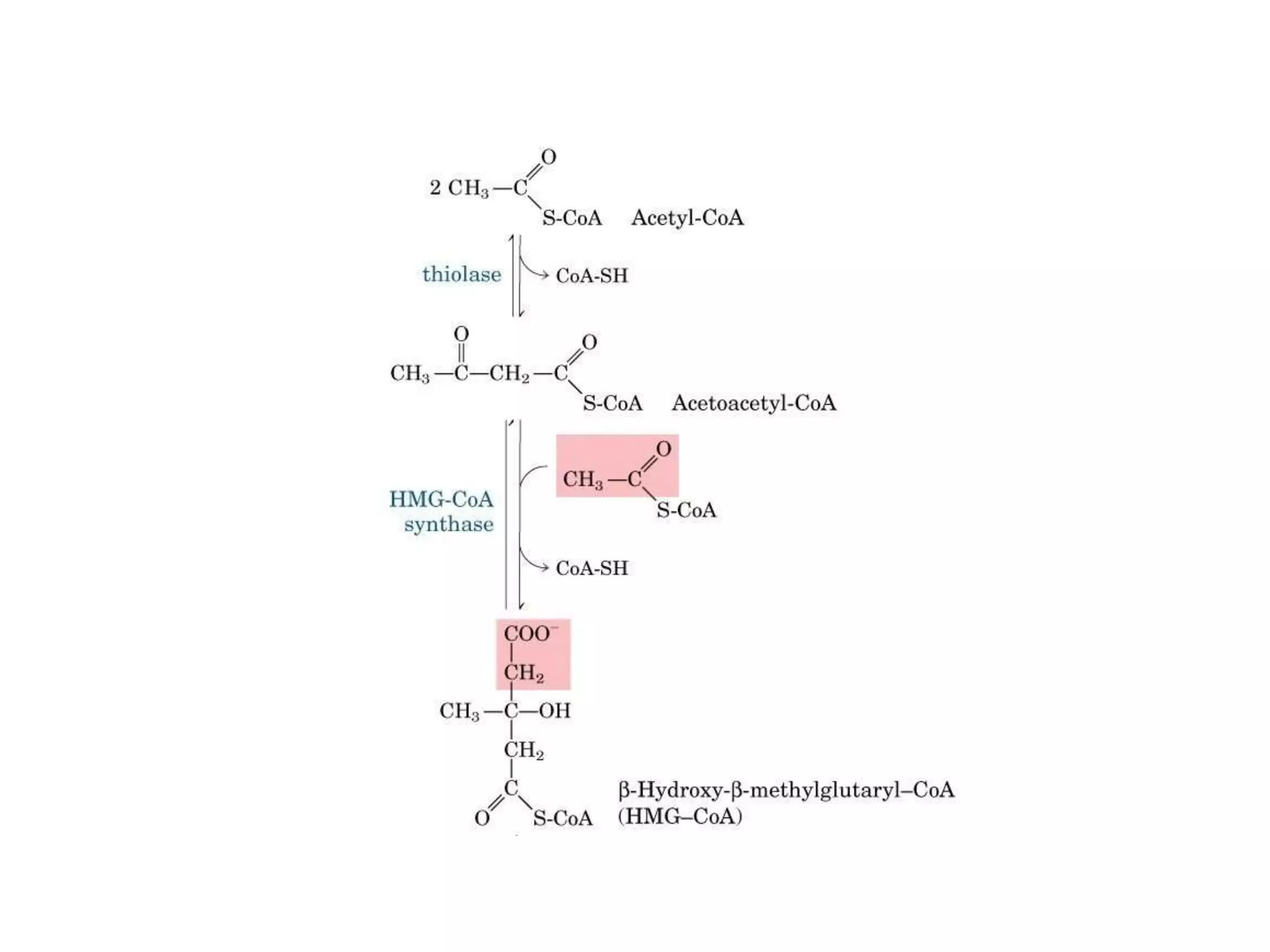
Initially, two molecules of acetyl-CoA condense
to form Acetoacetyl-CoA catalyzed by cytosolic
thiolase.
Acetoacetyl-CoA condenses with a further
molecule of acetyl-CoA catalyzed by HMG-CoA
synthase to form HMG-CoA
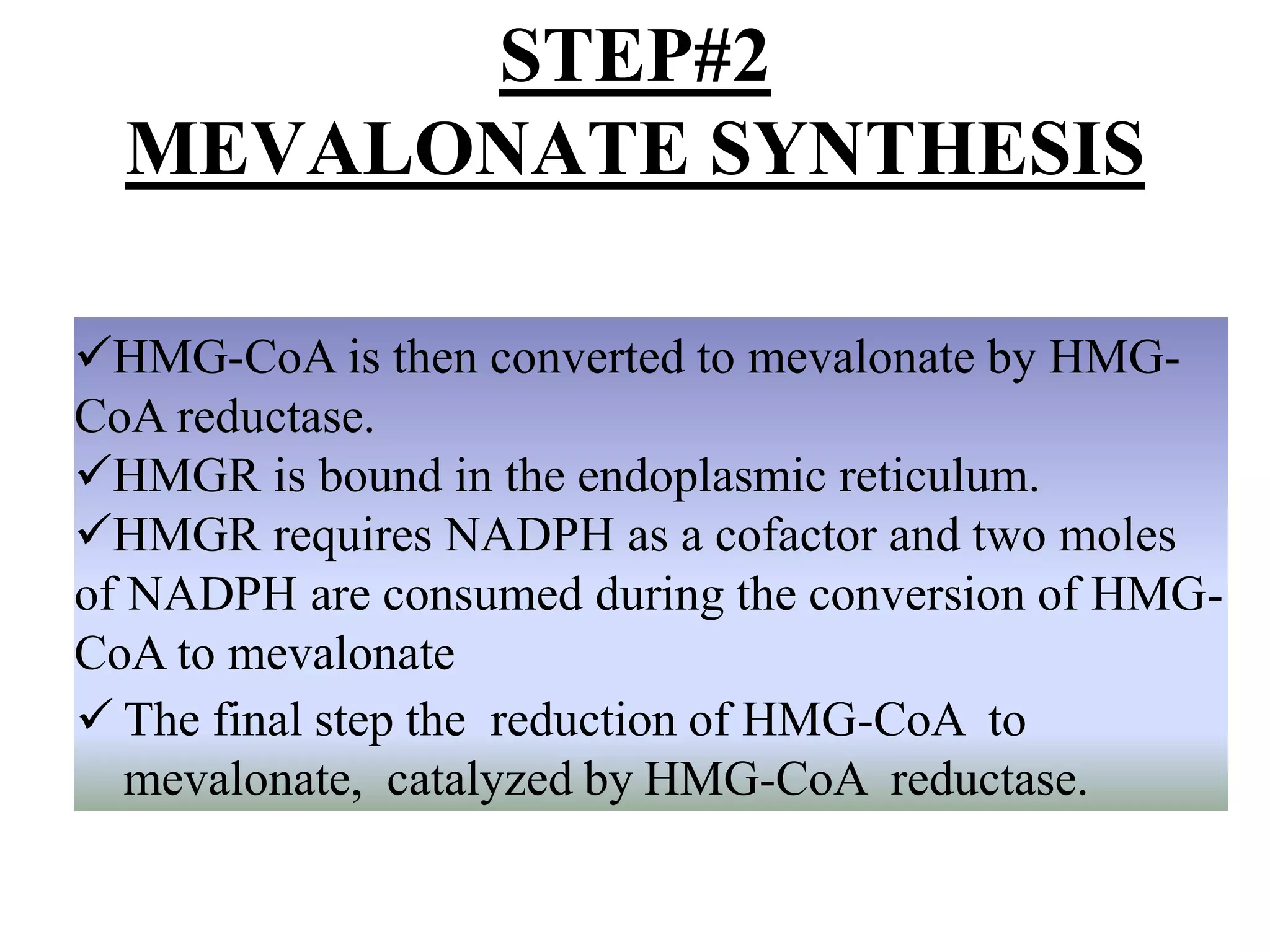
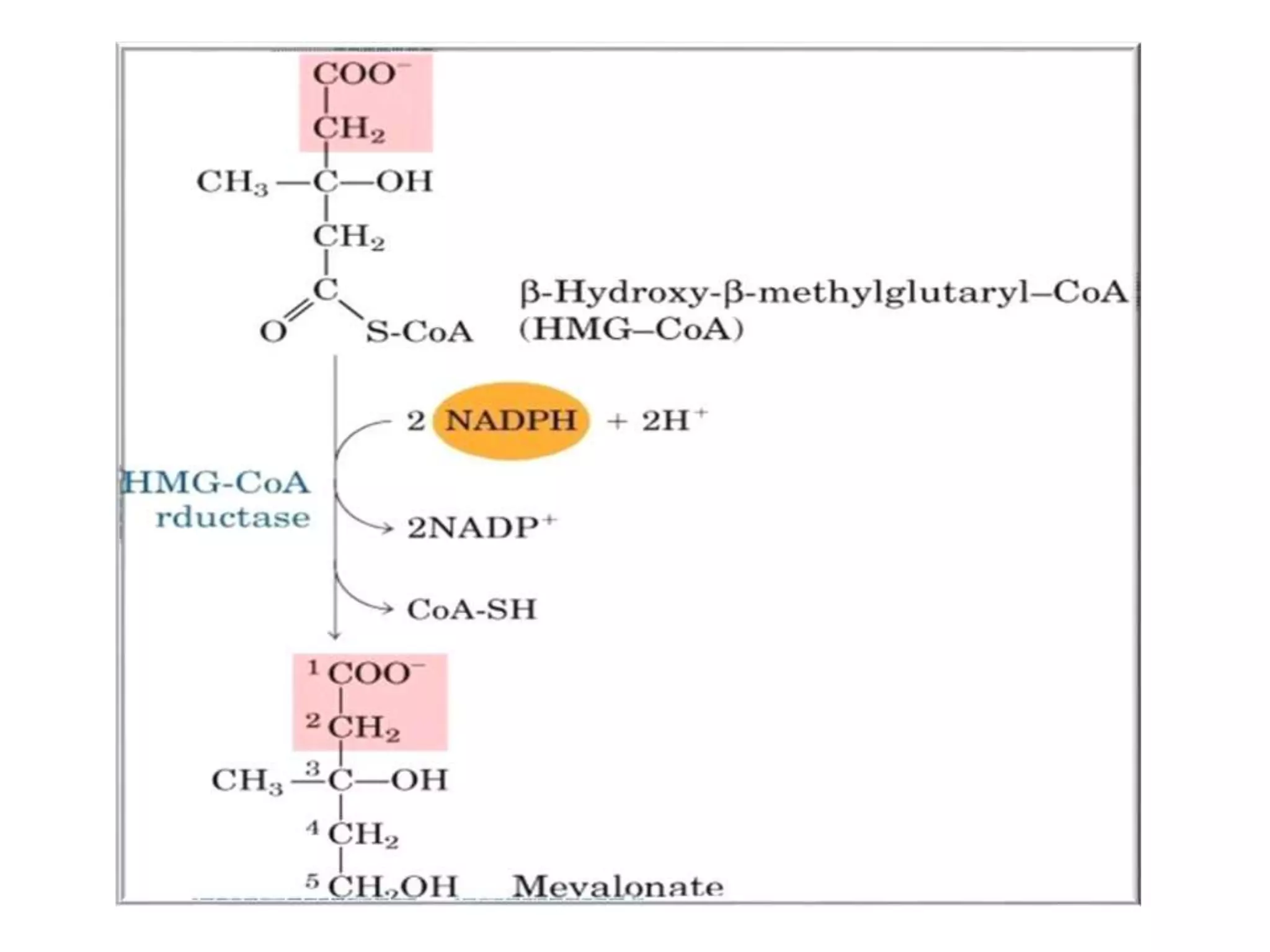
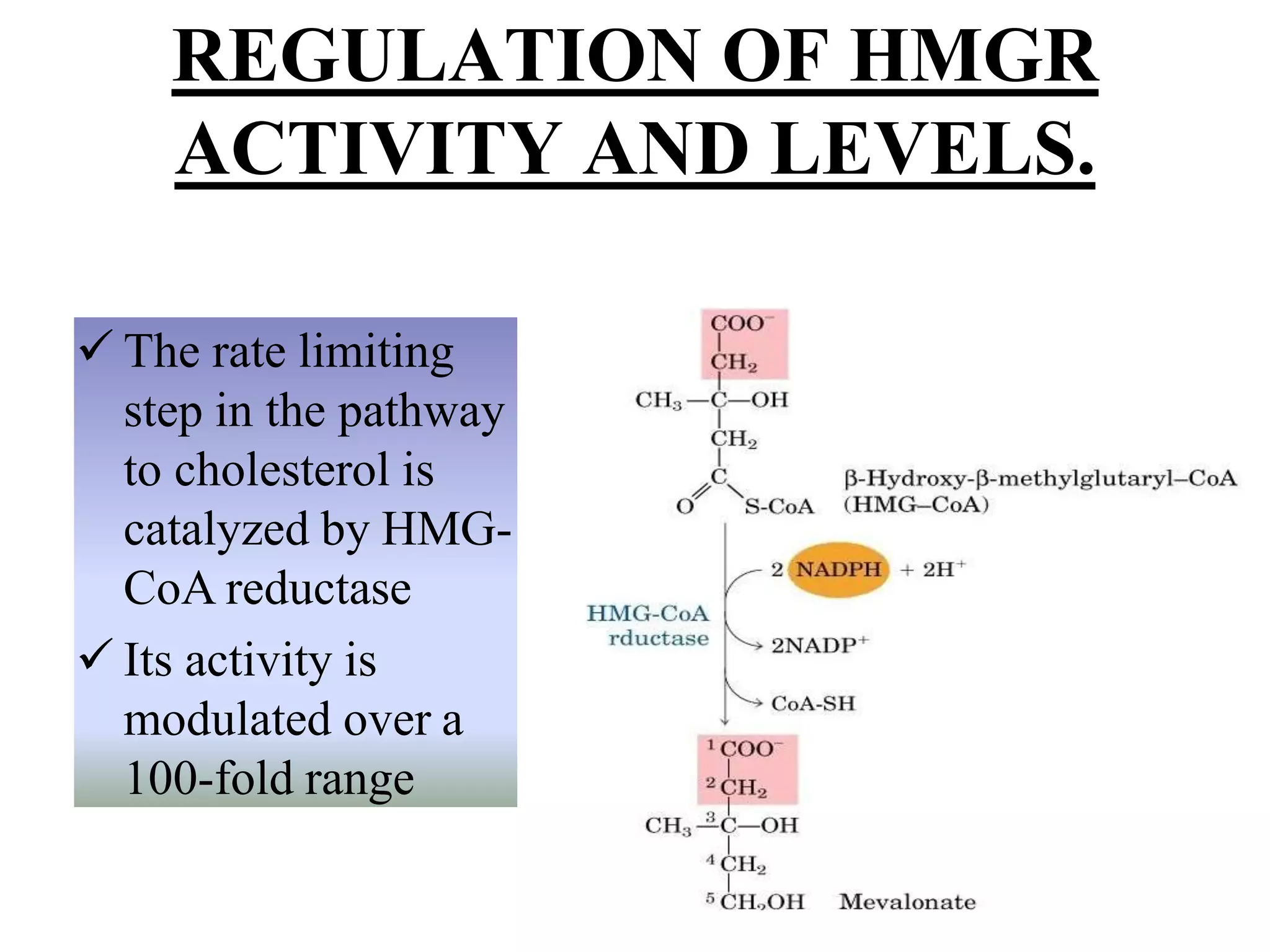
HMG-CoA is then converted to mevalonate by HMG-
CoA reductase.
HMGR is bound in the endoplasmic reticulum.
HMGR requires NADPH as a cofactor and two moles
of NADPH are consumed during the conversion of HMG-
CoA to mevalonate
 The final step the reduction of HMG-CoA to
mevalonate, catalyzed by HMG-CoA reductase.
STEP#2
MEVALONATE SYNTHESIS
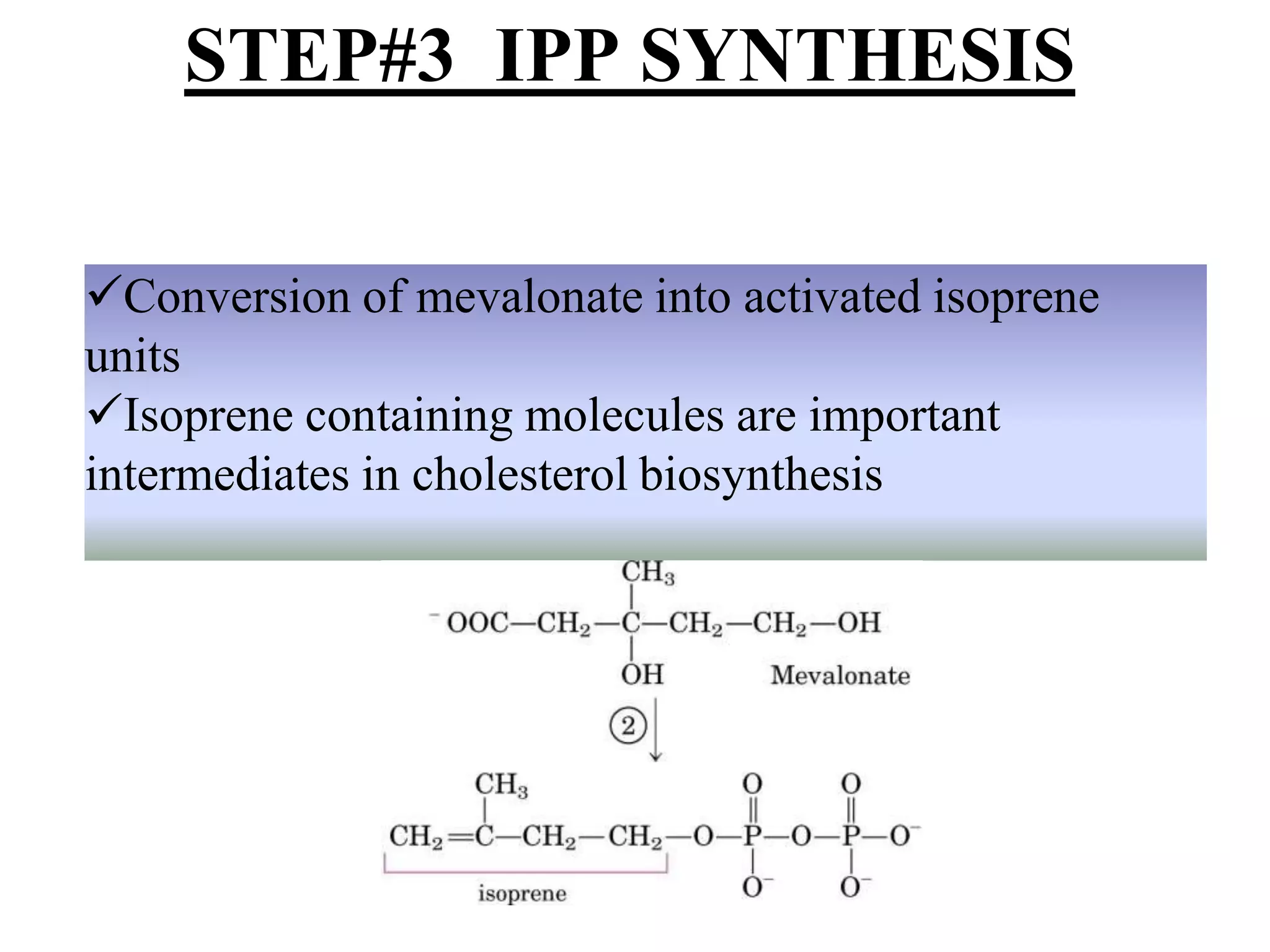
STEP#3 IPP SYNTHESIS
Conversion of mevalonate into activated isoprene
units
Isoprene containing molecules are important
intermediates in cholesterol biosynthesis
Mevalonate is
phosphorylated by 2
sequential Pitransfers
from ATP,
yielding the
pyrophosphate
derivative.
ATP-dependent
decarboxylation, with
dehydration, yields
isopentenyl
pyrophosphate.
H2C
C
CH3
HO
2
C

O O
2CH CH OH
O
O O
H2C CH2 CH2 O P O P
O
O
CH3
C
H2C
C
CH3
HO
2
C

O O
2 O
O O
CH CH O P O P
O
O
CO2
5-pyrophosphomevalonate
ATP
ADP + Pi
mevalonate
2ATP (2 steps)
2ADP
isopentenyl pyrophosphate
Isopentenyl Pyrophosphate Isomerase inter-converts
isopentenyl pyrophosphate & dimethylallyl pyrophosphate.
O
O O
CH3
C
H2C CH2 CH2 O P O P
O O
O
O O
CH3
C
H3C CH CH2 O P O P
O O
isopentenyl
pyrophosphate
dimethylallyl
pyrophosphate
STEP#4 SYNTHESIS OF
SQUALENE
Polymerization of
six 5-carbon
isoprene units to
form the 30-carbon
linear structure of
squalene
O
O O
O
O O
H2C
CH3
C CH2 CH2 O P O P
CH3
H3C C CH CH2 O P O P
O
O
O
OCH3
H3C C CH CH2 CH2
CH3
C CH CH2 O P O P
O
O
PPi
O
O O
H2C
CH3
C CH2 CH2 O P O P
CH3
H3C C CH CH2 CH2
PPi
O
CH3 CH3
C CH CH2 CH2 C CH CH2 O P O P
O
O
dimethylallyl pyrophosphate
O
O
isopentenyl pyrophosphate
O
O
O
isopentenyl pyrophosphate
O O
geranyl pyrophosphate
farnesyl pyrophosphate
Each condensation involves a carbocation formed as PPi is eliminated.
O
O O
CH CH2 O P O P
O
O
CH3 CH3
CH2 C CH CH2 CH2 C
CH3
2 H3C C CH CH2
O
O2 H2O
HO
H+
NADPH
NADP+
+ 2 PPi
NADP+
NADPH
2 farnesyl pyrophosphate
squalene 2,3-oxidosqualene lanosterol
Squalene Synthase: Head-to-head condensation of 2 farnesyl
pyrophosphate, with reduction by NADPH, yields squalene.
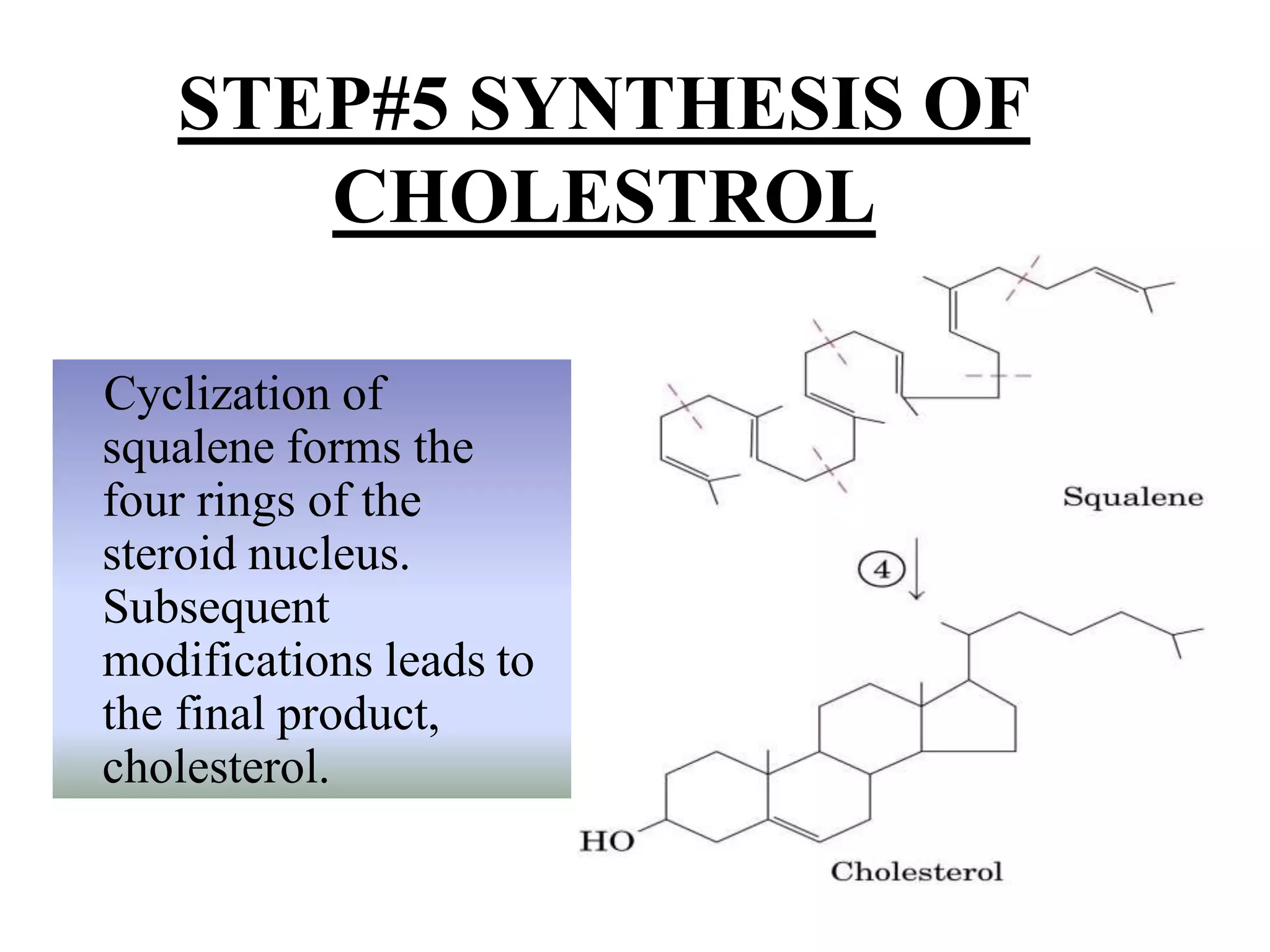
Cyclization of
squalene forms the
four rings of the
steroid nucleus.
Subsequent
modifications leads to
the final product,
cholesterol.
STEP#5 SYNTHESIS OF
CHOLESTROL
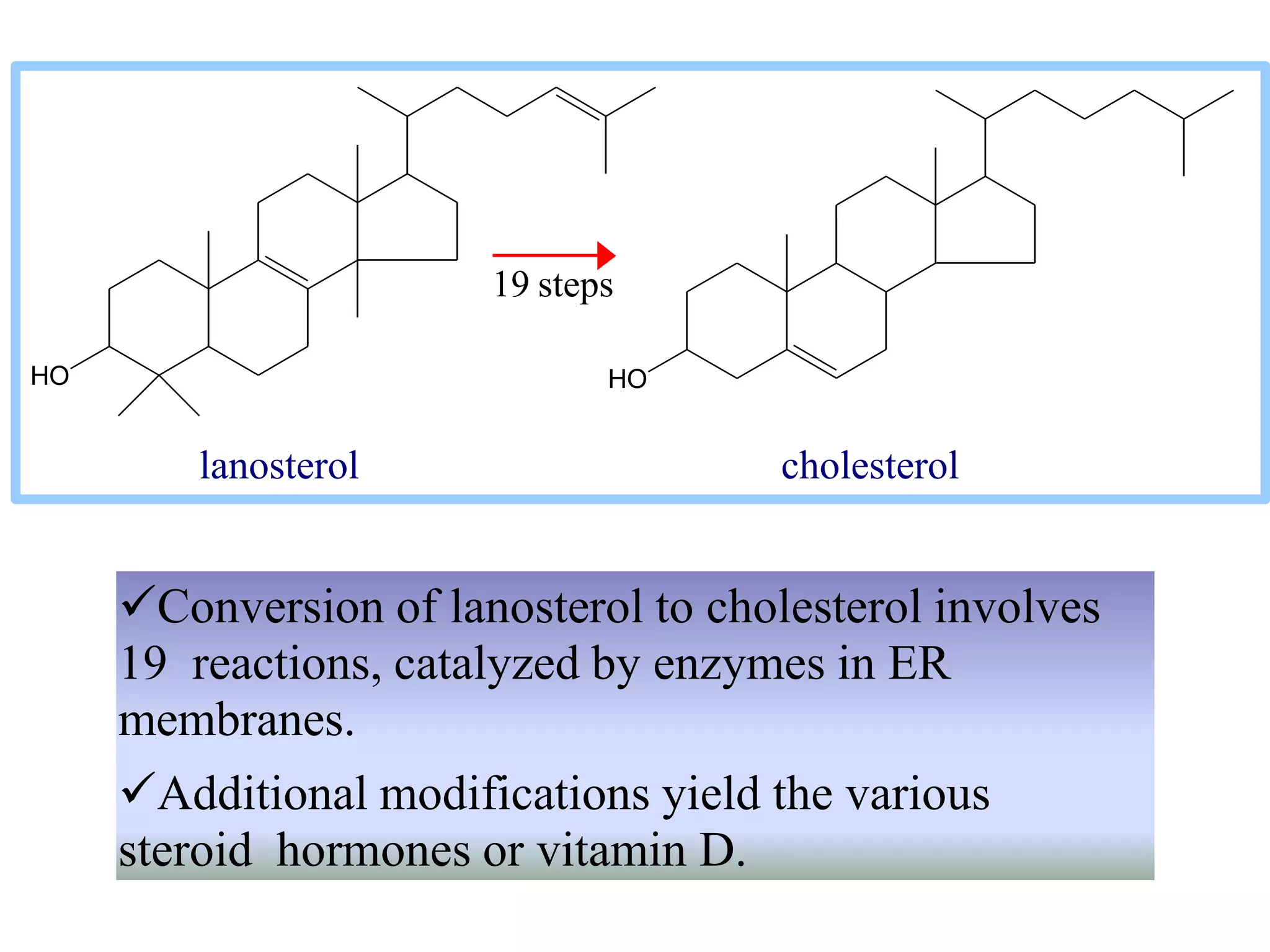
Conversion of lanosterol to cholesterol involves
19 reactions, catalyzed by enzymes in ER
membranes.
Additional modifications yield the various
steroid hormones or vitamin D.
HO HO
lanosterol cholesterol
19 steps
REGULATION OF
CHOLESTEROL SYNTHESIS
Normal healthy adults synthesize cholesterol at a rate of
approximately 1g/day and consume approximately
0.3g/day. A relatively constant level of cholesterol in the
blood (150–200 mg/dL) is maintained primarily by
controlling the level of de novo synthesis. The level of
cholesterol synthesis is regulated in part by the dietary
intake of cholesterol. Cholesterol from both diet and
synthesis is utilized in the formation of membranes and in
the synthesis of the steroid hormones and bile acids. The
greatest proportion of cholesterol is used in bile acid
synthesis.
VARIATION OF SERUM
CHOLESTEROL LEVELS
High cholesterol concentration is found in:
Diabetes mellitus
Nephrotic syndrome
Obstructive jaundice
Familial hypercholesterolemia
Biliary cirrhosis
Hypothyroidism
HYPOCHOLESTEROLEMIA
Low serum cholesterol concentration is
observed in-
Hyperthyroidism
Malnutrition
Malabsorption
Anemia
Physiologically lower levels are found in children
Persons on cholesterol lowering drugs
 The rate limiting
step in the pathway
to cholesterol is
catalyzed by HMG-
CoA reductase
 Its activity is
modulated over a
100-fold range
REGULATION OF HMGR
ACTIVITY AND LEVELS.
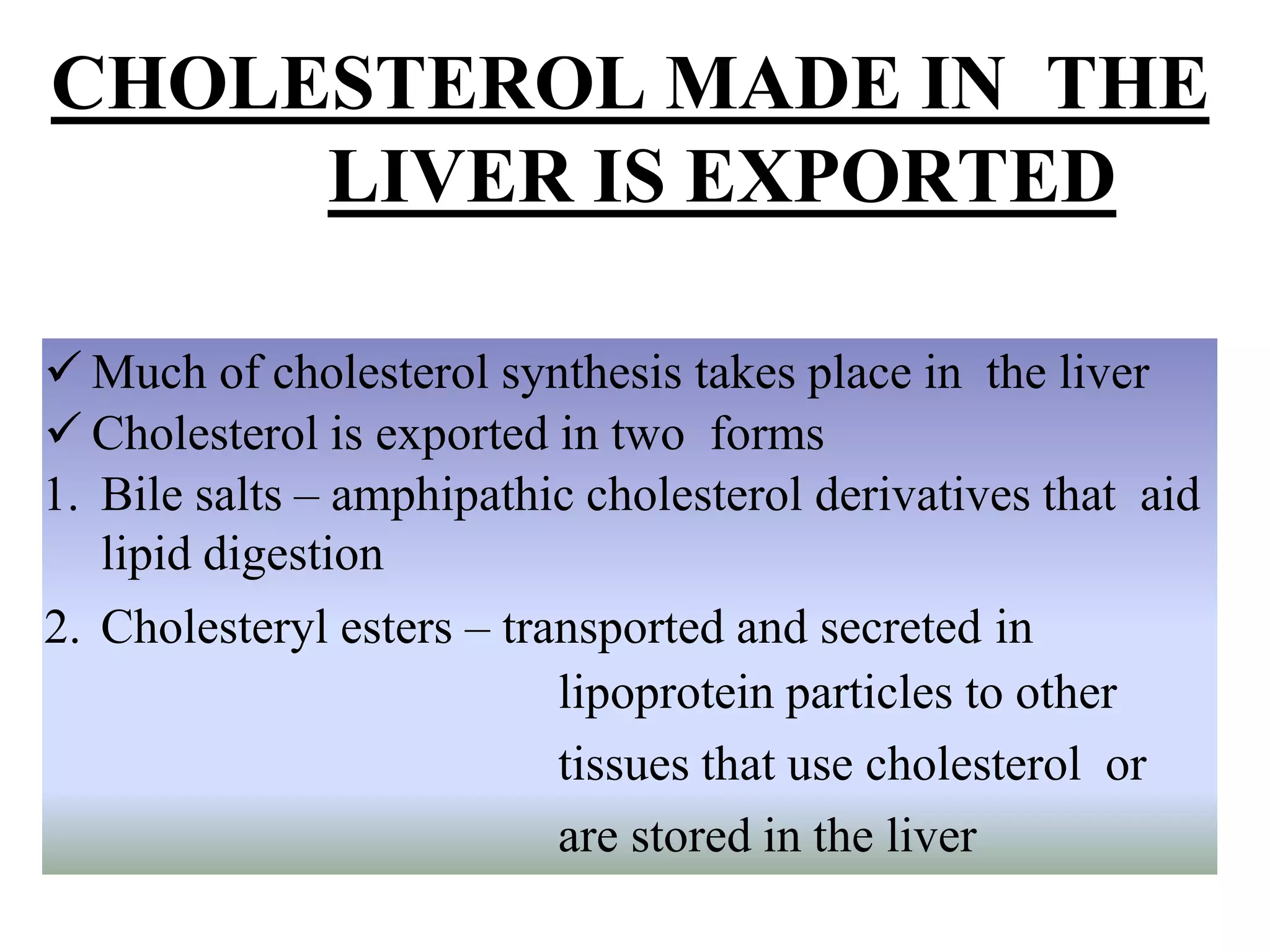
CHOLESTEROL MADE IN THE
LIVER IS EXPORTED
 Much of cholesterol synthesis takes place in the liver
 Cholesterol is exported in two forms
1. Bile salts – amphipathic cholesterol derivatives that aid
lipid digestion
2. Cholesteryl esters – transported and secreted in
lipoprotein particles to other
tissues that use cholesterol or
are stored in the liver
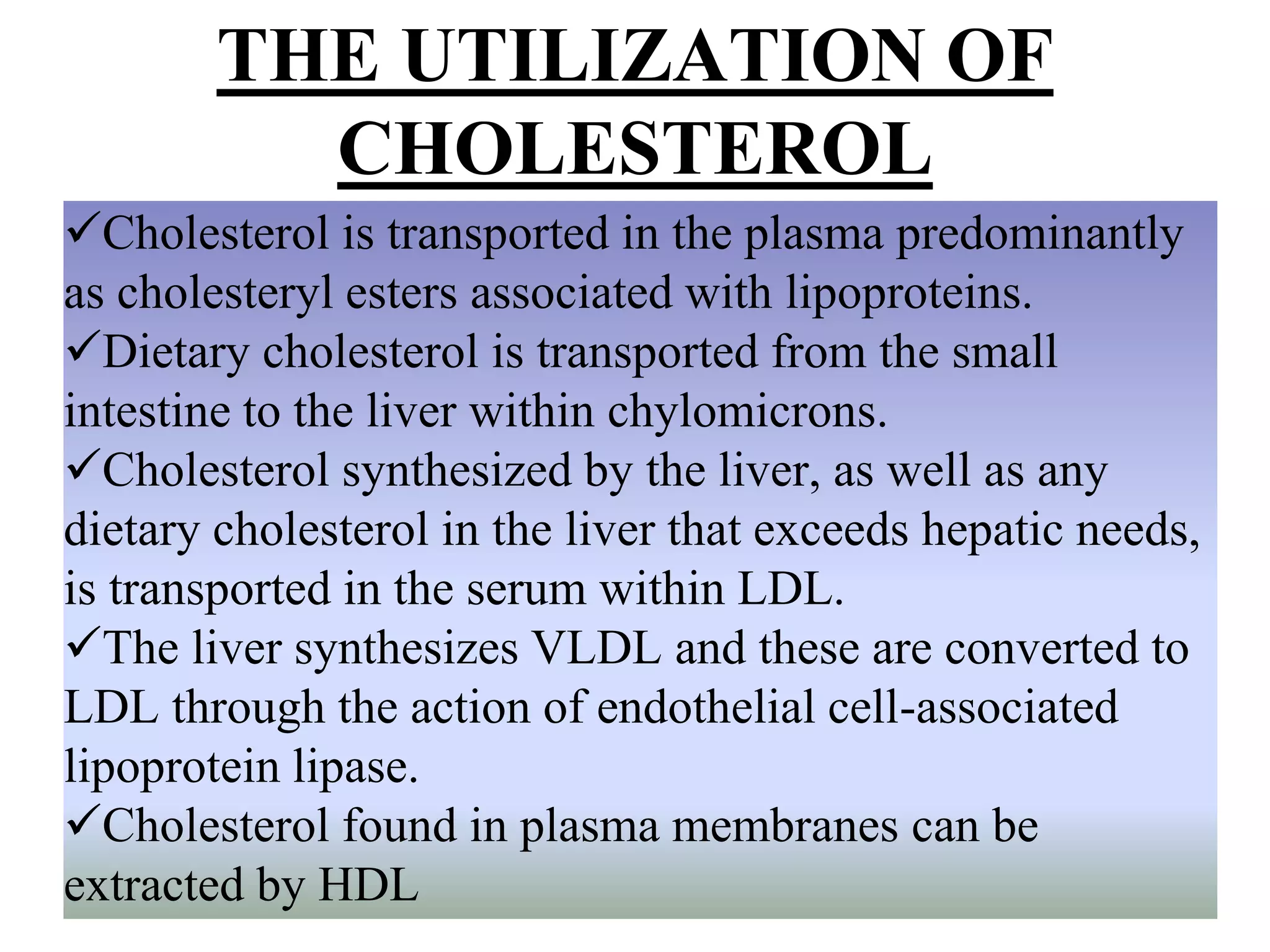
THE UTILIZATION OF
CHOLESTEROL
Cholesterol is transported in the plasma predominantly
as cholesteryl esters associated with lipoproteins.
Dietary cholesterol is transported from the small
intestine to the liver within chylomicrons.
Cholesterol synthesized by the liver, as well as any
dietary cholesterol in the liver that exceeds hepatic needs,
is transported in the serum within LDL.
The liver synthesizes VLDL and these are converted to
LDL through the action of endothelial cell-associated
lipoprotein lipase.
Cholesterol found in plasma membranes can be
extracted by HDL
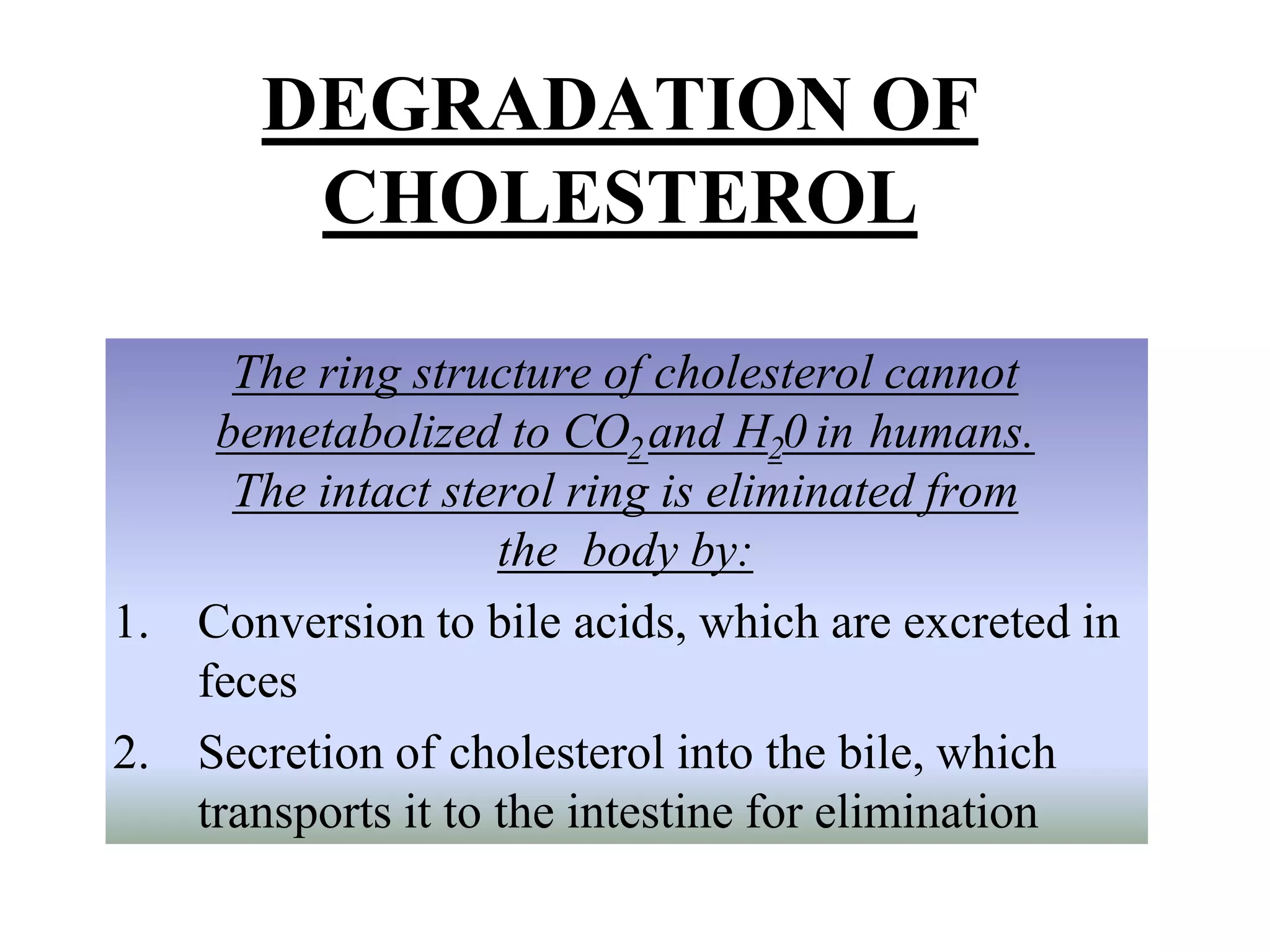
DEGRADATION OF
CHOLESTEROL
The ring structure of cholesterol cannot
bemetabolized to CO2and H20 in humans.
The intact sterol ring is eliminated from
the body by:
1. Conversion to bile acids, which are excreted in
feces
2. Secretion of cholesterol into the bile, which
transports it to the intestine for elimination

BIOSYNTHESIS OF CHOLESTEROL

  • 1.
    BIOSYNTHESIS OF CHOLESTEROL PREPARED BY;MISS RABIA KHAN BABER COURSE TITLE : BIOCHEMISTRY
  • 2.
    LEARNING OBJECTIVES OFPPT CHOLESTROL METABOLISM STRUCTURE METABOLISM AND BIOSYNTHESIS VARIATIONIN SERUM UTILIZATION DEGREDATION REGULATION FUNCTIONS AND SOURCES
  • 3.
    INTRODUCTION TO CHOLESTROL METABOLISM Cholesterolis the major sterol in the animal tissues. Cholesterol is present in tissues and in plasma either as free cholesterol or as a storage form, combined with a long-chain fatty acid as cholesteryl ester. In plasma, both forms are transported in lipoproteins removed from tissues by plasma high-density lipoprotein (HDL) and transported to the liver, where it is eliminated from the body either unchanged or after conversion to bile acids in the process known as reverse cholesterol transport
  • 4.
    STRUCTURE OF CHOLESTROL  4non aromatic rings named as A,B,C,D  27 Carbon compound  1 double bond between C 5&6  1 side chain  1 hydroxyl group at C-3
  • 5.
    SOURCES OF CHOLESTROL Cholesterolis derived from Diet  De novo synthesis From the hydrolysis of cholesteryl esters The liver and intestine account for approximately 10% each of total synthesis in humans. Virtually all tissues containing nucleated cells are capable of cholesterol synthesis, which occurs in the endoplasmic reticulum and the cytosol.
  • 6.
    FUNCTIONS OF CHOLESTROL Cholesterol isthe most abundant sterol in humans and performs a number of essential functions. It is a major constituent of the plasma membrane and of plasma lipoproteins. It is a precursor of bile salts, It is a precursor of steroid hormones that include adrenocortical hormones, sex hormones, placental hormones etc Also a precursor of vitamin D It is required for the nerve transmission
  • 7.
    STEROID HORMONE PRODUCTION  Allsteroid hormones are derived form cholesterol  In the cortex of adrenal glands two classes of hormones are synthesized – mineralocorticoids and glucocorticoids  In the male and female gonads – sex hormones are produced  Sex hormones include – progesterone, androgens and estrogens
  • 8.
    BIOSYNTHESIS OF CHOLESTROL Slightly lessthan half of the cholesterol in the body derives from biosynthesis de novo. Biosynthesis in the liver accounts for approximately 10%, and in the intestines approximately 15%, of the amount produced each day. The cholesterol biosynthesis pathway involves enzymes that are in the cytoplasm, microsomes (ER), and peroxisomes. Synthesis of cholesterol, like that of most biological lipids, begins from the two-carbon acetate group of acetyl-CoA. The initial steps in the pathway of cholesterol biosynthesis are collectively called the mevalonate pathway which itself culminates with the synthesis of the isoprenoid molecule, isopentenyl pyrophosphate (IPP).
  • 10.
    The process ofcholesterol synthesis can be considered to be composed of five major steps where the reactions that culminate in the synthesis of isopentenyl pyrophosphate, and its isomeric form dimethylallyl pyrophosphate, are commonly referred to as the mevlonate pathway: Acetyl-CoAs are converted to 3-hydroxy-3-methylglutaryl-CoA (HMG-CoA) HMG-CoA is converted to mevalonate Mevalonate is converted to the isoprene based molecule, isopentenyl pyrophosphate (IPP) IPP molecules are converted to squalene Squalene is converted to cholesterol
  • 11.
    STEP#1 HMG-COA SYNTHESIS Initially, twomolecules of acetyl-CoA condense to form Acetoacetyl-CoA catalyzed by cytosolic thiolase. Acetoacetyl-CoA condenses with a further molecule of acetyl-CoA catalyzed by HMG-CoA synthase to form HMG-CoA
  • 13.
    HMG-CoA is thenconverted to mevalonate by HMG- CoA reductase. HMGR is bound in the endoplasmic reticulum. HMGR requires NADPH as a cofactor and two moles of NADPH are consumed during the conversion of HMG- CoA to mevalonate  The final step the reduction of HMG-CoA to mevalonate, catalyzed by HMG-CoA reductase. STEP#2 MEVALONATE SYNTHESIS
  • 15.
    STEP#3 IPP SYNTHESIS Conversionof mevalonate into activated isoprene units Isoprene containing molecules are important intermediates in cholesterol biosynthesis
  • 16.
    Mevalonate is phosphorylated by2 sequential Pitransfers from ATP, yielding the pyrophosphate derivative. ATP-dependent decarboxylation, with dehydration, yields isopentenyl pyrophosphate. H2C C CH3 HO 2 C  O O 2CH CH OH O O O H2C CH2 CH2 O P O P O O CH3 C H2C C CH3 HO 2 C  O O 2 O O O CH CH O P O P O O CO2 5-pyrophosphomevalonate ATP ADP + Pi mevalonate 2ATP (2 steps) 2ADP isopentenyl pyrophosphate
  • 17.
    Isopentenyl Pyrophosphate Isomeraseinter-converts isopentenyl pyrophosphate & dimethylallyl pyrophosphate. O O O CH3 C H2C CH2 CH2 O P O P O O O O O CH3 C H3C CH CH2 O P O P O O isopentenyl pyrophosphate dimethylallyl pyrophosphate
  • 18.
    STEP#4 SYNTHESIS OF SQUALENE Polymerizationof six 5-carbon isoprene units to form the 30-carbon linear structure of squalene
  • 19.
    O O O O O O H2C CH3 CCH2 CH2 O P O P CH3 H3C C CH CH2 O P O P O O O OCH3 H3C C CH CH2 CH2 CH3 C CH CH2 O P O P O O PPi O O O H2C CH3 C CH2 CH2 O P O P CH3 H3C C CH CH2 CH2 PPi O CH3 CH3 C CH CH2 CH2 C CH CH2 O P O P O O dimethylallyl pyrophosphate O O isopentenyl pyrophosphate O O O isopentenyl pyrophosphate O O geranyl pyrophosphate farnesyl pyrophosphate Each condensation involves a carbocation formed as PPi is eliminated.
  • 20.
    O O O CH CH2O P O P O O CH3 CH3 CH2 C CH CH2 CH2 C CH3 2 H3C C CH CH2 O O2 H2O HO H+ NADPH NADP+ + 2 PPi NADP+ NADPH 2 farnesyl pyrophosphate squalene 2,3-oxidosqualene lanosterol Squalene Synthase: Head-to-head condensation of 2 farnesyl pyrophosphate, with reduction by NADPH, yields squalene.
  • 21.
    Cyclization of squalene formsthe four rings of the steroid nucleus. Subsequent modifications leads to the final product, cholesterol. STEP#5 SYNTHESIS OF CHOLESTROL
  • 22.
    Conversion of lanosterolto cholesterol involves 19 reactions, catalyzed by enzymes in ER membranes. Additional modifications yield the various steroid hormones or vitamin D. HO HO lanosterol cholesterol 19 steps
  • 23.
    REGULATION OF CHOLESTEROL SYNTHESIS Normalhealthy adults synthesize cholesterol at a rate of approximately 1g/day and consume approximately 0.3g/day. A relatively constant level of cholesterol in the blood (150–200 mg/dL) is maintained primarily by controlling the level of de novo synthesis. The level of cholesterol synthesis is regulated in part by the dietary intake of cholesterol. Cholesterol from both diet and synthesis is utilized in the formation of membranes and in the synthesis of the steroid hormones and bile acids. The greatest proportion of cholesterol is used in bile acid synthesis.
  • 24.
    VARIATION OF SERUM CHOLESTEROLLEVELS High cholesterol concentration is found in: Diabetes mellitus Nephrotic syndrome Obstructive jaundice Familial hypercholesterolemia Biliary cirrhosis Hypothyroidism
  • 25.
    HYPOCHOLESTEROLEMIA Low serum cholesterolconcentration is observed in- Hyperthyroidism Malnutrition Malabsorption Anemia Physiologically lower levels are found in children Persons on cholesterol lowering drugs
  • 26.
     The ratelimiting step in the pathway to cholesterol is catalyzed by HMG- CoA reductase  Its activity is modulated over a 100-fold range REGULATION OF HMGR ACTIVITY AND LEVELS.
  • 27.
    CHOLESTEROL MADE INTHE LIVER IS EXPORTED  Much of cholesterol synthesis takes place in the liver  Cholesterol is exported in two forms 1. Bile salts – amphipathic cholesterol derivatives that aid lipid digestion 2. Cholesteryl esters – transported and secreted in lipoprotein particles to other tissues that use cholesterol or are stored in the liver
  • 28.
    THE UTILIZATION OF CHOLESTEROL Cholesterolis transported in the plasma predominantly as cholesteryl esters associated with lipoproteins. Dietary cholesterol is transported from the small intestine to the liver within chylomicrons. Cholesterol synthesized by the liver, as well as any dietary cholesterol in the liver that exceeds hepatic needs, is transported in the serum within LDL. The liver synthesizes VLDL and these are converted to LDL through the action of endothelial cell-associated lipoprotein lipase. Cholesterol found in plasma membranes can be extracted by HDL
  • 29.
    DEGRADATION OF CHOLESTEROL The ringstructure of cholesterol cannot bemetabolized to CO2and H20 in humans. The intact sterol ring is eliminated from the body by: 1. Conversion to bile acids, which are excreted in feces 2. Secretion of cholesterol into the bile, which transports it to the intestine for elimination