•The bile acids are synthesized in the
liver form cholesterol.
• It contains 24 carbon atoms, 2 or 3
OH groups in steroid nucleus and a
side chain ending in carboxyl group.
•Liver secrete a clear golden yellow
viscous fluid known as bile.
•It is stored in gall bladder and mainly
used in digestion.
Bile acid structure
Bile consist of inorganic ions and as
well as organic compound.
That is bile acids, bile pigments,
liquids, fatty acids and cholesterol.
Bile acids present as sodium salts of
amide with glycine or taurine.
Glycocholate - Glycine + Cholic acid
Taurocholate – Taurine + Cholic acid
In 1848, Germany’s Heinrich Otto
Wieland discovered and
investigated the role of Bile acids
in the Human Body.
In 1927, Wieland was recognized
for those efforts with a Nobel Prize
in Chemistry.
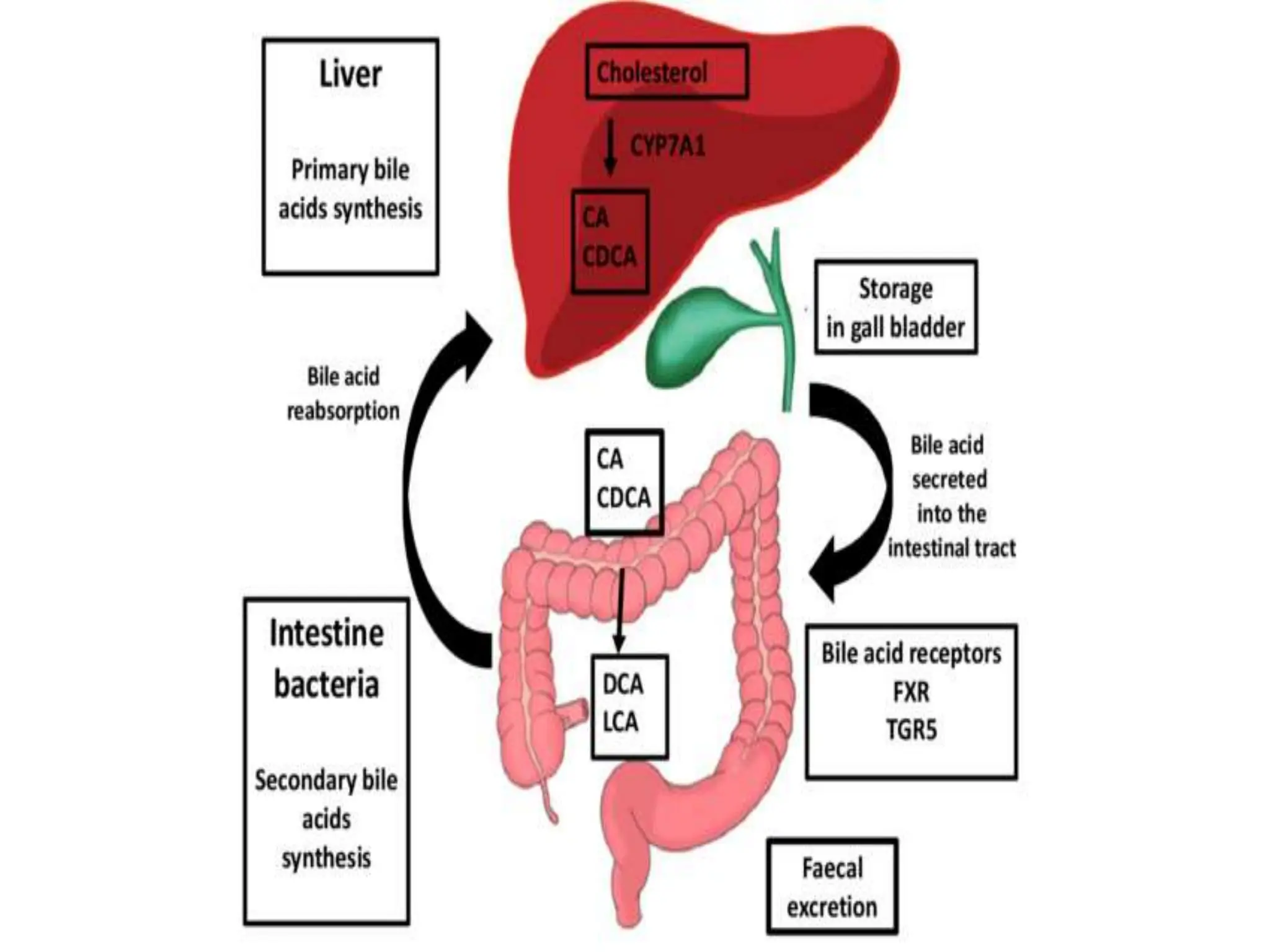
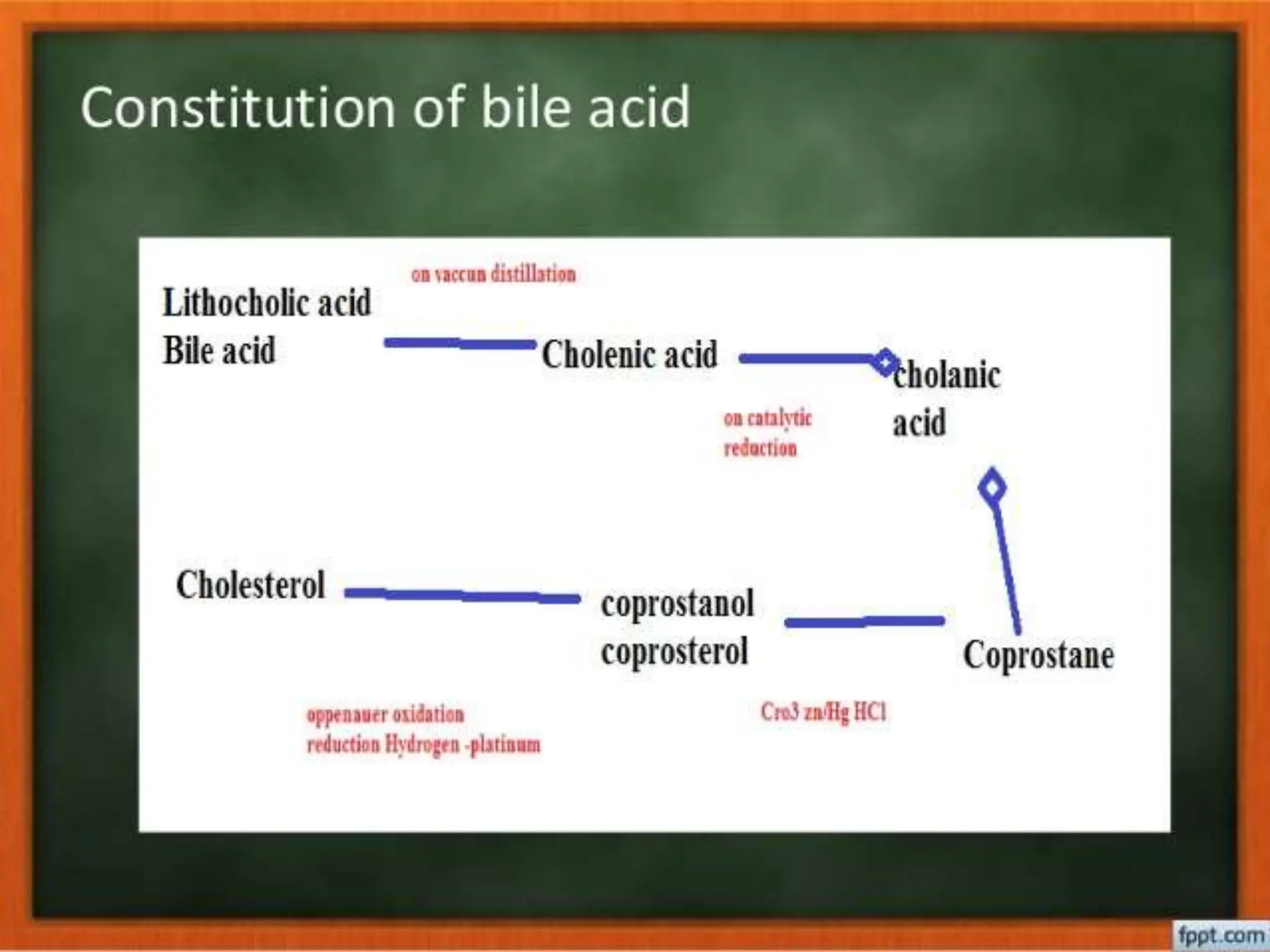
Cholesterol (50%) is converted to bile acids
(excreted in feces), serves as a precursor for
the synthesis of steroid hormones, vitamin D,
coprostanol and cholestanol.
In the bile conjugated bile acids exist as
sodium and potassium salts which are
known as Bile salts.
The primary bile acids are conjugated
with glycine and Taurine to form
Glycocholic acid
Taurocholic acid
Glycochenodeoxycholic acid
Taurochenodeoxycholic acid
Cholic acid is converted into
deoxycholic acid and
chenodeoxycholic acid is
converted to lithocholic acid.
Deoxycholic acid and
lithocholic acid are
secondary bile acids.
Liver
Gall
Bladder
Intestine
Muscle
Adipose
Tissue
Where do bile acids come from?
Bile is a fluid is made and released by the
liver and stored in the gallbladder.
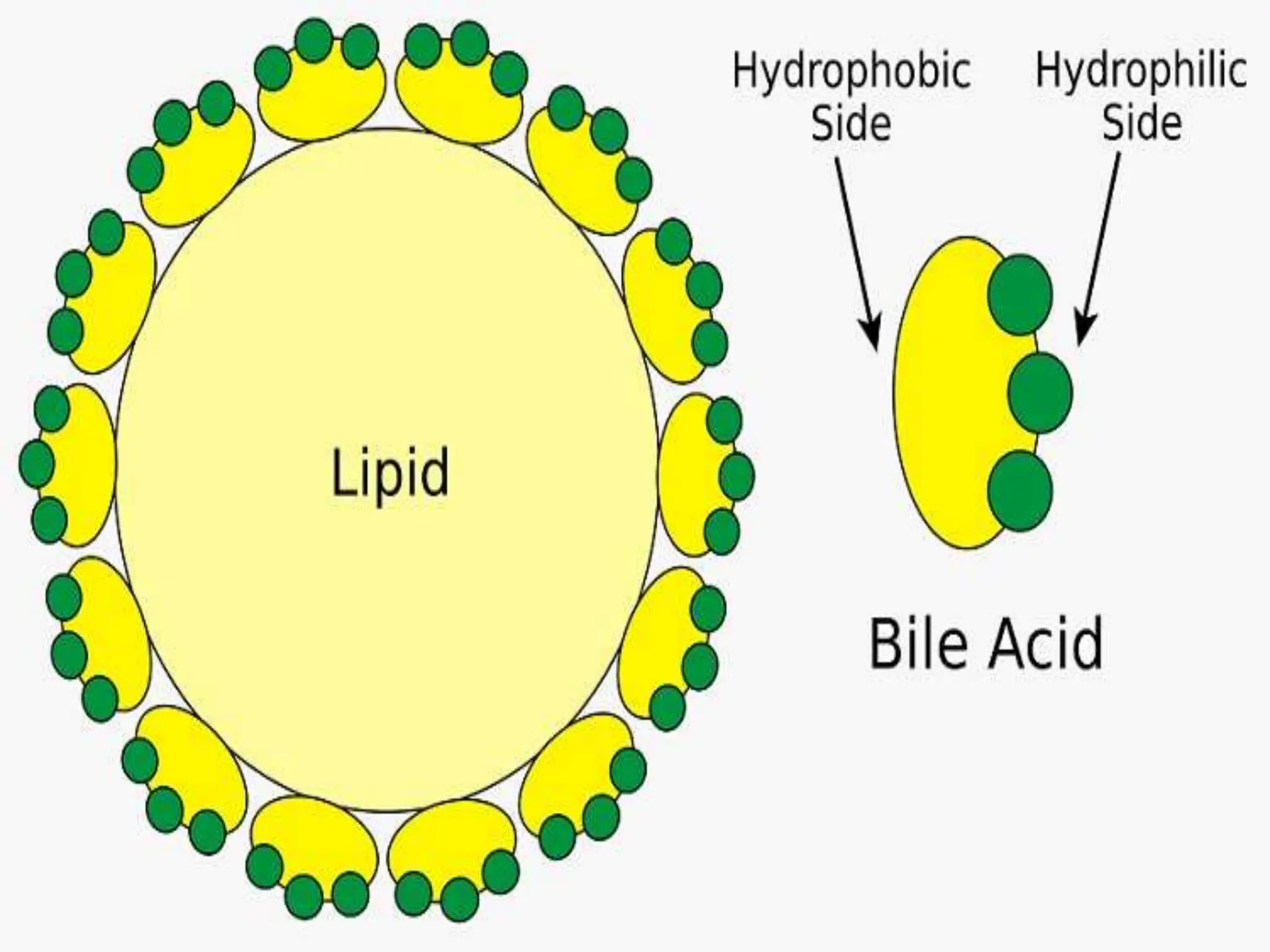
It helps with digestion and breaks down fats
into fatty acids which can be taken into the
body by the digestive tract.
Bile contains:
Mostly cholesterol
Also called bile salts
Billirubin (a breakdown product or RBC )
Water
Body salts ( such as Potassium and Sodium)
Copper and other metals.
Biosynthesis of Bile Acid

Biosynthesis of Bile Acid

  • 3.
    •The bile acidsare synthesized in the liver form cholesterol. • It contains 24 carbon atoms, 2 or 3 OH groups in steroid nucleus and a side chain ending in carboxyl group. •Liver secrete a clear golden yellow viscous fluid known as bile. •It is stored in gall bladder and mainly used in digestion.
  • 4.
  • 7.
    Bile consist ofinorganic ions and as well as organic compound. That is bile acids, bile pigments, liquids, fatty acids and cholesterol. Bile acids present as sodium salts of amide with glycine or taurine. Glycocholate - Glycine + Cholic acid Taurocholate – Taurine + Cholic acid
  • 10.
    In 1848, Germany’sHeinrich Otto Wieland discovered and investigated the role of Bile acids in the Human Body. In 1927, Wieland was recognized for those efforts with a Nobel Prize in Chemistry.
  • 12.
    Cholesterol (50%) isconverted to bile acids (excreted in feces), serves as a precursor for the synthesis of steroid hormones, vitamin D, coprostanol and cholestanol. In the bile conjugated bile acids exist as sodium and potassium salts which are known as Bile salts.
  • 20.
    The primary bileacids are conjugated with glycine and Taurine to form Glycocholic acid Taurocholic acid Glycochenodeoxycholic acid Taurochenodeoxycholic acid
  • 21.
    Cholic acid isconverted into deoxycholic acid and chenodeoxycholic acid is converted to lithocholic acid. Deoxycholic acid and lithocholic acid are secondary bile acids.
  • 27.
  • 28.
    Where do bileacids come from?
  • 29.
    Bile is afluid is made and released by the liver and stored in the gallbladder. It helps with digestion and breaks down fats into fatty acids which can be taken into the body by the digestive tract. Bile contains: Mostly cholesterol Also called bile salts Billirubin (a breakdown product or RBC ) Water Body salts ( such as Potassium and Sodium) Copper and other metals.