





Syncope
Paleerat Jariyakanjana, MD
Faculty of Medicine, Naresuan University
7 Jun 2013
 composed of
 brief loss of consciousness
 inability to maintain postural tone
 spontaneously and completely resolves without
medical intervention
 distinct from vertigo, seizures, coma, and states
of altered consciousness
Epidemiology
 Near-syncope
 premonition of syncope without loss of
consciousness
 shares the same basic pathophysiologic process
as syncope and likely carries the same risks
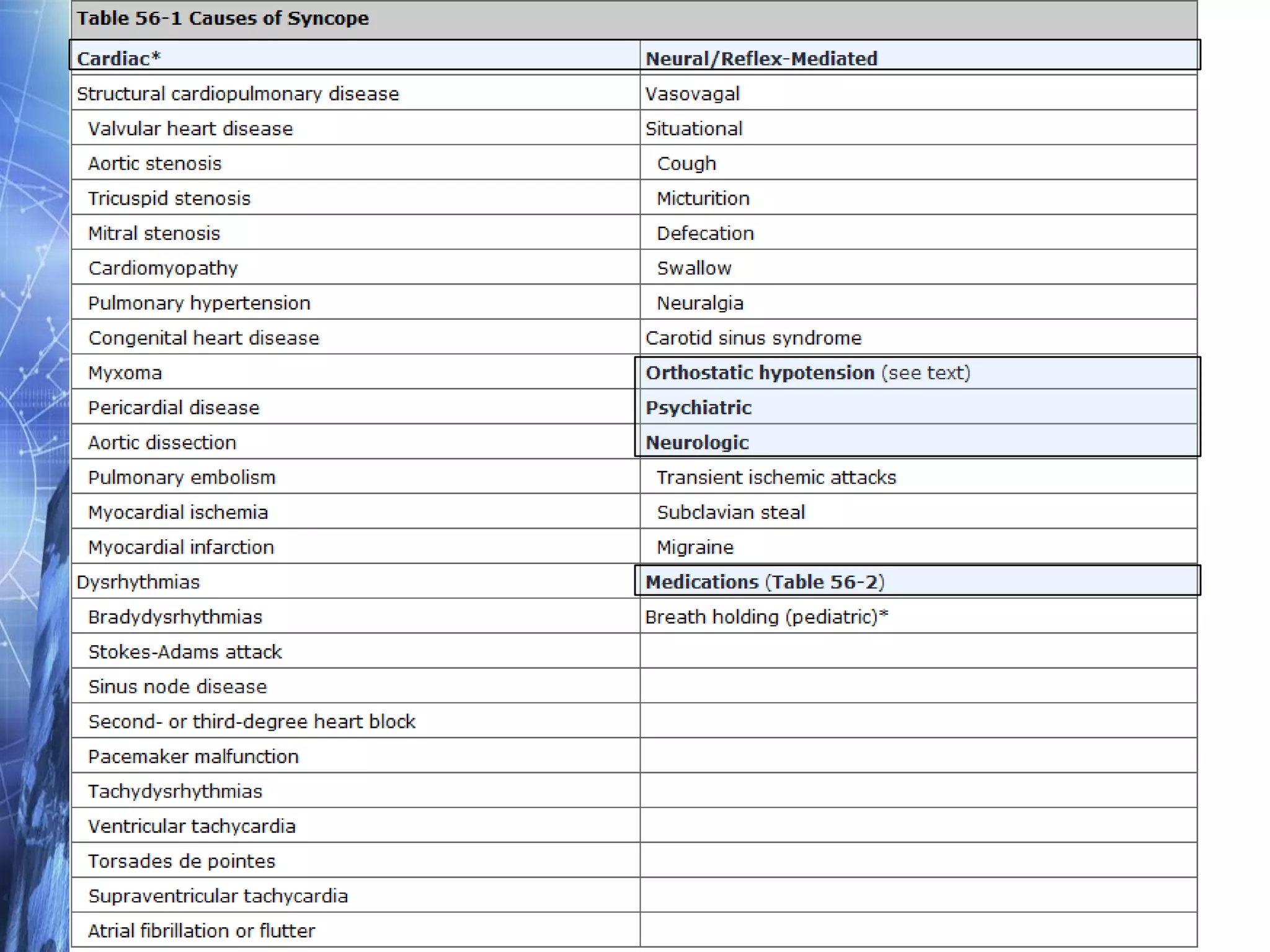
ETIOLOGY
Cardiac-Related Syncope
Aortic stenosis
 excluded as a cause of syncope in the elderly
 classic presentation: chest pain, dyspnea on
exertion, and syncope
Cardiac-Related Syncope
Dysrhythmias
 occur because of a primary electrolyte
imbalance as in hypomagnesemia (torsades de
pointes)
 rarely occur in structurally normal hearts
 Exceptions: familial disorders of Brugada
syndrome, long QT syndrome, and
catecholamine-associated polymorphic
ventricular tachycardia
 typically sudden and usually without prodromal
symptoms
Vasovagal or Neurally/Reflex-
Mediated Syncope
Vasovagal syncope
 sensation of increased warmth
 preceding lightheadedness (prodrome) with
sweating and nausea
 slow, progressive onset with associated
prodrome
Vasovagal or Neurally/Reflex-
Mediated Syncope
Vasovagal syncope
 occur after exposure to an unexpected or
unpleasant sight, sound, smell, fear, severe
pain, emotional distress, and/or instrumentation
 occur in association with prolonged standing or
kneeling in a crowded or warm place or on
exertion
 Upright tilt table testing
Vasovagal or Neurally/Reflex-
Mediated Syncope
Carotid sinus hypersensitivity
 more common in men, the elderly, and among
those with ischemic heart
disease, hypertension, and certain head and
neck malignancies
 shaving or turning of the head
 considered in all older patients with recurrent
syncope and negative cardiac evaluations
Orthostatic Syncope
 Orthostatic blood pressures are recommended
to be taken after 5 minutes of being supine.
 Measurements are repeated after 1 and 3
minutes of standing.
 A decrease of >20 mm Hg in the systolic
pressure is considered abnormal as is a drop in
pressure below 90 mm Hg independent of the
development of symptoms.
Orthostatic Syncope
 intravascular volume loss
 dehydration or blood loss
 poor vascular tone
 α-receptor disorders or medications
 other life-threatening causes of syncope should
be considered before orthostasis is considered
the cause
Psychiatric Illness
 generalized anxiety disorder and major
depressive disorder
 Hyperventilation: lead to hypocarbia, cerebral
vasoconstriction, and subsequent syncope
 assigned only after organic causes have been
excluded
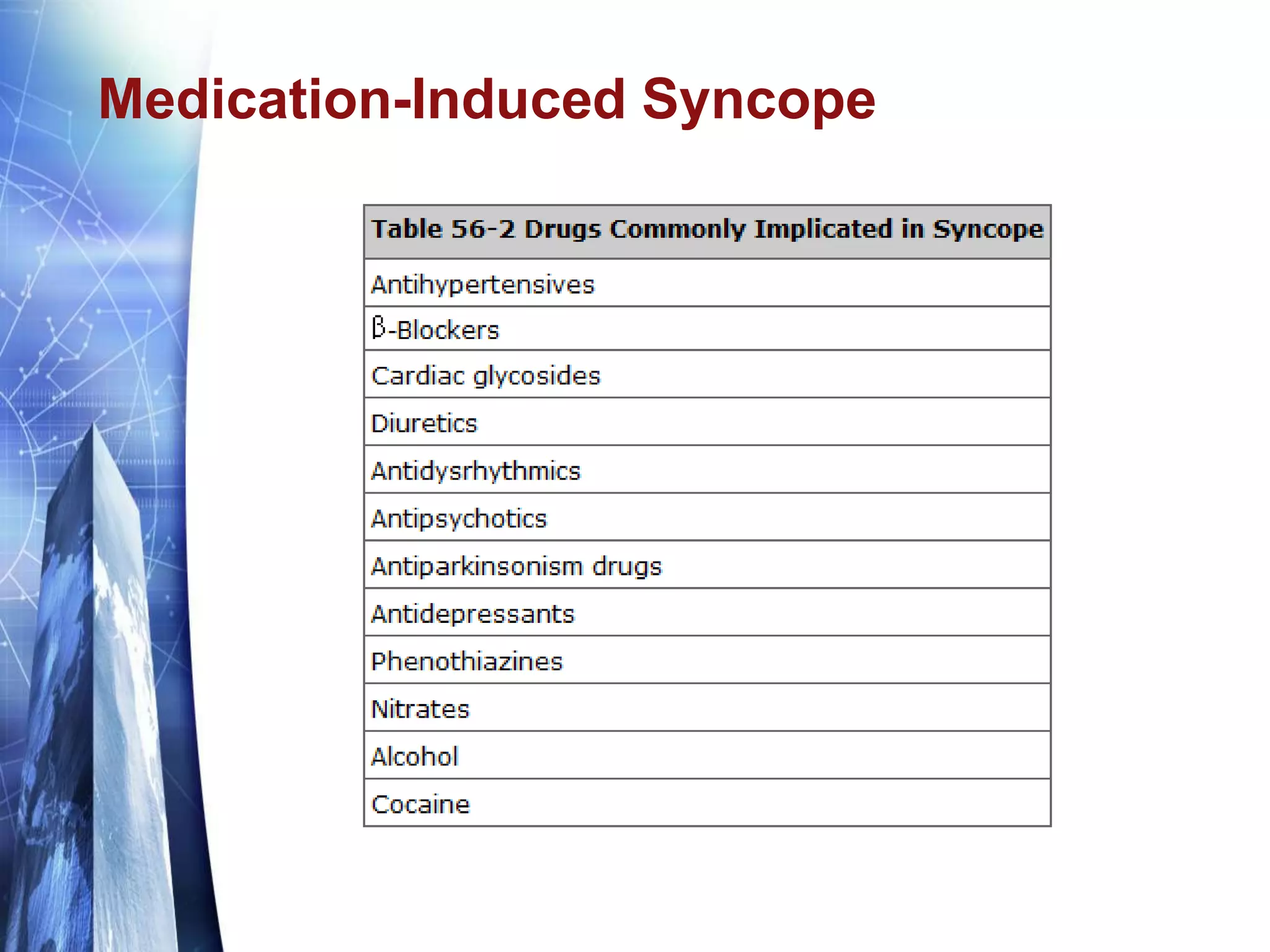
Medication-Induced Syncope
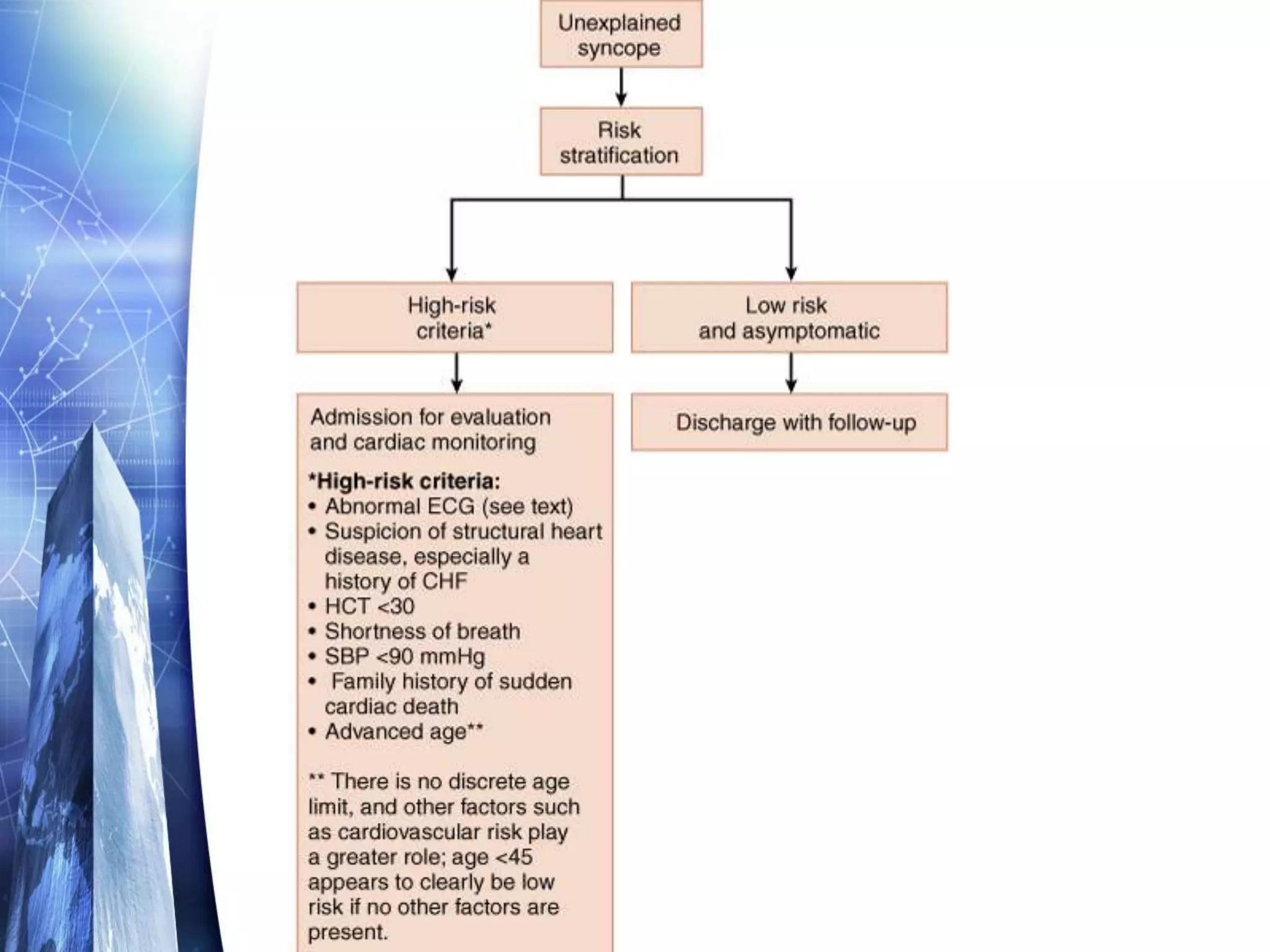
PRINCIPLES OF EVALUATION
History
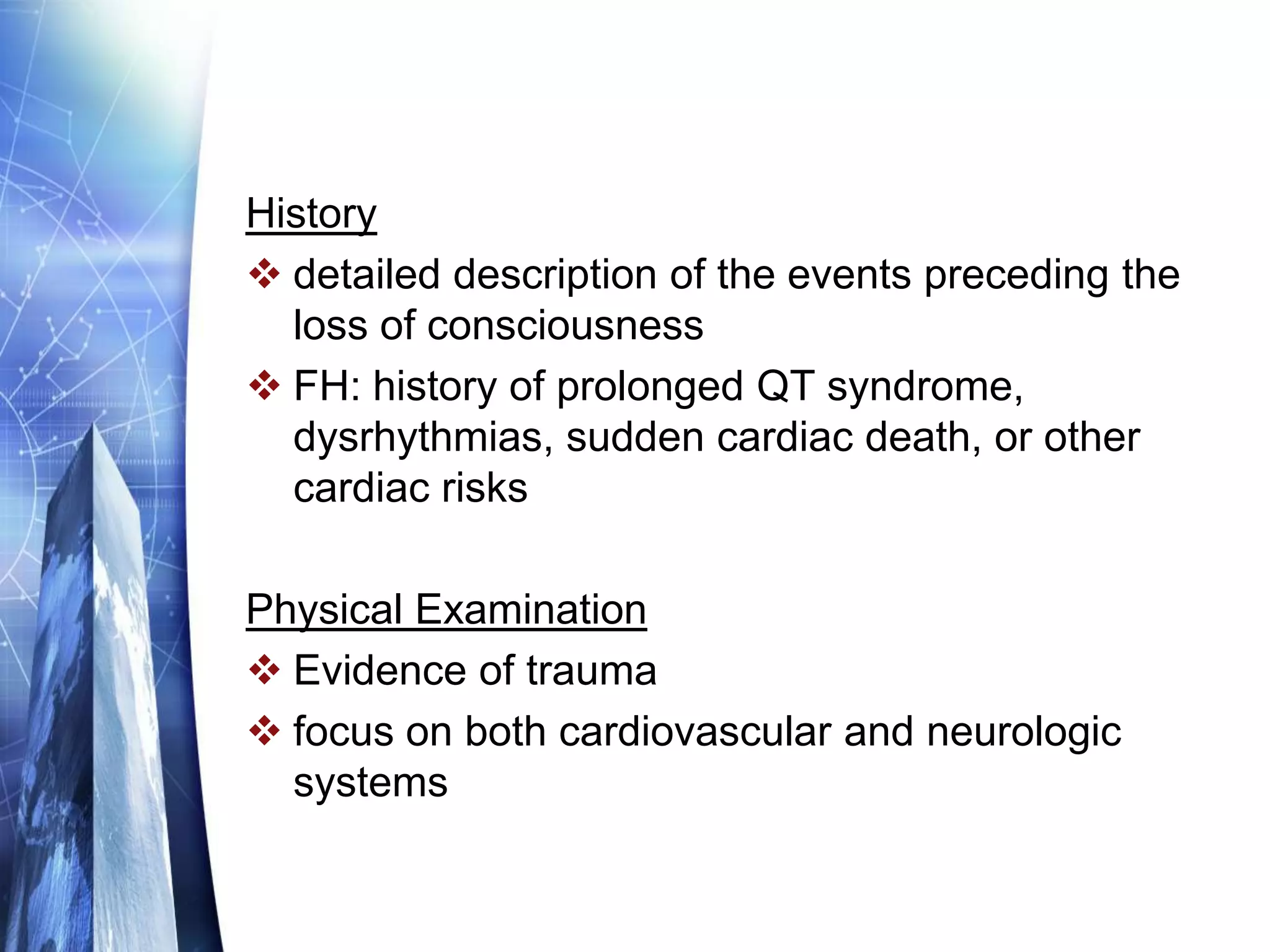
 detailed description of the events preceding the
loss of consciousness
 FH: history of prolonged QT syndrome,
dysrhythmias, sudden cardiac death, or other
cardiac risks
Physical Examination
 Evidence of trauma
 focus on both cardiovascular and neurologic
systems
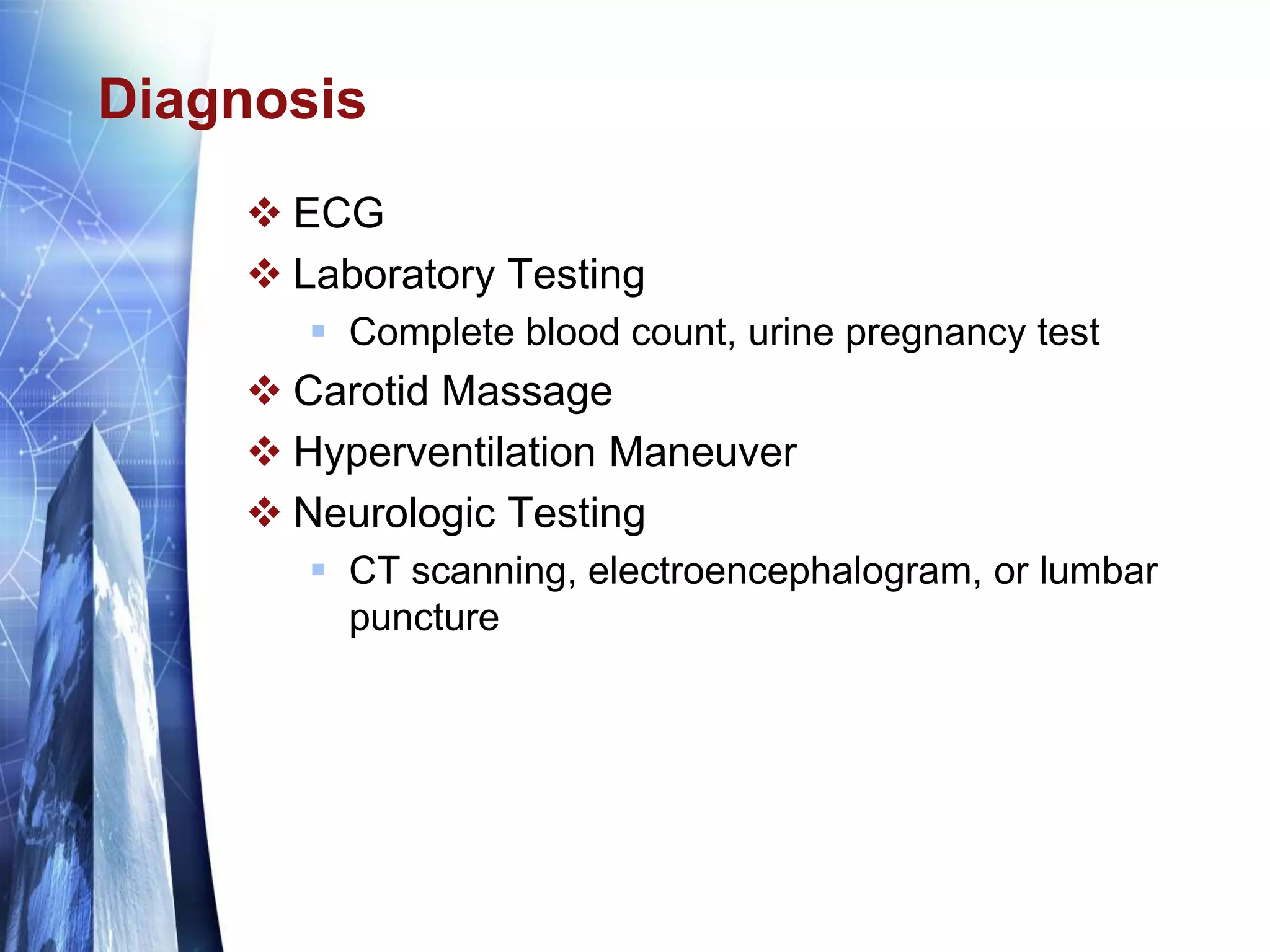
Diagnosis
 ECG
 Laboratory Testing
 Complete blood count, urine pregnancy test
 Carotid Massage
 Hyperventilation Maneuver
 Neurologic Testing
 CT scanning, electroencephalogram, or lumbar
puncture
DISPOSITION AND FOLLOW-
UP
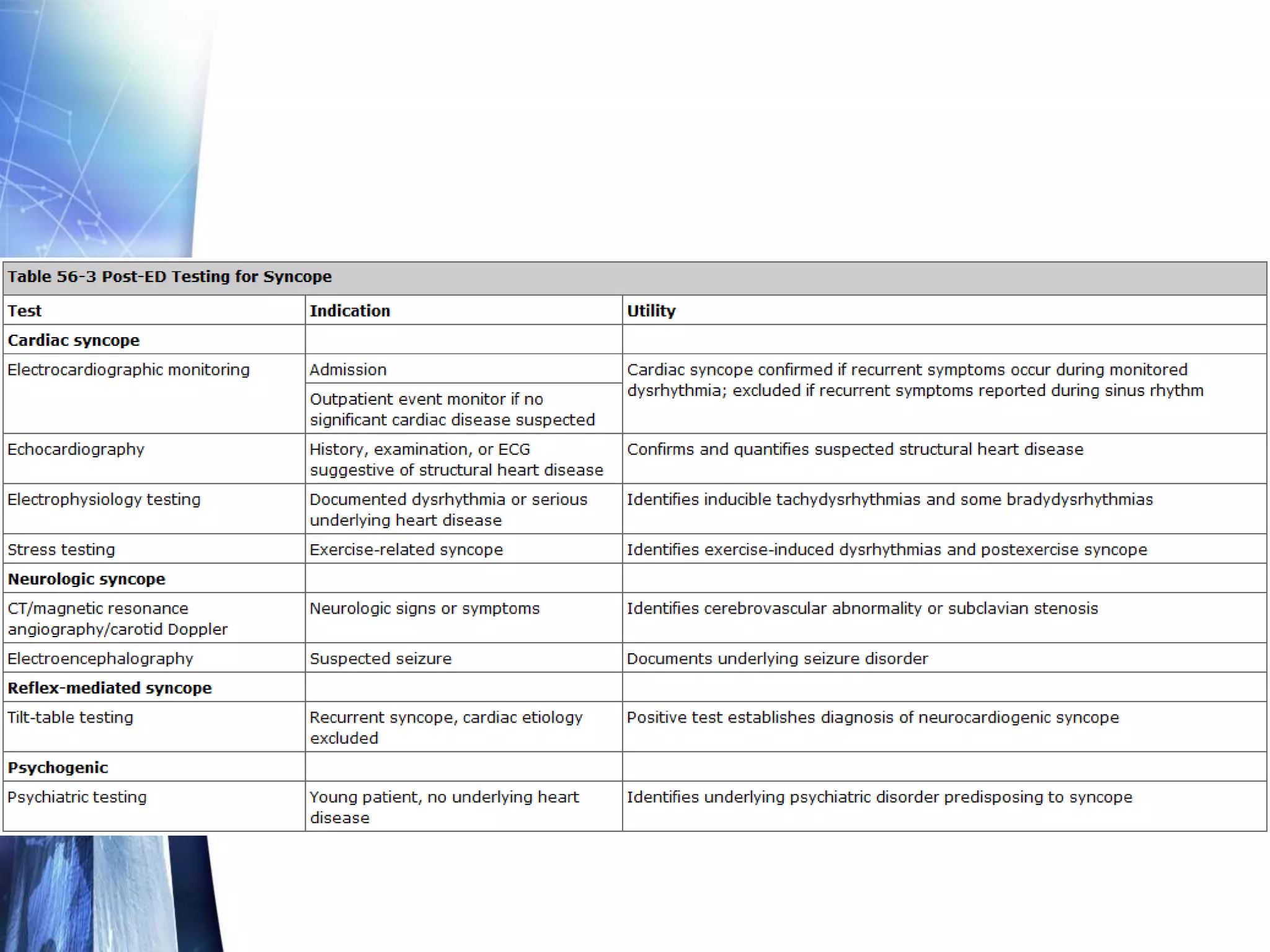
POST-ED EVALUATION
Reference
 Tintinalli's Emergency Medicine, 7e
ANY QUESTIONS?

Syncope

  • 1.
    Syncope Paleerat Jariyakanjana, MD Facultyof Medicine, Naresuan University 7 Jun 2013
  • 2.
     composed of brief loss of consciousness  inability to maintain postural tone  spontaneously and completely resolves without medical intervention  distinct from vertigo, seizures, coma, and states of altered consciousness
  • 3.
    Epidemiology  Near-syncope  premonitionof syncope without loss of consciousness  shares the same basic pathophysiologic process as syncope and likely carries the same risks
  • 4.
  • 6.
    Cardiac-Related Syncope Aortic stenosis excluded as a cause of syncope in the elderly  classic presentation: chest pain, dyspnea on exertion, and syncope
  • 7.
    Cardiac-Related Syncope Dysrhythmias  occurbecause of a primary electrolyte imbalance as in hypomagnesemia (torsades de pointes)  rarely occur in structurally normal hearts  Exceptions: familial disorders of Brugada syndrome, long QT syndrome, and catecholamine-associated polymorphic ventricular tachycardia  typically sudden and usually without prodromal symptoms
  • 8.
    Vasovagal or Neurally/Reflex- MediatedSyncope Vasovagal syncope  sensation of increased warmth  preceding lightheadedness (prodrome) with sweating and nausea  slow, progressive onset with associated prodrome
  • 9.
    Vasovagal or Neurally/Reflex- MediatedSyncope Vasovagal syncope  occur after exposure to an unexpected or unpleasant sight, sound, smell, fear, severe pain, emotional distress, and/or instrumentation  occur in association with prolonged standing or kneeling in a crowded or warm place or on exertion  Upright tilt table testing
  • 10.
    Vasovagal or Neurally/Reflex- MediatedSyncope Carotid sinus hypersensitivity  more common in men, the elderly, and among those with ischemic heart disease, hypertension, and certain head and neck malignancies  shaving or turning of the head  considered in all older patients with recurrent syncope and negative cardiac evaluations
  • 11.
    Orthostatic Syncope  Orthostaticblood pressures are recommended to be taken after 5 minutes of being supine.  Measurements are repeated after 1 and 3 minutes of standing.  A decrease of >20 mm Hg in the systolic pressure is considered abnormal as is a drop in pressure below 90 mm Hg independent of the development of symptoms.
  • 12.
    Orthostatic Syncope  intravascularvolume loss  dehydration or blood loss  poor vascular tone  α-receptor disorders or medications  other life-threatening causes of syncope should be considered before orthostasis is considered the cause
  • 13.
    Psychiatric Illness  generalizedanxiety disorder and major depressive disorder  Hyperventilation: lead to hypocarbia, cerebral vasoconstriction, and subsequent syncope  assigned only after organic causes have been excluded
  • 14.
  • 15.
  • 16.
    History  detailed descriptionof the events preceding the loss of consciousness  FH: history of prolonged QT syndrome, dysrhythmias, sudden cardiac death, or other cardiac risks Physical Examination  Evidence of trauma  focus on both cardiovascular and neurologic systems
  • 17.
    Diagnosis  ECG  LaboratoryTesting  Complete blood count, urine pregnancy test  Carotid Massage  Hyperventilation Maneuver  Neurologic Testing  CT scanning, electroencephalogram, or lumbar puncture
  • 18.
  • 22.
  • 24.
  • 25.