Transition Metals &
Ionic Charge
Group B elements
Courtesy of: Mr. Boroski
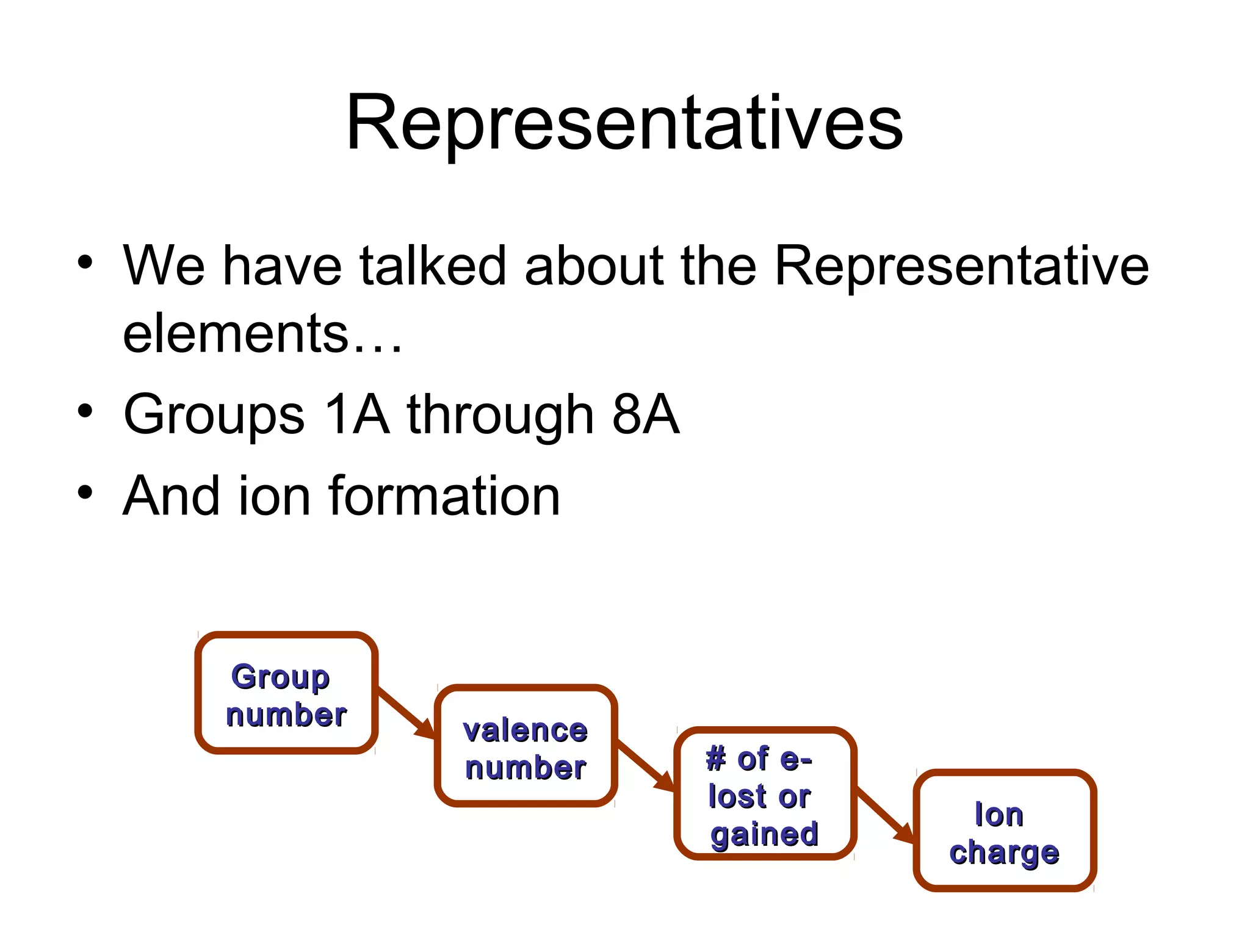
Representatives
• We have talked about the Representative
elements…
• Groups 1A through 8A
• And ion formation
IonIon
chargecharge
GroupGroup
numbernumber
valencevalence
numbernumber # of e-# of e-
lost orlost or
gainedgained
Transition elements
• Found in the middle of the table
• Known as the B group elements
• Are called transition because they can change
their charges!
• How do they become charged?
• By losing electrons.
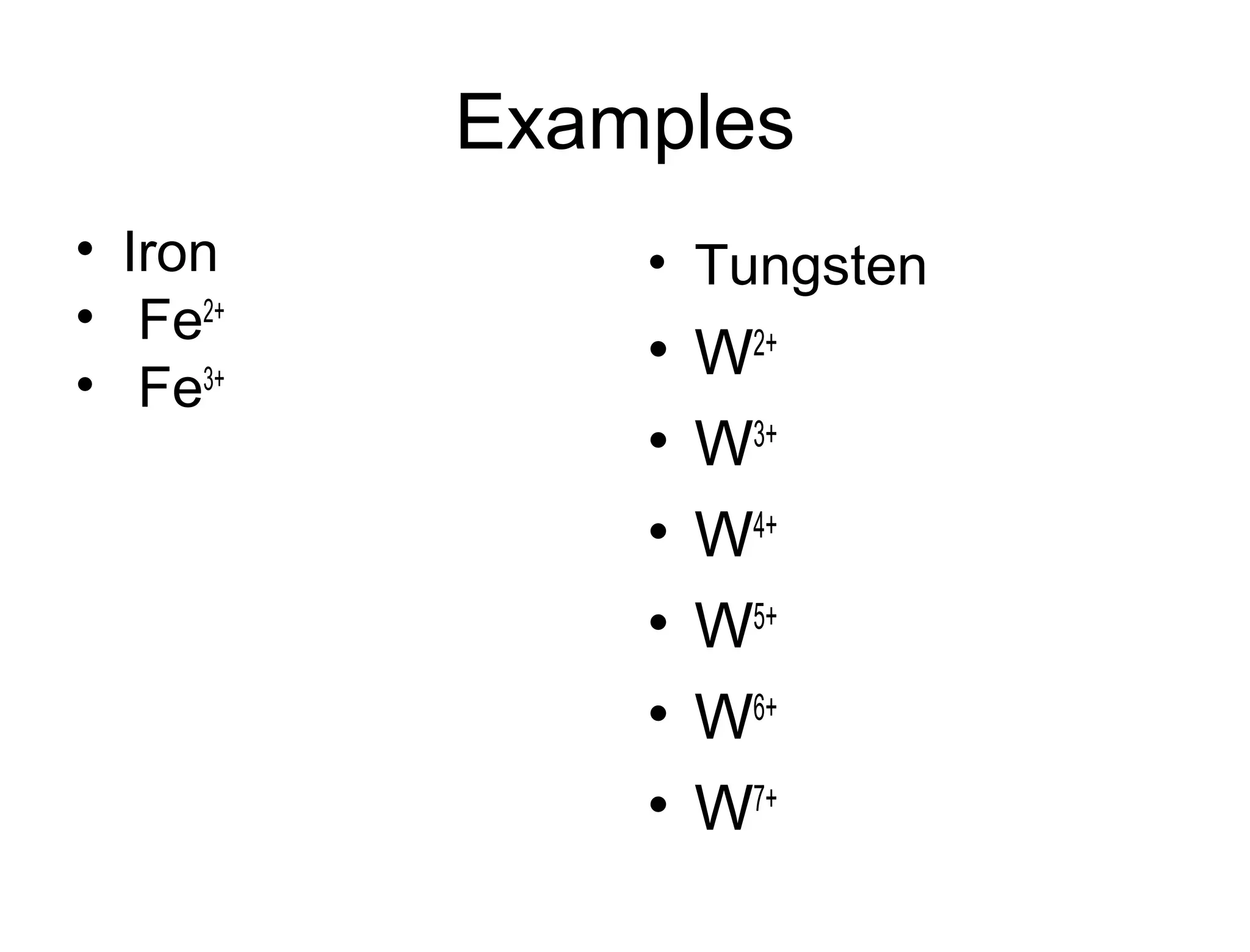
Examples
• Iron
• Fe2+
• Fe3+
• Tungsten
• W2+
• W3+
• W4+
• W5+
• W6+
• W7+
How do we predict???
• Cannot use group number!
• Must see how it reacts with other
elements.
• Need to see its OxidationOxidation
state (+ or -).state (+ or -).
Oxidation state
• Represents the charge of an atom in a
compound at a given time.
– It is similar to the charge on the atom.
• To figure, need to know the oxidation
state rules…
OXIDATION RULES
1. Oxidation state of an element (in its pure form)
is 0.
2. Oxidation state for representatives is their
ionic charge most of the time.
3. Oxygen is always –2 unless in a peroxide,
then it is –1.
4. H with nonmetals(covalent compounds) is
given +1 oxidation state. Usually in the front
of the formula.
5. The sum of oxidation numbers must be 0 for
compounds and whatever the charge of the
ionic species is.
To use rules:
• You need to be able to do two
things:
An atom inventory
Add and multiply whole numbers that are
positive and negative.
Examples:
Find oxidation states for all elements present.
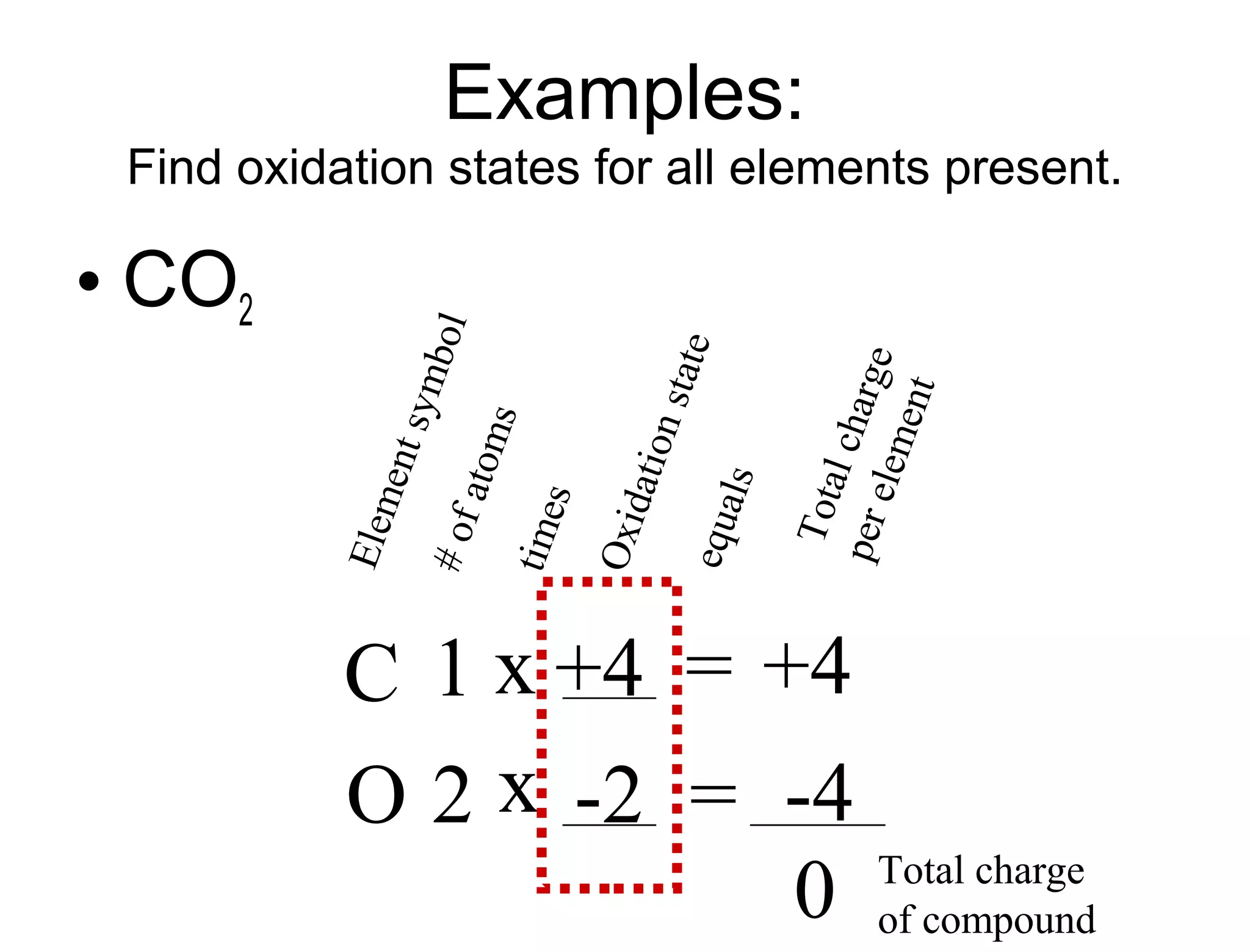
• CO2
C
O
1
2
x
x
=
=
0
-2 -4
+4+4
Total charge
of compound
#ofatoms
times
Oxidationstate
Totalchargeperelement
Elementsymbol
equals
Examples:
Find oxidation states for all elements present.
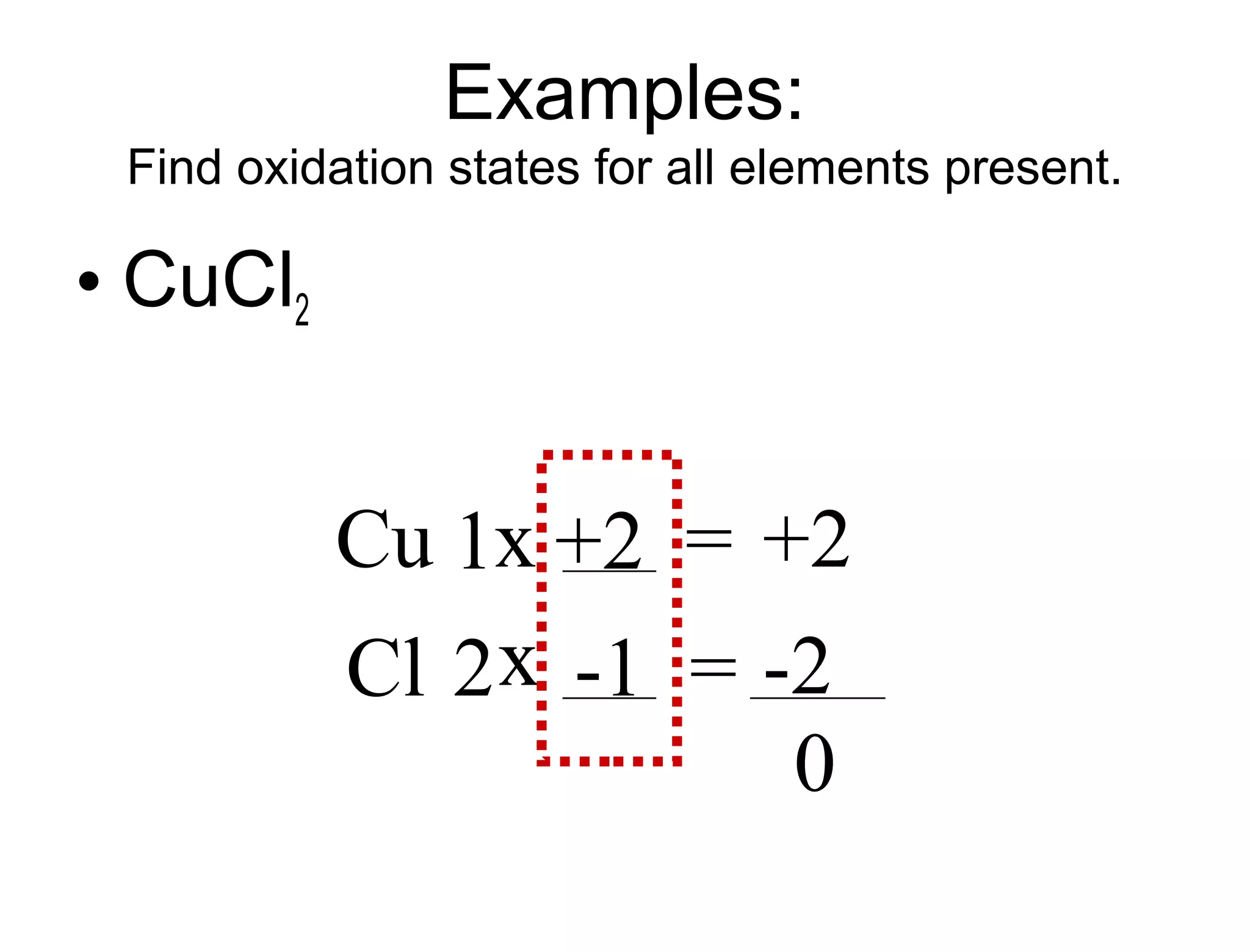
• CuCl2
Cu
Cl
1
2
x
x
=
=
0
-1 -2
+2+2
Examples:
Find oxidation states for all elements present.
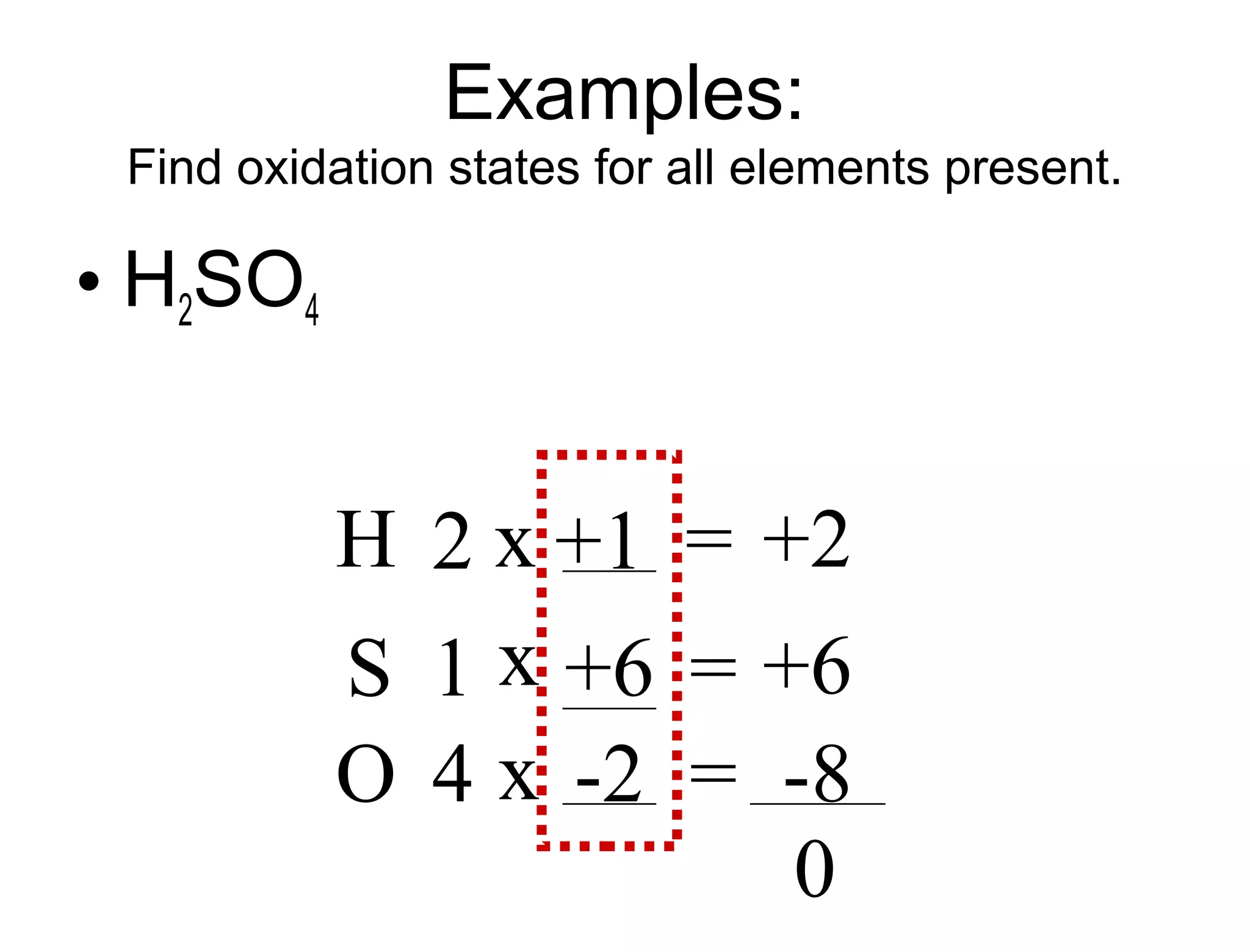
• H2SO4
H
S
2
1
x
x
=
=
0
+6 +6
+2+1
O 4 x =-2 -8
Examples:
Find oxidation states for all elements present.
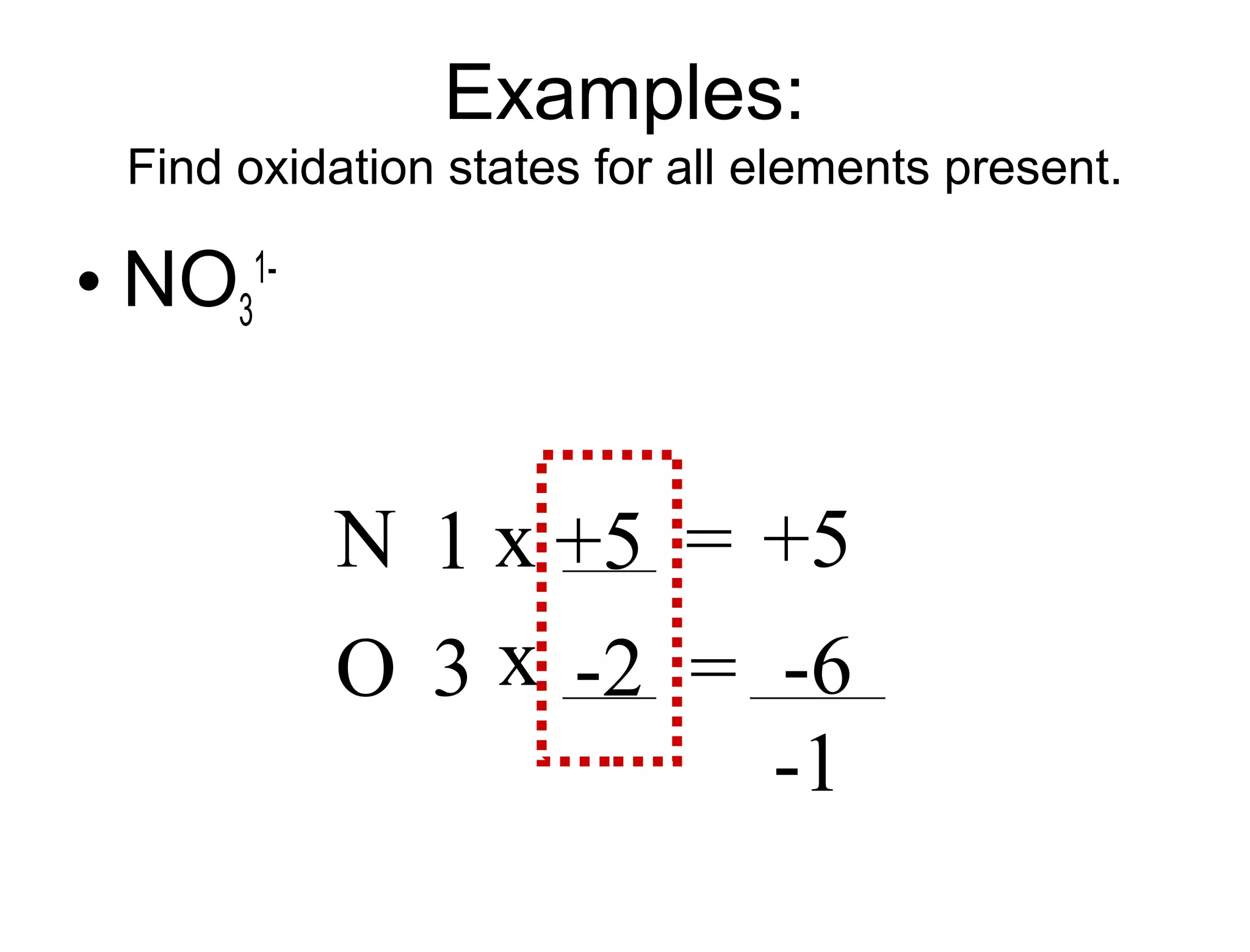
• NO3
1-
N
O
1
3
x
x
=
=
-1
-2 -6
+5+5
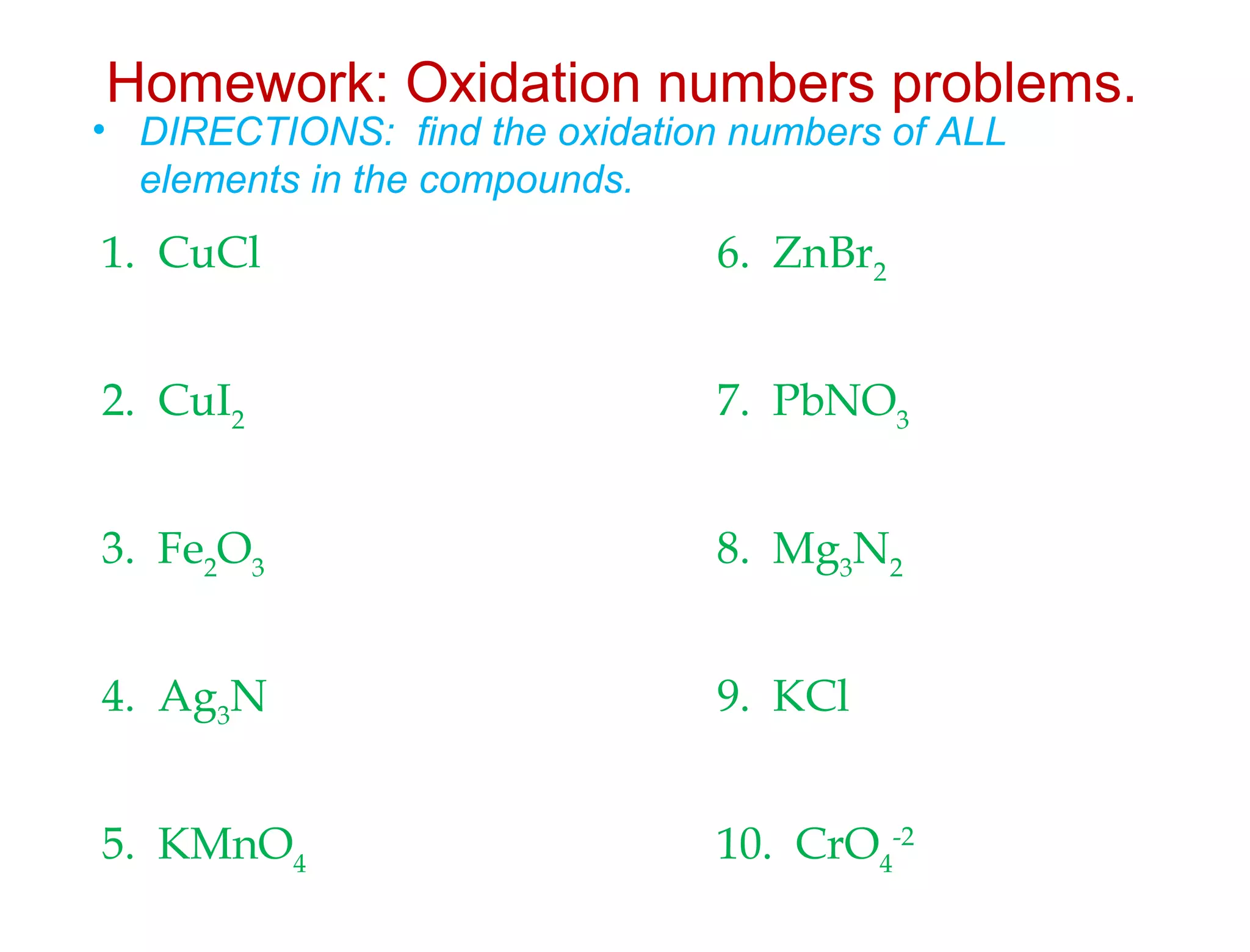
Homework: Oxidation numbers problems.
• DIRECTIONS: find the oxidation numbers of ALL
elements in the compounds.
1. CuCl 6. ZnBr2
2. CuI2
7. PbNO3
3. Fe2
O3
8. Mg3
N2
4. Ag3
N 9. KCl
5. KMnO4
10. CrO4
-2

5.1 b groups oxidation states

  • 1.
    Transition Metals & IonicCharge Group B elements Courtesy of: Mr. Boroski
  • 2.
    Representatives • We havetalked about the Representative elements… • Groups 1A through 8A • And ion formation IonIon chargecharge GroupGroup numbernumber valencevalence numbernumber # of e-# of e- lost orlost or gainedgained
  • 3.
    Transition elements • Foundin the middle of the table • Known as the B group elements • Are called transition because they can change their charges! • How do they become charged? • By losing electrons.
  • 4.
    Examples • Iron • Fe2+ •Fe3+ • Tungsten • W2+ • W3+ • W4+ • W5+ • W6+ • W7+
  • 5.
    How do wepredict??? • Cannot use group number! • Must see how it reacts with other elements. • Need to see its OxidationOxidation state (+ or -).state (+ or -).
  • 6.
    Oxidation state • Representsthe charge of an atom in a compound at a given time. – It is similar to the charge on the atom. • To figure, need to know the oxidation state rules…
  • 7.
    OXIDATION RULES 1. Oxidationstate of an element (in its pure form) is 0. 2. Oxidation state for representatives is their ionic charge most of the time. 3. Oxygen is always –2 unless in a peroxide, then it is –1. 4. H with nonmetals(covalent compounds) is given +1 oxidation state. Usually in the front of the formula. 5. The sum of oxidation numbers must be 0 for compounds and whatever the charge of the ionic species is.
  • 8.
    To use rules: •You need to be able to do two things: An atom inventory Add and multiply whole numbers that are positive and negative.
  • 9.
    Examples: Find oxidation statesfor all elements present. • CO2 C O 1 2 x x = = 0 -2 -4 +4+4 Total charge of compound #ofatoms times Oxidationstate Totalchargeperelement Elementsymbol equals
  • 10.
    Examples: Find oxidation statesfor all elements present. • CuCl2 Cu Cl 1 2 x x = = 0 -1 -2 +2+2
  • 11.
    Examples: Find oxidation statesfor all elements present. • H2SO4 H S 2 1 x x = = 0 +6 +6 +2+1 O 4 x =-2 -8
  • 12.
    Examples: Find oxidation statesfor all elements present. • NO3 1- N O 1 3 x x = = -1 -2 -6 +5+5
  • 13.
    Homework: Oxidation numbersproblems. • DIRECTIONS: find the oxidation numbers of ALL elements in the compounds. 1. CuCl 6. ZnBr2 2. CuI2 7. PbNO3 3. Fe2 O3 8. Mg3 N2 4. Ag3 N 9. KCl 5. KMnO4 10. CrO4 -2