Solutions 13.1
Mixtures A  solution  is a homogeneous mixture of two or more substances uniformly dispersed throughout a single   phase. Stable…no settling.  In a  homogeneous  mixture the particles are molecule-sized, so the mixture appears to be made of only one substance. Homo = looks the same The particles of a  heterogeneous   mixture are large enough to see. Hetero = looks different
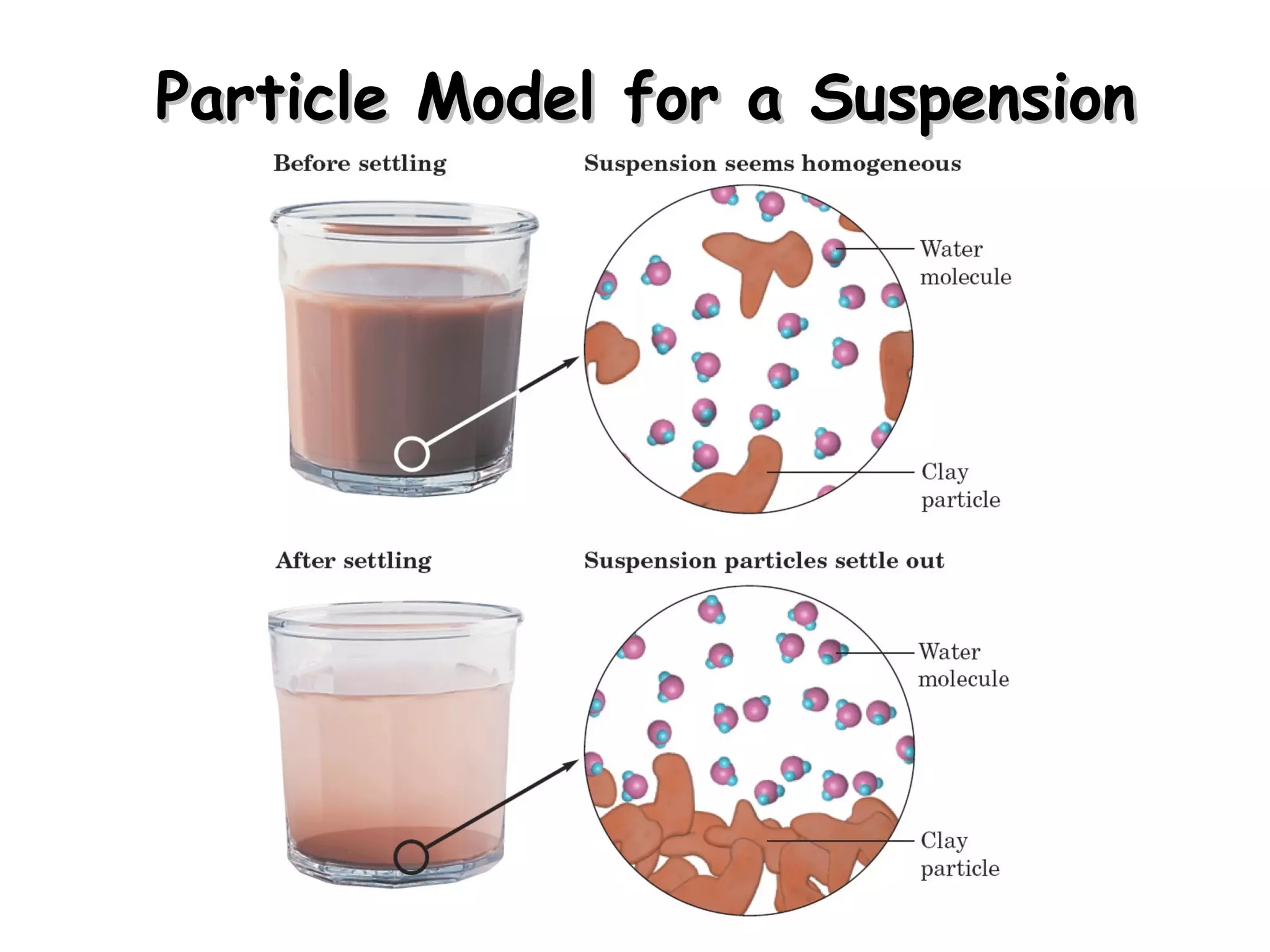
Suspensions A   suspension   is a mixture in which particles of a material are more or less evenly dispersed throughout a liquid or gas. In a suspension, the particles may remain mixed with the liquid while the liquid is being stirred, but later they settle to the bottom. Not stable.
Particle Model for a Suspension
Solution Any mixture that is homogeneous.  Air is a gaseous solution. A homogeneous liquid mixture:  one main component—a liquid one or more additional ingredients that are present in smaller amounts.
Solutions The  solvent   is the primary ingredient in a solution. Water is the most common solvent. Water is known as the universal solvent.  The other ingredients are the   solutes.   Solutes are dissolved in the solvent. Aqueous  solutions have water as the solvent.
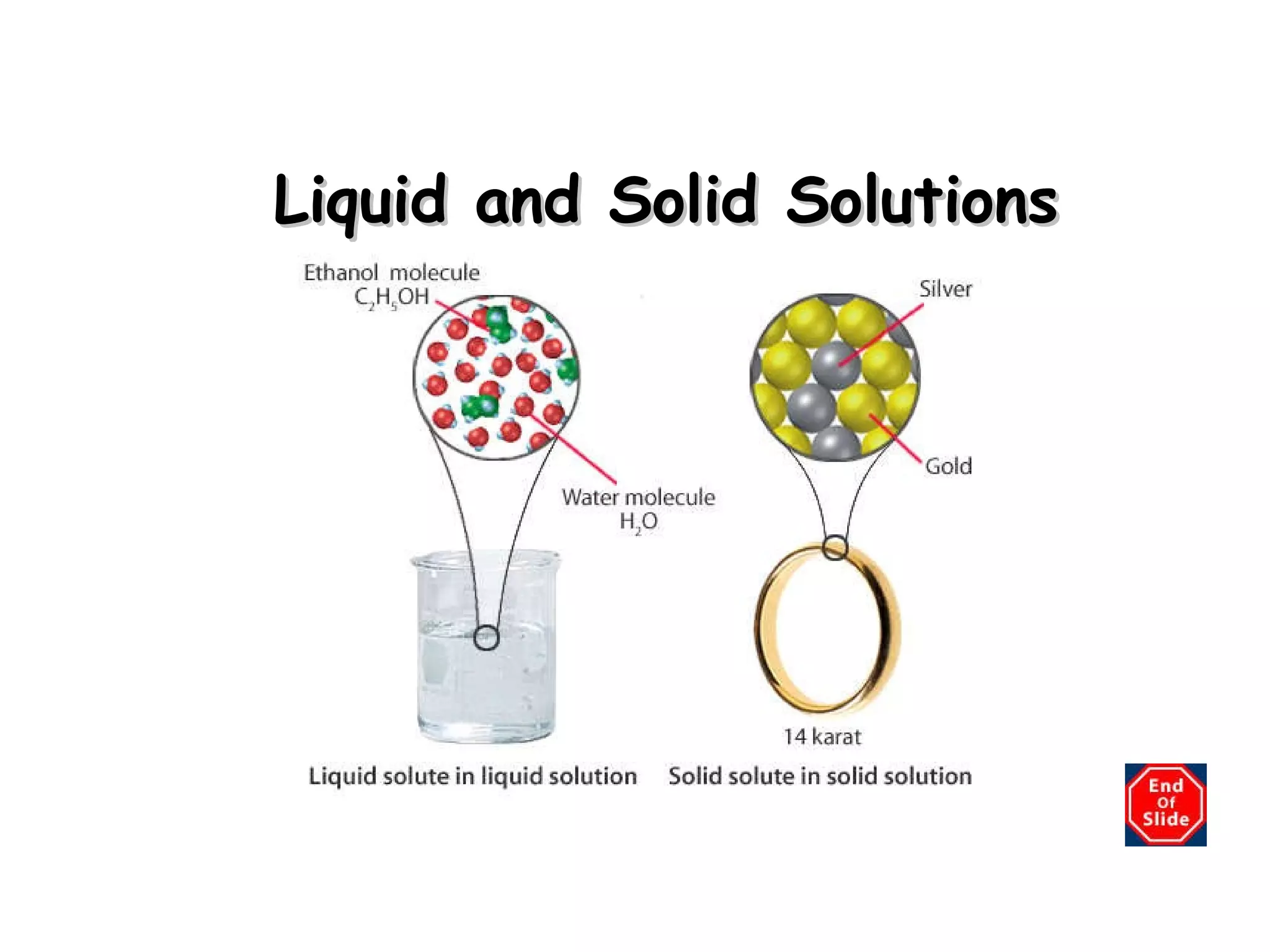
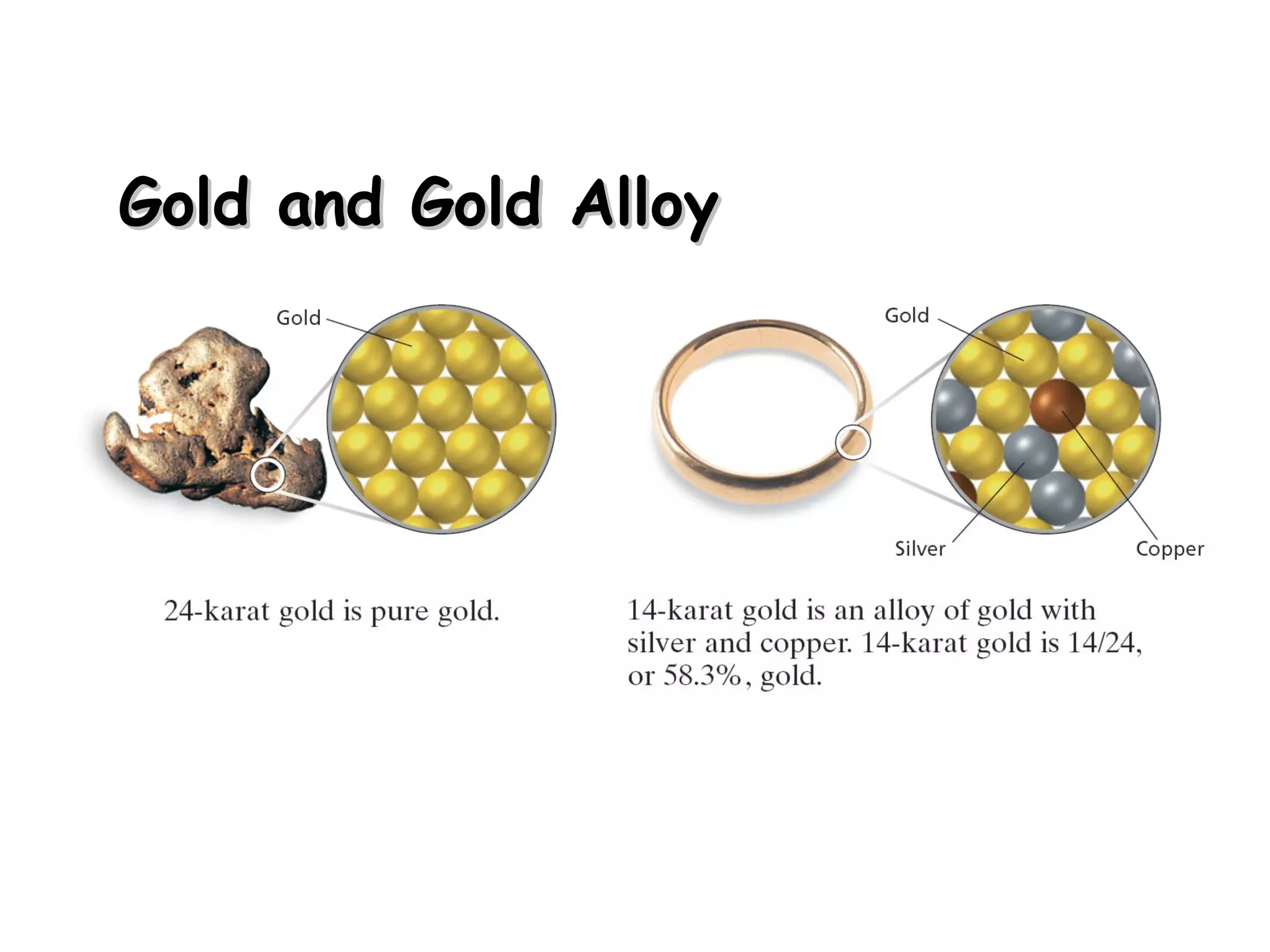
Solid Solutions? Another type of solution involves one solid mixed with another solid. Examples include alloys such as: brass, bronze, and steel The “gold penny” you made in lab was really brass.
Liquid and Solid Solutions
Gold and Gold Alloy
Colloids A  colloid   is a mixture.  Particles are  middle sized .  Bigger than solution but smaller than Stable Homogeneous Example: Milk  Looks homogeneous. But milk contains fat and lumps of casein (protein) in a liquid called   whey.
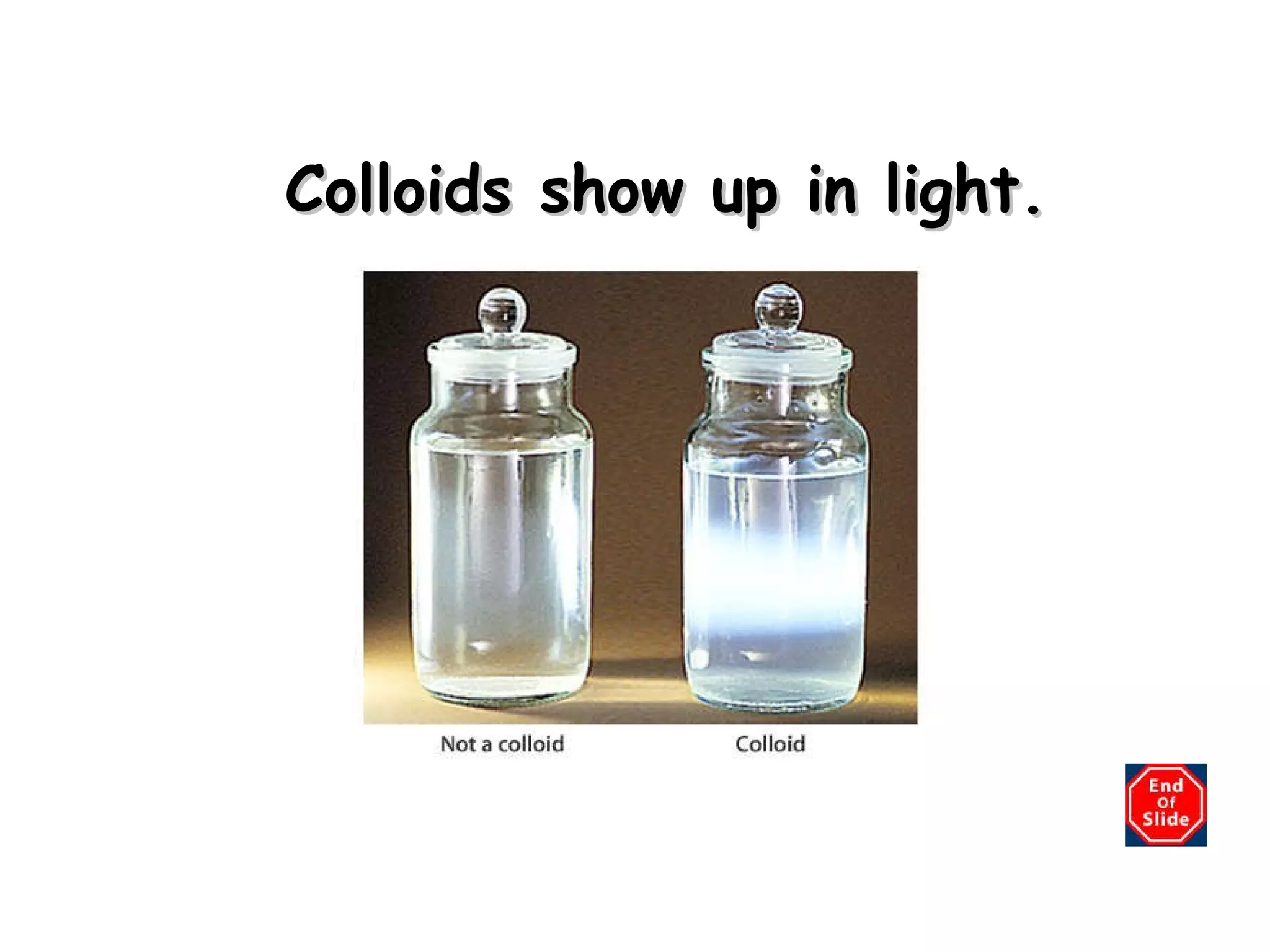
Colloids show up in light.
Separating Mixtures Mixtures are separated based on their physical properties. Filtering, settling, evaporation… Chromatography   separates by differences in attraction.
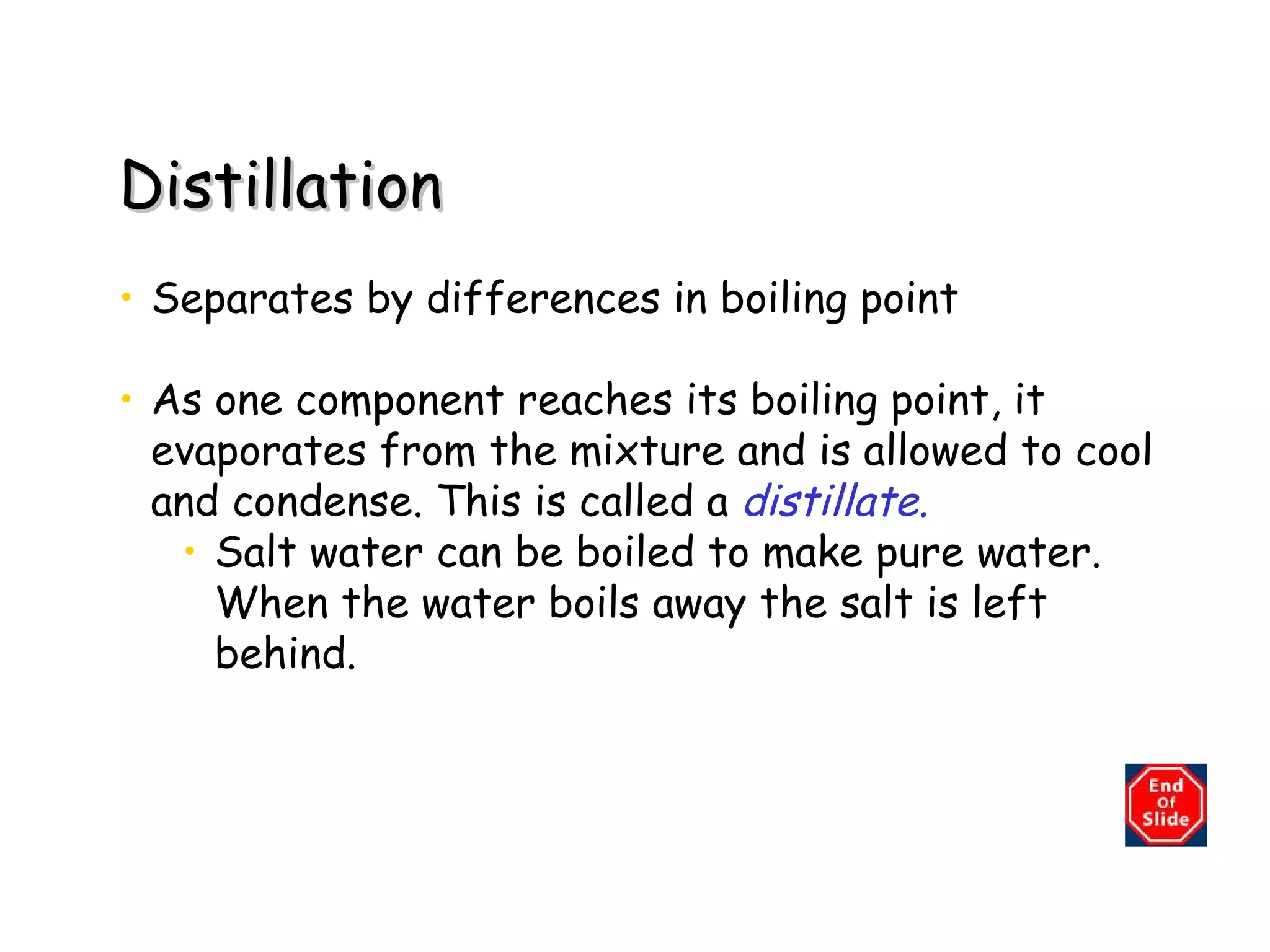
Distillation Separates by differences in boiling point As one component reaches its boiling point, it evaporates from the mixture and is allowed to cool and condense. This is called a   distillate. Salt water can be boiled to make pure water.  When the water boils away the salt is left behind.
READ CHAPTER 13 SECTION 1 ADD ANY VOCAB THAT I DID NOT COVER TO YOUR 13.1 NOTES. DO: p.459 1-12

13.1 solutions

  • 1.
  • 2.
    Mixtures A solution is a homogeneous mixture of two or more substances uniformly dispersed throughout a single phase. Stable…no settling. In a homogeneous mixture the particles are molecule-sized, so the mixture appears to be made of only one substance. Homo = looks the same The particles of a heterogeneous mixture are large enough to see. Hetero = looks different
  • 3.
    Suspensions A suspension is a mixture in which particles of a material are more or less evenly dispersed throughout a liquid or gas. In a suspension, the particles may remain mixed with the liquid while the liquid is being stirred, but later they settle to the bottom. Not stable.
  • 4.
    Particle Model fora Suspension
  • 5.
    Solution Any mixturethat is homogeneous. Air is a gaseous solution. A homogeneous liquid mixture: one main component—a liquid one or more additional ingredients that are present in smaller amounts.
  • 6.
    Solutions The solvent is the primary ingredient in a solution. Water is the most common solvent. Water is known as the universal solvent. The other ingredients are the solutes. Solutes are dissolved in the solvent. Aqueous solutions have water as the solvent.
  • 7.
    Solid Solutions? Anothertype of solution involves one solid mixed with another solid. Examples include alloys such as: brass, bronze, and steel The “gold penny” you made in lab was really brass.
  • 8.
  • 9.
  • 10.
    Colloids A colloid is a mixture. Particles are middle sized . Bigger than solution but smaller than Stable Homogeneous Example: Milk Looks homogeneous. But milk contains fat and lumps of casein (protein) in a liquid called whey.
  • 11.
  • 12.
    Separating Mixtures Mixturesare separated based on their physical properties. Filtering, settling, evaporation… Chromatography separates by differences in attraction.
  • 13.
    Distillation Separates bydifferences in boiling point As one component reaches its boiling point, it evaporates from the mixture and is allowed to cool and condense. This is called a distillate. Salt water can be boiled to make pure water. When the water boils away the salt is left behind.
  • 14.
    READ CHAPTER 13SECTION 1 ADD ANY VOCAB THAT I DID NOT COVER TO YOUR 13.1 NOTES. DO: p.459 1-12