Trace elements
IPC
Kabin Maleku
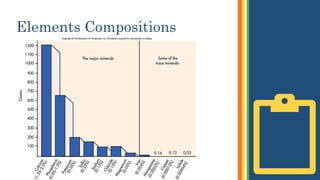
Elements Compositions
Trace Elements
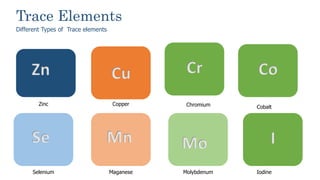
Different Types of Trace elements
Zinc
Selenium
Copper
Maganese
Chromium
Molybdenum
Zn Cu Cr
Se Mn Mo
Co
I
Cobalt
Iodine
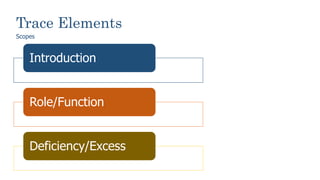
Trace Elements
Scopes
Introduction
Role/Function
Deficiency/Excess
Copper
• Cu is an essential nutrient.
• Rapid growth increases Cu demands in infancy.
• The adult body contains approximately 100 mg of copper – the
highest concentrations are in liver, kidney, and hearth.
• The absorption in gastrointestinal tract requires a specific
mechanism - metal binding protein metallothionein
(Cu2+ ions are highly insoluble).
• Ceruloplasmin (CP) is a glycoprotein, copper-dependent
ferroxidase (95% of the total copper in human plasma), oxidizes
Fe2+ to Fe3+ in gastrointestinal iron absorption mechanism.
Copper metabolism
• Cu is an essential cofactor in a number of critical enzymes in
metabolism:
• superoxide dismutase (Cu/Zn-SOD)
• cytochrome c oxidase (COX)
• tyrosinase
• monoamino oxidase
• lysyloxidase
•
• Cu metabolism is altered in inflammation, infection, an cancer.
• In infection, Cu is essential for production of Ile-2 by activated
lymphocytes.
• In cancer, plasma CP is positively correlated with disease
stage.
Copper Diseases
• Deficiency
Anemia
Leukopenia
Neutropenia
Bone changes (children): irregular, Bone cortex thinning
• Excess State
Nausea, vomiting, heartburn, diarrhea, jaundice, hemoglobinuria,
hematuria, oliguria, anuria, hypotension, coma, melena
Molybdenum
• Metal required for the function of the metalloenzymes:
• xantine oxydase
• aldehyde oxidase
• sulfite oxidase
• Nitrous acid oxidase
• Some evidence that Mo can interfere with Co metabolism
by the diminishing the efficiency of copper utilization.
• (the foot content of Mo is highly dependent upon the soil
type in which the foodstuff are grown).
Molybdenum Role
•Amino acid metabolism
•Uric acid metabolism
•Sulfuric acid/sulfurous acid metabolism
Molybdenum Diseases
• Deficiency
Tachycardia
Polypnea
Night blindness
Irritability
Disorientation
Coma
Excess State
Hyperuricemia, gout
Manganese
• High concentration of Mn2+ is present in mitochondria
• Functions as a necessary factor for activation of
glycosyltransferases (enzymes responsible for the synthesis
of oligosaccharides, glycoproteins, proteoglycans.
• Required for superoxid dismutase activity, for activity of
metalloenzymes:
• hydrolases
• kinases
• decarboxylases
• transferases.
• Deficiency of Mn extensively reduce glycoprotein and
proteoglycan formation.
Manganese Diseases
• Deficiency
Reduced serum cholesterol
Reduced coagulation
Hair reddening
Dermatitis
Growth retardation
Excess State
Parkinsonian syndrome
Impotence, loss of vigor, edema, myalgia, headache,
Extrapyramidal disorder
Iron
•Introduction
•Iron is an essential element for blood production.
About 70 percent of your body's iron is found in the
red blood cells of your blood called hemoglobin and in
muscle cells called myoglobin. Hemoglobin
is essential for transferring oxygen in your blood from
the lungs to the tissues.
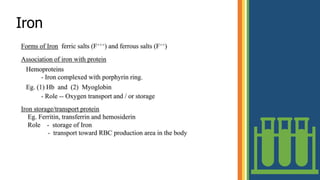
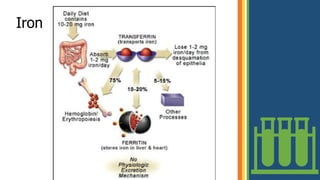
Iron
Iron
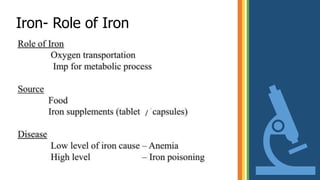
Iron- Role of Iron
Iron- haematenics
• HAEMATINICS
• are the agents used for formation of blood
• to treat various types of anaemia’s.
• These include: Iron, Vitamin B12 and Folic AcidA hematinic is a
nutrient required for the formation of blood cells in the process of
hematopoiesis
Iron- Daily Intake
Iron- Deficiency
• The primary sources of heme iron are hemoglobin and myoglobin from
consumption of meat, poultry, and fish, whereas nonheme iron is obtained
from cereals, pulses, legumes, fruits, and vegetables
• GROUPS AT HIGH RISK: Poor, infants and adolescents, women of
reproductive age, pregnancy,
• Iron deficiency anemia
• Anemia of chronic disease-due to elevated hepcidin
• Anemia from active bleeding
• Anemia related to kidney disease-deficiency of erythropoietin
• Anemia related to pregnancy
• Anemia related to poor nutrition
• Thalassemia
End of Topic

Essential Trace elements and Iron.pptx

  • 1.
  • 2.
  • 3.
    Trace Elements Different Typesof Trace elements Zinc Selenium Copper Maganese Chromium Molybdenum Zn Cu Cr Se Mn Mo Co I Cobalt Iodine
  • 4.
  • 5.
    Copper • Cu isan essential nutrient. • Rapid growth increases Cu demands in infancy. • The adult body contains approximately 100 mg of copper – the highest concentrations are in liver, kidney, and hearth. • The absorption in gastrointestinal tract requires a specific mechanism - metal binding protein metallothionein (Cu2+ ions are highly insoluble). • Ceruloplasmin (CP) is a glycoprotein, copper-dependent ferroxidase (95% of the total copper in human plasma), oxidizes Fe2+ to Fe3+ in gastrointestinal iron absorption mechanism.
  • 6.
    Copper metabolism • Cuis an essential cofactor in a number of critical enzymes in metabolism: • superoxide dismutase (Cu/Zn-SOD) • cytochrome c oxidase (COX) • tyrosinase • monoamino oxidase • lysyloxidase • • Cu metabolism is altered in inflammation, infection, an cancer. • In infection, Cu is essential for production of Ile-2 by activated lymphocytes. • In cancer, plasma CP is positively correlated with disease stage.
  • 7.
    Copper Diseases • Deficiency Anemia Leukopenia Neutropenia Bonechanges (children): irregular, Bone cortex thinning • Excess State Nausea, vomiting, heartburn, diarrhea, jaundice, hemoglobinuria, hematuria, oliguria, anuria, hypotension, coma, melena
  • 8.
    Molybdenum • Metal requiredfor the function of the metalloenzymes: • xantine oxydase • aldehyde oxidase • sulfite oxidase • Nitrous acid oxidase • Some evidence that Mo can interfere with Co metabolism by the diminishing the efficiency of copper utilization. • (the foot content of Mo is highly dependent upon the soil type in which the foodstuff are grown).
  • 9.
    Molybdenum Role •Amino acidmetabolism •Uric acid metabolism •Sulfuric acid/sulfurous acid metabolism
  • 10.
    Molybdenum Diseases • Deficiency Tachycardia Polypnea Nightblindness Irritability Disorientation Coma Excess State Hyperuricemia, gout
  • 11.
    Manganese • High concentrationof Mn2+ is present in mitochondria • Functions as a necessary factor for activation of glycosyltransferases (enzymes responsible for the synthesis of oligosaccharides, glycoproteins, proteoglycans. • Required for superoxid dismutase activity, for activity of metalloenzymes: • hydrolases • kinases • decarboxylases • transferases. • Deficiency of Mn extensively reduce glycoprotein and proteoglycan formation.
  • 12.
    Manganese Diseases • Deficiency Reducedserum cholesterol Reduced coagulation Hair reddening Dermatitis Growth retardation Excess State Parkinsonian syndrome Impotence, loss of vigor, edema, myalgia, headache, Extrapyramidal disorder
  • 13.
    Iron •Introduction •Iron is anessential element for blood production. About 70 percent of your body's iron is found in the red blood cells of your blood called hemoglobin and in muscle cells called myoglobin. Hemoglobin is essential for transferring oxygen in your blood from the lungs to the tissues.
  • 14.
  • 15.
  • 16.
  • 17.
    Iron- haematenics • HAEMATINICS •are the agents used for formation of blood • to treat various types of anaemia’s. • These include: Iron, Vitamin B12 and Folic AcidA hematinic is a nutrient required for the formation of blood cells in the process of hematopoiesis
  • 18.
  • 19.
    Iron- Deficiency • Theprimary sources of heme iron are hemoglobin and myoglobin from consumption of meat, poultry, and fish, whereas nonheme iron is obtained from cereals, pulses, legumes, fruits, and vegetables • GROUPS AT HIGH RISK: Poor, infants and adolescents, women of reproductive age, pregnancy, • Iron deficiency anemia • Anemia of chronic disease-due to elevated hepcidin • Anemia from active bleeding • Anemia related to kidney disease-deficiency of erythropoietin • Anemia related to pregnancy • Anemia related to poor nutrition • Thalassemia
  • 20.