5 Moment Hand HygieneSN CHUNGB. Sc. Hons Nursing Practice Development15/8/2010
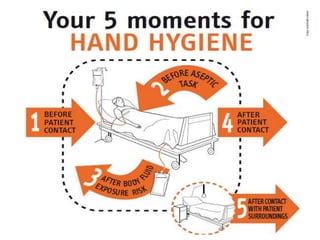
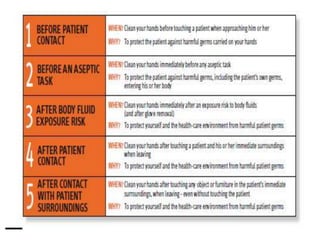
ExamplesBefore PatientShaking hands, helping a patient to move around, getting washed, taking pulse, blood pressure, chest auscultation, abdominal palpationBefore clean/ aseptic procedureOral/dental care, secretion aspiration, skin lesion care, wound dressing, subcutaneous injection; catheter insertion, opening a vascular access system; preparation of food, medication, dressing sets
After body fluid exposure riskOral/dental care, secretion aspiration; skin lesion care, wound dressing, subcutaneous injection; drawing and manipulation any fluid sample, opening draining system, endotracheal tube insertion and removal; clearing up urines, faces, vomit; handling waste (bandages, napkin, incontinence pads); cleaning of contaminated and visibly soiled material or areas (lavatories, medical instruments)
After touching a patientShaking hands, helping a patient to move around, getting washed, taking pulse, taking blood pressure, chest auscultation, abdominal palpationAfter touching patient surroundingsChanging bed linen, perfusion speed adjustment, monitoring alarm, holding a bed rail, clearing the bedside table
Why we need to wash our hands?Hand washing helps to remove micro-organisms.Soap and water kills many transient micro-organisms that are mechanically removed by rinsing.Antimicrobial products kills or inhibits the growth of micro-organisms in deep layers of the skin
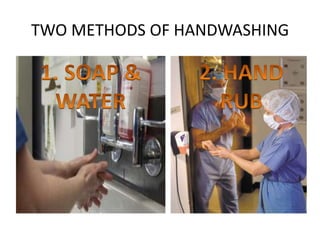
TWO METHODS OF HANDWASHING1. SOAP & WATER2. HAND RUB
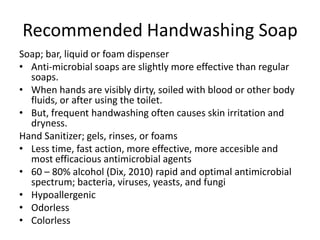
Recommended Handwashing SoapSoap; bar, liquid or foam dispenserAnti-microbial soaps are slightly more effective than regular soaps.When hands are visibly dirty, soiled with blood or other body fluids, or after using the toilet.But, frequent handwashing often causes skin irritation and dryness. Hand Sanitizer; gels, rinses, or foamsLess time, fast action, more effective, more accesible and most efficacious antimicrobial agents60 – 80% alcohol (Dix, 2010) - rapid and optimal antimicrobial spectrum; bacteria, viruses, yeasts, and fungi Hypoallergenic  OdorlessColorless
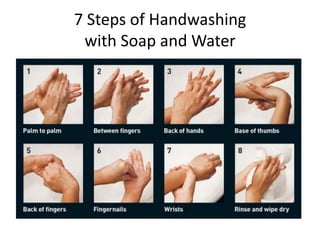
7 Steps of Handwashing with Soap and Water
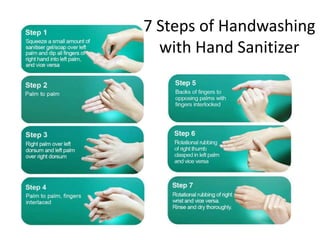
7 Steps of Handwashing with Hand Sanitizer
Handwashing VideosHandwashing with soap and water. Available at: http://www.youtube.com/watch?v=WYj2kkSIsOc&feature=relatedHandwashing with Hand rub. Available at: http://www.youtube.com/watch?v=JHoPQTTfCv0
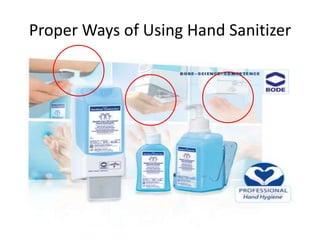
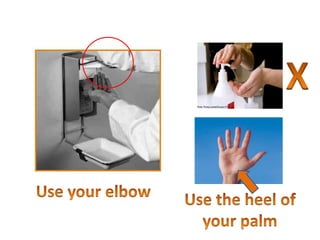
Proper Ways of Using Hand Sanitizerheel of your palmelbow
ReferenceAlcohol Hand Rub & Hand HygieneCDC's Endorsement of Alcohol Hand Rubs Launches New Era in Hand HygieneImproving Adherence to Hand Hygiene Practice: A Multidisciplinary ApproachInfection Control Advice to Contacts of Suspect or Probable SARS cases: HandwashingWorld Health Organization Issues Guidelines on Hand Hygiene in HealthcareAn Evaluation of Handwashing Technique
Evidence Based Hand HygieneRecommendations from the CDC Guideline for Hand Hygiene in Healthcare Settings. Available at: http://solutions.3m.com/3MContentRetrievalAPI/BlobServlet?locale=en_US&lmd=1145337135000&assetId=1114284208573&assetType=MMM_Image&blobAttribute=ImageFile
"Proper handwashing with soap and water is an important barrier to many infectious diseases and promotes better health and well-being…handwashing is one of the most practical and effective ways of preventing the spread of disease." World Health Organization (WHO)

5 moment hand hygiene

  • 1.
    5 Moment HandHygieneSN CHUNGB. Sc. Hons Nursing Practice Development15/8/2010
  • 4.
    ExamplesBefore PatientShaking hands,helping a patient to move around, getting washed, taking pulse, blood pressure, chest auscultation, abdominal palpationBefore clean/ aseptic procedureOral/dental care, secretion aspiration, skin lesion care, wound dressing, subcutaneous injection; catheter insertion, opening a vascular access system; preparation of food, medication, dressing sets
  • 5.
    After body fluidexposure riskOral/dental care, secretion aspiration; skin lesion care, wound dressing, subcutaneous injection; drawing and manipulation any fluid sample, opening draining system, endotracheal tube insertion and removal; clearing up urines, faces, vomit; handling waste (bandages, napkin, incontinence pads); cleaning of contaminated and visibly soiled material or areas (lavatories, medical instruments)
  • 6.
    After touching apatientShaking hands, helping a patient to move around, getting washed, taking pulse, taking blood pressure, chest auscultation, abdominal palpationAfter touching patient surroundingsChanging bed linen, perfusion speed adjustment, monitoring alarm, holding a bed rail, clearing the bedside table
  • 7.
    Why we needto wash our hands?Hand washing helps to remove micro-organisms.Soap and water kills many transient micro-organisms that are mechanically removed by rinsing.Antimicrobial products kills or inhibits the growth of micro-organisms in deep layers of the skin
  • 8.
    TWO METHODS OFHANDWASHING1. SOAP & WATER2. HAND RUB
  • 9.
    Recommended Handwashing SoapSoap;bar, liquid or foam dispenserAnti-microbial soaps are slightly more effective than regular soaps.When hands are visibly dirty, soiled with blood or other body fluids, or after using the toilet.But, frequent handwashing often causes skin irritation and dryness. Hand Sanitizer; gels, rinses, or foamsLess time, fast action, more effective, more accesible and most efficacious antimicrobial agents60 – 80% alcohol (Dix, 2010) - rapid and optimal antimicrobial spectrum; bacteria, viruses, yeasts, and fungi Hypoallergenic OdorlessColorless
  • 11.
    7 Steps ofHandwashing with Soap and Water
  • 12.
    7 Steps ofHandwashing with Hand Sanitizer
  • 13.
    Handwashing VideosHandwashing withsoap and water. Available at: http://www.youtube.com/watch?v=WYj2kkSIsOc&feature=relatedHandwashing with Hand rub. Available at: http://www.youtube.com/watch?v=JHoPQTTfCv0
  • 14.
    Proper Ways ofUsing Hand Sanitizerheel of your palmelbow
  • 15.
    ReferenceAlcohol Hand Rub& Hand HygieneCDC's Endorsement of Alcohol Hand Rubs Launches New Era in Hand HygieneImproving Adherence to Hand Hygiene Practice: A Multidisciplinary ApproachInfection Control Advice to Contacts of Suspect or Probable SARS cases: HandwashingWorld Health Organization Issues Guidelines on Hand Hygiene in HealthcareAn Evaluation of Handwashing Technique
  • 16.
    Evidence Based HandHygieneRecommendations from the CDC Guideline for Hand Hygiene in Healthcare Settings. Available at: http://solutions.3m.com/3MContentRetrievalAPI/BlobServlet?locale=en_US&lmd=1145337135000&assetId=1114284208573&assetType=MMM_Image&blobAttribute=ImageFile
  • 17.
    "Proper handwashing withsoap and water is an important barrier to many infectious diseases and promotes better health and well-being…handwashing is one of the most practical and effective ways of preventing the spread of disease." World Health Organization (WHO)