Personal Protective
Equipment
PPE
THE USE OF PPE
A variety of barriers to protect
HCW’s mucous membranes,
airways, skin, and clothing
(whenever blood/body fluids
splashes are expected)
THE USE OF PPE
• Gloves – Use when touching blood, body fluids,
secretions, excretions, contaminated items; for
touching mucus membranes and nonintact skin.
• Gowns – Use during procedures and patient care
activities when contact of clothing/ exposed skin
with blood/body fluids, secretions, or excretions is
anticipated.
• Mask, goggles or face shield – Use during
patient care activities likely to generate splashes or
sprays of blood, body fluids, secretions, or excretions
Select appropriate type and size
(Covers arms, body front, neck to mid-
thigh) Opening is in the back
Secure at neck and waist
 If gown is too small, use two
gowns
Gown #1 ties in front .
Gown #2 ties in back
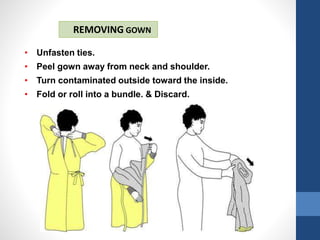
• Unfasten ties.
• Peel gown away from neck and shoulder.
• Turn contaminated outside toward the inside.
• Fold or roll into a bundle. & Discard.
REMOVING GOWN
SURGICAL MASK
 to protect patients from HCWs respiratory
secretions.
placed on coughing patients.
procedures that generates splashes and sprays.
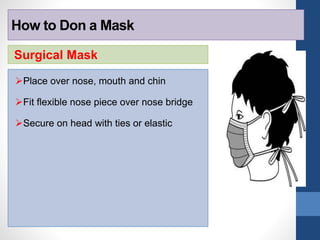
How to Don a Mask
Place over nose, mouth and chin
Fit flexible nose piece over nose bridge
Secure on head with ties or elastic
Surgical Mask
• Fit flexible nose piece over nose
bridge
• Secure on head with elastic
band.
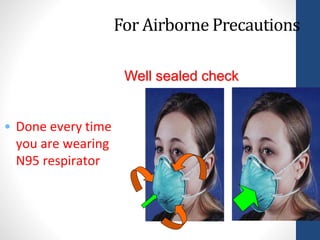
• Perform the seal check –
• Inhale – respirator should
collapse
• Exhale – check for leakage
around face
N95 Respirator
Well sealed check
• Done every time
you are wearing
N95 respirator
For Airborne Precautions
FIT TEST
•Performed
annually
•Each staff
should be
aware about his fitted
Type and size
Removing of N95
• Lift the bottom elastic
over your head first
• Then lift off the top
elastic
• Discard
Removing of N95
you should remove the N95 respirator Just
outside the patient room
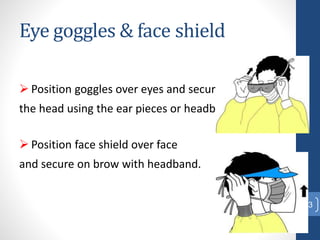
Eye goggles & face shield
 Position goggles over eyes and secure to
the head using the ear pieces or headband.
 Position face shield over face
and secure on brow with headband.
13
Used in :
-Direct contact with blood, body fluids, non intact
skin, mucous membrane and potentially
infectious materials
- Dealing with patients under contact isolation
• Put on last PPE and first to be removed
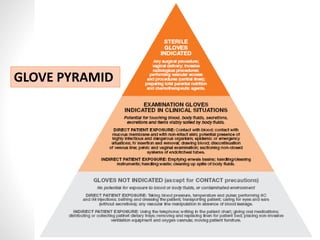
GLOVE PYRAMID
“The Glove Pyramid”
The Glove Pyramid-to aid decision making
on when to wear (and not wear) gloves
Gloves must be worn according to
STANDARD and CONTACT
PRECAUTIONS
 Hand hygiene should be performed when
appropriate regardless of indication for
glove use
STERILE
GLOVES
INDICATED
(any surgical procedure, vaginal
deliveries, invasive radiological
procedures, performing vascular
access & procedures (central
lines) (preparing TPN, chemo
agents)
CLEAN / EXAMINATION
GLOVES INDICATED IN
CLINICAL SITUATION
Potential direct/indirect exposure to blood,
body fluids, secretions, excretions and items
visibly soiled by body fluids
DIRECT PATIENT EXPOSURE:
Contact with blood; contact with
mucous membrane and with non-intact skin; potential presence of
highly infectious and dangerous organism; epidemic or emergency
situations; IV insertion and removal; drawing blood; discontinuation
of venous line; pelvic and vaginal examination; suctioning non-closed
systems of endotracheal tubes
INDIRECT PATIENT EXPOSURE:
Emptying emesis basins; handling/cleaning instruments; handling waste; cleaning
up spills of body fluids
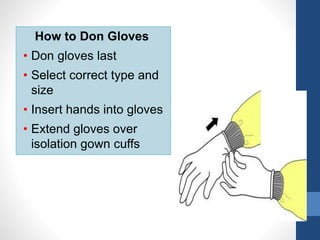
How to Don Gloves
• Don gloves last
• Select correct type and
size
• Insert hands into gloves
• Extend gloves over
isolation gown cuffs
How to Remove Gloves
(1)
1. Grasp outside edge near wrist.
2. Peel away from hand, turning glove
inside-out.
3. Hold in opposite gloved hand.
How to Remove Gloves
(2)
1. Slide ungloved finger under the wrist of
the remaining glove
2. Peel off from inside, creating a bag for
both gloves.
3. Discard.
“Hand Hygiene and Medical Glove use”
-Remove the gloves to perform hand hygiene when an
indication occurs while wearing gloves
-Discard gloves after each task and clean your hand –
gloves may carry germs
- Wear gloves only when indicating to Standard and
Contact precautions, otherwise they become a major
risk for germ transmission
How to Safely Use PPE
 Keep gloved hands away from face.
 Avoid touching or adjusting other PPE.
 Remove gloves if they become torn; perform hand
hygiene before donning new gloves.
 Limit surfaces and items touched to avoid
contamination.
Proper donning of
Personal Protective Equipment
Proper removing of
Personal Protective Equipment
SEQUENCE OF
DONNING PPE
• Gown first.
• Mask or respirator.
• Goggles or face shield.
• HAND HYGIENE
• Gloves.
Don before contact with the
patient, generally before
entering the room.
Sequence for
Removing PPE
Gloves
Hand Hygiene
Face shield or
goggles.
Gown.
Mask or respirator.
Where to Remove PPE
 At doorway, before leaving
patient room or in
anteroom.
 Remove respirator outside
room, after door has been
closed.

PPE

  • 1.
  • 2.
    THE USE OFPPE A variety of barriers to protect HCW’s mucous membranes, airways, skin, and clothing (whenever blood/body fluids splashes are expected)
  • 3.
    THE USE OFPPE • Gloves – Use when touching blood, body fluids, secretions, excretions, contaminated items; for touching mucus membranes and nonintact skin. • Gowns – Use during procedures and patient care activities when contact of clothing/ exposed skin with blood/body fluids, secretions, or excretions is anticipated. • Mask, goggles or face shield – Use during patient care activities likely to generate splashes or sprays of blood, body fluids, secretions, or excretions
  • 4.
    Select appropriate typeand size (Covers arms, body front, neck to mid- thigh) Opening is in the back Secure at neck and waist  If gown is too small, use two gowns Gown #1 ties in front . Gown #2 ties in back
  • 5.
    • Unfasten ties. •Peel gown away from neck and shoulder. • Turn contaminated outside toward the inside. • Fold or roll into a bundle. & Discard. REMOVING GOWN
  • 6.
    SURGICAL MASK  toprotect patients from HCWs respiratory secretions. placed on coughing patients. procedures that generates splashes and sprays.
  • 7.
    How to Dona Mask Place over nose, mouth and chin Fit flexible nose piece over nose bridge Secure on head with ties or elastic Surgical Mask
  • 8.
    • Fit flexiblenose piece over nose bridge • Secure on head with elastic band. • Perform the seal check – • Inhale – respirator should collapse • Exhale – check for leakage around face N95 Respirator
  • 9.
    Well sealed check •Done every time you are wearing N95 respirator For Airborne Precautions
  • 10.
    FIT TEST •Performed annually •Each staff shouldbe aware about his fitted Type and size
  • 11.
    Removing of N95 •Lift the bottom elastic over your head first • Then lift off the top elastic • Discard
  • 12.
    Removing of N95 youshould remove the N95 respirator Just outside the patient room
  • 13.
    Eye goggles &face shield  Position goggles over eyes and secure to the head using the ear pieces or headband.  Position face shield over face and secure on brow with headband. 13
  • 14.
    Used in : -Directcontact with blood, body fluids, non intact skin, mucous membrane and potentially infectious materials - Dealing with patients under contact isolation • Put on last PPE and first to be removed
  • 15.
  • 16.
    “The Glove Pyramid” TheGlove Pyramid-to aid decision making on when to wear (and not wear) gloves Gloves must be worn according to STANDARD and CONTACT PRECAUTIONS  Hand hygiene should be performed when appropriate regardless of indication for glove use
  • 17.
    STERILE GLOVES INDICATED (any surgical procedure,vaginal deliveries, invasive radiological procedures, performing vascular access & procedures (central lines) (preparing TPN, chemo agents)
  • 18.
    CLEAN / EXAMINATION GLOVESINDICATED IN CLINICAL SITUATION Potential direct/indirect exposure to blood, body fluids, secretions, excretions and items visibly soiled by body fluids DIRECT PATIENT EXPOSURE: Contact with blood; contact with mucous membrane and with non-intact skin; potential presence of highly infectious and dangerous organism; epidemic or emergency situations; IV insertion and removal; drawing blood; discontinuation of venous line; pelvic and vaginal examination; suctioning non-closed systems of endotracheal tubes INDIRECT PATIENT EXPOSURE: Emptying emesis basins; handling/cleaning instruments; handling waste; cleaning up spills of body fluids
  • 19.
    How to DonGloves • Don gloves last • Select correct type and size • Insert hands into gloves • Extend gloves over isolation gown cuffs
  • 20.
    How to RemoveGloves (1) 1. Grasp outside edge near wrist. 2. Peel away from hand, turning glove inside-out. 3. Hold in opposite gloved hand. How to Remove Gloves (2) 1. Slide ungloved finger under the wrist of the remaining glove 2. Peel off from inside, creating a bag for both gloves. 3. Discard.
  • 21.
    “Hand Hygiene andMedical Glove use” -Remove the gloves to perform hand hygiene when an indication occurs while wearing gloves -Discard gloves after each task and clean your hand – gloves may carry germs - Wear gloves only when indicating to Standard and Contact precautions, otherwise they become a major risk for germ transmission
  • 22.
    How to SafelyUse PPE  Keep gloved hands away from face.  Avoid touching or adjusting other PPE.  Remove gloves if they become torn; perform hand hygiene before donning new gloves.  Limit surfaces and items touched to avoid contamination.
  • 23.
    Proper donning of PersonalProtective Equipment
  • 24.
    Proper removing of PersonalProtective Equipment
  • 25.
    SEQUENCE OF DONNING PPE •Gown first. • Mask or respirator. • Goggles or face shield. • HAND HYGIENE • Gloves. Don before contact with the patient, generally before entering the room. Sequence for Removing PPE Gloves Hand Hygiene Face shield or goggles. Gown. Mask or respirator. Where to Remove PPE  At doorway, before leaving patient room or in anteroom.  Remove respirator outside room, after door has been closed.