DONNING AND DOFFING OF
PERSONAL PROTECTIVE
EQUIPMENT
1
OBJECTIVES
At the end of presentation, learners will be able to :
• Describe standard precautions.
• Explain the concept of transmission based precautions.
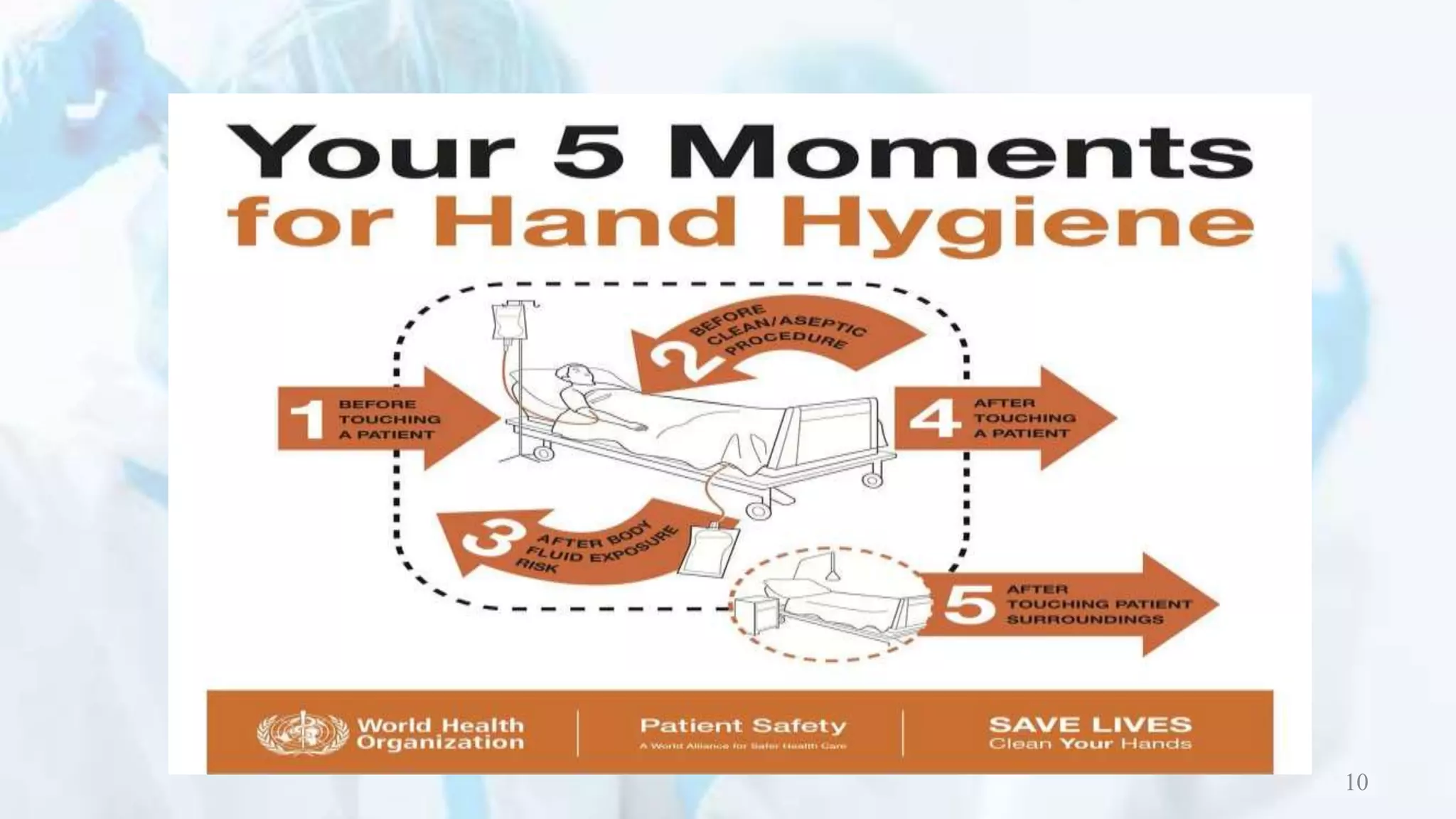
• Understand the importance of hand hygiene.
• Acknowledge the steps of hand hygiene.
• Elaborate the steps of donning PPEs.
• Describe the steps of doffing PPEs.
2
STANDARD PRECAUTIONS
Standard Precautions are the minimum infection prevention
practices that apply to all patient care, regardless of suspected or
confirmed infection status of the patient, in any setting where
health care is delivered.
3
STANDARD PRECAUTIONS
Standard precautions consist of the following practices:
• Hand hygiene.
• Use of personal protective equipment
.
• Safe use and disposal of sharps.
• Use of aseptic "non-touch" technique.
4
STANDARD PRECAUTIONS
• Routine environmental cleaning
• Respiratory hygiene and cough
etiquette
5
TRANSMISSION-BASED PRECAUTIONS(TBP)
• (TBPs) are used in addition to standard precautions.
• TBPs are for patients who are known or suspected to
be infected or colonized with infectious agents.
• TBPs are not required for patients with blood borne
viruses, such as HIV, hepatitis B virus or hepatitis C
virus.
6
TRANSMISSION-BASED PRECAUTIONS
There are three different types of transmission precautions:
Contact Precautions
• used for infections, diseases, or germs that are spread by touching the
patient or items in the room (examples: MRSA, diarrheal illnesses, open
wounds).
Droplet Precautions
• used for diseases or germs that are spread in tiny droplets caused by
coughing and sneezing (examples: pneumonia, influenza, whooping cough,
bacterial meningitis).
Airborne Precautions
• used for diseases or very small germs that are spread through the air from
one person to another (examples: tuberculosis, measles, chickenpox).
7
HAND HYGIENE
• Hand hygiene is considered one of the most important infection control
measures for reducing the spread of infection. Hand hygiene is a general
term that refers to any action of hand cleansing, such as handwashing or
hand rubbing.
8
Hands are the primary carriers of dirt, viruses, and bacteria, as
they can come into contact with so many different surfaces throughout
the day. Without proper hand hygiene, this could easily lead to
something harmful entering the body, spreading elsewhere, or causing
cross-contamination.
WHY IS HAND HYGIENE SO IMPORTANT?
9
10
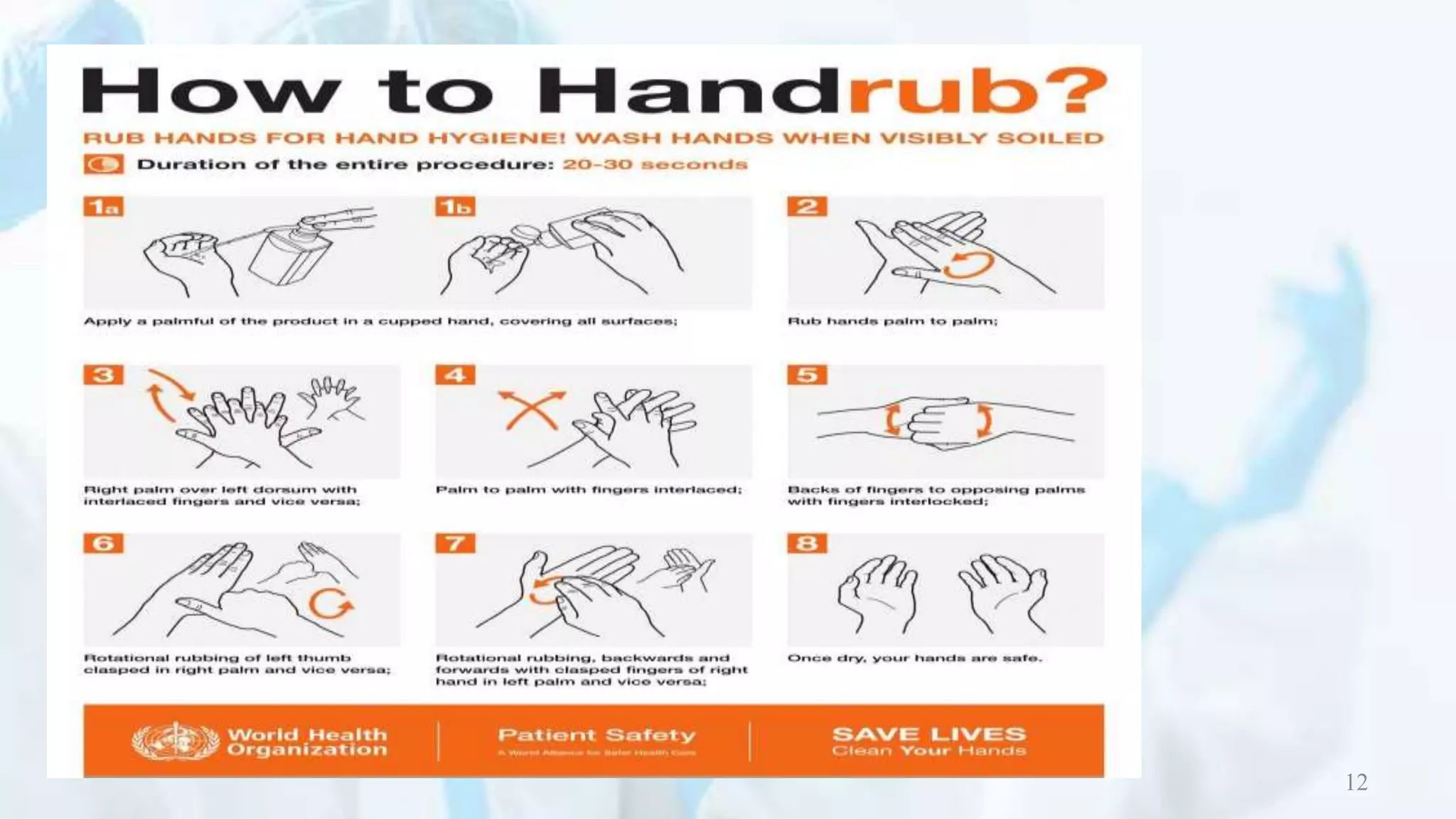
STEPS OF HAND RUB
11
12
PPEs DONNING SEQUENCE
13
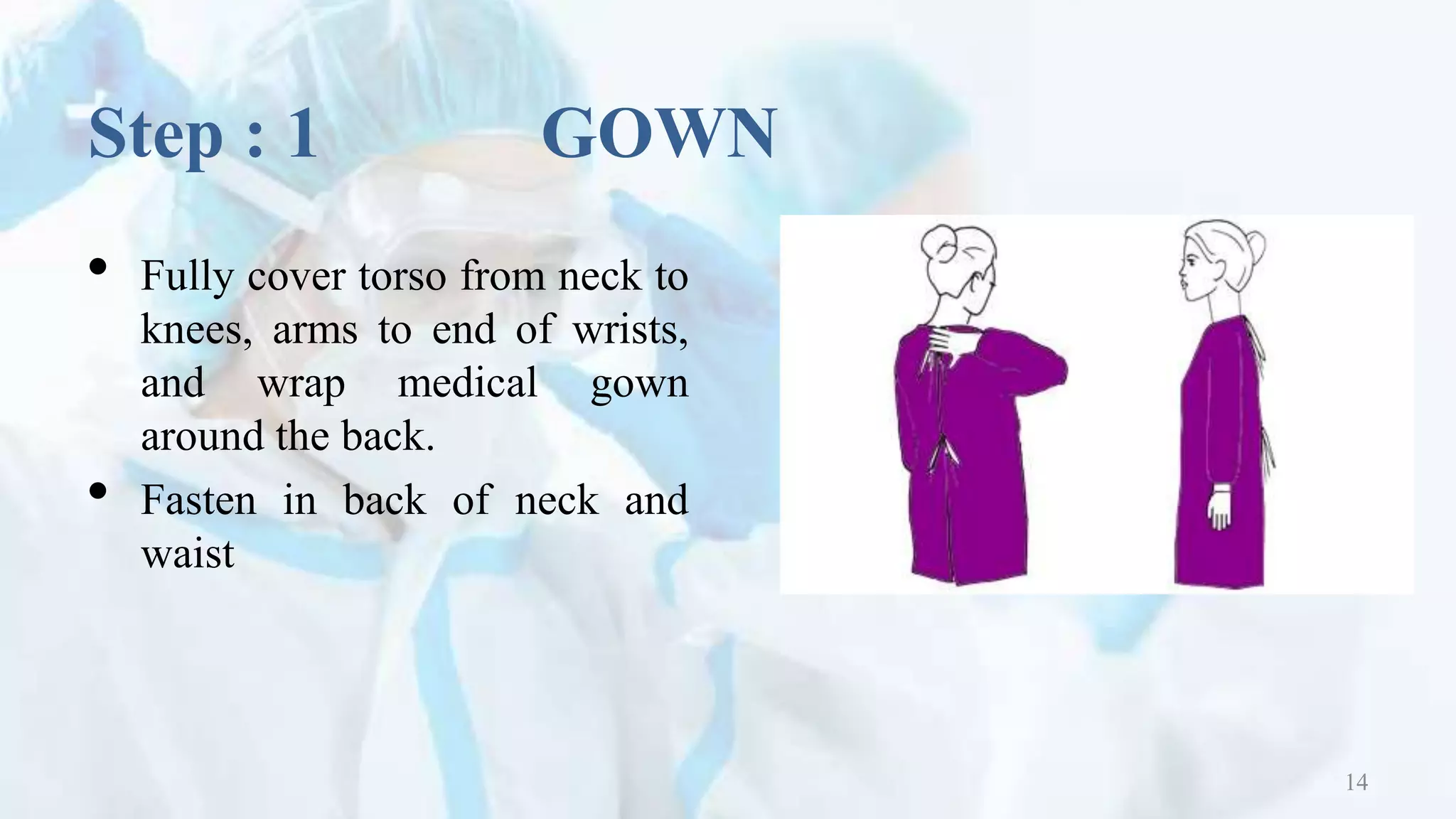
Step : 1 GOWN
• Fully cover torso from neck to
knees, arms to end of wrists,
and wrap medical gown
around the back.
• Fasten in back of neck and
waist
14
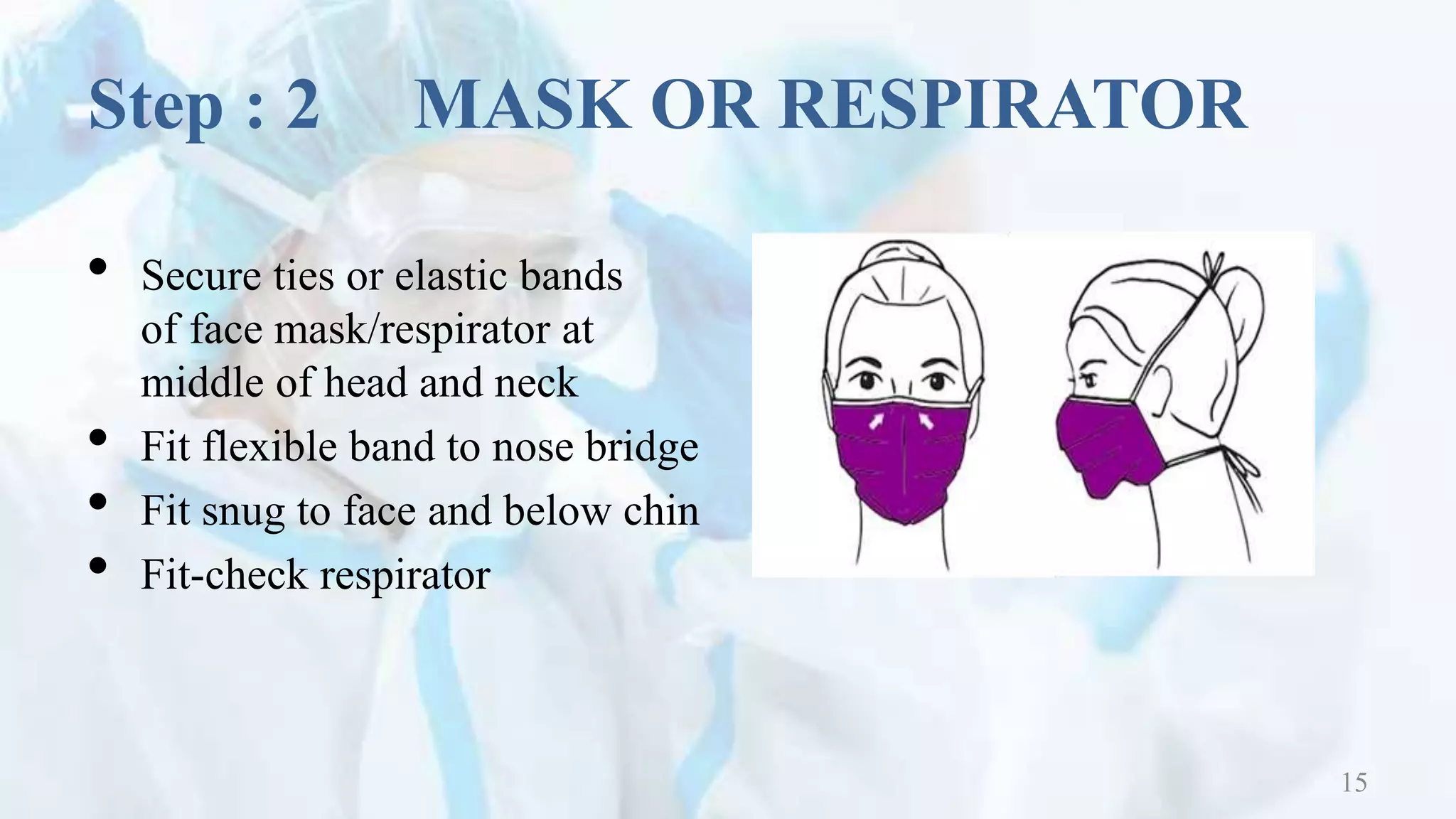
Step : 2 MASK OR RESPIRATOR
• Secure ties or elastic bands
of face mask/respirator at
middle of head and neck
• Fit flexible band to nose bridge
• Fit snug to face and below chin
• Fit-check respirator
15
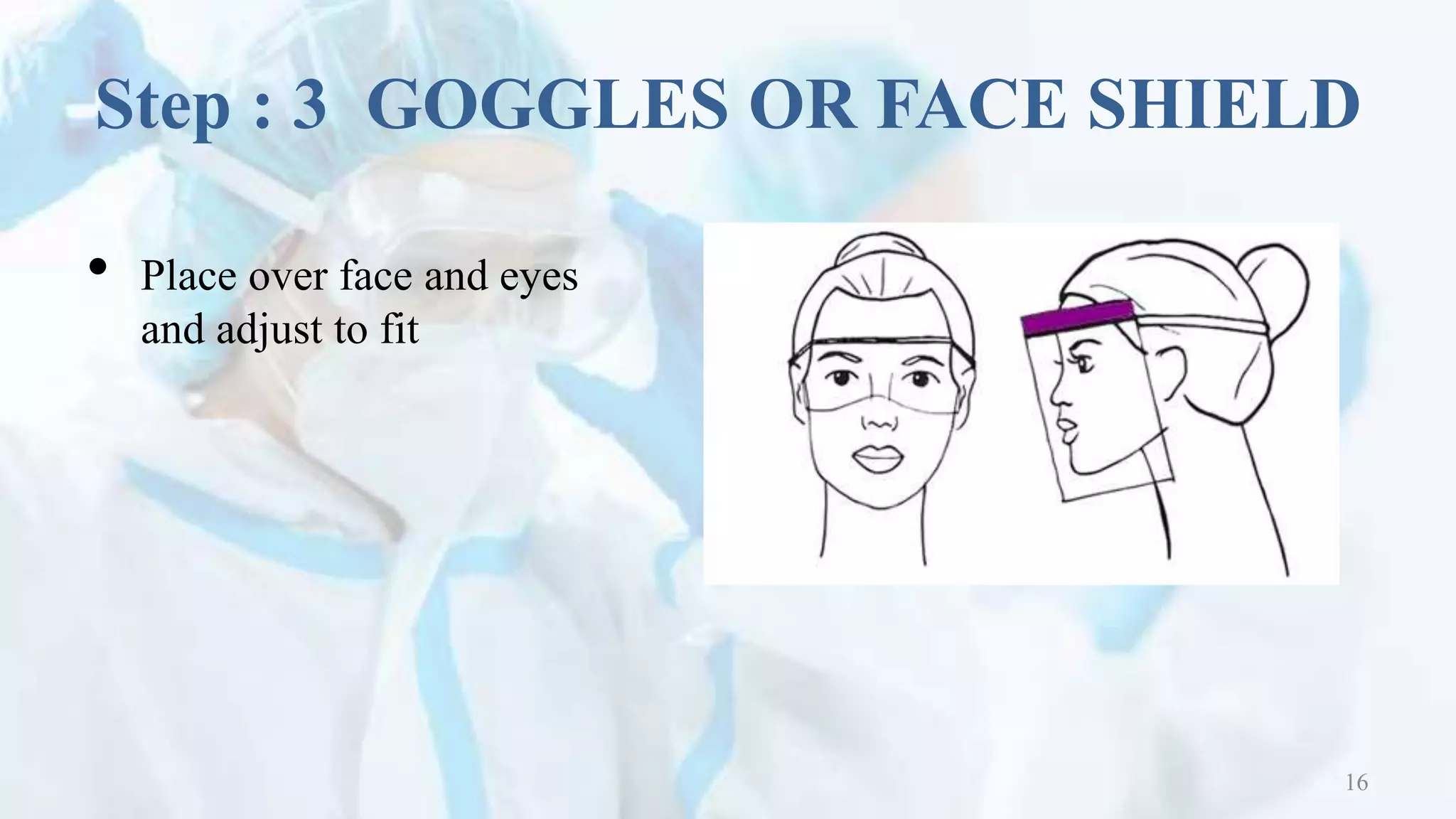
Step : 3 GOGGLES OR FACE SHIELD
• Place over face and eyes
and adjust to fit
16
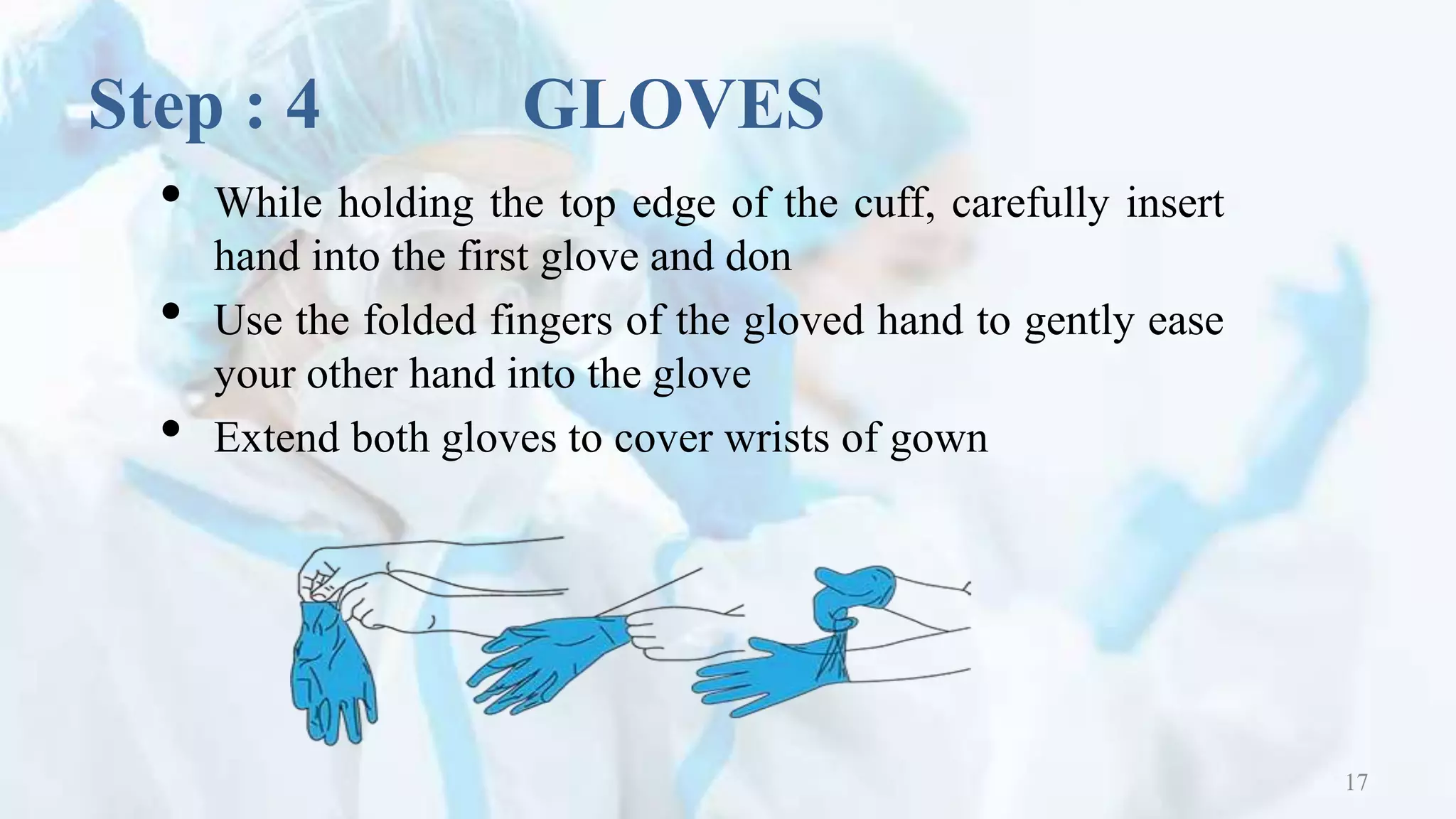
Step : 4 GLOVES
• While holding the top edge of the cuff, carefully insert
hand into the first glove and don
• Use the folded fingers of the gloved hand to gently ease
your other hand into the glove
• Extend both gloves to cover wrists of gown
17
PPEs DOFFING SEQUENCE
18
Step : 1 GLOVES
• Grasp outside of glove with opposite gloved hand and peel off
• Hold removed glove in gloved hand and slide fingers of hand under
remaining glove at wrist
• Peel glove off over first glove and discard gloves in waste
container
19
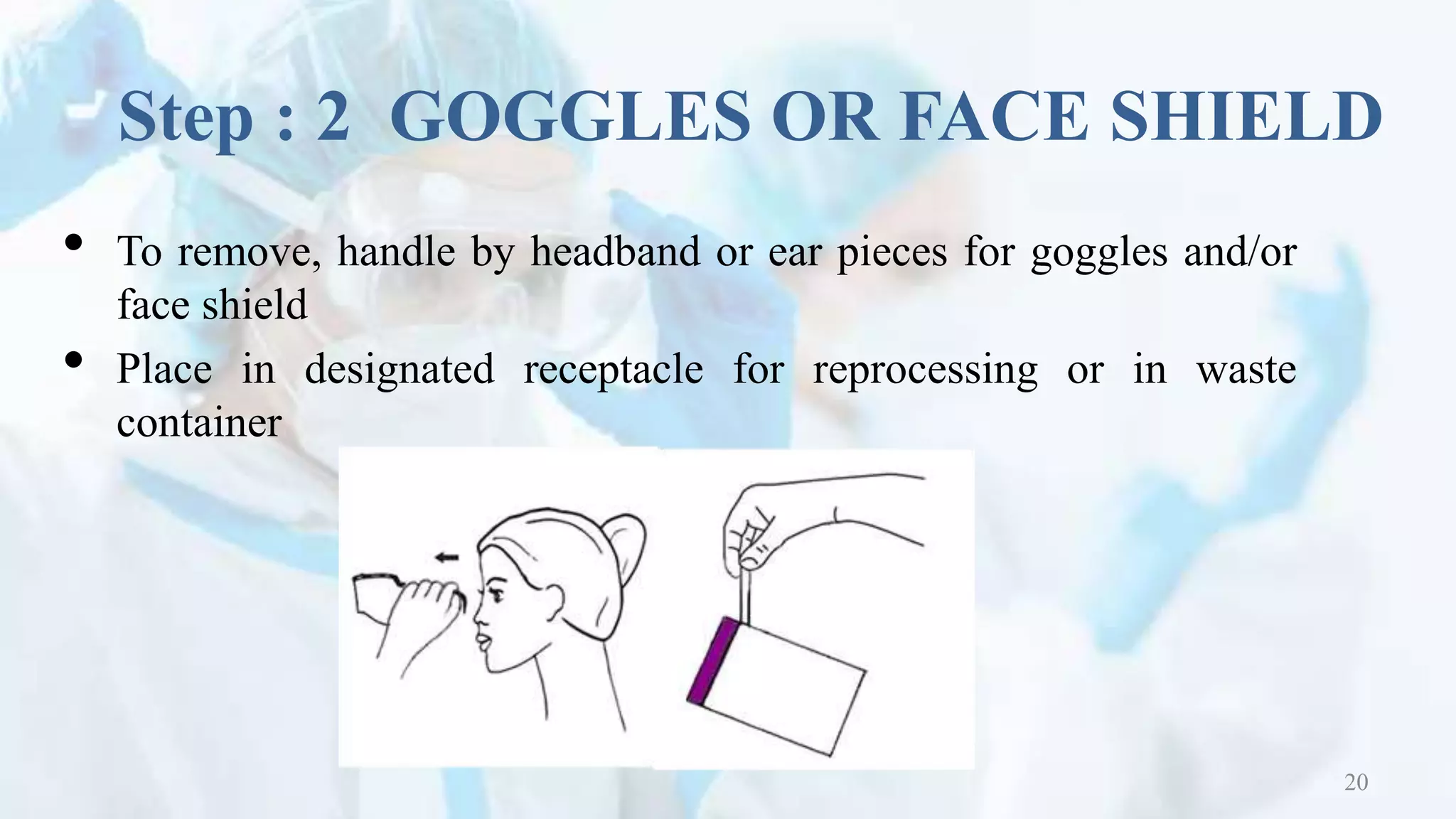
Step : 2 GOGGLES OR FACE SHIELD
• To remove, handle by headband or ear pieces for goggles and/or
face shield
• Place in designated receptacle for reprocessing or in waste
container
20
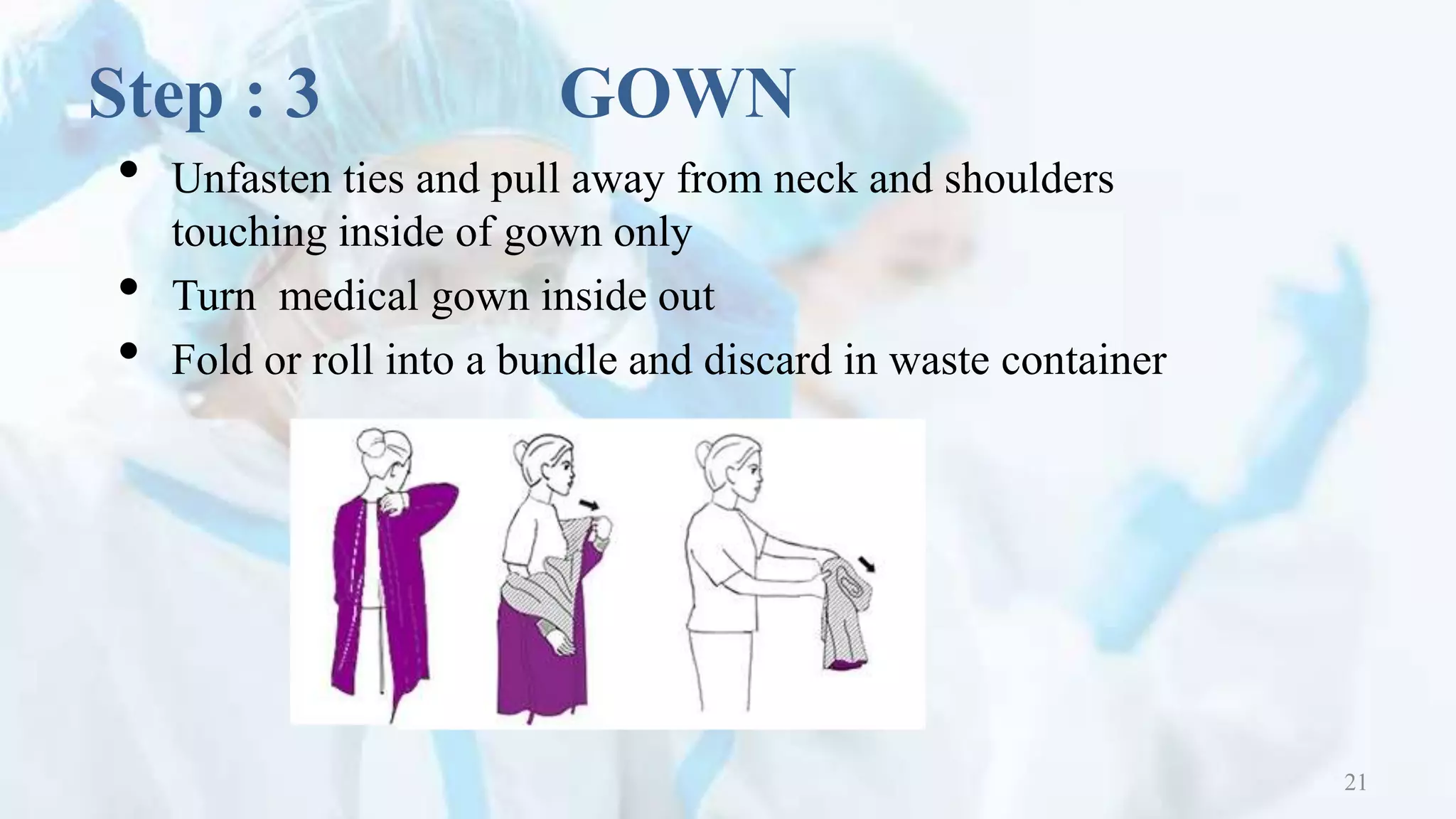
Step : 3 GOWN
• Unfasten ties and pull away from neck and shoulders
touching inside of gown only
• Turn medical gown inside out
• Fold or roll into a bundle and discard in waste container
21
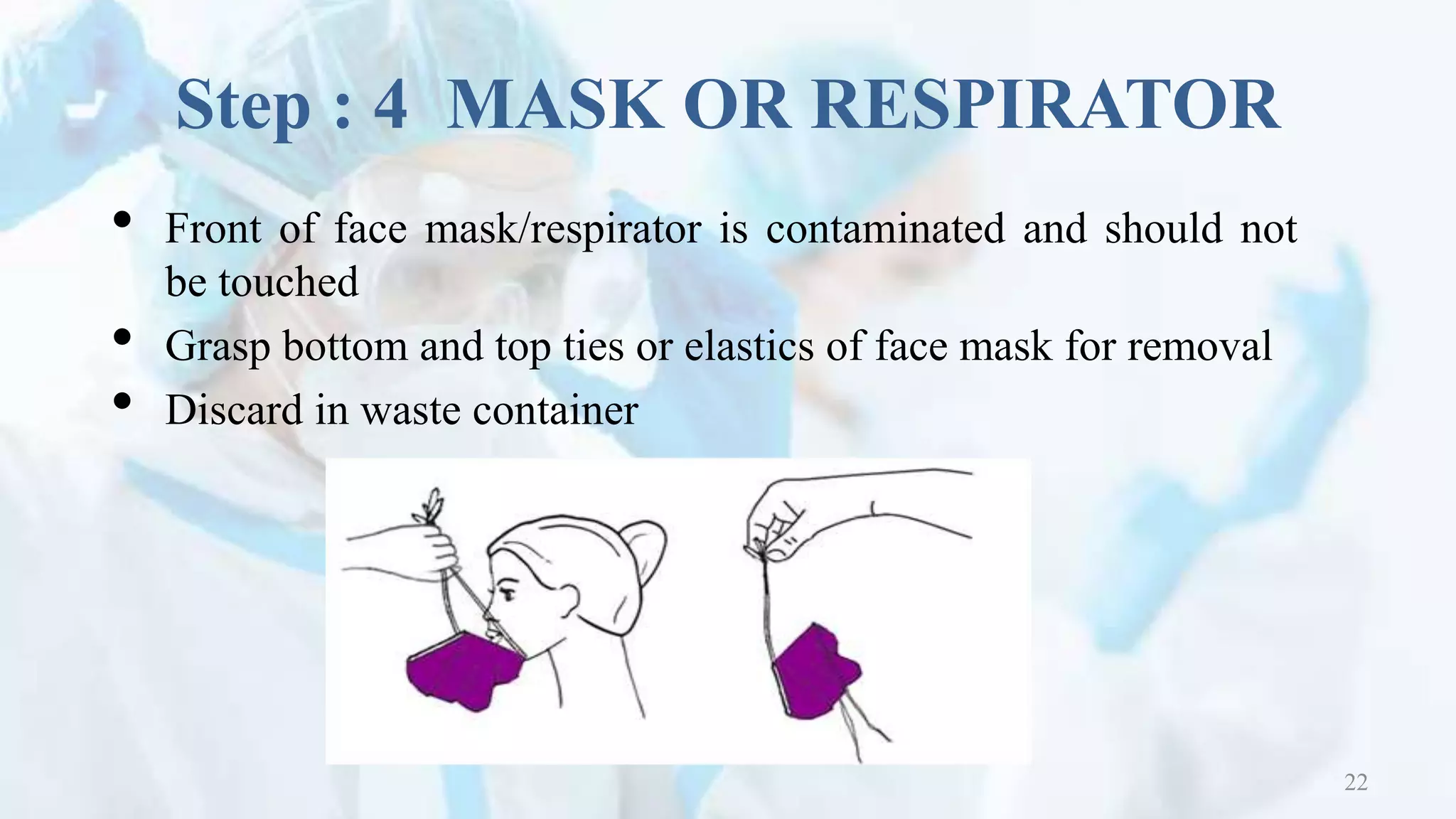
Step : 4 MASK OR RESPIRATOR
• Front of face mask/respirator is contaminated and should not
be touched
• Grasp bottom and top ties or elastics of face mask for removal
• Discard in waste container
22
Let’s Revise
• How many steps of donning.
• First step of donning.
• Last step of donning.
• Last step of doffing.
• Hand hygiene movements.
• Steps of hand rub.
23
REFERENCES
• World Health Organization (WHO) and UNICEF. Joint Monitoring
Program (JMP) 2017 2. Health care without avoidable infections. The
critical role of infection prevention and control 3. Burden of endemic
health-care-associated infection in developing countries: systematic
review and meta-analysis.
24
• Molloy J. Personal Protective Equipment (PPE): Donning and
Removal of PPE. St. John's: Eastern Health Infection Prevention and
Control; 2017. Eastern Health Infection Prevention and Control.
Policy: Personal Protective Equipment (PPE) - Donning and Removal
of PPE. [Google Scholar]
25
THANK YOU

Donning and doffing (1)-3.pptx

  • 1.
    DONNING AND DOFFINGOF PERSONAL PROTECTIVE EQUIPMENT 1
  • 2.
    OBJECTIVES At the endof presentation, learners will be able to : • Describe standard precautions. • Explain the concept of transmission based precautions. • Understand the importance of hand hygiene. • Acknowledge the steps of hand hygiene. • Elaborate the steps of donning PPEs. • Describe the steps of doffing PPEs. 2
  • 3.
    STANDARD PRECAUTIONS Standard Precautionsare the minimum infection prevention practices that apply to all patient care, regardless of suspected or confirmed infection status of the patient, in any setting where health care is delivered. 3
  • 4.
    STANDARD PRECAUTIONS Standard precautionsconsist of the following practices: • Hand hygiene. • Use of personal protective equipment . • Safe use and disposal of sharps. • Use of aseptic "non-touch" technique. 4
  • 5.
    STANDARD PRECAUTIONS • Routineenvironmental cleaning • Respiratory hygiene and cough etiquette 5
  • 6.
    TRANSMISSION-BASED PRECAUTIONS(TBP) • (TBPs)are used in addition to standard precautions. • TBPs are for patients who are known or suspected to be infected or colonized with infectious agents. • TBPs are not required for patients with blood borne viruses, such as HIV, hepatitis B virus or hepatitis C virus. 6
  • 7.
    TRANSMISSION-BASED PRECAUTIONS There arethree different types of transmission precautions: Contact Precautions • used for infections, diseases, or germs that are spread by touching the patient or items in the room (examples: MRSA, diarrheal illnesses, open wounds). Droplet Precautions • used for diseases or germs that are spread in tiny droplets caused by coughing and sneezing (examples: pneumonia, influenza, whooping cough, bacterial meningitis). Airborne Precautions • used for diseases or very small germs that are spread through the air from one person to another (examples: tuberculosis, measles, chickenpox). 7
  • 8.
    HAND HYGIENE • Handhygiene is considered one of the most important infection control measures for reducing the spread of infection. Hand hygiene is a general term that refers to any action of hand cleansing, such as handwashing or hand rubbing. 8
  • 9.
    Hands are theprimary carriers of dirt, viruses, and bacteria, as they can come into contact with so many different surfaces throughout the day. Without proper hand hygiene, this could easily lead to something harmful entering the body, spreading elsewhere, or causing cross-contamination. WHY IS HAND HYGIENE SO IMPORTANT? 9
  • 10.
  • 11.
  • 12.
  • 13.
  • 14.
    Step : 1GOWN • Fully cover torso from neck to knees, arms to end of wrists, and wrap medical gown around the back. • Fasten in back of neck and waist 14
  • 15.
    Step : 2MASK OR RESPIRATOR • Secure ties or elastic bands of face mask/respirator at middle of head and neck • Fit flexible band to nose bridge • Fit snug to face and below chin • Fit-check respirator 15
  • 16.
    Step : 3GOGGLES OR FACE SHIELD • Place over face and eyes and adjust to fit 16
  • 17.
    Step : 4GLOVES • While holding the top edge of the cuff, carefully insert hand into the first glove and don • Use the folded fingers of the gloved hand to gently ease your other hand into the glove • Extend both gloves to cover wrists of gown 17
  • 18.
  • 19.
    Step : 1GLOVES • Grasp outside of glove with opposite gloved hand and peel off • Hold removed glove in gloved hand and slide fingers of hand under remaining glove at wrist • Peel glove off over first glove and discard gloves in waste container 19
  • 20.
    Step : 2GOGGLES OR FACE SHIELD • To remove, handle by headband or ear pieces for goggles and/or face shield • Place in designated receptacle for reprocessing or in waste container 20
  • 21.
    Step : 3GOWN • Unfasten ties and pull away from neck and shoulders touching inside of gown only • Turn medical gown inside out • Fold or roll into a bundle and discard in waste container 21
  • 22.
    Step : 4MASK OR RESPIRATOR • Front of face mask/respirator is contaminated and should not be touched • Grasp bottom and top ties or elastics of face mask for removal • Discard in waste container 22
  • 23.
    Let’s Revise • Howmany steps of donning. • First step of donning. • Last step of donning. • Last step of doffing. • Hand hygiene movements. • Steps of hand rub. 23
  • 24.
    REFERENCES • World HealthOrganization (WHO) and UNICEF. Joint Monitoring Program (JMP) 2017 2. Health care without avoidable infections. The critical role of infection prevention and control 3. Burden of endemic health-care-associated infection in developing countries: systematic review and meta-analysis. 24 • Molloy J. Personal Protective Equipment (PPE): Donning and Removal of PPE. St. John's: Eastern Health Infection Prevention and Control; 2017. Eastern Health Infection Prevention and Control. Policy: Personal Protective Equipment (PPE) - Donning and Removal of PPE. [Google Scholar]
  • 25.