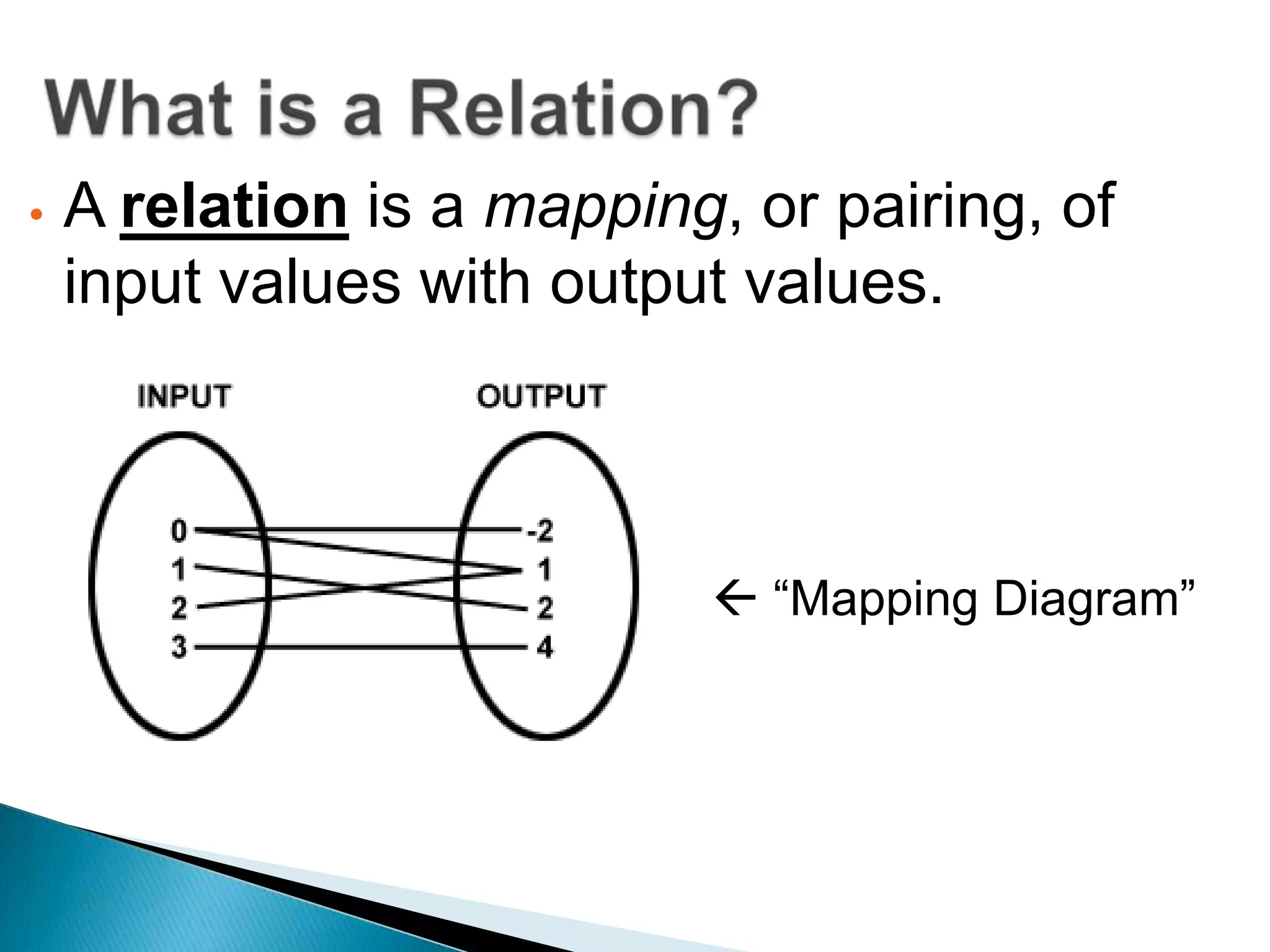
• A relation is a mapping, or pairing, of 
input values with output values. 
 “Mapping Diagram”
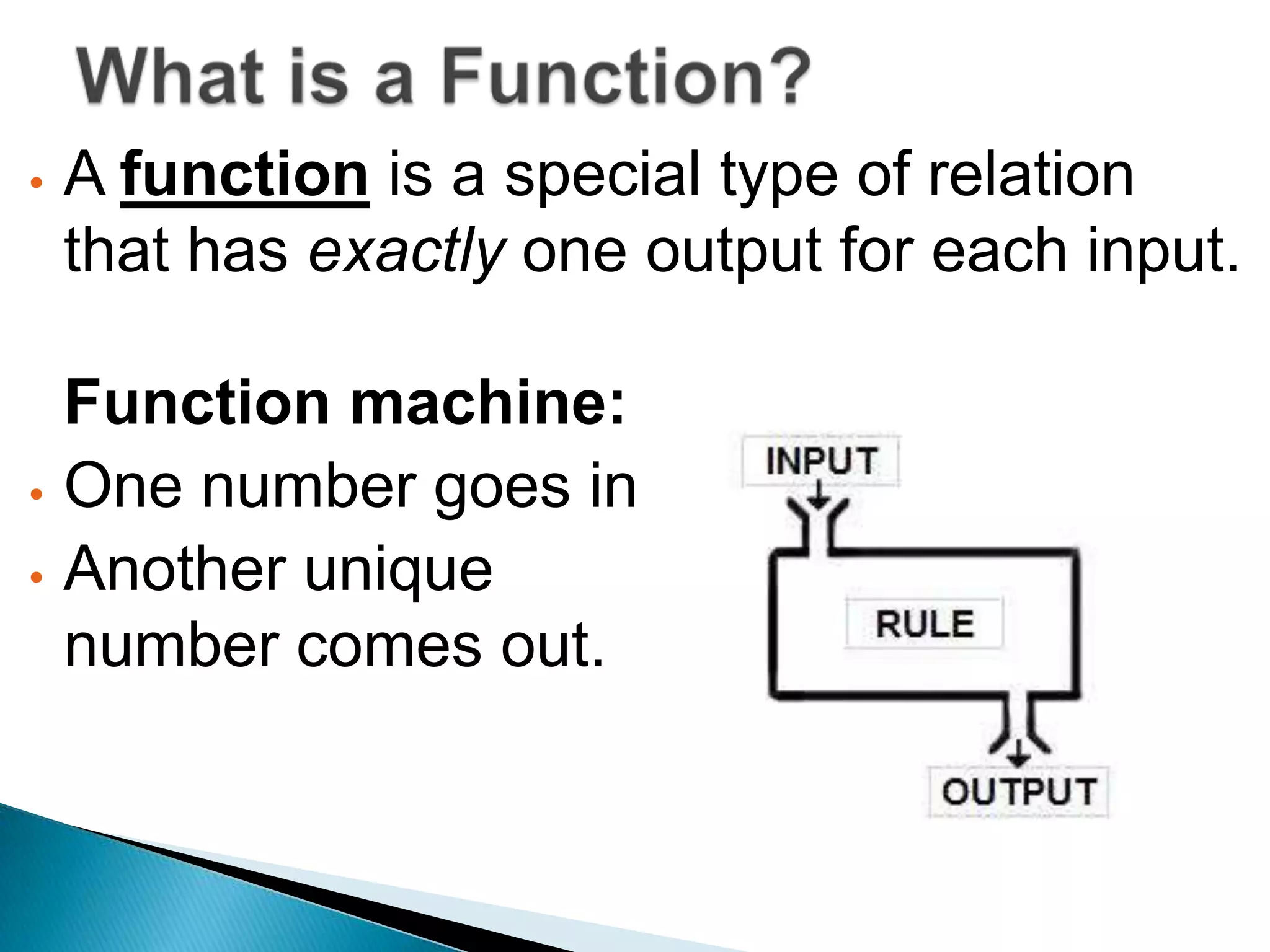
• A function is a special type of relation 
that has exactly one output for each input. 
Function machine: 
• One number goes in 
• Another unique 
number comes out.
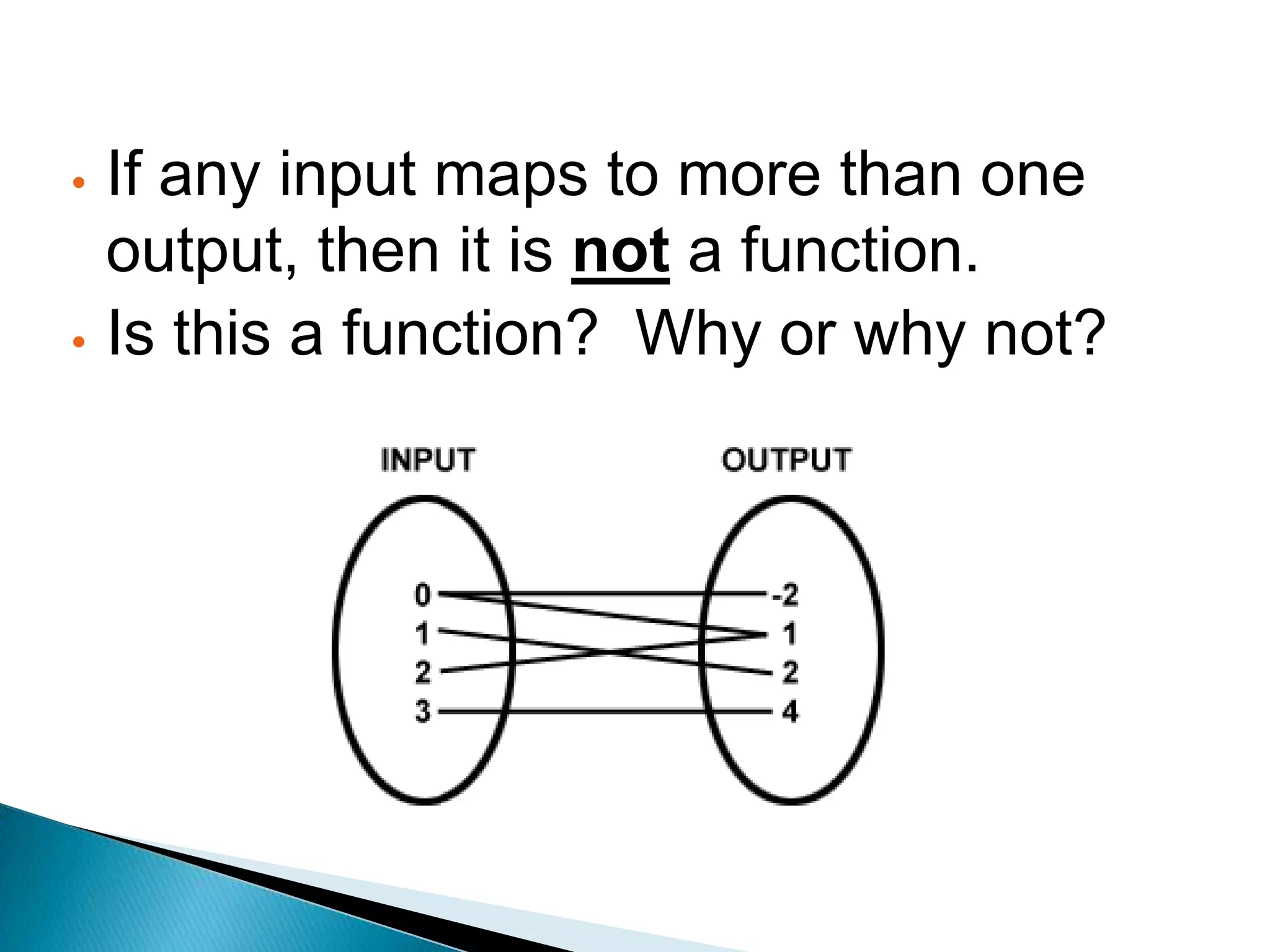
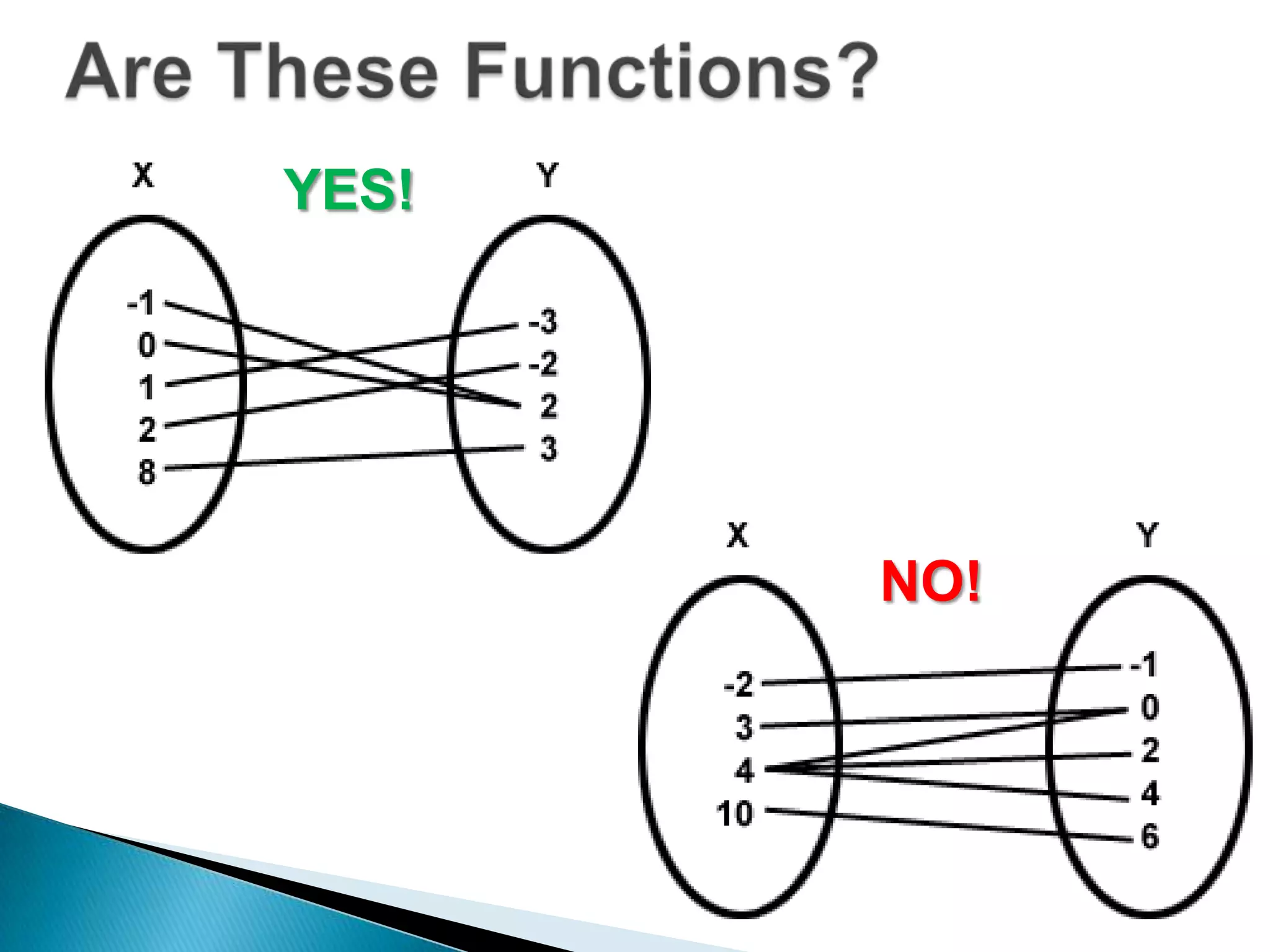
• If any input maps to more than one 
output, then it is not a function. 
• Is this a function? Why or why not?
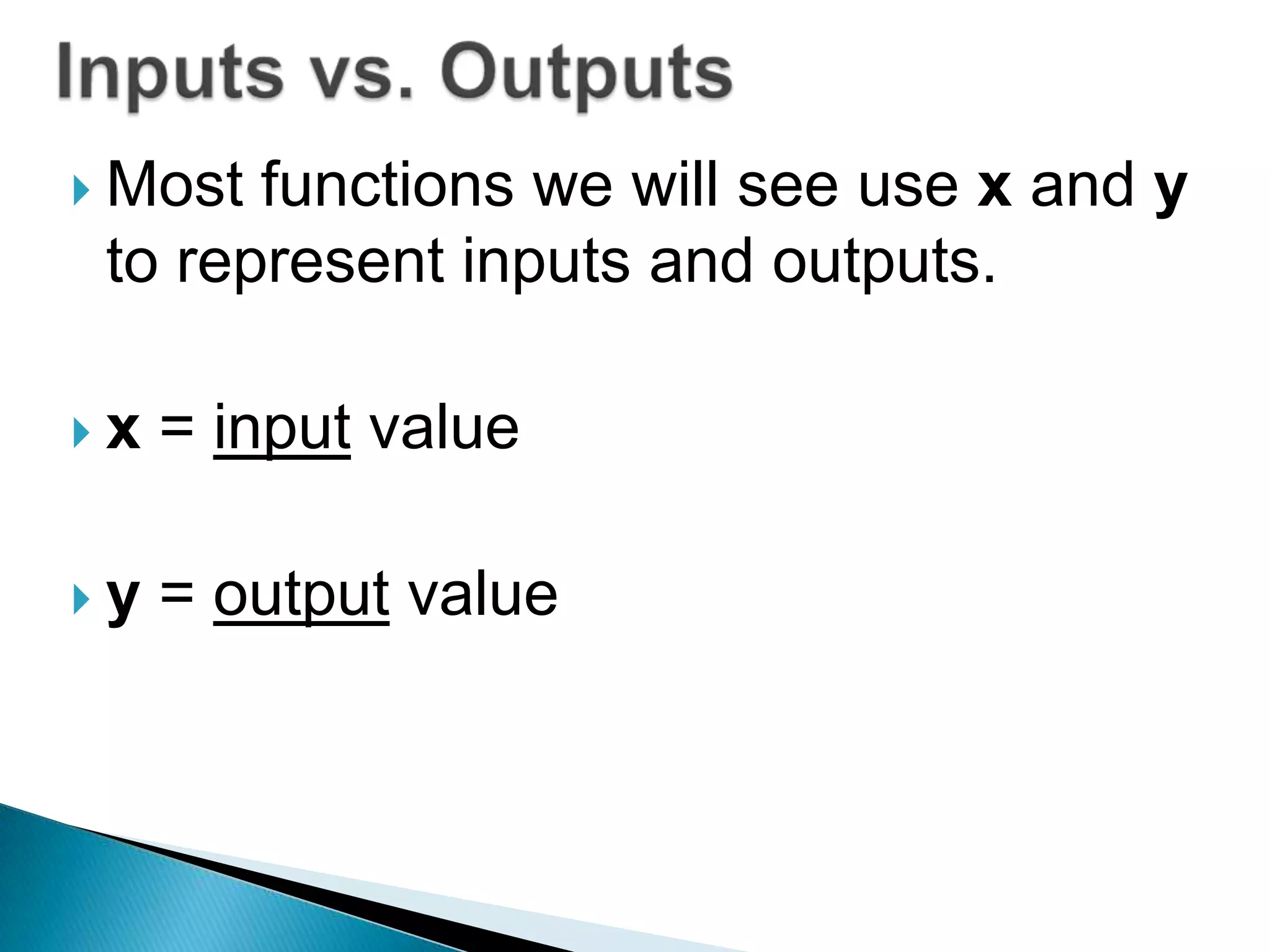
 Most functions we will see use x and y 
to represent inputs and outputs. 
 x = input value 
 y = output value
YES! 
NO!
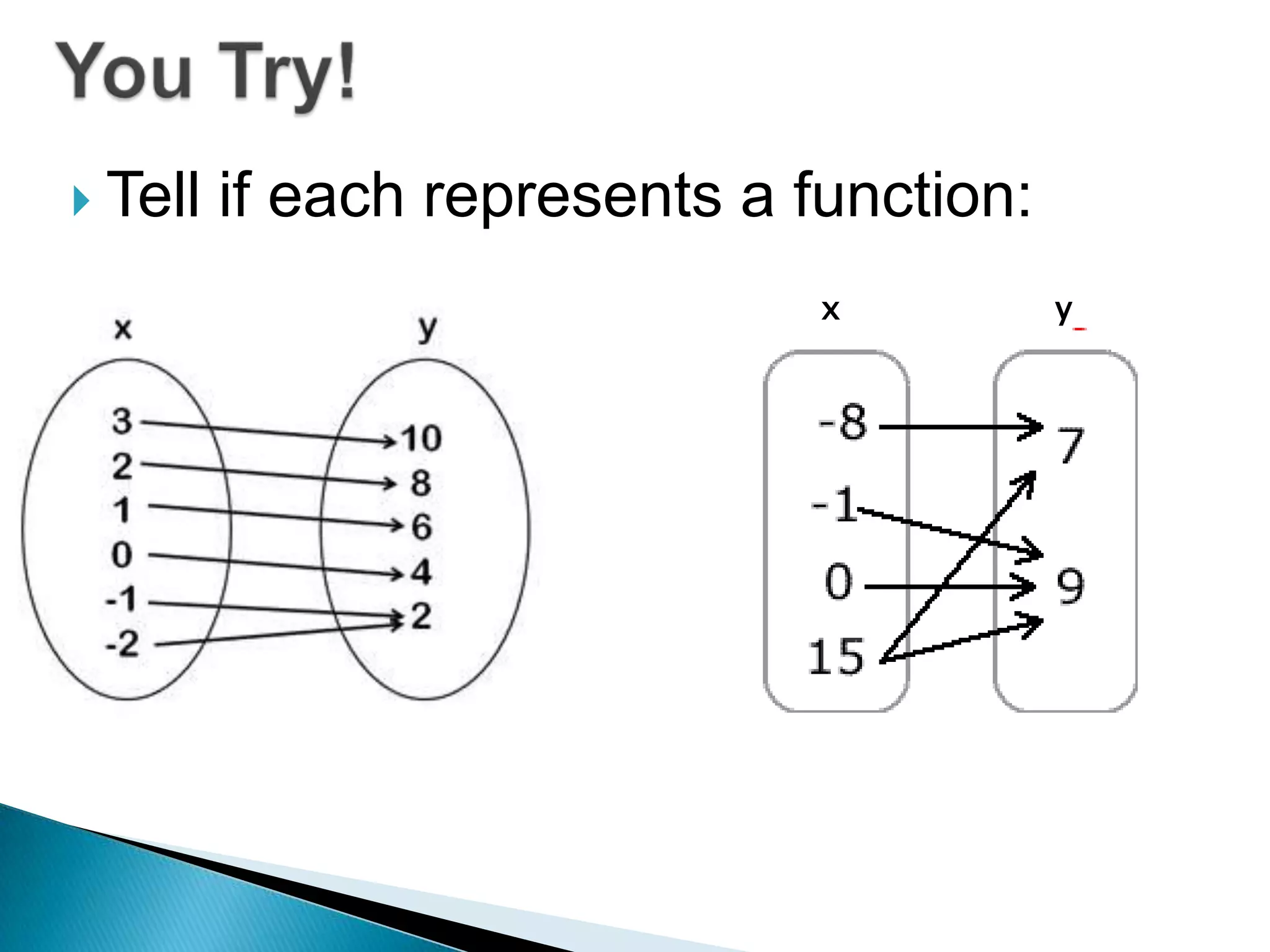
 Tell if each represents a function: 
x y
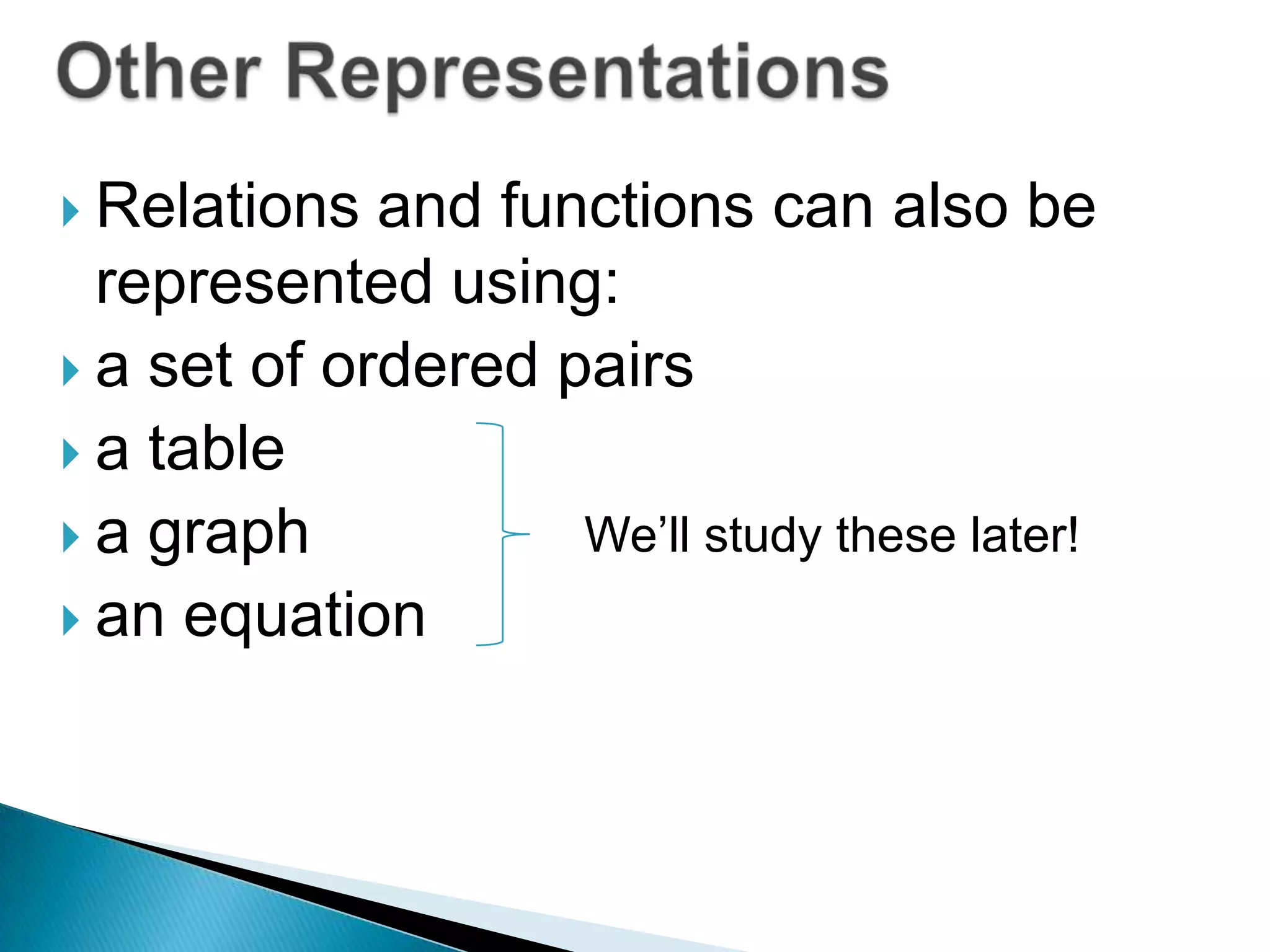
 Relations and functions can also be 
represented using: 
 a set of ordered pairs 
 a table 
 a graph 
 an equation 
We’ll study these later!
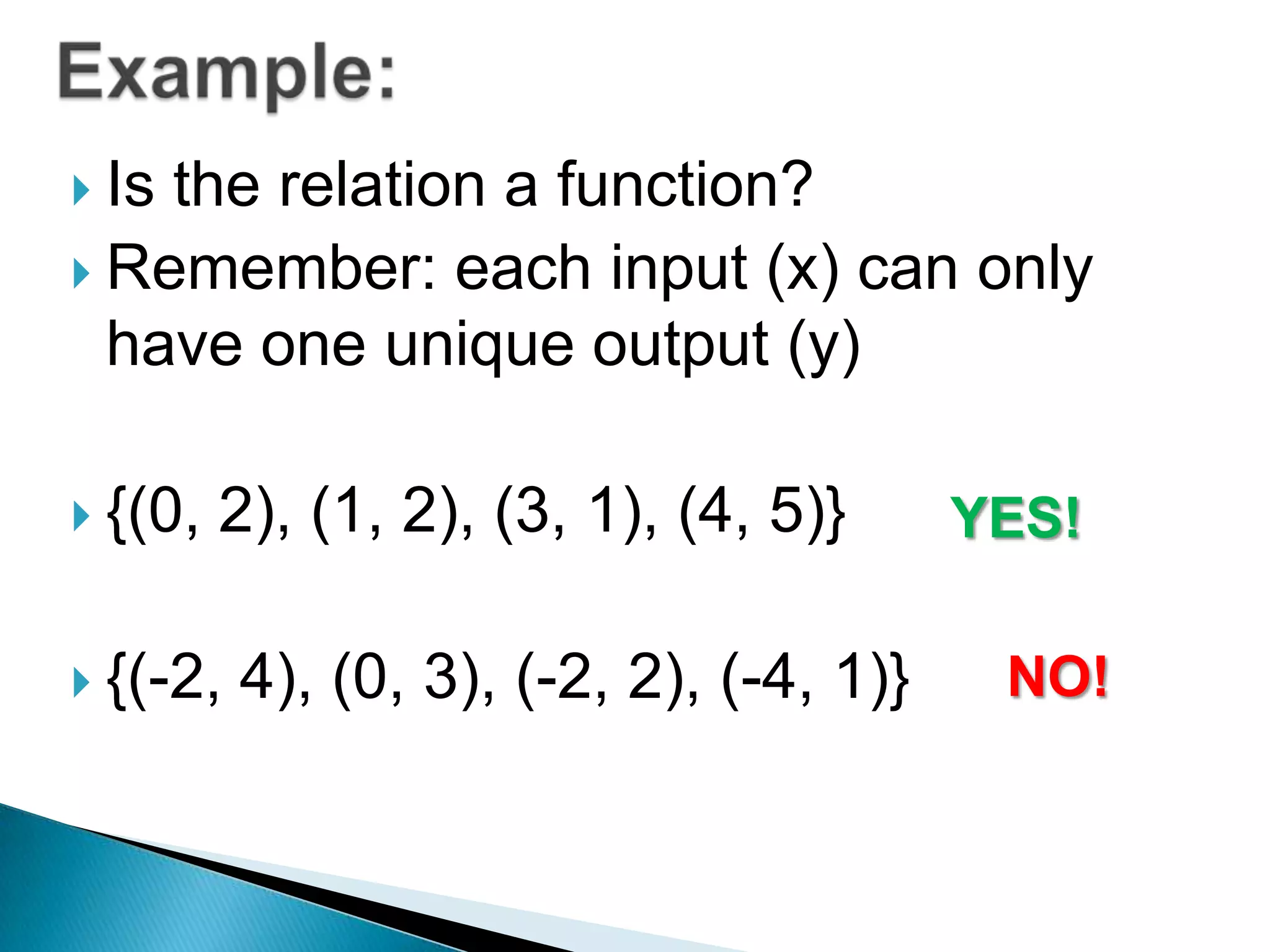
 Is the relation a function? 
 Remember: each input (x) can only 
have one unique output (y) 
 {(0, 2), (1, 2), (3, 1), (4, 5)} 
 {(-2, 4), (0, 3), (-2, 2), (-4, 1)} 
YES! 
NO!
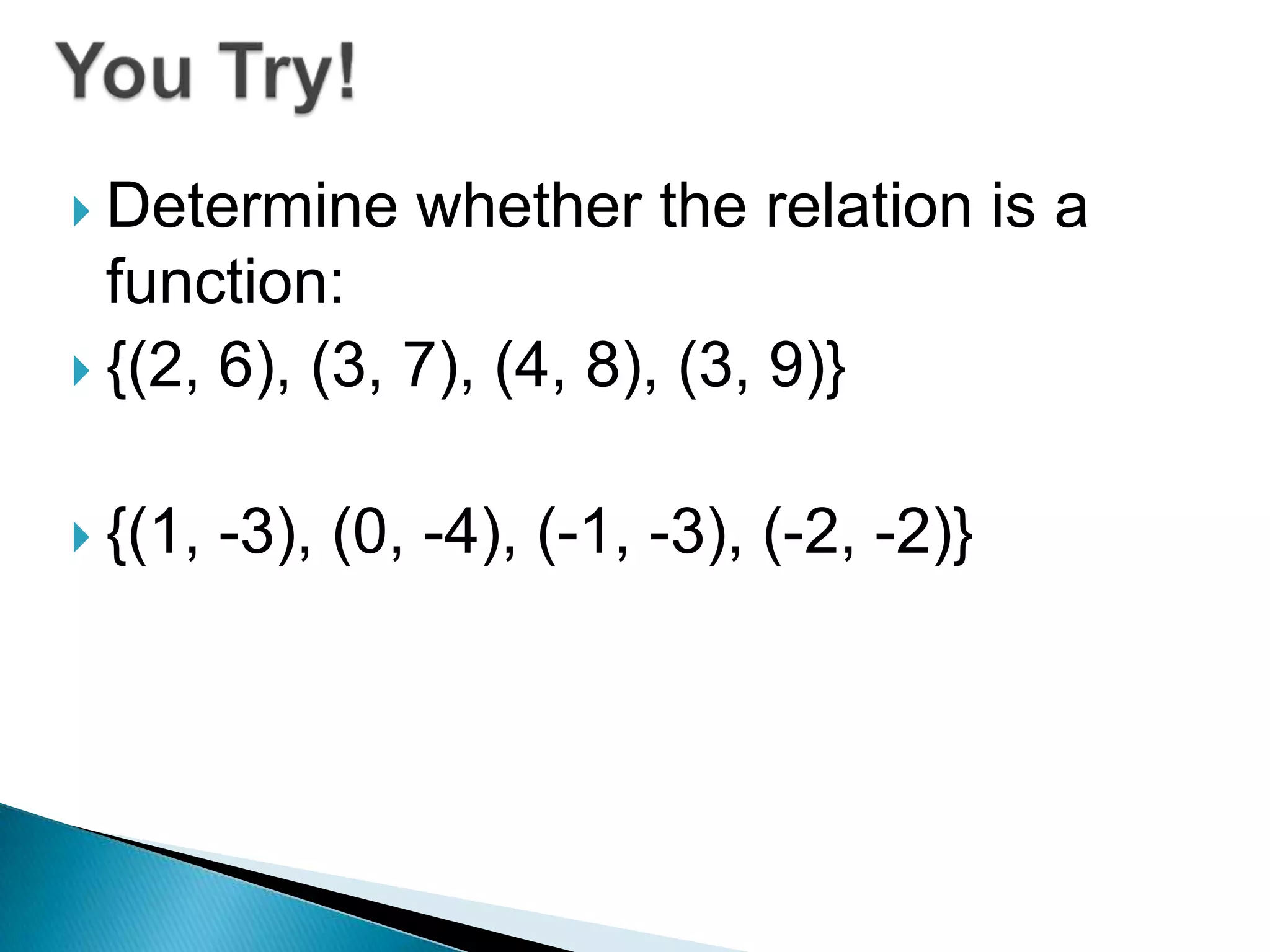
 Determine whether the relation is a 
function: 
 {(2, 6), (3, 7), (4, 8), (3, 9)} 
 {(1, -3), (0, -4), (-1, -3), (-2, -2)}
• A graph is a function 
if and only if no vertical 
line crosses the graph 
at more than one point.
 Determine whether each graph 
represents a function. 
YES! YES! NO!
 Determine whether each graph 
represents a function.

2.1 definition of a function

  • 2.
    • A relationis a mapping, or pairing, of input values with output values.  “Mapping Diagram”
  • 3.
    • A functionis a special type of relation that has exactly one output for each input. Function machine: • One number goes in • Another unique number comes out.
  • 4.
    • If anyinput maps to more than one output, then it is not a function. • Is this a function? Why or why not?
  • 5.
     Most functionswe will see use x and y to represent inputs and outputs.  x = input value  y = output value
  • 6.
  • 7.
     Tell ifeach represents a function: x y
  • 8.
     Relations andfunctions can also be represented using:  a set of ordered pairs  a table  a graph  an equation We’ll study these later!
  • 9.
     Is therelation a function?  Remember: each input (x) can only have one unique output (y)  {(0, 2), (1, 2), (3, 1), (4, 5)}  {(-2, 4), (0, 3), (-2, 2), (-4, 1)} YES! NO!
  • 10.
     Determine whetherthe relation is a function:  {(2, 6), (3, 7), (4, 8), (3, 9)}  {(1, -3), (0, -4), (-1, -3), (-2, -2)}
  • 11.
    • A graphis a function if and only if no vertical line crosses the graph at more than one point.
  • 12.
     Determine whethereach graph represents a function. YES! YES! NO!
  • 13.
     Determine whethereach graph represents a function.