infantile  diarrhea
Etiology Pathogenesis Clinical manifestations Diagnosis Treatment Differential diagnosis diarrhea
Definition Infantile diarrhea is syndrome caused  by  multi-pathogens & multifactor. Abnormally fluid content in the stool It is easily complicated: disturbances of  water  electrolyte and  acid- base balance  It can be classified  infectious  non-infectious
 
Etiology Predisposing factors Infectious factors 1. Immature digestive function and rapid growth 2. Poor host defenses 3. Formula feeding 1. Intraintestinal infections 2 . Extraintestinal infections 1. Dietary factors 2. Weather factors Non-infectious factors
morbidity   constituent ratio     <  1y  38.65% 1-   2y  32.29% Etiology
Low gastric acidity   the ability killing  pathogens Low activity of digestive enzymes   digestive  ability Rapid growth   nutrient requirements  overburden  in gastrointestinal tract Predisposing  factors  Immature digestive function and rapid growth
Poor host defenses IgM  resistance to the infection of  gram-negative  bacilli SIgA  resistance to the local infection Newborn infants have not acquired normal enteric  flora Prolonged administration of antibiotics a shift  in their balance Predisposing  factors
Very few microbes are always pathogenic Many microbes are potentially pathogenic Most microbes are  never pathogenic Microbes and humans
Formula feeding Have much more opportunities for contamination Some useful agents (C3,C4, lysozyme, lysosome,  lactoferrin and some cells ) which breast milk  contains are less or have been  destroyed in  animal milk after heating  Predisposing  factors  Bottle-fed babies are more predisposed to diarrhea
Intraintestinal infections(enteritis) Viruses:   (70%)  Rotavirus etc. Bacteria:   Escherichia coli (E.coli), etc. Fungi:   Candida albicans,  etc. Protozoa:   Entamoeba histolytic, etc. Infectious Factors
The infectious diarrhea dose not include that having legal name  such as bacillary dysentery, cholera  Diarrhea caused by other infectious agents and unknown pathogens may all be named “ enteritis” and should be defined with the name of the specific pathogen.  Such as enteropathogenic E. Coli. enteritis, rotavirus enteritis.
Viruses  Bacteria  Parasites  fungi Rotavirus  Salmonella species  Giardia lamblia  candida  albicans Adenovirus  Shigella species  Cryptosporidium parvum Nowalk  agent  Escherichia coli  Entamoeba histolytica Campylobacter jejunis torovirus,  Yersinia enterocolitica Calcivirus  Vibrio cholerae Astrovirus  Aeromonas hydrophilia Plegiomonas shigelloides Common infectious etiologic agents of acute gastroenteritis
rotavirus
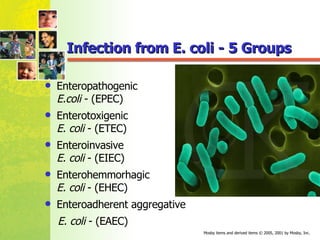
Infection from E. coli - 5 Groups Enteropathogenic  E.coli  - (EPEC) Enterotoxigenic  E. coli  - (ETEC) Enteroinvasive  E. coli  - (EIEC) Enterohemmorhagic E. coli  - (EHEC) Enteroadherent aggregative  E. coli  - (EAEC)
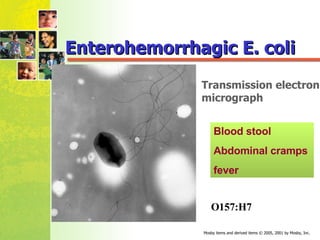
Enterohemorrhagic E. coli O157:H7  Blood stool Abdominal cramps fever Transmission electron  micrograph
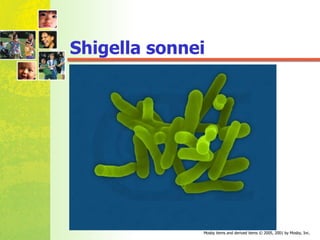
Shigella sonnei
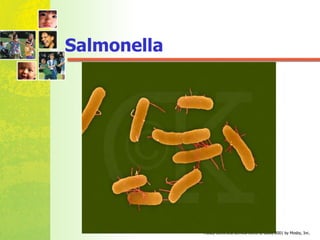
Salmonella
 
Entamoeba histolytica
Candida albicans
Extraintestinal infections Otitis media  Upper respiratory infection Meningitis Pneumonia Urinary infection Cutaneous infection etc .  diarrhea  vomiting Infectious Factors
Dietary factors Feeding conditions causing diarrhea  among infants: Excess or irregular feeding.  Sudden alteration of diet. Feeding  starch or fat too early, changing food or weaning suddenly. Allergy to cow’s milk or disaccharidase  deficiency. Non-infectious Factors
Weather factors A cool environment  increased  bowel peristalsis A hot environment  digestive  juices  drink excess milk Non-infectious Factors
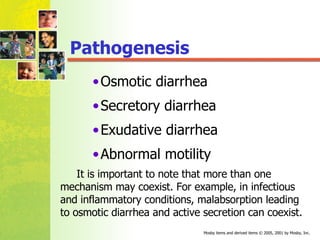
Pathogenesis Osmotic diarrhea Secretory diarrhea  Exudative diarrhea  Abnormal motility It is important to note that more than one mechanism may coexist. For example, in infectious and inflammatory conditions, malabsorption leading to osmotic diarrhea and active secretion can coexist.
Osmotic diarrhea unabsorbable or poorly absorbable solute that exerts an osmotic pressure effect across the intestinal mucosa, resulting in excessive water output.  Causes  Dietary factors Viral enteritis Pathogenesis
Secretory diarrhea Abnormal ion transport across the intestinal epithelial cells, which results in increased secretion, decreased absorption, or both.  A classic example  enterotoxigenic E coli (ETEC ).  Pathogenesis
Exudative diarrhea Pathogens invade and multiply within  intestinal mucosa with inflammatory changes Leak of blood, fluid, pus  Impairment of absorption  Causes  enteroinvasive E.coli(EIEC),  Shigella, Salmonella  Pathogenesis
Abnormal motility Enhanced motility   resulting in rapid gut transit and decreased contact time between luminal  contents and absorptive epithelial cells Slow motility   may result in bacterial overgrowth Pathogenesis
Bacterial enteritis  Enterotoxin  Bacteria invasive intestinal  mucosa Heat-intolerant  Heat-resistant Enterotoxin  enterotoxin  Adenyl cyclase  Guanyl  cyclase  Congestion, dropsy, ulcer cAMP↑  cGMP↑ Na+  Cl-  H 2 O↑ Small intestine juice secrete↑  Stool (blood, mucus shreds, pus) Diarrhea  Pathogenesis of Bacterial enteritis
Carbohydrate decomposition &  absorption disorder Shedding of epithelial cells on intestine mucous membrane, intestinal villus shortening   Intestinal   lactic acid ↑ Intestinal Na  +  & glucose ↑ Disaccharidase activity ↓ Watery diarrhea Na  + , glucose coupling transporter disorder Na  + , glucose absorption disorder Reabsorbed  water-electrolyte ↓ Pathogenesis of Viral Enteritis   Virus particles Microvillares epithelial cells on Small intestine mucous membrane  Intestines osmotic pressure↑
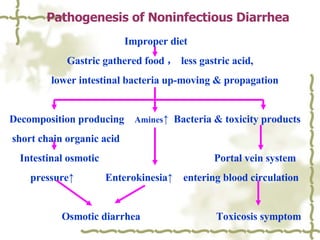
Pathogenesis of Noninfectious Diarrhea   Improper diet  Gastric gathered food , less gastric acid,  lower intestinal bacteria up-moving & propagation   Decomposition producing   Amines ↑   Bacteria & toxicity products   short chain organic acid   Intestinal osmotic  Portal vein system pressure↑  Enterokinesia↑  entering blood circulation Osmotic diarrhea  Toxicosis symptom  (endogenous infection)
Classified by course    Acute infantile diarrhea:  <2 weeks    Persisting infantile diarrhea:  2 weeks~2 months Chronic infantile diarrhea:  >2 months Clinical manifestations
Clinical manifestations GI symptoms Systemic toxic symptoms Disturbances in water, electrolyte, and/or acid-base balances Acute Diarrhea
Gastrointestinal symptoms Other GI symptoms Frequent stools: loose, watery, with pus,mucus, blood ,undigested food Microscopic findings: WBC, RBC, fatty particles Anorexia, nausea, vomiting, abdominal pain and distention Clinical Manifestations Diarrhea
Clinical manifestations Systemic toxic symptoms Abnormal temperature Irritability, lethargy, coma Acute Diarrhea
Water and electrolyte disturbances The most important evidences to distinguish  severe  diarrhea from  mild   The  usual causes of death in gastroenteritis The correction of them is the fundamental aim of treatment of diarrhea They include: Dehydration Metobolic acidosis Hypokalemia Hypocalcemia and Hypomagnesemia Clinical Manifestations
Characteristics of some specific enteritis Non-infectious diarrhea : The patient mainly presents the gastrointestinal symptoms  without or with mild systemic symptoms and water-electrolyte disturbances The stools may contain mucus, froth, or undigested food, but  have  no pus or blood .  Microscopic findings can be negative or only fatty particles.
Infectious diarrhea Often associated with  obvious systemic symptoms and water-electrolyte disturbance  in addition to gastrointestinal symptoms Characteristics of some specific enteritis
Infectious  diarrhea Invasive bacterial enteritis   dysentery-like symptoms: frequent stools  with mucus, pus and blood.  Microscopic findings of stools are a  number of leukocytes and erythrocytes. Characteristics of some specific enteritis
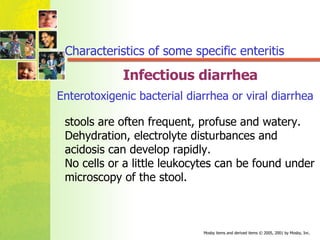
Infectious diarrhea Enterotoxigenic bacterial diarrhea or viral diarrhea   stools are often frequent, profuse and watery. Dehydration, electrolyte disturbances and acidosis can develop rapidly. No cells or a little leukocytes can be found under microscopy of the stool. Characteristics of some specific enteritis
Candida albicans enteritis   occurs predominantly in infants under 2y and  with protracted use of antibiotics who have a  disturbed enteric bacterial flora.  The patient often has also thrush. The stools often have mucus and much froth,  candidal filament may be seen under microscope. Characteristics of some specific enteritis Infectious diarrhea
muguet (mycotic stomatitis)
Rotavirus enteritis Pathogen: Human rotavirus (HRV). Predisposing age: 6 - 24 months. Predisposing seasons: autumn and winter. Suddenly onset with  low-grade fever and  symptoms of common cold, no obvious toxic  symptoms. Characteristics of some specific enteritis
Vomiting usually precedes diarrhea. The diarrhea is  typically acute in onset and generally watery in  character, frequent and in large amount, odorless. It is usually associated with dehydration which is  usually isotonic and associated with electrolyte,  acid-base disturbance. It is a self-limited disease, the clinical illness  generally lasts for 3-8 days Rotavirus enteritis Characteristics of some specific enteritis
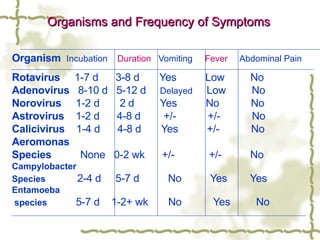
Organism  Incubation  Duration   Vomiting  Fever  Abdominal Pain Rotavirus  1-7 d  3-8 d  Yes  Low  No Adenovirus  8-10 d  5-12 d  Delayed  Low  No Norovirus  1-2 d  2 d  Yes  No  No Astrovirus  1-2 d  4-8 d  +/-  +/-  No Calicivirus  1-4 d  4-8 d  Yes  +/-  No Aeromonas  Species  None  0-2 wk  +/-  +/-  No Campylobacter  Species   2-4 d  5-7 d  No  Yes  Yes Entamoeba species   5-7 d  1-2+ wk  No  Yes  No Organisms and Frequency of Symptoms
Organism  Incubation  Duration   Vomiting  Fever  Abdominal Pain Enterohemorrhagic  E coli   1-8 d  3-6 d  No  +/-  Yes Enterotoxigenic  E coli   1-3 d  3-5 d  Yes  Low  Yes   Salmonella   Species  0-3 d  2-7 d  Yes  Yes  Yes Shigella  Species   0-2 d  2-5 d  No  High  Yes  Vibrio   species  0-1 d  5-7 d  Yes  No  Yes   Giardia   Species   2 wk  1+wk  No  No  Yes Campylobacter   Species  2-4 d  5-7 d  No  Yes  Yes Cryptosporidium species   5-21 d  Months  No  Low  Yes Organisms and Frequency of Symptoms
Dehydration Clinical features of dehydration  Degrees of dehydration Types of dehydration Clinical Manifestations Water and electrolyte disturbances
Higher metabolic rates  Increased body surface area  to mass index  Higher body water contents  (water comprises approximately  70% of body  weight in infants,  65% in children, 60% in adults)  Young pediatric patients tend to be  more  susceptible to fluid losses  a quick turnover of fluids and solute
Normal routes of fluid excretion in infants and children. Lungs Skin Urine & feces insensible water losses
Sudden weight loss Changes in activity level (restless, lassitude, lethargy, coma) Thirst and dry mouth Sunken eye sockets and tearless Sunken anterior fontanel ( infant) Dry skin and poor skin turgor Decreased urination (Oliguria) Severe cases:  poor peripheral circulation  ( prolonged capillary refill time) or even shock Dehydration
Clinical features of dehydration in an infant prolonged
Loss of Skin Elasticity
Degrees According to weight loss: Dehydration 100~120 50~100 50 Volume deficit (ml/kg) >10% 5%~10% <5% Weight loss (% of BW) severe moderate mild Extent
Degrees According to the severity  of the symptoms and signs The key point to distinguish severe cases from mild and moderate ones is  poor peripheral circulation and even shock. Dehydration
Dehydration 5-10% Slight sunken
Types of dehydration Hypertonic Isotonic Hypotonic The type is defined according to the change of serum osmolality (serum Na+ concentration) Dehydration
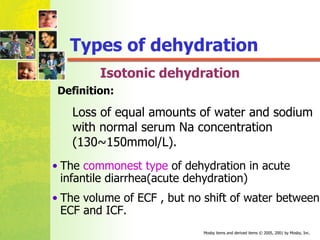
Isotonic dehydration The  commonest type  of dehydration in acute infantile diarrhea(acute dehydration) The volume of ECF , but no shift of water between  ECF and ICF. Loss of equal amounts of water and sodium with normal serum Na concentration (130~150mmol/L).   Types of dehydration Definition:
Hypotonic dehydration A  shift of water from ECF to ICF 1.  More  obvious signs of dehydration  and  a greater  degree of shock per unit of water loss. 2.  The increase in the volume of ICF leads to an  increase in brain volume, sometimes resulting in  convulsions.  More common in poorly nourished infants or with  prolonged diarrhea  in developing countries . Loss of more sodium than water with low serum Na concentration (<130mmol/L)   Types of dehydration Definition:
Hypertonic dehydration Loss of more water than sodium with high serum Na concentration (>150mmol/L) 1.  Less obvious signs of dehydration 2.   Particularly dangerous :  Water is drawn out of the brain and cerebral shrinkage within a rigid skull may lead to multiple, small cerebral haemorrhages and convulsions. A shift of water from ICF to ECF The least common, usually results from high insensible water losses or from profuse, low-sodium diarrhea Types of dehydration Definition:
Hypertonic dehydration Isotonic  dehydration Hypotonic dehydration humour distribute Interstitial fluid plasma ICF
Property of dehydration ICF: severely decrease, Milder dehydrant sign than the other two kinds >150 mmol / L High grade fever, Infection Hypertonic ECF: severely decrease,  Easily shock  ,  Severer dehydrant sign than the other two kinds <130 mmol / L Chronic gastrointestinal fluid lose Hypotonic ECF: decrease,  Osmotic pressure  (intracellular = extracellular) Dehydrant volume accord with dehydrant physical sign 130 ~ 150 mmol / L Acute gastrointe-stinal fluid lose Isotonic Pathophysiology & clinical characteristic Serum sodium Pathogeny Type of dehydration
Metabolic acidosis Degrees of acidosis Clinical manifestations
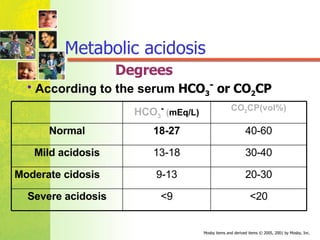
Degrees According to the serum   HCO 3 -  or CO 2 CP Metabolic acidosis <20 <9 Severe acidosis 20-30 9-13 Moderate cidosis 30-40 13-18 Mild acidosis 40-60 18-27 Normal CO 2 CP(vol%) HCO 3 -  ( mEq/L)
Clinical manifestations Lassitude, lethargy, coma or irritability Deep, rapid respiration and cool  expiratory air The expiratory air smells like ‘acetone’ Cherry lips Nausea, vomiting Metabolic acidosis
Hypokalemia Definition Features of the body potassium before and after rehydration Clinical manifestations Hypokalemia is a condition of below normal levels of potassium in the blood serum(<3.5  mmol/L) .
Heart symptoms Renal symptoms  Neuromuscular symptoms Hypokalemia
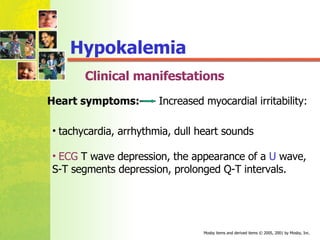
Clinical manifestations tachycardia, arrhythmia, dull heart sounds ECG  T wave depression, the appearance of a  U  wave, S-T segments depression, prolonged Q-T intervals. Heart symptoms:   Increased myocardial irritability: Hypokalemia
Hypokalemia:  K+ < 3.5 meq/L
Clinical manifestations Hypokalemia Renal symptoms: Lassitude, weakness, hypotonia, diminished reflexes and even paralysis Abdominal distention with diminished or absent peristalsis Hypokalemic and hypochloremic alkalosis Neuromuscular symptoms   Depressed irritability: Polyuria  Impaired concentrating ability
Serum K usually remains normal prior to rehydration 1. hemoconcentration 2. During acidosis potassium moves from ICF into ECF  3. Oliguria reduces the excretion of potassium Along with rehydration serum K will gradually fall, because: 1. Hemodilution  2. Acidosis is being corrected, potassium returns from ECF  to ICF  3. Potassium excretion is increased along with urine discharge  4. Synthesis of glycogen with infused glucose needs potassium  5. Ongoing loss of potassium due to diarrhea Features of the body K before and after rehydration In the presence of a body  potassium deficit
Hypocalcemia and Hypomagnesemia Definition  Features before and after rehydration Manifestations : Tetany and convulsion If the tetany or convulsion is not relieved after the patient has been given calcium, hypomagnesemia should be considered. A condition of below normal levels of Ca (<1.75  mmol  ) or Mg (<0.6  mmol  ) in the blood serum
Features before and after rehydration
Diagnosis Clinical diagnosis   history (including feeding history and epidemical data), manifestations,  physical examination and routine examination of stool. Dehydration (degree and type), electrolyte disturbances and acidosis should be assessed for moderate and severe cases. Ancillary data : WBC counts of peripheral blood to assess risk of  bacterial infection Serum electrolyte and blood gas analysis Etiological diagnosis for enteritis depends on stool  bacteria culture or virus identification which are not always available.
Differential Diagnosis Physiologic diarrhea It occurs in infants apparently fatty, younger  than six months, usually breast feeding. Accompanied by eczema. Besides diarrhea the infants have no other  symptoms and have good appetite and  normal weight gain. After solid foods (supplemental food) were  added the stools turn to normal
Bacillary dysentery Epidemic data (contact history) Stool bacteria culture.  Differential Diagnosis
Acute necrotizing enterocolitis Severe systemic toxic symptoms Obvious bloody diarrhea Differential Diagnosis
Treatment Principles  regulating and continue feeding  correcting water and electrolyte  disturbances  controlling intestinal and extraintestinal infection  good care and symptomatic treatment
Treatment Fasting  severe vomiting Regulating and limiting the diet Antibiotic :  bacterial infection Microecological drug : lactobacilli GI tract mucosa protector : smecta Drug therapy Fluid therapy   Mainstay  of treatment Dietary therapy
Fluid therapy Purpose :  Correction of dehydration,  electrolyte and acid-base imbalances Common solutions used in fluid therapy Oral fluid therapy Intravenous fluid therapy
Common solutions Non-electrolyte solution Electrolyte solutions Mixed solution Oral rehydration salt(ORS) Fluid therapy
Non-electrolyte solution 5%(isosmotic )  10% (hyperosmotic )  Because the glucose is used for energy supply after it enters the body, the solutions are known as  no tonic solutions  only used in  providing water and calories. Fluid therapy Glucose solution (GS)
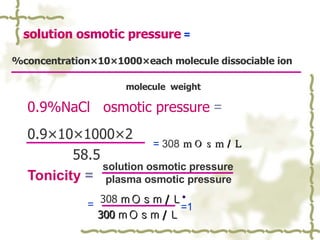
Tonicity   or effective osmolality is the ability  of a solution to cause water movement .   solution osmotic pressure plasma osmotic pressure solution osmotic pressure  = %concentration×10×1000×each molecule dissociable ion  molecule  weight   It’s a ratio =
0.9%NaCl  osmotic pressure   =   0.9×10×1000×2 58.5 Tonicity  = 308 mOsm / L 300 mOsm / L =  308 mOsm / L   solution osmotic pressure  = %concentration×10×1000×each molecule dissociable ion   molecule  weight   solution osmotic pressure plasma osmotic pressure = =1
tonicity include isotonic : An extracellular solution that has  effectively the same concentration of  solution as that found within a cell  hypertonic :  A hypertonic solution has higher  solution concentrations on the outside. in a  net movement of water out of cells. hypotonic : A hypotonic (hypoosmotic)   solution has  a  lower concentration on the outside ,  in a net  movement of water into cells.
Fluid therapy Electrolyte solutions Sodium chloride solution (NaCl) Isotonic  (0.9%, Normal saline, NS): Replenish volume. Maintain plasma osmolality Hypertonic(3%)   Correct hyponatremia Sodium bicarbonate (SB)(NaHCO 3 ) Isotonic(1.4%)   Maintain plasma osmolality, correct acidosis Hypertonic(5% , 3.6 tonic)   Correct acidosis Potassium chloride (KCl) Isotonic(1.2%)  Hypertonic(10% ,8.9 tonic ) Replenish K+
Mixed solution Components of mixed solution solution  component ratio   NS  5%/10%GS  1.4%SB   2:1 isotonic sol   2  1  1:1 sol (1/2tonicity)  1  1   2:3:1 sol (1/2tonicity)   2  3  1 4:3:2 sol (2/3tonicity)   4  3  2 1:2 sol (1/3tonicity)  1  2 1:4 sol (1/5tonicity)  1  4 Prepared with different portions of various isotonic electrolyte solutions and glucose solution.
Oral fluid therapy Mild or moderate dehydration. No severe vomiting  or  abdominal distention Indications ORS may be used with unlimited water intake.  The fluid is best given in small amounts frequently . Fluid therapy
Ingredient  amount (grams) NaCl  3.5 NaHCO 3  2.5 KCl  1.5 Glucose  20 Water  1000ml Oral rehydration salt (ORS) It has been advocated by the WHO Formula of rehydration salt: 2/3 tonicity and the potassium concentration is 0.15%
40℃ warm water or cooled boiled water  Oral rehydration salt (ORS)
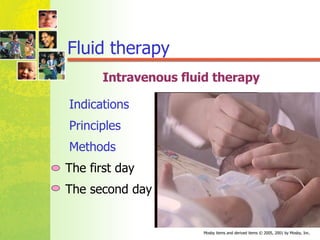
Indications Principles Methods The first day The second day Fluid therapy Intravenous fluid   therapy
Indications Moderate or severe dehydration The illness is not relieved by oral  fluid therapy or complicated with  severe vomiting. Intravenous fluid therapy
Principles Correcting volume and electrolyte deficits  and correcting acid-base imbalances Supplying maintenance requirements Replenishing ongoing abnormal losses Intravenous fluid therapy
The therapy for the first day Volume supplement  Correcting acidosis Replacement of potassium Replacement  of calcium and magnesium Intravenous fluid therapy
Volume supplement To determine the amount of fluid to be infused To determine the kind of fluid to be infused To determine the infusion rate (speed) Three “determination”
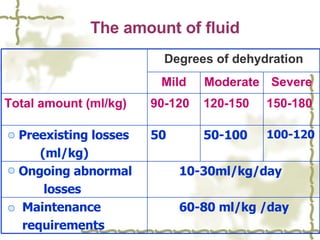
The amount of fluid 60-80 ml/kg /day Maintenance  requirements 10-30ml/kg/day Ongoing abnormal  losses 100-120 50-100 50 Preexisting losses  (ml/kg) 150-180 120-150 90-120 Total amount (ml/kg) Severe Moderate Mild Degrees of dehydration
losing continuing   1/2 ~ 1/3 tonic Sodic solution physiological need   1/3 ~ 1/5 tonic Sodic solution The Quality of fluid 1/3 ~ 1 / 5 Tonic Sodic solution Hypertonic dehydration 2:3:1 Isotonic dehydration 4:3:2 Hypotonic dehydration Cumulated losing volume Dehydrant category
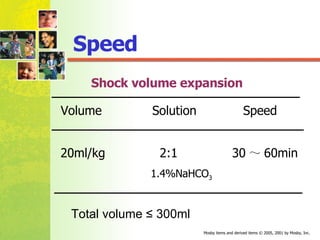
Shock volume expansion   Volume  Solution  Speed 20ml/kg  2:1  30 ~ 60min 1.4%NaHCO 3 Total volume ≤   300ml  Speed
Speed 5ml  /  kg  / h 8 ~ 10ml  /  kg  / h 12 ~ 16h 8 ~ 12h 24h Keep transfusing period ( physiological need, losing continuing ) Cumulated losing volume Total volume
Correcting acidosis Mild acidosis is easily corrected with volume restoration As the fluid infused contains certain amounts of  alkaline  solutions and increased renal perfusion permits  excretion of excess H +  ions in the urine For severe acidosis 1.4%SB (20ml/kg) may be used  instead of  2:1 solution for volume expanding therapy. 1ml/kg of 5%SB, can elevate 1mEq/L of HCO 3 - Usually give half of the amount calculated and further  regulation is based on further HCO 3 -  or blood gas  analysis. Intravenous fluid therapy
Replacement of potassium The amount of potassium to be replaced Mild hypokalemia:  200-300mg/kg/day  or 3- 4mEq/kg/d  (KCl) Severe hypokalemia: 300-450 mg/kg/day or 4-6 mEq/kg/d Some key points should be paid attention to: Intravenous fluid therapy
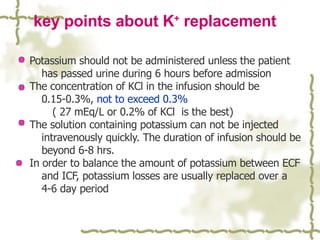
key points about K +  replacement Potassium should not be administered unless the patient has passed urine during 6 hours before admission The concentration of KCl in the infusion should be 0.15-0.3%,  not to exceed 0.3% ( 27 mEq/L or 0.2% of KCl  is the best) The solution containing potassium can not be injected intravenously quickly. The duration of infusion should be beyond 6-8 hrs. In order to balance the amount of potassium between ECF and ICF, potassium losses are usually replaced over a 4-6 day period
Replacement  of calcium and magnesium If patients show the symptoms of hypocalcemia (tetany or convulsion) calcium should be administered  10% Calcium gluconate 10ml + 10% glucose 10ml intravenous injection slowly  If the symptoms are not improved, magnesium should be given. Intravenous fluid therapy
The therapy for the second day The fluid therapy on the second day is mainly composed of replacement of ongoing normal and abnormal losses with  1/2  or  1/3  sodium-containing solutions.  The volumes of ongoing abnormal  losses are dependent on the amount of diarrhea stools.  Correcting acidosis and hypokalemia if necessary Intravenous fluid therapy
If we could prevent rotavirus: We would save the lives of 1,400 children a day. We would save countries’ precious human and financial resources. We would make a difference.  2006, USA. oral, vaccine for use in preventing  rotavirus gastroenteritis  in infants.  This vaccine gives health care providers an important new tool that can effectively prevent an illness that affects almost all children within the first few years of life  vaccine
 
Definition: Dehydration Isotonic dehydration Hypotonic dehydration  Hypertonic dehydration Hypokalemia Key Points
Etiology of infantile diarrhea To evaluate the severity of dehydration caused by infantile diarrhea, you should pay attention to some  signs  For fluid therapy, the commonly used non-electrolyte solution and the electrolyte solutions   2:1 isotonic solution ,2:3:1 solution component and usage key points about K +  replacement the main distinction between severe and mild infantile diarrhea Key Points
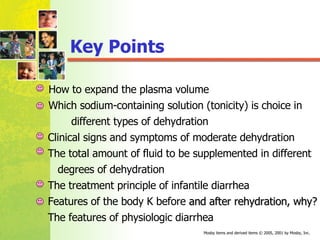
How to expand the plasma volume Which sodium-containing solution (tonicity) is choice in  different types of dehydration Clinical signs and symptoms of moderate dehydration  The total amount of fluid to be supplemented in different degrees of dehydration The treatment principle of infantile diarrhea Features of the body K before   and after rehydration, why? The features of physiologic diarrhea Key Points
Thanks !

2009外文讲义3

  • 1.
  • 2.
    Etiology Pathogenesis Clinicalmanifestations Diagnosis Treatment Differential diagnosis diarrhea
  • 3.
    Definition Infantile diarrheais syndrome caused by multi-pathogens & multifactor. Abnormally fluid content in the stool It is easily complicated: disturbances of water electrolyte and acid- base balance It can be classified infectious non-infectious
  • 4.
  • 5.
    Etiology Predisposing factorsInfectious factors 1. Immature digestive function and rapid growth 2. Poor host defenses 3. Formula feeding 1. Intraintestinal infections 2 . Extraintestinal infections 1. Dietary factors 2. Weather factors Non-infectious factors
  • 6.
    morbidity constituent ratio < 1y 38.65% 1- 2y 32.29% Etiology
  • 7.
    Low gastric acidity the ability killing pathogens Low activity of digestive enzymes digestive ability Rapid growth nutrient requirements overburden in gastrointestinal tract Predisposing factors Immature digestive function and rapid growth
  • 8.
    Poor host defensesIgM resistance to the infection of gram-negative bacilli SIgA resistance to the local infection Newborn infants have not acquired normal enteric flora Prolonged administration of antibiotics a shift in their balance Predisposing factors
  • 9.
    Very few microbesare always pathogenic Many microbes are potentially pathogenic Most microbes are never pathogenic Microbes and humans
  • 10.
    Formula feeding Havemuch more opportunities for contamination Some useful agents (C3,C4, lysozyme, lysosome, lactoferrin and some cells ) which breast milk contains are less or have been destroyed in animal milk after heating Predisposing factors Bottle-fed babies are more predisposed to diarrhea
  • 11.
    Intraintestinal infections(enteritis) Viruses: (70%) Rotavirus etc. Bacteria: Escherichia coli (E.coli), etc. Fungi: Candida albicans, etc. Protozoa: Entamoeba histolytic, etc. Infectious Factors
  • 12.
    The infectious diarrheadose not include that having legal name such as bacillary dysentery, cholera Diarrhea caused by other infectious agents and unknown pathogens may all be named “ enteritis” and should be defined with the name of the specific pathogen. Such as enteropathogenic E. Coli. enteritis, rotavirus enteritis.
  • 13.
    Viruses Bacteria Parasites fungi Rotavirus Salmonella species Giardia lamblia candida albicans Adenovirus Shigella species Cryptosporidium parvum Nowalk agent Escherichia coli Entamoeba histolytica Campylobacter jejunis torovirus, Yersinia enterocolitica Calcivirus Vibrio cholerae Astrovirus Aeromonas hydrophilia Plegiomonas shigelloides Common infectious etiologic agents of acute gastroenteritis
  • 14.
  • 15.
    Infection from E.coli - 5 Groups Enteropathogenic E.coli - (EPEC) Enterotoxigenic E. coli - (ETEC) Enteroinvasive E. coli - (EIEC) Enterohemmorhagic E. coli - (EHEC) Enteroadherent aggregative E. coli - (EAEC)
  • 16.
    Enterohemorrhagic E. coliO157:H7 Blood stool Abdominal cramps fever Transmission electron micrograph
  • 17.
  • 18.
  • 19.
  • 20.
  • 21.
  • 22.
    Extraintestinal infections Otitismedia Upper respiratory infection Meningitis Pneumonia Urinary infection Cutaneous infection etc . diarrhea vomiting Infectious Factors
  • 23.
    Dietary factors Feedingconditions causing diarrhea among infants: Excess or irregular feeding. Sudden alteration of diet. Feeding starch or fat too early, changing food or weaning suddenly. Allergy to cow’s milk or disaccharidase deficiency. Non-infectious Factors
  • 24.
    Weather factors Acool environment increased bowel peristalsis A hot environment digestive juices drink excess milk Non-infectious Factors
  • 25.
    Pathogenesis Osmotic diarrheaSecretory diarrhea Exudative diarrhea Abnormal motility It is important to note that more than one mechanism may coexist. For example, in infectious and inflammatory conditions, malabsorption leading to osmotic diarrhea and active secretion can coexist.
  • 26.
    Osmotic diarrhea unabsorbableor poorly absorbable solute that exerts an osmotic pressure effect across the intestinal mucosa, resulting in excessive water output. Causes Dietary factors Viral enteritis Pathogenesis
  • 27.
    Secretory diarrhea Abnormalion transport across the intestinal epithelial cells, which results in increased secretion, decreased absorption, or both. A classic example enterotoxigenic E coli (ETEC ). Pathogenesis
  • 28.
    Exudative diarrhea Pathogensinvade and multiply within intestinal mucosa with inflammatory changes Leak of blood, fluid, pus Impairment of absorption Causes enteroinvasive E.coli(EIEC), Shigella, Salmonella Pathogenesis
  • 29.
    Abnormal motility Enhancedmotility resulting in rapid gut transit and decreased contact time between luminal contents and absorptive epithelial cells Slow motility may result in bacterial overgrowth Pathogenesis
  • 30.
    Bacterial enteritis Enterotoxin Bacteria invasive intestinal mucosa Heat-intolerant Heat-resistant Enterotoxin enterotoxin Adenyl cyclase Guanyl cyclase Congestion, dropsy, ulcer cAMP↑ cGMP↑ Na+ Cl- H 2 O↑ Small intestine juice secrete↑ Stool (blood, mucus shreds, pus) Diarrhea Pathogenesis of Bacterial enteritis
  • 31.
    Carbohydrate decomposition & absorption disorder Shedding of epithelial cells on intestine mucous membrane, intestinal villus shortening Intestinal lactic acid ↑ Intestinal Na + & glucose ↑ Disaccharidase activity ↓ Watery diarrhea Na + , glucose coupling transporter disorder Na + , glucose absorption disorder Reabsorbed water-electrolyte ↓ Pathogenesis of Viral Enteritis Virus particles Microvillares epithelial cells on Small intestine mucous membrane Intestines osmotic pressure↑
  • 32.
    Pathogenesis of NoninfectiousDiarrhea Improper diet Gastric gathered food , less gastric acid, lower intestinal bacteria up-moving & propagation Decomposition producing Amines ↑ Bacteria & toxicity products short chain organic acid Intestinal osmotic Portal vein system pressure↑ Enterokinesia↑ entering blood circulation Osmotic diarrhea Toxicosis symptom (endogenous infection)
  • 33.
    Classified by course   Acute infantile diarrhea: <2 weeks    Persisting infantile diarrhea: 2 weeks~2 months Chronic infantile diarrhea: >2 months Clinical manifestations
  • 34.
    Clinical manifestations GIsymptoms Systemic toxic symptoms Disturbances in water, electrolyte, and/or acid-base balances Acute Diarrhea
  • 35.
    Gastrointestinal symptoms OtherGI symptoms Frequent stools: loose, watery, with pus,mucus, blood ,undigested food Microscopic findings: WBC, RBC, fatty particles Anorexia, nausea, vomiting, abdominal pain and distention Clinical Manifestations Diarrhea
  • 36.
    Clinical manifestations Systemictoxic symptoms Abnormal temperature Irritability, lethargy, coma Acute Diarrhea
  • 37.
    Water and electrolytedisturbances The most important evidences to distinguish severe diarrhea from mild The usual causes of death in gastroenteritis The correction of them is the fundamental aim of treatment of diarrhea They include: Dehydration Metobolic acidosis Hypokalemia Hypocalcemia and Hypomagnesemia Clinical Manifestations
  • 38.
    Characteristics of somespecific enteritis Non-infectious diarrhea : The patient mainly presents the gastrointestinal symptoms without or with mild systemic symptoms and water-electrolyte disturbances The stools may contain mucus, froth, or undigested food, but have no pus or blood . Microscopic findings can be negative or only fatty particles.
  • 39.
    Infectious diarrhea Oftenassociated with obvious systemic symptoms and water-electrolyte disturbance in addition to gastrointestinal symptoms Characteristics of some specific enteritis
  • 40.
    Infectious diarrheaInvasive bacterial enteritis dysentery-like symptoms: frequent stools with mucus, pus and blood. Microscopic findings of stools are a number of leukocytes and erythrocytes. Characteristics of some specific enteritis
  • 41.
    Infectious diarrhea Enterotoxigenicbacterial diarrhea or viral diarrhea stools are often frequent, profuse and watery. Dehydration, electrolyte disturbances and acidosis can develop rapidly. No cells or a little leukocytes can be found under microscopy of the stool. Characteristics of some specific enteritis
  • 42.
    Candida albicans enteritis occurs predominantly in infants under 2y and with protracted use of antibiotics who have a disturbed enteric bacterial flora. The patient often has also thrush. The stools often have mucus and much froth, candidal filament may be seen under microscope. Characteristics of some specific enteritis Infectious diarrhea
  • 43.
  • 44.
    Rotavirus enteritis Pathogen:Human rotavirus (HRV). Predisposing age: 6 - 24 months. Predisposing seasons: autumn and winter. Suddenly onset with low-grade fever and symptoms of common cold, no obvious toxic symptoms. Characteristics of some specific enteritis
  • 45.
    Vomiting usually precedesdiarrhea. The diarrhea is typically acute in onset and generally watery in character, frequent and in large amount, odorless. It is usually associated with dehydration which is usually isotonic and associated with electrolyte, acid-base disturbance. It is a self-limited disease, the clinical illness generally lasts for 3-8 days Rotavirus enteritis Characteristics of some specific enteritis
  • 46.
    Organism Incubation Duration Vomiting Fever Abdominal Pain Rotavirus 1-7 d 3-8 d Yes Low No Adenovirus 8-10 d 5-12 d Delayed Low No Norovirus 1-2 d 2 d Yes No No Astrovirus 1-2 d 4-8 d +/- +/- No Calicivirus 1-4 d 4-8 d Yes +/- No Aeromonas Species None 0-2 wk +/- +/- No Campylobacter Species 2-4 d 5-7 d No Yes Yes Entamoeba species 5-7 d 1-2+ wk No Yes No Organisms and Frequency of Symptoms
  • 47.
    Organism Incubation Duration Vomiting Fever Abdominal Pain Enterohemorrhagic E coli 1-8 d 3-6 d No +/- Yes Enterotoxigenic E coli 1-3 d 3-5 d Yes Low Yes Salmonella Species 0-3 d 2-7 d Yes Yes Yes Shigella Species 0-2 d 2-5 d No High Yes Vibrio species 0-1 d 5-7 d Yes No Yes Giardia Species 2 wk 1+wk No No Yes Campylobacter Species 2-4 d 5-7 d No Yes Yes Cryptosporidium species 5-21 d Months No Low Yes Organisms and Frequency of Symptoms
  • 48.
    Dehydration Clinical featuresof dehydration Degrees of dehydration Types of dehydration Clinical Manifestations Water and electrolyte disturbances
  • 49.
    Higher metabolic rates Increased body surface area to mass index Higher body water contents (water comprises approximately 70% of body weight in infants, 65% in children, 60% in adults) Young pediatric patients tend to be more susceptible to fluid losses a quick turnover of fluids and solute
  • 50.
    Normal routes offluid excretion in infants and children. Lungs Skin Urine & feces insensible water losses
  • 51.
    Sudden weight lossChanges in activity level (restless, lassitude, lethargy, coma) Thirst and dry mouth Sunken eye sockets and tearless Sunken anterior fontanel ( infant) Dry skin and poor skin turgor Decreased urination (Oliguria) Severe cases: poor peripheral circulation ( prolonged capillary refill time) or even shock Dehydration
  • 52.
    Clinical features ofdehydration in an infant prolonged
  • 53.
    Loss of SkinElasticity
  • 54.
    Degrees According toweight loss: Dehydration 100~120 50~100 50 Volume deficit (ml/kg) >10% 5%~10% <5% Weight loss (% of BW) severe moderate mild Extent
  • 55.
    Degrees According tothe severity of the symptoms and signs The key point to distinguish severe cases from mild and moderate ones is poor peripheral circulation and even shock. Dehydration
  • 56.
  • 57.
    Types of dehydrationHypertonic Isotonic Hypotonic The type is defined according to the change of serum osmolality (serum Na+ concentration) Dehydration
  • 58.
    Isotonic dehydration The commonest type of dehydration in acute infantile diarrhea(acute dehydration) The volume of ECF , but no shift of water between ECF and ICF. Loss of equal amounts of water and sodium with normal serum Na concentration (130~150mmol/L). Types of dehydration Definition:
  • 59.
    Hypotonic dehydration A shift of water from ECF to ICF 1. More obvious signs of dehydration and a greater degree of shock per unit of water loss. 2. The increase in the volume of ICF leads to an increase in brain volume, sometimes resulting in convulsions. More common in poorly nourished infants or with prolonged diarrhea in developing countries . Loss of more sodium than water with low serum Na concentration (<130mmol/L) Types of dehydration Definition:
  • 60.
    Hypertonic dehydration Lossof more water than sodium with high serum Na concentration (>150mmol/L) 1. Less obvious signs of dehydration 2. Particularly dangerous : Water is drawn out of the brain and cerebral shrinkage within a rigid skull may lead to multiple, small cerebral haemorrhages and convulsions. A shift of water from ICF to ECF The least common, usually results from high insensible water losses or from profuse, low-sodium diarrhea Types of dehydration Definition:
  • 61.
    Hypertonic dehydration Isotonic dehydration Hypotonic dehydration humour distribute Interstitial fluid plasma ICF
  • 62.
    Property of dehydrationICF: severely decrease, Milder dehydrant sign than the other two kinds >150 mmol / L High grade fever, Infection Hypertonic ECF: severely decrease, Easily shock , Severer dehydrant sign than the other two kinds <130 mmol / L Chronic gastrointestinal fluid lose Hypotonic ECF: decrease, Osmotic pressure (intracellular = extracellular) Dehydrant volume accord with dehydrant physical sign 130 ~ 150 mmol / L Acute gastrointe-stinal fluid lose Isotonic Pathophysiology & clinical characteristic Serum sodium Pathogeny Type of dehydration
  • 63.
    Metabolic acidosis Degreesof acidosis Clinical manifestations
  • 64.
    Degrees According tothe serum HCO 3 - or CO 2 CP Metabolic acidosis <20 <9 Severe acidosis 20-30 9-13 Moderate cidosis 30-40 13-18 Mild acidosis 40-60 18-27 Normal CO 2 CP(vol%) HCO 3 - ( mEq/L)
  • 65.
    Clinical manifestations Lassitude,lethargy, coma or irritability Deep, rapid respiration and cool expiratory air The expiratory air smells like ‘acetone’ Cherry lips Nausea, vomiting Metabolic acidosis
  • 66.
    Hypokalemia Definition Featuresof the body potassium before and after rehydration Clinical manifestations Hypokalemia is a condition of below normal levels of potassium in the blood serum(<3.5 mmol/L) .
  • 67.
    Heart symptoms Renalsymptoms Neuromuscular symptoms Hypokalemia
  • 68.
    Clinical manifestations tachycardia,arrhythmia, dull heart sounds ECG T wave depression, the appearance of a U wave, S-T segments depression, prolonged Q-T intervals. Heart symptoms: Increased myocardial irritability: Hypokalemia
  • 69.
    Hypokalemia: K+< 3.5 meq/L
  • 70.
    Clinical manifestations HypokalemiaRenal symptoms: Lassitude, weakness, hypotonia, diminished reflexes and even paralysis Abdominal distention with diminished or absent peristalsis Hypokalemic and hypochloremic alkalosis Neuromuscular symptoms Depressed irritability: Polyuria Impaired concentrating ability
  • 71.
    Serum K usuallyremains normal prior to rehydration 1. hemoconcentration 2. During acidosis potassium moves from ICF into ECF 3. Oliguria reduces the excretion of potassium Along with rehydration serum K will gradually fall, because: 1. Hemodilution 2. Acidosis is being corrected, potassium returns from ECF to ICF 3. Potassium excretion is increased along with urine discharge 4. Synthesis of glycogen with infused glucose needs potassium 5. Ongoing loss of potassium due to diarrhea Features of the body K before and after rehydration In the presence of a body potassium deficit
  • 72.
    Hypocalcemia and HypomagnesemiaDefinition Features before and after rehydration Manifestations : Tetany and convulsion If the tetany or convulsion is not relieved after the patient has been given calcium, hypomagnesemia should be considered. A condition of below normal levels of Ca (<1.75 mmol ) or Mg (<0.6 mmol ) in the blood serum
  • 73.
    Features before andafter rehydration
  • 74.
    Diagnosis Clinical diagnosis history (including feeding history and epidemical data), manifestations, physical examination and routine examination of stool. Dehydration (degree and type), electrolyte disturbances and acidosis should be assessed for moderate and severe cases. Ancillary data : WBC counts of peripheral blood to assess risk of bacterial infection Serum electrolyte and blood gas analysis Etiological diagnosis for enteritis depends on stool bacteria culture or virus identification which are not always available.
  • 75.
    Differential Diagnosis Physiologicdiarrhea It occurs in infants apparently fatty, younger than six months, usually breast feeding. Accompanied by eczema. Besides diarrhea the infants have no other symptoms and have good appetite and normal weight gain. After solid foods (supplemental food) were added the stools turn to normal
  • 76.
    Bacillary dysentery Epidemicdata (contact history) Stool bacteria culture. Differential Diagnosis
  • 77.
    Acute necrotizing enterocolitisSevere systemic toxic symptoms Obvious bloody diarrhea Differential Diagnosis
  • 78.
    Treatment Principles regulating and continue feeding correcting water and electrolyte disturbances controlling intestinal and extraintestinal infection good care and symptomatic treatment
  • 79.
    Treatment Fasting severe vomiting Regulating and limiting the diet Antibiotic : bacterial infection Microecological drug : lactobacilli GI tract mucosa protector : smecta Drug therapy Fluid therapy Mainstay of treatment Dietary therapy
  • 80.
    Fluid therapy Purpose: Correction of dehydration, electrolyte and acid-base imbalances Common solutions used in fluid therapy Oral fluid therapy Intravenous fluid therapy
  • 81.
    Common solutions Non-electrolytesolution Electrolyte solutions Mixed solution Oral rehydration salt(ORS) Fluid therapy
  • 82.
    Non-electrolyte solution 5%(isosmotic) 10% (hyperosmotic ) Because the glucose is used for energy supply after it enters the body, the solutions are known as no tonic solutions only used in providing water and calories. Fluid therapy Glucose solution (GS)
  • 83.
    Tonicity or effective osmolality is the ability of a solution to cause water movement . solution osmotic pressure plasma osmotic pressure solution osmotic pressure = %concentration×10×1000×each molecule dissociable ion molecule weight It’s a ratio =
  • 84.
    0.9%NaCl osmoticpressure = 0.9×10×1000×2 58.5 Tonicity = 308 mOsm / L 300 mOsm / L = 308 mOsm / L solution osmotic pressure = %concentration×10×1000×each molecule dissociable ion molecule weight solution osmotic pressure plasma osmotic pressure = =1
  • 85.
    tonicity include isotonic: An extracellular solution that has effectively the same concentration of solution as that found within a cell hypertonic : A hypertonic solution has higher solution concentrations on the outside. in a net movement of water out of cells. hypotonic : A hypotonic (hypoosmotic) solution has a lower concentration on the outside , in a net movement of water into cells.
  • 86.
    Fluid therapy Electrolytesolutions Sodium chloride solution (NaCl) Isotonic (0.9%, Normal saline, NS): Replenish volume. Maintain plasma osmolality Hypertonic(3%) Correct hyponatremia Sodium bicarbonate (SB)(NaHCO 3 ) Isotonic(1.4%) Maintain plasma osmolality, correct acidosis Hypertonic(5% , 3.6 tonic) Correct acidosis Potassium chloride (KCl) Isotonic(1.2%) Hypertonic(10% ,8.9 tonic ) Replenish K+
  • 87.
    Mixed solution Componentsof mixed solution solution component ratio NS 5%/10%GS 1.4%SB 2:1 isotonic sol 2 1 1:1 sol (1/2tonicity) 1 1 2:3:1 sol (1/2tonicity) 2 3 1 4:3:2 sol (2/3tonicity) 4 3 2 1:2 sol (1/3tonicity) 1 2 1:4 sol (1/5tonicity) 1 4 Prepared with different portions of various isotonic electrolyte solutions and glucose solution.
  • 88.
    Oral fluid therapyMild or moderate dehydration. No severe vomiting or abdominal distention Indications ORS may be used with unlimited water intake. The fluid is best given in small amounts frequently . Fluid therapy
  • 89.
    Ingredient amount(grams) NaCl 3.5 NaHCO 3 2.5 KCl 1.5 Glucose 20 Water 1000ml Oral rehydration salt (ORS) It has been advocated by the WHO Formula of rehydration salt: 2/3 tonicity and the potassium concentration is 0.15%
  • 90.
    40℃ warm wateror cooled boiled water Oral rehydration salt (ORS)
  • 91.
    Indications Principles MethodsThe first day The second day Fluid therapy Intravenous fluid therapy
  • 92.
    Indications Moderate orsevere dehydration The illness is not relieved by oral fluid therapy or complicated with severe vomiting. Intravenous fluid therapy
  • 93.
    Principles Correcting volumeand electrolyte deficits and correcting acid-base imbalances Supplying maintenance requirements Replenishing ongoing abnormal losses Intravenous fluid therapy
  • 94.
    The therapy forthe first day Volume supplement Correcting acidosis Replacement of potassium Replacement of calcium and magnesium Intravenous fluid therapy
  • 95.
    Volume supplement Todetermine the amount of fluid to be infused To determine the kind of fluid to be infused To determine the infusion rate (speed) Three “determination”
  • 96.
    The amount offluid 60-80 ml/kg /day Maintenance requirements 10-30ml/kg/day Ongoing abnormal losses 100-120 50-100 50 Preexisting losses (ml/kg) 150-180 120-150 90-120 Total amount (ml/kg) Severe Moderate Mild Degrees of dehydration
  • 97.
    losing continuing 1/2 ~ 1/3 tonic Sodic solution physiological need 1/3 ~ 1/5 tonic Sodic solution The Quality of fluid 1/3 ~ 1 / 5 Tonic Sodic solution Hypertonic dehydration 2:3:1 Isotonic dehydration 4:3:2 Hypotonic dehydration Cumulated losing volume Dehydrant category
  • 98.
    Shock volume expansion Volume Solution Speed 20ml/kg 2:1 30 ~ 60min 1.4%NaHCO 3 Total volume ≤ 300ml Speed
  • 99.
    Speed 5ml / kg / h 8 ~ 10ml / kg / h 12 ~ 16h 8 ~ 12h 24h Keep transfusing period ( physiological need, losing continuing ) Cumulated losing volume Total volume
  • 100.
    Correcting acidosis Mildacidosis is easily corrected with volume restoration As the fluid infused contains certain amounts of alkaline solutions and increased renal perfusion permits excretion of excess H + ions in the urine For severe acidosis 1.4%SB (20ml/kg) may be used instead of 2:1 solution for volume expanding therapy. 1ml/kg of 5%SB, can elevate 1mEq/L of HCO 3 - Usually give half of the amount calculated and further regulation is based on further HCO 3 - or blood gas analysis. Intravenous fluid therapy
  • 101.
    Replacement of potassiumThe amount of potassium to be replaced Mild hypokalemia: 200-300mg/kg/day or 3- 4mEq/kg/d (KCl) Severe hypokalemia: 300-450 mg/kg/day or 4-6 mEq/kg/d Some key points should be paid attention to: Intravenous fluid therapy
  • 102.
    key points aboutK + replacement Potassium should not be administered unless the patient has passed urine during 6 hours before admission The concentration of KCl in the infusion should be 0.15-0.3%, not to exceed 0.3% ( 27 mEq/L or 0.2% of KCl is the best) The solution containing potassium can not be injected intravenously quickly. The duration of infusion should be beyond 6-8 hrs. In order to balance the amount of potassium between ECF and ICF, potassium losses are usually replaced over a 4-6 day period
  • 103.
    Replacement ofcalcium and magnesium If patients show the symptoms of hypocalcemia (tetany or convulsion) calcium should be administered 10% Calcium gluconate 10ml + 10% glucose 10ml intravenous injection slowly If the symptoms are not improved, magnesium should be given. Intravenous fluid therapy
  • 104.
    The therapy forthe second day The fluid therapy on the second day is mainly composed of replacement of ongoing normal and abnormal losses with 1/2 or 1/3 sodium-containing solutions. The volumes of ongoing abnormal losses are dependent on the amount of diarrhea stools. Correcting acidosis and hypokalemia if necessary Intravenous fluid therapy
  • 105.
    If we couldprevent rotavirus: We would save the lives of 1,400 children a day. We would save countries’ precious human and financial resources. We would make a difference. 2006, USA. oral, vaccine for use in preventing rotavirus gastroenteritis in infants. This vaccine gives health care providers an important new tool that can effectively prevent an illness that affects almost all children within the first few years of life vaccine
  • 106.
  • 107.
    Definition: Dehydration Isotonicdehydration Hypotonic dehydration Hypertonic dehydration Hypokalemia Key Points
  • 108.
    Etiology of infantilediarrhea To evaluate the severity of dehydration caused by infantile diarrhea, you should pay attention to some signs For fluid therapy, the commonly used non-electrolyte solution and the electrolyte solutions 2:1 isotonic solution ,2:3:1 solution component and usage key points about K + replacement the main distinction between severe and mild infantile diarrhea Key Points
  • 109.
    How to expandthe plasma volume Which sodium-containing solution (tonicity) is choice in different types of dehydration Clinical signs and symptoms of moderate dehydration The total amount of fluid to be supplemented in different degrees of dehydration The treatment principle of infantile diarrhea Features of the body K before and after rehydration, why? The features of physiologic diarrhea Key Points
  • 110.