Electric Circuits
Circuit
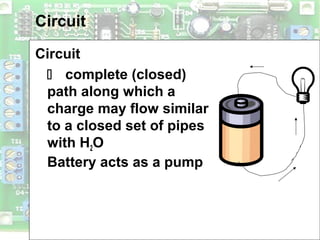
Circuit
 complete (closed)
path along which a
charge may flow similar
to a closed set of pipes
with H2O
Battery acts as a pump
2 Basic Types of Circuits
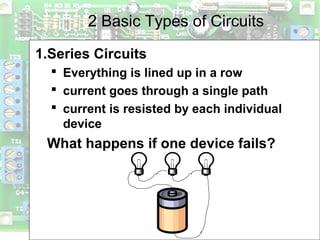
1.Series Circuits
 Everything is lined up in a row
 current goes through a single path
 current is resisted by each individual
device
What happens if one device fails?
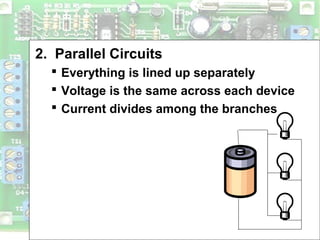
2. Parallel Circuits
 Everything is lined up separately
 Voltage is the same across each device
 Current divides among the branches
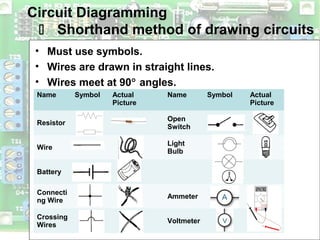
Circuit Diagramming
 Shorthand method of drawing circuits
• Must use symbols.
• Wires are drawn in straight lines.
• Wires meet at 90° angles.
Name Symbol Actual
Picture
Name Symbol Actual
Picture
Resistor
Open
Switch
Wire
Light
Bulb
Battery
Connecti
ng Wire
Ammeter
Crossing
Wires
Voltmeter
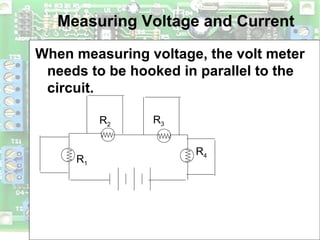
Measuring Voltage and Current
When measuring voltage, the volt meter
needs to be hooked in parallel to the
circuit.
R1
R2
R3
R4
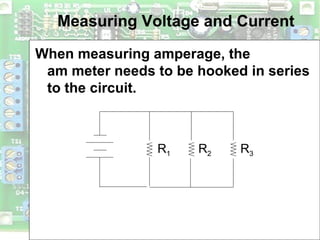
Measuring Voltage and Current
When measuring amperage, the
am meter needs to be hooked in series
to the circuit.
R1 R2 R3
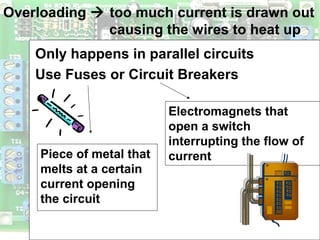
Overloading  too much current is drawn out
causing the wires to heat up
Only happens in parallel circuits
Use Fuses or Circuit Breakers
Piece of metal that
melts at a certain
current opening
the circuit
Electromagnets that
open a switch
interrupting the flow of
current

2 circuits

  • 1.
  • 2.
    Circuit Circuit  complete (closed) pathalong which a charge may flow similar to a closed set of pipes with H2O Battery acts as a pump
  • 3.
    2 Basic Typesof Circuits 1.Series Circuits  Everything is lined up in a row  current goes through a single path  current is resisted by each individual device What happens if one device fails?
  • 4.
    2. Parallel Circuits Everything is lined up separately  Voltage is the same across each device  Current divides among the branches
  • 5.
    Circuit Diagramming  Shorthandmethod of drawing circuits • Must use symbols. • Wires are drawn in straight lines. • Wires meet at 90° angles. Name Symbol Actual Picture Name Symbol Actual Picture Resistor Open Switch Wire Light Bulb Battery Connecti ng Wire Ammeter Crossing Wires Voltmeter
  • 6.
    Measuring Voltage andCurrent When measuring voltage, the volt meter needs to be hooked in parallel to the circuit. R1 R2 R3 R4
  • 7.
    Measuring Voltage andCurrent When measuring amperage, the am meter needs to be hooked in series to the circuit. R1 R2 R3
  • 8.
    Overloading  toomuch current is drawn out causing the wires to heat up Only happens in parallel circuits Use Fuses or Circuit Breakers Piece of metal that melts at a certain current opening the circuit Electromagnets that open a switch interrupting the flow of current