Circuits Series vs. Parallel
Vocabulary Circuit Energy Source Load Conductor Resistor Switch Series Circuit Parallel Circuit
Circuits A  circuit  is a path through which electricity can flow.  Charges flow in a circuit when there is a potential difference.
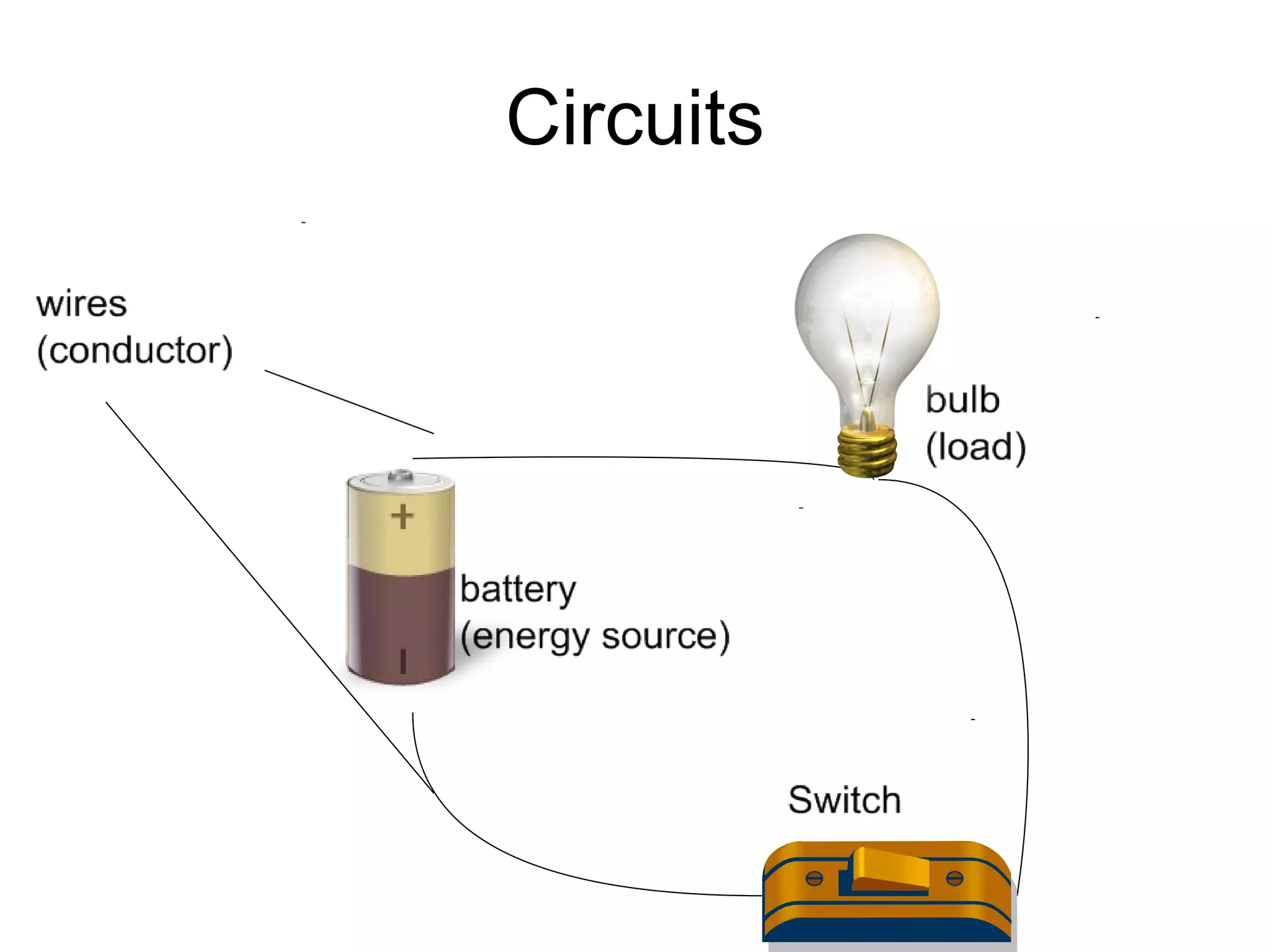
Circuits Most circuits have three parts: an  energy source , one or more  loads , and  conductors  (wires) that connect the two. Circuits may also have a switch that can be opened or closed to allow or stop the flow of current Energy flows only through a closed circuit.
Circuits
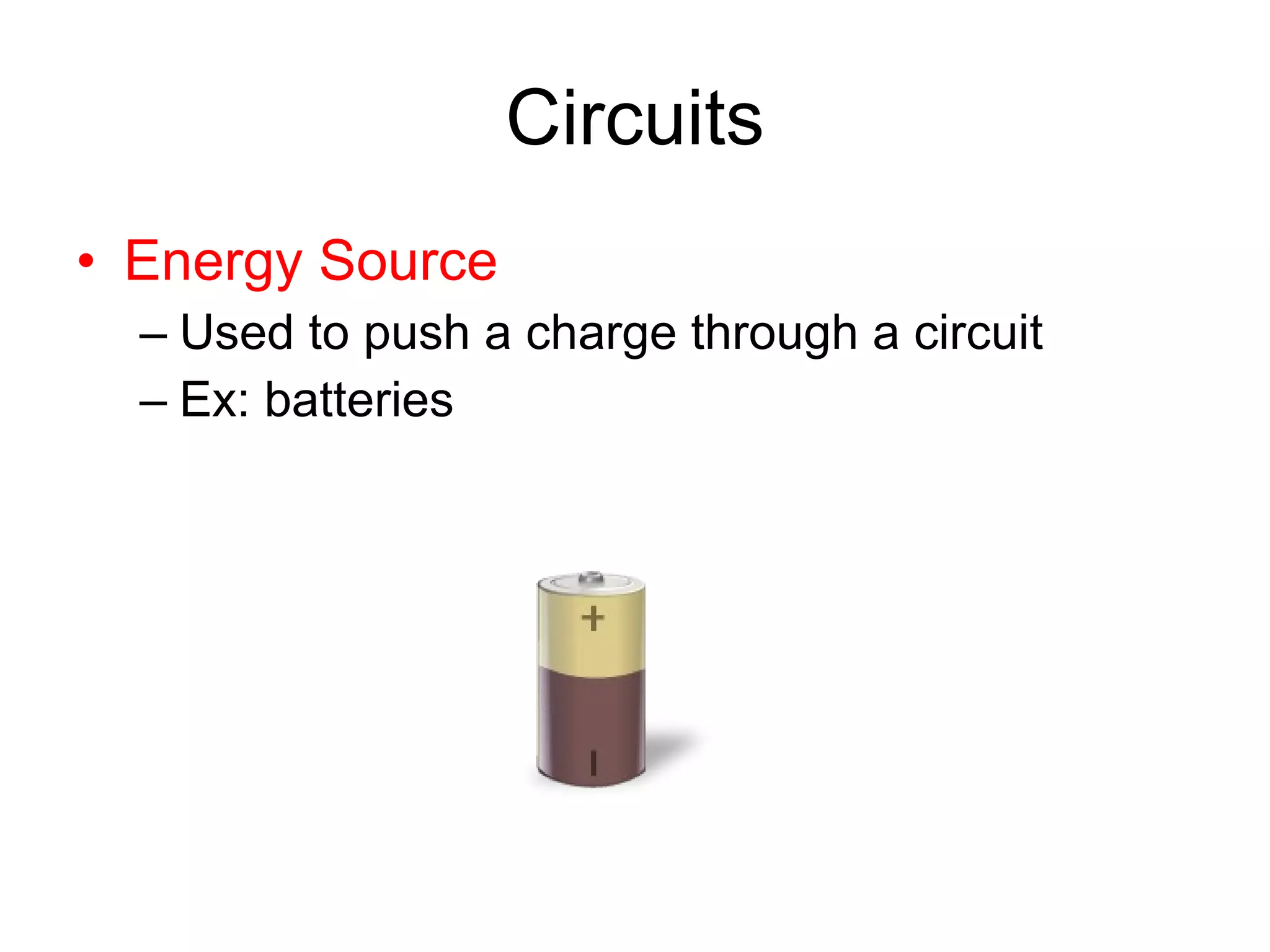
Circuits Energy Source Used to push a charge through a circuit Ex: batteries
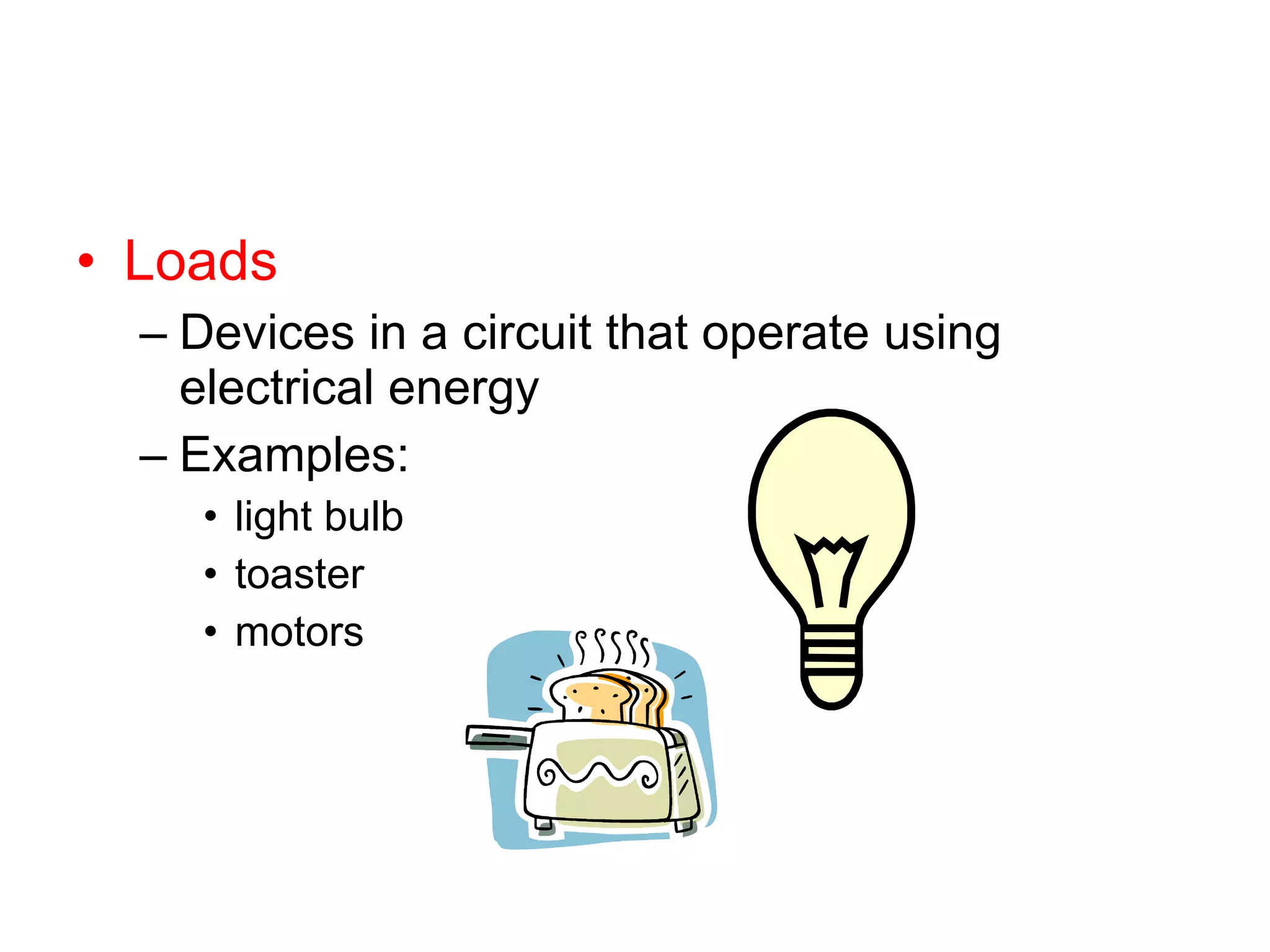
Loads Devices in a circuit that operate using electrical energy Examples:  light bulb toaster motors
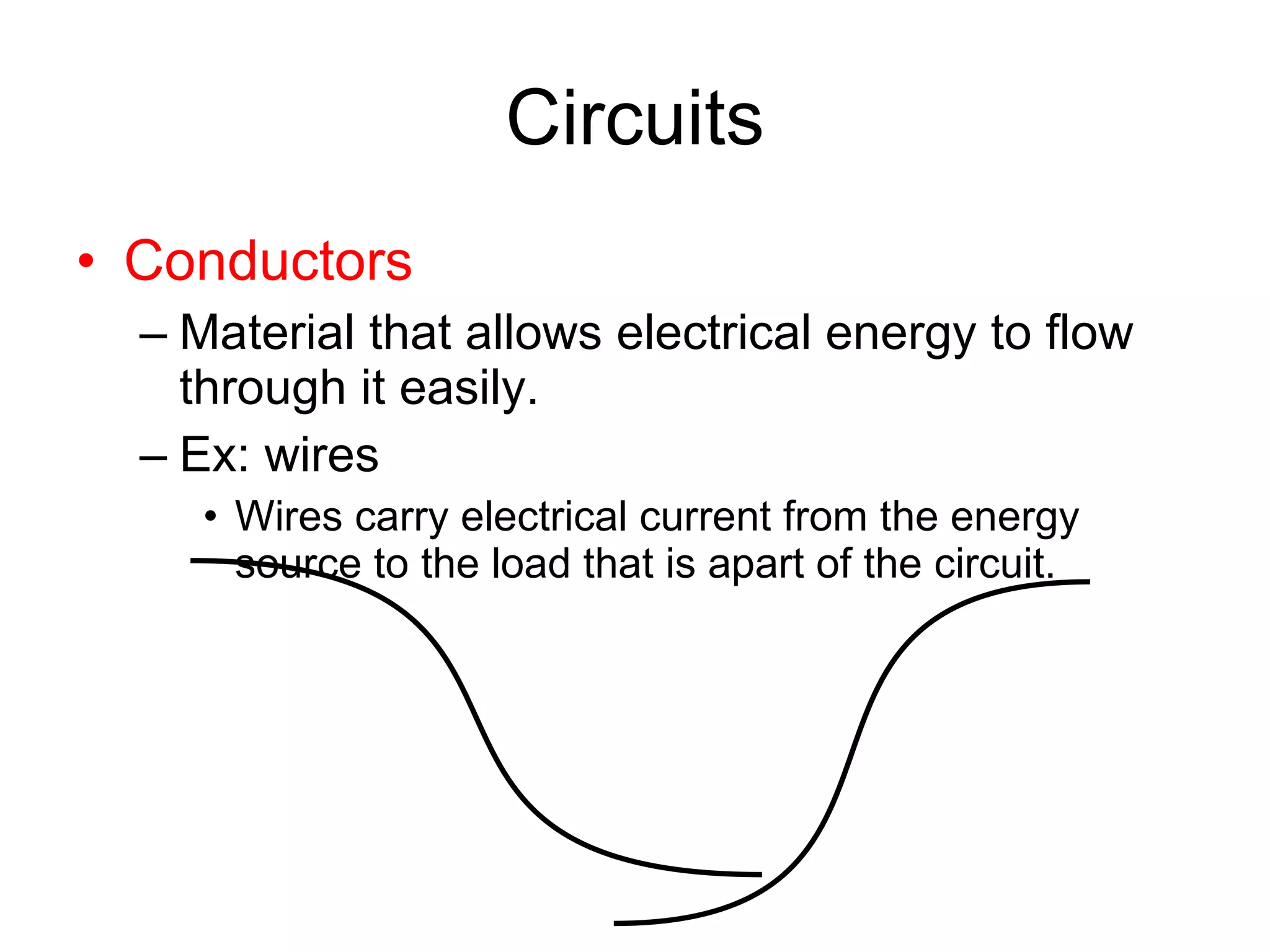
Circuits Conductors Material that allows electrical energy to flow through it easily. Ex: wires Wires carry electrical current from the energy source to the load that is apart of the circuit.
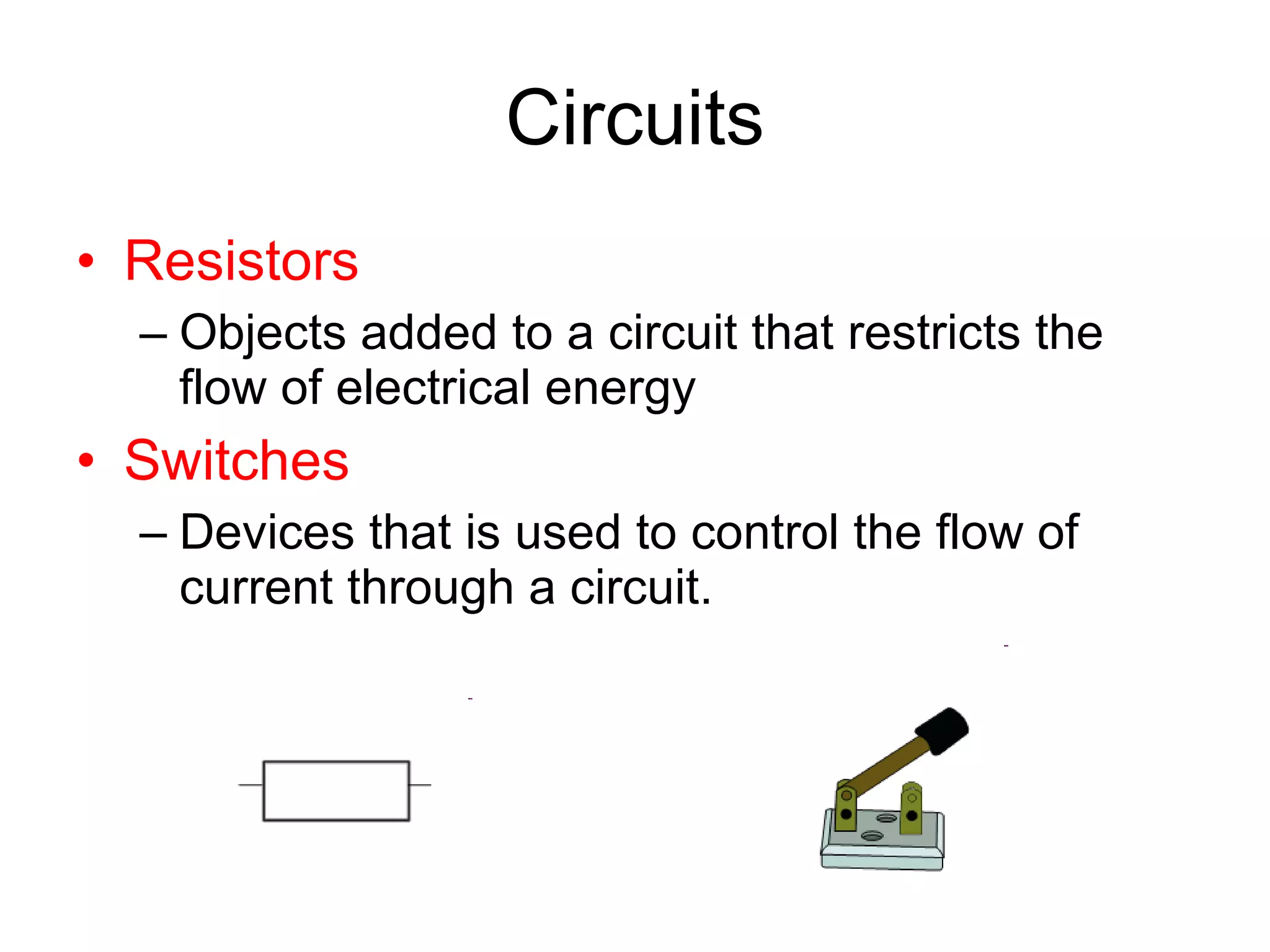
Circuits Resistors Objects added to a circuit that restricts the flow of electrical energy Switches Devices that is used to control the flow of current through a circuit.
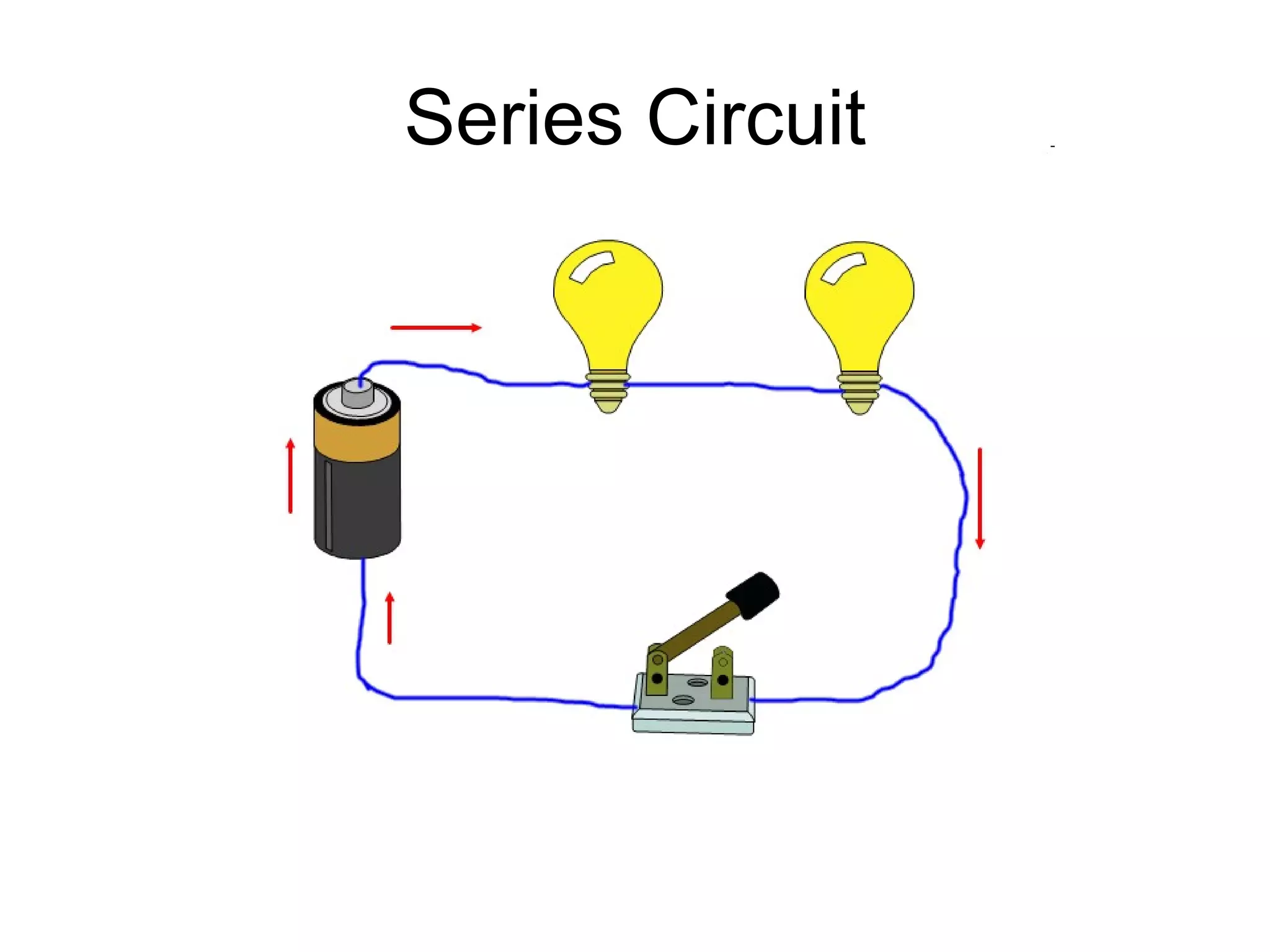
Series Circuits Series circuits  provide only one possible path for the flow of current. Loads are set up in series, or a line, that requires current to flow through one load before passing to through the next.
Series Circuit
Series Circuits Electricity in series has only one path to follow. A break in any part of the circuit will stop the flow of electricity through the entire circuit Ex: a burned-out bulb or open switch All loads share the same energy source. Current lowers as more loads are added. Ex: Adding more bulbs causes bulbs to be dimmer.
Parallel Circuits Parallel circuits  offer more that one path for the flow of electricity. Each load in a parallel circuit has its own closed circuit pathway to the energy source. A failure in one part of the circuit will not affect another part of the circuit. A bulb burns out in one path, but current can still flow through the circuit by another path.
Parallel Circuits Each load connected to a parallel circuit uses the full voltage of the energy source. Adding more parallel loads to the circuit does not affect the current flowing through the other loads. Lights will not be dimmer as more lights are added.
Parallel Circuit

Circuits

  • 1.
  • 2.
    Vocabulary Circuit EnergySource Load Conductor Resistor Switch Series Circuit Parallel Circuit
  • 3.
    Circuits A circuit is a path through which electricity can flow. Charges flow in a circuit when there is a potential difference.
  • 4.
    Circuits Most circuitshave three parts: an energy source , one or more loads , and conductors (wires) that connect the two. Circuits may also have a switch that can be opened or closed to allow or stop the flow of current Energy flows only through a closed circuit.
  • 5.
  • 6.
    Circuits Energy SourceUsed to push a charge through a circuit Ex: batteries
  • 7.
    Loads Devices ina circuit that operate using electrical energy Examples: light bulb toaster motors
  • 8.
    Circuits Conductors Materialthat allows electrical energy to flow through it easily. Ex: wires Wires carry electrical current from the energy source to the load that is apart of the circuit.
  • 9.
    Circuits Resistors Objectsadded to a circuit that restricts the flow of electrical energy Switches Devices that is used to control the flow of current through a circuit.
  • 10.
    Series Circuits Seriescircuits provide only one possible path for the flow of current. Loads are set up in series, or a line, that requires current to flow through one load before passing to through the next.
  • 11.
  • 12.
    Series Circuits Electricityin series has only one path to follow. A break in any part of the circuit will stop the flow of electricity through the entire circuit Ex: a burned-out bulb or open switch All loads share the same energy source. Current lowers as more loads are added. Ex: Adding more bulbs causes bulbs to be dimmer.
  • 13.
    Parallel Circuits Parallelcircuits offer more that one path for the flow of electricity. Each load in a parallel circuit has its own closed circuit pathway to the energy source. A failure in one part of the circuit will not affect another part of the circuit. A bulb burns out in one path, but current can still flow through the circuit by another path.
  • 14.
    Parallel Circuits Eachload connected to a parallel circuit uses the full voltage of the energy source. Adding more parallel loads to the circuit does not affect the current flowing through the other loads. Lights will not be dimmer as more lights are added.
  • 15.