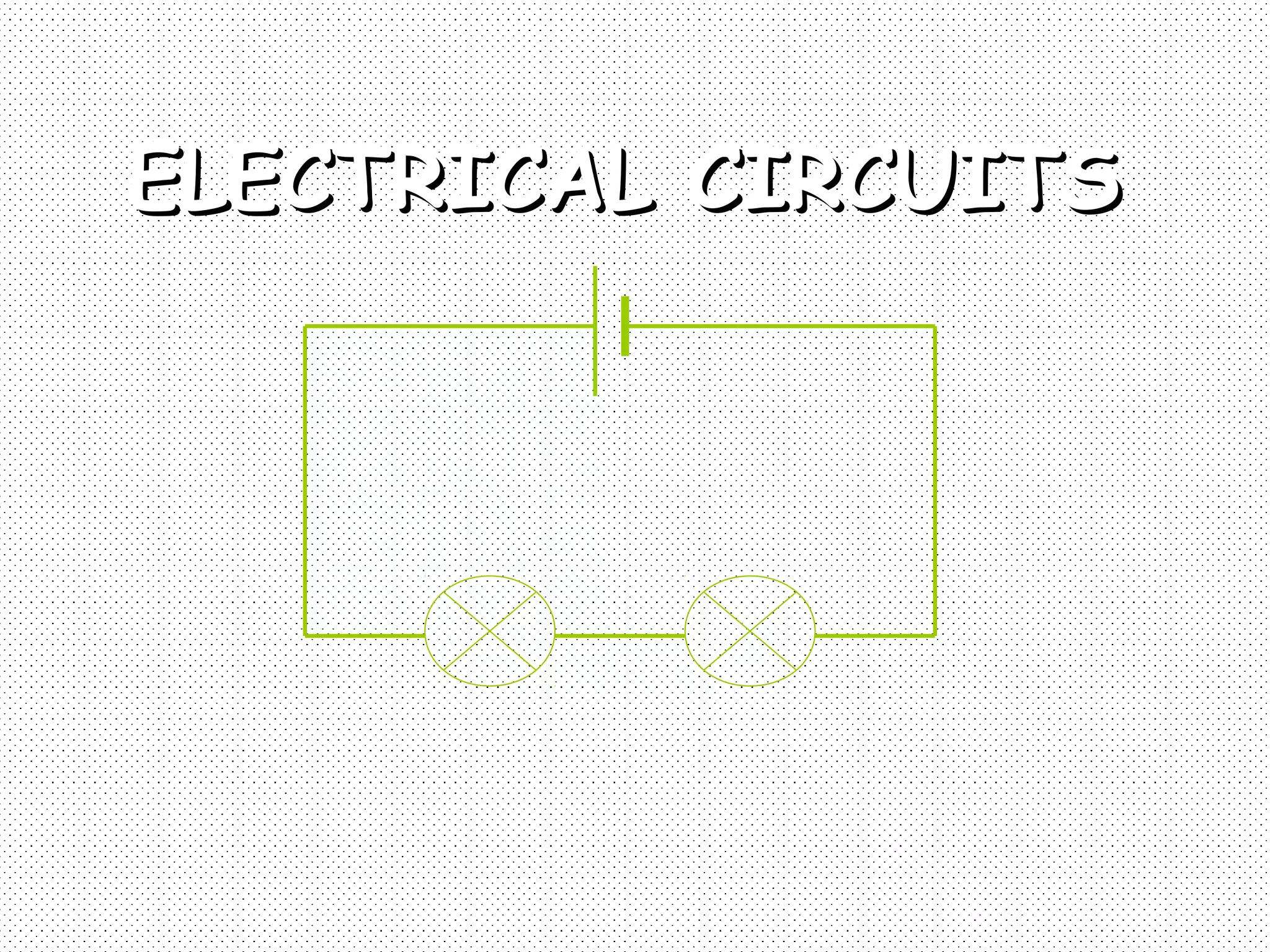



ELECTRICAL CIRCUITSELECTRICAL CIRCUITS
Presented ByPresented By
Talha Zubaer
Dept. of CSE,
Daffodil International University.
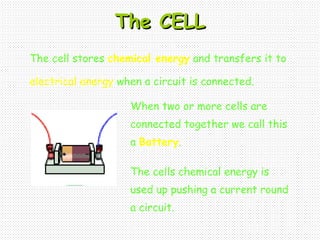
The CELLThe CELL
The cell stores chemical energy and transfers it to
electrical energy when a circuit is connected.
When two or more cells are
connected together we call this
a Battery.
The cells chemical energy is
used up pushing a current round
a circuit.
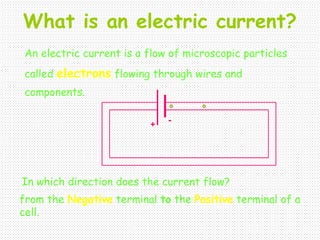
What is an electric current?
An electric current is a flow of microscopic particles
called electrons flowing through wires and
components.
+
-
In which direction does the current flow?
from the Negative terminal to the Positive terminal of a
cell.
simple circuitsimple circuit
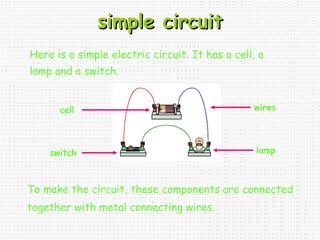
Here is a simple electric circuit. It has a cell, a
lamp and a switch.
To make the circuit, these components are connected
together with metal connecting wires.
cell
lampswitch
wires
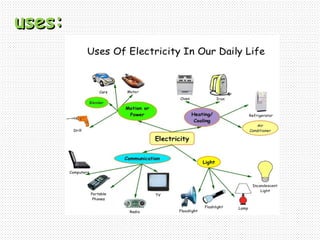
uses:uses:
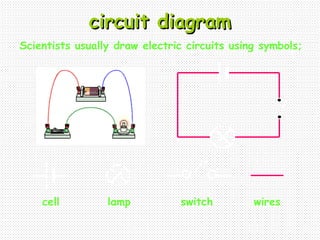
circuit diagramcircuit diagram
cell switchlamp wires
Scientists usually draw electric circuits using symbols;
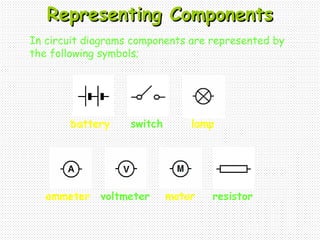
Representing ComponentsRepresenting Components
In circuit diagrams components are represented by
the following symbols;
battery switch lamp
motorammeter voltmeter resistor
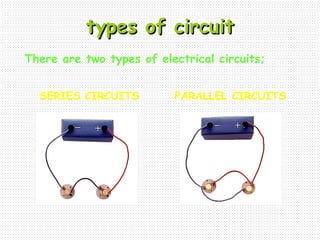
types of circuittypes of circuit
There are two types of electrical circuits;
SERIES CIRCUITS PARALLEL CIRCUITS
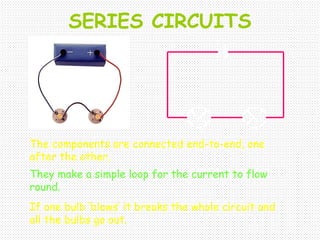
The components are connected end-to-end, one
after the other.
They make a simple loop for the current to flow
round.
SERIES CIRCUITS
If one bulb ‘blows’ it breaks the whole circuit and
all the bulbs go out.
PARALLEL CIRCUITS
The current has a choice of routes.
The components are connected side by side.
If one bulb ‘blows’ there is still be a complete circuit to
the other bulb so it stays alight.
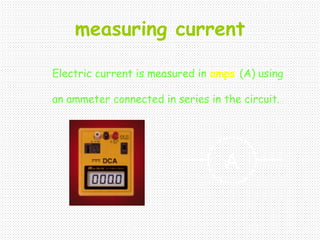
measuring current
Electric current is measured in amps (A) using
an ammeter connected in series in the circuit.
A
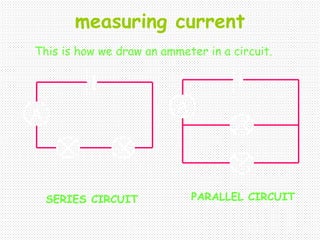
measuring current
A A
This is how we draw an ammeter in a circuit.
SERIES CIRCUIT PARALLEL CIRCUIT
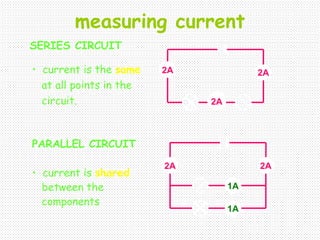
measuring current
SERIES CIRCUIT
PARALLEL CIRCUIT
• current is the same
at all points in the
circuit.
2A 2A
2A
• current is shared
between the
components
2A2A
1A
1A
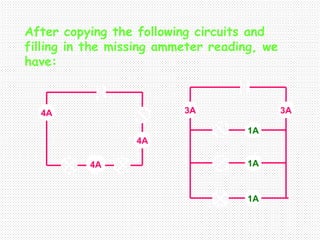
After copying the following circuits and
filling in the missing ammeter reading, we
have:
?
?
4A
4A
4A
3A?
?
1A
?
3A
1A
1A
measuring voltage
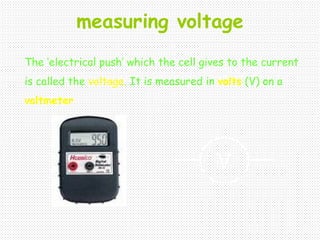
The ‘electrical push’ which the cell gives to the current
is called the voltage. It is measured in volts (V) on a
voltmeter
V
Different cells produce different voltages. The
bigger the voltage supplied by the cell, the bigger the
current.
measuring voltage
Unlike an ammeter a voltmeter is connected across
the components
Scientist usually use the term Potential Difference
(pd) when they talk about voltage.
Questions…
Review on Electrical Circuits

Review on Electrical Circuits

  • 1.
  • 2.
    Presented ByPresented By TalhaZubaer Dept. of CSE, Daffodil International University.
  • 3.
    The CELLThe CELL Thecell stores chemical energy and transfers it to electrical energy when a circuit is connected. When two or more cells are connected together we call this a Battery. The cells chemical energy is used up pushing a current round a circuit.
  • 4.
    What is anelectric current? An electric current is a flow of microscopic particles called electrons flowing through wires and components. + - In which direction does the current flow? from the Negative terminal to the Positive terminal of a cell.
  • 5.
    simple circuitsimple circuit Hereis a simple electric circuit. It has a cell, a lamp and a switch. To make the circuit, these components are connected together with metal connecting wires. cell lampswitch wires
  • 6.
  • 7.
    circuit diagramcircuit diagram cellswitchlamp wires Scientists usually draw electric circuits using symbols;
  • 8.
    Representing ComponentsRepresenting Components Incircuit diagrams components are represented by the following symbols; battery switch lamp motorammeter voltmeter resistor
  • 9.
    types of circuittypesof circuit There are two types of electrical circuits; SERIES CIRCUITS PARALLEL CIRCUITS
  • 10.
    The components areconnected end-to-end, one after the other. They make a simple loop for the current to flow round. SERIES CIRCUITS If one bulb ‘blows’ it breaks the whole circuit and all the bulbs go out.
  • 11.
    PARALLEL CIRCUITS The currenthas a choice of routes. The components are connected side by side. If one bulb ‘blows’ there is still be a complete circuit to the other bulb so it stays alight.
  • 12.
    measuring current Electric currentis measured in amps (A) using an ammeter connected in series in the circuit. A
  • 13.
    measuring current A A Thisis how we draw an ammeter in a circuit. SERIES CIRCUIT PARALLEL CIRCUIT
  • 14.
    measuring current SERIES CIRCUIT PARALLELCIRCUIT • current is the same at all points in the circuit. 2A 2A 2A • current is shared between the components 2A2A 1A 1A
  • 15.
    After copying thefollowing circuits and filling in the missing ammeter reading, we have: ? ? 4A 4A 4A 3A? ? 1A ? 3A 1A 1A
  • 16.
    measuring voltage The ‘electricalpush’ which the cell gives to the current is called the voltage. It is measured in volts (V) on a voltmeter V
  • 17.
    Different cells producedifferent voltages. The bigger the voltage supplied by the cell, the bigger the current. measuring voltage Unlike an ammeter a voltmeter is connected across the components Scientist usually use the term Potential Difference (pd) when they talk about voltage.
  • 18.