WOOD

MATERIALS TECHNOLOGY
4th Edition
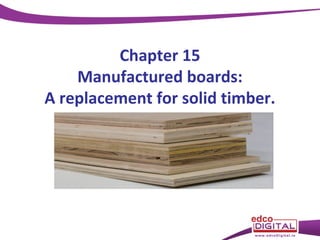
Chapter 15
Manufactured boards:
A replacement for solid timber.
Manufacture boards
Man made woods or manufactured boards have
become important as a substitute for solid wood
over the past number of years.
The main advantages are
– Help conserve tropical forests
– They are economic alternative
– They come in large sizes with uniform
thickness
– They are stable
Manufactured boards
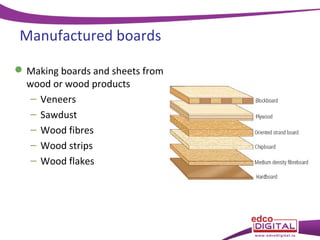
 Making boards and sheets from
wood or wood products
– Veneers
– Sawdust
– Wood fibres
– Wood strips
– Wood flakes
Plywood
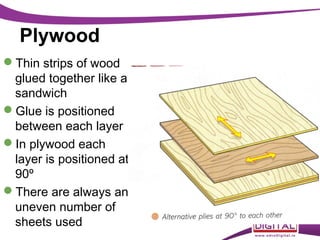
Thin strips of wood
glued together like a
sandwich
Glue is positioned
between each layer
In plywood each
layer is positioned at
90º
There are always an
uneven number of
sheets used
Plywood
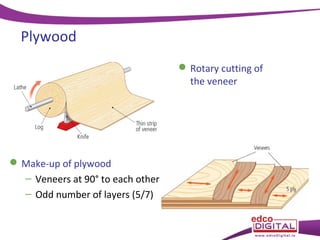
 Rotary cutting of
the veneer

 Make-up of plywood
– Veneers at 90° to each other
– Odd number of layers (5/7)
Plywood
Advantages
– Very strong
– Stable does not warp or shrink
– Does not split easily when nailed
– Smooth uniform finish
Disadvantages
– Unattractive edge must be covered with a
veneer, moulding or a slip of wood
Types of plywood
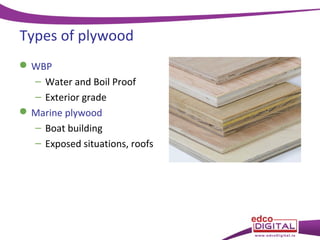
 WBP
– Water and Boil Proof
– Exterior grade
 Marine plywood
– Boat building
– Exposed situations, roofs
Blockboard
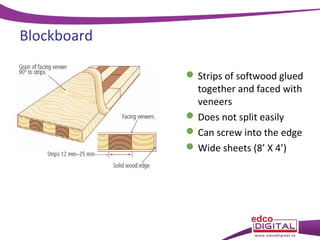
 Strips of softwood glued
together and faced with
veneers
 Does not split easily
 Can screw into the edge
 Wide sheets (8’ X 4’)
Blockboards
Advantage
– Very strong due to different directions of
veneer
– Resistance to attack from water, heat,
chemical, fungi and insect attack
– Comes in large sizes
– Blockboard comes in large thickness
Disadvantages
– Edges need to be covered
– Surface can be easily damaged
Pineboard/lamwood
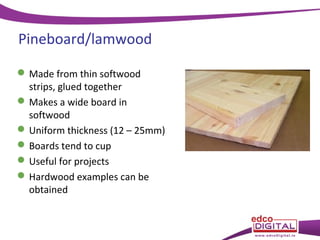
 Made from thin softwood
strips, glued together
 Makes a wide board in
softwood
 Uniform thickness (12 – 25mm)
 Boards tend to cup
 Useful for projects
 Hardwood examples can be
obtained
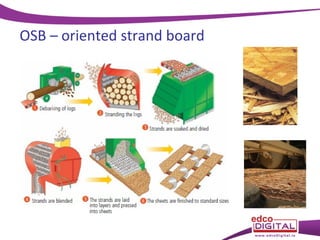
Oriented Strand board - OSB
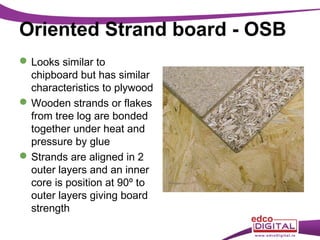
 Looks similar to
chipboard but has similar
characteristics to plywood
 Wooden strands or flakes
from tree log are bonded
together under heat and
pressure by glue
 Strands are aligned in 2
outer layers and an inner
core is position at 90º to
outer layers giving board
strength
OSB – oriented strand board
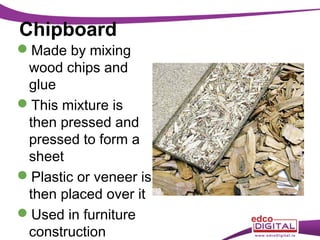
Chipboard
Made by mixing
wood chips and
glue
This mixture is
then pressed and
pressed to form a
sheet
Plastic or veneer is
then placed over it
Used in furniture
construction
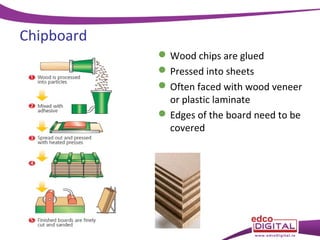
Chipboard
 Wood chips are glued
 Pressed into sheets
 Often faced with wood veneer
or plastic laminate
 Edges of the board need to be
covered
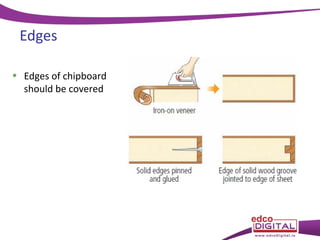
Edges
• Edges of chipboard
should be covered
Chipboard + OSB
Advantages
– Can be veneered
– Cheap
– Uniform thickness
– Makes use of waste wood
Disadvantages
– Rough surface if not finished with a veneer
– Chipboard is weak
– Water and moisture make the sheets swell
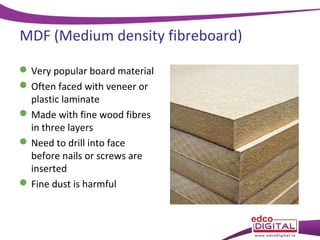
MDF (Medium density fibreboard)
 Very popular board material
 Often faced with veneer or
plastic laminate
 Made with fine wood fibres
in three layers
 Need to drill into face
before nails or screws are
inserted
 Fine dust is harmful
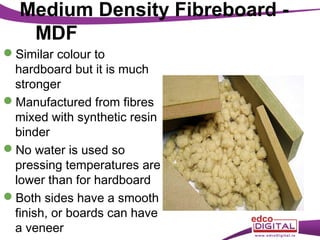
Medium Density Fibreboard MDF
Similar colour to
hardboard but it is much
stronger
Manufactured from fibres
mixed with synthetic resin
binder
No water is used so
pressing temperatures are
lower than for hardboard
Both sides have a smooth
finish, or boards can have
a veneer
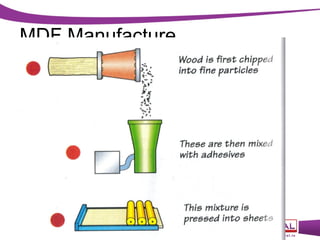
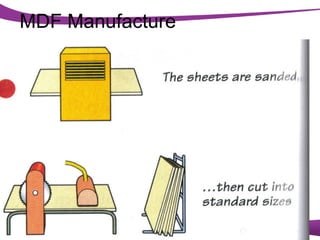
MDF Manufacture
MDF Manufacture
Hardboard
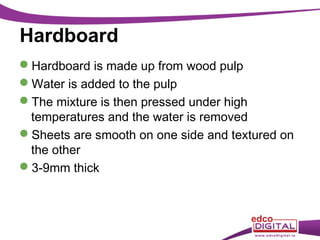
Hardboard is made up from wood pulp
Water is added to the pulp
The mixture is then pressed under high
temperatures and the water is removed
Sheets are smooth on one side and textured on
the other
3-9mm thick
Hardboard
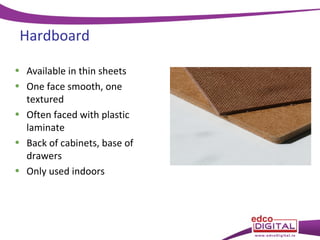
• Available in thin sheets
• One face smooth, one
textured
• Often faced with plastic
laminate
• Back of cabinets, base of
drawers
• Only used indoors
Quiz
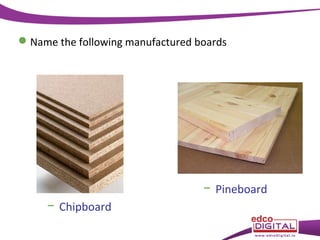
 Name the following manufactured boards

− Pineboard
− Chipboard
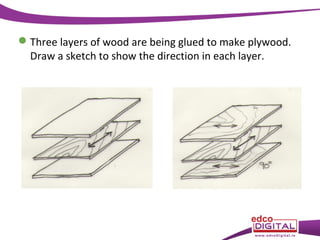
 Three layers of wood are being glued to make plywood.
Draw a sketch to show the direction in each layer.
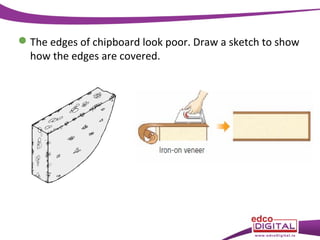
 The edges of chipboard look poor. Draw a sketch to show
how the edges are covered.
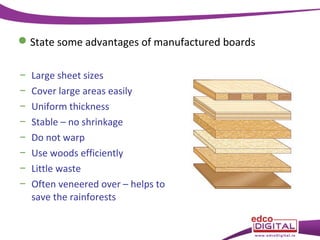
 State some advantages of manufactured boards
−
−
−
−
−
−
−
−

Large sheet sizes
Cover large areas easily
Uniform thickness
Stable – no shrinkage
Do not warp
Use woods efficiently
Little waste
Often veneered over – helps to
save the rainforests
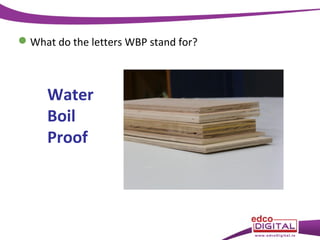
 What do the letters WBP stand for?

Water
Boil
Proof

15 manufactured boards

  • 1.
  • 2.
    Chapter 15 Manufactured boards: Areplacement for solid timber.
  • 3.
    Manufacture boards Man madewoods or manufactured boards have become important as a substitute for solid wood over the past number of years. The main advantages are – Help conserve tropical forests – They are economic alternative – They come in large sizes with uniform thickness – They are stable
  • 4.
    Manufactured boards  Makingboards and sheets from wood or wood products – Veneers – Sawdust – Wood fibres – Wood strips – Wood flakes
  • 5.
    Plywood Thin strips ofwood glued together like a sandwich Glue is positioned between each layer In plywood each layer is positioned at 90º There are always an uneven number of sheets used
  • 6.
    Plywood  Rotary cuttingof the veneer  Make-up of plywood – Veneers at 90° to each other – Odd number of layers (5/7)
  • 7.
    Plywood Advantages – Very strong –Stable does not warp or shrink – Does not split easily when nailed – Smooth uniform finish Disadvantages – Unattractive edge must be covered with a veneer, moulding or a slip of wood
  • 8.
    Types of plywood WBP – Water and Boil Proof – Exterior grade  Marine plywood – Boat building – Exposed situations, roofs
  • 9.
    Blockboard  Strips ofsoftwood glued together and faced with veneers  Does not split easily  Can screw into the edge  Wide sheets (8’ X 4’)
  • 10.
    Blockboards Advantage – Very strongdue to different directions of veneer – Resistance to attack from water, heat, chemical, fungi and insect attack – Comes in large sizes – Blockboard comes in large thickness Disadvantages – Edges need to be covered – Surface can be easily damaged
  • 11.
    Pineboard/lamwood  Made fromthin softwood strips, glued together  Makes a wide board in softwood  Uniform thickness (12 – 25mm)  Boards tend to cup  Useful for projects  Hardwood examples can be obtained
  • 12.
    Oriented Strand board- OSB  Looks similar to chipboard but has similar characteristics to plywood  Wooden strands or flakes from tree log are bonded together under heat and pressure by glue  Strands are aligned in 2 outer layers and an inner core is position at 90º to outer layers giving board strength
  • 13.
    OSB – orientedstrand board
  • 14.
    Chipboard Made by mixing woodchips and glue This mixture is then pressed and pressed to form a sheet Plastic or veneer is then placed over it Used in furniture construction
  • 15.
    Chipboard  Wood chipsare glued  Pressed into sheets  Often faced with wood veneer or plastic laminate  Edges of the board need to be covered
  • 16.
    Edges • Edges ofchipboard should be covered
  • 17.
    Chipboard + OSB Advantages –Can be veneered – Cheap – Uniform thickness – Makes use of waste wood Disadvantages – Rough surface if not finished with a veneer – Chipboard is weak – Water and moisture make the sheets swell
  • 18.
    MDF (Medium densityfibreboard)  Very popular board material  Often faced with veneer or plastic laminate  Made with fine wood fibres in three layers  Need to drill into face before nails or screws are inserted  Fine dust is harmful
  • 19.
    Medium Density FibreboardMDF Similar colour to hardboard but it is much stronger Manufactured from fibres mixed with synthetic resin binder No water is used so pressing temperatures are lower than for hardboard Both sides have a smooth finish, or boards can have a veneer
  • 20.
  • 21.
  • 22.
    Hardboard Hardboard is madeup from wood pulp Water is added to the pulp The mixture is then pressed under high temperatures and the water is removed Sheets are smooth on one side and textured on the other 3-9mm thick
  • 23.
    Hardboard • Available inthin sheets • One face smooth, one textured • Often faced with plastic laminate • Back of cabinets, base of drawers • Only used indoors
  • 24.
  • 25.
     Name thefollowing manufactured boards − Pineboard − Chipboard
  • 26.
     Three layersof wood are being glued to make plywood. Draw a sketch to show the direction in each layer.
  • 27.
     The edgesof chipboard look poor. Draw a sketch to show how the edges are covered.
  • 28.
     State someadvantages of manufactured boards − − − − − − − − Large sheet sizes Cover large areas easily Uniform thickness Stable – no shrinkage Do not warp Use woods efficiently Little waste Often veneered over – helps to save the rainforests
  • 29.
     What dothe letters WBP stand for? Water Boil Proof