WOOD

MATERIALS TECHNOLOGY
4th Edition
Chapter 13
Diseases and Defects
Defects
 Defects in timber can occur
1. naturally (during the growth of a tree) or
2. artificially (as a result of incorrect stacking or seasoning)
 Some defects can be decorative and very pleasing to the
eye, so these will be kept
 Others may cause problems during the manufacture of a
project, such defects must be overcome
Natural Defects
Occur during the growth of a tree
– Knots
– Resin pockets
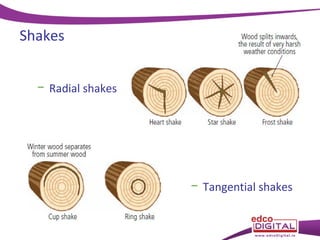
– Shakes
– Waney Edge
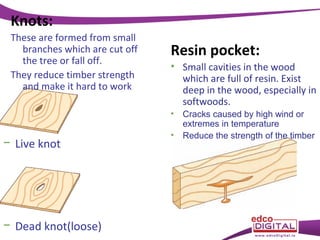
Knots:
These are formed from small
branches which are cut off
the tree or fall off.
They reduce timber strength
and make it hard to work

Resin pocket:
• Small cavities in the wood
which are full of resin. Exist
deep in the wood, especially in
softwoods.
•

− Live knot

− Dead knot(loose)

•

Cracks caused by high wind or
extremes in temperature
Reduce the strength of the timber
Shakes
− Radial shakes

− Tangential shakes
Shakes
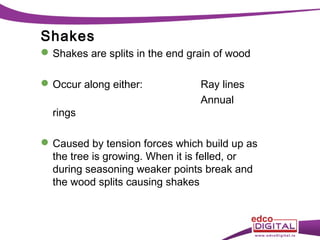
 Shakes are splits in the end grain of wood
 Occur along either:
rings

Ray lines
Annual

 Caused by tension forces which build up as
the tree is growing. When it is felled, or
during seasoning weaker points break and
the wood splits causing shakes
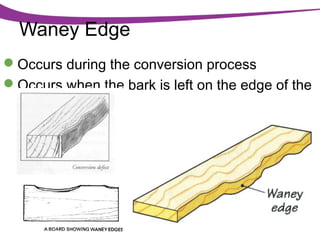
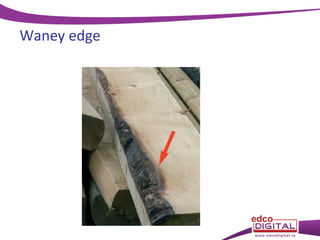
Waney Edge
Occurs during the conversion process
Occurs when the bark is left on the edge of the
plank
Waney edge
Artificial Defects
Occur as a result of incorrect stacking or
inappropriate drying schedule, stresses will be
created in the wood that will cause
– Cupping
– Bowing
– Twisting / Warping
– End Splitting
– Case Hardening
– Honeycomb Checks
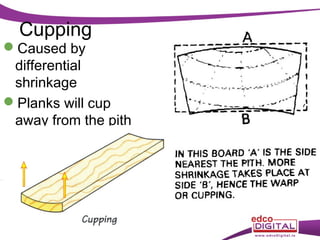
Cupping

Caused by
differential
shrinkage
Planks will cup
away from the pith
Annual rings
appear to try to
straighten out
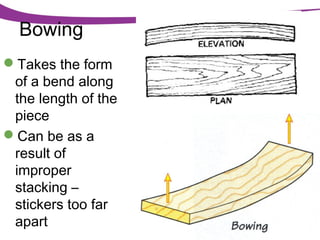
Bowing
Takes the form
of a bend along
the length of the
piece
Can be as a
result of
improper
stacking –
stickers too far
apart
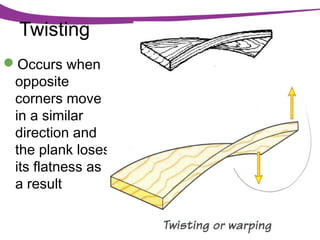
Twisting
Occurs when
opposite
corners move
in a similar
direction and
the plank loses
its flatness as
a result
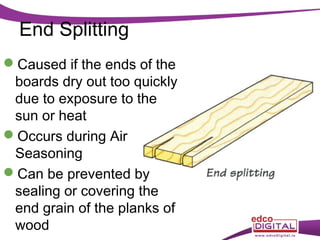
End Splitting
Caused if the ends of the
boards dry out too quickly
due to exposure to the
sun or heat
Occurs during Air
Seasoning
Can be prevented by
sealing or covering the
end grain of the planks of
wood
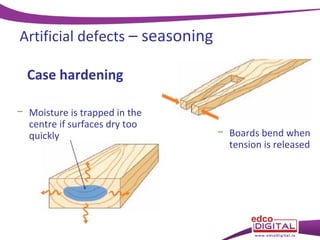
Artificial defects – seasoning
Case hardening
− Moisture is trapped in the
centre if surfaces dry too
quickly

− Boards bend when
tension is released
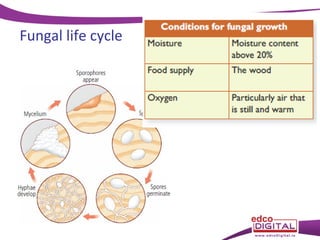
Fungal life cycle
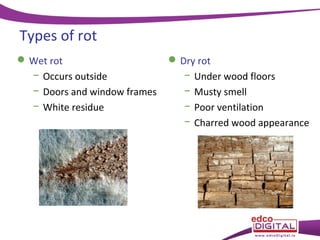
Types of rot
 Wet rot
− Occurs outside
− Doors and window frames
− White residue

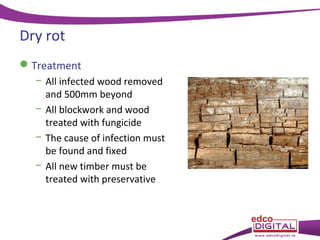
 Dry rot
− Under wood floors
− Musty smell
− Poor ventilation
− Charred wood appearance
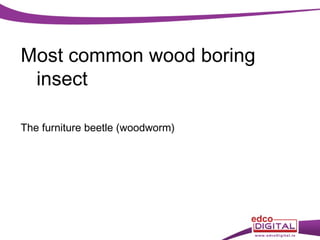
Dry rot
 Treatment
− All infected wood removed
and 500mm beyond
− All blockwork and wood
treated with fungicide
− The cause of infection must
be found and fixed
− All new timber must be
treated with preservative
Most common wood boring
insect
The furniture beetle (woodworm)
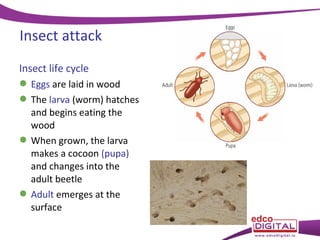
Insect attack
Insect life cycle
 Eggs are laid in wood
 The larva (worm) hatches
and begins eating the
wood
 When grown, the larva
makes a cocoon (pupa)
and changes into the
adult beetle
 Adult emerges at the
surface
Quiz
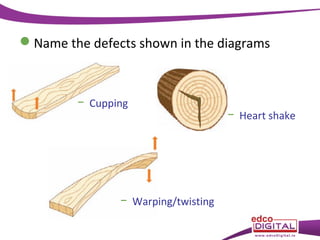
Name the defects shown in the diagrams

− Cupping

− Warping/twisting

− Heart shake
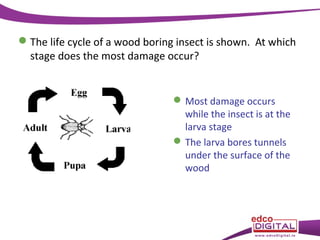
 The life cycle of a wood boring insect is shown. At which
stage does the most damage occur?

 Most damage occurs
while the insect is at the
larva stage
 The larva bores tunnels
under the surface of the
wood
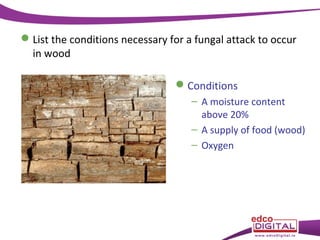
 List the conditions necessary for a fungal attack to occur
in wood
 Conditions
– A moisture content
above 20%
– A supply of food (wood)
– Oxygen
Questions
 1 What is the difference between natural and artificial
defects in timber.
 2 Give an example using a Sketch of both a radial
shake and a tangential shake.
 3 Describe using sketches what is meant by bowing,
cupping and twisting in planks.
 4 Why does case hardening occur?

13 diseases

  • 1.
  • 2.
  • 3.
    Defects  Defects intimber can occur 1. naturally (during the growth of a tree) or 2. artificially (as a result of incorrect stacking or seasoning)  Some defects can be decorative and very pleasing to the eye, so these will be kept  Others may cause problems during the manufacture of a project, such defects must be overcome
  • 4.
    Natural Defects Occur duringthe growth of a tree – Knots – Resin pockets – Shakes – Waney Edge
  • 5.
    Knots: These are formedfrom small branches which are cut off the tree or fall off. They reduce timber strength and make it hard to work Resin pocket: • Small cavities in the wood which are full of resin. Exist deep in the wood, especially in softwoods. • − Live knot − Dead knot(loose) • Cracks caused by high wind or extremes in temperature Reduce the strength of the timber
  • 6.
  • 7.
    Shakes  Shakes aresplits in the end grain of wood  Occur along either: rings Ray lines Annual  Caused by tension forces which build up as the tree is growing. When it is felled, or during seasoning weaker points break and the wood splits causing shakes
  • 8.
    Waney Edge Occurs duringthe conversion process Occurs when the bark is left on the edge of the plank
  • 9.
  • 10.
    Artificial Defects Occur asa result of incorrect stacking or inappropriate drying schedule, stresses will be created in the wood that will cause – Cupping – Bowing – Twisting / Warping – End Splitting – Case Hardening – Honeycomb Checks
  • 11.
    Cupping Caused by differential shrinkage Planks willcup away from the pith Annual rings appear to try to straighten out
  • 12.
    Bowing Takes the form ofa bend along the length of the piece Can be as a result of improper stacking – stickers too far apart
  • 13.
    Twisting Occurs when opposite corners move ina similar direction and the plank loses its flatness as a result
  • 14.
    End Splitting Caused ifthe ends of the boards dry out too quickly due to exposure to the sun or heat Occurs during Air Seasoning Can be prevented by sealing or covering the end grain of the planks of wood
  • 15.
    Artificial defects –seasoning Case hardening − Moisture is trapped in the centre if surfaces dry too quickly − Boards bend when tension is released
  • 16.
  • 17.
    Types of rot Wet rot − Occurs outside − Doors and window frames − White residue  Dry rot − Under wood floors − Musty smell − Poor ventilation − Charred wood appearance
  • 18.
    Dry rot  Treatment −All infected wood removed and 500mm beyond − All blockwork and wood treated with fungicide − The cause of infection must be found and fixed − All new timber must be treated with preservative
  • 19.
    Most common woodboring insect The furniture beetle (woodworm)
  • 20.
    Insect attack Insect lifecycle  Eggs are laid in wood  The larva (worm) hatches and begins eating the wood  When grown, the larva makes a cocoon (pupa) and changes into the adult beetle  Adult emerges at the surface
  • 21.
  • 22.
    Name the defectsshown in the diagrams − Cupping − Warping/twisting − Heart shake
  • 23.
     The lifecycle of a wood boring insect is shown. At which stage does the most damage occur?  Most damage occurs while the insect is at the larva stage  The larva bores tunnels under the surface of the wood
  • 24.
     List theconditions necessary for a fungal attack to occur in wood  Conditions – A moisture content above 20% – A supply of food (wood) – Oxygen
  • 25.
    Questions  1 Whatis the difference between natural and artificial defects in timber.  2 Give an example using a Sketch of both a radial shake and a tangential shake.  3 Describe using sketches what is meant by bowing, cupping and twisting in planks.  4 Why does case hardening occur?