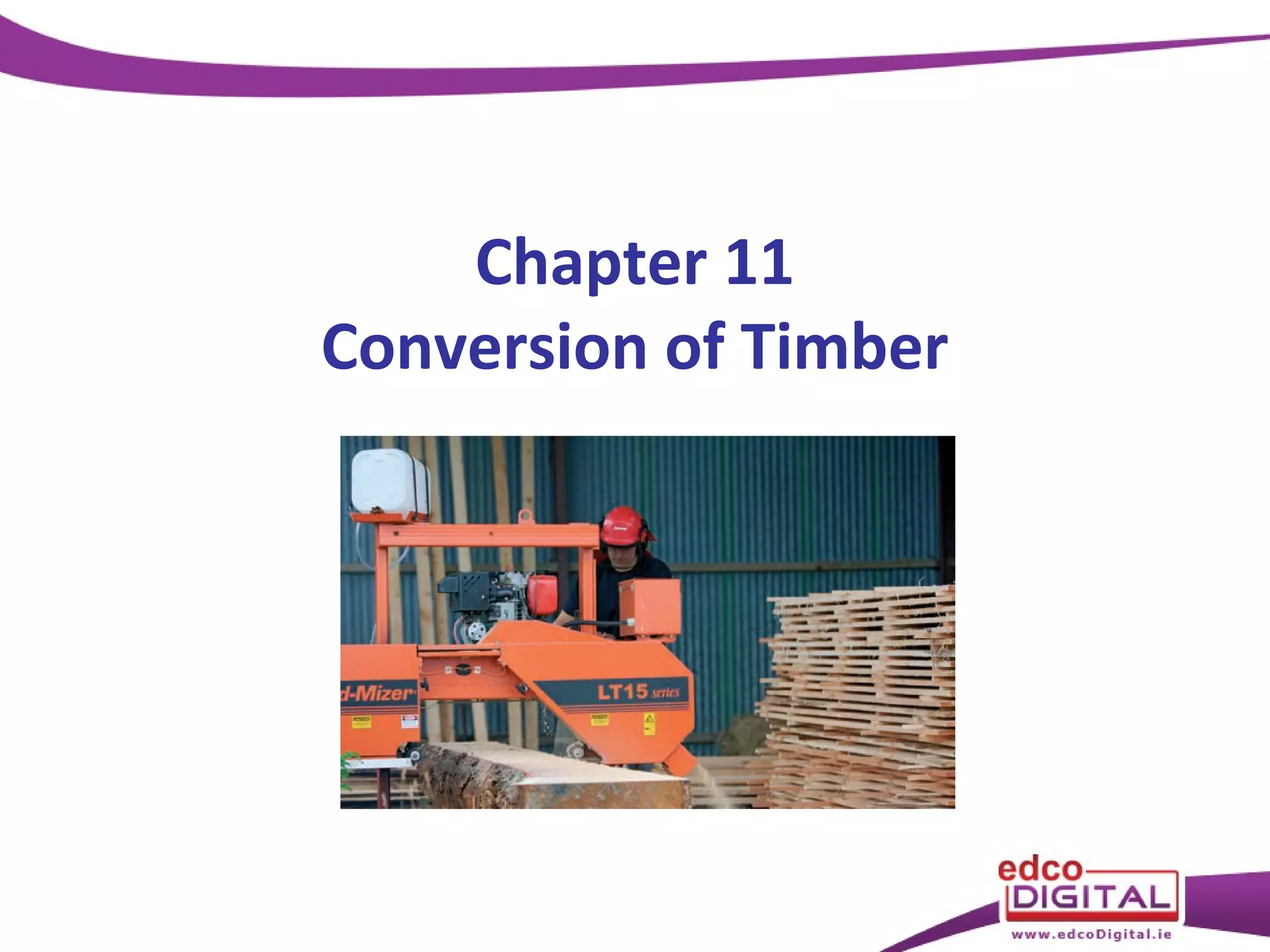
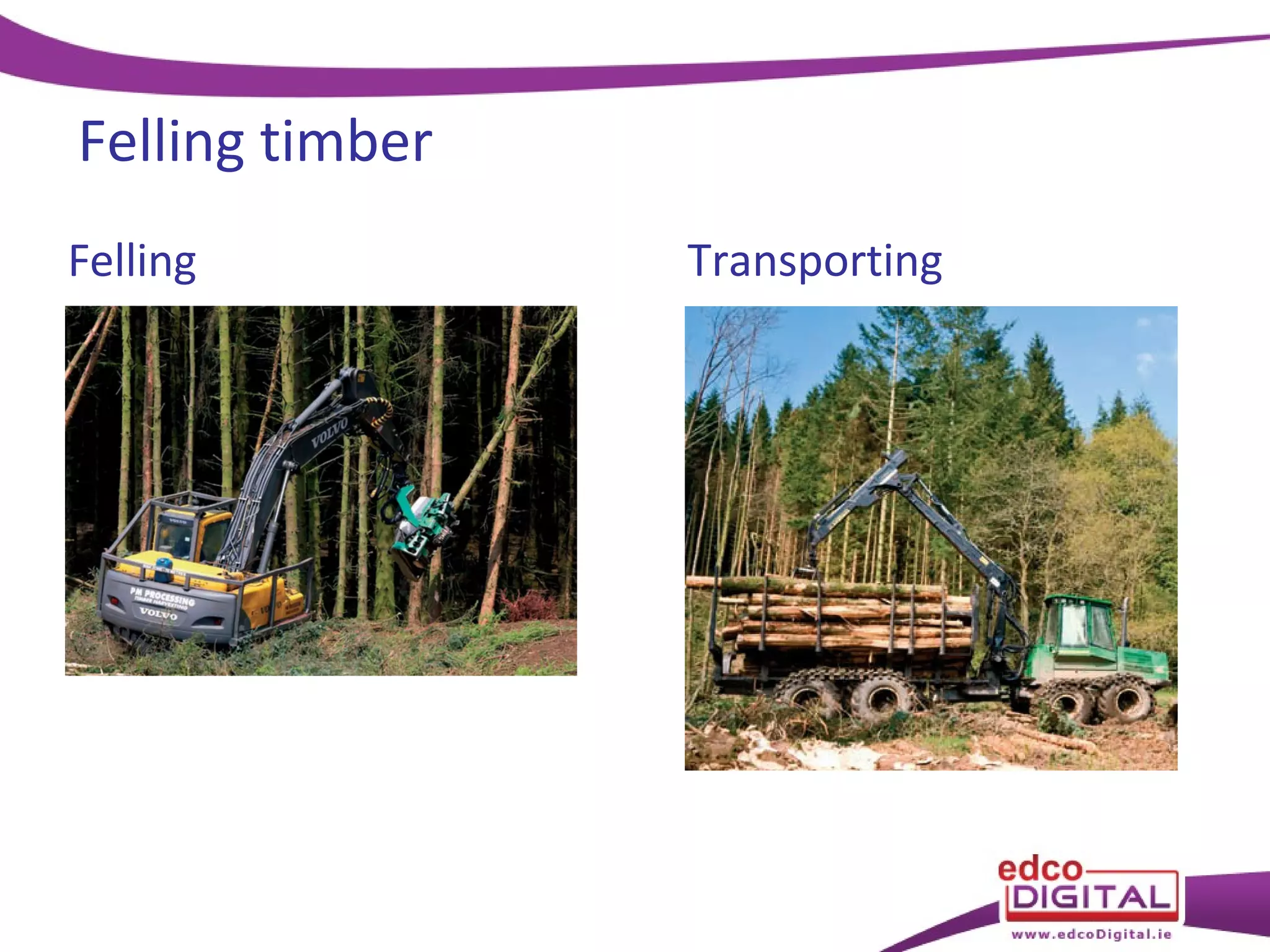
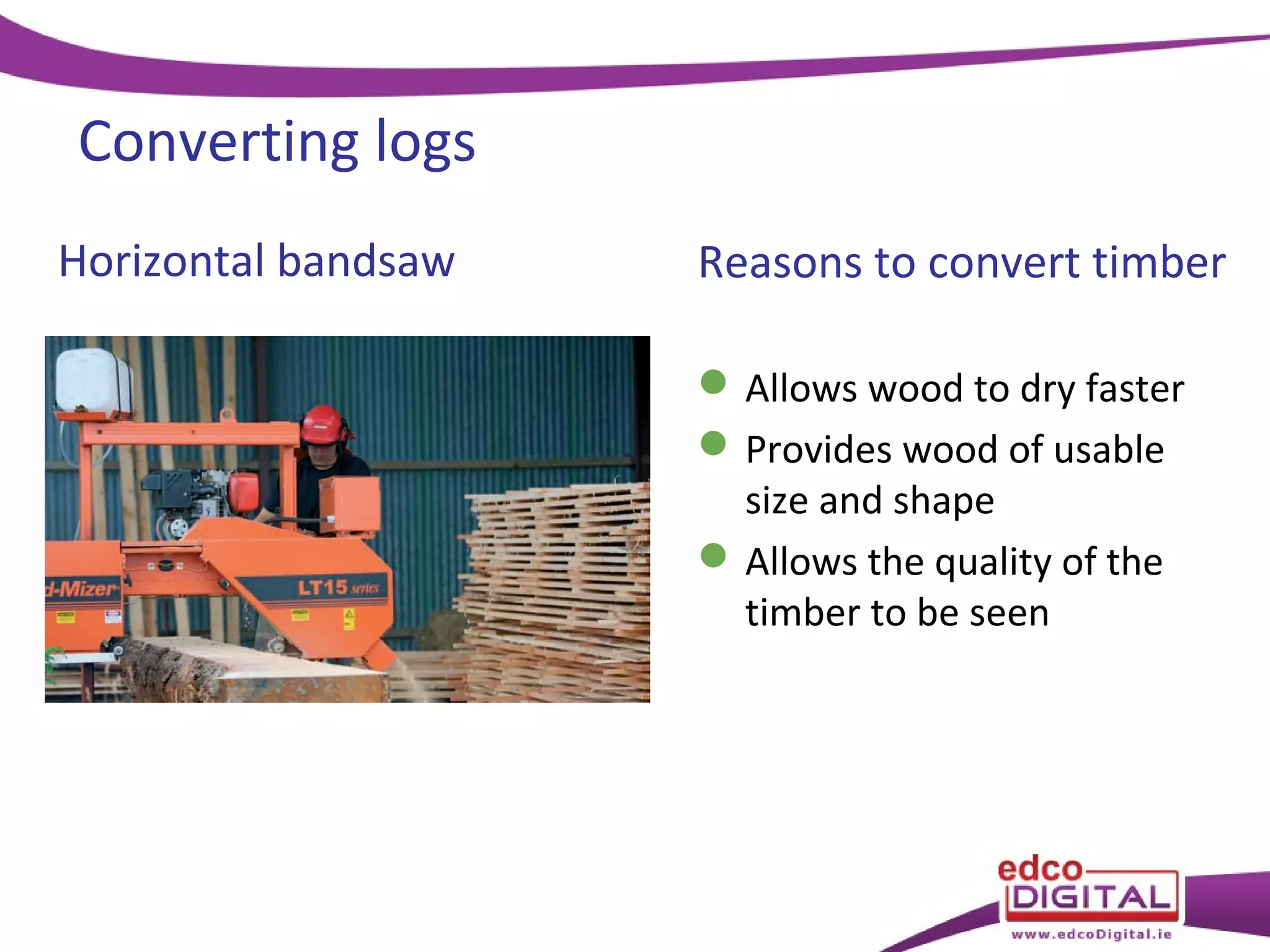
This document discusses different methods for converting logs into timber. It describes felling timber and transporting logs. It then explains four methods for converting logs: horizontal bandsaw, through and through sawing, quarter sawing, and tangential sawing. For each method, it provides the advantages and disadvantages. An exam question is included that asks the reader to name the conversion methods shown in diagrams, state the advantages and disadvantages of each, and determine which board shown is most likely to cup and why.
Converting logs
Horizontal bandsaw
Reasonsto convert timber
Allows wood to dry faster
Provides wood of usable
size and shape
Allows the quality of the
timber to be seen
Advantages
– Lowcost and fast
– Maximum width of planks obtained from log.
– Little wastage.
– Reveals attractive grain pattern, especially in
softwoods.
Disadvantages
– Not suitable for structural timber
– Some boards are all sapwood
– With this method cupping caused by tangential
shrinkage is a problem (cupping is the warping
of the plank away from the heart of the tree)
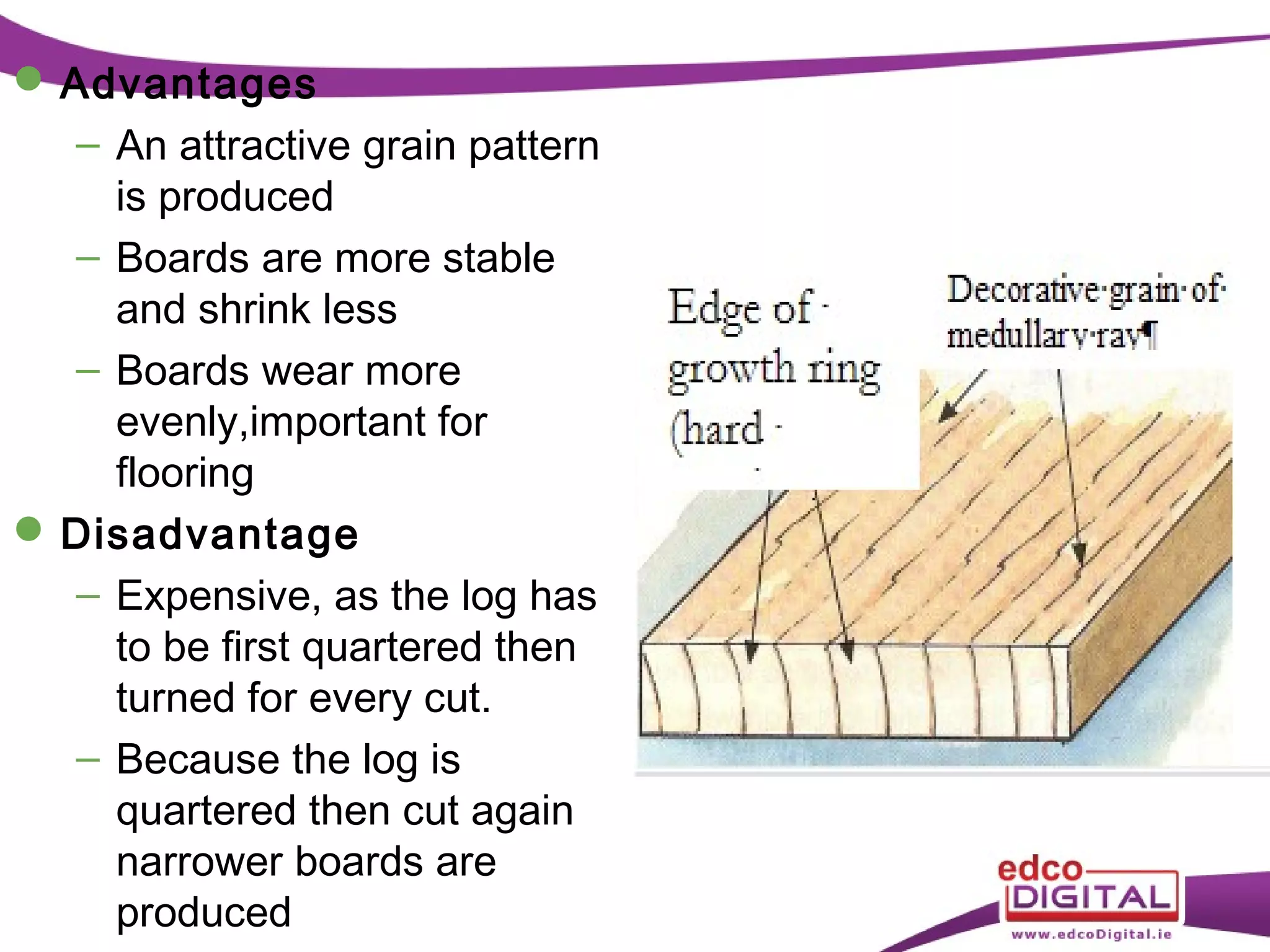
Advantages
– Anattractive grain pattern
is produced
– Boards are more stable
and shrink less
– Boards wear more
evenly,important for
flooring
Disadvantage
– Expensive, as the log has
to be first quartered then
turned for every cut.
– Because the log is
quartered then cut again
narrower boards are
produced
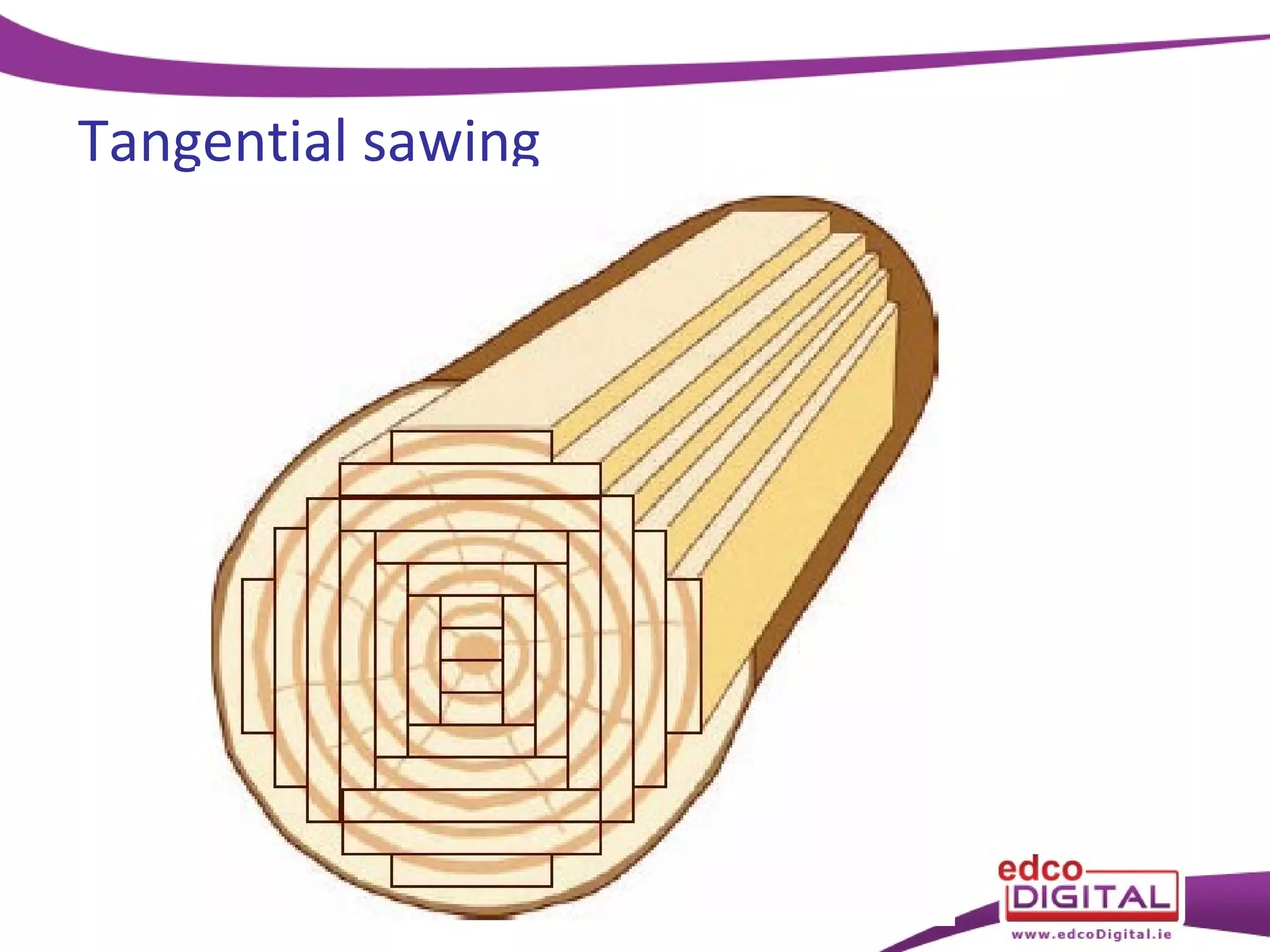
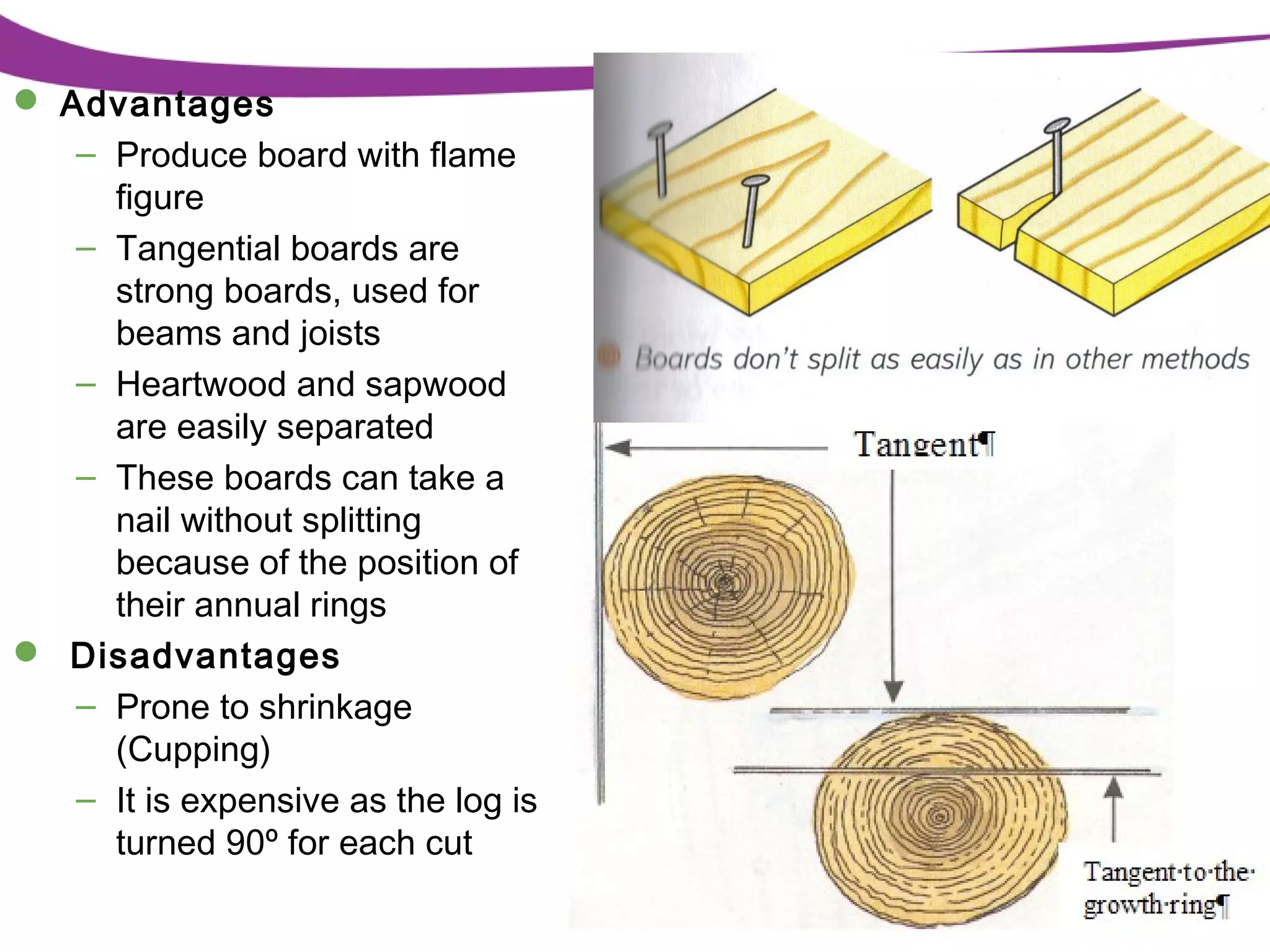
Advantages
– Produceboard with flame
figure
– Tangential boards are
strong boards, used for
beams and joists
– Heartwood and sapwood
are easily separated
– These boards can take a
nail without splitting
because of the position of
their annual rings
Disadvantages
– Prone to shrinkage
(Cupping)
– It is expensive as the log is
turned 90º for each cut
11.
Exam question
1
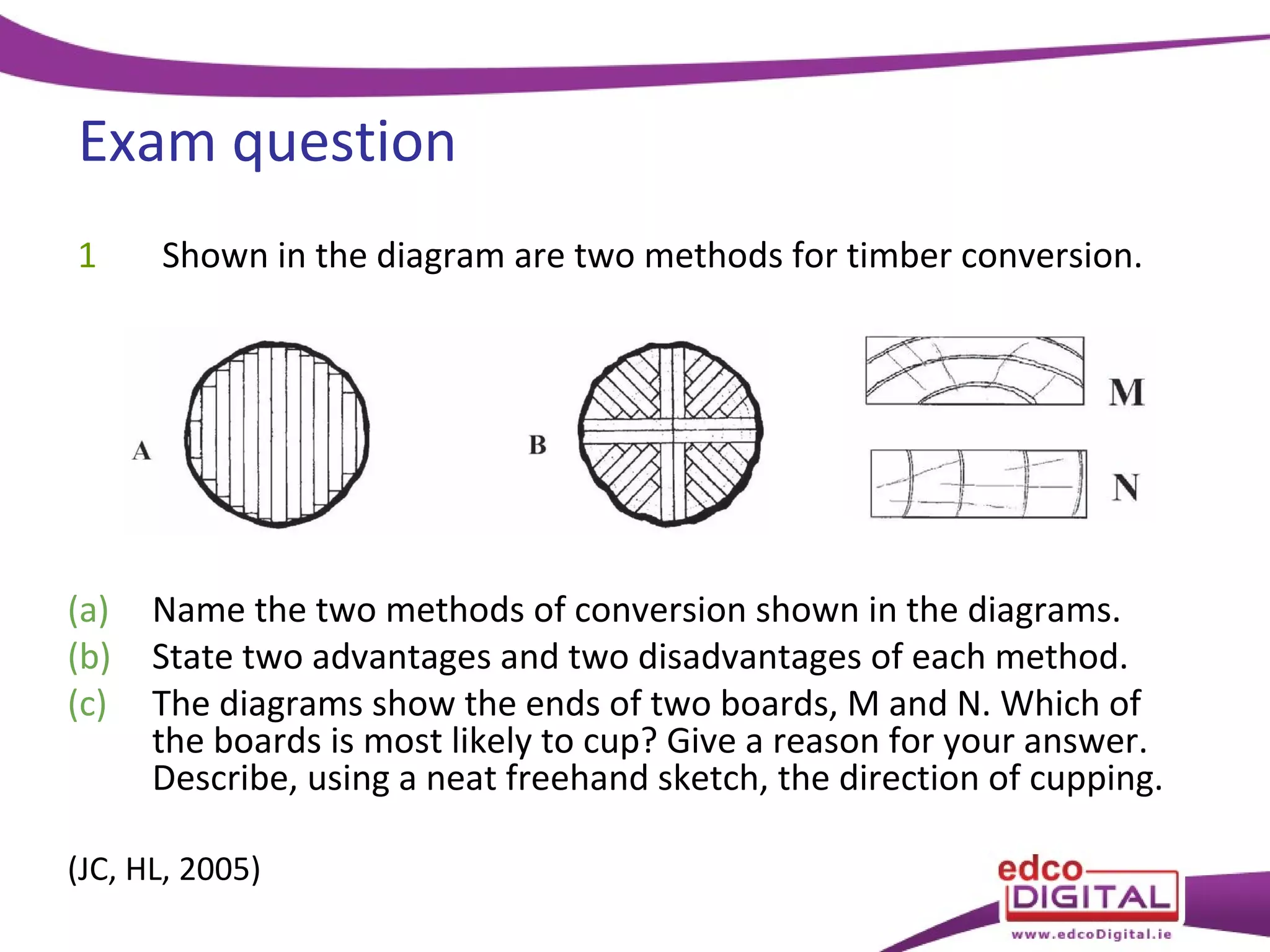
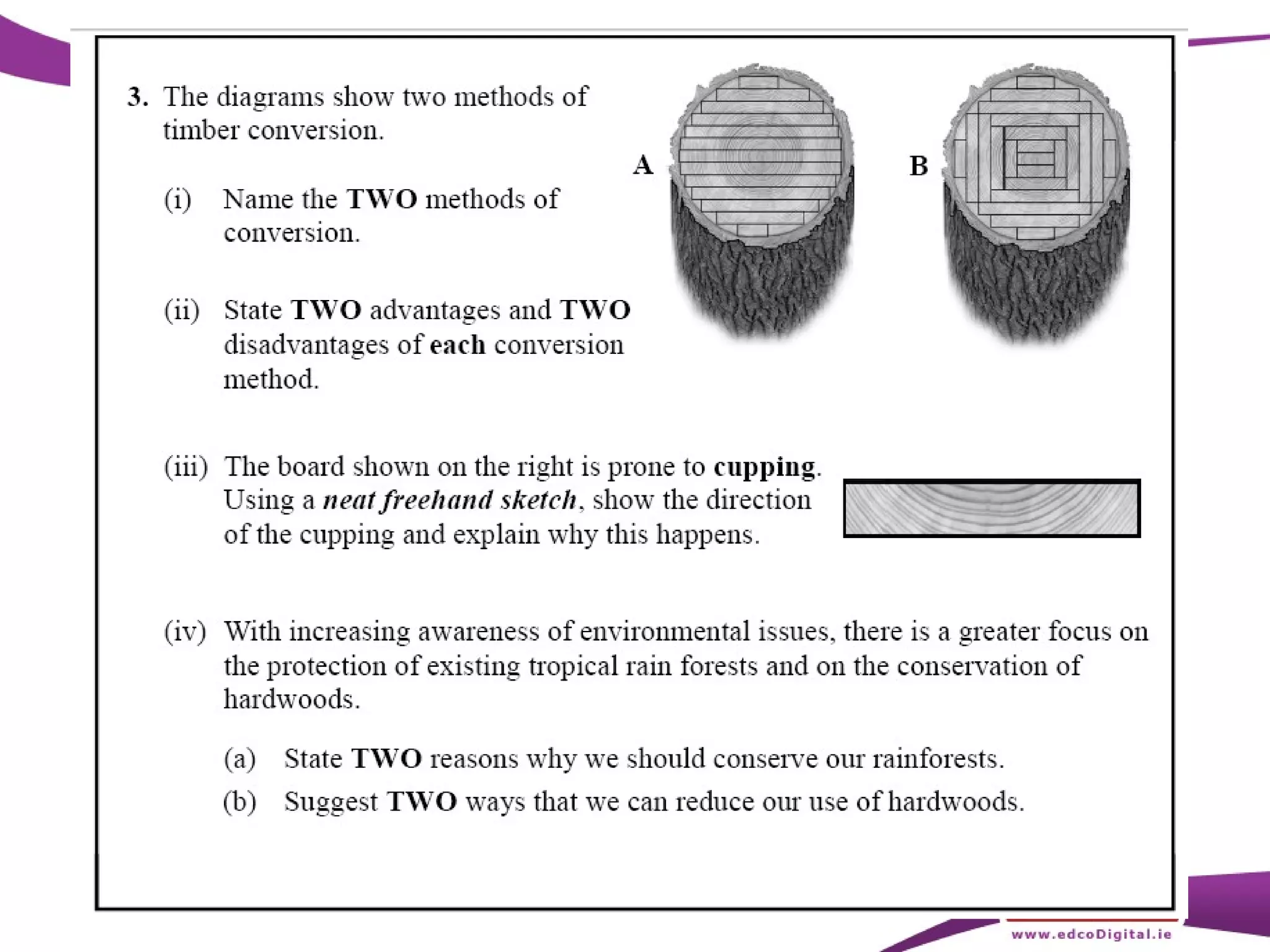
Shown inthe diagram are two methods for timber conversion.
(a)
(b)
(c)
Name the two methods of conversion shown in the diagrams.
State two advantages and two disadvantages of each method.
The diagrams show the ends of two boards, M and N. Which of
the boards is most likely to cup? Give a reason for your answer.
Describe, using a neat freehand sketch, the direction of cupping.
(JC, HL, 2005)
12.
Sample answer toexam question
1 (a) The methods of conversion shown are:
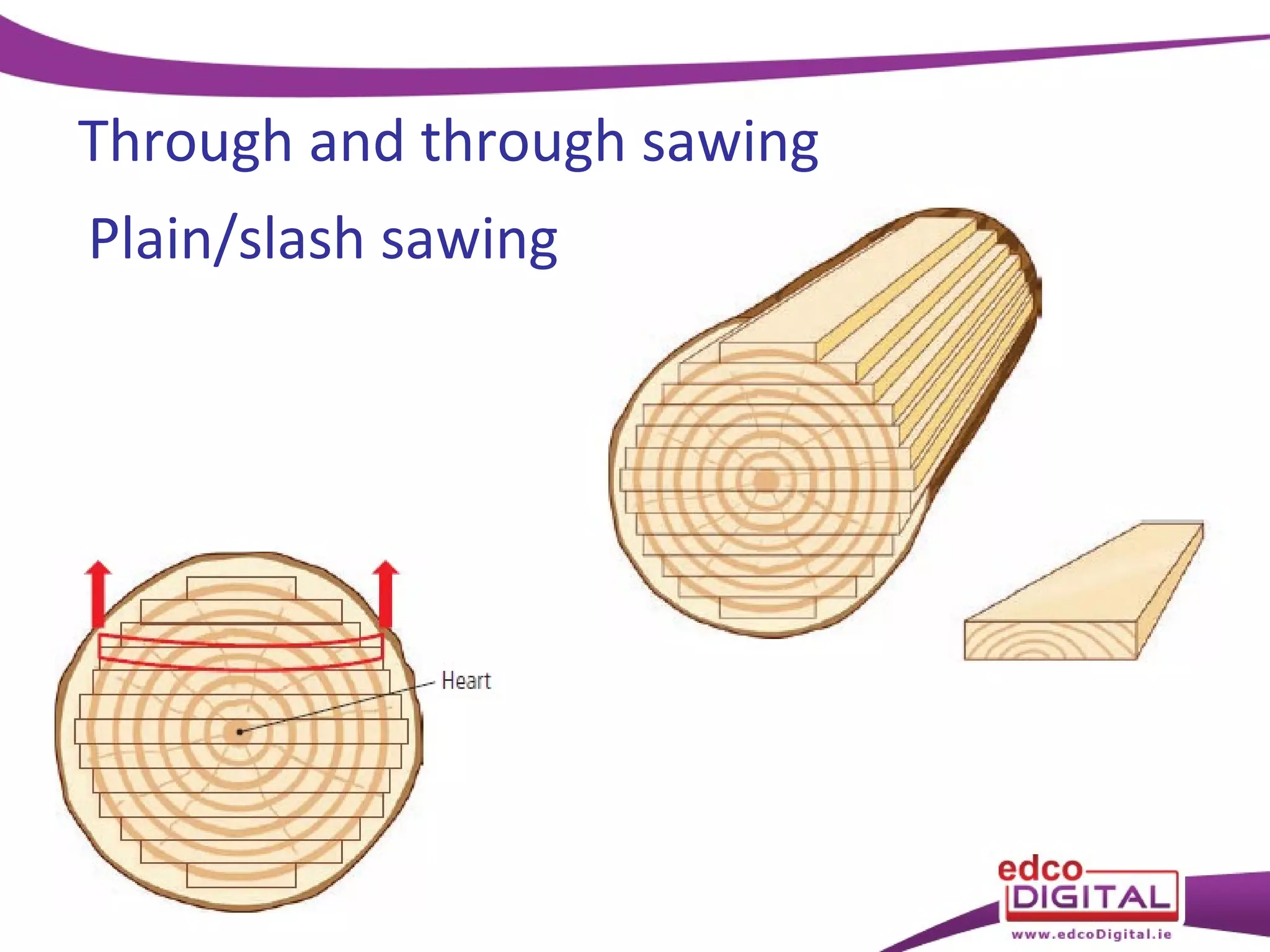
A Through and through sawing, also called slash or plain sawing.
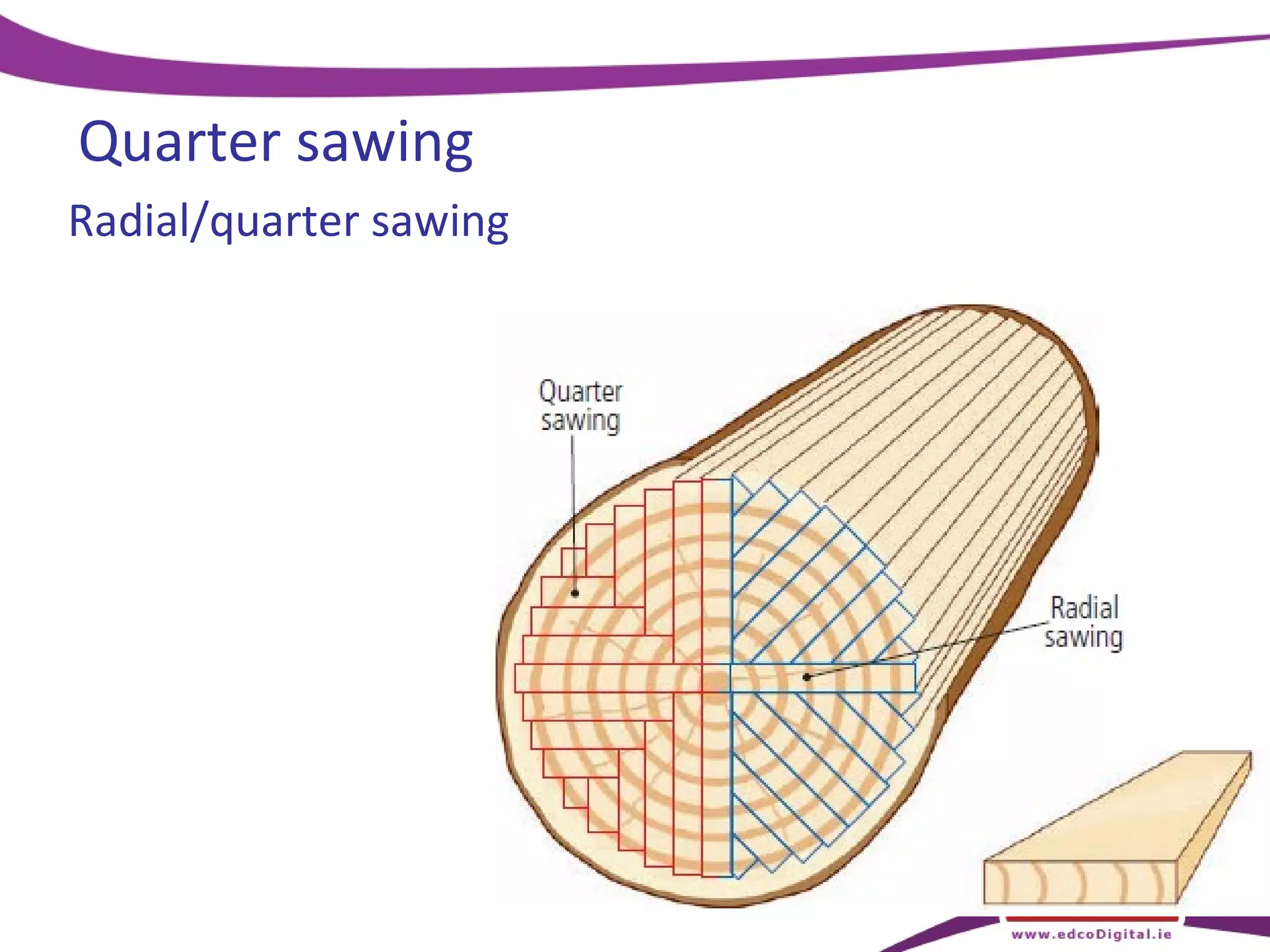
B Quarter sawing or radial sawing.
(b) Through and through sawing
Advantages
•
•
•
There is very little waste from this method
It gives wide boards
It is a cheap and easy method
Disadvantages
•
•
•
The boards are prone to cupping
The boards have no particular grain pattern
There would be a lot of sapwood in many boards so more likely
to rot due to fungi and insects
13.
Sample answer toexam question
1 (b) Quarter sawing
Advantages
• The boards are stable
• The boards are hard-wearing and used in flooring
Disadvantages
• More labour required, as the logs need to be turned
• More expensive
• More waste produced
14.
Sample answer toexam question
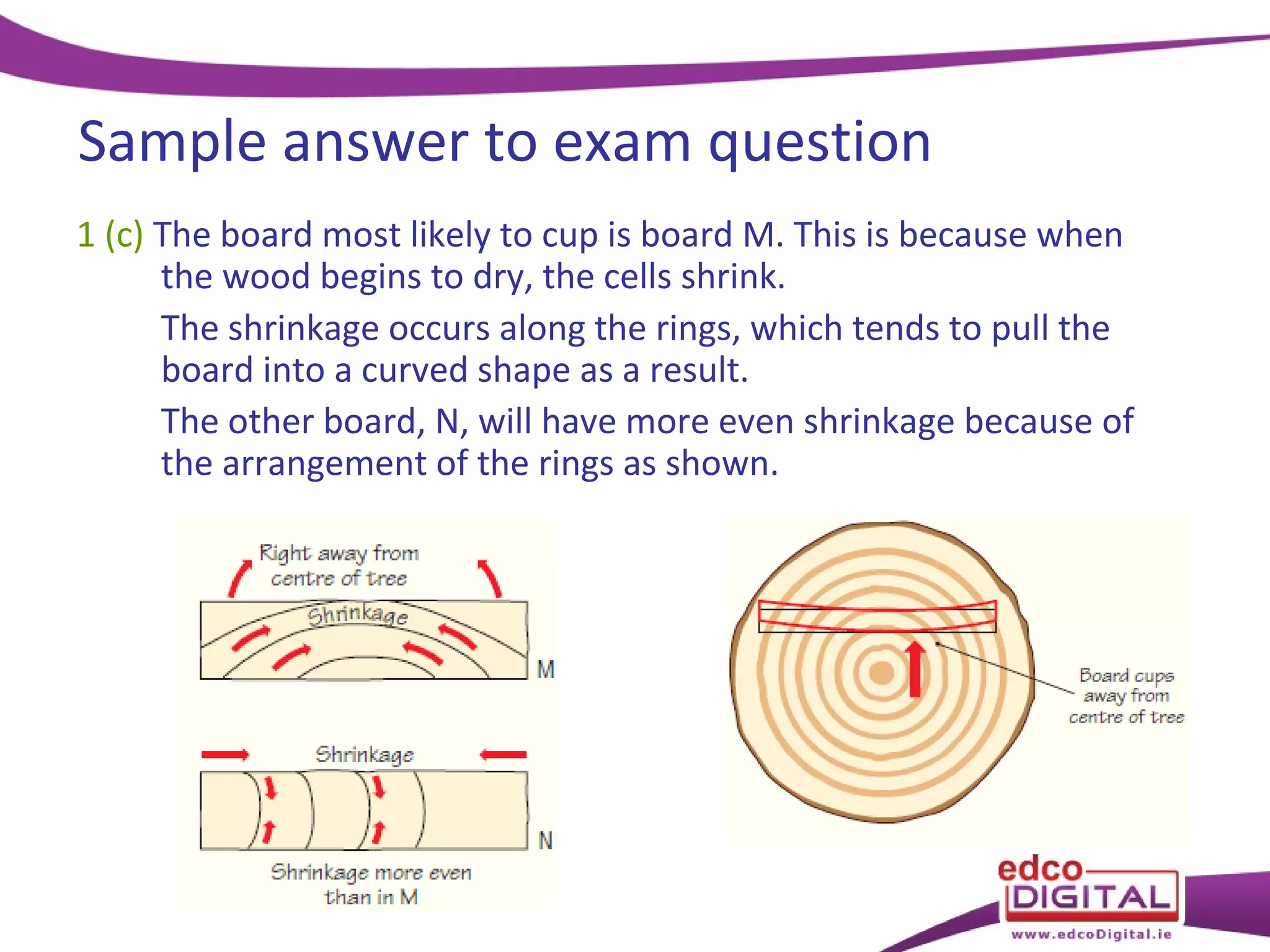
1 (c) The board most likely to cup is board M. This is because when
the wood begins to dry, the cells shrink.
The shrinkage occurs along the rings, which tends to pull the
board into a curved shape as a result.
The other board, N, will have more even shrinkage because of
the arrangement of the rings as shown.