WOOD

MATERIALS TECHNOLOGY
4th Edition
Chapter 28
Adhesives
Adhesives
 Shelf life
– Best before date – how long the glue will keep in its
container or packaging
 Pot life
– The time that the glue remains usable in a pot
– Also known as open assembly time
 Closed assembly time
– The time you have to adjust and cramp the pieces before
the glue starts to set
How a glue works
 Specific adhesion
– The holding power of
the glue itself

 Mechanical adhesion
– The grip it has on the material,
e.g. cracks, crevices, pores
Types of adhesive
 Scotch glue/pearl glue
 PVA glue
 Casein glue
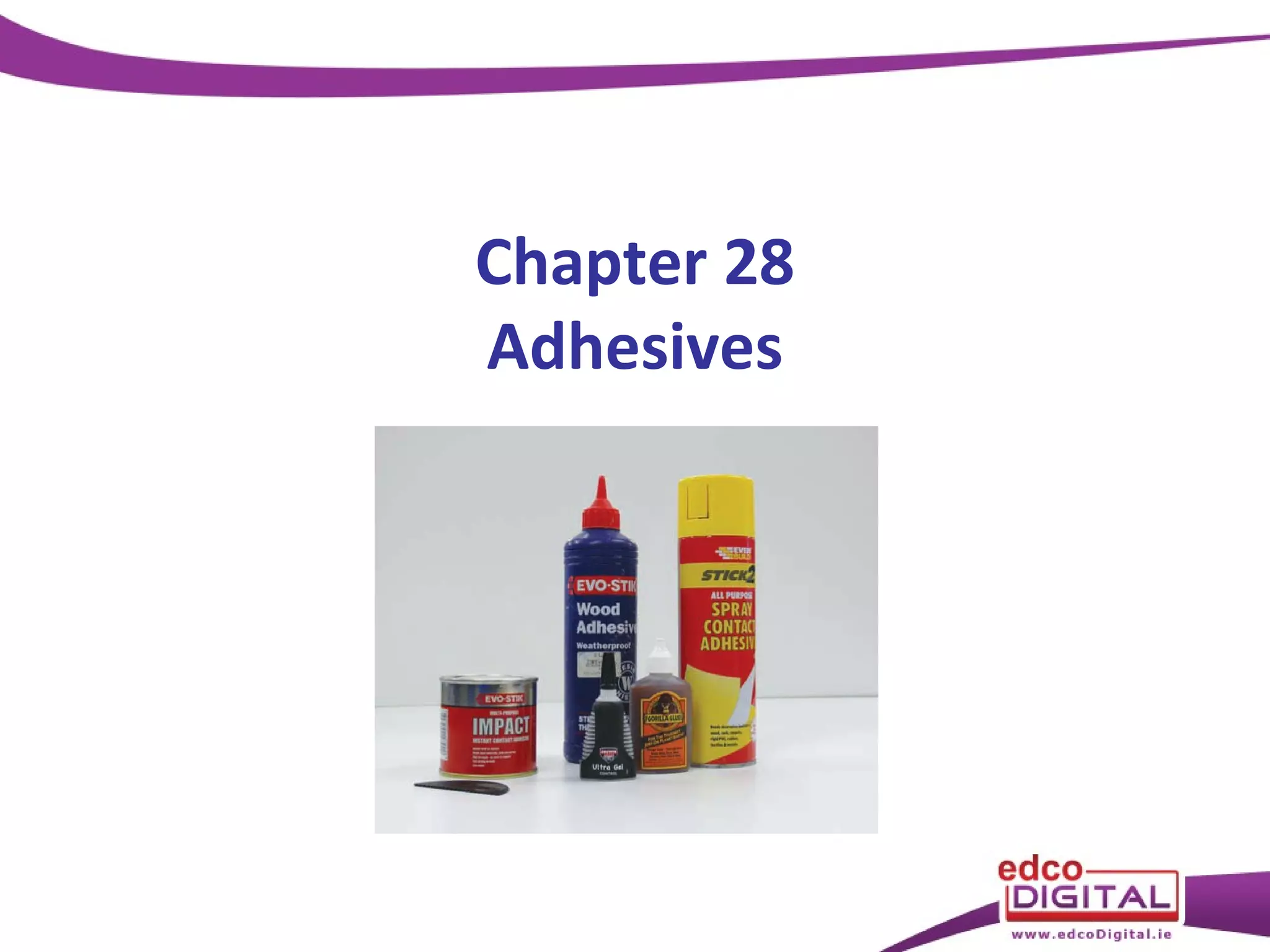
 Contact/impact glue
 Formaldehyde glue
 Epoxy resins
 Aliphatic (yellow) glue
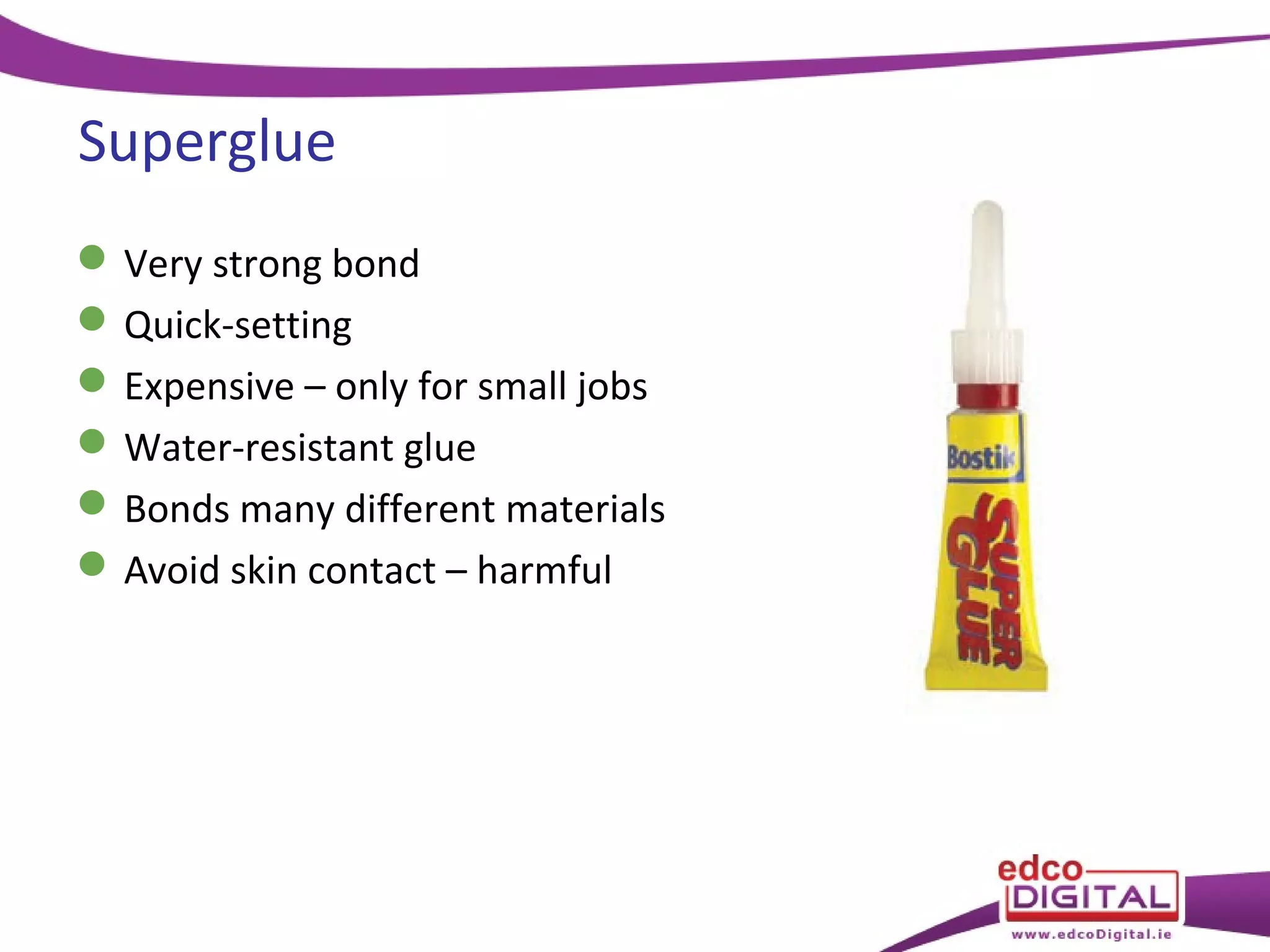
 Superglue
 Hot melt glue
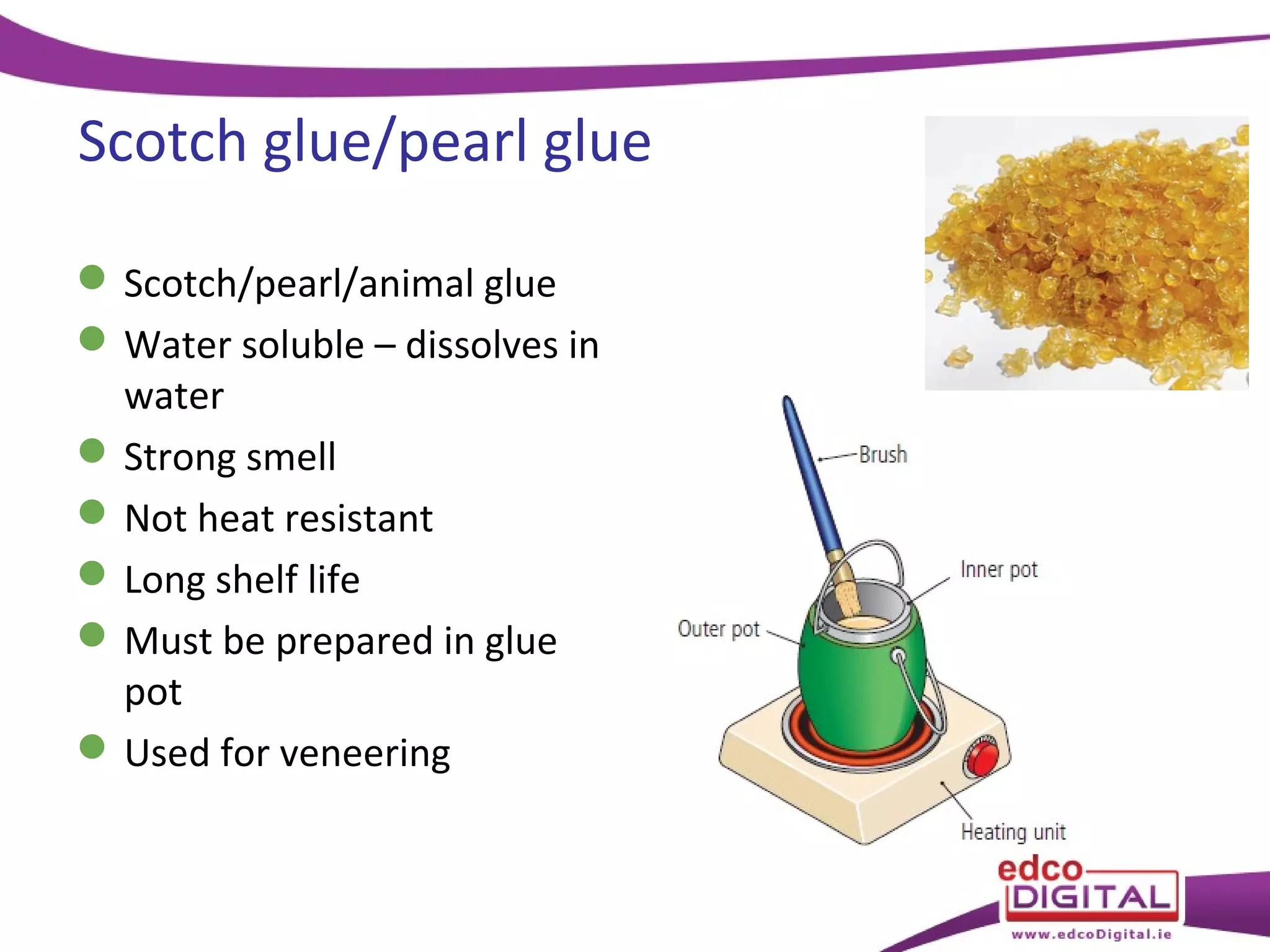
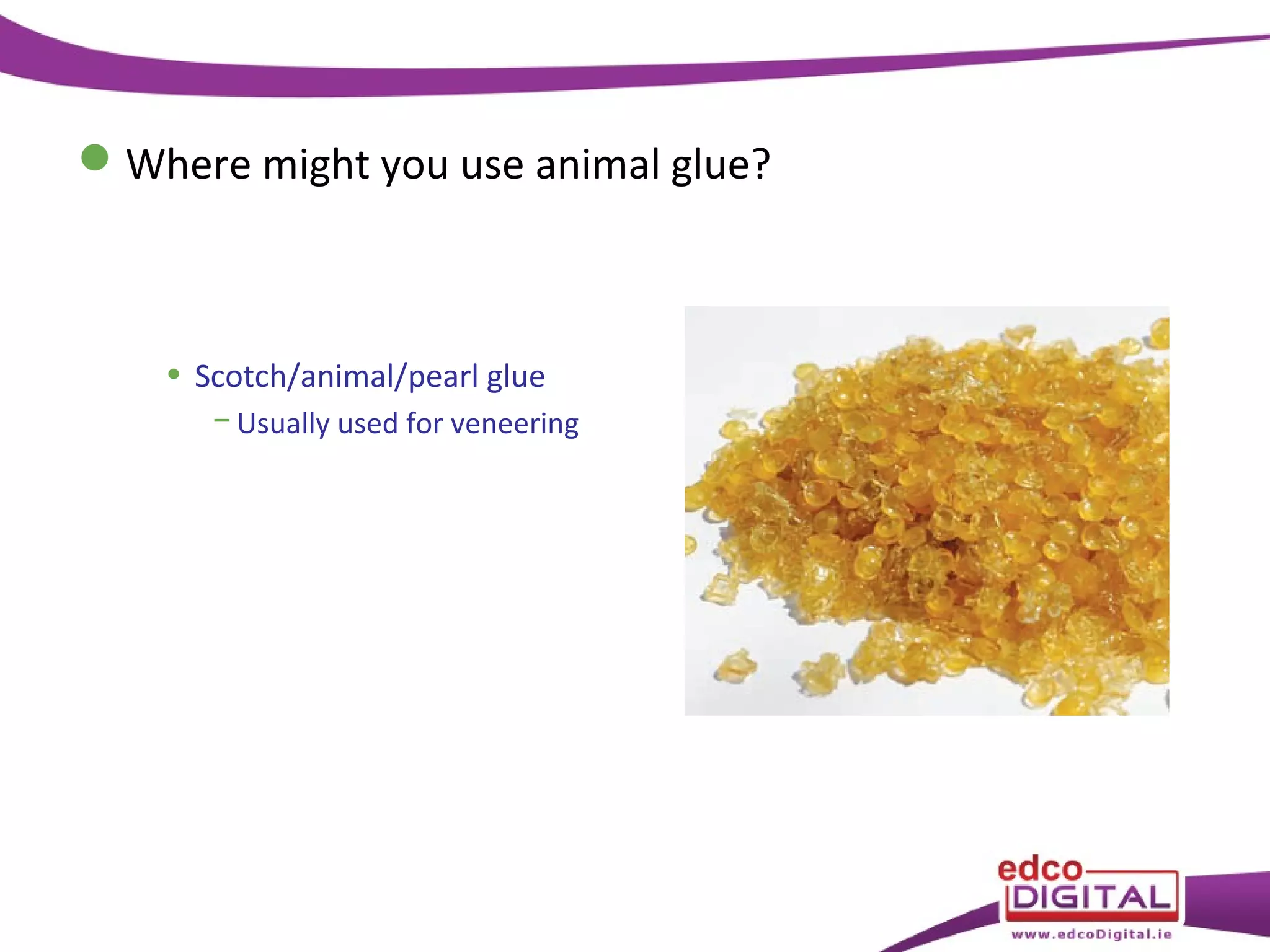
Scotch glue/pearl glue
 Scotch/pearl/animal glue
 Water soluble – dissolves in
water
 Strong smell
 Not heat resistant
 Long shelf life
 Must be prepared in glue
pot
 Used for veneering
PVA glue
 PolyVinyl Acetate (PVA)
– Water soluble
– Water-resistant types
available
– Ready to use from container
– Strong bond
– Requires cramps
– Sets in 4 – 12 hours
– Mainly used for bonding
wood
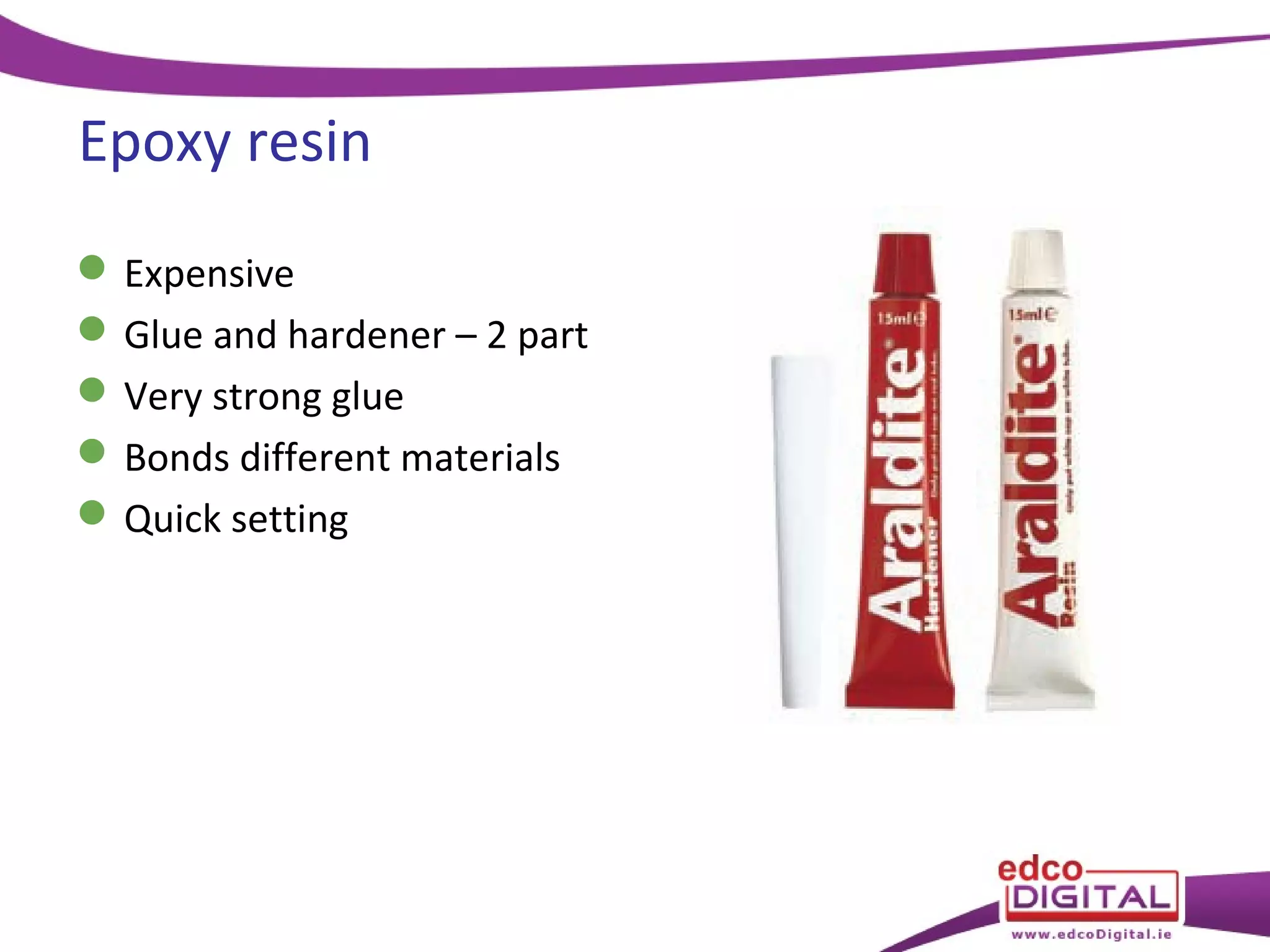
Epoxy resin
 Expensive
 Glue and hardener – 2 part
 Very strong glue
 Bonds different materials
 Quick setting
Impact/contact glue
 Used for veneering
 Solvent-based
 Harmful if inhaled
 Strong smell
 Avoid skin contact
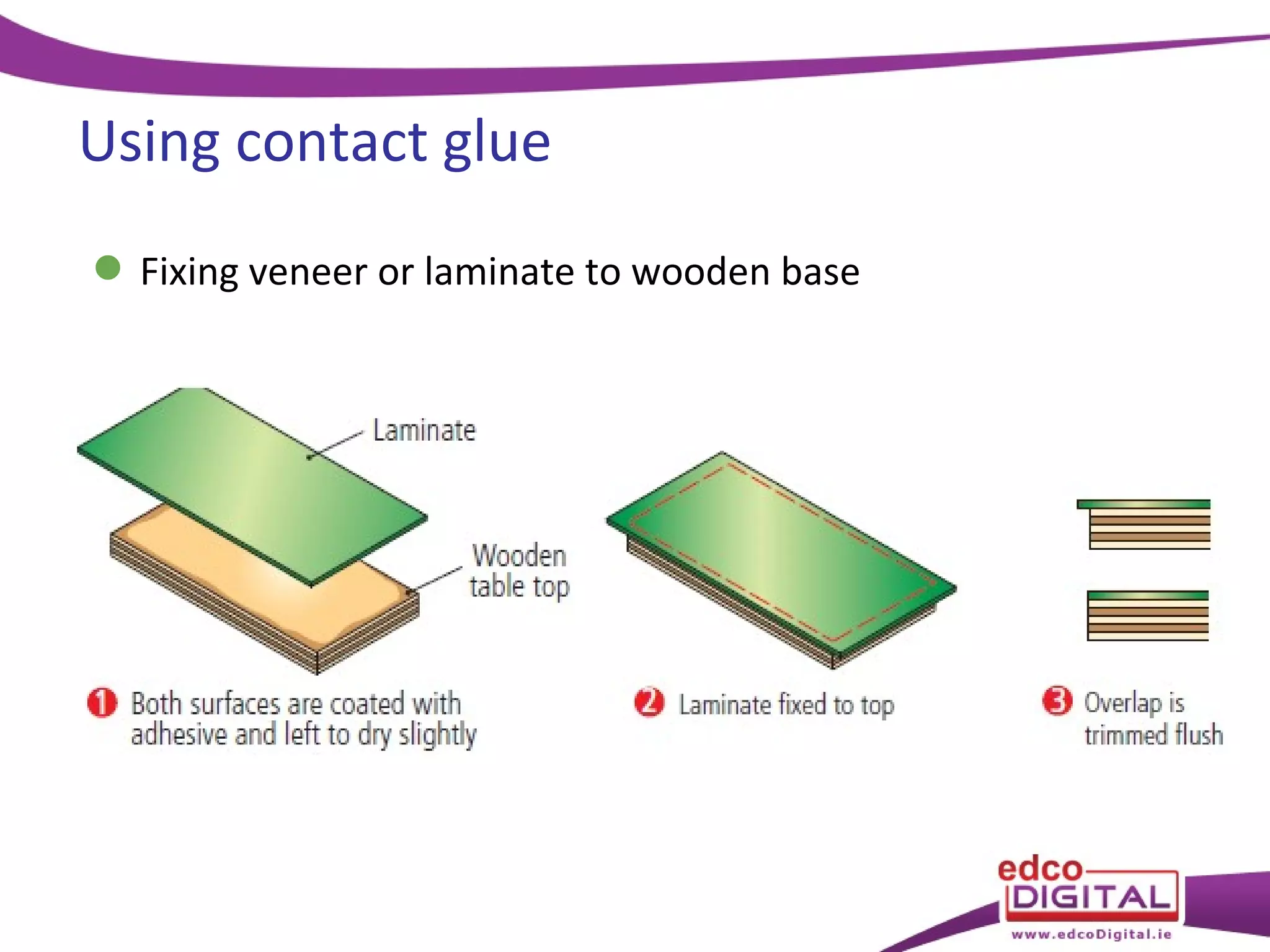
Using contact glue
 Fixing veneer or laminate to wooden base
Superglue
 Very strong bond
 Quick-setting
 Expensive – only for small jobs
 Water-resistant glue
 Bonds many different materials
 Avoid skin contact – harmful
Hot melt glue
 Glue sticks are melted in
the hot gun
 Hot liquid glue is squeezed
out with the trigger
 Glue sets quickly
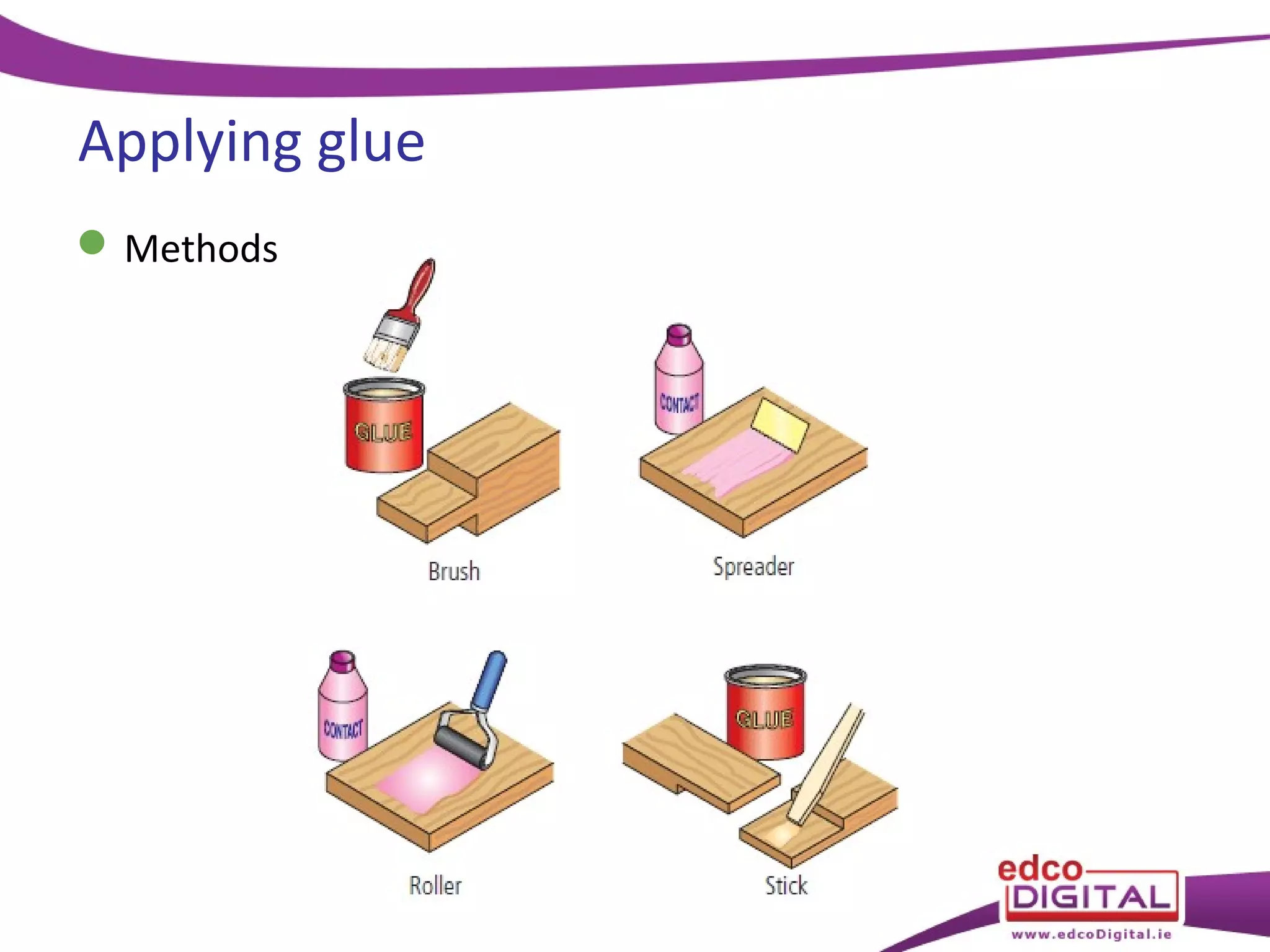
Applying glue
 Methods
Assembly
 Fit joints without glue and
check
 Apply glue to pieces
 Assemble joints carefully
 Cramp pieces lightly and
firmly
 Wipe off all excess glue with
a clean damp cloth
 Check for square
Quiz
 What do the letters PVA stand for?

– PolyVinyl Acetate
 Name the tool and state its use
• Hot melt glue gun
− An electrically heated gun
used for heating and
applying hot melt glue
 Which glue might be used to bond two metals together?

– Epoxy resin glue
– Superglue
 Where might you use animal glue?

• Scotch/animal/pearl glue
− Usually used for veneering
 Suggest a suitable adhesive to be used when forming the
laminated piece of this project

– PVA glue
– Casein glue
 Suggest a suitable adhesive for bonding the veneer to
the base
 A suitable glue might be
– Contact glue
– Scotch/animal glue

28 adhesives

  • 1.
  • 2.
  • 3.
    Adhesives  Shelf life –Best before date – how long the glue will keep in its container or packaging  Pot life – The time that the glue remains usable in a pot – Also known as open assembly time  Closed assembly time – The time you have to adjust and cramp the pieces before the glue starts to set
  • 4.
    How a glueworks  Specific adhesion – The holding power of the glue itself  Mechanical adhesion – The grip it has on the material, e.g. cracks, crevices, pores
  • 5.
    Types of adhesive Scotch glue/pearl glue  PVA glue  Casein glue  Contact/impact glue  Formaldehyde glue  Epoxy resins  Aliphatic (yellow) glue  Superglue  Hot melt glue
  • 6.
    Scotch glue/pearl glue Scotch/pearl/animal glue  Water soluble – dissolves in water  Strong smell  Not heat resistant  Long shelf life  Must be prepared in glue pot  Used for veneering
  • 7.
    PVA glue  PolyVinylAcetate (PVA) – Water soluble – Water-resistant types available – Ready to use from container – Strong bond – Requires cramps – Sets in 4 – 12 hours – Mainly used for bonding wood
  • 8.
    Epoxy resin  Expensive Glue and hardener – 2 part  Very strong glue  Bonds different materials  Quick setting
  • 9.
    Impact/contact glue  Usedfor veneering  Solvent-based  Harmful if inhaled  Strong smell  Avoid skin contact
  • 10.
    Using contact glue Fixing veneer or laminate to wooden base
  • 11.
    Superglue  Very strongbond  Quick-setting  Expensive – only for small jobs  Water-resistant glue  Bonds many different materials  Avoid skin contact – harmful
  • 12.
    Hot melt glue Glue sticks are melted in the hot gun  Hot liquid glue is squeezed out with the trigger  Glue sets quickly
  • 13.
  • 14.
    Assembly  Fit jointswithout glue and check  Apply glue to pieces  Assemble joints carefully  Cramp pieces lightly and firmly  Wipe off all excess glue with a clean damp cloth  Check for square
  • 15.
  • 16.
     What dothe letters PVA stand for? – PolyVinyl Acetate
  • 17.
     Name thetool and state its use • Hot melt glue gun − An electrically heated gun used for heating and applying hot melt glue
  • 18.
     Which gluemight be used to bond two metals together? – Epoxy resin glue – Superglue
  • 19.
     Where mightyou use animal glue? • Scotch/animal/pearl glue − Usually used for veneering
  • 20.
     Suggest asuitable adhesive to be used when forming the laminated piece of this project – PVA glue – Casein glue
  • 21.
     Suggest asuitable adhesive for bonding the veneer to the base  A suitable glue might be – Contact glue – Scotch/animal glue