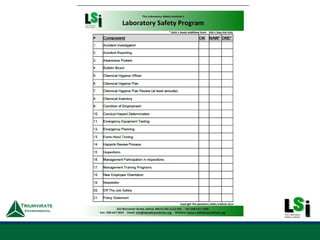
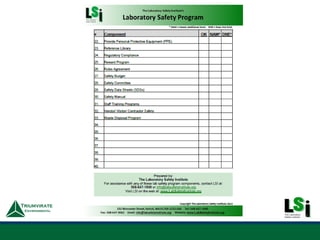
10 Components of a
Highly Effective Lab
Safety Program
PUTTING SAFETY PROGRAM PLANNING INTO
ACTION.
Meet Your Moderator
James Ciccone
During this Webinar:
 All lines will be muted.
 Communicate via the questions tab in your
webinar panel.
 Unanswered questions will be responded to
after the webinar.
 Webinar recording and slides will be emailed
to you tomorrow.
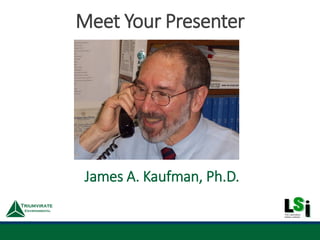
James A. Kaufman, Ph.D.
Meet Your Presenter
The Professional Organization for Safety
Conscious Scientists and Science Educators
offering:
The Laboratory Safety Institute:
• Seminars & Courses
• Audits, Inspections, & Regulatory Compliance
• Program Development – Six-Point System
• World Safety Conference
• Internships, Post-Doctoral Position
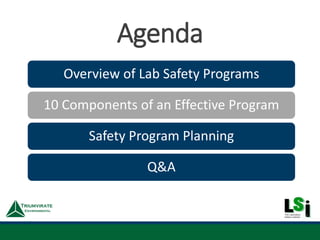
Agenda
Overview of Lab Safety Programs
10 Components of an Effective Program
Safety Program Planning
Q&A
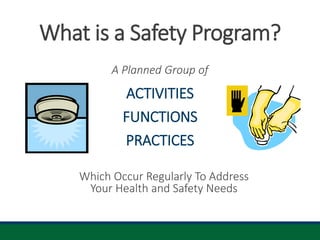
What is a Safety Program?
A Planned Group of
ACTIVITIES
FUNCTIONS
PRACTICES
Which Occur Regularly To Address
Your Health and Safety Needs
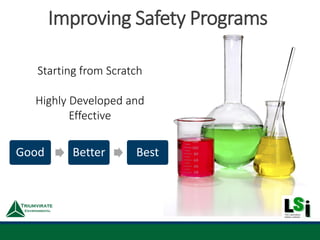
Improving Safety Programs
Starting from Scratch
Highly Developed and
Effective
Good Better Best
Improving Safety Programs
“Safety is a
Judgment about the
Acceptability of
Risk” …
Wm. Lowrance
Agenda
Overview of Lab Safety Programs
10 Components of an Effective Program
Safety Program Planning
Q&A
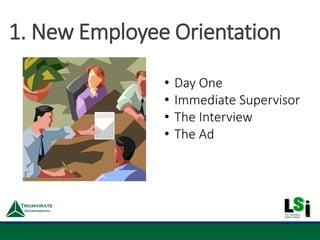
1. New Employee Orientation
• Day One
• Immediate Supervisor
• The Interview
• The Ad
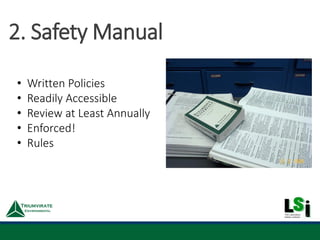
• Written Policies
• Readily Accessible
• Review at Least Annually
• Enforced!
• Rules
2. Safety Manual
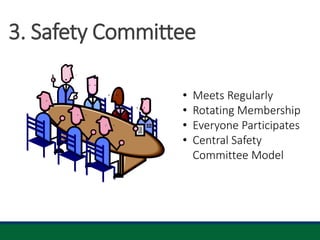
• Meets Regularly
• Rotating Membership
• Everyone Participates
• Central Safety
Committee Model
3. Safety Committee
• Signed by Students and
Employees
• The Four Critical Parts (Read,
Understood, Agree, and Realize)
• Provide the Cover Letter
4. Rules Agreement
1. What are the hazards?
2. What are the worst things that could happen?
3. What do I need to do to be prepared?
4. What are the prudent practices, protective facilities, and
protective equipment needed to minimize the risk?
5. Four Simple Questions
IT IS THE RESPONSIBILITY OF OUR INSTITUTION
AND ITS EMPLOYEES TO ENSURE THAT OUR
EDUCATION PROGRAMS PROTECT AND
PROMOTE THE HEALTH AND SAFETY OF OUR
STUDENTS, OUR EMPLOYEES, AND THE
ENVIRONMENT.
6. Safety Policy
Management is Responsible for
the Prevention of Injuries
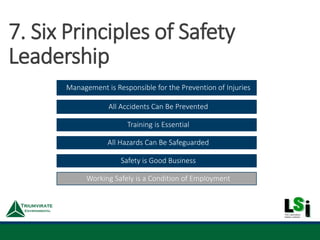
7. Six Principles of Safety
Leadership
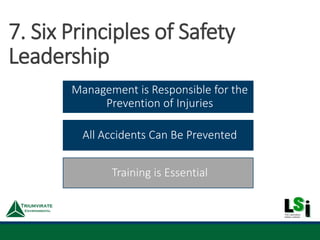
Management is Responsible for
the Prevention of Injuries
All Accidents Can Be Prevented
7. Six Principles of Safety
Leadership
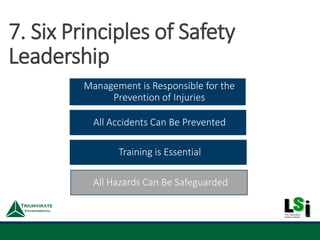
Management is Responsible for the
Prevention of Injuries
All Accidents Can Be Prevented
Training is Essential
7. Six Principles of Safety
Leadership
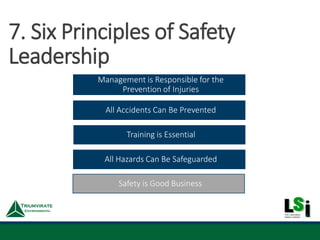
Management is Responsible for the
Prevention of Injuries
All Accidents Can Be Prevented
Training is Essential
All Hazards Can Be Safeguarded
7. Six Principles of Safety
Leadership
Management is Responsible for the
Prevention of Injuries
All Accidents Can Be Prevented
Training is Essential
All Hazards Can Be Safeguarded
Safety is Good Business
7. Six Principles of Safety
Leadership
Management is Responsible for the Prevention of Injuries
All Accidents Can Be Prevented
Training is Essential
All Hazards Can Be Safeguarded
Safety is Good Business
Working Safely is a Condition of Employment
7. Six Principles of Safety
Leadership
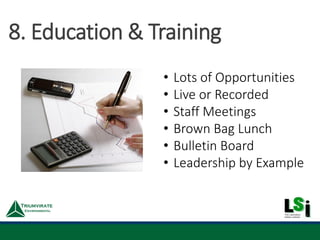
• Lots of Opportunities
• Live or Recorded
• Staff Meetings
• Brown Bag Lunch
• Bulletin Board
• Leadership by Example
8. Education & Training
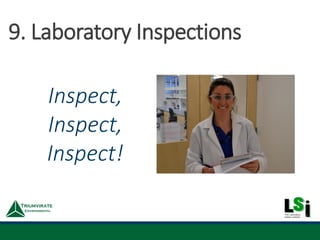
Inspect,
Inspect,
Inspect!
9. Laboratory Inspections
PLANNING AND
RESPONSE
This Never
Happened Before!
10. Emergencies
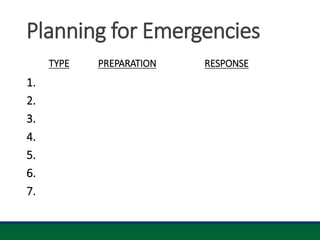
Planning for Emergencies
TYPE PREPARATION RESPONSE
1.
2.
3.
4.
5.
6.
7.
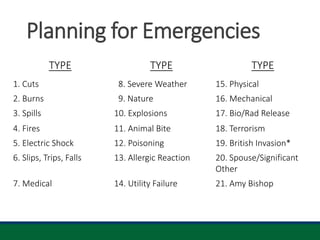
TYPE TYPE TYPE
1. Cuts 8. Severe Weather 15. Physical
2. Burns 9. Nature 16. Mechanical
3. Spills 10. Explosions 17. Bio/Rad Release
4. Fires 11. Animal Bite 18. Terrorism
5. Electric Shock 12. Poisoning 19. British Invasion*
6. Slips, Trips, Falls 13. Allergic Reaction 20. Spouse/Significant
Other
7. Medical 14. Utility Failure 21. Amy Bishop
Planning for Emergencies
3 Steps to be Prepared
1. Talk … $
2. Write
3. Practice
Agenda
Overview of Lab Safety Programs
10 Components of an Effective Program
Safety Program Planning
Q&A
Safety Program
Planning
Effective Safety Programs
• Caring
• Integration
• Rewards
• Repetition
• Participation
Student, Faculty & Administrator
Involvement
Employee & Management
Involvement
NO LESSON
is So Important and No Task So Urgent That We
Cannot Take Time to Teach, Learn and Practice
SCIENCE SAFELY
In Conclusion…
Make Labs
Safer
Contact:
Dr. James A. Kaufman
President/CEO
45
Make Health,
Safety, and the
Environment
Integral and
Important Parts of
Education, Work,
and Life
192 Worcester Street
Natick, MA 01760
(508) 647-1900
jim@labsafetyinstitute.org
QUESTIONS?
Thank You for Attending!
You Will Receive:
• A recording of this webinar
and a copy of this
presentation
• A link to a short survey
• List of upcoming webinars
and other helpful
resources

10 Components of a Highly Effective Lab Safety Program

  • 1.
    10 Components ofa Highly Effective Lab Safety Program PUTTING SAFETY PROGRAM PLANNING INTO ACTION.
  • 2.
  • 3.
    During this Webinar: All lines will be muted.  Communicate via the questions tab in your webinar panel.  Unanswered questions will be responded to after the webinar.  Webinar recording and slides will be emailed to you tomorrow.
  • 4.
    James A. Kaufman,Ph.D. Meet Your Presenter
  • 5.
    The Professional Organizationfor Safety Conscious Scientists and Science Educators offering: The Laboratory Safety Institute: • Seminars & Courses • Audits, Inspections, & Regulatory Compliance • Program Development – Six-Point System • World Safety Conference • Internships, Post-Doctoral Position
  • 6.
    Agenda Overview of LabSafety Programs 10 Components of an Effective Program Safety Program Planning Q&A
  • 7.
    What is aSafety Program? A Planned Group of ACTIVITIES FUNCTIONS PRACTICES Which Occur Regularly To Address Your Health and Safety Needs
  • 10.
    Improving Safety Programs Startingfrom Scratch Highly Developed and Effective Good Better Best
  • 11.
    Improving Safety Programs “Safetyis a Judgment about the Acceptability of Risk” … Wm. Lowrance
  • 14.
    Agenda Overview of LabSafety Programs 10 Components of an Effective Program Safety Program Planning Q&A
  • 15.
    1. New EmployeeOrientation • Day One • Immediate Supervisor • The Interview • The Ad
  • 16.
    • Written Policies •Readily Accessible • Review at Least Annually • Enforced! • Rules 2. Safety Manual
  • 17.
    • Meets Regularly •Rotating Membership • Everyone Participates • Central Safety Committee Model 3. Safety Committee
  • 18.
    • Signed byStudents and Employees • The Four Critical Parts (Read, Understood, Agree, and Realize) • Provide the Cover Letter 4. Rules Agreement
  • 19.
    1. What arethe hazards? 2. What are the worst things that could happen? 3. What do I need to do to be prepared? 4. What are the prudent practices, protective facilities, and protective equipment needed to minimize the risk? 5. Four Simple Questions
  • 21.
    IT IS THERESPONSIBILITY OF OUR INSTITUTION AND ITS EMPLOYEES TO ENSURE THAT OUR EDUCATION PROGRAMS PROTECT AND PROMOTE THE HEALTH AND SAFETY OF OUR STUDENTS, OUR EMPLOYEES, AND THE ENVIRONMENT. 6. Safety Policy
  • 22.
    Management is Responsiblefor the Prevention of Injuries 7. Six Principles of Safety Leadership
  • 23.
    Management is Responsiblefor the Prevention of Injuries All Accidents Can Be Prevented 7. Six Principles of Safety Leadership
  • 26.
    Management is Responsiblefor the Prevention of Injuries All Accidents Can Be Prevented Training is Essential 7. Six Principles of Safety Leadership
  • 27.
    Management is Responsiblefor the Prevention of Injuries All Accidents Can Be Prevented Training is Essential All Hazards Can Be Safeguarded 7. Six Principles of Safety Leadership
  • 28.
    Management is Responsiblefor the Prevention of Injuries All Accidents Can Be Prevented Training is Essential All Hazards Can Be Safeguarded Safety is Good Business 7. Six Principles of Safety Leadership
  • 29.
    Management is Responsiblefor the Prevention of Injuries All Accidents Can Be Prevented Training is Essential All Hazards Can Be Safeguarded Safety is Good Business Working Safely is a Condition of Employment 7. Six Principles of Safety Leadership
  • 30.
    • Lots ofOpportunities • Live or Recorded • Staff Meetings • Brown Bag Lunch • Bulletin Board • Leadership by Example 8. Education & Training
  • 31.
  • 34.
  • 35.
    Planning for Emergencies TYPEPREPARATION RESPONSE 1. 2. 3. 4. 5. 6. 7.
  • 36.
    TYPE TYPE TYPE 1.Cuts 8. Severe Weather 15. Physical 2. Burns 9. Nature 16. Mechanical 3. Spills 10. Explosions 17. Bio/Rad Release 4. Fires 11. Animal Bite 18. Terrorism 5. Electric Shock 12. Poisoning 19. British Invasion* 6. Slips, Trips, Falls 13. Allergic Reaction 20. Spouse/Significant Other 7. Medical 14. Utility Failure 21. Amy Bishop Planning for Emergencies
  • 38.
    3 Steps tobe Prepared 1. Talk … $ 2. Write 3. Practice
  • 39.
    Agenda Overview of LabSafety Programs 10 Components of an Effective Program Safety Program Planning Q&A
  • 40.
  • 41.
    Effective Safety Programs •Caring • Integration • Rewards • Repetition • Participation
  • 42.
    Student, Faculty &Administrator Involvement
  • 43.
  • 44.
    NO LESSON is SoImportant and No Task So Urgent That We Cannot Take Time to Teach, Learn and Practice SCIENCE SAFELY In Conclusion…
  • 45.
    Make Labs Safer Contact: Dr. JamesA. Kaufman President/CEO 45 Make Health, Safety, and the Environment Integral and Important Parts of Education, Work, and Life 192 Worcester Street Natick, MA 01760 (508) 647-1900 jim@labsafetyinstitute.org
  • 46.
  • 47.
    Thank You forAttending! You Will Receive: • A recording of this webinar and a copy of this presentation • A link to a short survey • List of upcoming webinars and other helpful resources