John Fischer, MassDEP
May 28, 2014
1
2
Waste Bans Background
Purpose:
 Implement as part of a comprehensive approach
 Ensure materials available for recycling &
composting facilities
 Limit need for disposal capacity
3
Waste Ban Background
Who do they apply to?
310 CMR 19.017(3)(a): “No person shall dispose,
transfer for disposal, or contract for disposal of the
restricted material…”
 Solid Waste Facilities
 Haulers
 Generators
4
Banned Materials
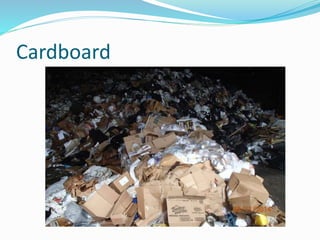
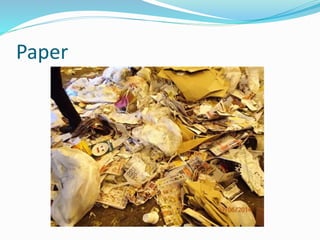
 Recyclable Paper/Cardboard
 Glass, Metal, Plastic Containers
 Leaves and Yard Waste
 Asphalt Pavement, Brick, Concrete, Metal, Wood
and Clean Gypsum Wallboard
 Lead Acid Vehicle Batteries and Tires
 Cathode Ray Tubes
 White Goods (large appliances)
* Tires and Wood can be accepted at municipal waste
combustors
 Overall, waste ban materials = about 40% of
trash disposed
MassDEP Waste Ban Compliance
Strategy
 Using facility and third party data
 Outreach and targeting inspections
 Increased inspections and enforcement
 Inspections at solid waste facilities
 Looking for large amounts of banned materials
 More than 150 enforcement actions since January 2013
 RecyclingWorks resources and assistance
5
Cardboard
Paper
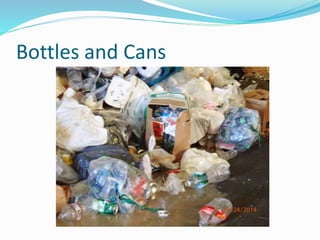
Bottles and Cans
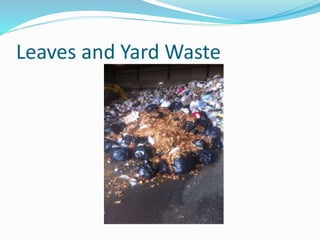
Leaves and Yard Waste
Organics Policy and Goals
 Solid Waste Master Plan
 Overall goal – reduce disposal by 2 million tons (30 %)
annually by 2020
 Reduce disposal by 80% by 2050
 Primary Goal – Divert additional 350,000 tons per year
of organic materials from disposal by 2020
 Clean Energy Results Program
 Support the development of renewable energy in Mass.
 Goal to have 50 MW of anaerobic digestion in place by
2020
10
Why focus on food waste/organics?
 Food waste and other organics >25% of disposal in
Mass. > 1 million tons per year
 In 2010 (fall & winter sampling)
 Food waste estimated 15% of MSW disposal
 Compostable paper 6 % of MSW disposal
 In 2013 (spring & summer sampling)
 Food waste 19% of MSW
 Compostable paper 8% of MSW
11
Benefits
 Opportunity to digest for energy and/or compost to
produce soil amendments/fertilizers
 Management solutions for dairy manure & wastewater
residuals
 Opportunity to generate energy at farms, waste water
plants, other locations
 Cost effective materials management for
businesses/institutions
 Reduced reliance on disposal capacity
12
Organics Action Plan Overview
 Comprehensive, integrated set of strategies
 Developed working with stakeholders
 Focused on 2020 goal – 350 K tons additional diversion
annually
 Data Analysis
 Collection Infrastructure
 Processing Capacity/Market Development
 Regulatory Reform/Waste Ban
13
Current Status/Progress to Date
 Estimate baseline 100,000 tons of food waste diversion
 Composting – farms and small commercial sites –
about 30 locations
 Pig farms/animal feed
 On-site systems
 Estimated 1,400 businesses/institutions now diverting
food waste – includes 300 supermarkets
 Growth in organics hauling services
14
Improved Data
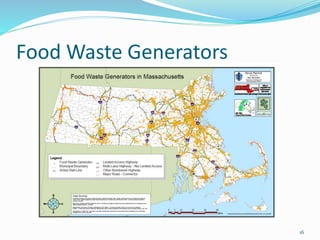
 Food waste density mapping study – updated 2011
 Waste characterization studies – food waste summary
available online – 2013 data available
 Completed survey of food waste management at state
facilities
 Will be reviewing facility reports to update diversion
data
15
Food Waste Generators
16
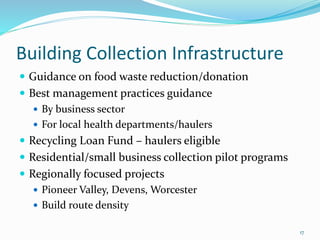
Building Collection Infrastructure
 Guidance on food waste reduction/donation
 Best management practices guidance
 By business sector
 For local health departments/haulers
 Recycling Loan Fund – haulers eligible
 Residential/small business collection pilot programs
 Regionally focused projects
 Pioneer Valley, Devens, Worcester
 Build route density
17
Food Waste Collection BMPs
 Cover:
 Kitchen (back of the house) separation
 Hauler collection practices/frequency
 Outside storage practices
 Expect to change and update over time as needed
 Available on RecyclingWorks web site
18
Technical Assistance to Generators
 RecyclingWorks in Massachusetts
 Website
 Service provider database
 Guidance/fact sheets/case studies
 Site specific TA
 WasteWise and other workshops
 Assistance to targeted sectors
 Supermarkets
 Hotels/large restaurants
 Colleges/universities
 State facilities
 Food manufacturers/processors
19
Growing Processing
Capacity/Markets
 Solid waste regulations siting changes
 Promulgated November 2012
 Clarify requirements, reduce siting barriers
 Facilities taking source separated materials do not
require solid waste facility site assignment
 Allow waste water plants to accept food waste to AD w/o
being solid waste facility
20
Market Development
 Financial assistance matrix available online
 MassDEP Recycling Loan Fund
 MassDEP Municipal Grants
 Mass Clean Energy Center Organics to Energy program
 Recent net metering changes
 Other funding sources can be leveraged
 Siting facilities on state property
 Use state contracts as opportunity to build demand
 Marketing workshops
21
Commercial Organics Waste Ban
 Will take effect October 1, 2014
 Food waste and vegetative material
 Does not apply to management in wastewater
 Commercial/institutional organics – dispose > 1
ton/week
 Estimate – 1,700 businesses/institutions subject to the
ban
 Focus now on outreach and compliance assistance
22
Additional Guidance
 Waste bans monitored/enforced @ solid waste
facilities
 Proposed threshold is 1 ton/week disposed, not
generated
 Q&A for generators/haulers
 Resources on how to comply on RecyclingWorks web
site
23
Common Questions
 Pre-consumer/post-consumer?
 How applied to university campus?
 Exceed threshold seasonally?
 How can my facility comply?
 Is packaged food subject?
24
Contact Information
www.mass.gov/dep/public/committee/swacorg.htm
www.mass.gov/dep/recycle/reduce/commorg.htm
http://www.mass.gov/dep/cleanenergy.htm
www.recyclingworksma.com
John Fischer, MassDEP
John.fischer@state.ma.us
617-292-5632
25

Massachusetts Commercial Organic Waste Ban - MassDEP

  • 1.
  • 2.
    2 Waste Bans Background Purpose: Implement as part of a comprehensive approach  Ensure materials available for recycling & composting facilities  Limit need for disposal capacity
  • 3.
    3 Waste Ban Background Whodo they apply to? 310 CMR 19.017(3)(a): “No person shall dispose, transfer for disposal, or contract for disposal of the restricted material…”  Solid Waste Facilities  Haulers  Generators
  • 4.
    4 Banned Materials  RecyclablePaper/Cardboard  Glass, Metal, Plastic Containers  Leaves and Yard Waste  Asphalt Pavement, Brick, Concrete, Metal, Wood and Clean Gypsum Wallboard  Lead Acid Vehicle Batteries and Tires  Cathode Ray Tubes  White Goods (large appliances) * Tires and Wood can be accepted at municipal waste combustors  Overall, waste ban materials = about 40% of trash disposed
  • 5.
    MassDEP Waste BanCompliance Strategy  Using facility and third party data  Outreach and targeting inspections  Increased inspections and enforcement  Inspections at solid waste facilities  Looking for large amounts of banned materials  More than 150 enforcement actions since January 2013  RecyclingWorks resources and assistance 5
  • 6.
  • 7.
  • 8.
  • 9.
  • 10.
    Organics Policy andGoals  Solid Waste Master Plan  Overall goal – reduce disposal by 2 million tons (30 %) annually by 2020  Reduce disposal by 80% by 2050  Primary Goal – Divert additional 350,000 tons per year of organic materials from disposal by 2020  Clean Energy Results Program  Support the development of renewable energy in Mass.  Goal to have 50 MW of anaerobic digestion in place by 2020 10
  • 11.
    Why focus onfood waste/organics?  Food waste and other organics >25% of disposal in Mass. > 1 million tons per year  In 2010 (fall & winter sampling)  Food waste estimated 15% of MSW disposal  Compostable paper 6 % of MSW disposal  In 2013 (spring & summer sampling)  Food waste 19% of MSW  Compostable paper 8% of MSW 11
  • 12.
    Benefits  Opportunity todigest for energy and/or compost to produce soil amendments/fertilizers  Management solutions for dairy manure & wastewater residuals  Opportunity to generate energy at farms, waste water plants, other locations  Cost effective materials management for businesses/institutions  Reduced reliance on disposal capacity 12
  • 13.
    Organics Action PlanOverview  Comprehensive, integrated set of strategies  Developed working with stakeholders  Focused on 2020 goal – 350 K tons additional diversion annually  Data Analysis  Collection Infrastructure  Processing Capacity/Market Development  Regulatory Reform/Waste Ban 13
  • 14.
    Current Status/Progress toDate  Estimate baseline 100,000 tons of food waste diversion  Composting – farms and small commercial sites – about 30 locations  Pig farms/animal feed  On-site systems  Estimated 1,400 businesses/institutions now diverting food waste – includes 300 supermarkets  Growth in organics hauling services 14
  • 15.
    Improved Data  Foodwaste density mapping study – updated 2011  Waste characterization studies – food waste summary available online – 2013 data available  Completed survey of food waste management at state facilities  Will be reviewing facility reports to update diversion data 15
  • 16.
  • 17.
    Building Collection Infrastructure Guidance on food waste reduction/donation  Best management practices guidance  By business sector  For local health departments/haulers  Recycling Loan Fund – haulers eligible  Residential/small business collection pilot programs  Regionally focused projects  Pioneer Valley, Devens, Worcester  Build route density 17
  • 18.
    Food Waste CollectionBMPs  Cover:  Kitchen (back of the house) separation  Hauler collection practices/frequency  Outside storage practices  Expect to change and update over time as needed  Available on RecyclingWorks web site 18
  • 19.
    Technical Assistance toGenerators  RecyclingWorks in Massachusetts  Website  Service provider database  Guidance/fact sheets/case studies  Site specific TA  WasteWise and other workshops  Assistance to targeted sectors  Supermarkets  Hotels/large restaurants  Colleges/universities  State facilities  Food manufacturers/processors 19
  • 20.
    Growing Processing Capacity/Markets  Solidwaste regulations siting changes  Promulgated November 2012  Clarify requirements, reduce siting barriers  Facilities taking source separated materials do not require solid waste facility site assignment  Allow waste water plants to accept food waste to AD w/o being solid waste facility 20
  • 21.
    Market Development  Financialassistance matrix available online  MassDEP Recycling Loan Fund  MassDEP Municipal Grants  Mass Clean Energy Center Organics to Energy program  Recent net metering changes  Other funding sources can be leveraged  Siting facilities on state property  Use state contracts as opportunity to build demand  Marketing workshops 21
  • 22.
    Commercial Organics WasteBan  Will take effect October 1, 2014  Food waste and vegetative material  Does not apply to management in wastewater  Commercial/institutional organics – dispose > 1 ton/week  Estimate – 1,700 businesses/institutions subject to the ban  Focus now on outreach and compliance assistance 22
  • 23.
    Additional Guidance  Wastebans monitored/enforced @ solid waste facilities  Proposed threshold is 1 ton/week disposed, not generated  Q&A for generators/haulers  Resources on how to comply on RecyclingWorks web site 23
  • 24.
    Common Questions  Pre-consumer/post-consumer? How applied to university campus?  Exceed threshold seasonally?  How can my facility comply?  Is packaged food subject? 24
  • 25.