Panupong Sahaisook
Division of Parasitology
Faculty of Medical
technology
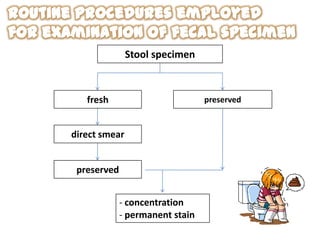
Stool specimen

fresh

preserved

direct smear
preserved
- concentration
- permanent stain
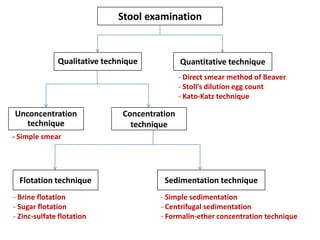
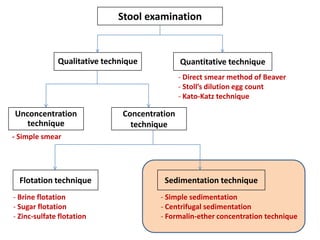
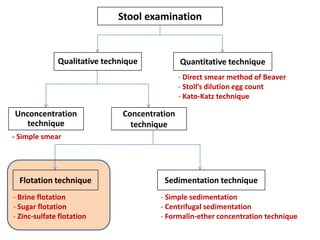
Stool examination

Qualitative technique

Quantitative technique
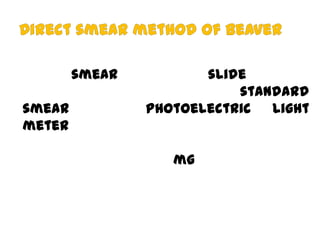
- Direct smear method of Beaver
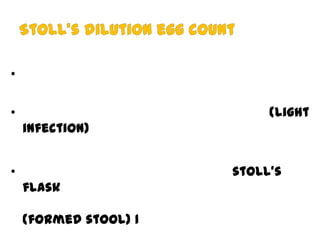
- Stoll’s dilution egg count
- Kato-Katz technique

Unconcentration
technique

Concentration
technique

- Simple smear

Flotation technique
- Brine flotation
- Sugar flotation
- Zinc-sulfate flotation

Sedimentation technique
- Simple sedimentation
- Centrifugal sedimentation
- Formalin-ether concentration technique
•
wet smear
• Sedimentation techniques
–

• Flotation techniques
–
Stool examination

Qualitative technique

Quantitative technique
- Direct smear method of Beaver
- Stoll’s dilution egg count
- Kato-Katz technique

Unconcentration
technique

Concentration
technique

- Simple smear

Flotation technique
- Brine flotation
- Sugar flotation
- Zinc-sulfate flotation

Sedimentation technique
- Simple sedimentation
- Centrifugal sedimentation
- Formalin-ether concentration technique
• Simple sedimentation
• Centrifugal sedimentation
• Formalin-ether
technique

concentration
1.

- g

-

ml

2.

ml

centrifuge tube
NSS 10 ml

3.

-

tube

NSS
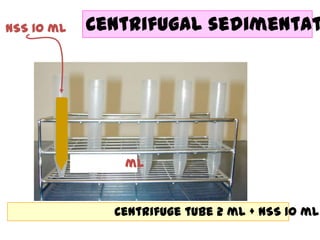
NSS 10 ml

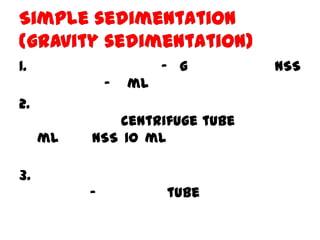
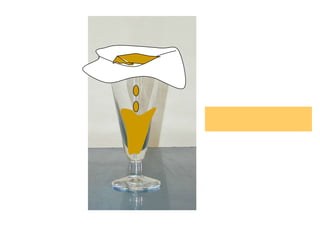
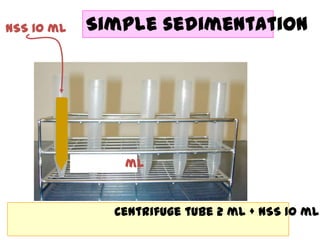
Simple sedimentation

ml

Centrifuge tube 2 ml + NSS 10 ml
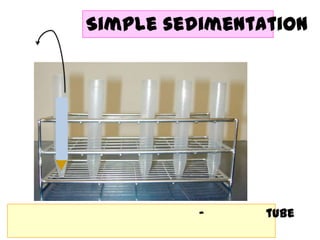
Simple sedimentation

-

tube
Simple Sedimentation

Cyst
Cyst
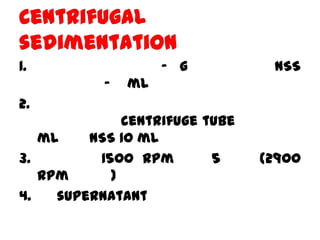
1.

- g

-

NSS

ml

2.
centrifuge tube
ml
NSS 10 ml
3.
1500 rpm
5
rpm
)
4.
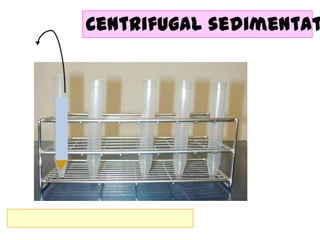
supernatant

(2900
NSS 10 ml

Centrifugal sedimentat

ml

Centrifuge tube 2 ml + NSS 10 ml
Centrifugal sedimentat

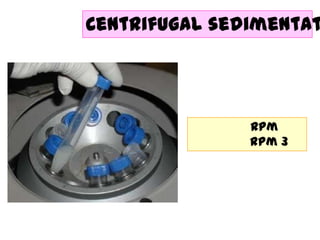
rpm
rpm 3
Centrifugal sedimentat
Centrifugal Sedimentation

NSS)
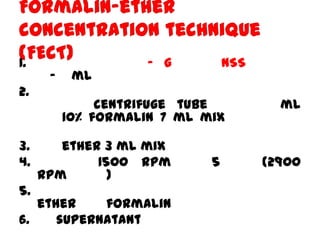
1.
2.

3.
4.

5.

-

ml

- g

NSS

centrifuge tube
10% formalin 7 ml mix
ether 3 ml mix
1500 rpm
rpm
)

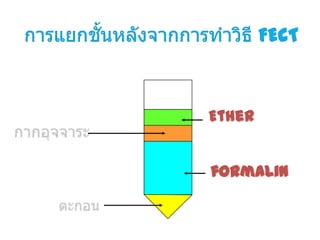
ether
formalin
6.
supernatant

5

ml

(2900
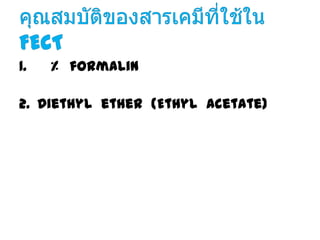
1.

% formalin

2. Diethyl ether (Ethyl acetate)
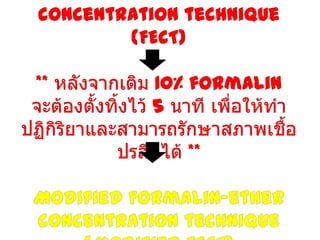
FECT
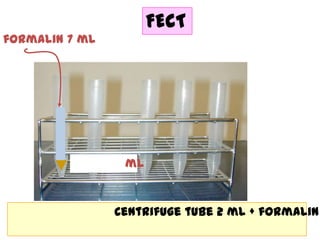
formalin 7 ml

ml

Centrifuge tube 2 ml + formalin
FECT
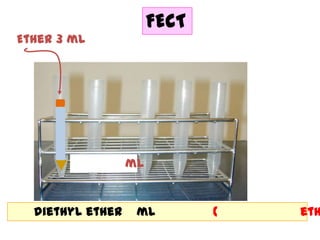
Ether 3 ml

ml

diethyl ether

ml

(

eth
FECT

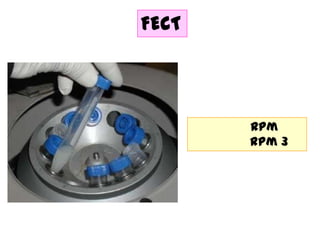
rpm
rpm 3
Ether
formalin
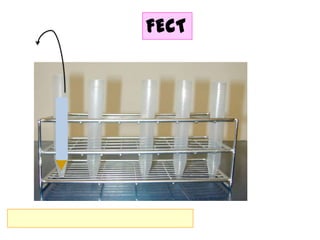
FECT
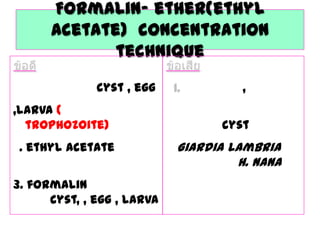
Formalin- ether(ethyl
acetate) concentration
technique
cyst , egg
,larva (
trophozoite)

. ethyl acetate
3. formalin
cyst, , egg , larva

,
cyst

Giardia lambria
H. nana
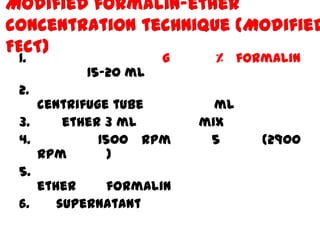
1.
2.

15-20 ml

g

centrifuge tube
3.
ether 3 ml
4.
1500 rpm
rpm
)
5.
ether
formalin
6.
supernatant

% formalin
ml
mix
5

(2900
Stool examination

Qualitative technique

Quantitative technique
- Direct smear method of Beaver
- Stoll’s dilution egg count
- Kato-Katz technique

Unconcentration
technique

Concentration
technique

- Simple smear

Flotation technique
- Brine flotation
- Sugar flotation
- Zinc-sulfate flotation

Sedimentation technique
- Simple sedimentation
- Centrifugal sedimentation
- Formalin-ether concentration technique
• Concentrated brine flotation
• Sugar flotation
• Zinc sulfate centrifugal flotation
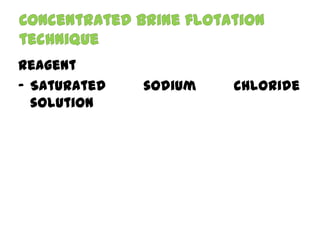
technique
Reagent
- Saturated
solution

sodium

chloride
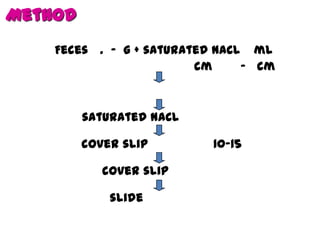
Method
Feces . - g + saturated NaCl ml
cm
- cm

saturated NaCl
cover slip
cover slip
slide

10-15
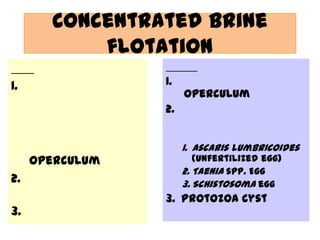
Concentrated brine
flotation
1.

1.

operculum

2.

operculum
2.
3.

1. Ascaris lumbricoides
(unfertilized egg)
2. Taenia spp. Egg
3. Schistosoma egg

3. Protozoa cyst
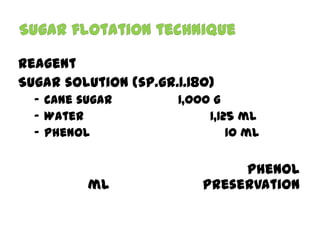
Reagent
Sugar solution (sp.gr.1.180)
- Cane sugar
- Water
- Phenol

ml

1,000 g
1,125 ml
10 ml

phenol
preservation
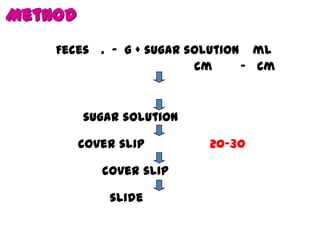
Method
Feces . - g + sugar solution ml
cm
- cm

sugar solution
cover slip
cover slip
slide

20-30
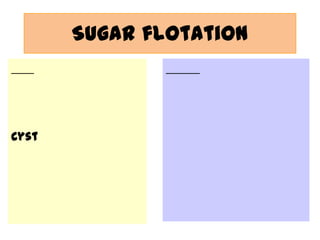
Sugar flotation

Cyst
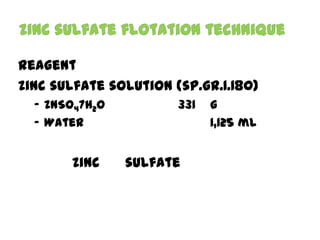
Reagent
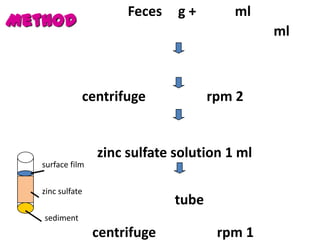
Zinc sulfate solution (sp.gr.1.180)
- ZnSO47H2O
- Water

Zinc

331

sulfate

g
1,125 ml
Feces

Method

g+

ml

ml

centrifuge

surface film

rpm 2

zinc sulfate solution 1 ml

zinc sulfate

tube

sediment

centrifuge

rpm 1
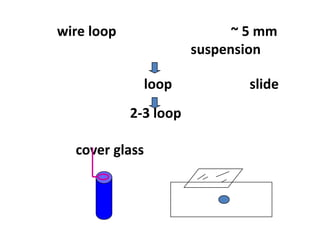
wire loop

~ 5 mm
suspension
loop
2-3 loop

cover glass

slide
Zinc sulfate flotation

Cyst,

Brine flotation
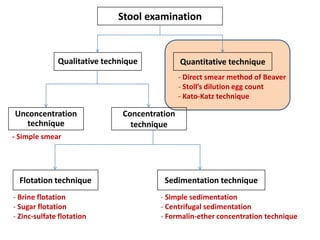
Stool examination

Qualitative technique

Quantitative technique
- Direct smear method of Beaver
- Stoll’s dilution egg count
- Kato-Katz technique

Unconcentration
technique

Concentration
technique

- Simple smear

Flotation technique
- Brine flotation
- Sugar flotation
- Zinc-sulfate flotation

Sedimentation technique
- Simple sedimentation
- Centrifugal sedimentation
- Formalin-ether concentration technique
•

•
•
(

•

epg : egg per gram
)
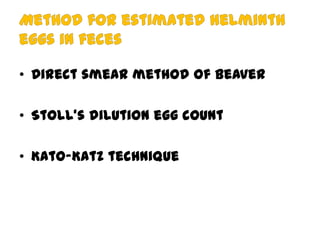
• Direct smear method of Beaver

• Stoll’s dilution egg count
• Kato-Katz technique
smear

smear
meter

slide
standard
Photoelectric
light

mg
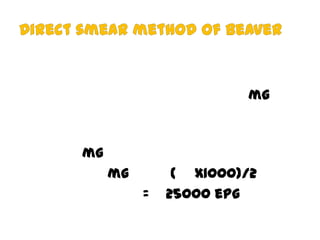
mg

mg

mg
=

( x1000)/2
25000 epg
•

(light

•
infection)

stoll’s

•
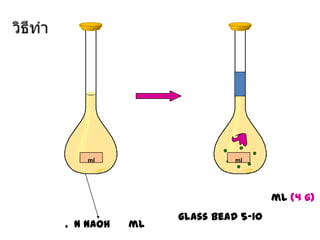
flask

(formed stool) 1
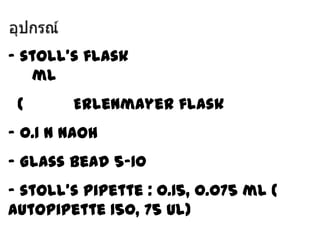
- stoll’s flask
ml
(

Erlenmayer flask

- 0.1 N NaOH
- Glass bead 5-10
- stoll’s pipette : 0.15, 0.075 ml (
autopipette 150, 75 ul)
ml

ml

ml (4 g)
. N NaOH

ml

glass bead 5-10
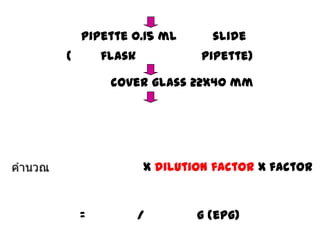
pipette 0.15 ml
(

flask

slide
pipette)

cover glass 22x40 mm

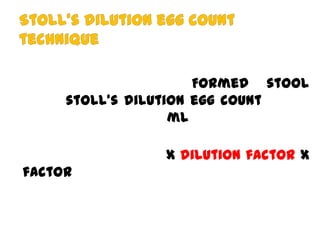
x dilution factor x factor

=

/

g (epg)
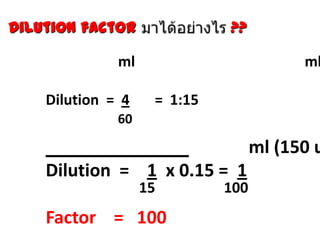
Dilution factor

??

ml
Dilution = 4

ml
= 1:15

60

ml (150 u

Dilution = 1 x 0.15 = 1
15

Factor = 100

100
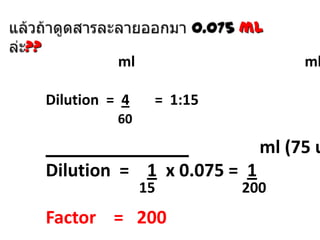
ml
??

ml
Dilution = 4

ml
= 1:15

60

ml (75 u

Dilution = 1 x 0.075 = 1
15

Factor = 200

200
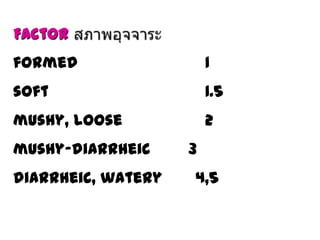
Factor
formed

1

soft

1.5

mushy, loose

2

mushy-diarrheic

diarrheic, watery

3

4,5
Formed stool
stoll’s dilution egg count
ml

x dilution factor x
factor
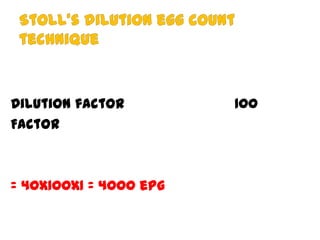
Dilution factor
Factor

= 40x100x1 = 4000 epg

100
>

:

metabolism
<
•
(Field study)
•

Qualitative
Quantitative
technique (semi-quantitative)
Reagent
Malachite green solution :
Malachite green (crystal)
0.3 g
Dist. Water
10.0 ml
Wetting solution :
Glycerine
100
parts
Malachite green solution
1.0
-

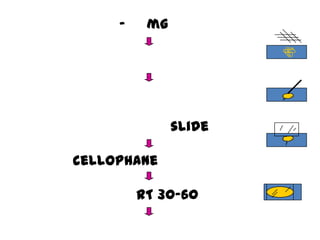
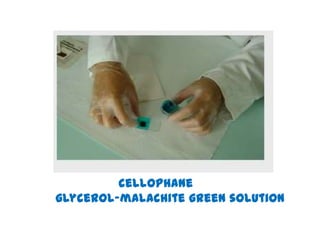
cellophane

x44

glycerine-malachite green
solution
-

mg

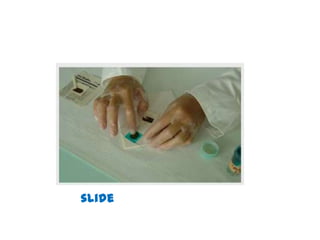
slide
cellophane
RT 30-60
:

* Ascaris , Trichuris
4. Light infection
hookworm,
Albuminous layer A.

lumbricoides
** hookworm, Opisthorchis
3. Cyst, Trophozoite, Larva
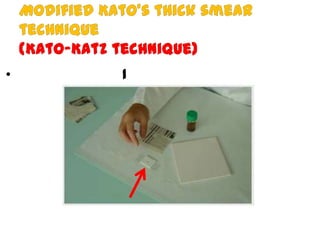
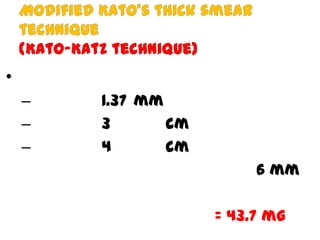
Kato’s

smear
1
•

1
•
–
–
–

1.37 mm
3
cm
4
cm

6 mm
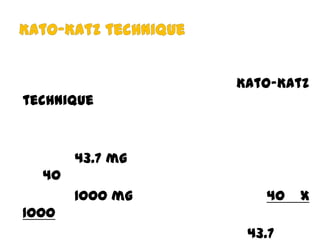
= 43.7 mg
feces
feces
slide
cellophane
glycerol-malachite green solution
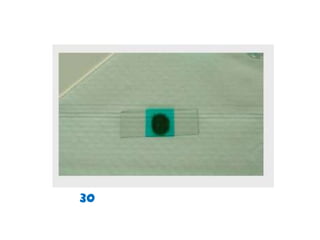
slide
30
Kato-Katz
technique

43.7 mg
40
1000 mg

40

1000
43.7

x
1.

simple direct exam, Kato-Katz
technique
request
2.
3-4
Modified FECT
Request
3.
Stool examination
specimen
5
Xerox
download
Atlas
(
Unknown)!! (
45
)

Concentration techniques for feacal examination