Laboratory Hazards, Safety
and Contamination
Introduction
A hazard is a situation that poses a level of
threat to life, health, property, or
environment. These hazards are also very
dangerous for human and animal life. Most
hazards are dormant or potential, with only a
theoretical risk of harm; however, once a
hazard becomes "active", it can create an
emergency. A hazardous situation that has
come to pass is called an incident. Hazard and
possibility interact together to create risk
Running a research lab is a challenge, to say
the least. In all the hustle of loading the
autosampler, pipetting, pouring, and mixing
for research experiments, worker health and
safety can be overlooked or forgotten
sometime with dire consequences.
Understanding the required Occupational
Safety and Health hazards will help identify
and minimize many of the common safety and
health hazards associated with running a
research laboratory.
TYPES OF HAZARDS
An important first step in protecting worker
health and safety is recognizing workplace
hazards. Most hazards encountered fall into
three main categories:
• Chemical
• Biological
• Physical
Chemical Hazards
Cleaning agents and disinfectants, drugs, anesthetic gases,
solvents, paints, and compressed gases are examples of
chemical hazards. Potential exposures to chemical hazards can
occur both during use and with poor storage. The use of
chemicals in research laboratories is inevitable, and the
potential for harm or injury could be significant if they are
misused or mishandled.
The “lab standard” applies to the laboratory use of
chemicals and mandates written Standard Operating
Procedures (SOPs) addressing the particular hazards
and precautions required for safe use. This goes hand
in hand with experimental design and planning. Both
standards require providing material safety data
sheets and employee training.
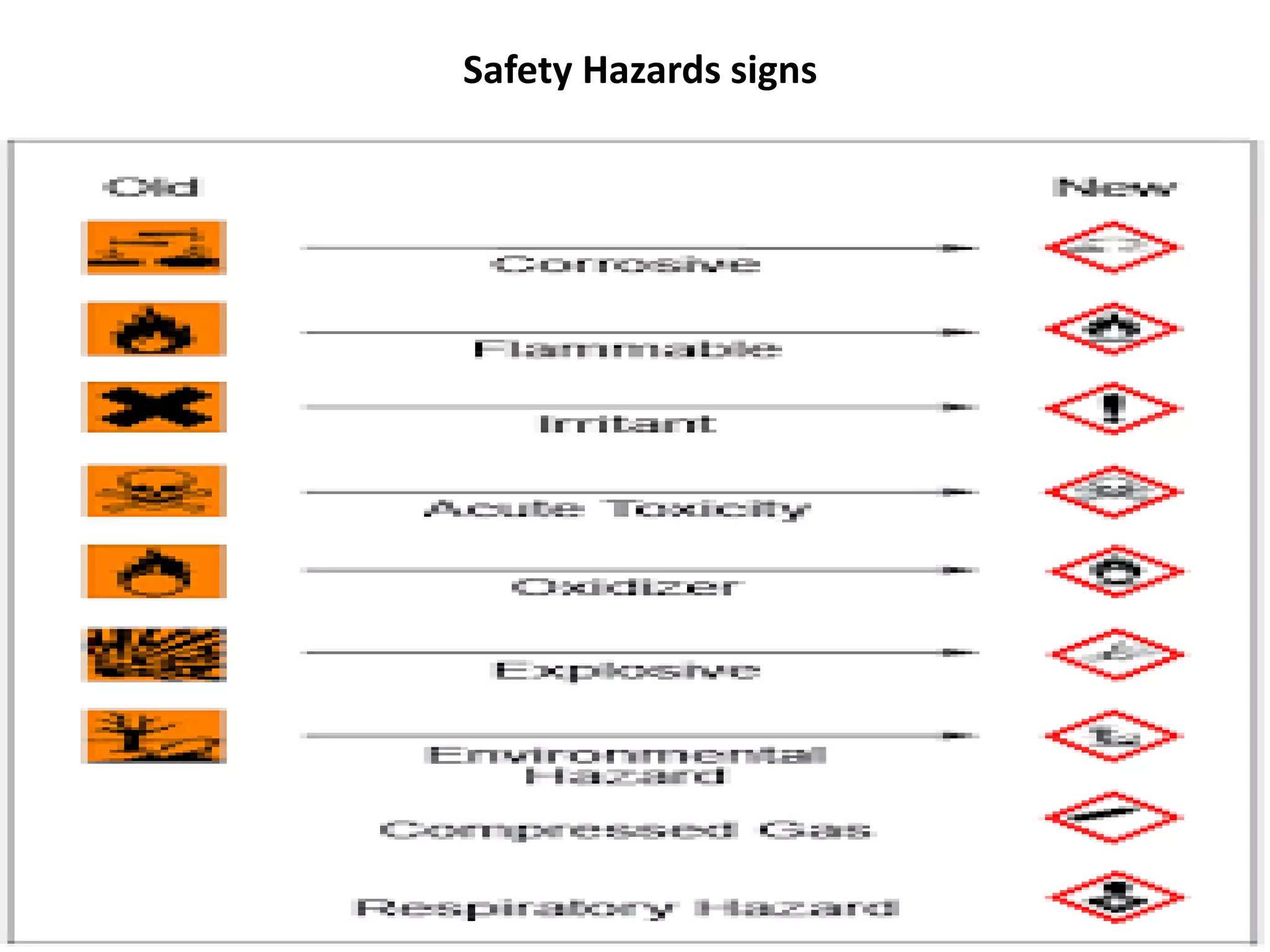
Safety Hazards signs
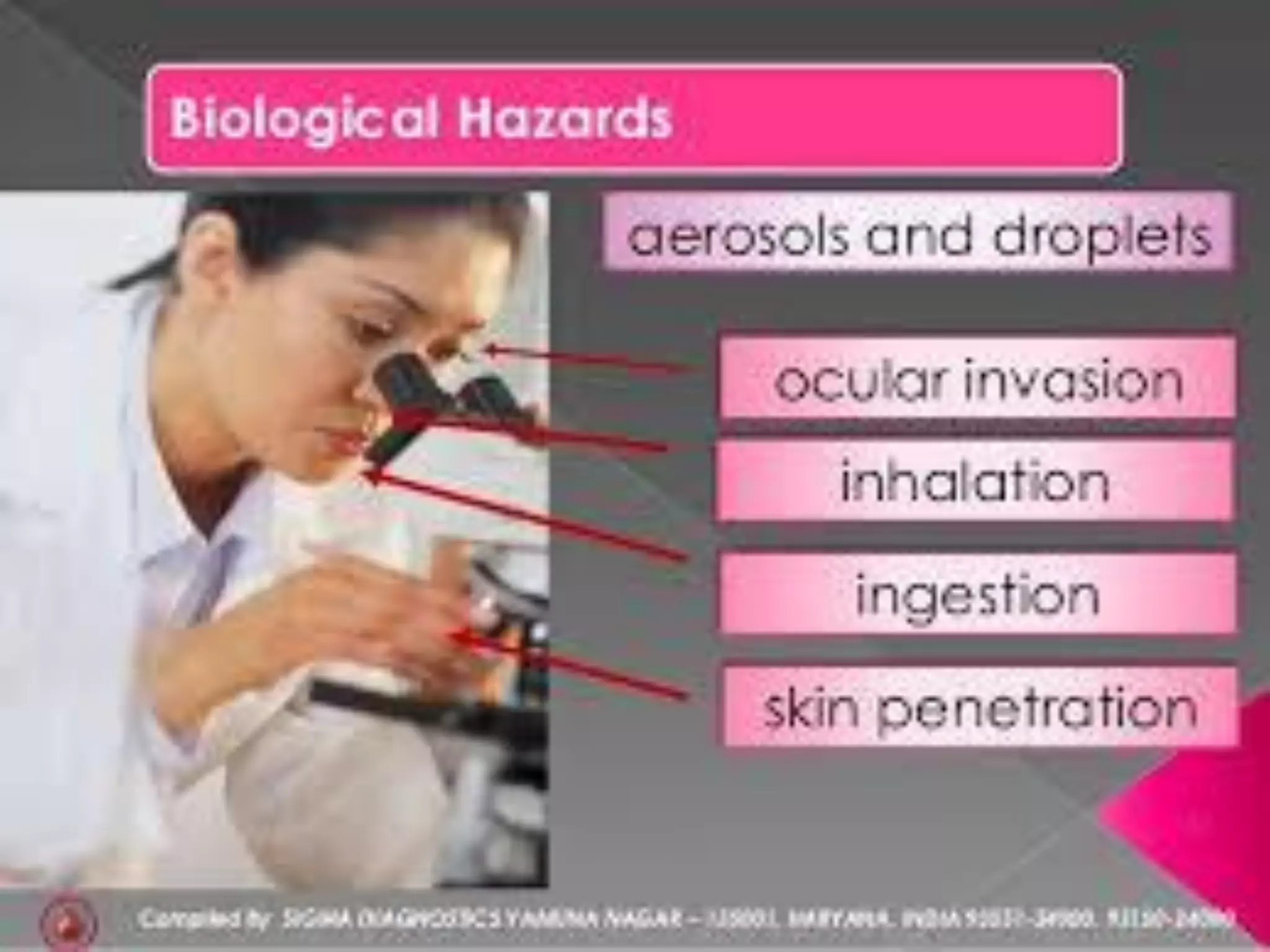
Biological Hazards
Biological hazards include potential exposures to
allergens, infectious zoonotics (animal
diseases transmissible to humans), and
experimental agents such as viral vectors.
Allergens, ubiquitous in animal research
facilities, are one of the most important
health hazards, yet they are frequently
overlooked.
The most prevalent biological hazards, in terms
of frequency of occurrence, are simple
allergens associated with the use and care of
laboratory animals. Health surveys of people
working with laboratory animals show that
up to 56 percent are affected by animal-
related allergies. In a survey of 5,641 workers
from 137 animal facilities, 23 percent had
allergic symptoms related to laboratory
animals. These figures do not include former
workers who became ill and could not
continue working.
Physical Hazards
Physical hazards associated with research
facilities are slips and falls from working in wet
locations and the ergonomic hazards of lifting,
pushing, pulling, and repetitive tasks. Other
physical hazards often unnoticed are
electrical, mechanical, acoustic, or thermal in
nature. Ignoring these can have potentially
serious consequences.
PHYSICAL HAZARDS
Sterilization
Sterilization is the killing or removal of all microorganisms, including
bacterial spores which are highly resistant. Sterilization is an
absolute term, i.e. the article must be sterile meaning the absence
of all microorganisms.
Disinfection is the killing of many, but not all microorganisms. It is a
process of reduction of number of contaminating organisms to a
level that cannot cause infection, i.e. pathogens must be killed.
Some organisms and bacterial spores may survive.
Disinfectants are chemicals that are used for disinfection.
Disinfectants should be used only on inanimate objects.
Antiseptics are mild forms of disinfectants that are used externally
on living tissues to kill microorganisms, e.g. on the surface of skin
and mucous membranes.
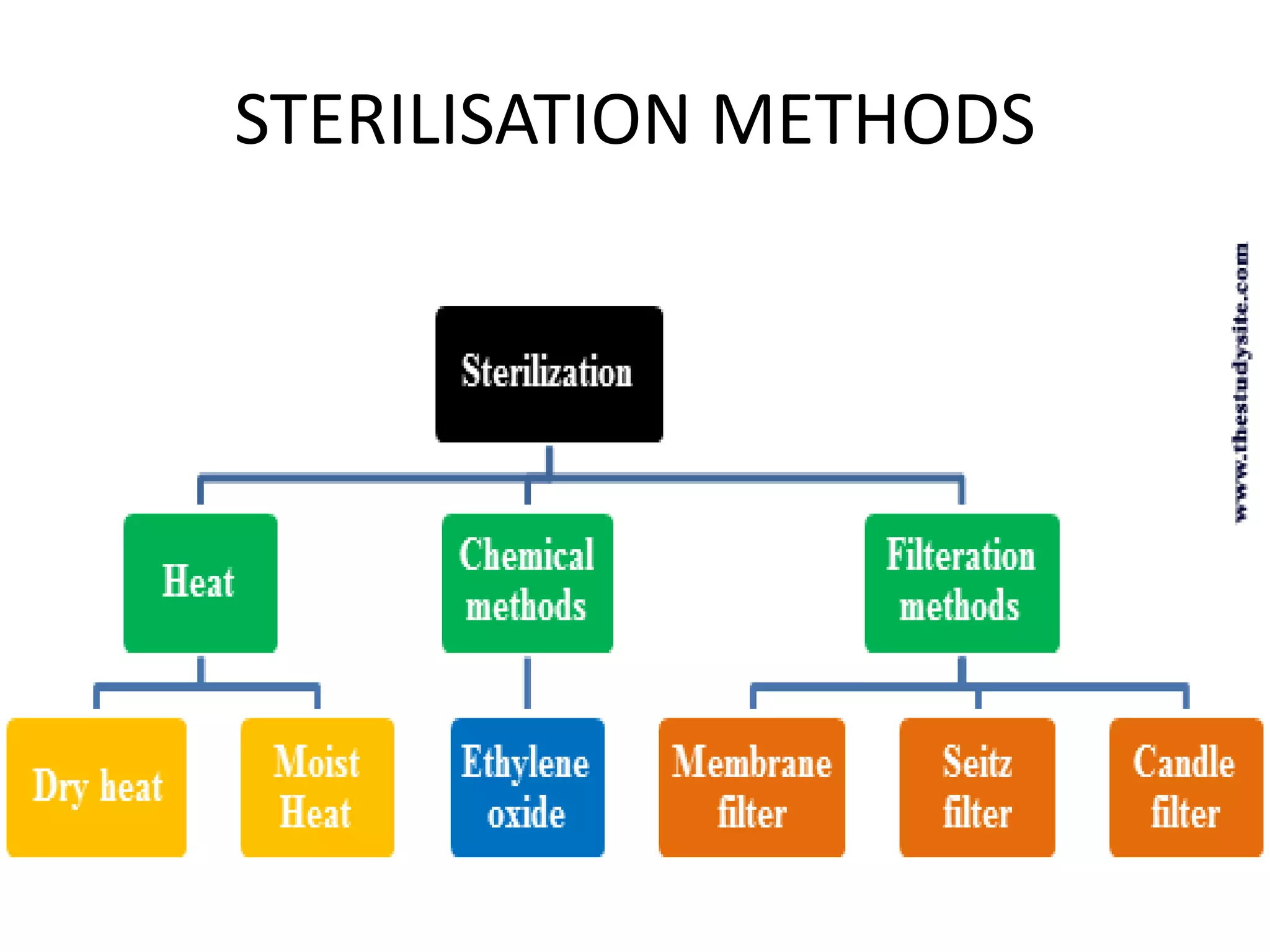
STERILISATION METHODS
Uses of Sterilization
1. Sterilization for Surgical Procedures: Gloves,
aprons, surgical instruments, syringes etc. are
to be sterilized.
2. Sterilization in Microbiological works like
preparation of culture media, reagents and
equipments where a sterile condition is to be
maintained.
Heat method of sterilization
Steam (moist heat)
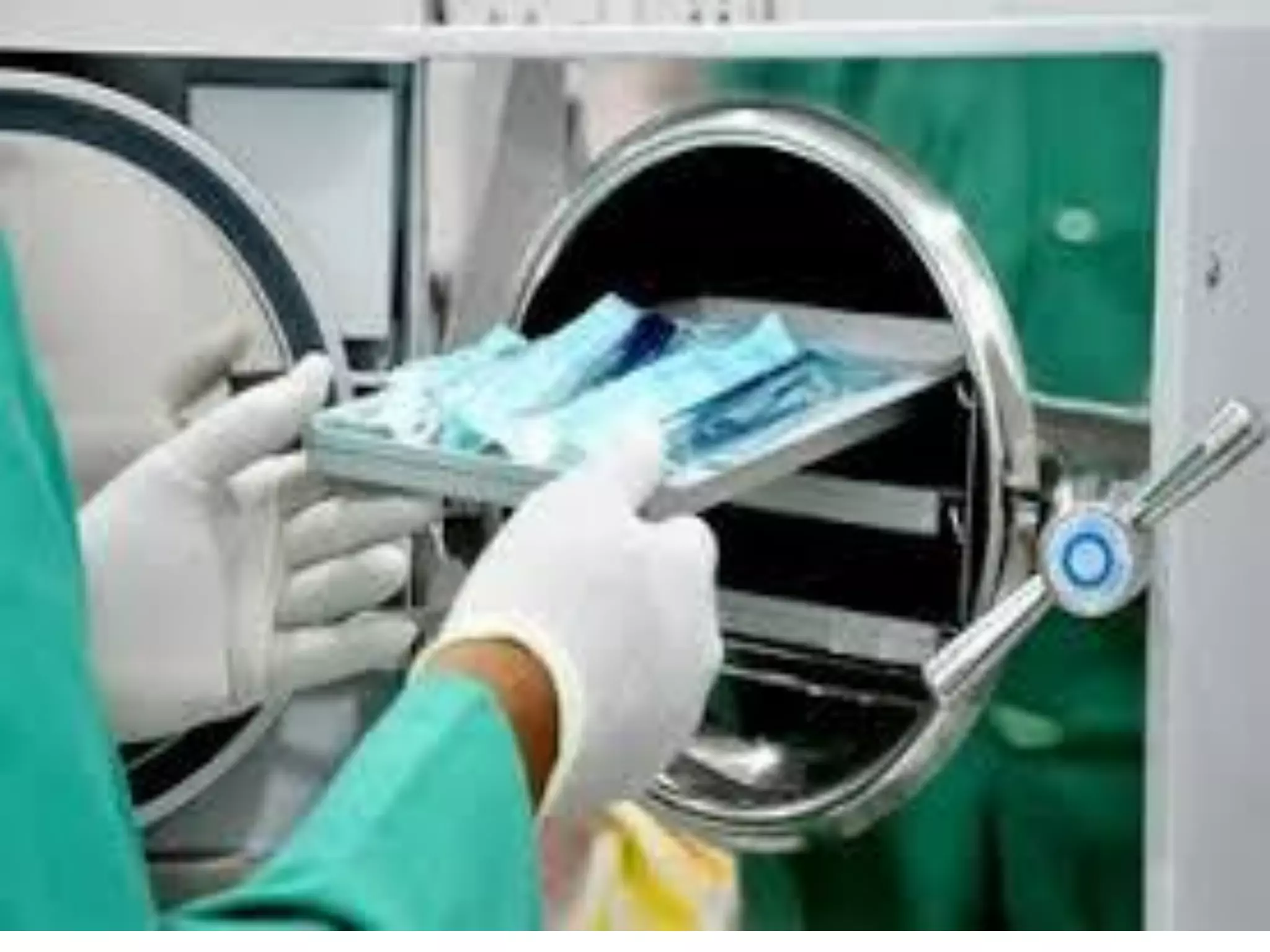
This method of sterilization involve the use of
autoclave which operates on the same principle as
the domestic pressure cooker. Most heat in a form of
pressurized steam is highly effective in killing of
micro organisms, Autoclaves use steam heated to
121-134 °C under pressure. To achieve sterility, the
article is heated in a chamber by injected steam until
the article reaches a time and temperature setpoint.
Autoclave
Dry heat
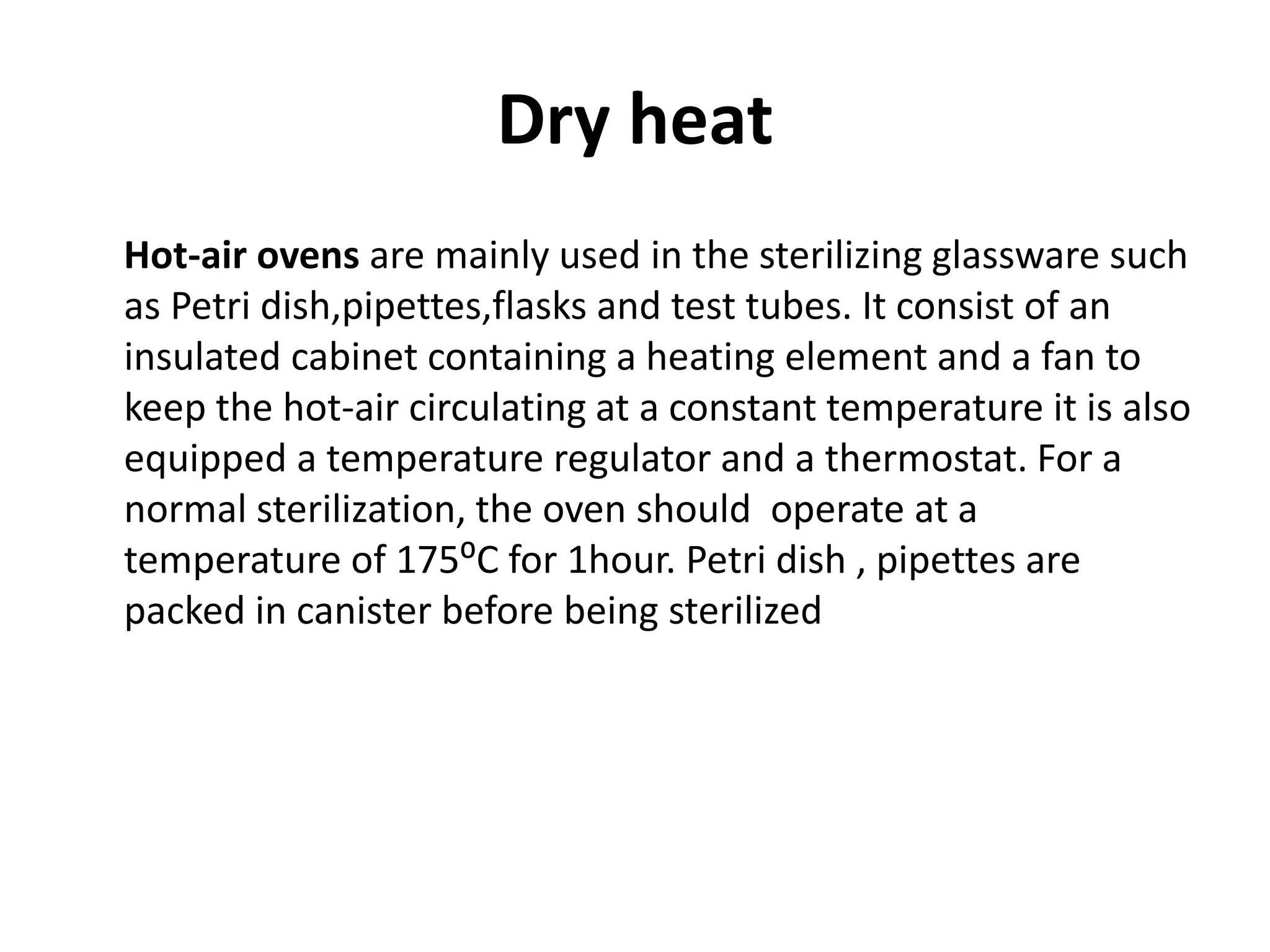
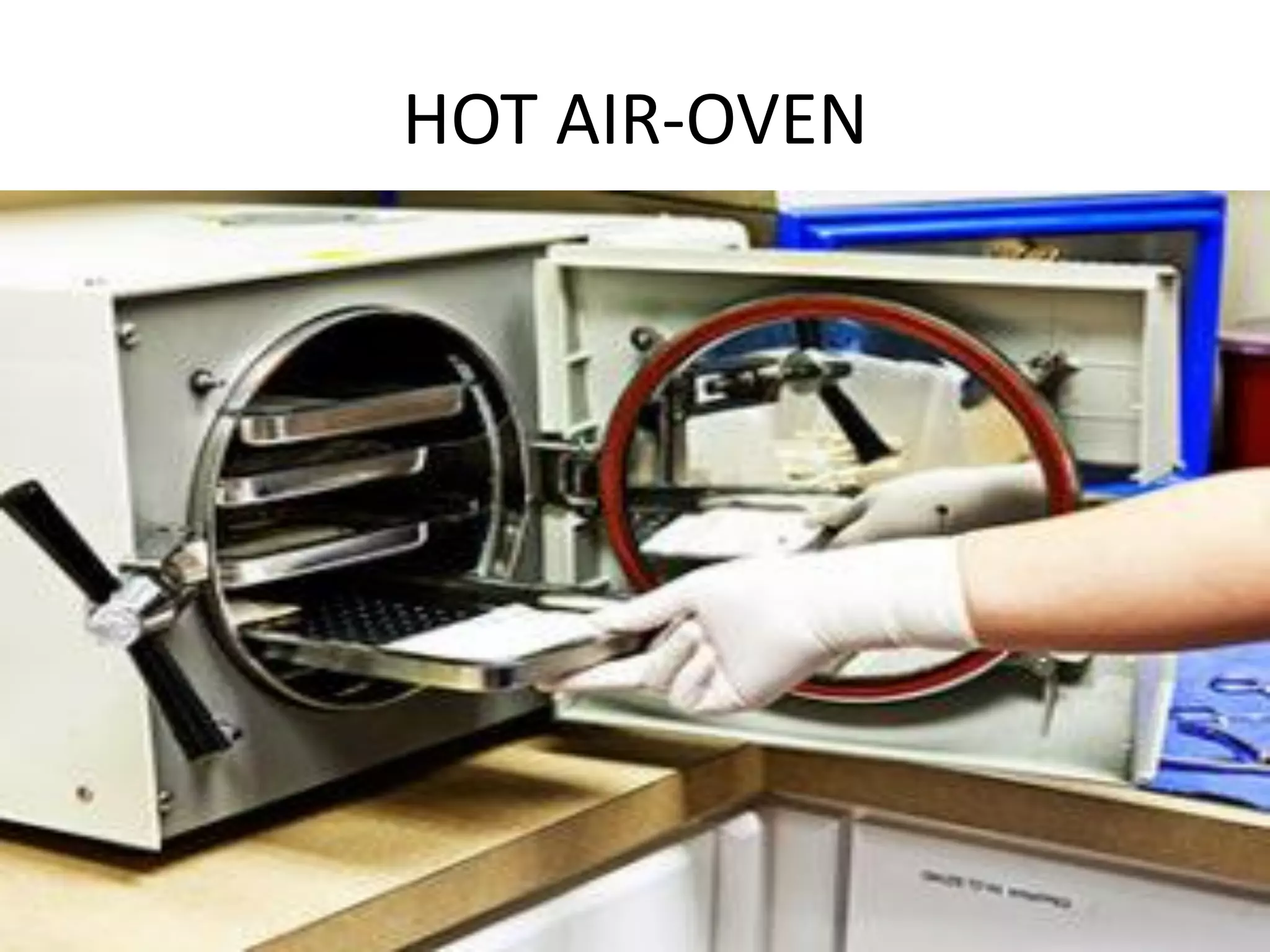
Hot-air ovens are mainly used in the sterilizing glassware such
as Petri dish,pipettes,flasks and test tubes. It consist of an
insulated cabinet containing a heating element and a fan to
keep the hot-air circulating at a constant temperature it is also
equipped a temperature regulator and a thermostat. For a
normal sterilization, the oven should operate at a
temperature of 175⁰C for 1hour. Petri dish , pipettes are
packed in canister before being sterilized
HOT AIR-OVEN
FLAMING
RED HEAT
Flaming is done to loops and straight-wires in microbiology
labs.
Sterility is the watch word in microbiology and bacteriology
since microbes cant be seen with naked eye.
Leaving the loop in the flame of a Bunsen burner or alcohol
lamp until it glows red ensures that any infectious agent gets
inactivated. This is done to prevent contamination in
laboratory. When this is not done properly it could trigger
false positive or negative which could go a long way to
mislead the Doctor
RED HEATING
Incineration
Incineration is a waste treatment process that
involves the combustion of organic substances
contained in waste materials. This method
also burns any organism to ash. It is used to
sterilize medical and other biohazardous
waste before it is discarded with non-
hazardous waste. Bacteria incinerators are
mini furnaces used to incinerate and kill off
any micro organisms that may be on an
inoculating loop or wire.
CHEMICAL STERIZATION
This is also termed as Disinfection, chemical
sterilization is the use of chemical in killing,
removal or minimizing microorganisms Except
spores.
Disinfection may be accomplished by physical or
chemical means. The commonest chemical used
in disinfection is Alcohol i.e. 70% ethanol.
Others include: bleach, Ethylene oxide, Nitrogen
dioxide, Glutaraldehyde and formaldehyde,
Hydrogen peroxide etc
RADIATION METHOD
• Radiation method involves exposing the packed materials to
radiation for sterilization. There are two types of radiations
available for sterilization i.e. non-ionic and ionic radiation.
• Non-ionic radiations are safe to the operator of sterilization
and they are like UV radiations, they can be used even at the
door entrances to prevent entry of live microbes through the
air.
• Ionizing radiation sterilization. They are powerful and very
effective for sterilization. The operator needs to protect
exposure from these radiations by use of special clothing. Ex:
X-rays, γ-rays etc.
Uv sterilizer
MEMBRANE FILTERATION
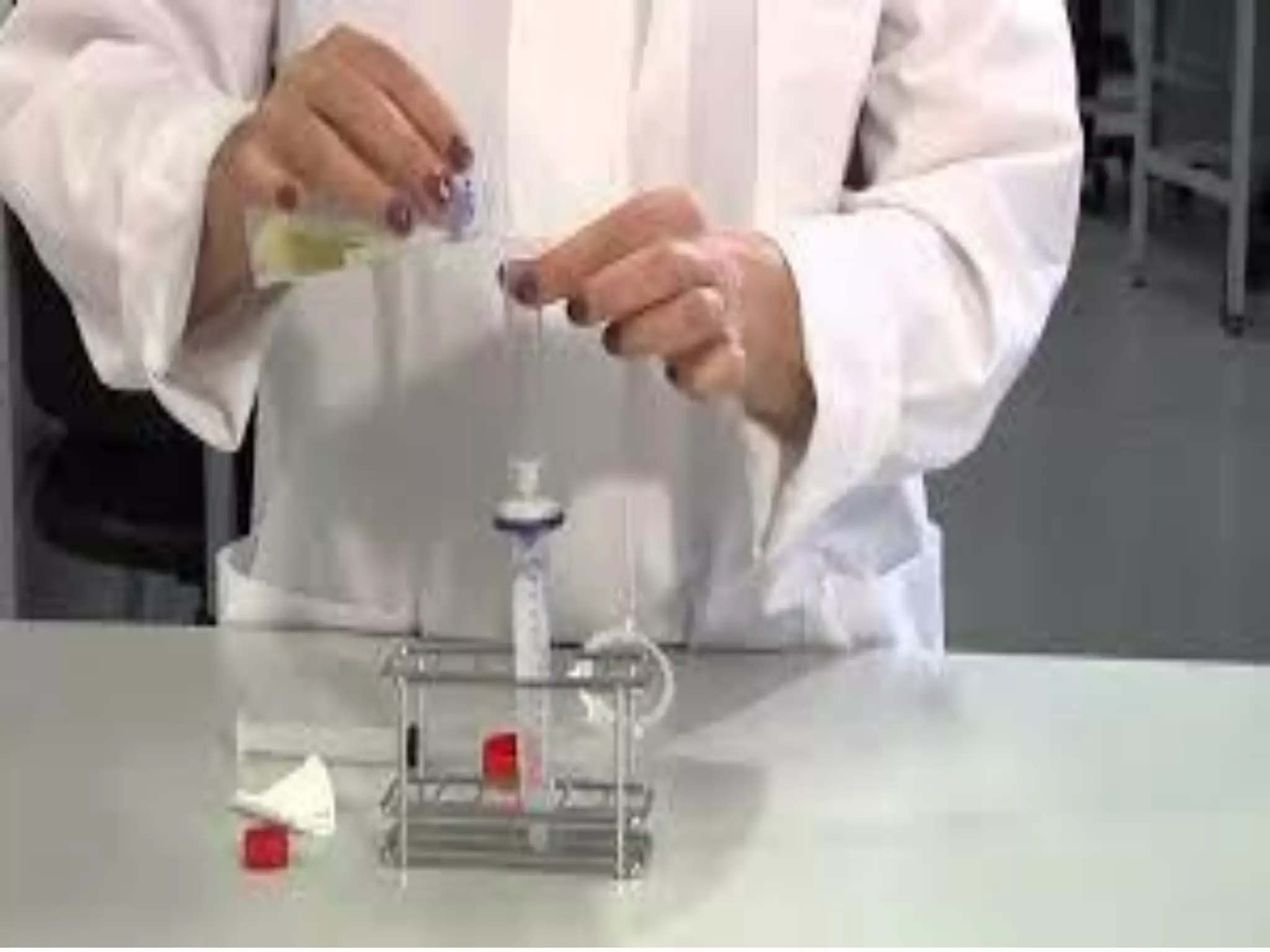
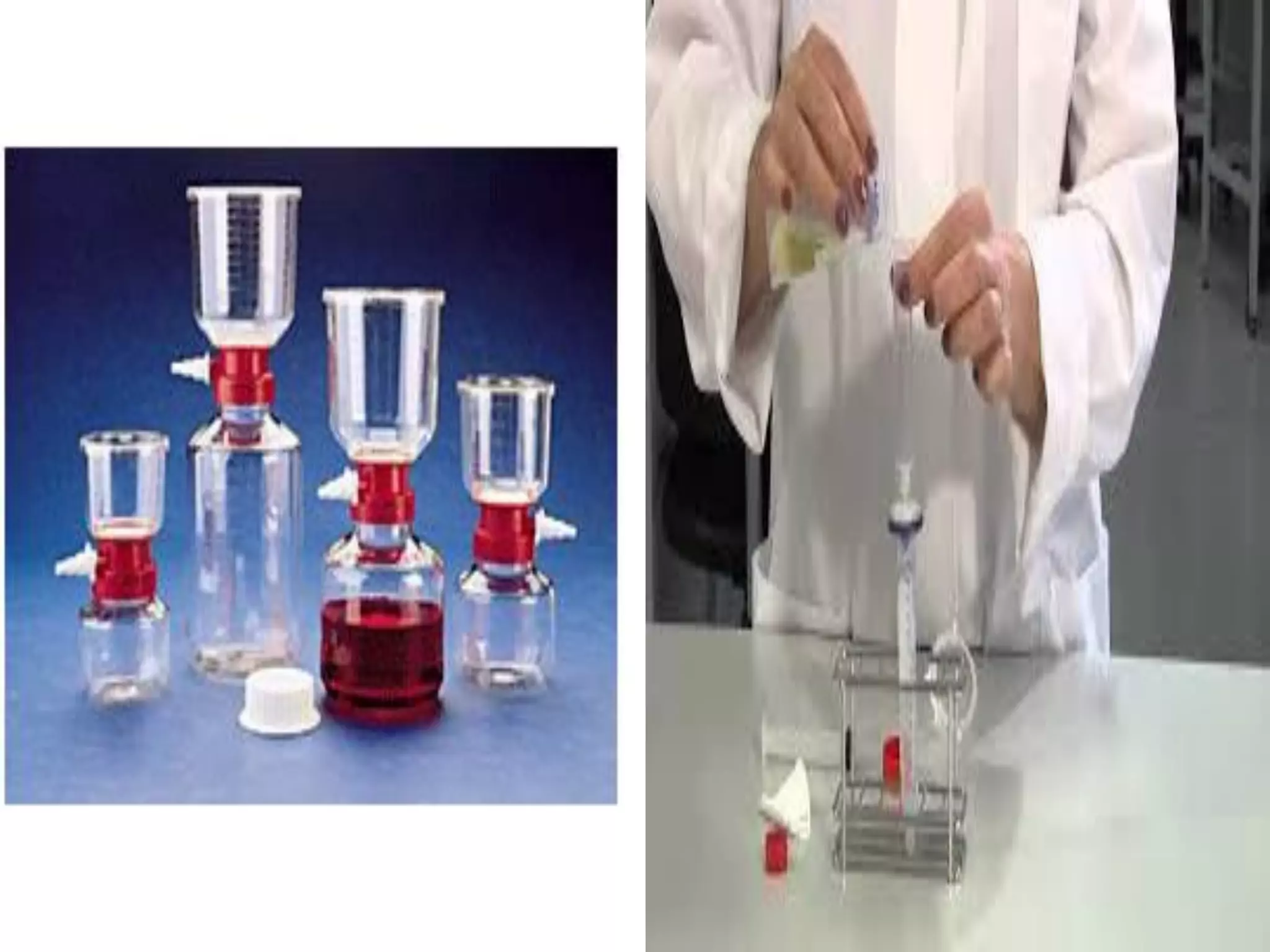
Filtration: Here the liquids are filtered
through bacterial filters to remove any
microbes present. This is an effective method
of sterilization for heat sensitive liquids. The
chances of clogging and long time duration for
the process are drawbacks.
Types of filters
There are three types of filters used for sterilization viz.
a) Membrane filters: These are thin filters which are made of cellulose.
They can be used for online sterilization during injection by placing the
membrane between the syringe and needle.
The disadvantage is there are chances of rupture of membrane leading
to improper sterilization.
b) Seitz filters: These are made of asbestos or other material. They are
pad like and thicker than membrane filters. They do not rupture during
filtration. But the solution might get absorbed by the filter pad itself.
An alternative type of filter is sintered glass filters. These are made of
glass and hence do not absorb liquids during filtration. The disadvantage
is that they are very brittle and break easily.
c) Candle filters: These are made of clay like diatom us mud. This special
mud has minute pores made by algae. The filters have many
minute lengthy pores. The microbes get stuck during their travel
through the pore in the candle.
General laboratory safety
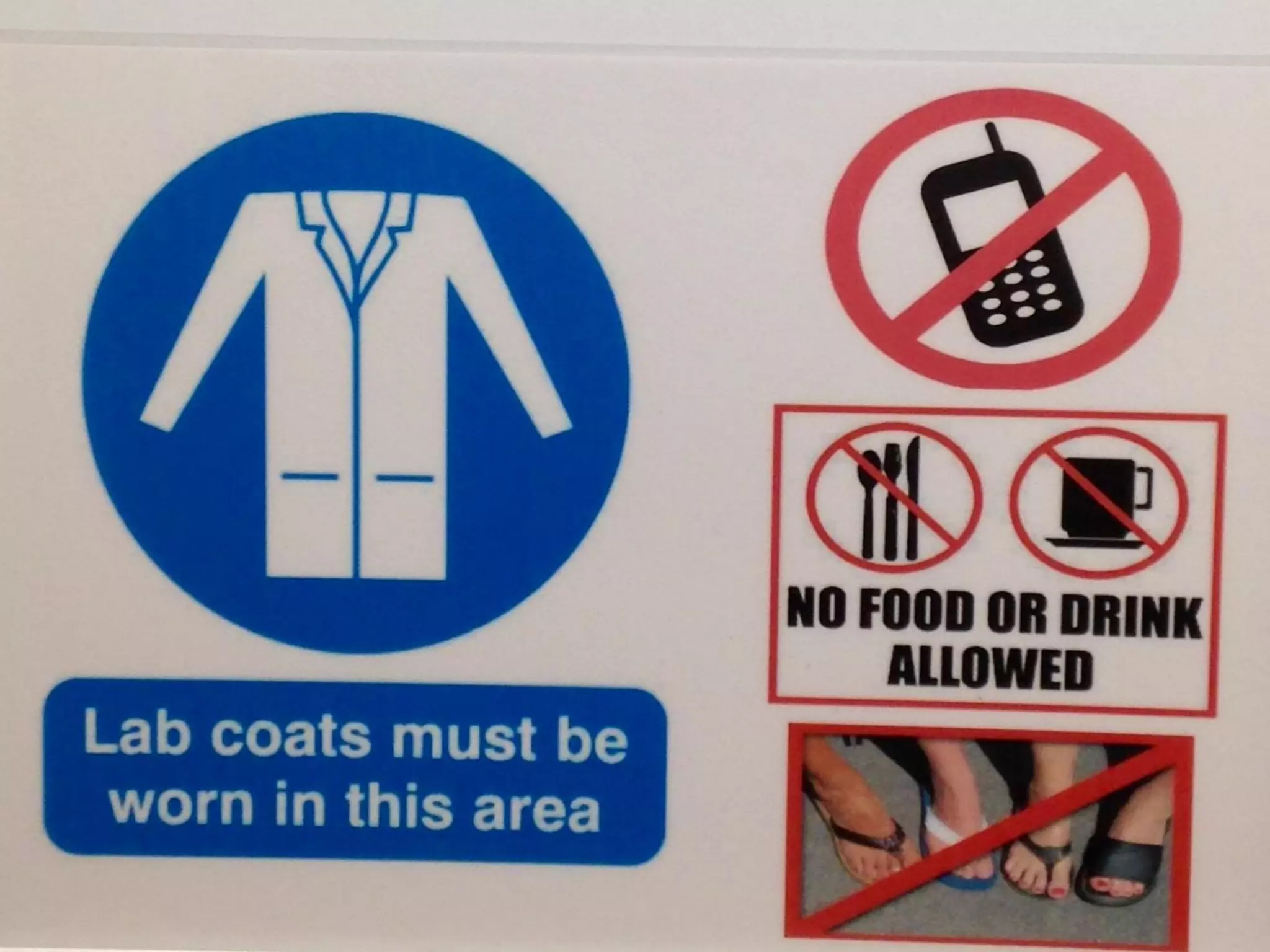
Never eat, drink, or smoke while working in the
laboratory.
Read labels carefully.
Do not use any equipment unless you are trained
and approved as a user by your supervisor.
Wear safety glasses or face shields when working
with hazardous materials and/or equipment.
Wear gloves when using any hazardous or toxic
agent.
 handling dangerous substances, wear gloves, laboratory coats, and
safety shield or glasses.
 Shorts and sandals should not be worn in the lab at any time.
 Shoes are required when working in the machine shops. If
you have long hair or loose clothes, make sure it is tied back
or confined.
 Keep the work area clear of all materials except those needed
for your work. Coats should be hung in the hall or placed in a
locker. Extra books, purses, etc. should be kept away from
equipment, that requires air flow or ventilation to prevent
overheating.
 Disposal - Students are responsible for the proper disposal of
used material if any in appropriate containers. Equipment
 Failure - If a piece of equipment fails while being used, report
it immediately to your lab assistant or tutor. Never try to fix
the problem yourself because you could harm yourself and
others.
COMPILED BY GROUP TWO
ERICA GOKAH
RITA BOAH
AIKINS FRANCIS MENSAH
ETHEL RICHARD
NURUDEEN NADJO

Laboratory hazards, safety and contamination

  • 1.
  • 2.
    Introduction A hazard isa situation that poses a level of threat to life, health, property, or environment. These hazards are also very dangerous for human and animal life. Most hazards are dormant or potential, with only a theoretical risk of harm; however, once a hazard becomes "active", it can create an emergency. A hazardous situation that has come to pass is called an incident. Hazard and possibility interact together to create risk
  • 3.
    Running a researchlab is a challenge, to say the least. In all the hustle of loading the autosampler, pipetting, pouring, and mixing for research experiments, worker health and safety can be overlooked or forgotten sometime with dire consequences.
  • 4.
    Understanding the requiredOccupational Safety and Health hazards will help identify and minimize many of the common safety and health hazards associated with running a research laboratory.
  • 5.
    TYPES OF HAZARDS Animportant first step in protecting worker health and safety is recognizing workplace hazards. Most hazards encountered fall into three main categories: • Chemical • Biological • Physical
  • 6.
    Chemical Hazards Cleaning agentsand disinfectants, drugs, anesthetic gases, solvents, paints, and compressed gases are examples of chemical hazards. Potential exposures to chemical hazards can occur both during use and with poor storage. The use of chemicals in research laboratories is inevitable, and the potential for harm or injury could be significant if they are misused or mishandled.
  • 7.
    The “lab standard”applies to the laboratory use of chemicals and mandates written Standard Operating Procedures (SOPs) addressing the particular hazards and precautions required for safe use. This goes hand in hand with experimental design and planning. Both standards require providing material safety data sheets and employee training.
  • 8.
  • 9.
    Biological Hazards Biological hazardsinclude potential exposures to allergens, infectious zoonotics (animal diseases transmissible to humans), and experimental agents such as viral vectors. Allergens, ubiquitous in animal research facilities, are one of the most important health hazards, yet they are frequently overlooked.
  • 11.
    The most prevalentbiological hazards, in terms of frequency of occurrence, are simple allergens associated with the use and care of laboratory animals. Health surveys of people working with laboratory animals show that up to 56 percent are affected by animal- related allergies. In a survey of 5,641 workers from 137 animal facilities, 23 percent had allergic symptoms related to laboratory animals. These figures do not include former workers who became ill and could not continue working.
  • 12.
    Physical Hazards Physical hazardsassociated with research facilities are slips and falls from working in wet locations and the ergonomic hazards of lifting, pushing, pulling, and repetitive tasks. Other physical hazards often unnoticed are electrical, mechanical, acoustic, or thermal in nature. Ignoring these can have potentially serious consequences.
  • 13.
  • 14.
    Sterilization Sterilization is thekilling or removal of all microorganisms, including bacterial spores which are highly resistant. Sterilization is an absolute term, i.e. the article must be sterile meaning the absence of all microorganisms. Disinfection is the killing of many, but not all microorganisms. It is a process of reduction of number of contaminating organisms to a level that cannot cause infection, i.e. pathogens must be killed. Some organisms and bacterial spores may survive. Disinfectants are chemicals that are used for disinfection. Disinfectants should be used only on inanimate objects. Antiseptics are mild forms of disinfectants that are used externally on living tissues to kill microorganisms, e.g. on the surface of skin and mucous membranes.
  • 15.
  • 16.
    Uses of Sterilization 1.Sterilization for Surgical Procedures: Gloves, aprons, surgical instruments, syringes etc. are to be sterilized. 2. Sterilization in Microbiological works like preparation of culture media, reagents and equipments where a sterile condition is to be maintained.
  • 18.
    Heat method ofsterilization Steam (moist heat) This method of sterilization involve the use of autoclave which operates on the same principle as the domestic pressure cooker. Most heat in a form of pressurized steam is highly effective in killing of micro organisms, Autoclaves use steam heated to 121-134 °C under pressure. To achieve sterility, the article is heated in a chamber by injected steam until the article reaches a time and temperature setpoint.
  • 19.
  • 20.
    Dry heat Hot-air ovensare mainly used in the sterilizing glassware such as Petri dish,pipettes,flasks and test tubes. It consist of an insulated cabinet containing a heating element and a fan to keep the hot-air circulating at a constant temperature it is also equipped a temperature regulator and a thermostat. For a normal sterilization, the oven should operate at a temperature of 175⁰C for 1hour. Petri dish , pipettes are packed in canister before being sterilized
  • 21.
  • 23.
    FLAMING RED HEAT Flaming isdone to loops and straight-wires in microbiology labs. Sterility is the watch word in microbiology and bacteriology since microbes cant be seen with naked eye. Leaving the loop in the flame of a Bunsen burner or alcohol lamp until it glows red ensures that any infectious agent gets inactivated. This is done to prevent contamination in laboratory. When this is not done properly it could trigger false positive or negative which could go a long way to mislead the Doctor
  • 24.
  • 26.
    Incineration Incineration is awaste treatment process that involves the combustion of organic substances contained in waste materials. This method also burns any organism to ash. It is used to sterilize medical and other biohazardous waste before it is discarded with non- hazardous waste. Bacteria incinerators are mini furnaces used to incinerate and kill off any micro organisms that may be on an inoculating loop or wire.
  • 27.
    CHEMICAL STERIZATION This isalso termed as Disinfection, chemical sterilization is the use of chemical in killing, removal or minimizing microorganisms Except spores. Disinfection may be accomplished by physical or chemical means. The commonest chemical used in disinfection is Alcohol i.e. 70% ethanol. Others include: bleach, Ethylene oxide, Nitrogen dioxide, Glutaraldehyde and formaldehyde, Hydrogen peroxide etc
  • 30.
    RADIATION METHOD • Radiationmethod involves exposing the packed materials to radiation for sterilization. There are two types of radiations available for sterilization i.e. non-ionic and ionic radiation. • Non-ionic radiations are safe to the operator of sterilization and they are like UV radiations, they can be used even at the door entrances to prevent entry of live microbes through the air. • Ionizing radiation sterilization. They are powerful and very effective for sterilization. The operator needs to protect exposure from these radiations by use of special clothing. Ex: X-rays, γ-rays etc.
  • 31.
  • 33.
    MEMBRANE FILTERATION Filtration: Herethe liquids are filtered through bacterial filters to remove any microbes present. This is an effective method of sterilization for heat sensitive liquids. The chances of clogging and long time duration for the process are drawbacks.
  • 35.
    Types of filters Thereare three types of filters used for sterilization viz. a) Membrane filters: These are thin filters which are made of cellulose. They can be used for online sterilization during injection by placing the membrane between the syringe and needle. The disadvantage is there are chances of rupture of membrane leading to improper sterilization. b) Seitz filters: These are made of asbestos or other material. They are pad like and thicker than membrane filters. They do not rupture during filtration. But the solution might get absorbed by the filter pad itself. An alternative type of filter is sintered glass filters. These are made of glass and hence do not absorb liquids during filtration. The disadvantage is that they are very brittle and break easily. c) Candle filters: These are made of clay like diatom us mud. This special mud has minute pores made by algae. The filters have many minute lengthy pores. The microbes get stuck during their travel through the pore in the candle.
  • 38.
    General laboratory safety Nevereat, drink, or smoke while working in the laboratory. Read labels carefully. Do not use any equipment unless you are trained and approved as a user by your supervisor. Wear safety glasses or face shields when working with hazardous materials and/or equipment. Wear gloves when using any hazardous or toxic agent.
  • 41.
     handling dangeroussubstances, wear gloves, laboratory coats, and safety shield or glasses.  Shorts and sandals should not be worn in the lab at any time.  Shoes are required when working in the machine shops. If you have long hair or loose clothes, make sure it is tied back or confined.  Keep the work area clear of all materials except those needed for your work. Coats should be hung in the hall or placed in a locker. Extra books, purses, etc. should be kept away from equipment, that requires air flow or ventilation to prevent overheating.  Disposal - Students are responsible for the proper disposal of used material if any in appropriate containers. Equipment  Failure - If a piece of equipment fails while being used, report it immediately to your lab assistant or tutor. Never try to fix the problem yourself because you could harm yourself and others.
  • 43.
    COMPILED BY GROUPTWO ERICA GOKAH RITA BOAH AIKINS FRANCIS MENSAH ETHEL RICHARD NURUDEEN NADJO