Safety in PhlebotomySafety in Phlebotomy
Safety Hazards & ActionsSafety Hazards & Actions
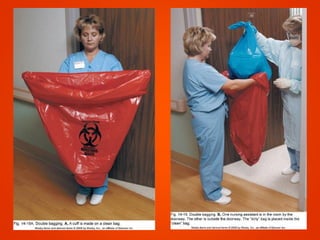
• Biologic
– Source: Infectious Agents
– Possible Injuries: Infections
– Actions:
• Handwashing!
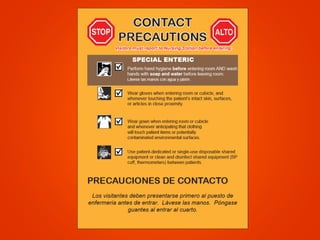
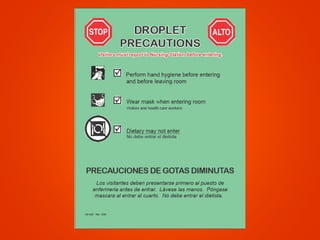
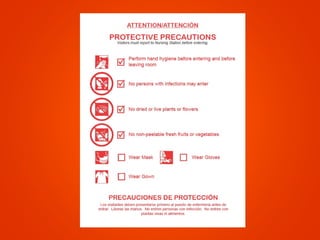
• Universal/Standard Precautions
• Personal Protective Equipment
• Isolation Procedures
Types of Safety HazardsTypes of Safety Hazards
• Sharp
– Source: Needles, Lancets & broken glass
– Possible Injuries: Cuts, punctures = exposure to
bloodborne pathogens
– Actions
• Never manually re cap a needleNever manually re cap a needle
• Dispose in sharps conveniently located Sharps
container immediately (never leave lying anywhere)immediately (never leave lying anywhere)
• Sharps containers not overfilled
• Sharps containers should be labeled with biohazard
labels
Types of Safety HazardsTypes of Safety Hazards
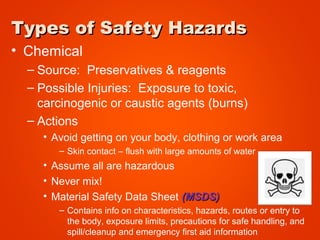
• Chemical
– Source: Preservatives & reagents
– Possible Injuries: Exposure to toxic,
carcinogenic or caustic agents (burns)
– Actions
• Avoid getting on your body, clothing or work area
– Skin contact – flush with large amounts of water
• Assume all are hazardous
• Never mix!
• Material Safety Data Sheet (MSDS)(MSDS)
– Contains info on characteristics, hazards, routes or entry to
the body, exposure limits, precautions for safe handling, and
spill/cleanup and emergency first aid information
Types of Safety HazardsTypes of Safety Hazards
• Radioactive
– Source: Equipment & radioisotopes (release
radiation as it breaks down)
• Radioisotopes injected in some patients are treatment;
patient and all blood and body fluids radioactive
– Possible Injuries: Radiation exposure
– Actions
• Working in area; required to wear exposure devices
• Radioactive Hazard Symbol – look for and treat
appropriately
Types of Safety HazardsTypes of Safety Hazards
• Electrical
– Source: Ungrounded/wet equipment; frayed
cords
– Possible Injuries: Burns or shock
– Actions
• Report damaged cords or equipment
Types of Safety HazardsTypes of Safety Hazards
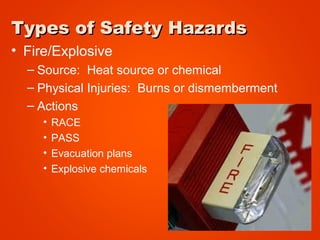
• Fire/Explosive
– Source: Heat source or chemical
– Physical Injuries: Burns or dismemberment
– Actions
• RACE
• PASS
• Evacuation plans
• Explosive chemicals
Types of Safety HazardsTypes of Safety Hazards
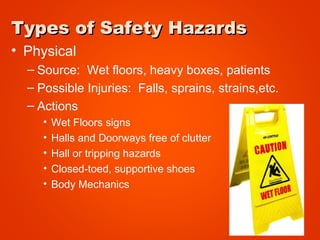
• Physical
– Source: Wet floors, heavy boxes, patients
– Possible Injuries: Falls, sprains, strains,etc.
– Actions
• Wet Floors signs
• Halls and Doorways free of clutter
• Hall or tripping hazards
• Closed-toed, supportive shoes
• Body Mechanics

Safety in phlebotomy

  • 1.
  • 2.
    Safety Hazards &ActionsSafety Hazards & Actions • Biologic – Source: Infectious Agents – Possible Injuries: Infections – Actions: • Handwashing! • Universal/Standard Precautions • Personal Protective Equipment • Isolation Procedures
  • 10.
    Types of SafetyHazardsTypes of Safety Hazards • Sharp – Source: Needles, Lancets & broken glass – Possible Injuries: Cuts, punctures = exposure to bloodborne pathogens – Actions • Never manually re cap a needleNever manually re cap a needle • Dispose in sharps conveniently located Sharps container immediately (never leave lying anywhere)immediately (never leave lying anywhere) • Sharps containers not overfilled • Sharps containers should be labeled with biohazard labels
  • 11.
    Types of SafetyHazardsTypes of Safety Hazards • Chemical – Source: Preservatives & reagents – Possible Injuries: Exposure to toxic, carcinogenic or caustic agents (burns) – Actions • Avoid getting on your body, clothing or work area – Skin contact – flush with large amounts of water • Assume all are hazardous • Never mix! • Material Safety Data Sheet (MSDS)(MSDS) – Contains info on characteristics, hazards, routes or entry to the body, exposure limits, precautions for safe handling, and spill/cleanup and emergency first aid information
  • 12.
    Types of SafetyHazardsTypes of Safety Hazards • Radioactive – Source: Equipment & radioisotopes (release radiation as it breaks down) • Radioisotopes injected in some patients are treatment; patient and all blood and body fluids radioactive – Possible Injuries: Radiation exposure – Actions • Working in area; required to wear exposure devices • Radioactive Hazard Symbol – look for and treat appropriately
  • 13.
    Types of SafetyHazardsTypes of Safety Hazards • Electrical – Source: Ungrounded/wet equipment; frayed cords – Possible Injuries: Burns or shock – Actions • Report damaged cords or equipment
  • 14.
    Types of SafetyHazardsTypes of Safety Hazards • Fire/Explosive – Source: Heat source or chemical – Physical Injuries: Burns or dismemberment – Actions • RACE • PASS • Evacuation plans • Explosive chemicals
  • 15.
    Types of SafetyHazardsTypes of Safety Hazards • Physical – Source: Wet floors, heavy boxes, patients – Possible Injuries: Falls, sprains, strains,etc. – Actions • Wet Floors signs • Halls and Doorways free of clutter • Hall or tripping hazards • Closed-toed, supportive shoes • Body Mechanics