Electrostatic Generators

A device that produces static electricity at high
voltage and low current.

This static electricity is generated by friction or
induction.
Wimshurst Machine

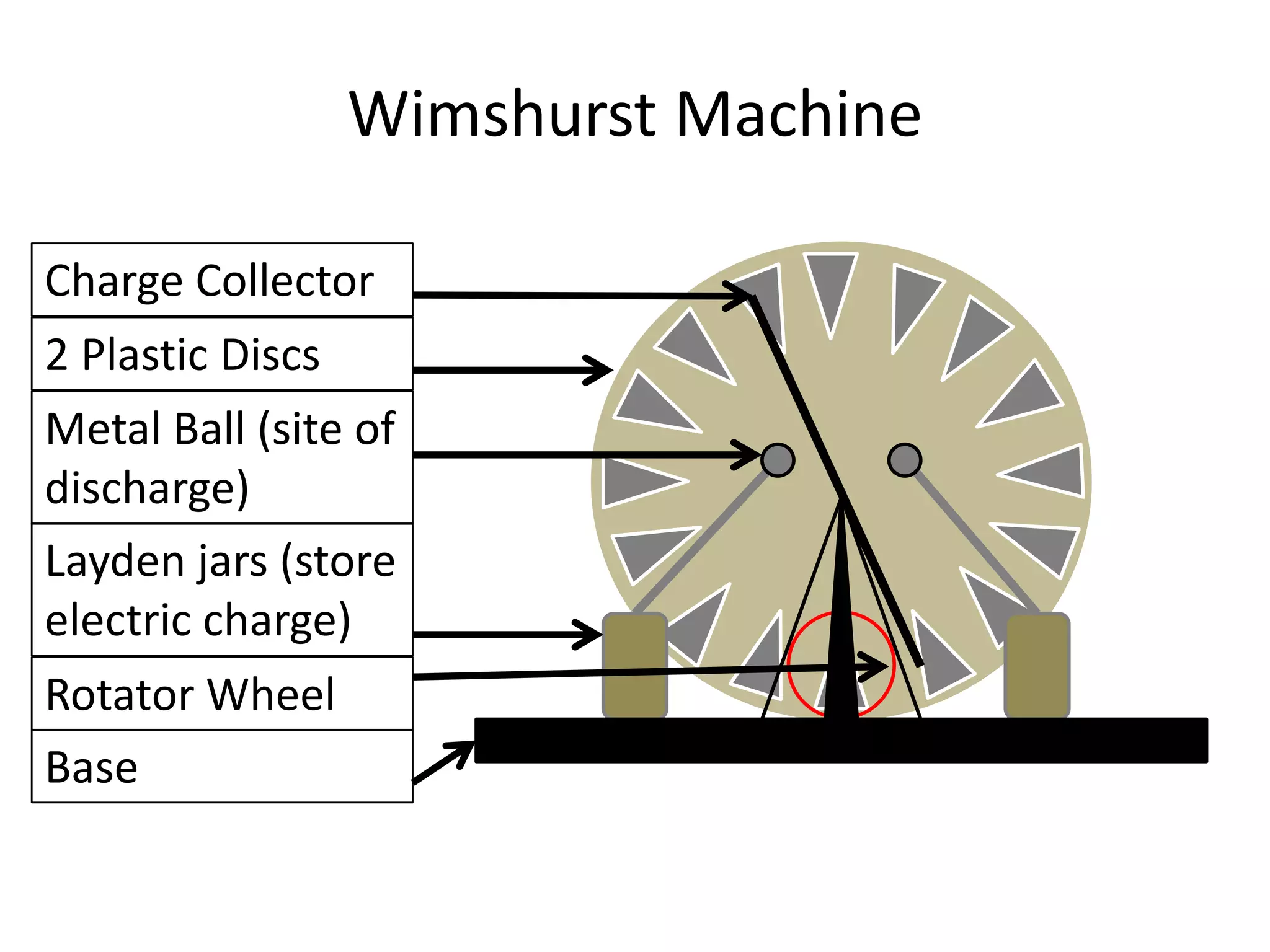
Charge Collector
2 Plastic Discs
Metal Ball (site of
discharge)
Layden jars (store
electric charge)
Rotator Wheel
Base
Wimshurst Machine
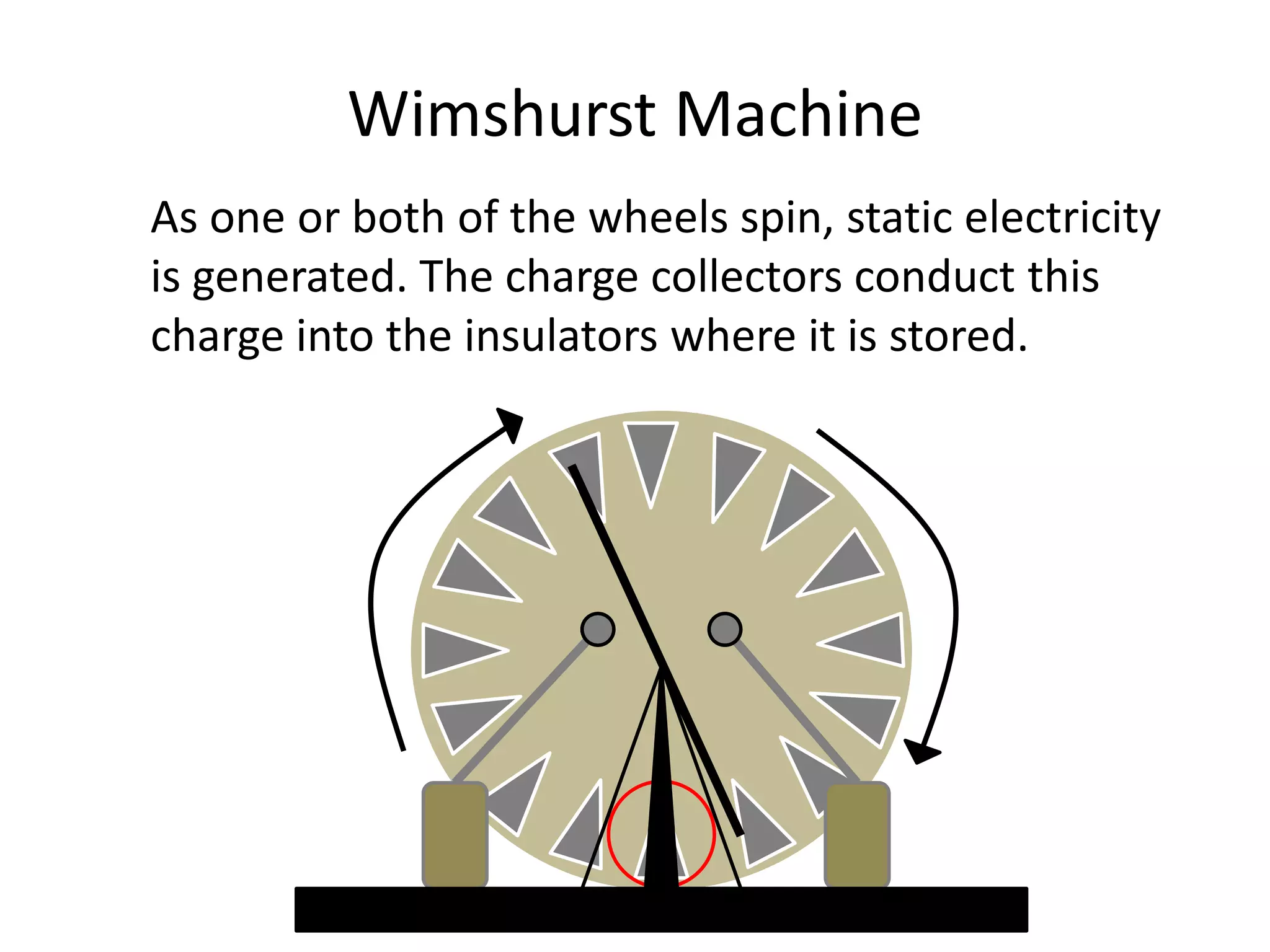
As one or both of the wheels spin, static electricity
is generated. The charge collectors conduct this
charge into the insulators where it is stored.
Wimshurst Machine
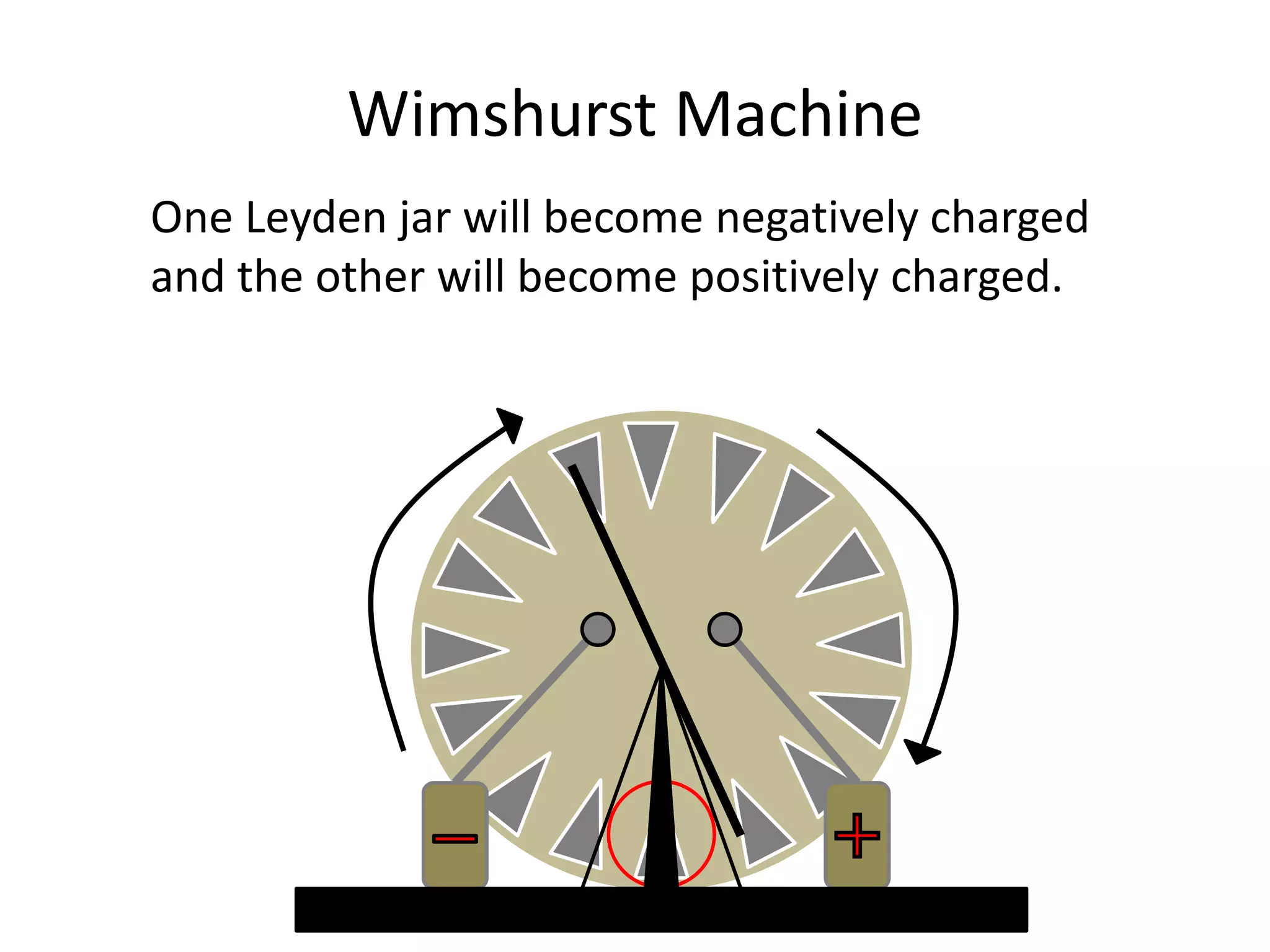
One Leyden jar will become negatively charged
and the other will become positively charged.
Wimshurst Machine
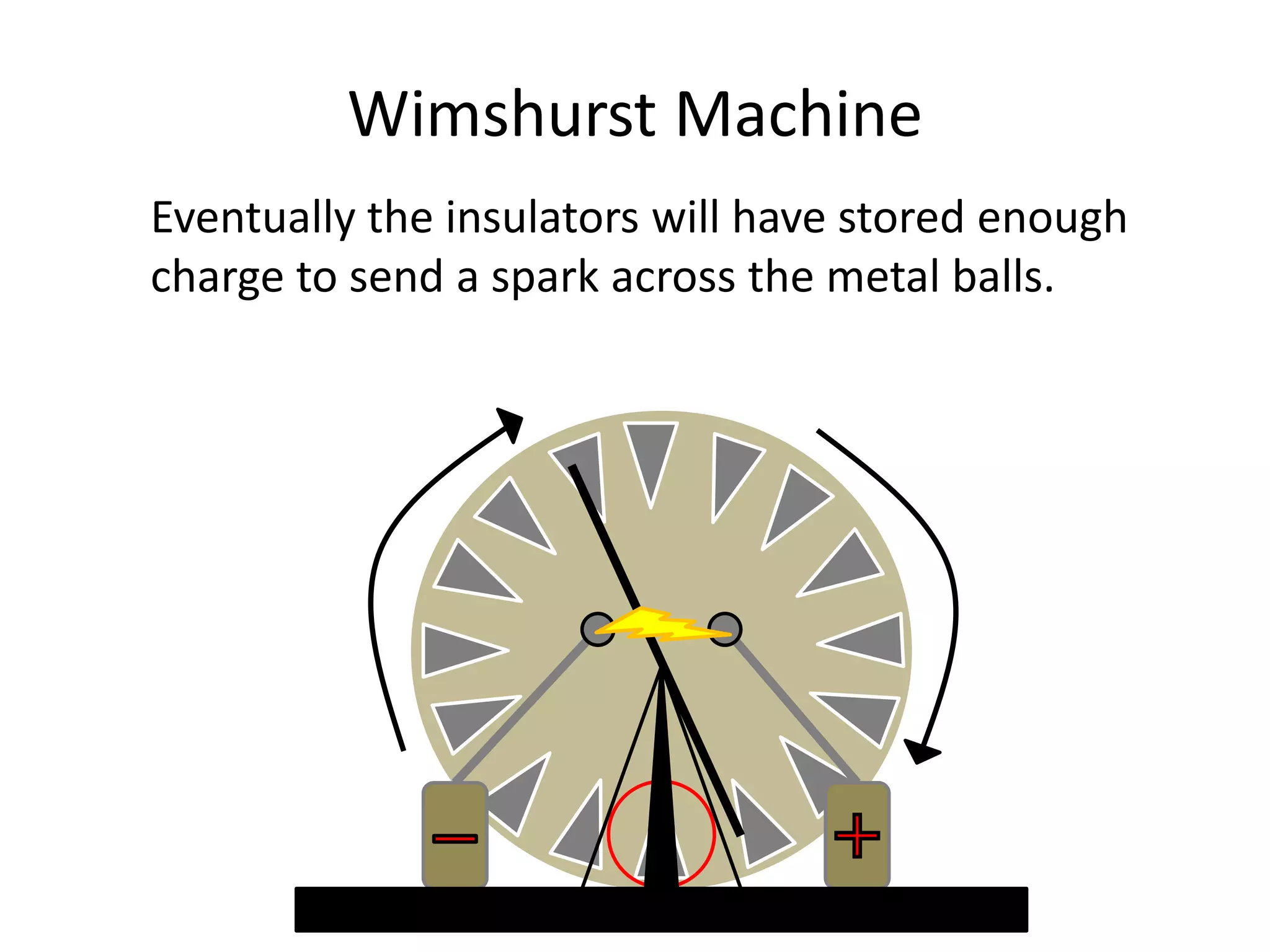
Eventually the insulators will have stored enough
charge to send a spark across the metal balls.
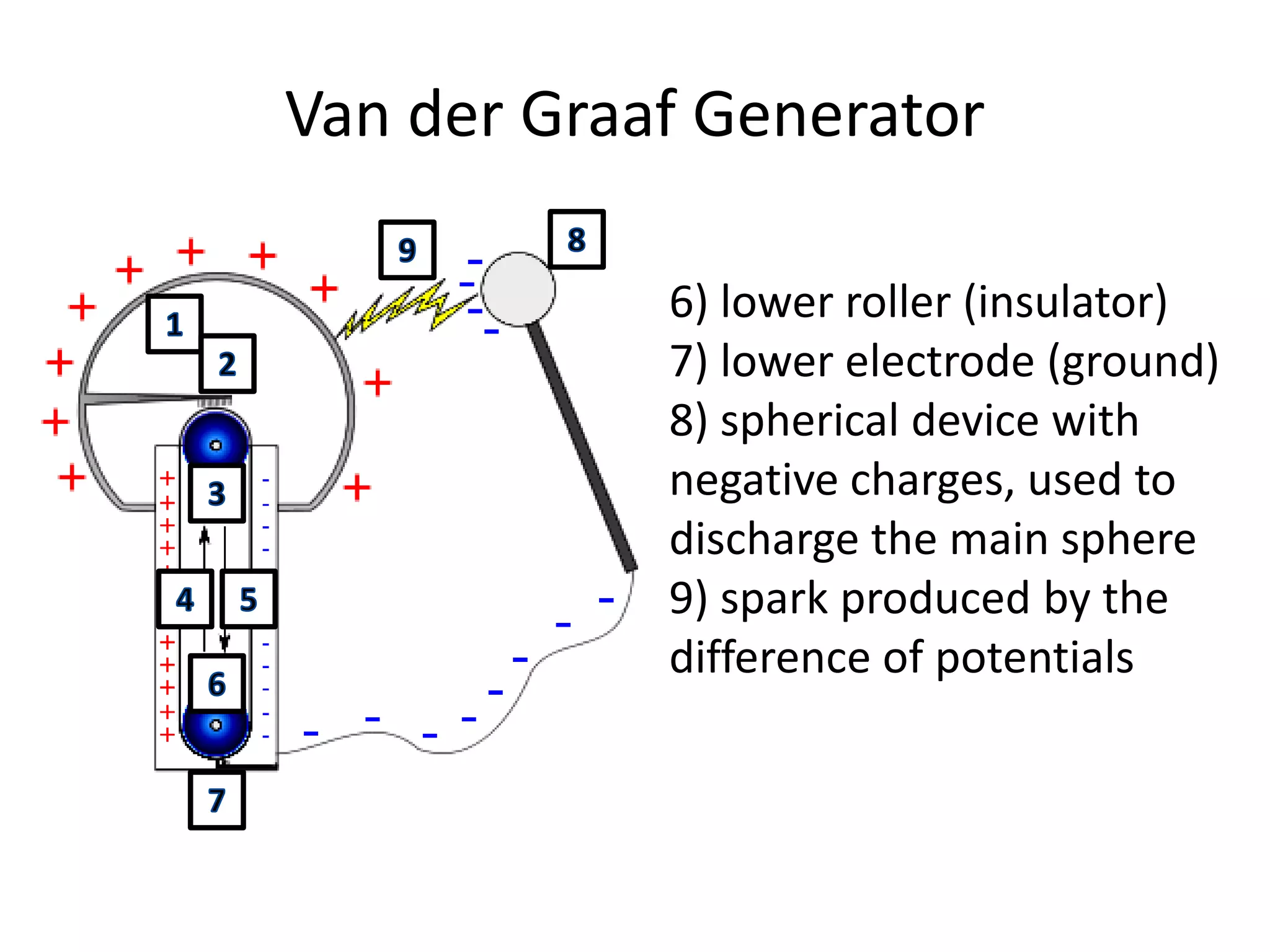
Van der Graaf Generator

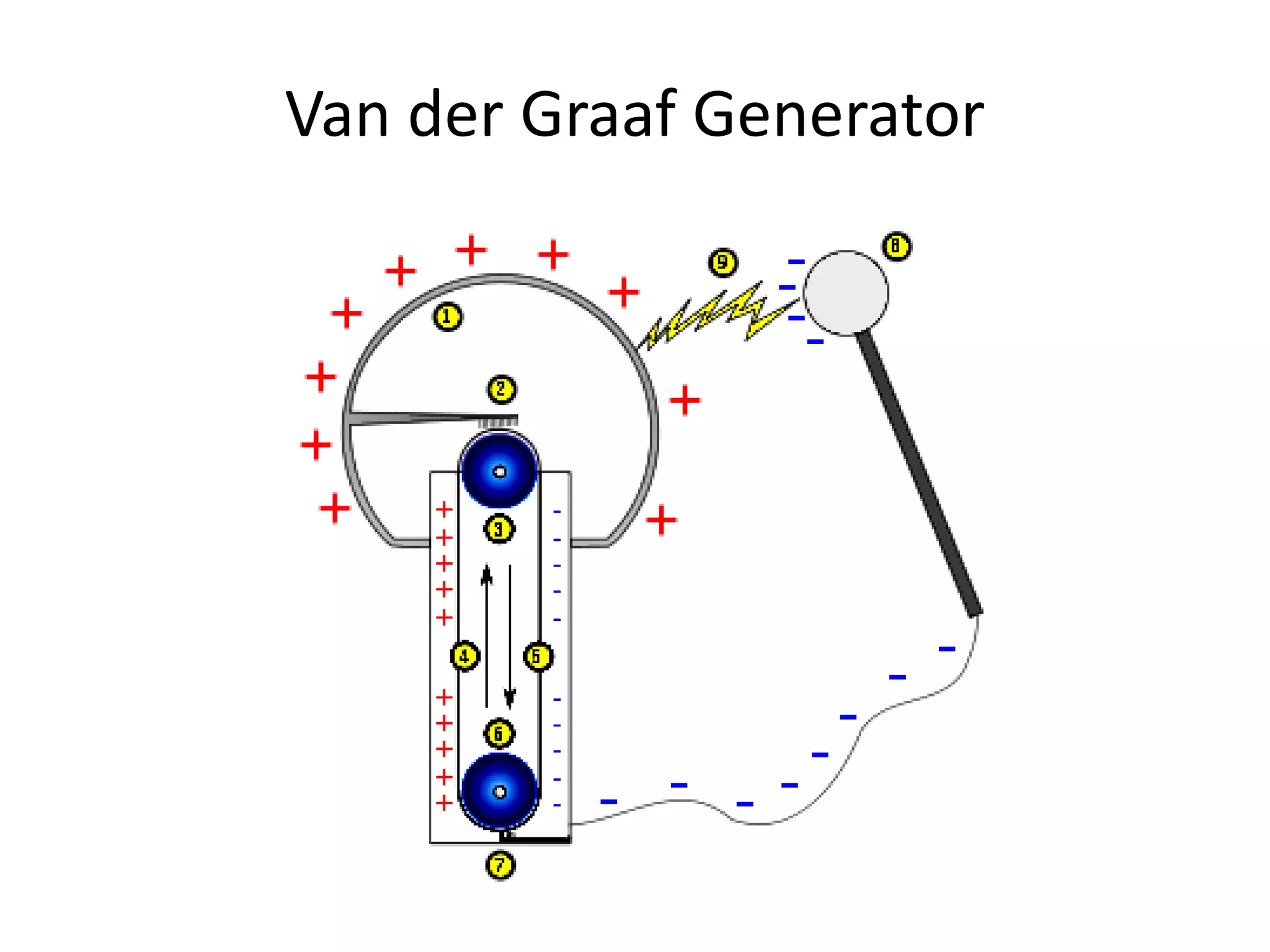
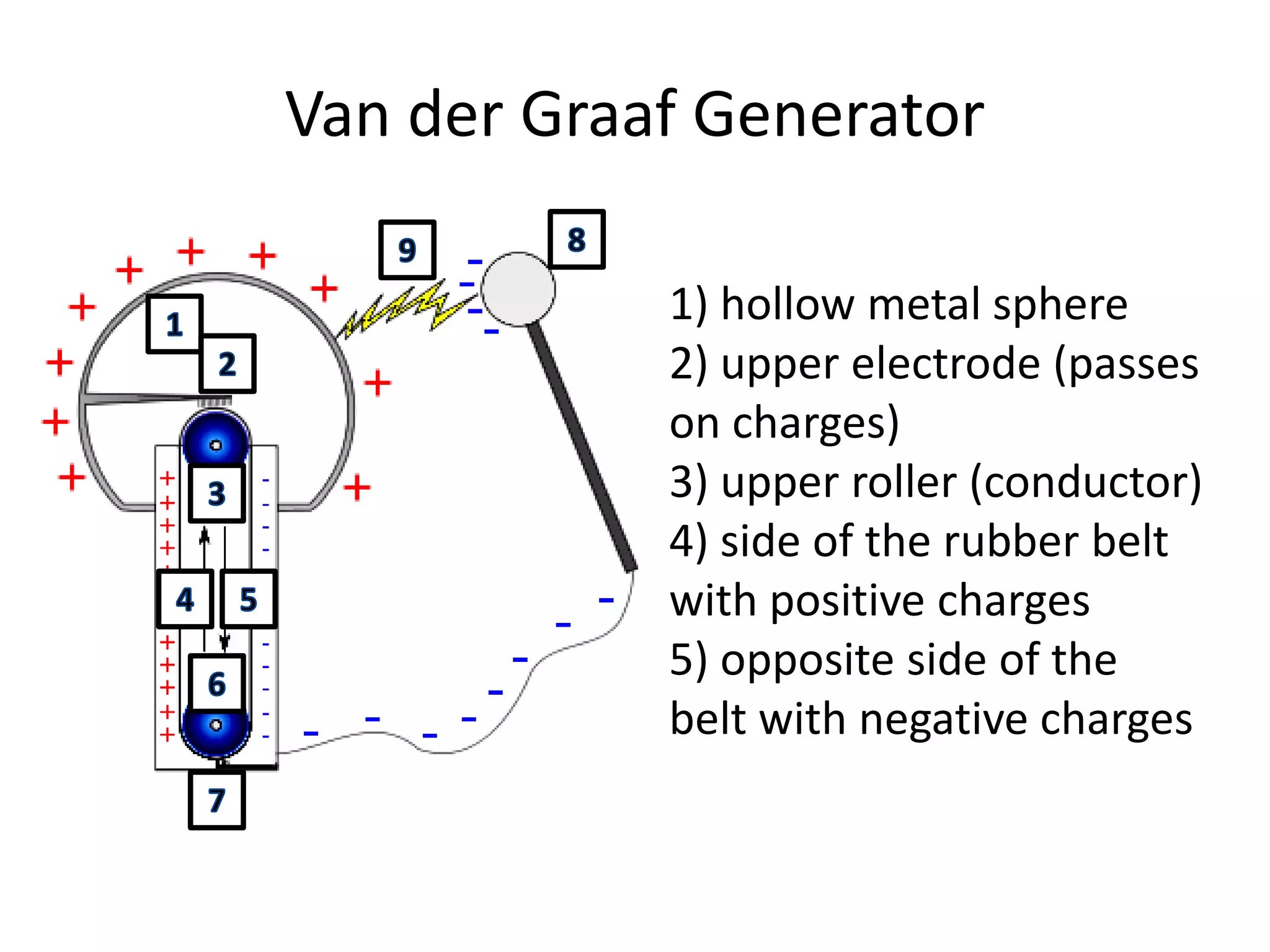
            1) hollow metal sphere
            2) upper electrode (passes
            on charges)
            3) upper roller (conductor)
            4) side of the rubber belt
            with positive charges
            5) opposite side of the
            belt with negative charges
Van der Graaf Generator

            6) lower roller (insulator)
            7) lower electrode (ground)
            8) spherical device with
            negative charges, used to
            discharge the main sphere
            9) spark produced by the
            difference of potentials
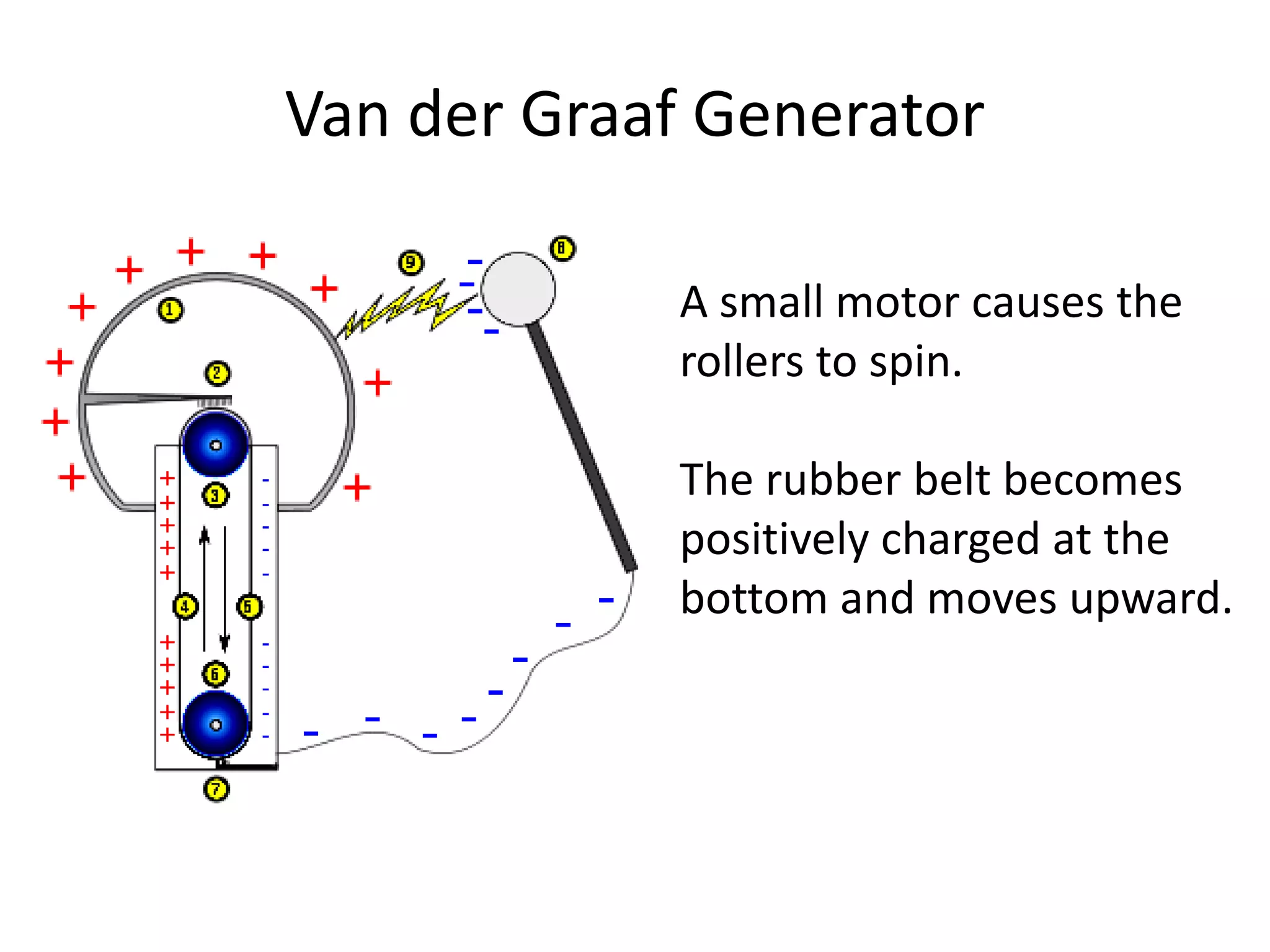
Van der Graaf Generator

            A small motor causes the
            rollers to spin.

            The rubber belt becomes
            positively charged at the
            bottom and moves upward.
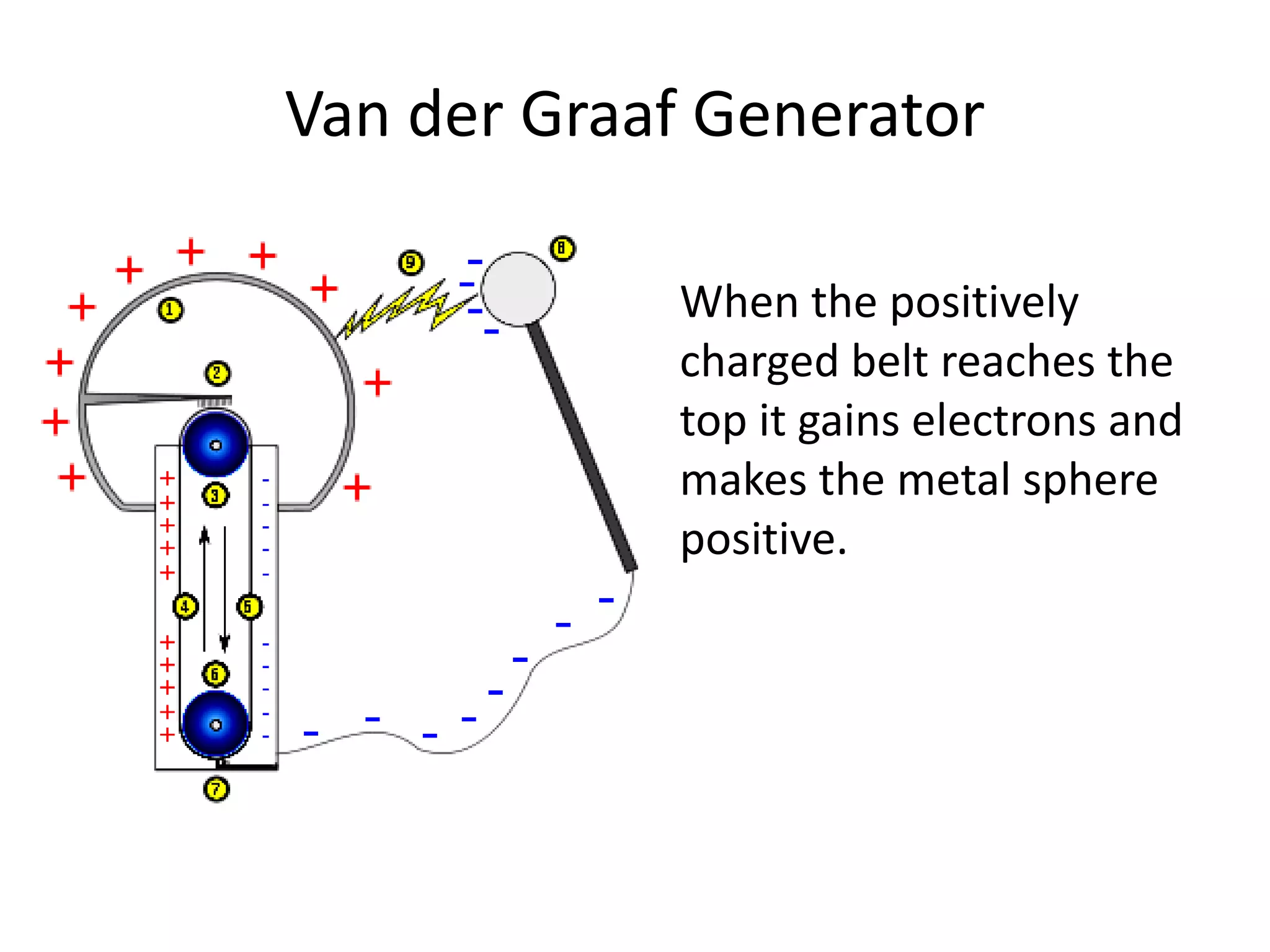
Van der Graaf Generator

            When the positively
            charged belt reaches the
            top it gains electrons and
            makes the metal sphere
            positive.
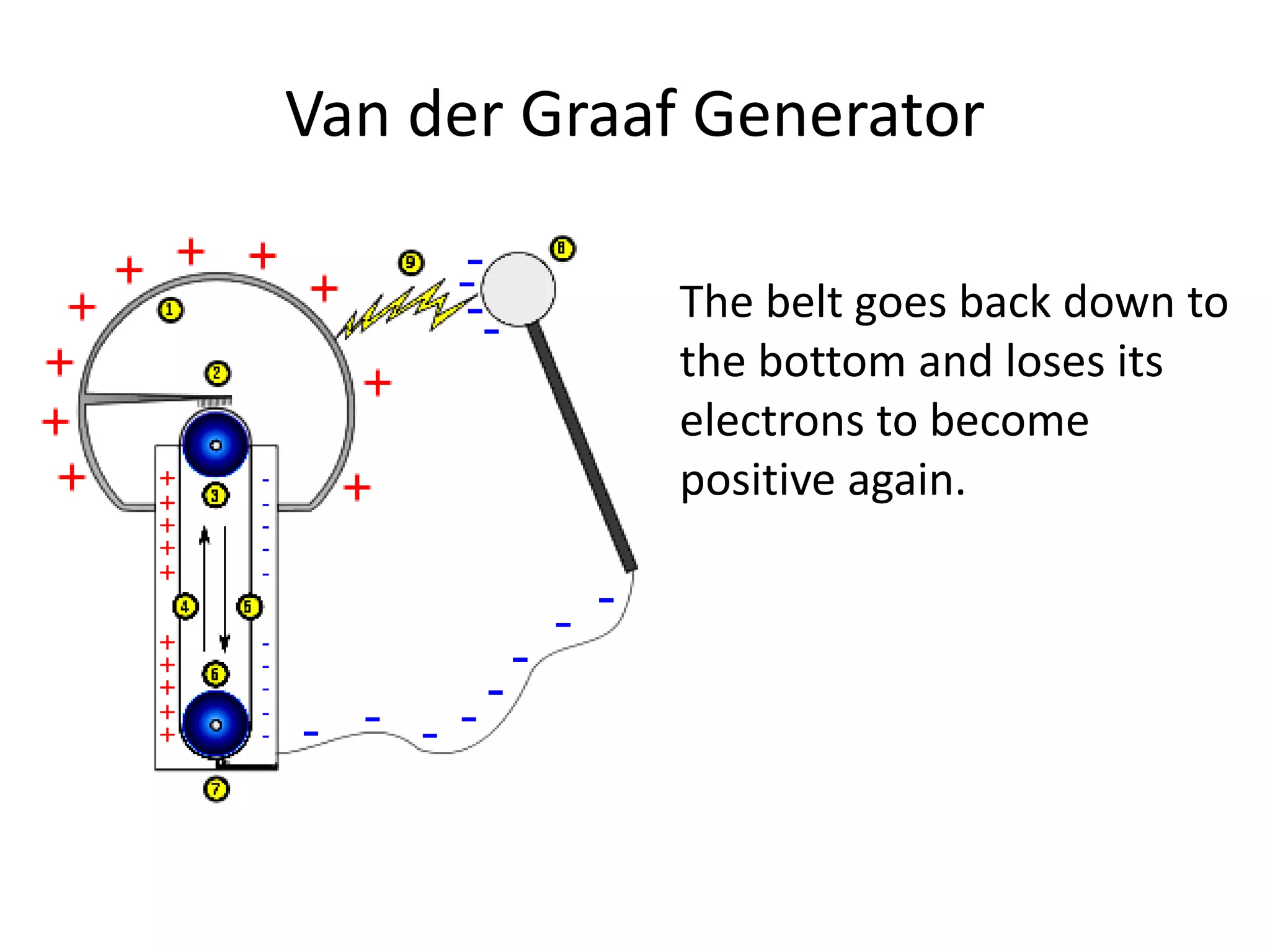
Van der Graaf Generator

            The belt goes back down to
            the bottom and loses its
            electrons to become
            positive again.

09 elec 08

  • 1.
  • 2.
    Electrostatic Generators A devicethat produces static electricity at high voltage and low current. This static electricity is generated by friction or induction.
  • 3.
    Wimshurst Machine Charge Collector 2Plastic Discs Metal Ball (site of discharge) Layden jars (store electric charge) Rotator Wheel Base
  • 4.
    Wimshurst Machine As oneor both of the wheels spin, static electricity is generated. The charge collectors conduct this charge into the insulators where it is stored.
  • 5.
    Wimshurst Machine One Leydenjar will become negatively charged and the other will become positively charged.
  • 6.
    Wimshurst Machine Eventually theinsulators will have stored enough charge to send a spark across the metal balls.
  • 7.
    Van der GraafGenerator
  • 8.
    Van der GraafGenerator 1) hollow metal sphere 2) upper electrode (passes on charges) 3) upper roller (conductor) 4) side of the rubber belt with positive charges 5) opposite side of the belt with negative charges
  • 9.
    Van der GraafGenerator 6) lower roller (insulator) 7) lower electrode (ground) 8) spherical device with negative charges, used to discharge the main sphere 9) spark produced by the difference of potentials
  • 10.
    Van der GraafGenerator A small motor causes the rollers to spin. The rubber belt becomes positively charged at the bottom and moves upward.
  • 11.
    Van der GraafGenerator When the positively charged belt reaches the top it gains electrons and makes the metal sphere positive.
  • 12.
    Van der GraafGenerator The belt goes back down to the bottom and loses its electrons to become positive again.