Mutation for Variation
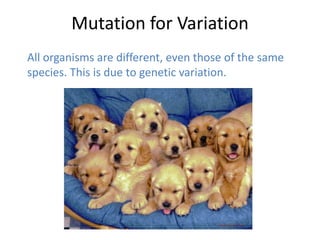
All organisms are different, even those of the same
species. This is due to genetic variation.
Mutation for Variation


Genetic variation within a species means that genes
have different alleles. Different alleles can by made by
mutation.
Mutation for Variation
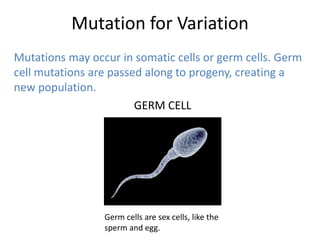
Mutations may occur in somatic cells or germ cells. Germ
cell mutations are passed along to progeny, creating a
new population.
                        GERM CELL


                 Germ cells are sex cells, like the
                 sperm and egg.
Mutation for Variation
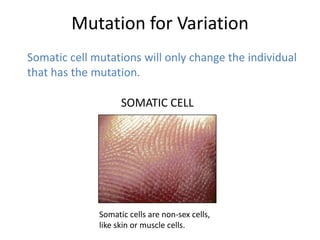
Somatic cell mutations will only change the individual
that has the mutation.

                    SOMATIC CELL


              Somatic cells are non-sex cells,
              like skin or muscle cells.
Mutation for Variation
These mutations may be

1) harmful   

2) neutral   

3) beneficial   
to an organism's and its offspring's survival.
Mutation for Variation
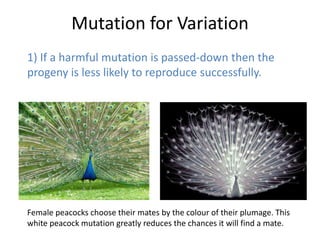
1) If a harmful mutation is passed-down then the
progeny is less likely to reproduce successfully.


Female peacocks choose their mates by the colour of their plumage. This
white peacock mutation greatly reduces the chances it will find a mate.
Mutation for Variation
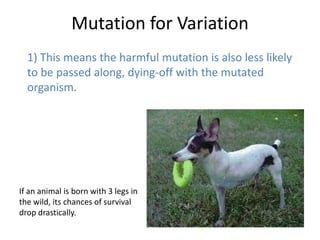
  1) This means the harmful mutation is also less likely
  to be passed along, dying-off with the mutated
  organism.


If an animal is born with 3 legs in
the wild, its chances of survival
drop drastically.
Mutation for Variation
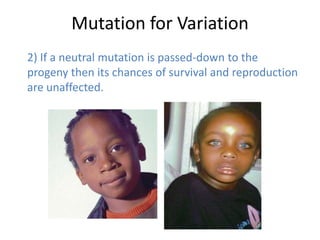
2) If a neutral mutation is passed-down to the
progeny then its chances of survival and reproduction
are unaffected.
Mutation for Variation
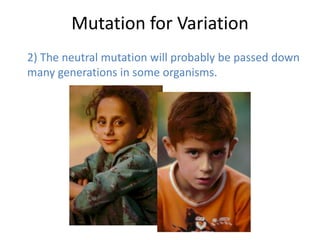
2) The neutral mutation will probably be passed down
many generations in some organisms.
Mutation for Variation
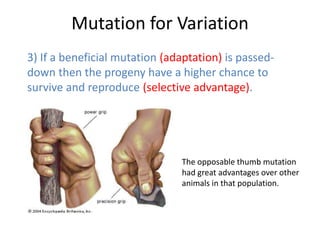
3) If a beneficial mutation (adaptation) is passed-
down then the progeny have a higher chance to
survive and reproduce (selective advantage).


                               The opposable thumb mutation
                               had great advantages over other
                               animals in that population.
Mutation for Variation
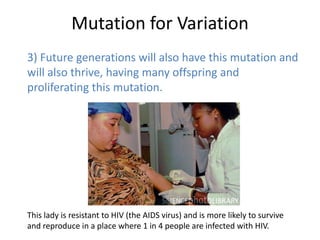
3) Future generations will also have this mutation and
will also thrive, having many offspring and
proliferating this mutation.


This lady is resistant to HIV (the AIDS virus) and is more likely to survive
and reproduce in a place where 1 in 4 people are infected with HIV.
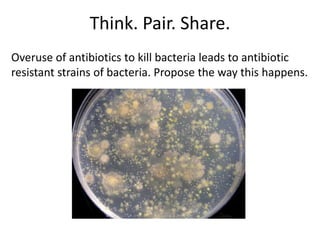
Think. Pair. Share.
Overuse of antibiotics to kill bacteria leads to antibiotic
resistant strains of bacteria. Propose the way this happens.
Evolution
Evolution
Evolution
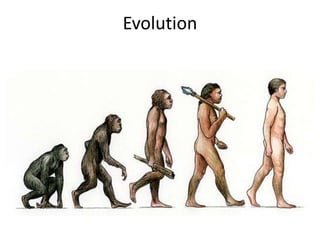
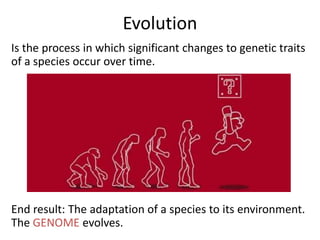
Is the process in which significant changes to genetic traits
of a species occur over time.


End result: The adaptation of a species to its environment.
The GENOME evolves.
Evolution
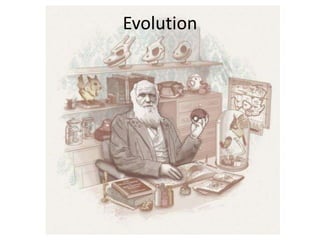
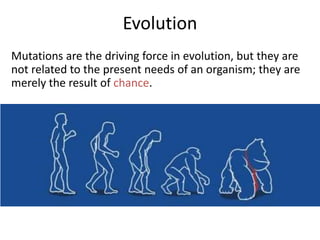
Mutations are the driving force in evolution, but they are
not related to the present needs of an organism; they are
merely the result of chance.

11 u mutations

  • 1.
  • 2.
    Mutation for Variation Allorganisms are different, even those of the same species. This is due to genetic variation.
  • 3.
    Mutation for Variation Geneticvariation within a species means that genes have different alleles. Different alleles can by made by mutation.
  • 4.
    Mutation for Variation Mutationsmay occur in somatic cells or germ cells. Germ cell mutations are passed along to progeny, creating a new population. GERM CELL Germ cells are sex cells, like the sperm and egg.
  • 5.
    Mutation for Variation Somaticcell mutations will only change the individual that has the mutation. SOMATIC CELL Somatic cells are non-sex cells, like skin or muscle cells.
  • 6.
    Mutation for Variation Thesemutations may be 1) harmful  2) neutral  3) beneficial  to an organism's and its offspring's survival.
  • 7.
    Mutation for Variation 1)If a harmful mutation is passed-down then the progeny is less likely to reproduce successfully. Female peacocks choose their mates by the colour of their plumage. This white peacock mutation greatly reduces the chances it will find a mate.
  • 8.
    Mutation for Variation 1) This means the harmful mutation is also less likely to be passed along, dying-off with the mutated organism. If an animal is born with 3 legs in the wild, its chances of survival drop drastically.
  • 9.
    Mutation for Variation 2)If a neutral mutation is passed-down to the progeny then its chances of survival and reproduction are unaffected.
  • 10.
    Mutation for Variation 2)The neutral mutation will probably be passed down many generations in some organisms.
  • 11.
    Mutation for Variation 3)If a beneficial mutation (adaptation) is passed- down then the progeny have a higher chance to survive and reproduce (selective advantage). The opposable thumb mutation had great advantages over other animals in that population.
  • 12.
    Mutation for Variation 3)Future generations will also have this mutation and will also thrive, having many offspring and proliferating this mutation. This lady is resistant to HIV (the AIDS virus) and is more likely to survive and reproduce in a place where 1 in 4 people are infected with HIV.
  • 13.
    Think. Pair. Share. Overuseof antibiotics to kill bacteria leads to antibiotic resistant strains of bacteria. Propose the way this happens.
  • 14.
  • 15.
  • 16.
    Evolution Is the processin which significant changes to genetic traits of a species occur over time. End result: The adaptation of a species to its environment. The GENOME evolves.
  • 17.
    Evolution Mutations are thedriving force in evolution, but they are not related to the present needs of an organism; they are merely the result of chance.

Editor's Notes

  • #10 For example, human eye colour plays no role in survival.
  • #11 Human hair colour is also a neutral mutation.