SPARK PLUG
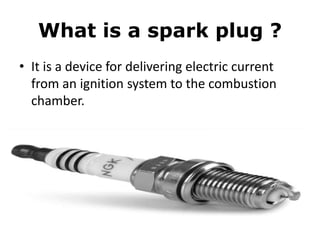
What is a spark plug ?
• It is a device for delivering electric current
from an ignition system to the combustion
chamber.
PARTS
• TERMINAL
• SHELL
• RESISTOR
• INSULATOR
• CENTRAL ELECTRODE
• GROUND ELECTRODE
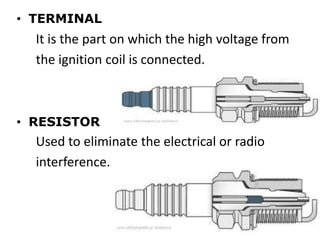
• TERMINAL
It is the part on which the high voltage from
the ignition coil is connected.
• RESISTOR
Used to eliminate the electrical or radio
interference.
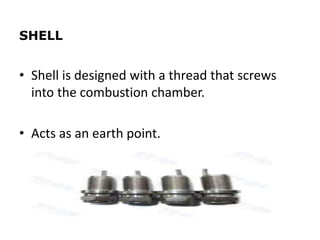
SHELL
• Shell is designed with a thread that screws
into the combustion chamber.
• Acts as an earth point.
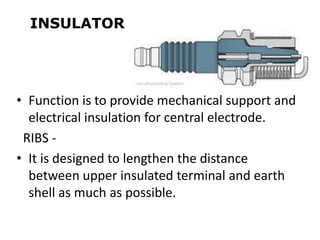
INSULATOR
• Function is to provide mechanical support and
electrical insulation for central electrode.
RIBS -
• It is designed to lengthen the distance
between upper insulated terminal and earth
shell as much as possible.
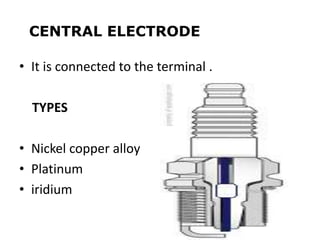
CENTRAL ELECTRODE
• It is connected to the terminal .
TYPES
• Nickel copper alloy
• Platinum
• iridium
Nickel copper alloy
• Allows the plug to heat up and also dissipate
heat quickly.
• but it subject to corrosive degradation.
• Diameter of central electrode - 2.5mm.
• service life - 20000 miles
PLATINUM
• Excellent corrosion resistance.
• Does not conduct electricity as Nickel copper
alloy.
• Diameter of central electrode – 1.1mm
• Service life – 100000 miles
• IRIDIUM
• Good conductor and six times harder than
platinum.
• Diameter of central electrode – 0.5mm
• Service life – 60000 miles
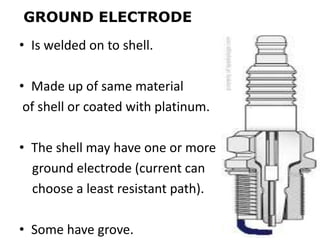
GROUND ELECTRODE
• Is welded on to shell.
• Made up of same material
of shell or coated with platinum.
• The shell may have one or more
ground electrode (current can
choose a least resistant path).
• Some have grove.
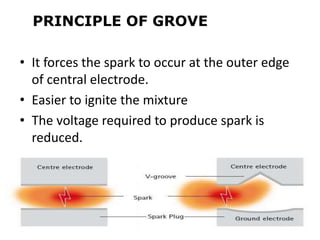
PRINCIPLE OF GROVE
• It forces the spark to occur at the outer edge
of central electrode.
• Easier to ignite the mixture
• The voltage required to produce spark is
reduced.
TYPES OF SPARK PLUG
• HOT PLUG
• COLD PLUG
• Main difference is length of electrode
insulator tip.
• Longer insulator tip makes the plug hotter
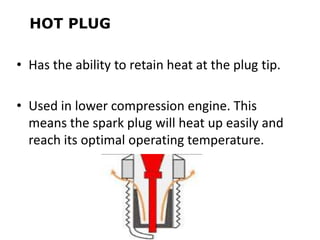
HOT PLUG
• Has the ability to retain heat at the plug tip.
• Used in lower compression engine. This
means the spark plug will heat up easily and
reach its optimal operating temperature.
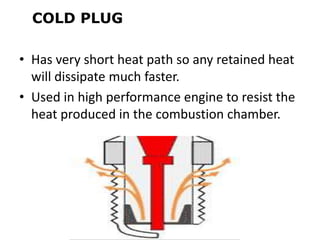
COLD PLUG
• Has very short heat path so any retained heat
will dissipate much faster.
• Used in high performance engine to resist the
heat produced in the combustion chamber.
• What happens when the spark plug selected
for an engine is -
too cold ?
heat range is too high ?
• If the spark plug is too cold carbon deposit will
start to develop between central electrode
and shell it makes a ground path for the
current to flow.
• If spark plug heat range is too high then
abnormal pre ignition may occur.
• Leads to - miss firing
melting of spark plug electrode
piston damage…
THANK YOU

Spark plug

  • 1.
  • 2.
    What is aspark plug ? • It is a device for delivering electric current from an ignition system to the combustion chamber.
  • 3.
    PARTS • TERMINAL • SHELL •RESISTOR • INSULATOR • CENTRAL ELECTRODE • GROUND ELECTRODE
  • 4.
    • TERMINAL It isthe part on which the high voltage from the ignition coil is connected. • RESISTOR Used to eliminate the electrical or radio interference.
  • 5.
    SHELL • Shell isdesigned with a thread that screws into the combustion chamber. • Acts as an earth point.
  • 6.
    INSULATOR • Function isto provide mechanical support and electrical insulation for central electrode. RIBS - • It is designed to lengthen the distance between upper insulated terminal and earth shell as much as possible.
  • 7.
    CENTRAL ELECTRODE • Itis connected to the terminal . TYPES • Nickel copper alloy • Platinum • iridium
  • 8.
    Nickel copper alloy •Allows the plug to heat up and also dissipate heat quickly. • but it subject to corrosive degradation. • Diameter of central electrode - 2.5mm. • service life - 20000 miles
  • 9.
    PLATINUM • Excellent corrosionresistance. • Does not conduct electricity as Nickel copper alloy. • Diameter of central electrode – 1.1mm • Service life – 100000 miles
  • 10.
    • IRIDIUM • Goodconductor and six times harder than platinum. • Diameter of central electrode – 0.5mm • Service life – 60000 miles
  • 11.
    GROUND ELECTRODE • Iswelded on to shell. • Made up of same material of shell or coated with platinum. • The shell may have one or more ground electrode (current can choose a least resistant path). • Some have grove.
  • 12.
    PRINCIPLE OF GROVE •It forces the spark to occur at the outer edge of central electrode. • Easier to ignite the mixture • The voltage required to produce spark is reduced.
  • 13.
    TYPES OF SPARKPLUG • HOT PLUG • COLD PLUG • Main difference is length of electrode insulator tip. • Longer insulator tip makes the plug hotter
  • 14.
    HOT PLUG • Hasthe ability to retain heat at the plug tip. • Used in lower compression engine. This means the spark plug will heat up easily and reach its optimal operating temperature.
  • 15.
    COLD PLUG • Hasvery short heat path so any retained heat will dissipate much faster. • Used in high performance engine to resist the heat produced in the combustion chamber.
  • 16.
    • What happenswhen the spark plug selected for an engine is - too cold ? heat range is too high ?
  • 17.
    • If thespark plug is too cold carbon deposit will start to develop between central electrode and shell it makes a ground path for the current to flow. • If spark plug heat range is too high then abnormal pre ignition may occur. • Leads to - miss firing melting of spark plug electrode piston damage…
  • 18.