VORTEX BLADELESS
WIND TURBINE
Mossab Mustafa Khan
CONTENTS
 Introduction
 Construction
 Working
 Types
 Advantages
 Disadvantages
 Applications
INTRODUCTION
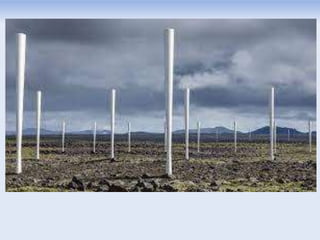
It is a device which extracts energy from wind
without rotation and blades, unlike wind
turbines.
It is based on the phenomena of resonance.
This process is called vortex shedding or
vortex street effect.
This phenomenon allows the Vortex device to
oscillate with small movements.
The Vortex Bladeless maximizes vortex shedding,
converting wind energy to fluttering of a light-
weight vertical pole, then captures that energy
with a generator at the bottom of the pole.
It produces electricity with very few moving
parts, on a very small footprint and in almost
complete silence.
It utilizes the vortex shedding effect of wind upon
interference with the turbines collector.
CONSTRUCTION
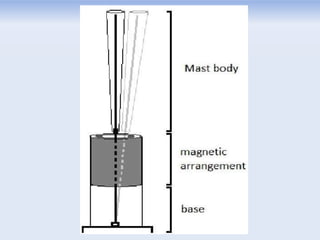
 The turbine consists of 2 mechanical components and
an electrical component.
The two mechanical components connected through a
fibre rod:
1. Mast
2. Base
The electrical component is:
Generation System
1. Mast:
 It is made of carbon fibre which has high fatigue
resistance and very elastic compared to other strong
materials such as steel and aluminium.
 The mast is largely rigid and has the ability to vibrate,
it is made of fibreglass reinforced composite similar
to the blades of regular wing turbines.
2. Base:
 This is firmly anchored to the ground
 Made of Carbon Fibre
WORKING
 Once the frequency of wind that passes through the body
is close enough to body’s structural frequency, the body
starts to oscillate and enters into resonance with the wind.
 The frequency of the Vortex shedding is proportional to
the windstream’s velocity, however each structure has its
own natural vibration frequency.
 Mass of body inversely proportional to natural frequency.
Rigidity is proportional to frequency.
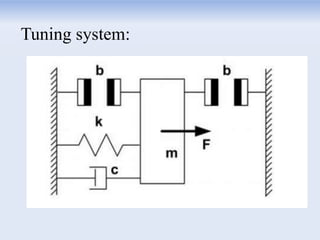
Vortex design uses a magnetic confinement
system with permanent magnets that increase
the apparent stiffness of the system according
to their degree of flexion. The degree of
flexion grows as long the wind intensifies.
This is called “tuning system“.
Tuning system:
Two pairs of permanent magnets are present.
The same poles are facing each other. These
pair of magnets has one fixed to the oscillating
mass and the other fixed to the rod.
As they get closer, the growth of the repulsive
force between them grows higher.
So, now the frequency of oscillation is
increasing with the oscillation amplitude.
This movement and speed is then multiplied
magnetically without the gear assemblies or ball
bearings.
It relies on the oscillation of its reed-like mast in
reaction to air vortices to move a series of
magnets located in the joint near its base to
generate electricity.
This kinetic energy is then used to power an
alternator, which multiplies the frequency of the
tower’s oscillation and converts the motion in to
usable electricity.
Vortex generates electricity through an alternator
system, made by coils and magnets, adapted to
the vortex dynamics, without gears, shafts or any
rotating parts.
This system is based on the same principle as an
alternator in electromagnetic induction.
And this is how mechanical energy gets
converted into electrical energy.
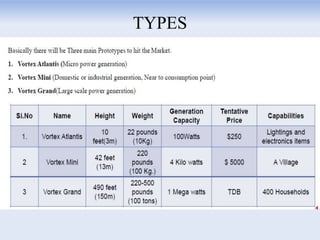
TYPES
ADVANTAGES
 Cost effectiveness:
There is no need for a nacelle, support mechanisms, and
blades, that are usually costly components in the
conventional wind generators.
 Weight:
Gravity center close to the ground, anchoring or
foundation requirements have been reduced significantly
compared to regular turbines, easing installation
 Absence of brakes:
Resonance disappears beyond the lock-in range, so Vortex
stops oscillating by itself without the need of brakes if
wind speed exceeds the device’s threshold.
Any limitation of the “shadow effect” is avoided.
Speed performance:
Vortex technology is designed to generate energy
from very low wind speeds, more frequent in
residential or urban emplacements
Clean energy:
Due to absence of moving gears, the device
functions quietly when properly calibrated.
Omnidirectional:
Wind turbulences or mixed windstreams does
not affect the aerogenerator’s function
Effect on wildlife:
Vortex’s design allows an oscillatory
movement on bladeless turbines to be tiny and
less aggressive than traditional wind turbines,
so it won’t disturb wildlife and allow birds and
bats to avoid them easily while flying.
DISADVANTAGES
 The efficiency of the energy absorbed from the wind
is less than that of the conventional wind turbine.
The requirement of control systems for controlling
the oscillation to meet the natural frequency of the
mast and control of the frequency at higher velocity
winds. The height of the mast can be increased based
on the output required.
APPLICATIONS
Industries
Remote telemetry
Schools
Farms
Houses
Off-grid Lighting
Thank you

Vortex bladeless wind turbine

  • 1.
  • 2.
    CONTENTS  Introduction  Construction Working  Types  Advantages  Disadvantages  Applications
  • 3.
    INTRODUCTION It is adevice which extracts energy from wind without rotation and blades, unlike wind turbines. It is based on the phenomena of resonance. This process is called vortex shedding or vortex street effect. This phenomenon allows the Vortex device to oscillate with small movements.
  • 5.
    The Vortex Bladelessmaximizes vortex shedding, converting wind energy to fluttering of a light- weight vertical pole, then captures that energy with a generator at the bottom of the pole. It produces electricity with very few moving parts, on a very small footprint and in almost complete silence. It utilizes the vortex shedding effect of wind upon interference with the turbines collector.
  • 7.
    CONSTRUCTION  The turbineconsists of 2 mechanical components and an electrical component. The two mechanical components connected through a fibre rod: 1. Mast 2. Base The electrical component is: Generation System
  • 9.
    1. Mast:  Itis made of carbon fibre which has high fatigue resistance and very elastic compared to other strong materials such as steel and aluminium.  The mast is largely rigid and has the ability to vibrate, it is made of fibreglass reinforced composite similar to the blades of regular wing turbines. 2. Base:  This is firmly anchored to the ground  Made of Carbon Fibre
  • 10.
    WORKING  Once thefrequency of wind that passes through the body is close enough to body’s structural frequency, the body starts to oscillate and enters into resonance with the wind.  The frequency of the Vortex shedding is proportional to the windstream’s velocity, however each structure has its own natural vibration frequency.  Mass of body inversely proportional to natural frequency.
  • 11.
    Rigidity is proportionalto frequency. Vortex design uses a magnetic confinement system with permanent magnets that increase the apparent stiffness of the system according to their degree of flexion. The degree of flexion grows as long the wind intensifies. This is called “tuning system“.
  • 12.
  • 13.
    Two pairs ofpermanent magnets are present. The same poles are facing each other. These pair of magnets has one fixed to the oscillating mass and the other fixed to the rod. As they get closer, the growth of the repulsive force between them grows higher. So, now the frequency of oscillation is increasing with the oscillation amplitude.
  • 14.
    This movement andspeed is then multiplied magnetically without the gear assemblies or ball bearings. It relies on the oscillation of its reed-like mast in reaction to air vortices to move a series of magnets located in the joint near its base to generate electricity. This kinetic energy is then used to power an alternator, which multiplies the frequency of the tower’s oscillation and converts the motion in to usable electricity.
  • 15.
    Vortex generates electricitythrough an alternator system, made by coils and magnets, adapted to the vortex dynamics, without gears, shafts or any rotating parts. This system is based on the same principle as an alternator in electromagnetic induction. And this is how mechanical energy gets converted into electrical energy.
  • 16.
  • 17.
    ADVANTAGES  Cost effectiveness: Thereis no need for a nacelle, support mechanisms, and blades, that are usually costly components in the conventional wind generators.  Weight: Gravity center close to the ground, anchoring or foundation requirements have been reduced significantly compared to regular turbines, easing installation  Absence of brakes: Resonance disappears beyond the lock-in range, so Vortex stops oscillating by itself without the need of brakes if wind speed exceeds the device’s threshold.
  • 18.
    Any limitation ofthe “shadow effect” is avoided. Speed performance: Vortex technology is designed to generate energy from very low wind speeds, more frequent in residential or urban emplacements Clean energy: Due to absence of moving gears, the device functions quietly when properly calibrated.
  • 19.
    Omnidirectional: Wind turbulences ormixed windstreams does not affect the aerogenerator’s function Effect on wildlife: Vortex’s design allows an oscillatory movement on bladeless turbines to be tiny and less aggressive than traditional wind turbines, so it won’t disturb wildlife and allow birds and bats to avoid them easily while flying.
  • 21.
    DISADVANTAGES  The efficiencyof the energy absorbed from the wind is less than that of the conventional wind turbine. The requirement of control systems for controlling the oscillation to meet the natural frequency of the mast and control of the frequency at higher velocity winds. The height of the mast can be increased based on the output required.
  • 22.
  • 23.