Security concept
1
Outline
• Security concept
1. Introduction
2. Risk management
i. risk response
ii. Exploits
iii. Security controls
iv. Attack vectors
3. Security patterns
i. Identity and access mgt.
ii. Segregation of duties and least privilege
iii. Layered security
iv. cryptography
2
Security (Availability, confidentiality,
integrity)
3
Reason for Crimes
1. Personal exposure and prestige
2. Creating damage
3. Financial gain
4. Terrorism
5. Warfare
4
Risk management
5
definition
Process of determining an acceptable level of risk, accessing the current
level, taking steps to reduce risk to the acceptable level and maintaining
that level.
6
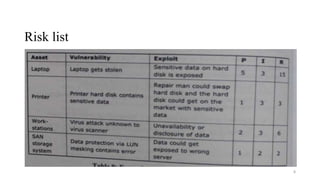
Risk list
1. Asset name
2. Vulnerability
3. Exploit
4. Probability
5. Impact
6. Risk
7
Risk list
8
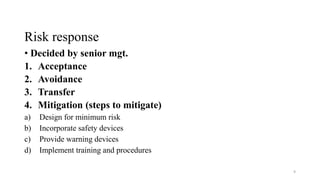
Risk response
• Decided by senior mgt.
1. Acceptance
2. Avoidance
3. Transfer
4. Mitigation (steps to mitigate)
a) Design for minimum risk
b) Incorporate safety devices
c) Provide warning devices
d) Implement training and procedures
9
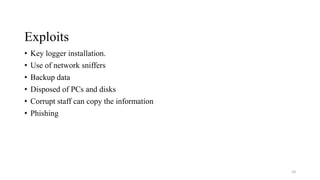
Exploits
• Key logger installation.
• Use of network sniffers
• Backup data
• Disposed of PCs and disks
• Corrupt staff can copy the information
• Phishing
10
Security Controls
• Confidentiality
• Integrity
• Availability
11
Attack vector
Attacks on infrastructure can be executed using:
1. Malicious code
2. Denial of services
3. Social engineering
4. phishing
12
1. Malicious code
These are the application that can cause:
1. network and server overload
2. steal data and passwords
3. Erase data
Forms
1. Viruses
2. Trojan horses
3. worms
13
DoS Attack
This is an attempt to overload an infrastructure to cause downtime of a
system.
How to perform DoS attack?
Why we use DDoS attack?
What is botnets?
14
Prevention of DDoS
1. Split business and public resources
2. Use external cloud provider
3. Setup automatic scalability
4. Limit bandwidth for certain traffic
5. Lower the TTL
6. Monitor traffic volume & source and number of request.
15
Prevention of DDoS
Some other actions
1. Immediately inform your internet provider and ask for help.
2. Run connection termination script
3. Change the server
4. Reroute or drop suspected traffic
16
Attack vector
1. Social engineering
2. Phishing
3. Baiting
17
Security Patterns
1. Identity and access management
2. Segregation of duties and least privilege
3. Layered security
4. cryptography
18
1. Identity and access management
It’s a process of managing the identity of people and systems, and their
permissions.
Steps:
1. Identification
2. Authentication
3. Authorization
19
1. Segregation of duties and least privilege
2. Layered security
3. Cryptography
1. Symmetric key encryption
2. Asymmetric key encryption
3. Hash function and digital signature
4. Cryptographic attacks
20

06. security concept

  • 1.
  • 2.
    Outline • Security concept 1.Introduction 2. Risk management i. risk response ii. Exploits iii. Security controls iv. Attack vectors 3. Security patterns i. Identity and access mgt. ii. Segregation of duties and least privilege iii. Layered security iv. cryptography 2
  • 3.
  • 4.
    Reason for Crimes 1.Personal exposure and prestige 2. Creating damage 3. Financial gain 4. Terrorism 5. Warfare 4
  • 5.
  • 6.
    definition Process of determiningan acceptable level of risk, accessing the current level, taking steps to reduce risk to the acceptable level and maintaining that level. 6
  • 7.
    Risk list 1. Assetname 2. Vulnerability 3. Exploit 4. Probability 5. Impact 6. Risk 7
  • 8.
  • 9.
    Risk response • Decidedby senior mgt. 1. Acceptance 2. Avoidance 3. Transfer 4. Mitigation (steps to mitigate) a) Design for minimum risk b) Incorporate safety devices c) Provide warning devices d) Implement training and procedures 9
  • 10.
    Exploits • Key loggerinstallation. • Use of network sniffers • Backup data • Disposed of PCs and disks • Corrupt staff can copy the information • Phishing 10
  • 11.
    Security Controls • Confidentiality •Integrity • Availability 11
  • 12.
    Attack vector Attacks oninfrastructure can be executed using: 1. Malicious code 2. Denial of services 3. Social engineering 4. phishing 12
  • 13.
    1. Malicious code Theseare the application that can cause: 1. network and server overload 2. steal data and passwords 3. Erase data Forms 1. Viruses 2. Trojan horses 3. worms 13
  • 14.
    DoS Attack This isan attempt to overload an infrastructure to cause downtime of a system. How to perform DoS attack? Why we use DDoS attack? What is botnets? 14
  • 15.
    Prevention of DDoS 1.Split business and public resources 2. Use external cloud provider 3. Setup automatic scalability 4. Limit bandwidth for certain traffic 5. Lower the TTL 6. Monitor traffic volume & source and number of request. 15
  • 16.
    Prevention of DDoS Someother actions 1. Immediately inform your internet provider and ask for help. 2. Run connection termination script 3. Change the server 4. Reroute or drop suspected traffic 16
  • 17.
    Attack vector 1. Socialengineering 2. Phishing 3. Baiting 17
  • 18.
    Security Patterns 1. Identityand access management 2. Segregation of duties and least privilege 3. Layered security 4. cryptography 18
  • 19.
    1. Identity andaccess management It’s a process of managing the identity of people and systems, and their permissions. Steps: 1. Identification 2. Authentication 3. Authorization 19
  • 20.
    1. Segregation ofduties and least privilege 2. Layered security 3. Cryptography 1. Symmetric key encryption 2. Asymmetric key encryption 3. Hash function and digital signature 4. Cryptographic attacks 20