5.2(ii) - Ammeters, Voltmeters
      & Potential Dividers


                                 1
Voltmeters
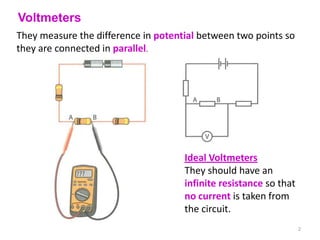
They measure the difference in potential between two points so
they are connected in parallel.


                                     Ideal Voltmeters
                                     They should have an
                                     infinite resistance so that
                                     no current is taken from
                                     the circuit.
                                                                   2
Ammeters


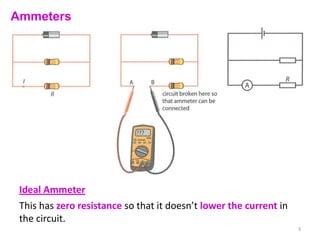
 Ideal Ammeter
 This has zero resistance so that it doesn’t lower the current in
 the circuit.
                                                                    3
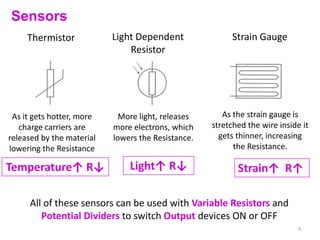
Sensors
     Thermistor            Light Dependent               Strain Gauge
                               Resistor


 As it gets hotter, more     More light, releases      As the strain gauge is
   charge carriers are     more electrons, which    stretched the wire inside it
released by the material   lowers the Resistance.     gets thinner, increasing
lowering the Resistance                                   the Resistance.

Temperature↑ R↓                Light↑ R↓                   Strain↑ R↑

     All of these sensors can be used with Variable Resistors and
        Potential Dividers to switch Output devices ON or OFF
                                                                            4
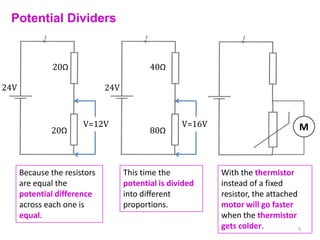
Potential Dividers


               20Ω                         40Ω

24V                           24V


                       V=12V                        V=16V                          M
              20Ω                          80Ω


      Because the resistors         This time the           With the thermistor
      are equal the                 potential is divided    instead of a fixed
      potential difference          into different          resistor, the attached
      across each one is            proportions.            motor will go faster
      equal.                                                when the thermistor
                                                            gets colder.           5
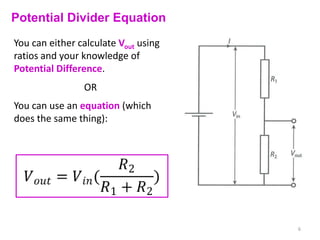
Potential Divider Equation
You can either calculate Vout using
ratios and your knowledge of
Potential Difference.
                OR
You can use an equation (which
does the same thing):


                                      6
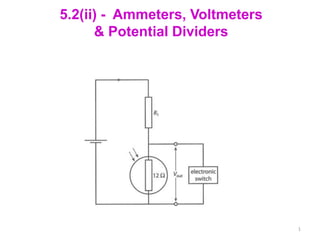
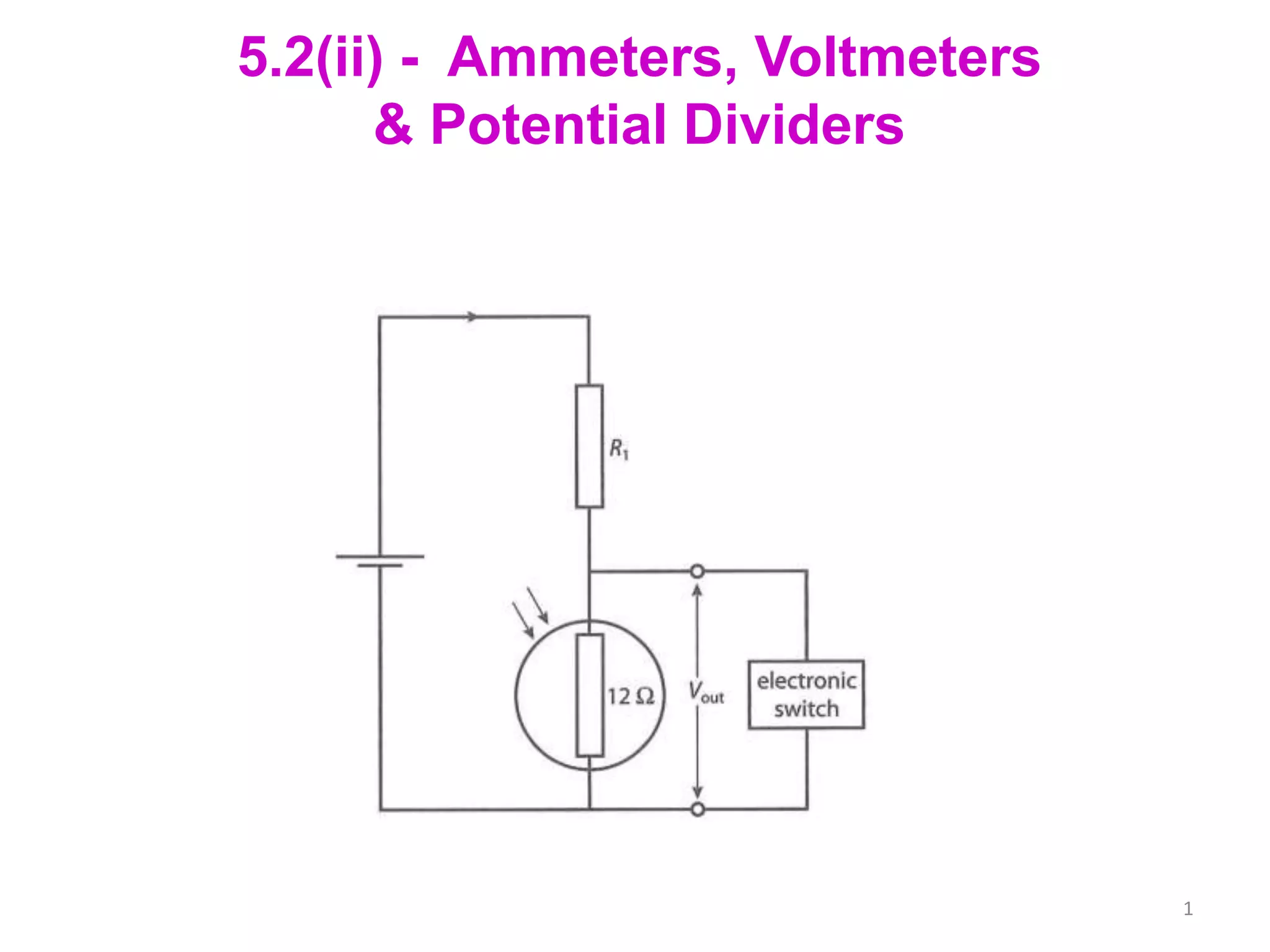
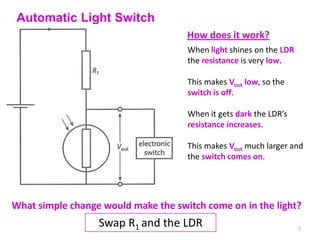
Automatic Light Switch
                                     How does it work?
                                     When light shines on the LDR
                                     the resistance is very low.

                                     This makes Vout low, so the
                                     switch is off.

                                     When it gets dark the LDR’s
                                     resistance increases.

                                     This makes Vout much larger and
                                     the switch comes on.


What simple change would make the switch come on in the light?
                  Swap R1 and the LDR                               7
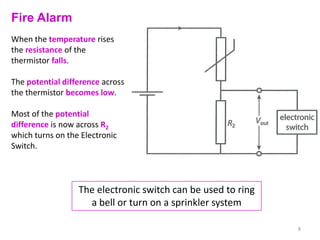
Fire Alarm
When the temperature rises
the resistance of the
thermistor falls.

The potential difference across
the thermistor becomes low.

Most of the potential
difference is now across R2
which turns on the Electronic
Switch.


                  The electronic switch can be used to ring
                    a bell or turn on a sprinkler system

                                                              8
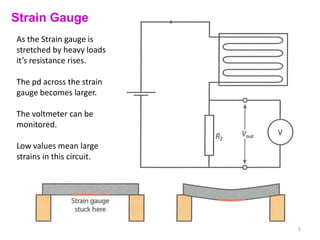
Strain Gauge
As the Strain gauge is
stretched by heavy loads
it’s resistance rises.

The pd across the strain
gauge becomes larger.

The voltmeter can be
monitored.

Low values mean large
strains in this circuit.


                           9
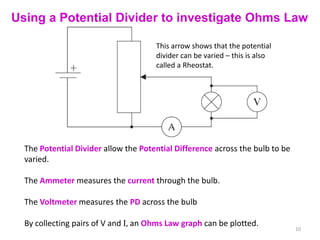
Using a Potential Divider to investigate Ohms Law

                                      This arrow shows that the potential
                                      divider can be varied – this is also
                                      called a Rheostat.


  The Potential Divider allow the Potential Difference across the bulb to be
  varied.

  The Ammeter measures the current through the bulb.

  The Voltmeter measures the PD across the bulb

  By collecting pairs of V and I, an Ohms Law graph can be plotted.
                                                                               10

5.2 - Ammeters, Voltmeters & Potential Dividers

  • 1.
    5.2(ii) - Ammeters,Voltmeters & Potential Dividers 1
  • 2.
    Voltmeters They measure thedifference in potential between two points so they are connected in parallel. Ideal Voltmeters They should have an infinite resistance so that no current is taken from the circuit. 2
  • 3.
    Ammeters Ideal Ammeter This has zero resistance so that it doesn’t lower the current in the circuit. 3
  • 4.
    Sensors Thermistor Light Dependent Strain Gauge Resistor As it gets hotter, more More light, releases As the strain gauge is charge carriers are more electrons, which stretched the wire inside it released by the material lowers the Resistance. gets thinner, increasing lowering the Resistance the Resistance. Temperature↑ R↓ Light↑ R↓ Strain↑ R↑ All of these sensors can be used with Variable Resistors and Potential Dividers to switch Output devices ON or OFF 4
  • 5.
    Potential Dividers 20Ω 40Ω 24V 24V V=12V V=16V M 20Ω 80Ω Because the resistors This time the With the thermistor are equal the potential is divided instead of a fixed potential difference into different resistor, the attached across each one is proportions. motor will go faster equal. when the thermistor gets colder. 5
  • 6.
    Potential Divider Equation Youcan either calculate Vout using ratios and your knowledge of Potential Difference. OR You can use an equation (which does the same thing): 6
  • 7.
    Automatic Light Switch How does it work? When light shines on the LDR the resistance is very low. This makes Vout low, so the switch is off. When it gets dark the LDR’s resistance increases. This makes Vout much larger and the switch comes on. What simple change would make the switch come on in the light? Swap R1 and the LDR 7
  • 8.
    Fire Alarm When thetemperature rises the resistance of the thermistor falls. The potential difference across the thermistor becomes low. Most of the potential difference is now across R2 which turns on the Electronic Switch. The electronic switch can be used to ring a bell or turn on a sprinkler system 8
  • 9.
    Strain Gauge As theStrain gauge is stretched by heavy loads it’s resistance rises. The pd across the strain gauge becomes larger. The voltmeter can be monitored. Low values mean large strains in this circuit. 9
  • 10.
    Using a PotentialDivider to investigate Ohms Law This arrow shows that the potential divider can be varied – this is also called a Rheostat. The Potential Divider allow the Potential Difference across the bulb to be varied. The Ammeter measures the current through the bulb. The Voltmeter measures the PD across the bulb By collecting pairs of V and I, an Ohms Law graph can be plotted. 10