Anti-Viral Chemotherapy Bacteria Many antibiotics Highly selective Viruses Use host cell metabolism Selectivity difficult Toxicity www.freelivedoctor.com
Anti-Viral Chemotherapy Key is selectivity Other problems Toxicity Rapid excretion Rapid metabolism Poor absorption www.freelivedoctor.com
Anti-Viral Chemotherapy Ideal Drug Water soluble Chemically and metabolically stable Easily absorbed (apolar) NOT Toxic Carcinogenic Allergenic Mutagenic Teratogenic www.freelivedoctor.com
Anti-Viral Chemotherapy Therapeutic index (T.I.) Minimum dose toxic to cell Minimum dose toxic to virus Effective drug: T.I. = 100-1000 at least www.freelivedoctor.com
Anti-Viral Chemotherapy Another consideration: Disease severity Rhinovirus v. Symptomatic rabies or Lassa fever www.freelivedoctor.com
Anti-Viral Chemotherapy Reasons for continuing search for anti-virals versus vaccines: For many established diseases there is still no  effective vaccine Rapid mutation  (retroviruses)   Or there are problems with the current vaccine Reassortment  (influenza) New and emerging diseases - no vaccine available Vaccine development takes many years Disease that involve immunosuppression (AIDS, cancer, transplantation) At present no drug completely suppresses viral replication (with  possible  exception of anti-HIV protease inhibitors) www.freelivedoctor.com
Anti-Viral Chemotherapy A successful drug must interfere with: A specific viral function e.g. enzyme necessary for viral life cycle A cellular function that the virus needs in order to replicate If interfere with cellular function either: It must be  crucial  to virus but not the cell  or Only the virus-infected cell must be killed (activation of  drug in the infected cell only?) www.freelivedoctor.com
Anti-Viral Chemotherapy Viral enzymes Nucleic acid polymerases DNA-dependent DNA polymerase - DNA viruses RNA-dependent RNA polymerase - RNA viruses RNA dependent DNA polymerase  (RT) - Retroviruses Protease (retrovirus) Integrase (retrovirus) Neuraminidase (orthomyxovirus) www.freelivedoctor.com
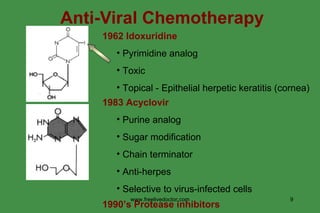
Anti-Viral Chemotherapy 1962 Idoxuridine Pyrimidine analog Toxic Topical - Epithelial herpetic keratitis (cornea) 1983 Acyclovir Purine analog Sugar modification Chain terminator Anti-herpes Selective to virus-infected cells 1990’s Protease inhibitors www.freelivedoctor.com
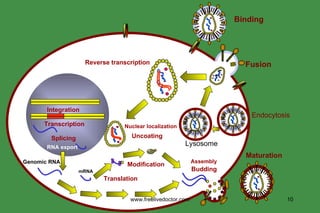
www.freelivedoctor.com Binding Fusion Reverse transcription Nuclear localization Uncoating Integration Transcription Splicing RNA export Genomic RNA mRNA Translation Modification Budding Assembly Maturation Endocytosis Lysosome
Anti-Viral Chemotherapy Binding to surface receptor At present no effective drugs in this class CD4-Ig2 (PRO542) - A more stable version of soluble CD4 is a tetrameric fusion protein of immunoglobulin G and CD4. It can reduce levels of virus in vivo AMD3100  -  appears to bind to CXCR4 (fusin)   RFI-641 (biphenyl triazine) active against RSV fusion Soluble CD4 -  May make HIV  more infective  as results in chemokine receptor being the only necessary receptor www.freelivedoctor.com
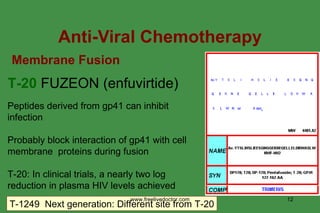
Anti-Viral Chemotherapy Peptides derived from gp41 can inhibit infection Probably block interaction of gp41 with cell membrane  proteins during fusion T-20: In clinical trials, a nearly two log reduction in plasma HIV levels achieved T-20  FUZEON (enfuvirtide) T-1249  Next generation: Different site from T-20 Membrane Fusion www.freelivedoctor.com
Anti-Viral Chemotherapy Endosome low pH often necessary for membrane fusion Lysosomotropic agents Membrane Fusion www.freelivedoctor.com
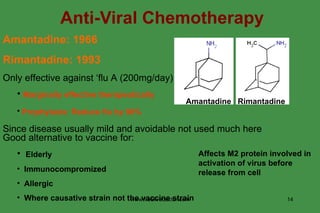
Anti-Viral Chemotherapy Amantadine: 1966 Rimantadine: 1993 Only effective against ‘flu A (200mg/day) Marginally effective therapeutically Prophylaxis: Reduce flu by 90%   Since disease usually mild and avoidable not used much here Good alternative to vaccine for: Elderly Immunocompromized Allergic Where causative strain not the vaccine strain Affects M2 protein involved in activation of virus before release from cell Amantadine  Rimantadine www.freelivedoctor.com
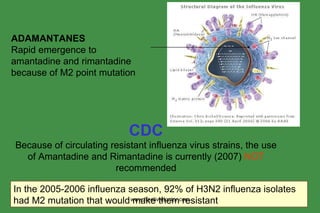
ADAMANTANES Rapid emergence to amantadine and rimantadine  because of M2 point mutation CDC Because of circulating resistant influenza virus strains, the use of Amantadine and Rimantadine is currently (2007)  NOT  recommended In the 2005-2006 influenza season, 92% of H3N2 influenza isolates had M2 mutation that would make them resistant www.freelivedoctor.com
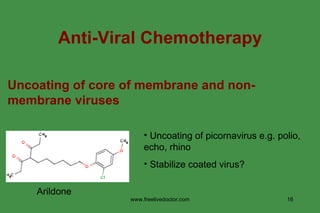
Uncoating of core of membrane and non-membrane viruses Uncoating of picornavirus e.g. polio, echo, rhino Stabilize coated virus? Anti-Viral Chemotherapy Arildone www.freelivedoctor.com
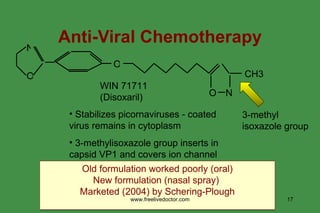
Anti-Viral Chemotherapy N O O O N CH3 WIN 71711  (Disoxaril) Stabilizes picornaviruses - coated virus remains in cytoplasm 3-methylisoxazole group inserts in capsid VP1 and covers ion channel Similar mechanism: Pleconaril Good bioavailability – readily absorbed Crosses blood-brain barrier Old formulation worked poorly (oral) New formulation (nasal spray)  Marketed (2004) by Schering-Plough www.freelivedoctor.com 3-methyl isoxazole group
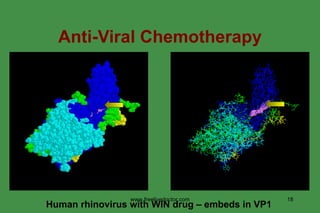
Anti-Viral Chemotherapy Human rhinovirus with WIN drug – embeds in VP1 VP1 VP1 www.freelivedoctor.com
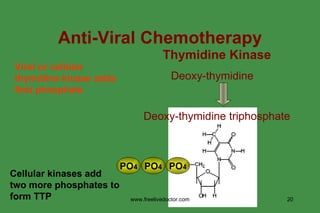
Anti-Viral Chemotherapy Nucleic Acid Synthesis Polymerases are often virally encoded Other enzymes in nucleic acid synthesis e.g. THYMIDINE KINASE in Herpes Simplex www.freelivedoctor.com
Thymidine Kinase Deoxy-thymidine  Deoxy-thymidine triphosphate Viral or cellular thymidine kinase adds first phosphate PO 4 PO 4 PO 4 Cellular kinases add two more phosphates to form TTP Anti-Viral Chemotherapy www.freelivedoctor.com
Anti-Viral Chemotherapy Why does Herpes simplex code for its own thymidine kinase? TK- virus cannot grow in neural cells because they are not proliferating (not making DNA) Although purine/pyrimidines are present, levels of phosphorylated nucleosides are low Allows virus to grow in cells that are not making DNA “ Thymidine kinase” is a misnomer Deoxynucleoside kinase NON-SPECIFIC www.freelivedoctor.com
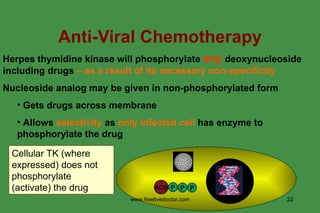
Anti-Viral Chemotherapy Herpes thymidine kinase will phosphorylate  any  deoxynucleoside including drugs  – as a result of its necessary non-specificity Nucleoside analog may be given in non-phosphorylated form Gets drugs across membrane Allows  selectivity  as  only infected cell  has enzyme to phosphorylate the drug ACG P P P Cellular TK (where expressed) does not phosphorylate (activate) the drug www.freelivedoctor.com
Anti-Viral Chemotherapy Need for activation restricts drug to: Viruses such as HSV that code for own thymidine kinase Virus such as cytomegalovirus and Epstein-Barr virus that induce cells to overproduce their own thymidine kinase In either case it is the VIRUS-INFECTED cell that activates the drug www.freelivedoctor.com
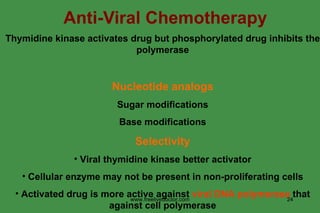
Anti-Viral Chemotherapy Thymidine kinase activates drug but phosphorylated drug inhibits the polymerase Nucleotide analogs Sugar modifications Base modifications Selectivity Viral thymidine kinase better activator Cellular enzyme may not be present in non-proliferating cells Activated drug is more active against  viral DNA polymerase  that against cell polymerase www.freelivedoctor.com
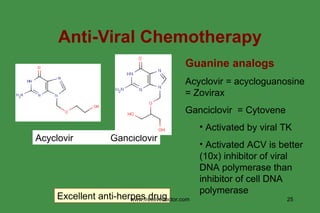
Anti-Viral Chemotherapy Guanine analogs Acyclovir = acycloguanosine = Zovirax Ganciclovir  = Cytovene Activated by viral TK Activated ACV is better (10x) inhibitor of viral DNA polymerase than inhibitor of cell DNA polymerase Excellent anti-herpes drug Acyclovir  Ganciclovir www.freelivedoctor.com
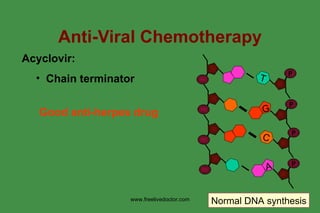
Anti-Viral Chemotherapy Acyclovir:  Chain terminator Good anti-herpes drug Normal DNA synthesis www.freelivedoctor.com T P P G P C P A
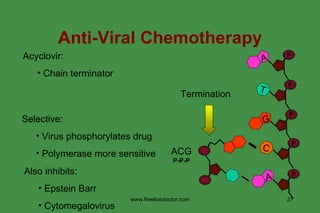
Termination Also inhibits: Epstein Barr Cytomegalovirus Acyclovir:  Chain terminator Selective: Virus phosphorylates drug Polymerase more sensitive Anti-Viral Chemotherapy www.freelivedoctor.com T P P G P C P A P A ACG P-P-P
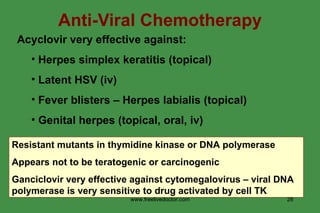
Anti-Viral Chemotherapy Acyclovir very effective against: Herpes simplex keratitis (topical) Latent HSV (iv) Fever blisters – Herpes labialis (topical) Genital herpes (topical, oral, iv) Resistant mutants in thymidine kinase or DNA polymerase Appears not to be teratogenic or carcinogenic Ganciclovir very effective against cytomegalovirus – viral DNA polymerase is very sensitive to drug activated by cell TK www.freelivedoctor.com
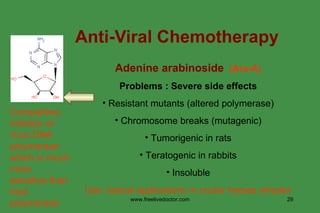
Anti-Viral Chemotherapy Adenine arabinoside   (Ara-A) Problems : Severe side effects Resistant mutants (altered polymerase) Chromosome breaks (mutagenic) Tumorigenic in rats Teratogenic in rabbits Insoluble Use: topical applications in ocular herpes simplex Competitive inhibitor of virus DNA polymerase which is much more sensitive than host polymerase www.freelivedoctor.com
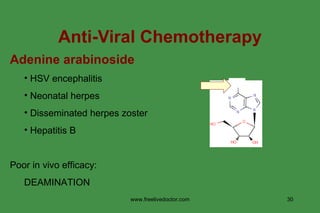
Anti-Viral Chemotherapy Adenine arabinoside HSV encephalitis Neonatal herpes Disseminated herpes zoster Hepatitis B Poor in vivo efficacy: DEAMINATION www.freelivedoctor.com
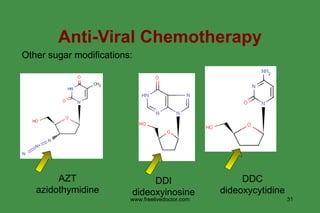
Anti-Viral Chemotherapy Other sugar modifications: AZT azidothymidine DDI dideoxyinosine DDC dideoxycytidine www.freelivedoctor.com
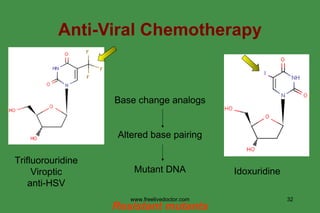
Anti-Viral Chemotherapy Base change analogs Altered base pairing Mutant DNA Resistant mutants Trifluorouridine Viroptic anti-HSV Idoxuridine www.freelivedoctor.com
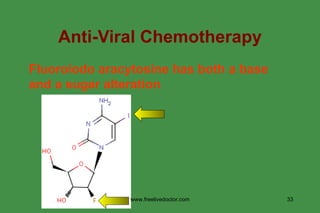
Anti-Viral Chemotherapy Fluoroiodo aracytosine has both a base and a sugar alteration www.freelivedoctor.com
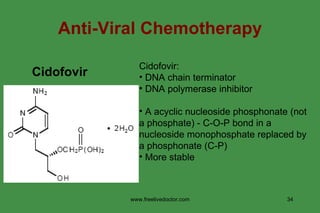
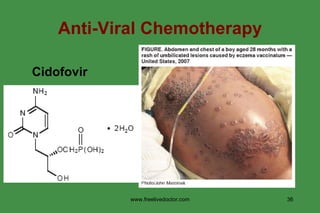
Anti-Viral Chemotherapy Cidofovir   Cidofovir: DNA chain terminator DNA polymerase inhibitor A acyclic nucleoside phosphonate (not a phosphate) - C-O-P bond in a nucleoside monophosphate replaced by a phosphonate (C-P) More stable  www.freelivedoctor.com
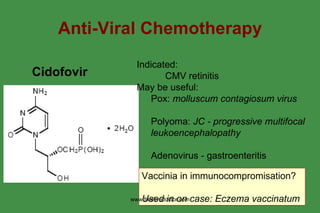
Anti-Viral Chemotherapy Cidofovir   Indicated: CMV retinitis May be useful: Pox:  molluscum contagiosum virus Polyoma:  JC - progressive multifocal leukoencephalopathy   Adenovirus - gastroenteritis Vaccinia in immunocompromisation? Used in on case: Eczema vaccinatum   www.freelivedoctor.com
Anti-Viral Chemotherapy Cidofovir   www.freelivedoctor.com
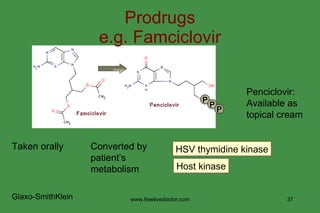
Prodrugs e.g. Famciclovir Taken orally Converted by patient’s  metabolism HSV thymidine kinase P Host kinase P P Penciclovir: Available as topical cream Glaxo-SmithKlein www.freelivedoctor.com
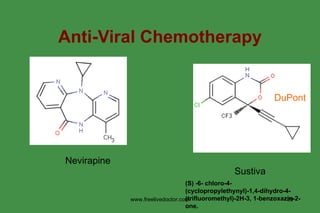
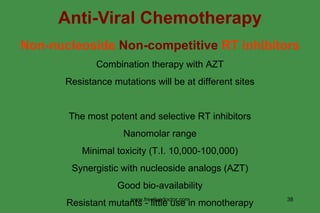
Anti-Viral Chemotherapy Non-nucleoside  Non-competitive  RT inhibitors Combination therapy with AZT Resistance mutations will be at different sites The most potent and selective RT inhibitors Nanomolar range Minimal toxicity (T.I. 10,000-100,000) Synergistic with nucleoside analogs (AZT) Good bio-availability Resistant mutants - little use in monotherapy www.freelivedoctor.com
Anti-Viral Chemotherapy Sustiva (S) -6- chloro-4-(cyclopropylethynyl)-1,4-dihydro-4-(trifluoromethyl)-2H-3, 1-benzoxazin-2-one. DuPont Nevirapine www.freelivedoctor.com
Anti-Viral Chemotherapy Nevirapine:  Approved for AIDS patients Good blocker of mother to child transmission  peri-natal -  breast feeding Single dose at delivery reduced HIV transmission by 50% Single dose to baby by 72 hours Efavirenz (Sustiva, DMP266) In  combination therapy  will suppress viral load as well as HAART and may be better – Approved for AIDS patients www.freelivedoctor.com
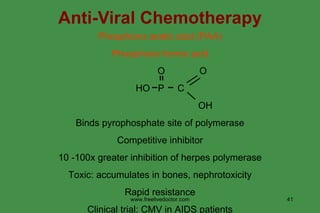
Anti-Viral Chemotherapy www.freelivedoctor.com Phosphono acetic acid (PAA) Phosphono formic acid   O  O HO  P  C   OH Binds pyrophosphate site of polymerase Competitive inhibitor 10 -100x greater inhibition of herpes polymerase Toxic: accumulates in bones, nephrotoxicity Rapid resistance Clinical trial: CMV in AIDS patients
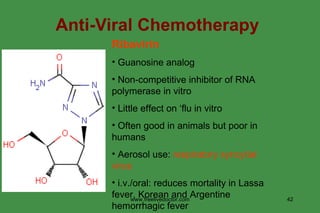
Anti-Viral Chemotherapy Ribavirin Guanosine analog Non-competitive inhibitor of RNA polymerase in vitro Little effect on ‘flu in vitro Often good in animals but poor in humans Aerosol use:  respiratory syncytial virus i.v./oral: reduces mortality in Lassa fever, Korean and Argentine hemorrhagic fever www.freelivedoctor.com
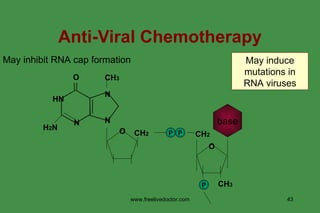
Anti-Viral Chemotherapy May induce mutations in RNA viruses www.freelivedoctor.com May inhibit RNA cap formation N N N HN H 2 N O CH 3 O CH 2 P P CH 2 O CH 3 P base
Anti-Viral Chemotherapy Viral  Protein synthesis: No inhibitors www.freelivedoctor.com
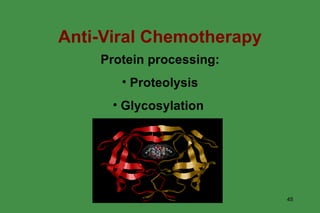
Anti-Viral Chemotherapy Protein processing: Proteolysis Glycosylation  www.freelivedoctor.com
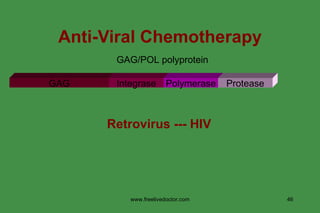
Anti-Viral Chemotherapy GAG Integrase Polymerase Protease GAG/POL polyprotein Retrovirus --- HIV www.freelivedoctor.com
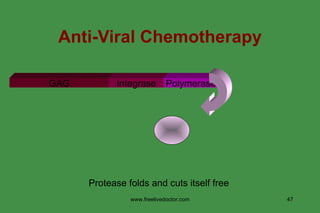
Anti-Viral Chemotherapy GAG Integrase Polymerase Protease folds and cuts itself free www.freelivedoctor.com
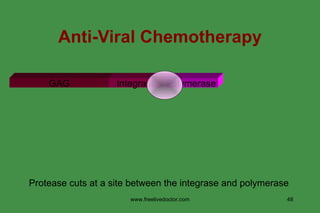
Anti-Viral Chemotherapy GAG Integrase Polymerase Protease cuts at a site between the integrase and polymerase www.freelivedoctor.com
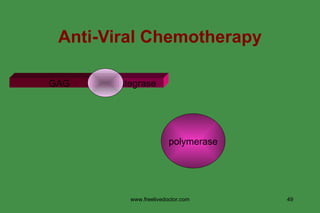
Anti-Viral Chemotherapy GAG Integrase polymerase www.freelivedoctor.com
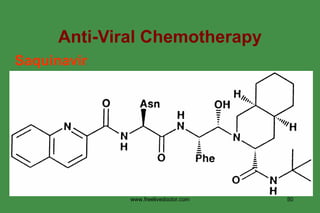
Anti-Viral Chemotherapy Saquinavir www.freelivedoctor.com
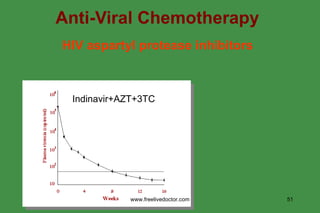
Anti-Viral Chemotherapy HIV aspartyl protease inhibitors Indinavir+AZT+3TC www.freelivedoctor.com
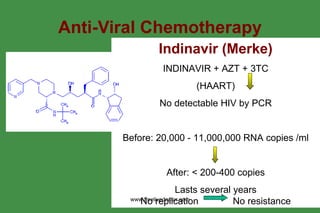
Anti-Viral Chemotherapy Indinavir (Merke) INDINAVIR + AZT + 3TC (HAART) No detectable HIV by PCR Before: 20,000 - 11,000,000 RNA copies /ml After: < 200-400 copies Lasts several years No replication  No resistance www.freelivedoctor.com
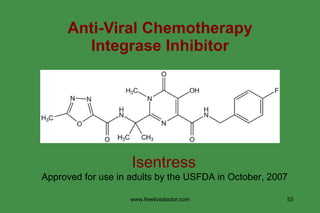
Anti-Viral Chemotherapy Integrase Inhibitor Isentress  Approved for use in adults by the USFDA in October, 2007  www.freelivedoctor.com
Anti-Viral Chemotherapy Influenza Requires neuraminidase to escape from cell Requires neuraminidase to penetrate mucus Zanamivir - RELENZA (fall 1997) Neuraminidase inhibitor Active against Influenza A and Influenza B www.freelivedoctor.com
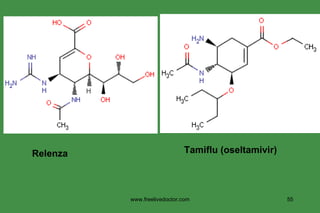
Relenza Tamiflu (oseltamivir) www.freelivedoctor.com
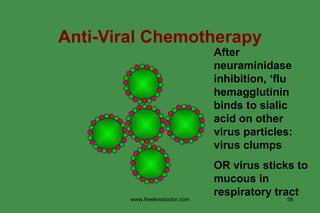
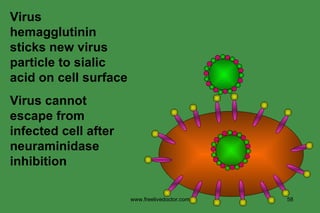
Anti-Viral Chemotherapy After neuraminidase inhibition, ‘flu hemagglutinin binds to sialic acid on other virus particles: virus clumps OR virus sticks to mucous in respiratory tract www.freelivedoctor.com
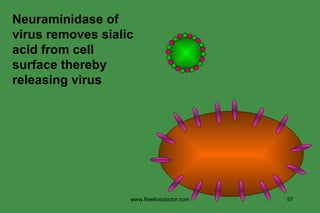
Neuraminidase of virus removes sialic acid from cell surface thereby releasing virus www.freelivedoctor.com
Virus hemagglutinin sticks new virus particle to sialic acid on cell surface Virus cannot escape from infected cell after neuraminidase inhibition www.freelivedoctor.com
Anti-Viral Chemotherapy Zanamivir - Relenza Neuraminidase inhibitor Nasal spray Shortens symptoms by a few days Tamiflu: Oral neuraminidase inhibitor www.freelivedoctor.com
NEURAMINDIASE INHIBITORS TREATMENT Oseltamivir is approved for treatment of persons aged  > 1 year Zanamivir is approved for treatment of persons aged  > 7 years PROPHYLAXIS Oseltamivir and zanamivir can be used for chemoprophylaxis of influenza Oseltamivir is licensed for use in persons aged  > 1 year Zanamivir is licensed for use in persons aged  > 5 years Anti-Viral Chemotherapy www.freelivedoctor.com
NEURAMINIDASE INHIBITORS Development of viral resistance to zanamivir and oseltamivir during treatment has been identified  No transmission of neuraminidase inhibitor-resistant viruses in humans has been documented to date Data are limited concerning the effectiveness of zanamivir and oseltamivir for treatment of influenza among persons at high risk for serious complications of influenza Anti-Viral Chemotherapy Among influenza virus- infected participants in 10 clinical trials, the risk for pneumonia among those participants receiving oseltamivir was approximately 50% lower than among those persons receiving a placebo www.freelivedoctor.com

Antiviral Chemotherapy

  • 1.
    Anti-Viral Chemotherapy BacteriaMany antibiotics Highly selective Viruses Use host cell metabolism Selectivity difficult Toxicity www.freelivedoctor.com
  • 2.
    Anti-Viral Chemotherapy Keyis selectivity Other problems Toxicity Rapid excretion Rapid metabolism Poor absorption www.freelivedoctor.com
  • 3.
    Anti-Viral Chemotherapy IdealDrug Water soluble Chemically and metabolically stable Easily absorbed (apolar) NOT Toxic Carcinogenic Allergenic Mutagenic Teratogenic www.freelivedoctor.com
  • 4.
    Anti-Viral Chemotherapy Therapeuticindex (T.I.) Minimum dose toxic to cell Minimum dose toxic to virus Effective drug: T.I. = 100-1000 at least www.freelivedoctor.com
  • 5.
    Anti-Viral Chemotherapy Anotherconsideration: Disease severity Rhinovirus v. Symptomatic rabies or Lassa fever www.freelivedoctor.com
  • 6.
    Anti-Viral Chemotherapy Reasonsfor continuing search for anti-virals versus vaccines: For many established diseases there is still no effective vaccine Rapid mutation (retroviruses) Or there are problems with the current vaccine Reassortment (influenza) New and emerging diseases - no vaccine available Vaccine development takes many years Disease that involve immunosuppression (AIDS, cancer, transplantation) At present no drug completely suppresses viral replication (with possible exception of anti-HIV protease inhibitors) www.freelivedoctor.com
  • 7.
    Anti-Viral Chemotherapy Asuccessful drug must interfere with: A specific viral function e.g. enzyme necessary for viral life cycle A cellular function that the virus needs in order to replicate If interfere with cellular function either: It must be crucial to virus but not the cell or Only the virus-infected cell must be killed (activation of drug in the infected cell only?) www.freelivedoctor.com
  • 8.
    Anti-Viral Chemotherapy Viralenzymes Nucleic acid polymerases DNA-dependent DNA polymerase - DNA viruses RNA-dependent RNA polymerase - RNA viruses RNA dependent DNA polymerase (RT) - Retroviruses Protease (retrovirus) Integrase (retrovirus) Neuraminidase (orthomyxovirus) www.freelivedoctor.com
  • 9.
    Anti-Viral Chemotherapy 1962Idoxuridine Pyrimidine analog Toxic Topical - Epithelial herpetic keratitis (cornea) 1983 Acyclovir Purine analog Sugar modification Chain terminator Anti-herpes Selective to virus-infected cells 1990’s Protease inhibitors www.freelivedoctor.com
  • 10.
    www.freelivedoctor.com Binding FusionReverse transcription Nuclear localization Uncoating Integration Transcription Splicing RNA export Genomic RNA mRNA Translation Modification Budding Assembly Maturation Endocytosis Lysosome
  • 11.
    Anti-Viral Chemotherapy Bindingto surface receptor At present no effective drugs in this class CD4-Ig2 (PRO542) - A more stable version of soluble CD4 is a tetrameric fusion protein of immunoglobulin G and CD4. It can reduce levels of virus in vivo AMD3100 - appears to bind to CXCR4 (fusin) RFI-641 (biphenyl triazine) active against RSV fusion Soluble CD4 - May make HIV more infective as results in chemokine receptor being the only necessary receptor www.freelivedoctor.com
  • 12.
    Anti-Viral Chemotherapy Peptidesderived from gp41 can inhibit infection Probably block interaction of gp41 with cell membrane proteins during fusion T-20: In clinical trials, a nearly two log reduction in plasma HIV levels achieved T-20 FUZEON (enfuvirtide) T-1249 Next generation: Different site from T-20 Membrane Fusion www.freelivedoctor.com
  • 13.
    Anti-Viral Chemotherapy Endosomelow pH often necessary for membrane fusion Lysosomotropic agents Membrane Fusion www.freelivedoctor.com
  • 14.
    Anti-Viral Chemotherapy Amantadine:1966 Rimantadine: 1993 Only effective against ‘flu A (200mg/day) Marginally effective therapeutically Prophylaxis: Reduce flu by 90% Since disease usually mild and avoidable not used much here Good alternative to vaccine for: Elderly Immunocompromized Allergic Where causative strain not the vaccine strain Affects M2 protein involved in activation of virus before release from cell Amantadine Rimantadine www.freelivedoctor.com
  • 15.
    ADAMANTANES Rapid emergenceto amantadine and rimantadine because of M2 point mutation CDC Because of circulating resistant influenza virus strains, the use of Amantadine and Rimantadine is currently (2007) NOT recommended In the 2005-2006 influenza season, 92% of H3N2 influenza isolates had M2 mutation that would make them resistant www.freelivedoctor.com
  • 16.
    Uncoating of coreof membrane and non-membrane viruses Uncoating of picornavirus e.g. polio, echo, rhino Stabilize coated virus? Anti-Viral Chemotherapy Arildone www.freelivedoctor.com
  • 17.
    Anti-Viral Chemotherapy NO O O N CH3 WIN 71711 (Disoxaril) Stabilizes picornaviruses - coated virus remains in cytoplasm 3-methylisoxazole group inserts in capsid VP1 and covers ion channel Similar mechanism: Pleconaril Good bioavailability – readily absorbed Crosses blood-brain barrier Old formulation worked poorly (oral) New formulation (nasal spray) Marketed (2004) by Schering-Plough www.freelivedoctor.com 3-methyl isoxazole group
  • 18.
    Anti-Viral Chemotherapy Humanrhinovirus with WIN drug – embeds in VP1 VP1 VP1 www.freelivedoctor.com
  • 19.
    Anti-Viral Chemotherapy NucleicAcid Synthesis Polymerases are often virally encoded Other enzymes in nucleic acid synthesis e.g. THYMIDINE KINASE in Herpes Simplex www.freelivedoctor.com
  • 20.
    Thymidine Kinase Deoxy-thymidine Deoxy-thymidine triphosphate Viral or cellular thymidine kinase adds first phosphate PO 4 PO 4 PO 4 Cellular kinases add two more phosphates to form TTP Anti-Viral Chemotherapy www.freelivedoctor.com
  • 21.
    Anti-Viral Chemotherapy Whydoes Herpes simplex code for its own thymidine kinase? TK- virus cannot grow in neural cells because they are not proliferating (not making DNA) Although purine/pyrimidines are present, levels of phosphorylated nucleosides are low Allows virus to grow in cells that are not making DNA “ Thymidine kinase” is a misnomer Deoxynucleoside kinase NON-SPECIFIC www.freelivedoctor.com
  • 22.
    Anti-Viral Chemotherapy Herpesthymidine kinase will phosphorylate any deoxynucleoside including drugs – as a result of its necessary non-specificity Nucleoside analog may be given in non-phosphorylated form Gets drugs across membrane Allows selectivity as only infected cell has enzyme to phosphorylate the drug ACG P P P Cellular TK (where expressed) does not phosphorylate (activate) the drug www.freelivedoctor.com
  • 23.
    Anti-Viral Chemotherapy Needfor activation restricts drug to: Viruses such as HSV that code for own thymidine kinase Virus such as cytomegalovirus and Epstein-Barr virus that induce cells to overproduce their own thymidine kinase In either case it is the VIRUS-INFECTED cell that activates the drug www.freelivedoctor.com
  • 24.
    Anti-Viral Chemotherapy Thymidinekinase activates drug but phosphorylated drug inhibits the polymerase Nucleotide analogs Sugar modifications Base modifications Selectivity Viral thymidine kinase better activator Cellular enzyme may not be present in non-proliferating cells Activated drug is more active against viral DNA polymerase that against cell polymerase www.freelivedoctor.com
  • 25.
    Anti-Viral Chemotherapy Guanineanalogs Acyclovir = acycloguanosine = Zovirax Ganciclovir = Cytovene Activated by viral TK Activated ACV is better (10x) inhibitor of viral DNA polymerase than inhibitor of cell DNA polymerase Excellent anti-herpes drug Acyclovir Ganciclovir www.freelivedoctor.com
  • 26.
    Anti-Viral Chemotherapy Acyclovir: Chain terminator Good anti-herpes drug Normal DNA synthesis www.freelivedoctor.com T P P G P C P A
  • 27.
    Termination Also inhibits:Epstein Barr Cytomegalovirus Acyclovir: Chain terminator Selective: Virus phosphorylates drug Polymerase more sensitive Anti-Viral Chemotherapy www.freelivedoctor.com T P P G P C P A P A ACG P-P-P
  • 28.
    Anti-Viral Chemotherapy Acyclovirvery effective against: Herpes simplex keratitis (topical) Latent HSV (iv) Fever blisters – Herpes labialis (topical) Genital herpes (topical, oral, iv) Resistant mutants in thymidine kinase or DNA polymerase Appears not to be teratogenic or carcinogenic Ganciclovir very effective against cytomegalovirus – viral DNA polymerase is very sensitive to drug activated by cell TK www.freelivedoctor.com
  • 29.
    Anti-Viral Chemotherapy Adeninearabinoside (Ara-A) Problems : Severe side effects Resistant mutants (altered polymerase) Chromosome breaks (mutagenic) Tumorigenic in rats Teratogenic in rabbits Insoluble Use: topical applications in ocular herpes simplex Competitive inhibitor of virus DNA polymerase which is much more sensitive than host polymerase www.freelivedoctor.com
  • 30.
    Anti-Viral Chemotherapy Adeninearabinoside HSV encephalitis Neonatal herpes Disseminated herpes zoster Hepatitis B Poor in vivo efficacy: DEAMINATION www.freelivedoctor.com
  • 31.
    Anti-Viral Chemotherapy Othersugar modifications: AZT azidothymidine DDI dideoxyinosine DDC dideoxycytidine www.freelivedoctor.com
  • 32.
    Anti-Viral Chemotherapy Basechange analogs Altered base pairing Mutant DNA Resistant mutants Trifluorouridine Viroptic anti-HSV Idoxuridine www.freelivedoctor.com
  • 33.
    Anti-Viral Chemotherapy Fluoroiodoaracytosine has both a base and a sugar alteration www.freelivedoctor.com
  • 34.
    Anti-Viral Chemotherapy Cidofovir Cidofovir: DNA chain terminator DNA polymerase inhibitor A acyclic nucleoside phosphonate (not a phosphate) - C-O-P bond in a nucleoside monophosphate replaced by a phosphonate (C-P) More stable www.freelivedoctor.com
  • 35.
    Anti-Viral Chemotherapy Cidofovir Indicated: CMV retinitis May be useful: Pox: molluscum contagiosum virus Polyoma: JC - progressive multifocal leukoencephalopathy Adenovirus - gastroenteritis Vaccinia in immunocompromisation? Used in on case: Eczema vaccinatum www.freelivedoctor.com
  • 36.
    Anti-Viral Chemotherapy Cidofovir www.freelivedoctor.com
  • 37.
    Prodrugs e.g. FamciclovirTaken orally Converted by patient’s metabolism HSV thymidine kinase P Host kinase P P Penciclovir: Available as topical cream Glaxo-SmithKlein www.freelivedoctor.com
  • 38.
    Anti-Viral Chemotherapy Non-nucleoside Non-competitive RT inhibitors Combination therapy with AZT Resistance mutations will be at different sites The most potent and selective RT inhibitors Nanomolar range Minimal toxicity (T.I. 10,000-100,000) Synergistic with nucleoside analogs (AZT) Good bio-availability Resistant mutants - little use in monotherapy www.freelivedoctor.com
  • 39.
    Anti-Viral Chemotherapy Sustiva(S) -6- chloro-4-(cyclopropylethynyl)-1,4-dihydro-4-(trifluoromethyl)-2H-3, 1-benzoxazin-2-one. DuPont Nevirapine www.freelivedoctor.com
  • 40.
    Anti-Viral Chemotherapy Nevirapine: Approved for AIDS patients Good blocker of mother to child transmission peri-natal - breast feeding Single dose at delivery reduced HIV transmission by 50% Single dose to baby by 72 hours Efavirenz (Sustiva, DMP266) In combination therapy will suppress viral load as well as HAART and may be better – Approved for AIDS patients www.freelivedoctor.com
  • 41.
    Anti-Viral Chemotherapy www.freelivedoctor.comPhosphono acetic acid (PAA) Phosphono formic acid O O HO P C OH Binds pyrophosphate site of polymerase Competitive inhibitor 10 -100x greater inhibition of herpes polymerase Toxic: accumulates in bones, nephrotoxicity Rapid resistance Clinical trial: CMV in AIDS patients
  • 42.
    Anti-Viral Chemotherapy RibavirinGuanosine analog Non-competitive inhibitor of RNA polymerase in vitro Little effect on ‘flu in vitro Often good in animals but poor in humans Aerosol use: respiratory syncytial virus i.v./oral: reduces mortality in Lassa fever, Korean and Argentine hemorrhagic fever www.freelivedoctor.com
  • 43.
    Anti-Viral Chemotherapy Mayinduce mutations in RNA viruses www.freelivedoctor.com May inhibit RNA cap formation N N N HN H 2 N O CH 3 O CH 2 P P CH 2 O CH 3 P base
  • 44.
    Anti-Viral Chemotherapy Viral Protein synthesis: No inhibitors www.freelivedoctor.com
  • 45.
    Anti-Viral Chemotherapy Proteinprocessing: Proteolysis Glycosylation www.freelivedoctor.com
  • 46.
    Anti-Viral Chemotherapy GAGIntegrase Polymerase Protease GAG/POL polyprotein Retrovirus --- HIV www.freelivedoctor.com
  • 47.
    Anti-Viral Chemotherapy GAGIntegrase Polymerase Protease folds and cuts itself free www.freelivedoctor.com
  • 48.
    Anti-Viral Chemotherapy GAGIntegrase Polymerase Protease cuts at a site between the integrase and polymerase www.freelivedoctor.com
  • 49.
    Anti-Viral Chemotherapy GAGIntegrase polymerase www.freelivedoctor.com
  • 50.
    Anti-Viral Chemotherapy Saquinavirwww.freelivedoctor.com
  • 51.
    Anti-Viral Chemotherapy HIVaspartyl protease inhibitors Indinavir+AZT+3TC www.freelivedoctor.com
  • 52.
    Anti-Viral Chemotherapy Indinavir(Merke) INDINAVIR + AZT + 3TC (HAART) No detectable HIV by PCR Before: 20,000 - 11,000,000 RNA copies /ml After: < 200-400 copies Lasts several years No replication No resistance www.freelivedoctor.com
  • 53.
    Anti-Viral Chemotherapy IntegraseInhibitor Isentress Approved for use in adults by the USFDA in October, 2007 www.freelivedoctor.com
  • 54.
    Anti-Viral Chemotherapy InfluenzaRequires neuraminidase to escape from cell Requires neuraminidase to penetrate mucus Zanamivir - RELENZA (fall 1997) Neuraminidase inhibitor Active against Influenza A and Influenza B www.freelivedoctor.com
  • 55.
    Relenza Tamiflu (oseltamivir)www.freelivedoctor.com
  • 56.
    Anti-Viral Chemotherapy Afterneuraminidase inhibition, ‘flu hemagglutinin binds to sialic acid on other virus particles: virus clumps OR virus sticks to mucous in respiratory tract www.freelivedoctor.com
  • 57.
    Neuraminidase of virusremoves sialic acid from cell surface thereby releasing virus www.freelivedoctor.com
  • 58.
    Virus hemagglutinin sticksnew virus particle to sialic acid on cell surface Virus cannot escape from infected cell after neuraminidase inhibition www.freelivedoctor.com
  • 59.
    Anti-Viral Chemotherapy Zanamivir- Relenza Neuraminidase inhibitor Nasal spray Shortens symptoms by a few days Tamiflu: Oral neuraminidase inhibitor www.freelivedoctor.com
  • 60.
    NEURAMINDIASE INHIBITORS TREATMENTOseltamivir is approved for treatment of persons aged > 1 year Zanamivir is approved for treatment of persons aged > 7 years PROPHYLAXIS Oseltamivir and zanamivir can be used for chemoprophylaxis of influenza Oseltamivir is licensed for use in persons aged > 1 year Zanamivir is licensed for use in persons aged > 5 years Anti-Viral Chemotherapy www.freelivedoctor.com
  • 61.
    NEURAMINIDASE INHIBITORS Developmentof viral resistance to zanamivir and oseltamivir during treatment has been identified No transmission of neuraminidase inhibitor-resistant viruses in humans has been documented to date Data are limited concerning the effectiveness of zanamivir and oseltamivir for treatment of influenza among persons at high risk for serious complications of influenza Anti-Viral Chemotherapy Among influenza virus- infected participants in 10 clinical trials, the risk for pneumonia among those participants receiving oseltamivir was approximately 50% lower than among those persons receiving a placebo www.freelivedoctor.com