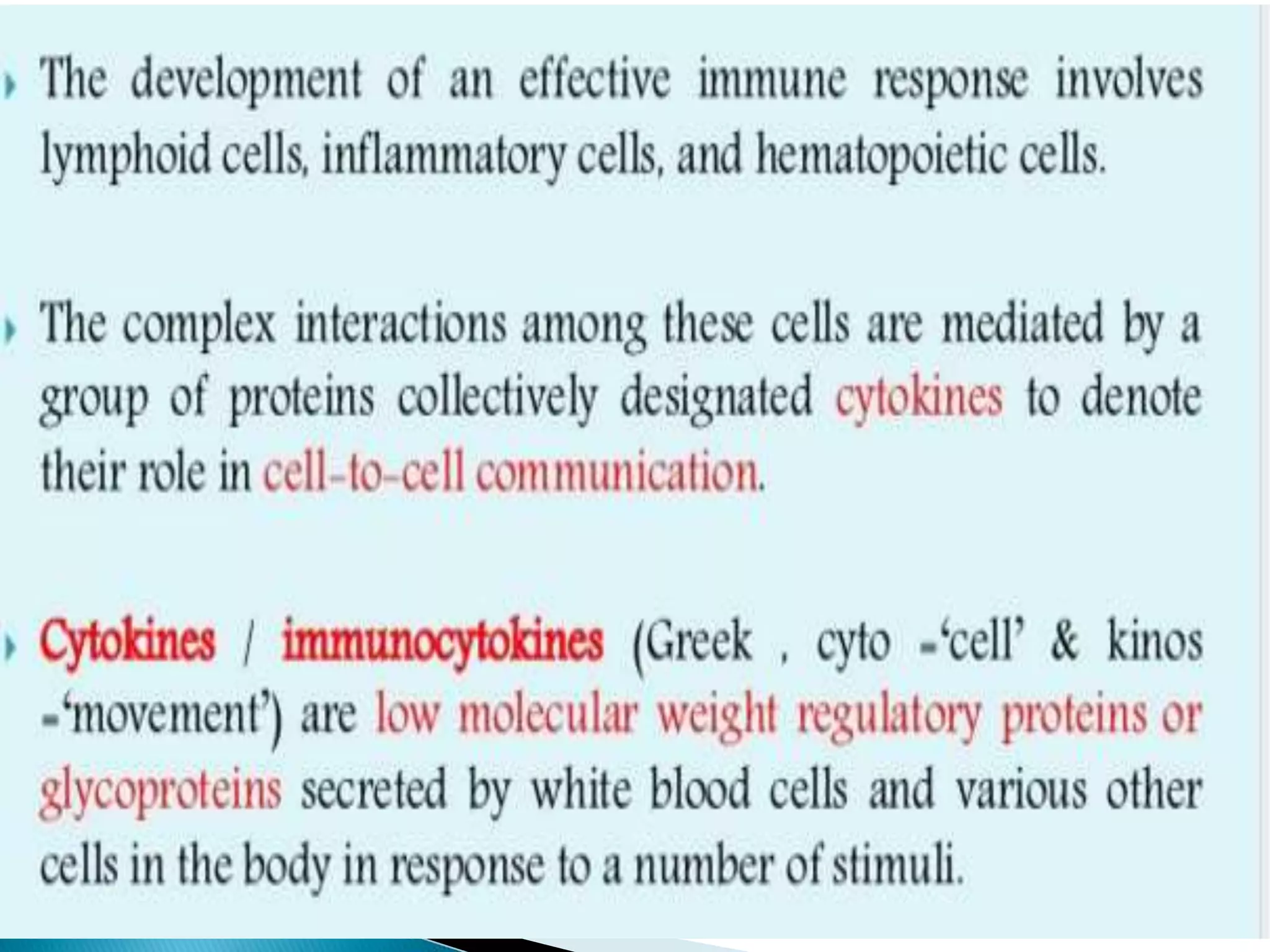
 DEFINITION
 PROPERTIES OF CYTOKINES
 NOMENCLATURE
 CLASSIFICATION
 CYTOKINE RECEPTORS
 CYTOKINE SIGNALING
 CYTOKINE ANTAGONIST
 TH1 AND TH2
 CYOKINE RELATED DISEASES
 CYTOKINE THEARPY
 CYTOKINE IN HEMATOPOIESIS
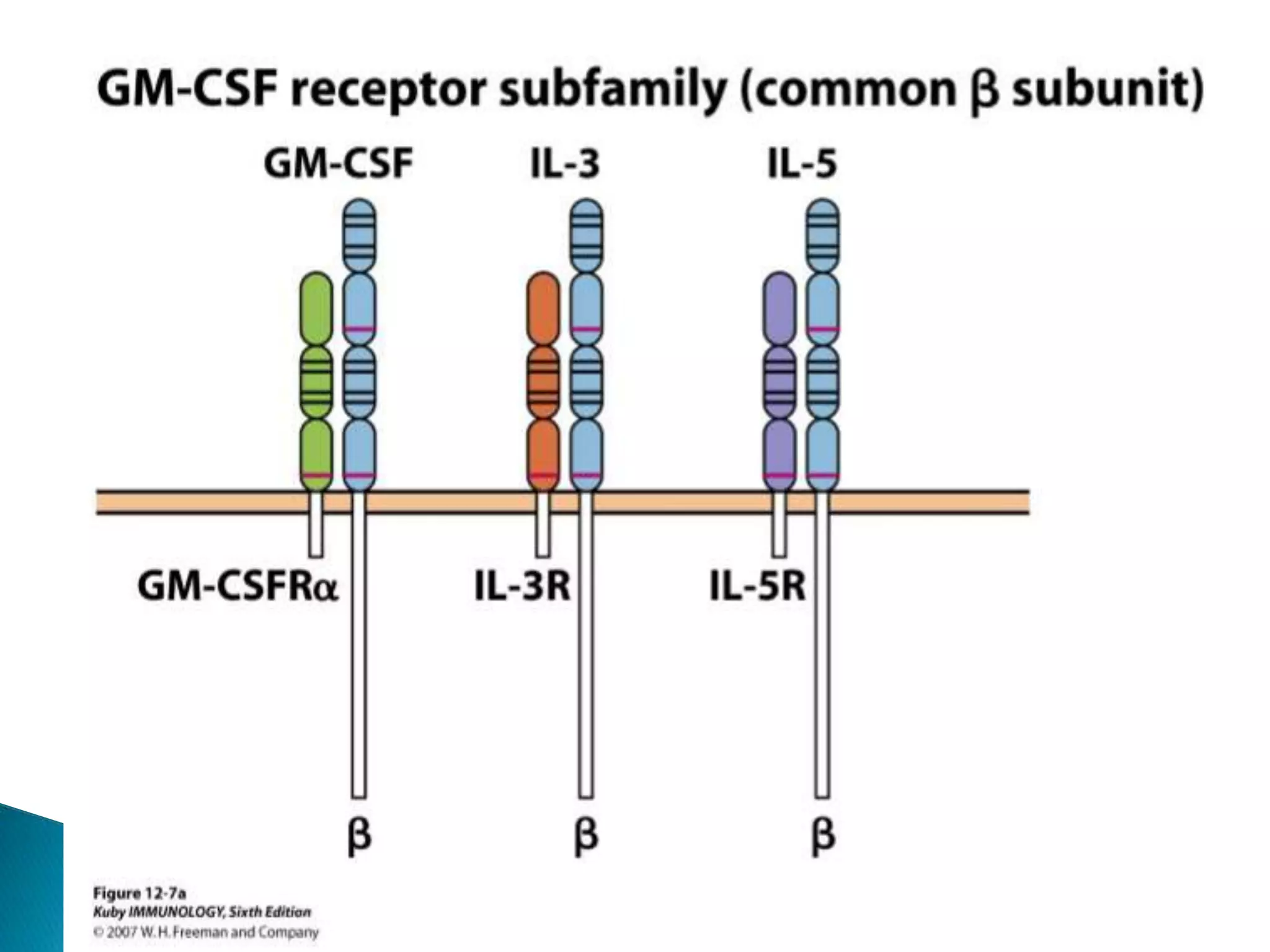
 HEMATOPOIETIN FAMILY
 INTERFERON FAMILY
 CHEMOKINE FAMILY
 TUMOR NECROSIS FACTOR FAMILY
Non specificity of cytokines conflicts with
established specificity of immune system
How does this work?
-Careful expression of the receptors for those
cytokines on specific cells
-Receptors are often only expressed after
exposure to antigen
IL-2R is the most thoroughly studied
cytokine receptor
-Expressed by T cells for proliferation
-Also called CD25, surface marker in
mature T cells
-Complete receptor has 3 subunits
-Majority of cytokine receptors are in Class I and
Class II families
-These cytokine receptors lack signaling
motifs, this was puzzling to researchers
-IFN-γ was studied because of it’s ability to block viral
replication like other interferons
However, this IFN plays immunoregulatory role
which lead to understanding the process of
signal transduction through cytokine receptors
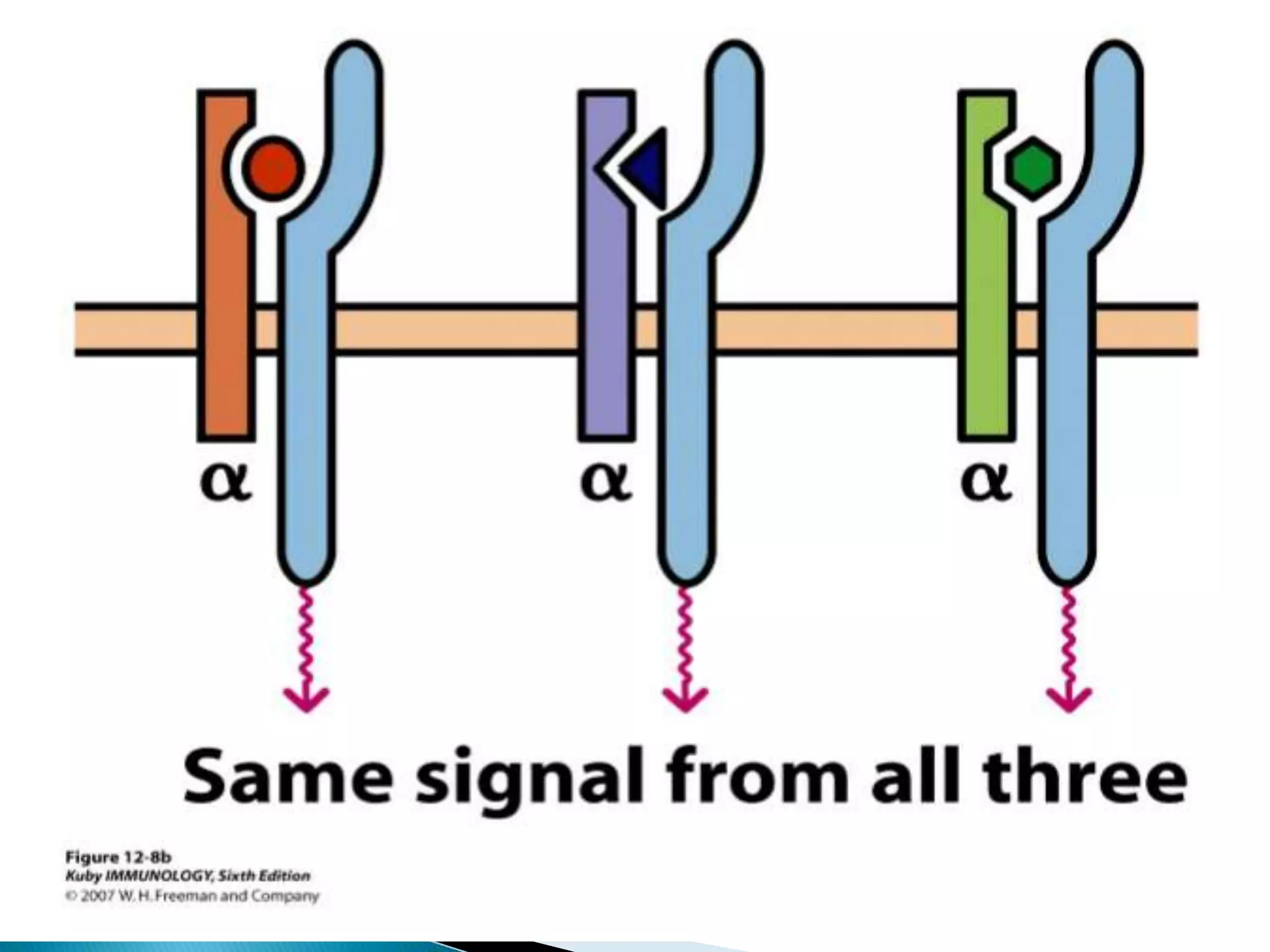
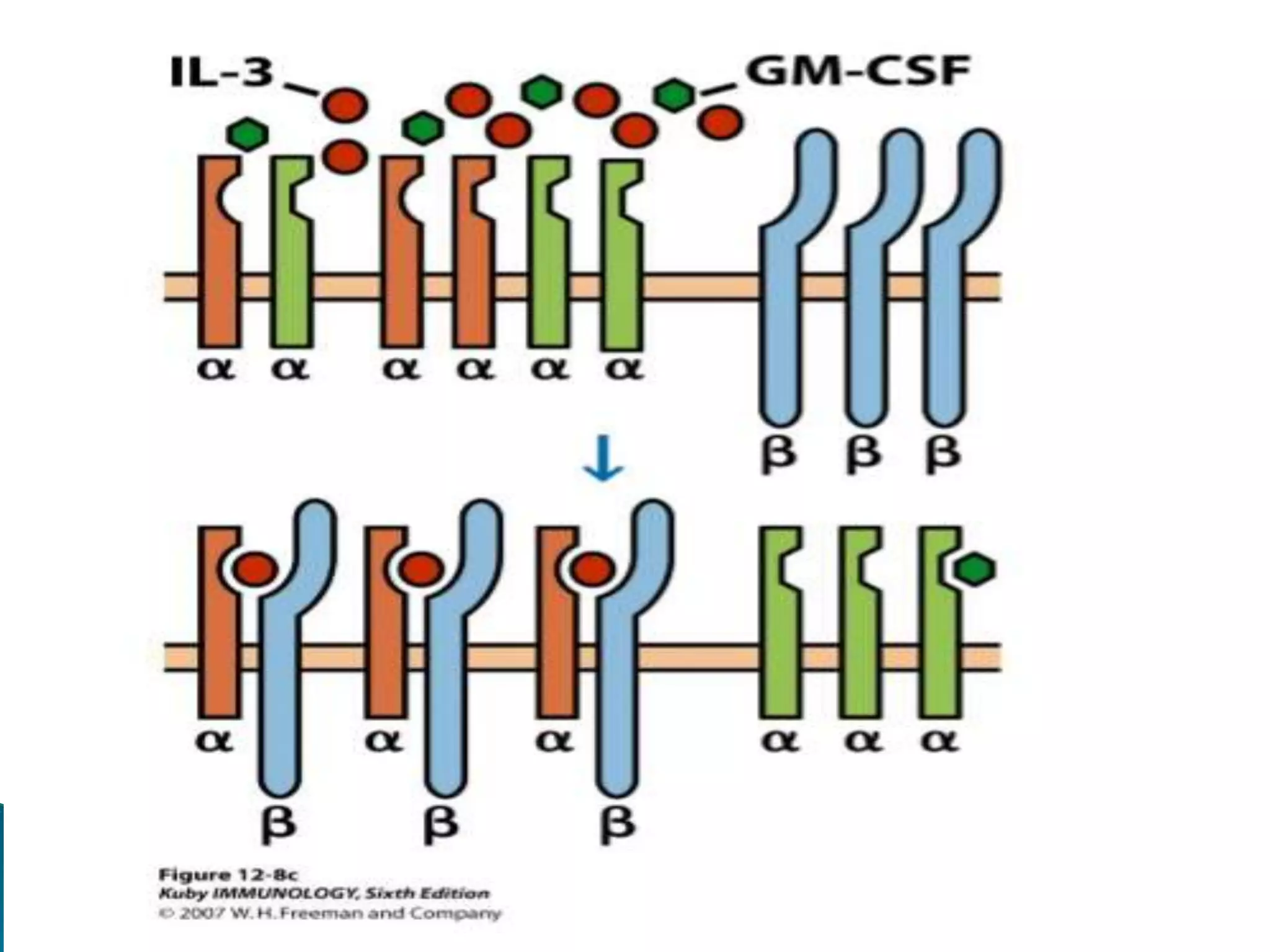
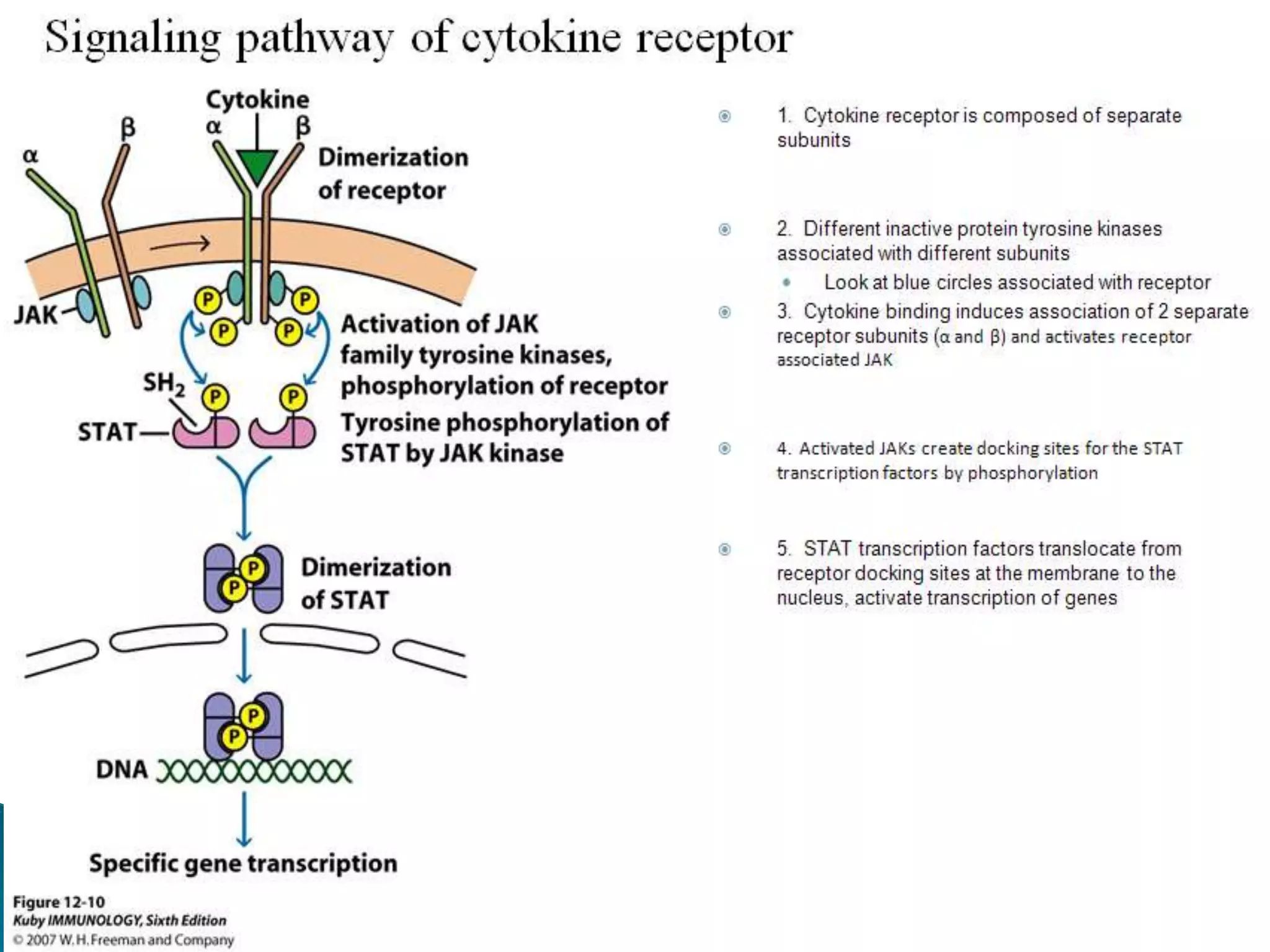
-Ligand Binds  Subunit
-Ligand Binding Causes Dimerization
of Receptor
-JAKs Get Activated
#Phosphorylation of tyrosine residues on
receptor
#Phosphorylation of JAKs themselves
-STATS Dock Receptor
#Phosphorylation of STATs by JAKs
-Dimerized STATs Translocate To
Nucleus
-Gene Expression
 Number of proteins can inhibit cytokine activity
○ Can bind to receptor OR
○ Can bind to cytokine, disabling it
 Enzymatic cleavage of receptors and release of
these can bind cytokines in the blood
- Marker of chronic T cell activation (transplant
rejection, AIDS)
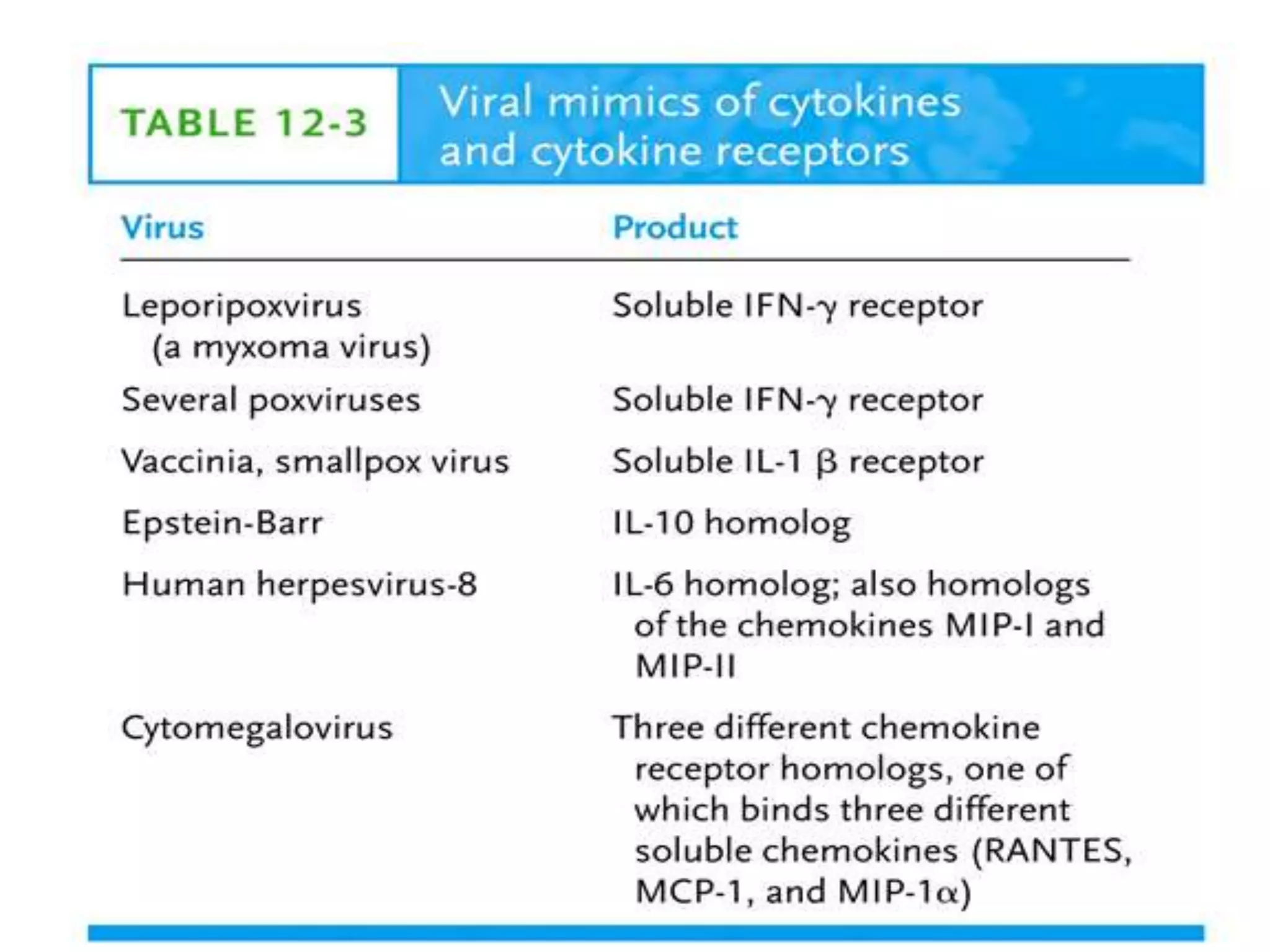
 Viruses have developed strategies
○ Cytokine homologs
○ Cytokine binding proteins
○ Homologs of cytokine receptors
○ Interference with intracellular signaling
○ Interference with cytokine secretion
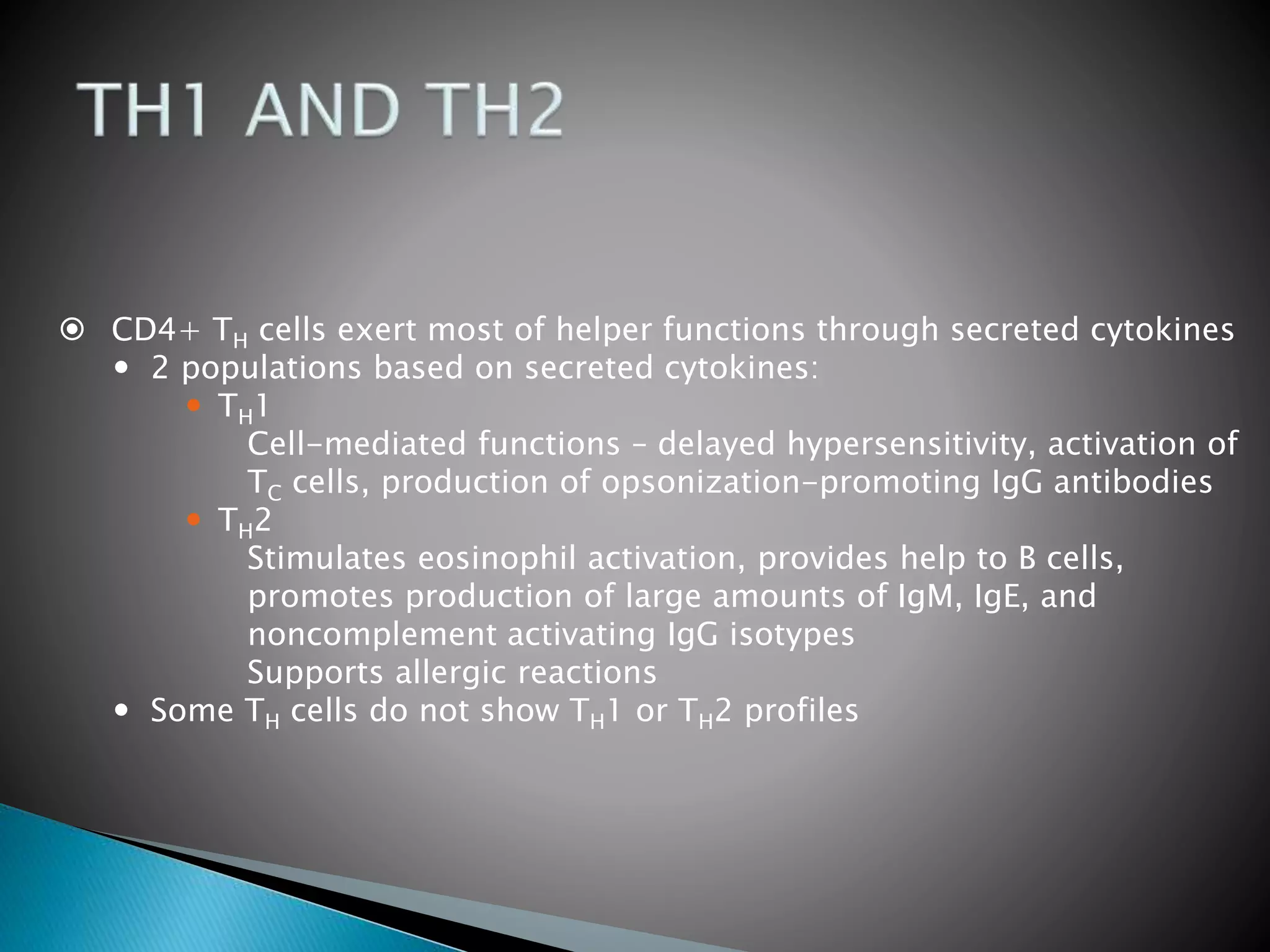
 CD4+ TH cells exert most of helper functions through secreted cytokines
 2 populations based on secreted cytokines:
 TH1
Cell-mediated functions – delayed hypersensitivity, activation of
TC cells, production of opsonization-promoting IgG antibodies
 TH2
Stimulates eosinophil activation, provides help to B cells,
promotes production of large amounts of IgM, IgE, and
noncomplement activating IgG isotypes
Supports allergic reactions
 Some TH cells do not show TH1 or TH2 profiles
-Promote growth of subset that produces
them
-Inhibit development and activity of other
subset
-Progression of some diseases depends
on balance between TH1 and TH2
-T-bet Expression Results In TH1
-T-bet Suppresses TH2
-GATA-3 Results In TH2
-GATA-3 Suppresses TH1
-IFN- Regulates Expression of T-bet (Stat 1)
-IL-4 Regulates Expression of GATA-3 (Stat
6)
-SCID
Genetic defects in cytokines, their
receptors
-Defective receptor for IFN-γ
Susceptible to mycobacterial infections
 Bacterial Septic Shock
 Certain Gram- bacteria
 Symptoms: drop in blood pressure, fever,
diarrhoea, blood clotting
 Endotoxins bind TLRs on dendritic cells and
macrophages
○Over-produce IL-1 and TNF-α
○Cytokine imbalance causes abnormal temp, abnormal
respiration, capillary leakage, tissue injury, organ
failure
○Neutralization by monoclonal antibodies may help
-Bacterial Toxic Shock
-Superantigens
-Bind simultaneously to Class II
MHC and T cell receptor, activating
T cell despite antigenic specificity
-Symptoms similar to sepsis
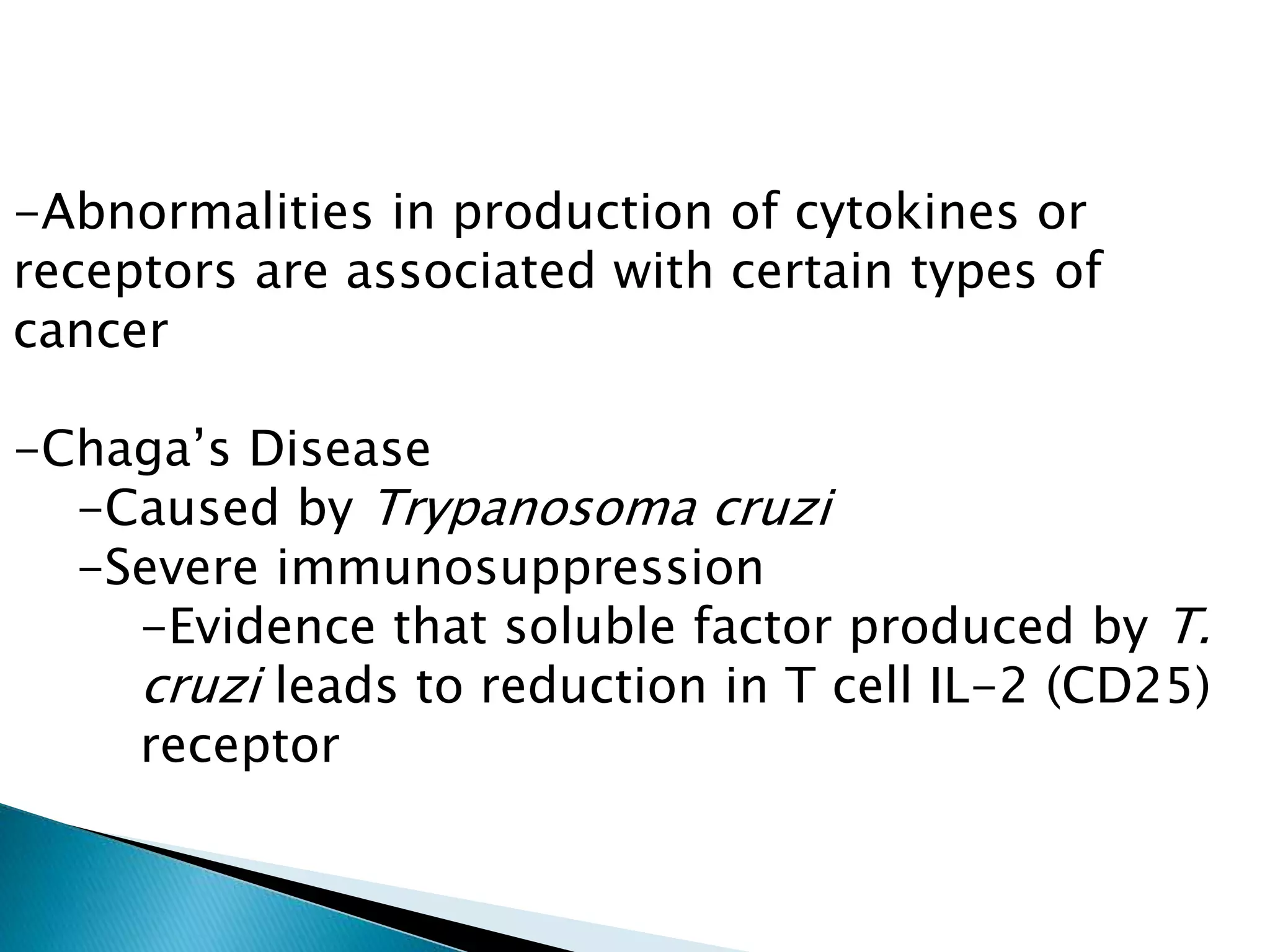
-Abnormalities in production of cytokines or
receptors are associated with certain types of
cancer
-Chaga’s Disease
-Caused by Trypanosoma cruzi
-Severe immunosuppression
-Evidence that soluble factor produced by T.
cruzi leads to reduction in T cell IL-2 (CD25)
receptor
Problems with cytokine
therapies:
-Effective dose levels
-Short half-life
-Potent biological
response modifiers
-Can cause
unpredictable side
effects
-Cytokines play essential role
in hematopoiesis
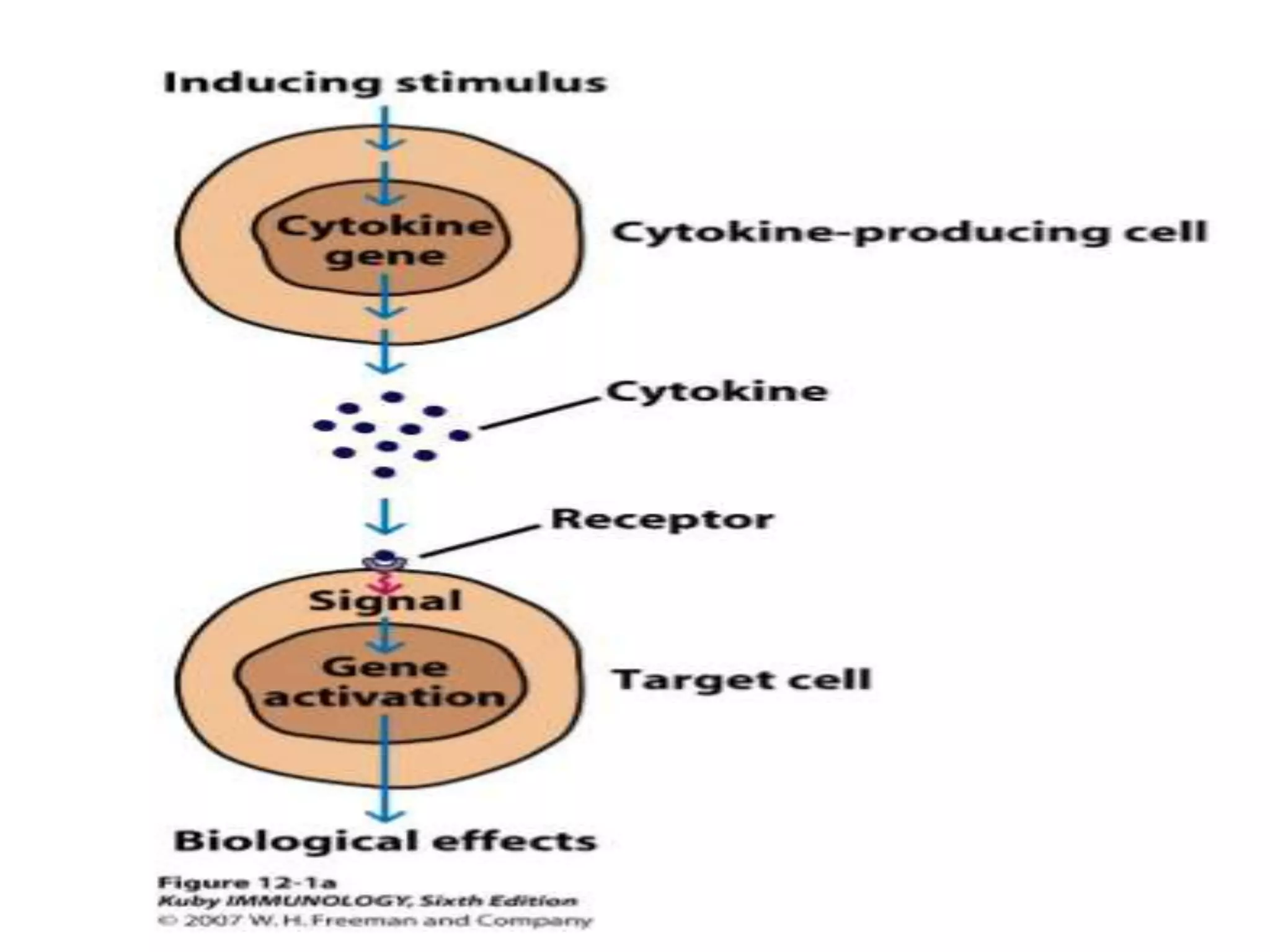
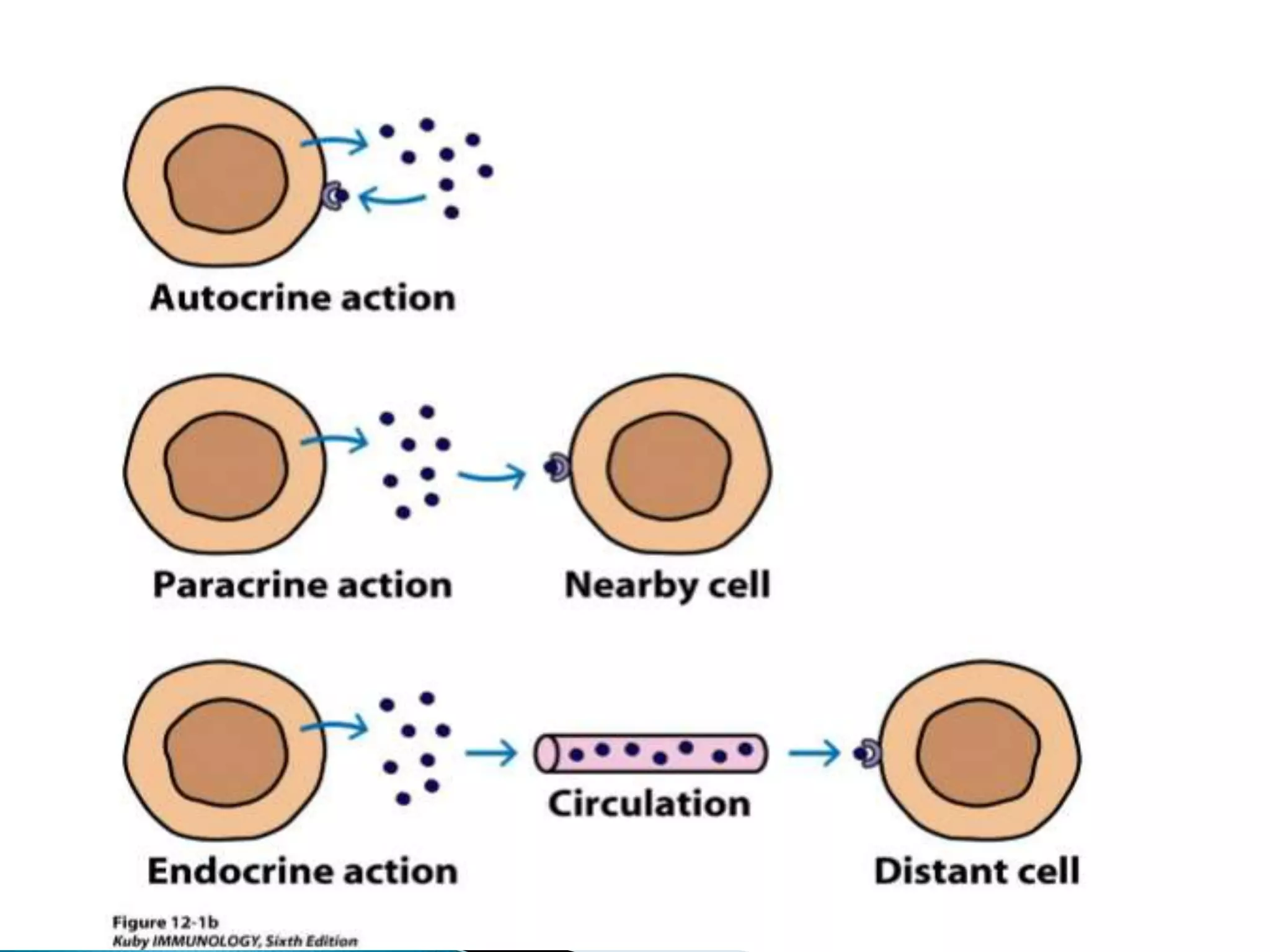
 Cytokines are low MW proteins that are produced
and secreted by a variety of cell types .
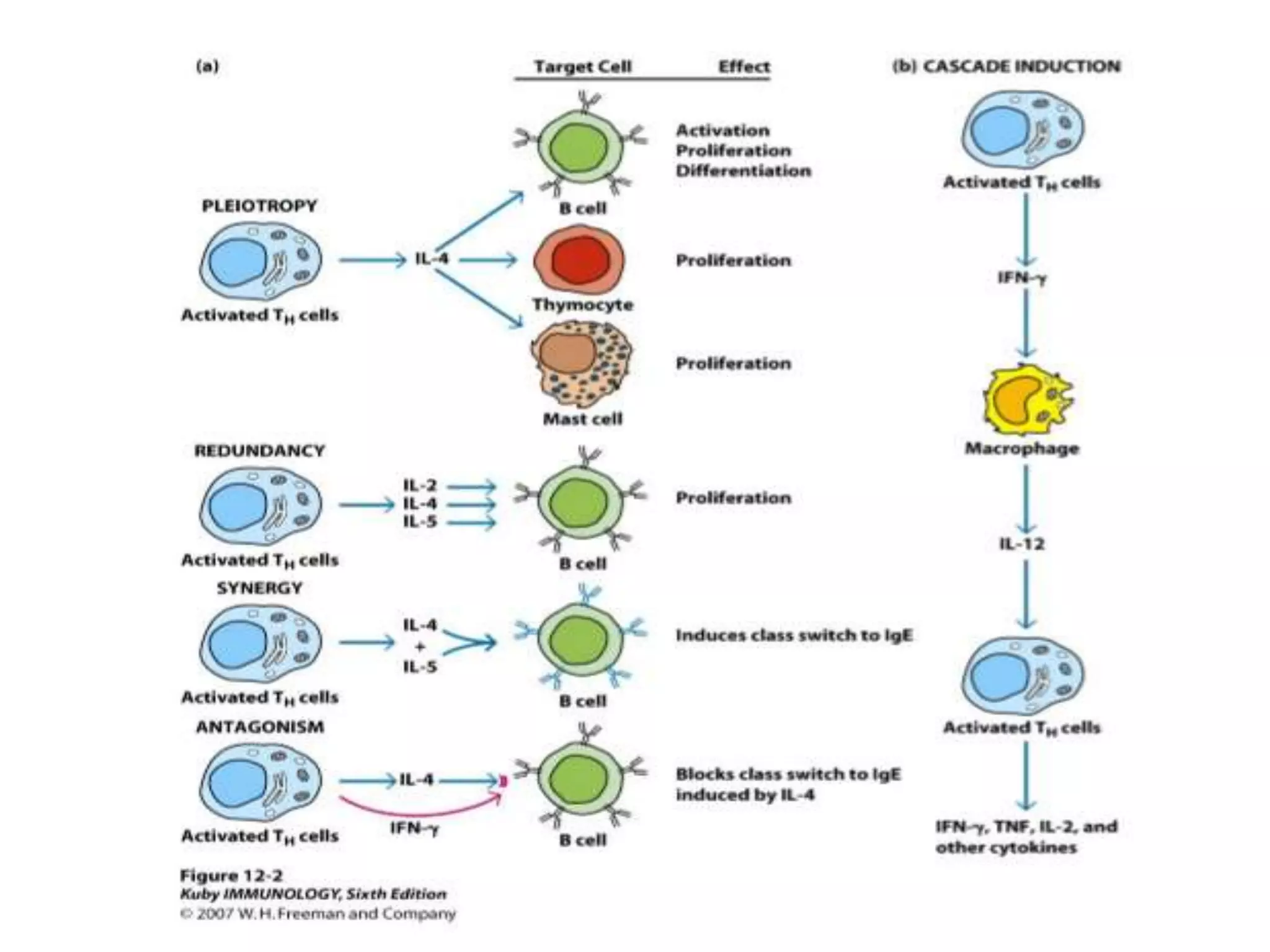
 The biological activities of cytokines exhibit
pleiotropy , redundancy , synergy , antagonism
and cascade induction.
 Families of cytokines : hematopoietin ,
interferons , chemokines and TNF.
 Cytokine receptors: Ig superfamily , class 1,class
2,TNF and chemokine receptors.
 Cytokine- induced multimerization of class 1 and
class2 receptors activate JAT/STAT signal
transduction pathway.
 Therapies based on cytokines and cytokine
receptors have entered clinical practice
 Cytokines have role in hematopoiesis
Cytokines ppt

Cytokines ppt

  • 2.
     DEFINITION  PROPERTIESOF CYTOKINES  NOMENCLATURE  CLASSIFICATION  CYTOKINE RECEPTORS  CYTOKINE SIGNALING  CYTOKINE ANTAGONIST  TH1 AND TH2  CYOKINE RELATED DISEASES  CYTOKINE THEARPY  CYTOKINE IN HEMATOPOIESIS
  • 11.
     HEMATOPOIETIN FAMILY INTERFERON FAMILY  CHEMOKINE FAMILY  TUMOR NECROSIS FACTOR FAMILY
  • 15.
    Non specificity ofcytokines conflicts with established specificity of immune system How does this work? -Careful expression of the receptors for those cytokines on specific cells -Receptors are often only expressed after exposure to antigen
  • 26.
    IL-2R is themost thoroughly studied cytokine receptor -Expressed by T cells for proliferation -Also called CD25, surface marker in mature T cells -Complete receptor has 3 subunits
  • 28.
    -Majority of cytokinereceptors are in Class I and Class II families -These cytokine receptors lack signaling motifs, this was puzzling to researchers -IFN-γ was studied because of it’s ability to block viral replication like other interferons However, this IFN plays immunoregulatory role which lead to understanding the process of signal transduction through cytokine receptors
  • 29.
    -Ligand Binds Subunit -Ligand Binding Causes Dimerization of Receptor -JAKs Get Activated #Phosphorylation of tyrosine residues on receptor #Phosphorylation of JAKs themselves -STATS Dock Receptor #Phosphorylation of STATs by JAKs -Dimerized STATs Translocate To Nucleus -Gene Expression
  • 32.
     Number ofproteins can inhibit cytokine activity ○ Can bind to receptor OR ○ Can bind to cytokine, disabling it  Enzymatic cleavage of receptors and release of these can bind cytokines in the blood - Marker of chronic T cell activation (transplant rejection, AIDS)  Viruses have developed strategies ○ Cytokine homologs ○ Cytokine binding proteins ○ Homologs of cytokine receptors ○ Interference with intracellular signaling ○ Interference with cytokine secretion
  • 34.
     CD4+ THcells exert most of helper functions through secreted cytokines  2 populations based on secreted cytokines:  TH1 Cell-mediated functions – delayed hypersensitivity, activation of TC cells, production of opsonization-promoting IgG antibodies  TH2 Stimulates eosinophil activation, provides help to B cells, promotes production of large amounts of IgM, IgE, and noncomplement activating IgG isotypes Supports allergic reactions  Some TH cells do not show TH1 or TH2 profiles
  • 36.
    -Promote growth ofsubset that produces them -Inhibit development and activity of other subset -Progression of some diseases depends on balance between TH1 and TH2
  • 37.
    -T-bet Expression ResultsIn TH1 -T-bet Suppresses TH2 -GATA-3 Results In TH2 -GATA-3 Suppresses TH1 -IFN- Regulates Expression of T-bet (Stat 1) -IL-4 Regulates Expression of GATA-3 (Stat 6)
  • 39.
    -SCID Genetic defects incytokines, their receptors -Defective receptor for IFN-γ Susceptible to mycobacterial infections
  • 40.
     Bacterial SepticShock  Certain Gram- bacteria  Symptoms: drop in blood pressure, fever, diarrhoea, blood clotting  Endotoxins bind TLRs on dendritic cells and macrophages ○Over-produce IL-1 and TNF-α ○Cytokine imbalance causes abnormal temp, abnormal respiration, capillary leakage, tissue injury, organ failure ○Neutralization by monoclonal antibodies may help
  • 41.
    -Bacterial Toxic Shock -Superantigens -Bindsimultaneously to Class II MHC and T cell receptor, activating T cell despite antigenic specificity -Symptoms similar to sepsis
  • 42.
    -Abnormalities in productionof cytokines or receptors are associated with certain types of cancer -Chaga’s Disease -Caused by Trypanosoma cruzi -Severe immunosuppression -Evidence that soluble factor produced by T. cruzi leads to reduction in T cell IL-2 (CD25) receptor
  • 47.
    Problems with cytokine therapies: -Effectivedose levels -Short half-life -Potent biological response modifiers -Can cause unpredictable side effects
  • 49.
    -Cytokines play essentialrole in hematopoiesis
  • 51.
     Cytokines arelow MW proteins that are produced and secreted by a variety of cell types .  The biological activities of cytokines exhibit pleiotropy , redundancy , synergy , antagonism and cascade induction.  Families of cytokines : hematopoietin , interferons , chemokines and TNF.  Cytokine receptors: Ig superfamily , class 1,class 2,TNF and chemokine receptors.  Cytokine- induced multimerization of class 1 and class2 receptors activate JAT/STAT signal transduction pathway.
  • 52.
     Therapies basedon cytokines and cytokine receptors have entered clinical practice  Cytokines have role in hematopoiesis