Antiviral Agents www.freelivedoctor.com
Viruses Obligate intracellular parasites Consist of a core genome in a protein shell and some are surrounded by a lipoprotein lack a cell wall and cell membrane do not carry out metabolic processes Replication depends on the host cell machinery www.freelivedoctor.com
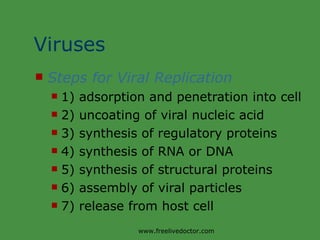
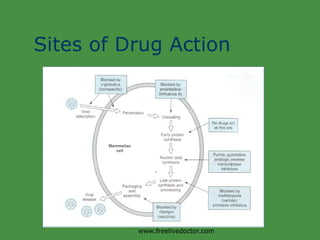
Viruses Steps for Viral Replication 1) adsorption and penetration into cell 2) uncoating of viral nucleic acid 3) synthesis of regulatory proteins 4) synthesis of RNA or DNA 5) synthesis of structural proteins 6) assembly of viral particles 7) release from host cell www.freelivedoctor.com
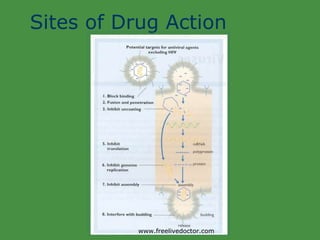
Sites of Drug Action www.freelivedoctor.com
Antiviral Agents Block viral entry into the cell or must work inside the cell Most agents are pyrimidine or purine nucleoside analogs www.freelivedoctor.com
Sites of Drug Action www.freelivedoctor.com
Antiherpes Agents Acyclovir-  prototype Valacyclovir Famciclovir Penciclovir Trifluridine Vidarabine www.freelivedoctor.com
Mechanism of Action  Acyclovir an acyclic guanosine derivative Phosphorylated by  viral thymidine kinase Di-and tri-phosphorylated by host cellular enzymes Inhibits viral DNA synthesis by: 1) competing with dGTP for viral DNA polymerase 2) chain termination www.freelivedoctor.com
Mechanism of Resistance  Acyclovir   Alteration in viral thymidine kinase Alteration in viral DNA polymerase Cross-resistance with  valacyclovir, famciclovir,  and  ganciclovir   www.freelivedoctor.com
Clinical Uses  Acyclovir Oral, IV, and Topical formulations Cleared by glomerular filtration and tubular secretion Uses : Herpes Simplex Virus 1 and 2  (HSV) Varicella-zoster virus (VZV) Side Effects :  nausea, diarrhea, headache, tremors, and delirium www.freelivedoctor.com
Valacyclovir L-valyl ester of acyclovir Converted to acyclovir when ingested M.O.A. :  same as acyclovir Uses :  1) recurrent genital herpes 2) herpes zoster infections Side Effects :  nausea, diarrhea, and headache www.freelivedoctor.com
Famciclovir Prodrug of  penciclovir  (a guanosine analog) M.O.A.:  same as acyclovir does  not  cause chain termination Uses:  HSV-1, HSV-2, VZV, EBV, and hepatitis B Side Effects :  nausea, diarrhea, and headache www.freelivedoctor.com
Trifluridine Trifluridine - fluorinated pyrimidine  inhibits viral DNA synthesis same as acyclovir incorporates into viral and cellular DNA Uses : HSV-1 and HSV-2 (topically) www.freelivedoctor.com
Vidarabine An adenosine analog inhibits viral DNA polymerase incorporated into viral and cellular DNA metabolized to hypoxanthine arabinoside Side Effects : GI intolerance and myelosuppression www.freelivedoctor.com
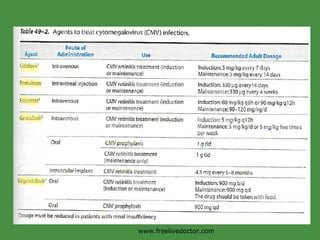
Anti-Cytomegalovirus Agents Gancyclovir Valgancyclovir Cidofovir Foscarnet Fomivirsen www.freelivedoctor.com
Ganciclovir An acyclic guanosine analog requires triphosphorylation for activation monophosphorylation is catalyzed by a phosphotransferase in CMV and by thymidine kinase in HSV cells M.O.A.:  same as acyclovir Uses : CMV*, HSV, VZV,and EBV Side Effect : myelosuppression www.freelivedoctor.com
Valgancyclovir Monovalyl ester prodrug of gancyclovir Metabolized by intestinal and hepatic esterases when administered orally M.O.A.:  same as gancyclovir Uses : CMV* Side Effect : myelosuppression www.freelivedoctor.com
Cidofovir Aphosphorylation  cytosine analog not  dependent on viral enzymes Uses:  CMV*, HSV-1, HSV-2, VZV, EBV, HHV-6, adenovirus, and human papillomavirus Side Effects:  nephrotoxicity (prevented by admin. of probenecid) Resistance:  mutation in DNA polymerase gene www.freelivedoctor.com
Foscarnet An inorganic pyrophosphate inhibits viral DNA polymerase, RNA polymerase, and HIV reverse transcriptase does not have to be phosphorylated Uses:  HSV, VZV, CMV, EBV, HHV-6, HBV, and HIV Resistance due to mutations in DNA polymerase gene Side Effects:   hypo- or hypercalcemia and phosphotemia www.freelivedoctor.com
Fomivirsen An oligonucleotide M.O.A.:  binds to mRNA and inhibits protein synthesis and viral replication Uses : CMV retinitis Side effects : iritis and increased intraocular pressure www.freelivedoctor.com
www.freelivedoctor.com
Antiretroviral Agents 1) Nucleoside Reverse Transcriptase Inhibitors (NRTIs) 2) Nonnucleoside Reverse Transcriptase Inhibitors (NNRTIs) 3)Protease inhibitors www.freelivedoctor.com
Reverse Transcriptase Inhibitors Zidovudine (AZT) Didanosine-  causes pancreatitis* Lamivudine-  causes pancreatitis Zalcitabine-  causes peripheral neuropathy * Stavudine-  causes peripheral neuropathy* Abacavir www.freelivedoctor.com
Mechanism of Action  Zidovudine (AZT) A deoxythymidine analog enters the cell via passive diffusion must be converted to the triphosphate form by mammalian thymidine kinase competitively inhibits deoxythymidine triphosphate for the reverse transcriptase enzyme causes chain termination www.freelivedoctor.com
Mechanism of Resistance    Zidovudine Due to mutations in the reverse transcriptase gene more frequent after prolong therapy and in persons with HIV www.freelivedoctor.com
Clinical Uses  Zidovudine Available in IV and oral formulations activity against HIV-1, HIV-2, and human T cell lymphotropic viruses mainly used for treatment of HIV, decreases rate of progression and prolongs survival prevents mother to newborn transmission of HIV www.freelivedoctor.com
Side Effects  Zidovudine Myelosuppression, including anemia and neutropenia GI intolerance, headaches, and insomnia www.freelivedoctor.com
Other NRTIs Didanosine-  synthetic  deoxy-adenosine  analog; causes pancreatitis* Lamivudine-  cytosine  analog Zalcitabine-  cytosine  analog; causes peripheral neuropathy* Stavudine-  thymidine  analog;causes peripheral neuropathy* Abacavir-  guanosine analog; more effective than the other agents; fatal hypersensitivity reactions can occur  www.freelivedoctor.com
Nucleotide Inhibitors Tenofovir Adefovir www.freelivedoctor.com
Tenofovir An acyclic nucleoside phosphonate analog of adenosine M.O.A .- competively inhibits HIV reverse transcriptase and causes chain termination after incorporation into DNA Uses  – in combination with other antiretrovirals for HIV-1 suppression www.freelivedoctor.com
Adefovir An analog of adenosine monophosphate Phosphorylated by cellular kinases  M.O.A.  - Competitively inhibits HBV DNA polymerase and results in chain termination after incorporation into viral DNA Uses  - Hepatitis B Side effects  - nephrotoxicity www.freelivedoctor.com
Nonnucleoside Reverse Transcriptase Inhibitors (NNRTIs) Nevirapine Delavirdine Efavirenz www.freelivedoctor.com
Mechanism of Action NNRTIs Bind to site on viral reverse transcriptase, different from NRTIs results in blockade of RNA and DNA dependent DNA polymerase activity do  not  compete with nucleoside triphosphates do  not  require phosphorylation these drugs can  not  be given alone substrates  and inhibitors of  CYP3A4 www.freelivedoctor.com
Nevirapine-  prevents transmission of HIV from mother to newborn when given at onset of labor and to the neonate at delivery Delavirdine-  teratogenic, therefore can not be given during pregnancy Efavirenz-  teratogenic, therefore can not be given during pregnancy Nonnucleoside Reverse Transcriptase Inhibitors (NNRTIs) www.freelivedoctor.com
Protease Inhibitors Indinavir Ritonavir Saquinavir Nelfinavir Amprenavir www.freelivedoctor.com
Protease Inhibitors The protease enzyme cleaves precursor molecules to produce mature, infectious virions these agents inhibit protease and prevent the spread of infection These agents cause a syndrome of altered body fat distribution, insulin resistance, and hyperlipidemia www.freelivedoctor.com
Indinavir  and  Ritonavir M.O.A. : Specific inhibitors of the HIV-1 protease enzyme M.O.R. : mediated by expression of multiple and variable protease amino acid substitutions Side Effects :hyperbilirubinemia Contraindications :inhibitor/substrate for CPY3A4, do  not  give with antifungal azoles www.freelivedoctor.com
Saquinavir A synthetic peptide-like substrate analog inhibits HIV-1 protease prevents cleavage of viral polyproteins www.freelivedoctor.com
Nelfinavir  and  Amprenavir M.O.A. : Specific inhibitors of the HIV-1 protease enzyme M.O.R. : mediated by expression of multiple and variable protease amino acid substitutions Less cross-resistance with  Amprenavir Side Effects : diarrhea and flatulence Amprenavir  can cause Stevens-Johnson syndrome Contraindications :inhibitor/substrate for CPY3A4 www.freelivedoctor.com
Fusion Inhibitors Enfuvirtide  (T-20)- binds to the gp41 subunit of the viral envelope glycoprotein, preventing the conformational changes required for fusion of the viral and cellular membranes By blocking fusion (entry into cell), FUZEON prevents HIV from infecting CD4 cells www.freelivedoctor.com
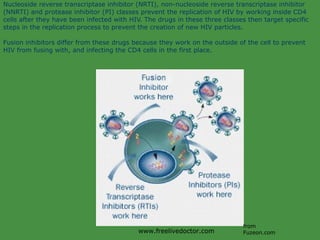
Nucleoside reverse transcriptase inhibitor (NRTI), non-nucleoside reverse transcriptase inhibitor (NNRTI) and protease inhibitor (PI) classes prevent the replication of HIV by working inside CD4 cells after they have been infected with HIV. The drugs in these three classes then target specific steps in the replication process to prevent the creation of new HIV particles. Fusion inhibitors differ from these drugs because they work on the outside of the cell to prevent HIV from fusing with, and infecting the CD4 cells in the first place.  from Fuzeon.com www.freelivedoctor.com
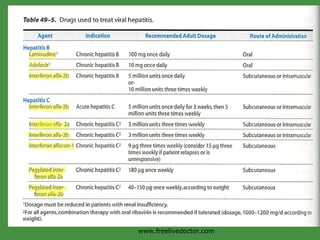
Anti-Hepatitis Agents Lamivudine  - Nucleoside Reverse Transcriptase Inhibitor (NRTI) Adefovir  - Nucleotide Inhibitor Interferon   Alfa Pegylated Interferon Alfa Ribavirin www.freelivedoctor.com
Interferons Interferon Alfa Endogenous proteins  induce host cell enzymes that inhibit viral RNA translation and cause degradation of viral mRNA and tRNA Bind to membrane receptors on cell surface May also inhibit viral penetration, uncoating, mRNA synthesis, and translation, and virion assembly and release www.freelivedoctor.com
Interferons Pegylated interferon Alfa A linear or branced polyethylene gylcol (PEG) moiety is attached to covalently to interferon Increased half-life and steady drug concentrations Less frequent dosing Tx chronic hepatitis C in combination with ribavirin www.freelivedoctor.com
Ribavirin A guanosine analog phosphorylated intracellularly by host enzymes inhibits capping of viral messenger RNA inhibits the viral RNA-dependent RNA polymerase inhibits replication of DNA and RNA viruses www.freelivedoctor.com
www.freelivedoctor.com
Anti-Influenza Agents Amantadine Rimantadine Zanamivir www.freelivedoctor.com
Amantadine   and  Rimantadine cyclic amines inhibit the uncoating of viral RNA therefore inhibiting replication resistance due to mutations in the RNA sequence coding for the structural M2 protein used in the prevention and treatment of Influenza A www.freelivedoctor.com
Zanamivir  and  Oseltamivir Inhibits the enzyme neuraminidase inhibit the replication of influenza A and Influenza B treats uncomplicated influenza infections administered intranasally www.freelivedoctor.com
Antiviral Agents
Understanding Viruses Viral Replication A virus cannot replicate on its own. It must attach to and enter a host cell. It then uses the host cell’s energy to synthesize protein, DNA, and RNA.
Understanding Viruses Viruses are difficult to kill because they live inside our cells. Any drug that kills a virus may also kill our cells.
Viral Infections Competent immune system: Best response to viral infections A well-functioning immune system will eliminate  or effectively destroy virus replication Immunocompromised patients have frequent viral infections Cancer patients, especially leukemia or lymphoma Transplant patients, due to pharmacological therapy AIDS patients, disease attacks immune system
Antivirals Key characteristics of antiviral drugs: Able to enter the cells infected with virus. Interfere with viral nucleic acid synthesis and/or regulation. Some agents interfere with ability of virus  to bind to cells. Some agents stimulate the body’s immune system.
Antivirals Viruses killed by current antiviral therapy: cytomegalovirus (CMV) herpes simplex virus (HSV) human immunodeficiency virus (HIV) influenza A (the “flu”) respiratory syncytial virus (RSV)
Antivirals: Mechanism of Action Inhibit viral replication Inhibit viral attachment Prevent genetic copying of virus Prevent viral protein production
Antivirals  Synthetic Purine Nucleoside Analogues Two types of nucleosides: Purine nucleosides guanine adenosine Pyrimidine nucleosides thymine cytosine
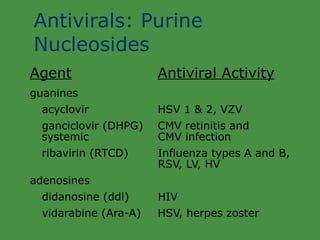
Antivirals: Purine Nucleosides Agent Antiviral Activity guanines acyclovir HSV 1 & 2, VZV ganciclovir (DHPG) CMV retinitis and systemic CMV infection ribavirin (RTCD) Influenza types A and B, RSV, LV, HV adenosines didanosine (ddl) HIV vidarabine (Ara-A) HSV, herpes zoster
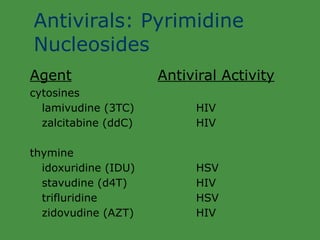
Antivirals: Pyrimidine Nucleosides Agent Antiviral Activity cytosines lamivudine (3TC) HIV zalcitabine (ddC) HIV thymine idoxuridine (IDU) HSV stavudine (d4T) HIV trifluridine HSV zidovudine (AZT) HIV
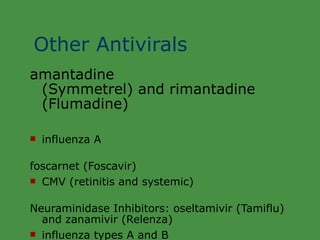
Other Antivirals amantadine  (Symmetrel) and rimantadine (Flumadine) influenza A foscarnet (Foscavir) CMV (retinitis and systemic) Neuraminidase Inhibitors: oseltamivir (Tamiflu)  and zanamivir (Relenza) influenza types A and B
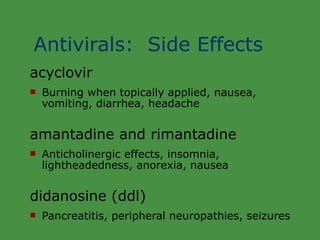
Antivirals:  Side Effects acyclovir Burning when topically applied, nausea, vomiting, diarrhea, headache amantadine and rimantadine Anticholinergic effects, insomnia, lightheadedness, anorexia, nausea didanosine (ddl) Pancreatitis, peripheral neuropathies, seizures
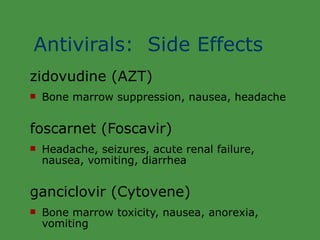
Antivirals:  Side Effects zidovudine (AZT) Bone marrow suppression, nausea, headache foscarnet (Foscavir) Headache, seizures, acute renal failure, nausea, vomiting, diarrhea ganciclovir (Cytovene) Bone marrow toxicity, nausea, anorexia, vomiting
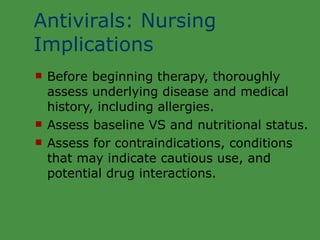
Antivirals: Nursing Implications Before beginning therapy, thoroughly  assess underlying disease and medical history, including allergies. Assess baseline VS and nutritional status. Assess for contraindications, conditions  that may indicate cautious use, and potential drug interactions.
Antivirals:  Nursing Implications Be sure to teach proper application technique for ointments, aerosol  powders, etc. Emphasize hand washing before and after administration of medications to prevent site contamination and spread of infection. Patients should wear a glove or finger cot when applying ointments or solutions to affected areas.
Antivirals:  Nursing Implications Instruct patients to consult their physician before taking any other medication, including OTC medications. Emphasize the importance of good hygiene. Inform patients that antiviral agents are not cures, but do help to manage symptoms.
Antivirals:  Nursing Implications Instruct patients on the importance of taking these medications exactly as prescribed and for the full course of treatment. With zidovudine: Inform patients that hair loss MAY occur so that they are prepared for this rare adverse reaction. This medication should be taken on an empty stomach.
Antivirals:  Nursing Implications Monitor for side effects: effects are varied and specific to each agent
Antivirals:  Nursing Implications Monitor for therapeutic effects: effects will vary depending on the type of viral infection Effects range from delayed progression of AIDS  and ARC to decrease in flu-like symptoms, decreased frequency of herpes-like flare-ups,  or crusting over of herpetic lesions.

Anti viral agents

  • 1.
  • 2.
    Viruses Obligate intracellularparasites Consist of a core genome in a protein shell and some are surrounded by a lipoprotein lack a cell wall and cell membrane do not carry out metabolic processes Replication depends on the host cell machinery www.freelivedoctor.com
  • 3.
    Viruses Steps forViral Replication 1) adsorption and penetration into cell 2) uncoating of viral nucleic acid 3) synthesis of regulatory proteins 4) synthesis of RNA or DNA 5) synthesis of structural proteins 6) assembly of viral particles 7) release from host cell www.freelivedoctor.com
  • 4.
    Sites of DrugAction www.freelivedoctor.com
  • 5.
    Antiviral Agents Blockviral entry into the cell or must work inside the cell Most agents are pyrimidine or purine nucleoside analogs www.freelivedoctor.com
  • 6.
    Sites of DrugAction www.freelivedoctor.com
  • 7.
    Antiherpes Agents Acyclovir- prototype Valacyclovir Famciclovir Penciclovir Trifluridine Vidarabine www.freelivedoctor.com
  • 8.
    Mechanism of Action Acyclovir an acyclic guanosine derivative Phosphorylated by viral thymidine kinase Di-and tri-phosphorylated by host cellular enzymes Inhibits viral DNA synthesis by: 1) competing with dGTP for viral DNA polymerase 2) chain termination www.freelivedoctor.com
  • 9.
    Mechanism of Resistance Acyclovir Alteration in viral thymidine kinase Alteration in viral DNA polymerase Cross-resistance with valacyclovir, famciclovir, and ganciclovir www.freelivedoctor.com
  • 10.
    Clinical Uses Acyclovir Oral, IV, and Topical formulations Cleared by glomerular filtration and tubular secretion Uses : Herpes Simplex Virus 1 and 2 (HSV) Varicella-zoster virus (VZV) Side Effects : nausea, diarrhea, headache, tremors, and delirium www.freelivedoctor.com
  • 11.
    Valacyclovir L-valyl esterof acyclovir Converted to acyclovir when ingested M.O.A. : same as acyclovir Uses : 1) recurrent genital herpes 2) herpes zoster infections Side Effects : nausea, diarrhea, and headache www.freelivedoctor.com
  • 12.
    Famciclovir Prodrug of penciclovir (a guanosine analog) M.O.A.: same as acyclovir does not cause chain termination Uses: HSV-1, HSV-2, VZV, EBV, and hepatitis B Side Effects : nausea, diarrhea, and headache www.freelivedoctor.com
  • 13.
    Trifluridine Trifluridine -fluorinated pyrimidine inhibits viral DNA synthesis same as acyclovir incorporates into viral and cellular DNA Uses : HSV-1 and HSV-2 (topically) www.freelivedoctor.com
  • 14.
    Vidarabine An adenosineanalog inhibits viral DNA polymerase incorporated into viral and cellular DNA metabolized to hypoxanthine arabinoside Side Effects : GI intolerance and myelosuppression www.freelivedoctor.com
  • 15.
    Anti-Cytomegalovirus Agents GancyclovirValgancyclovir Cidofovir Foscarnet Fomivirsen www.freelivedoctor.com
  • 16.
    Ganciclovir An acyclicguanosine analog requires triphosphorylation for activation monophosphorylation is catalyzed by a phosphotransferase in CMV and by thymidine kinase in HSV cells M.O.A.: same as acyclovir Uses : CMV*, HSV, VZV,and EBV Side Effect : myelosuppression www.freelivedoctor.com
  • 17.
    Valgancyclovir Monovalyl esterprodrug of gancyclovir Metabolized by intestinal and hepatic esterases when administered orally M.O.A.: same as gancyclovir Uses : CMV* Side Effect : myelosuppression www.freelivedoctor.com
  • 18.
    Cidofovir Aphosphorylation cytosine analog not dependent on viral enzymes Uses: CMV*, HSV-1, HSV-2, VZV, EBV, HHV-6, adenovirus, and human papillomavirus Side Effects: nephrotoxicity (prevented by admin. of probenecid) Resistance: mutation in DNA polymerase gene www.freelivedoctor.com
  • 19.
    Foscarnet An inorganicpyrophosphate inhibits viral DNA polymerase, RNA polymerase, and HIV reverse transcriptase does not have to be phosphorylated Uses: HSV, VZV, CMV, EBV, HHV-6, HBV, and HIV Resistance due to mutations in DNA polymerase gene Side Effects: hypo- or hypercalcemia and phosphotemia www.freelivedoctor.com
  • 20.
    Fomivirsen An oligonucleotideM.O.A.: binds to mRNA and inhibits protein synthesis and viral replication Uses : CMV retinitis Side effects : iritis and increased intraocular pressure www.freelivedoctor.com
  • 21.
  • 22.
    Antiretroviral Agents 1)Nucleoside Reverse Transcriptase Inhibitors (NRTIs) 2) Nonnucleoside Reverse Transcriptase Inhibitors (NNRTIs) 3)Protease inhibitors www.freelivedoctor.com
  • 23.
    Reverse Transcriptase InhibitorsZidovudine (AZT) Didanosine- causes pancreatitis* Lamivudine- causes pancreatitis Zalcitabine- causes peripheral neuropathy * Stavudine- causes peripheral neuropathy* Abacavir www.freelivedoctor.com
  • 24.
    Mechanism of Action Zidovudine (AZT) A deoxythymidine analog enters the cell via passive diffusion must be converted to the triphosphate form by mammalian thymidine kinase competitively inhibits deoxythymidine triphosphate for the reverse transcriptase enzyme causes chain termination www.freelivedoctor.com
  • 25.
    Mechanism of Resistance Zidovudine Due to mutations in the reverse transcriptase gene more frequent after prolong therapy and in persons with HIV www.freelivedoctor.com
  • 26.
    Clinical Uses Zidovudine Available in IV and oral formulations activity against HIV-1, HIV-2, and human T cell lymphotropic viruses mainly used for treatment of HIV, decreases rate of progression and prolongs survival prevents mother to newborn transmission of HIV www.freelivedoctor.com
  • 27.
    Side Effects Zidovudine Myelosuppression, including anemia and neutropenia GI intolerance, headaches, and insomnia www.freelivedoctor.com
  • 28.
    Other NRTIs Didanosine- synthetic deoxy-adenosine analog; causes pancreatitis* Lamivudine- cytosine analog Zalcitabine- cytosine analog; causes peripheral neuropathy* Stavudine- thymidine analog;causes peripheral neuropathy* Abacavir- guanosine analog; more effective than the other agents; fatal hypersensitivity reactions can occur www.freelivedoctor.com
  • 29.
    Nucleotide Inhibitors TenofovirAdefovir www.freelivedoctor.com
  • 30.
    Tenofovir An acyclicnucleoside phosphonate analog of adenosine M.O.A .- competively inhibits HIV reverse transcriptase and causes chain termination after incorporation into DNA Uses – in combination with other antiretrovirals for HIV-1 suppression www.freelivedoctor.com
  • 31.
    Adefovir An analogof adenosine monophosphate Phosphorylated by cellular kinases M.O.A. - Competitively inhibits HBV DNA polymerase and results in chain termination after incorporation into viral DNA Uses - Hepatitis B Side effects - nephrotoxicity www.freelivedoctor.com
  • 32.
    Nonnucleoside Reverse TranscriptaseInhibitors (NNRTIs) Nevirapine Delavirdine Efavirenz www.freelivedoctor.com
  • 33.
    Mechanism of ActionNNRTIs Bind to site on viral reverse transcriptase, different from NRTIs results in blockade of RNA and DNA dependent DNA polymerase activity do not compete with nucleoside triphosphates do not require phosphorylation these drugs can not be given alone substrates and inhibitors of CYP3A4 www.freelivedoctor.com
  • 34.
    Nevirapine- preventstransmission of HIV from mother to newborn when given at onset of labor and to the neonate at delivery Delavirdine- teratogenic, therefore can not be given during pregnancy Efavirenz- teratogenic, therefore can not be given during pregnancy Nonnucleoside Reverse Transcriptase Inhibitors (NNRTIs) www.freelivedoctor.com
  • 35.
    Protease Inhibitors IndinavirRitonavir Saquinavir Nelfinavir Amprenavir www.freelivedoctor.com
  • 36.
    Protease Inhibitors Theprotease enzyme cleaves precursor molecules to produce mature, infectious virions these agents inhibit protease and prevent the spread of infection These agents cause a syndrome of altered body fat distribution, insulin resistance, and hyperlipidemia www.freelivedoctor.com
  • 37.
    Indinavir and Ritonavir M.O.A. : Specific inhibitors of the HIV-1 protease enzyme M.O.R. : mediated by expression of multiple and variable protease amino acid substitutions Side Effects :hyperbilirubinemia Contraindications :inhibitor/substrate for CPY3A4, do not give with antifungal azoles www.freelivedoctor.com
  • 38.
    Saquinavir A syntheticpeptide-like substrate analog inhibits HIV-1 protease prevents cleavage of viral polyproteins www.freelivedoctor.com
  • 39.
    Nelfinavir and Amprenavir M.O.A. : Specific inhibitors of the HIV-1 protease enzyme M.O.R. : mediated by expression of multiple and variable protease amino acid substitutions Less cross-resistance with Amprenavir Side Effects : diarrhea and flatulence Amprenavir can cause Stevens-Johnson syndrome Contraindications :inhibitor/substrate for CPY3A4 www.freelivedoctor.com
  • 40.
    Fusion Inhibitors Enfuvirtide (T-20)- binds to the gp41 subunit of the viral envelope glycoprotein, preventing the conformational changes required for fusion of the viral and cellular membranes By blocking fusion (entry into cell), FUZEON prevents HIV from infecting CD4 cells www.freelivedoctor.com
  • 41.
    Nucleoside reverse transcriptaseinhibitor (NRTI), non-nucleoside reverse transcriptase inhibitor (NNRTI) and protease inhibitor (PI) classes prevent the replication of HIV by working inside CD4 cells after they have been infected with HIV. The drugs in these three classes then target specific steps in the replication process to prevent the creation of new HIV particles. Fusion inhibitors differ from these drugs because they work on the outside of the cell to prevent HIV from fusing with, and infecting the CD4 cells in the first place. from Fuzeon.com www.freelivedoctor.com
  • 42.
    Anti-Hepatitis Agents Lamivudine - Nucleoside Reverse Transcriptase Inhibitor (NRTI) Adefovir - Nucleotide Inhibitor Interferon Alfa Pegylated Interferon Alfa Ribavirin www.freelivedoctor.com
  • 43.
    Interferons Interferon AlfaEndogenous proteins induce host cell enzymes that inhibit viral RNA translation and cause degradation of viral mRNA and tRNA Bind to membrane receptors on cell surface May also inhibit viral penetration, uncoating, mRNA synthesis, and translation, and virion assembly and release www.freelivedoctor.com
  • 44.
    Interferons Pegylated interferonAlfa A linear or branced polyethylene gylcol (PEG) moiety is attached to covalently to interferon Increased half-life and steady drug concentrations Less frequent dosing Tx chronic hepatitis C in combination with ribavirin www.freelivedoctor.com
  • 45.
    Ribavirin A guanosineanalog phosphorylated intracellularly by host enzymes inhibits capping of viral messenger RNA inhibits the viral RNA-dependent RNA polymerase inhibits replication of DNA and RNA viruses www.freelivedoctor.com
  • 46.
  • 47.
    Anti-Influenza Agents AmantadineRimantadine Zanamivir www.freelivedoctor.com
  • 48.
    Amantadine and Rimantadine cyclic amines inhibit the uncoating of viral RNA therefore inhibiting replication resistance due to mutations in the RNA sequence coding for the structural M2 protein used in the prevention and treatment of Influenza A www.freelivedoctor.com
  • 49.
    Zanamivir and Oseltamivir Inhibits the enzyme neuraminidase inhibit the replication of influenza A and Influenza B treats uncomplicated influenza infections administered intranasally www.freelivedoctor.com
  • 50.
  • 51.
    Understanding Viruses ViralReplication A virus cannot replicate on its own. It must attach to and enter a host cell. It then uses the host cell’s energy to synthesize protein, DNA, and RNA.
  • 52.
    Understanding Viruses Virusesare difficult to kill because they live inside our cells. Any drug that kills a virus may also kill our cells.
  • 53.
    Viral Infections Competentimmune system: Best response to viral infections A well-functioning immune system will eliminate or effectively destroy virus replication Immunocompromised patients have frequent viral infections Cancer patients, especially leukemia or lymphoma Transplant patients, due to pharmacological therapy AIDS patients, disease attacks immune system
  • 54.
    Antivirals Key characteristicsof antiviral drugs: Able to enter the cells infected with virus. Interfere with viral nucleic acid synthesis and/or regulation. Some agents interfere with ability of virus to bind to cells. Some agents stimulate the body’s immune system.
  • 55.
    Antivirals Viruses killedby current antiviral therapy: cytomegalovirus (CMV) herpes simplex virus (HSV) human immunodeficiency virus (HIV) influenza A (the “flu”) respiratory syncytial virus (RSV)
  • 56.
    Antivirals: Mechanism ofAction Inhibit viral replication Inhibit viral attachment Prevent genetic copying of virus Prevent viral protein production
  • 57.
    Antivirals SyntheticPurine Nucleoside Analogues Two types of nucleosides: Purine nucleosides guanine adenosine Pyrimidine nucleosides thymine cytosine
  • 58.
    Antivirals: Purine NucleosidesAgent Antiviral Activity guanines acyclovir HSV 1 & 2, VZV ganciclovir (DHPG) CMV retinitis and systemic CMV infection ribavirin (RTCD) Influenza types A and B, RSV, LV, HV adenosines didanosine (ddl) HIV vidarabine (Ara-A) HSV, herpes zoster
  • 59.
    Antivirals: Pyrimidine NucleosidesAgent Antiviral Activity cytosines lamivudine (3TC) HIV zalcitabine (ddC) HIV thymine idoxuridine (IDU) HSV stavudine (d4T) HIV trifluridine HSV zidovudine (AZT) HIV
  • 60.
    Other Antivirals amantadine (Symmetrel) and rimantadine (Flumadine) influenza A foscarnet (Foscavir) CMV (retinitis and systemic) Neuraminidase Inhibitors: oseltamivir (Tamiflu) and zanamivir (Relenza) influenza types A and B
  • 61.
    Antivirals: SideEffects acyclovir Burning when topically applied, nausea, vomiting, diarrhea, headache amantadine and rimantadine Anticholinergic effects, insomnia, lightheadedness, anorexia, nausea didanosine (ddl) Pancreatitis, peripheral neuropathies, seizures
  • 62.
    Antivirals: SideEffects zidovudine (AZT) Bone marrow suppression, nausea, headache foscarnet (Foscavir) Headache, seizures, acute renal failure, nausea, vomiting, diarrhea ganciclovir (Cytovene) Bone marrow toxicity, nausea, anorexia, vomiting
  • 63.
    Antivirals: Nursing ImplicationsBefore beginning therapy, thoroughly assess underlying disease and medical history, including allergies. Assess baseline VS and nutritional status. Assess for contraindications, conditions that may indicate cautious use, and potential drug interactions.
  • 64.
    Antivirals: NursingImplications Be sure to teach proper application technique for ointments, aerosol powders, etc. Emphasize hand washing before and after administration of medications to prevent site contamination and spread of infection. Patients should wear a glove or finger cot when applying ointments or solutions to affected areas.
  • 65.
    Antivirals: NursingImplications Instruct patients to consult their physician before taking any other medication, including OTC medications. Emphasize the importance of good hygiene. Inform patients that antiviral agents are not cures, but do help to manage symptoms.
  • 66.
    Antivirals: NursingImplications Instruct patients on the importance of taking these medications exactly as prescribed and for the full course of treatment. With zidovudine: Inform patients that hair loss MAY occur so that they are prepared for this rare adverse reaction. This medication should be taken on an empty stomach.
  • 67.
    Antivirals: NursingImplications Monitor for side effects: effects are varied and specific to each agent
  • 68.
    Antivirals: NursingImplications Monitor for therapeutic effects: effects will vary depending on the type of viral infection Effects range from delayed progression of AIDS and ARC to decrease in flu-like symptoms, decreased frequency of herpes-like flare-ups, or crusting over of herpetic lesions.