Presented by –
Dwijottam Sarma Bordoloi
(17/BBT/20)
Ashish Pratim Mahanta
(17/BBT/60)
Course : Biotechnology
Department of Applied Biology
CRISPR CAS9 TECHNOLOGY
CONTENTS
1. Introduction
2. CRISPR mechanism in bacteria
3. CRISPR CAS9 technique
4. Executions till date
5. Ethical Concerns
6. Conclusion
7. References
INTRODUCTION
CRISPR refers to a type of adaptive immune system found in
bacterial cells, prevalent in bacterial genome.
Scientists discovered that a lot of bacteria have repetitive
DNA sequences in their genome – CRISPRs
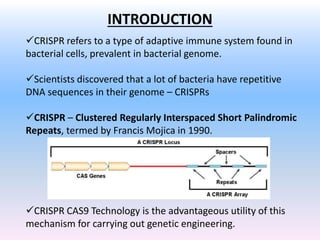
CRISPR – Clustered Regularly Interspaced Short Palindromic
Repeats, termed by Francis Mojica in 1990.
CRISPR CAS9 Technology is the advantageous utility of this
mechanism for carrying out genetic engineering.
CRISPR COMPONENTS
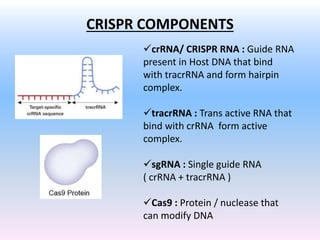
crRNA/ CRISPR RNA : Guide RNA
present in Host DNA that bind
with tracrRNA and form hairpin
complex.
tracrRNA : Trans active RNA that
bind with crRNA form active
complex.
sgRNA : Single guide RNA
( crRNA + tracrRNA )
Cas9 : Protein / nuclease that
can modify DNA
CRISPR MECHANISM IN BACTERIA
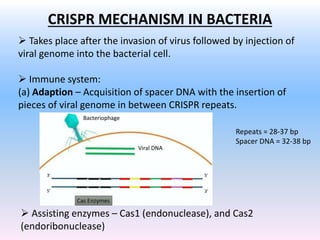
 Takes place after the invasion of virus followed by injection of
viral genome into the bacterial cell.
 Immune system:
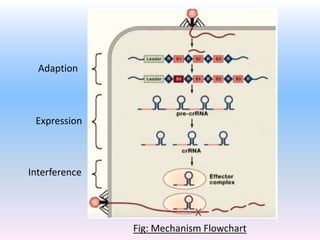
(a) Adaption – Acquisition of spacer DNA with the insertion of
pieces of viral genome in between CRISPR repeats.
Repeats = 28-37 bp
Spacer DNA = 32-38 bp
Bacteriophage
Viral DNA
 Assisting enzymes – Cas1 (endonuclease), and Cas2
(endoribonuclease)
(b) Expression -
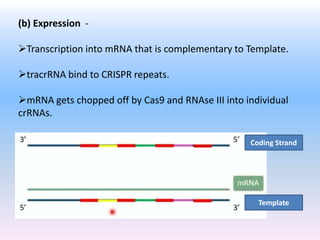
Transcription into mRNA that is complementary to Template.
tracrRNA bind to CRISPR repeats.
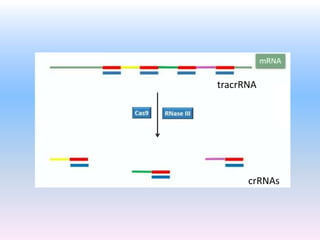
mRNA gets chopped off by Cas9 and RNAse III into individual
crRNAs.
Coding Strand
Template
tracrRNA
crRNAs
(c) Interference –
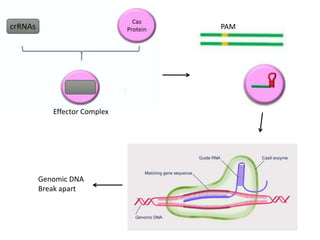
crRNAs get integrated with a Cas9 protein to form effector
complexes.
CRISPR repeats take hairpin like looped form.
[Fact: The bacterial genome preferably takes in a part of the viral
genome only from the portion adjacent to PAM
sequence(Protospacer Adjacent Motif) which is targeted by the
Cas9 nuclease]
On finding a viral genome containing a strand complementary to
the crRNA itself, it binds to viral DNA.
Cas9 induces a double strand cut in the viral DNA (assisting
domains: HNC and RuvC)
Effector Complex
PAM
Genomic DNA
Break apart
Adaption
Expression
Interference
Fig: Mechanism Flowchart
CRISPR – CAS9 TECHNIQUE
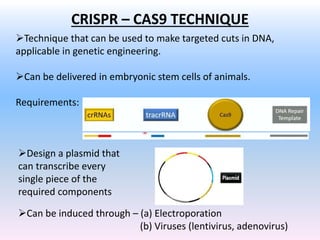
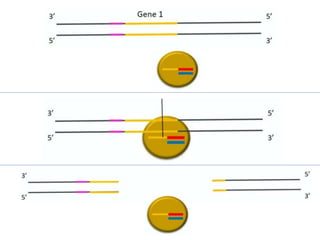
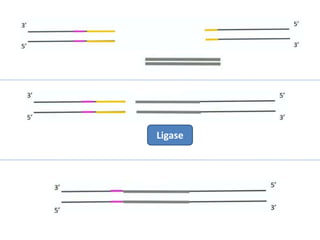
Technique that can be used to make targeted cuts in DNA,
applicable in genetic engineering.
Can be delivered in embryonic stem cells of animals.
Requirements:
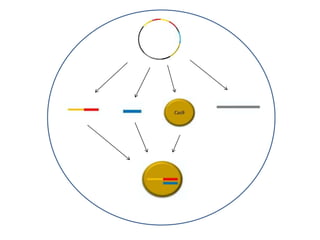
Design a plasmid that
can transcribe every
single piece of the
required components
Can be induced through – (a) Electroporation
(b) Viruses (lentivirus, adenovirus)
Ligase
EXECUTIONS TILL DATE
Tomatoes with stronger stems being able to carry heavier fruits
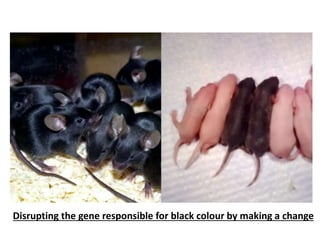
Disrupting the gene responsible for black colour by making a change
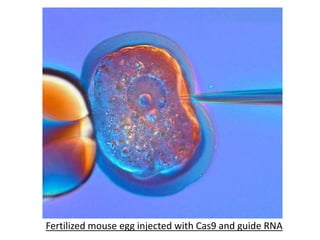
Fertilized mouse egg injected with Cas9 and guide RNA
ETHICAL CONCERNS
 Raises various ethical issues because of its possible
employment not only in adult cells but also in embryos of
humans.
 Also can be used for engineering humans with enhanced
properties (stronger bones, eye colour etc)
 Rising concerns of unintended consequences in clinical
applications in humans in future.
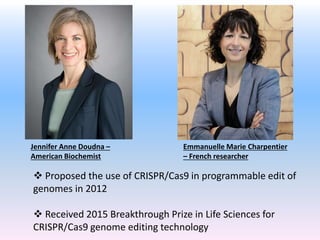
Jennifer Anne Doudna –
American Biochemist
 Proposed the use of CRISPR/Cas9 in programmable edit of
genomes in 2012
 Received 2015 Breakthrough Prize in Life Sciences for
CRISPR/Cas9 genome editing technology
Emmanuelle Marie Charpentier
– French researcher
CONCLUSION
 Bacteria also contains an adaptive immune system like
humans although it has a different pathway.
 Bacteria executes this mechanism to fight viruses but we can
use it for genetic engineering.
 Various ethical issues have been raised along with different
ideas that can executed for human welfare.
REFERENCES
Jennifer Doudna : CRISPR Basics
Channel name : Innovative Genomics Institute – IGI
Youtube link : http://youtu.be/47pkFey3CZ0
How CRISPR lets us edit our DNA | Jennifer Doudna
Channel name : TED
Youtube link : http://youtu.be/TdBAHexVYzc
The principle of CRISPR System and CRISPR – CAS9
Technique
Channel name : Biomedical and Biological Sciences
Youtube links : http://youtu.be/VtOZdThl6dM
http://youtu.be/KIMsVSQGBqw
CRISPR CAS9 technique

CRISPR CAS9 technique

  • 1.
    Presented by – DwijottamSarma Bordoloi (17/BBT/20) Ashish Pratim Mahanta (17/BBT/60) Course : Biotechnology Department of Applied Biology CRISPR CAS9 TECHNOLOGY
  • 2.
    CONTENTS 1. Introduction 2. CRISPRmechanism in bacteria 3. CRISPR CAS9 technique 4. Executions till date 5. Ethical Concerns 6. Conclusion 7. References
  • 3.
    INTRODUCTION CRISPR refers toa type of adaptive immune system found in bacterial cells, prevalent in bacterial genome. Scientists discovered that a lot of bacteria have repetitive DNA sequences in their genome – CRISPRs CRISPR – Clustered Regularly Interspaced Short Palindromic Repeats, termed by Francis Mojica in 1990. CRISPR CAS9 Technology is the advantageous utility of this mechanism for carrying out genetic engineering.
  • 4.
    CRISPR COMPONENTS crRNA/ CRISPRRNA : Guide RNA present in Host DNA that bind with tracrRNA and form hairpin complex. tracrRNA : Trans active RNA that bind with crRNA form active complex. sgRNA : Single guide RNA ( crRNA + tracrRNA ) Cas9 : Protein / nuclease that can modify DNA
  • 5.
    CRISPR MECHANISM INBACTERIA  Takes place after the invasion of virus followed by injection of viral genome into the bacterial cell.  Immune system: (a) Adaption – Acquisition of spacer DNA with the insertion of pieces of viral genome in between CRISPR repeats. Repeats = 28-37 bp Spacer DNA = 32-38 bp Bacteriophage Viral DNA  Assisting enzymes – Cas1 (endonuclease), and Cas2 (endoribonuclease)
  • 6.
    (b) Expression - Transcriptioninto mRNA that is complementary to Template. tracrRNA bind to CRISPR repeats. mRNA gets chopped off by Cas9 and RNAse III into individual crRNAs. Coding Strand Template
  • 7.
  • 8.
    (c) Interference – crRNAsget integrated with a Cas9 protein to form effector complexes. CRISPR repeats take hairpin like looped form. [Fact: The bacterial genome preferably takes in a part of the viral genome only from the portion adjacent to PAM sequence(Protospacer Adjacent Motif) which is targeted by the Cas9 nuclease] On finding a viral genome containing a strand complementary to the crRNA itself, it binds to viral DNA. Cas9 induces a double strand cut in the viral DNA (assisting domains: HNC and RuvC)
  • 9.
  • 10.
  • 11.
    CRISPR – CAS9TECHNIQUE Technique that can be used to make targeted cuts in DNA, applicable in genetic engineering. Can be delivered in embryonic stem cells of animals. Requirements: Design a plasmid that can transcribe every single piece of the required components Can be induced through – (a) Electroporation (b) Viruses (lentivirus, adenovirus)
  • 14.
  • 15.
    EXECUTIONS TILL DATE Tomatoeswith stronger stems being able to carry heavier fruits
  • 16.
    Disrupting the generesponsible for black colour by making a change
  • 17.
    Fertilized mouse egginjected with Cas9 and guide RNA
  • 18.
    ETHICAL CONCERNS  Raisesvarious ethical issues because of its possible employment not only in adult cells but also in embryos of humans.  Also can be used for engineering humans with enhanced properties (stronger bones, eye colour etc)  Rising concerns of unintended consequences in clinical applications in humans in future.
  • 19.
    Jennifer Anne Doudna– American Biochemist  Proposed the use of CRISPR/Cas9 in programmable edit of genomes in 2012  Received 2015 Breakthrough Prize in Life Sciences for CRISPR/Cas9 genome editing technology Emmanuelle Marie Charpentier – French researcher
  • 20.
    CONCLUSION  Bacteria alsocontains an adaptive immune system like humans although it has a different pathway.  Bacteria executes this mechanism to fight viruses but we can use it for genetic engineering.  Various ethical issues have been raised along with different ideas that can executed for human welfare.
  • 21.
    REFERENCES Jennifer Doudna :CRISPR Basics Channel name : Innovative Genomics Institute – IGI Youtube link : http://youtu.be/47pkFey3CZ0 How CRISPR lets us edit our DNA | Jennifer Doudna Channel name : TED Youtube link : http://youtu.be/TdBAHexVYzc The principle of CRISPR System and CRISPR – CAS9 Technique Channel name : Biomedical and Biological Sciences Youtube links : http://youtu.be/VtOZdThl6dM http://youtu.be/KIMsVSQGBqw