Formation of Sedimentary
         Rock
Formation of Sedimentary Rock
• Made up of an accumulation of various types
  of sediment.

• Compaction or cementation are two process
  that form sedimentary rock.
 – Compaction- when all air and water is squeezed
   out of sediment
 – Cementation- when minerals are left between the
   fragments of sediment.
3 Types of Sedimentary Rocks
• Clastic Sedimentary Rock- rock is made up of
  rock fragments that have been moved by
  water, wind or ice.

• Chemical Sedimentary Rock- forms from
  minerals that precipitate from water.

• Organic Sedimentary Rock- forms from the
  remains of organisms.
Clastic Sedimentary rocks
• Rocks are classified by the sediments size.

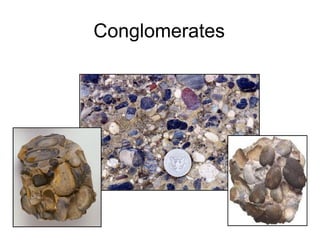
• Conglomerates- rocks composed of rounded gravel
  size fragments or pebbles.
  – Individual pieces are easily seen.

• The sandstone group is made up of sand size grains
  that have been cemented together.

• The third group is shale, which consists of clay size
  particles the easily flake or break apart.
Conglomerates
Sandstone
Shale
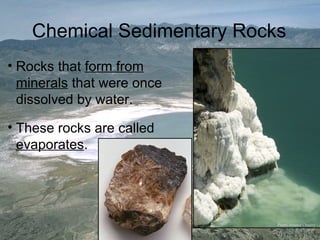
Chemical Sedimentary Rocks
• Rocks that form from
  minerals that were once
  dissolved by water.

• These rocks are called
  evaporates.
Organic Sedimentary Rock
• Formed out of the remains of living things.

• Coal is a prime example of this.
Sedimentary Rock Features
• Easily identifiable
  – Layering
  – Ripples marks
  – Mud
  – Cracks
  – Fossils
  – Concretion

5.2 sedimentary rocks

  • 1.
  • 2.
    Formation of SedimentaryRock • Made up of an accumulation of various types of sediment. • Compaction or cementation are two process that form sedimentary rock. – Compaction- when all air and water is squeezed out of sediment – Cementation- when minerals are left between the fragments of sediment.
  • 3.
    3 Types ofSedimentary Rocks • Clastic Sedimentary Rock- rock is made up of rock fragments that have been moved by water, wind or ice. • Chemical Sedimentary Rock- forms from minerals that precipitate from water. • Organic Sedimentary Rock- forms from the remains of organisms.
  • 4.
    Clastic Sedimentary rocks •Rocks are classified by the sediments size. • Conglomerates- rocks composed of rounded gravel size fragments or pebbles. – Individual pieces are easily seen. • The sandstone group is made up of sand size grains that have been cemented together. • The third group is shale, which consists of clay size particles the easily flake or break apart.
  • 5.
  • 6.
  • 7.
  • 8.
    Chemical Sedimentary Rocks •Rocks that form from minerals that were once dissolved by water. • These rocks are called evaporates.
  • 9.
    Organic Sedimentary Rock •Formed out of the remains of living things. • Coal is a prime example of this.
  • 10.
    Sedimentary Rock Features •Easily identifiable – Layering – Ripples marks – Mud – Cracks – Fossils – Concretion