STRUCTURES OFSTRUCTURES OF
SEDIMENTARY ROCKSSEDIMENTARY ROCKS
M.RAJASEKHAR
ASST. PROFESSOR
KUPPAM ENGINEERING COLLGE
Structures ofStructures of sedimentary rocks formed by the deposition of sediments orsedimentary rocks formed by the deposition of sediments or
fragments by the process of ETDfragments by the process of ETD
Sedimentary structures are classified into different types based upon theSedimentary structures are classified into different types based upon the
deposition of sediments they aredeposition of sediments they are
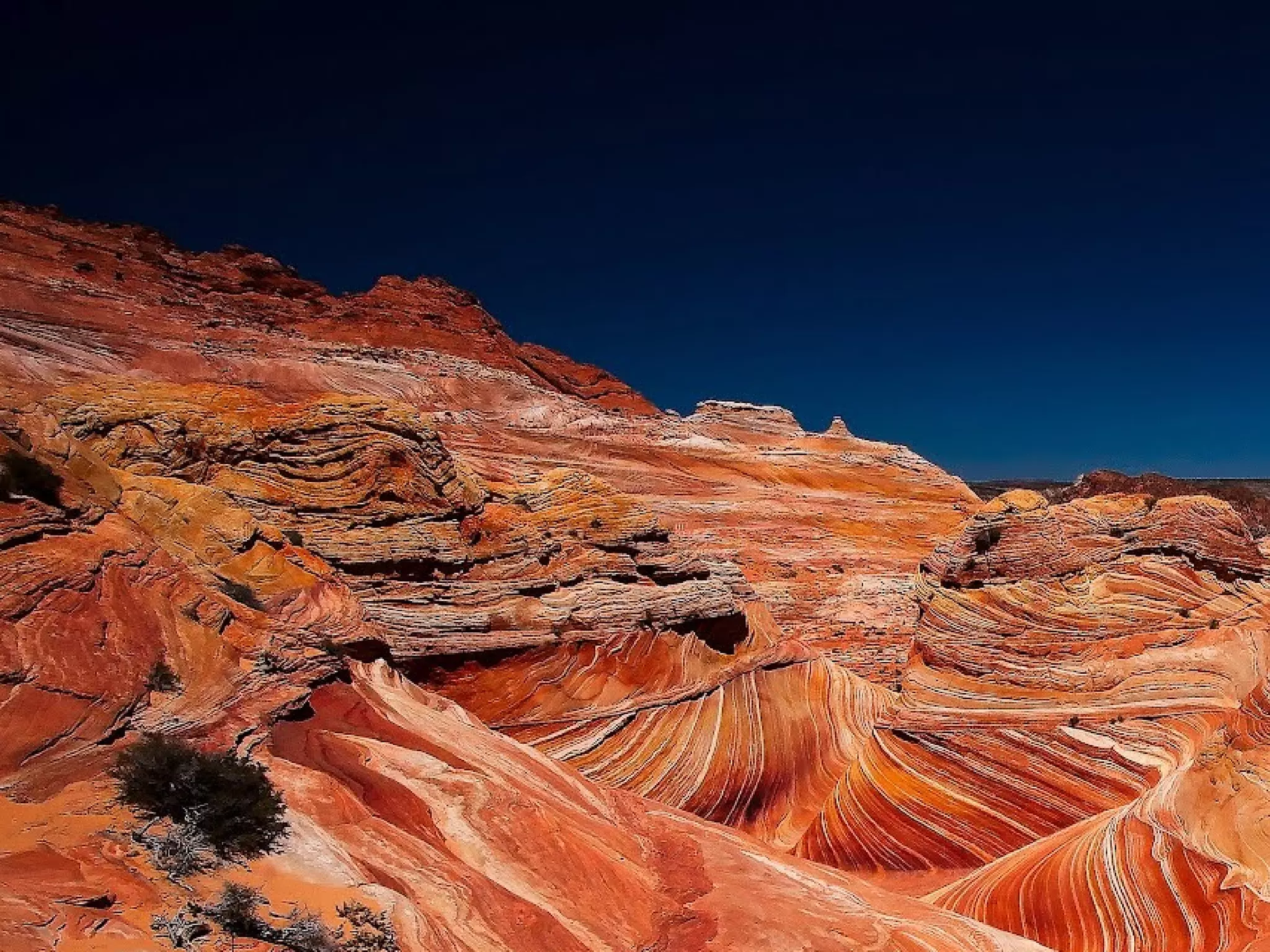
1. Stratification
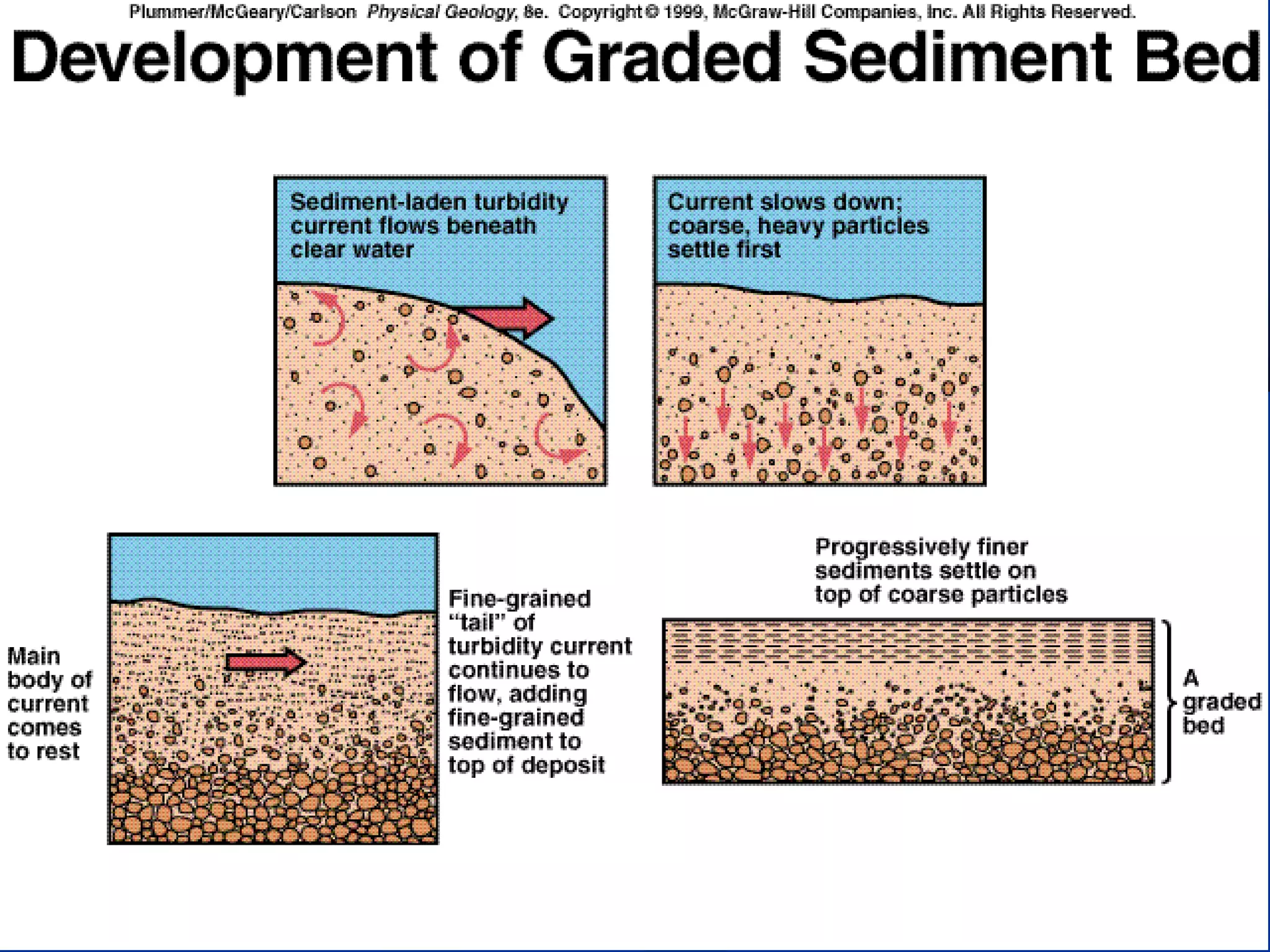
2. Graded bedding
3. Cross bedding
4. Ripple marks
5. Mud cracks
6. Rain drop marks
7. Cast and mould
8. Tool marks
9. Track and Trails
10. Burrow marks
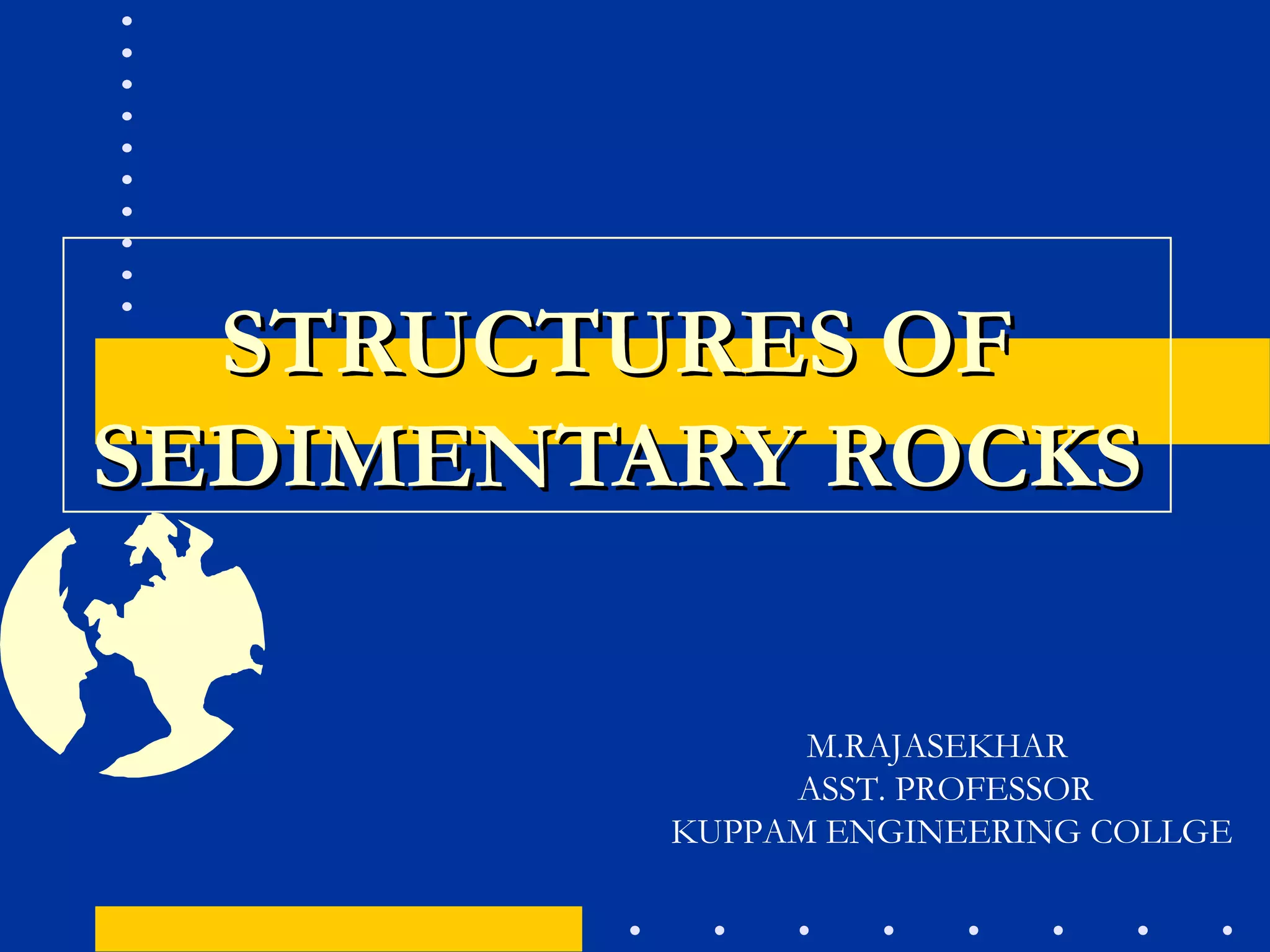
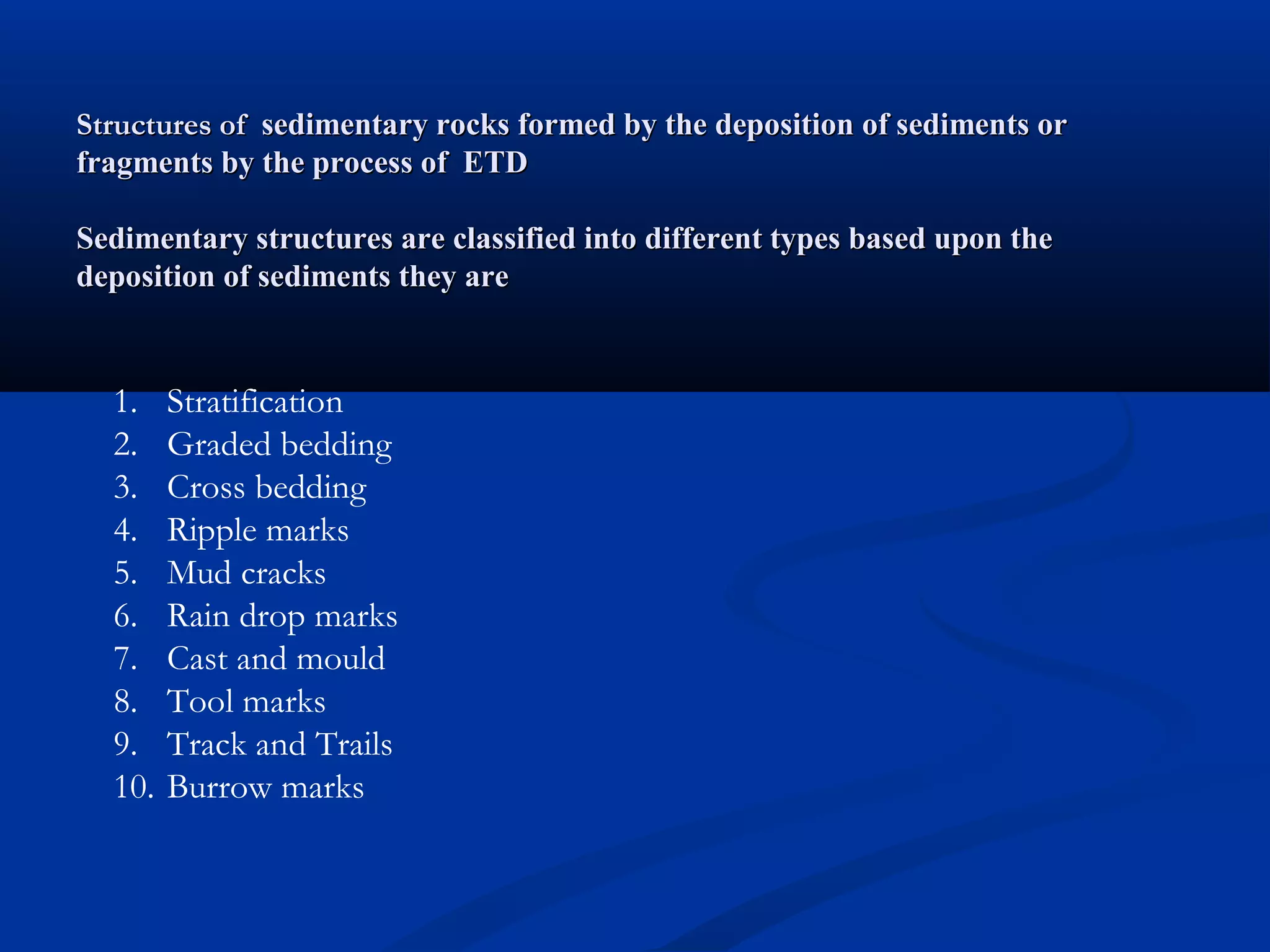
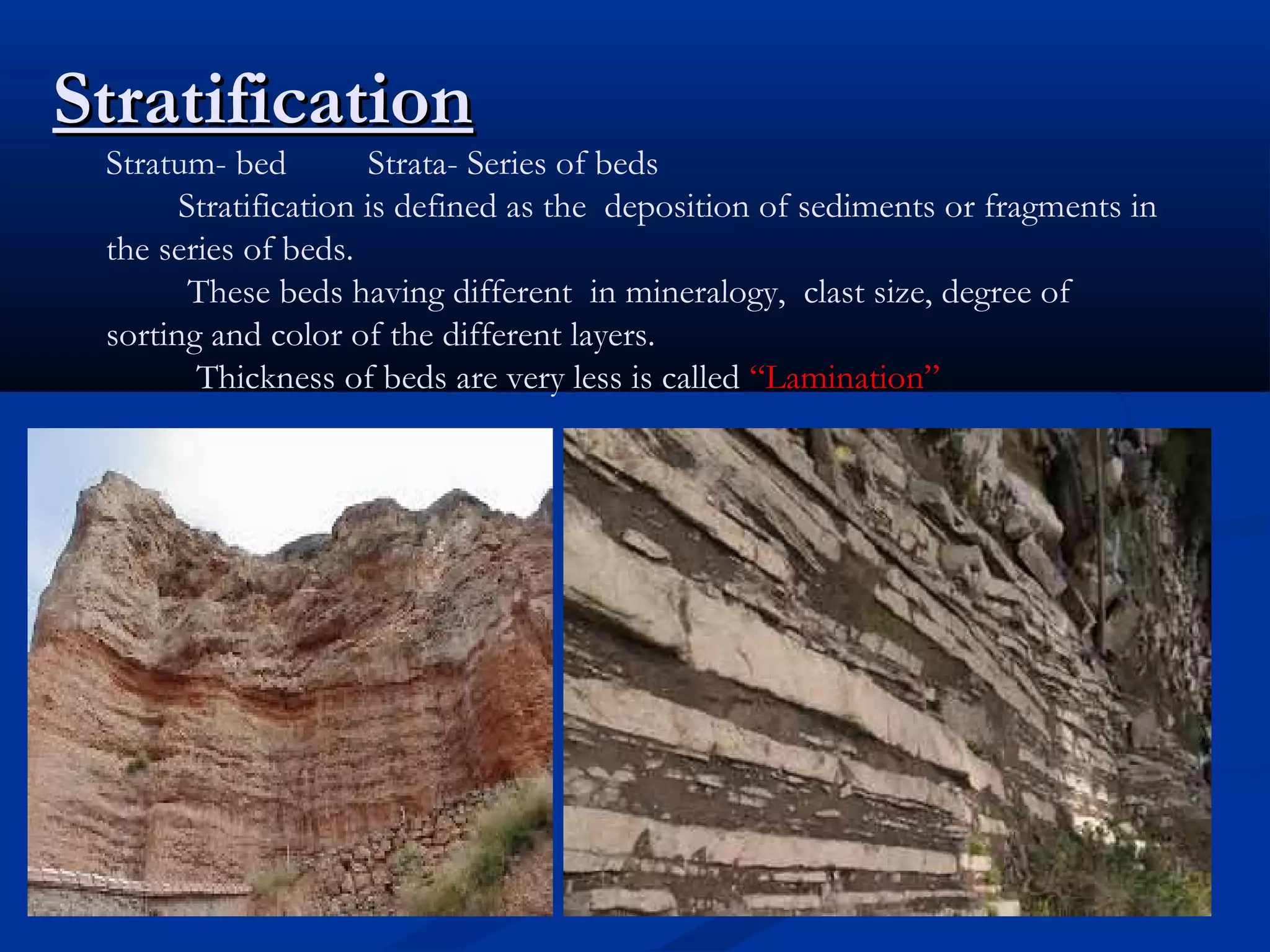
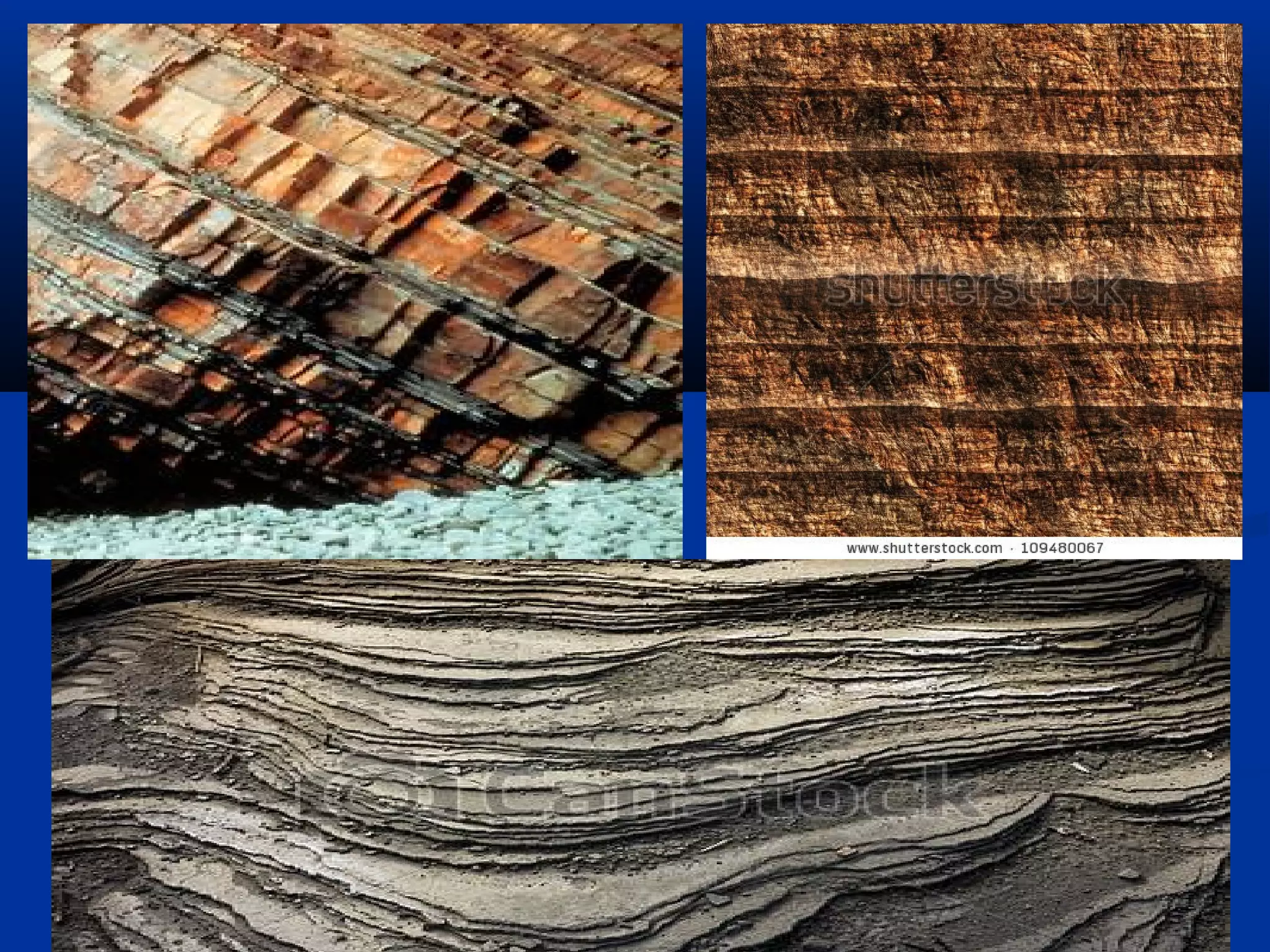
StratificationStratification
Stratum- bed Strata- Series of beds
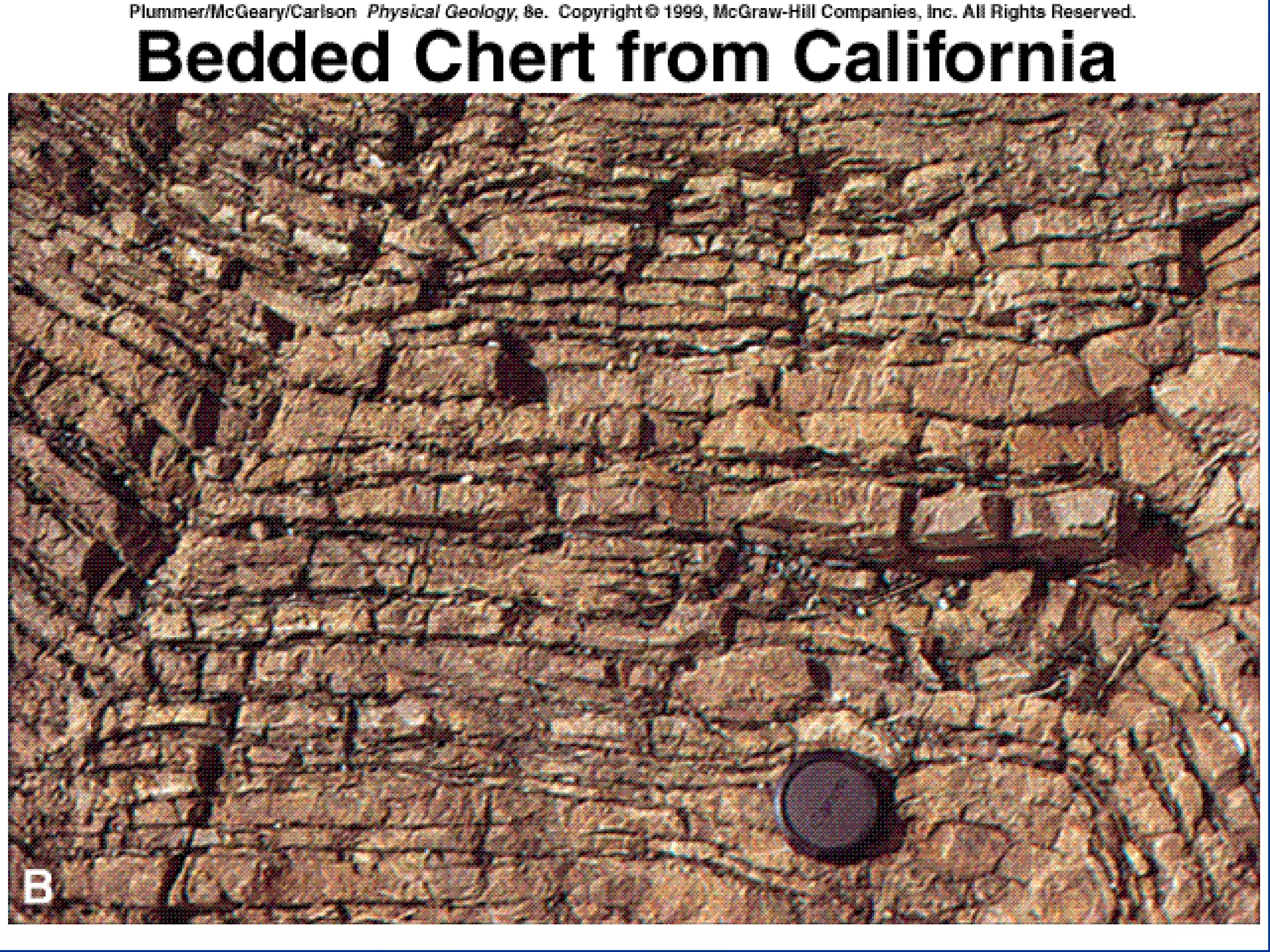
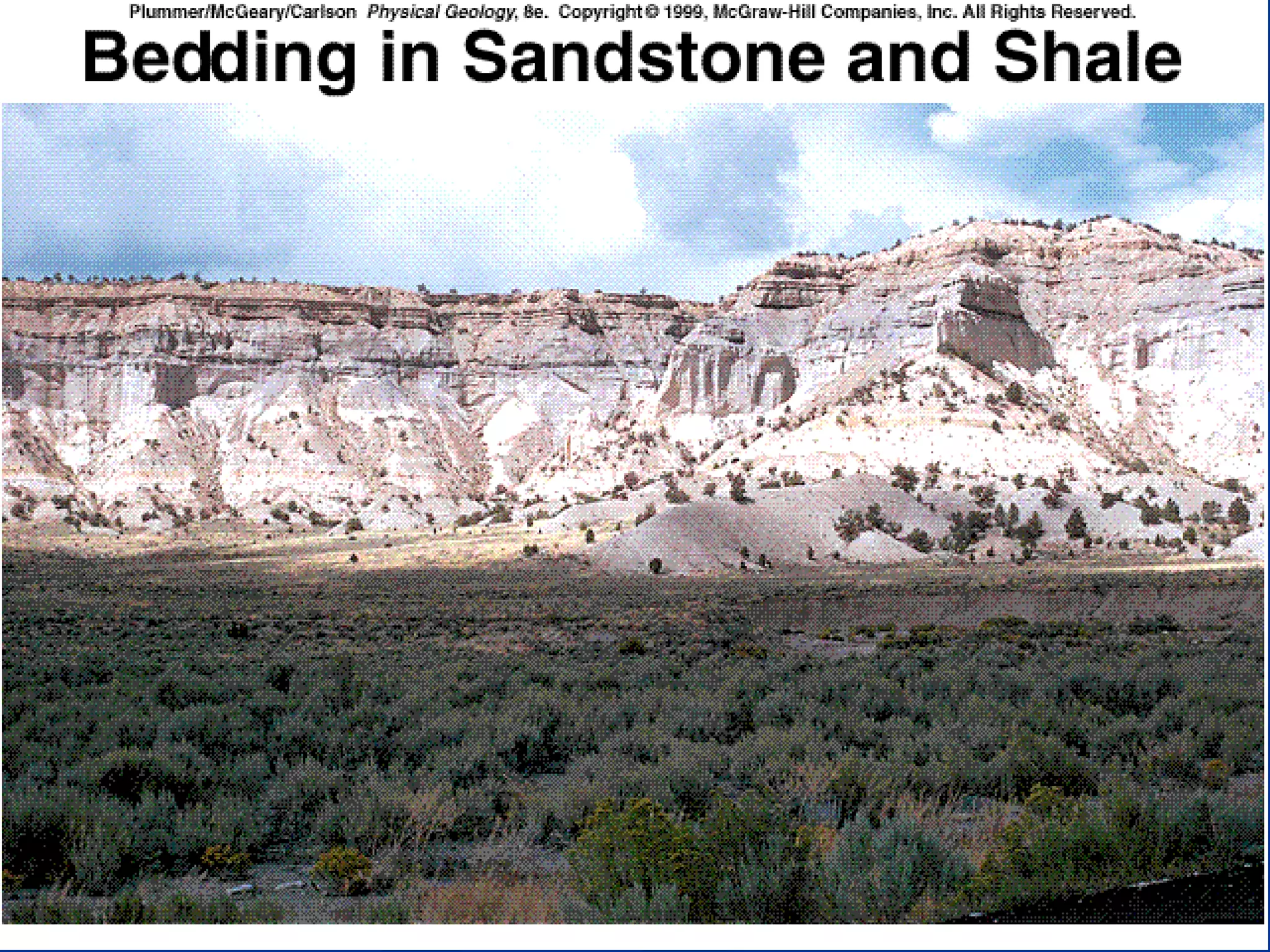
Stratification is defined as the deposition of sediments or fragments in
the series of beds.
These beds having different in mineralogy, clast size, degree of
sorting and color of the different layers.
Thickness of beds are very less is called “Lamination”
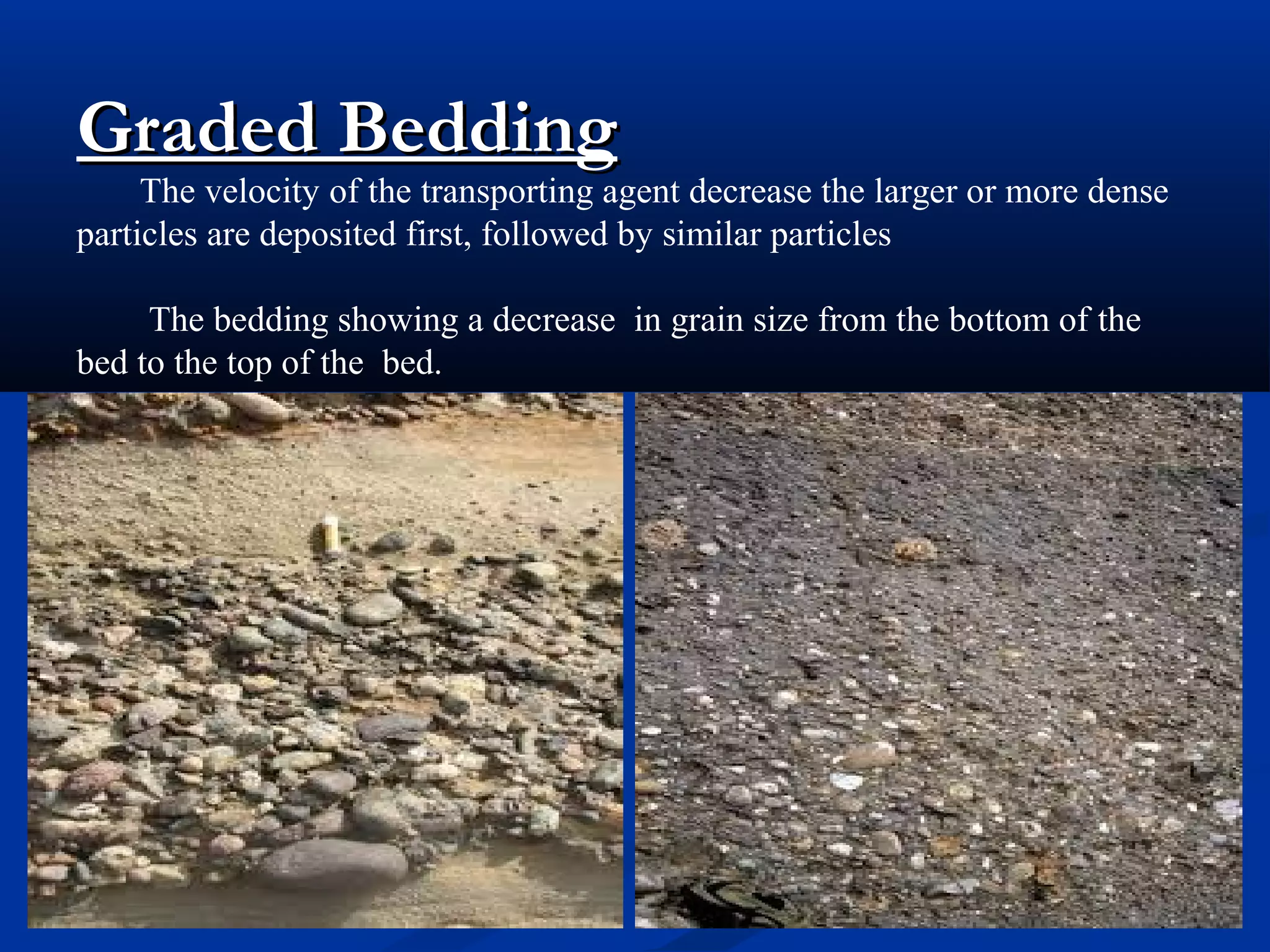
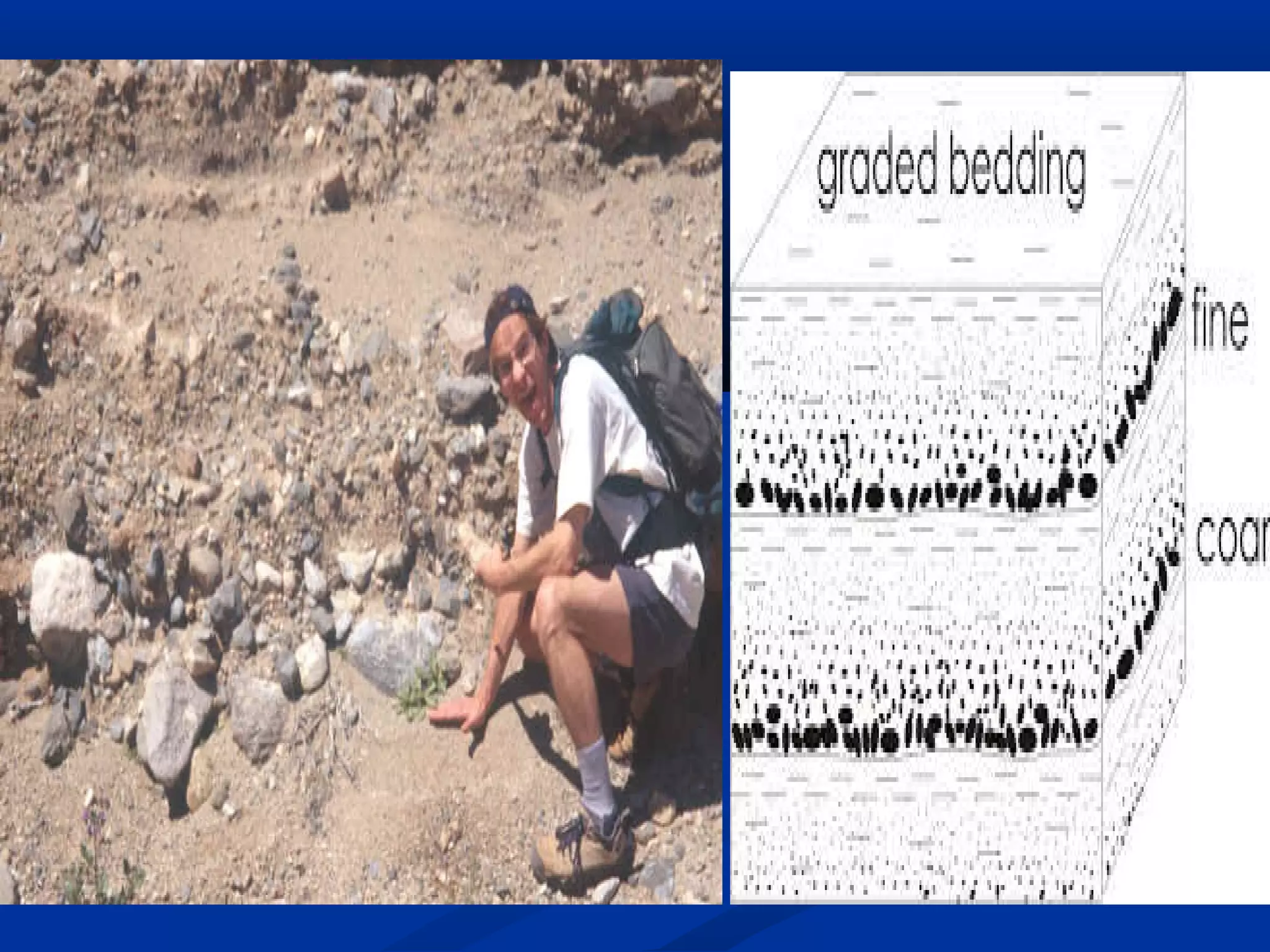
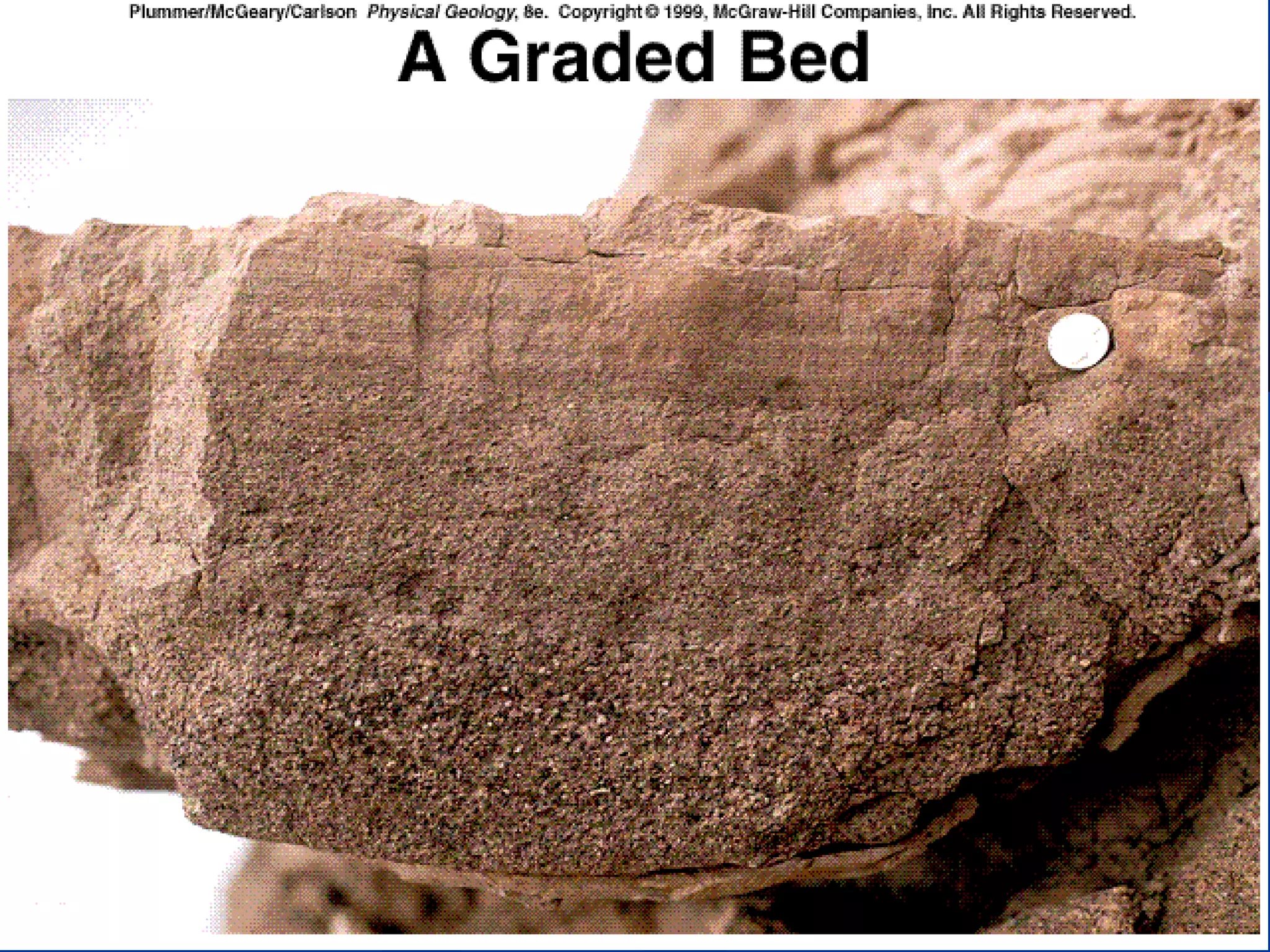
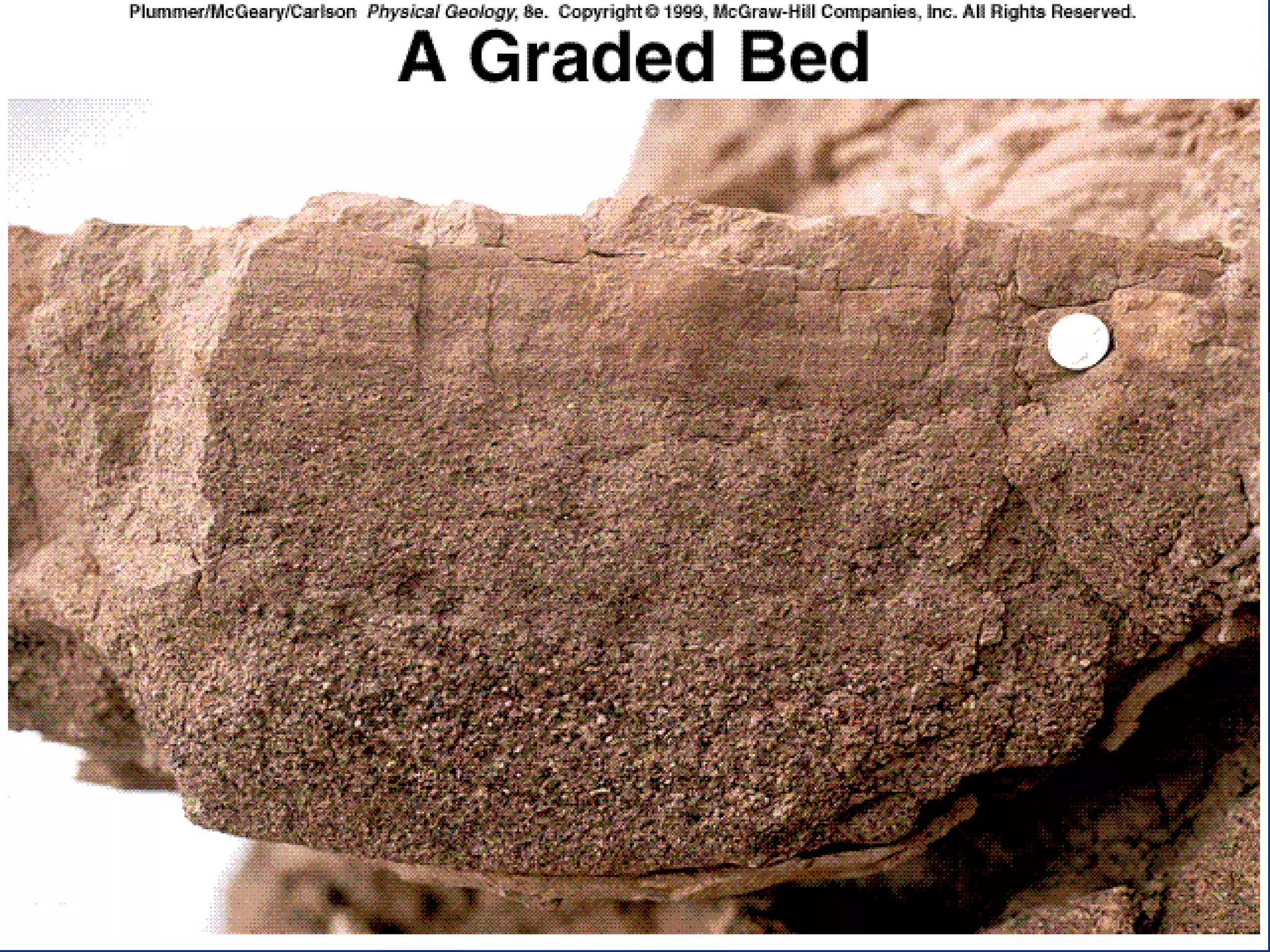
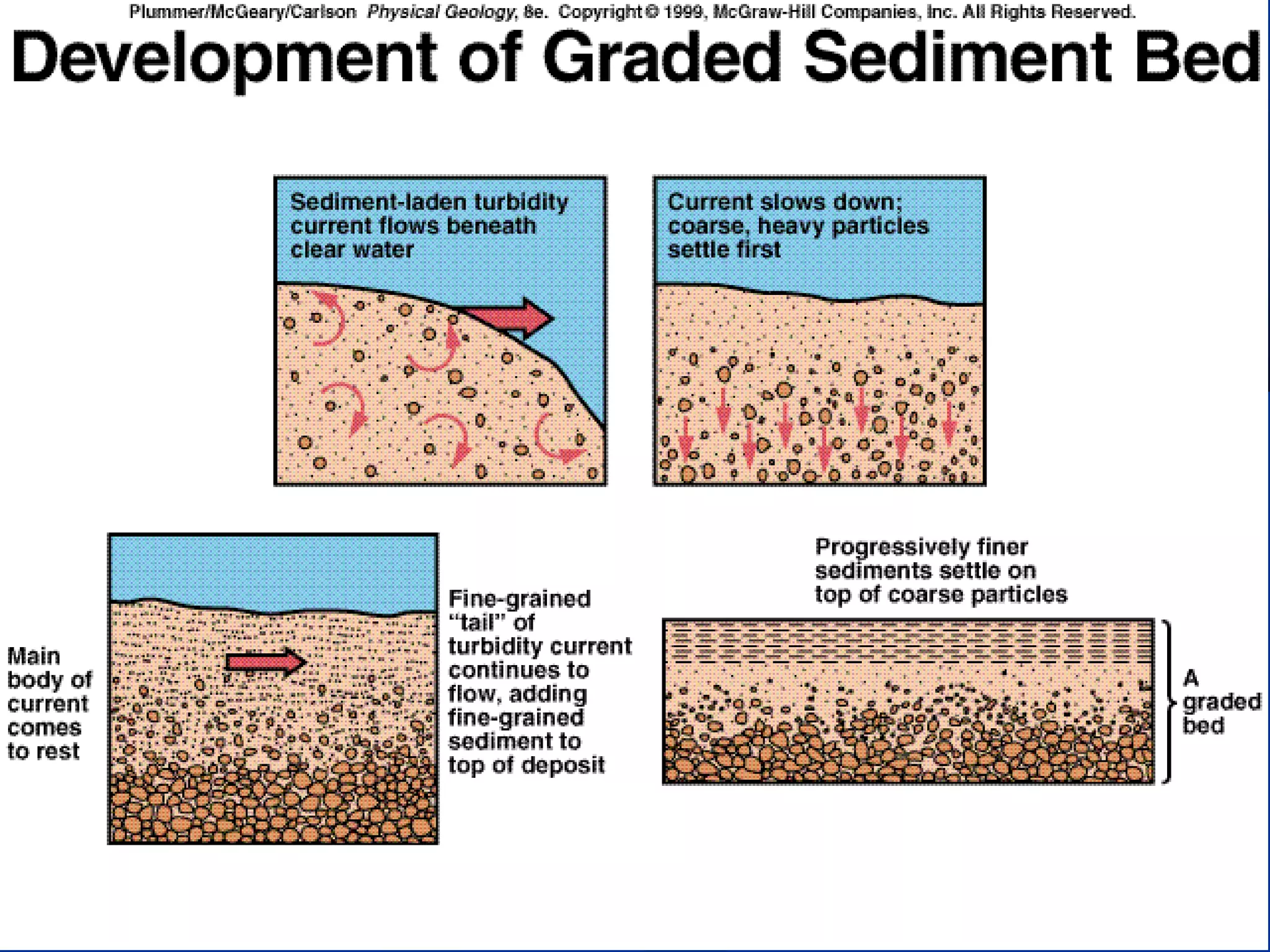
Graded BeddingGraded Bedding
The velocity of the transporting agent decrease the larger or more dense
particles are deposited first, followed by similar particles
The bedding showing a decrease in grain size from the bottom of the
bed to the top of the bed.
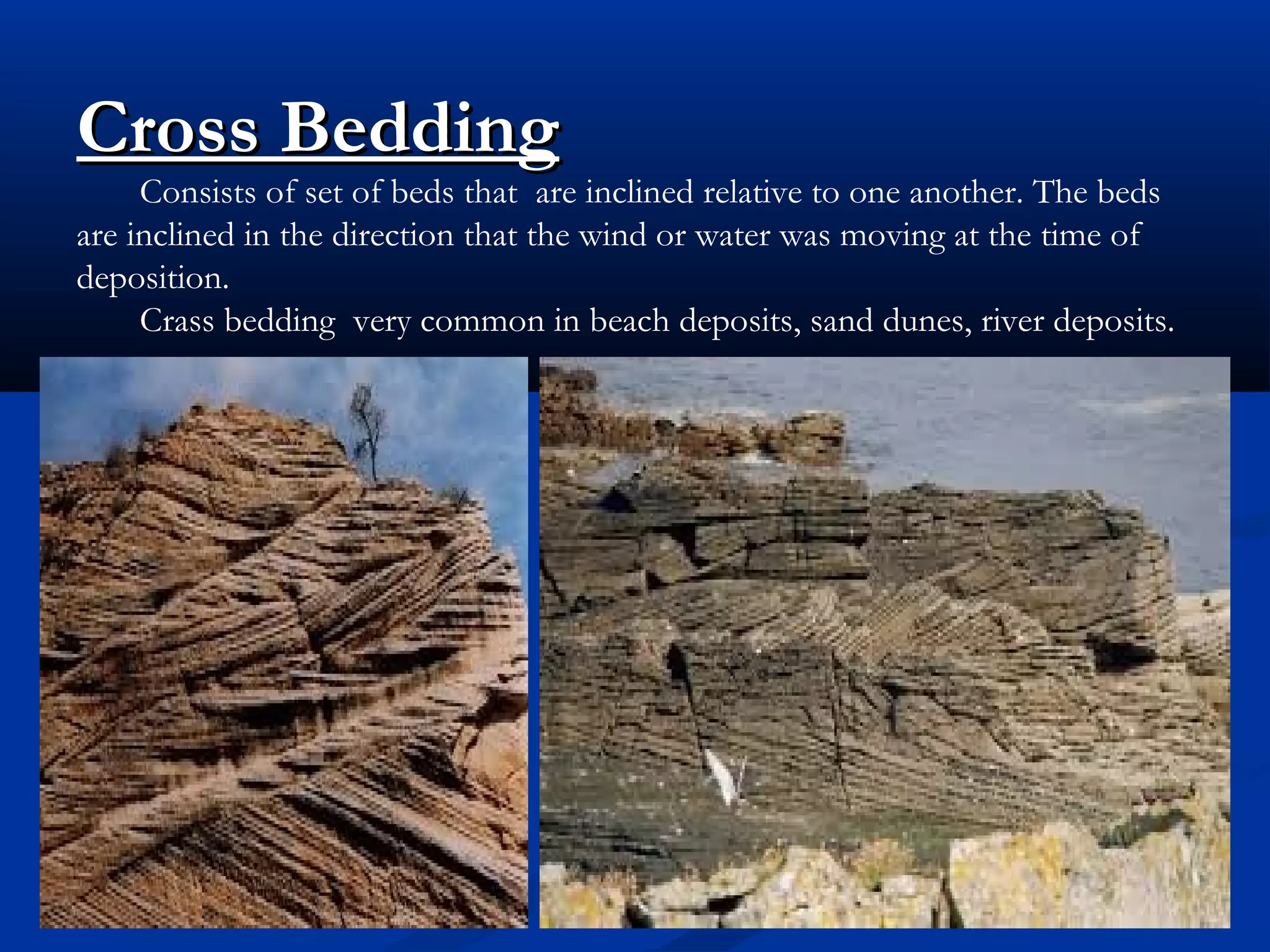
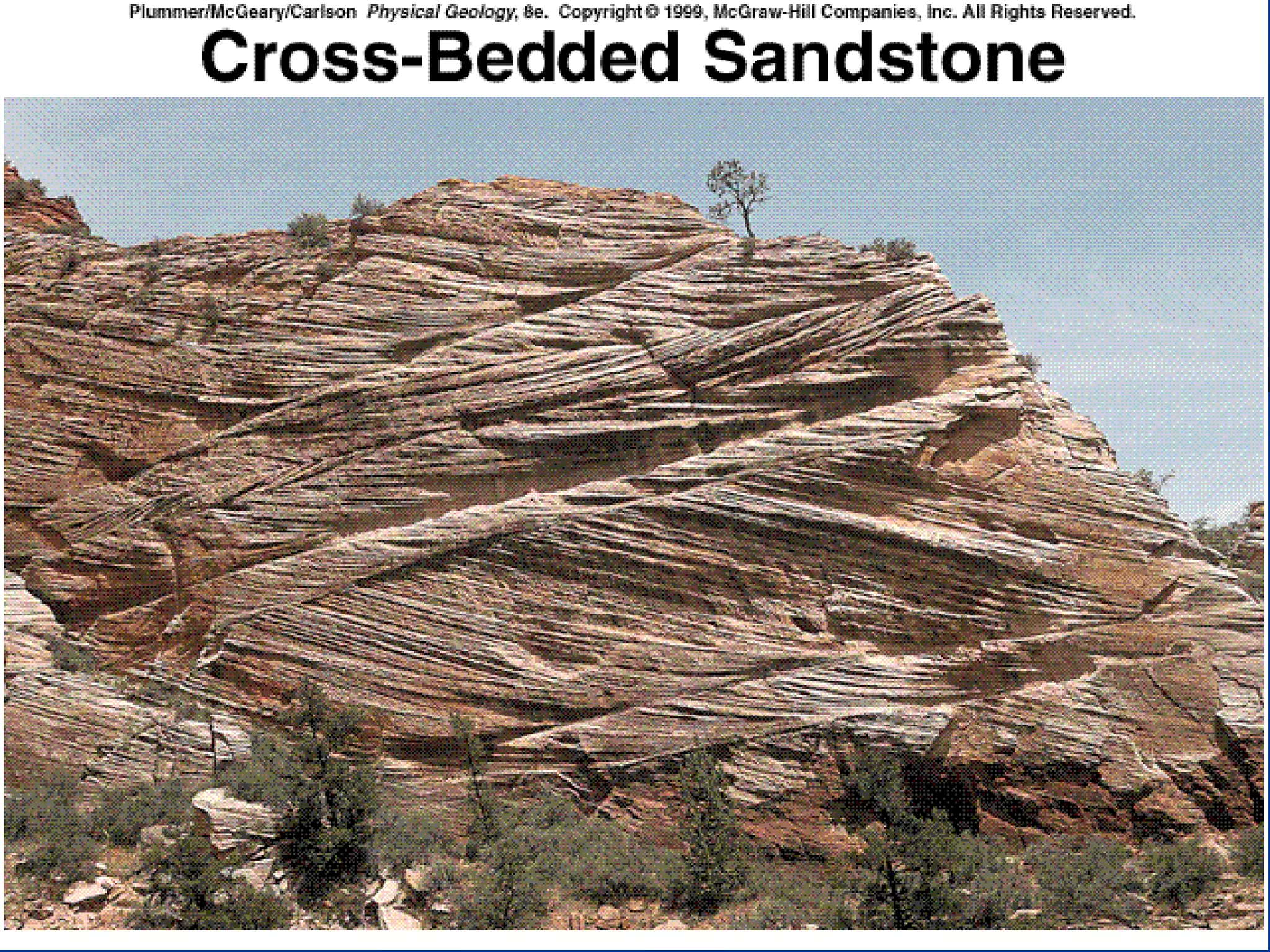
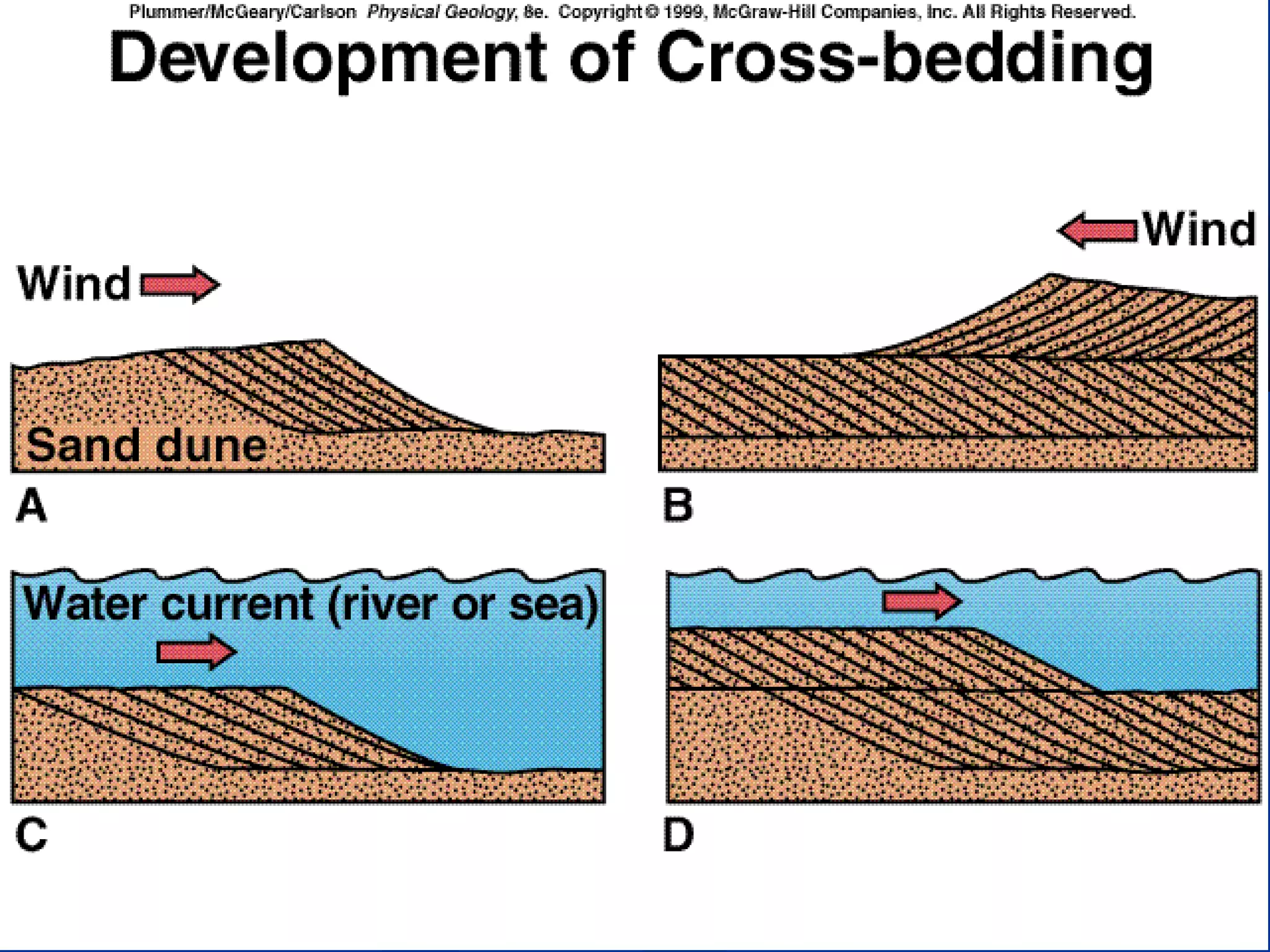
Cross BeddingCross Bedding
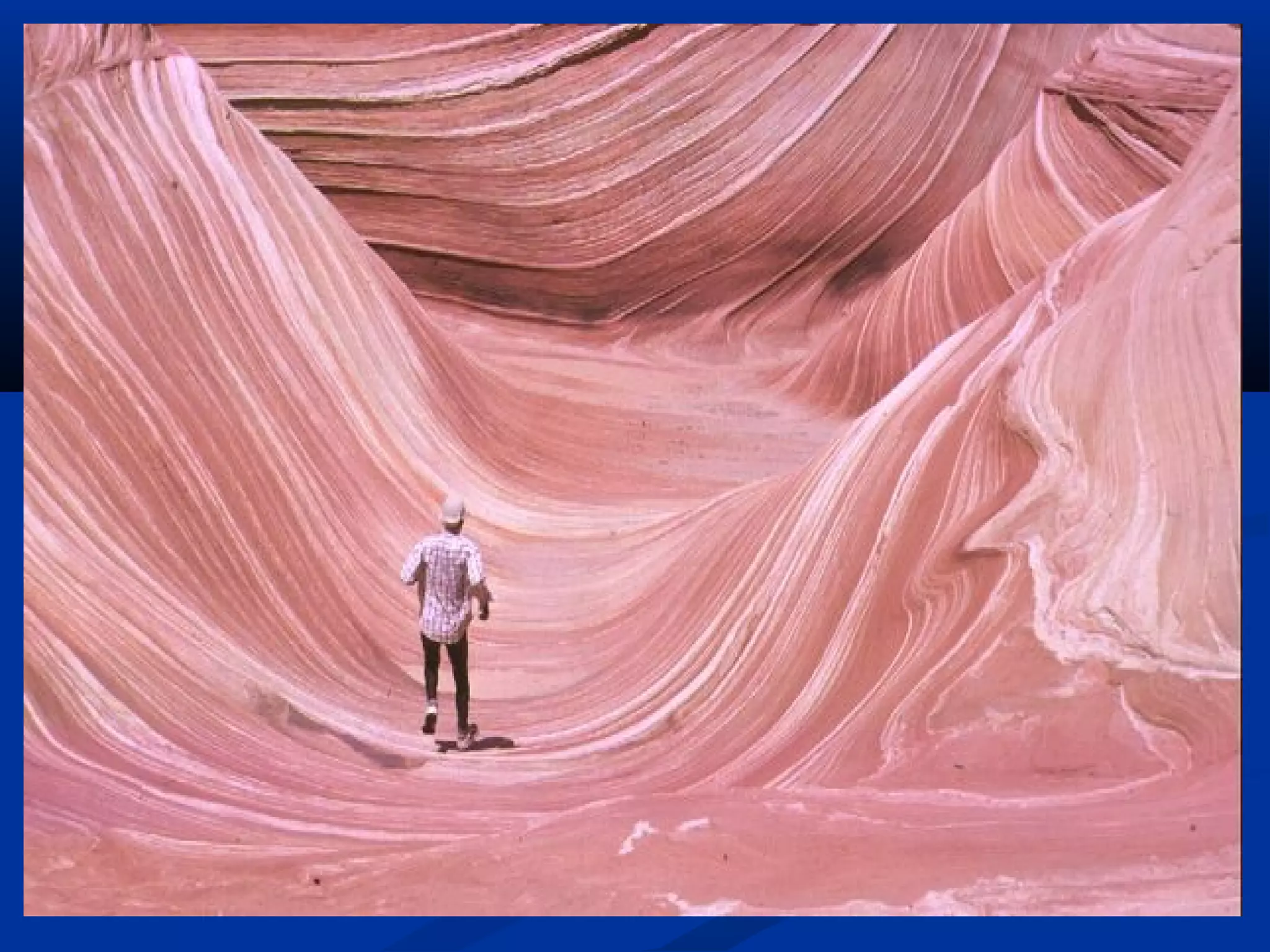
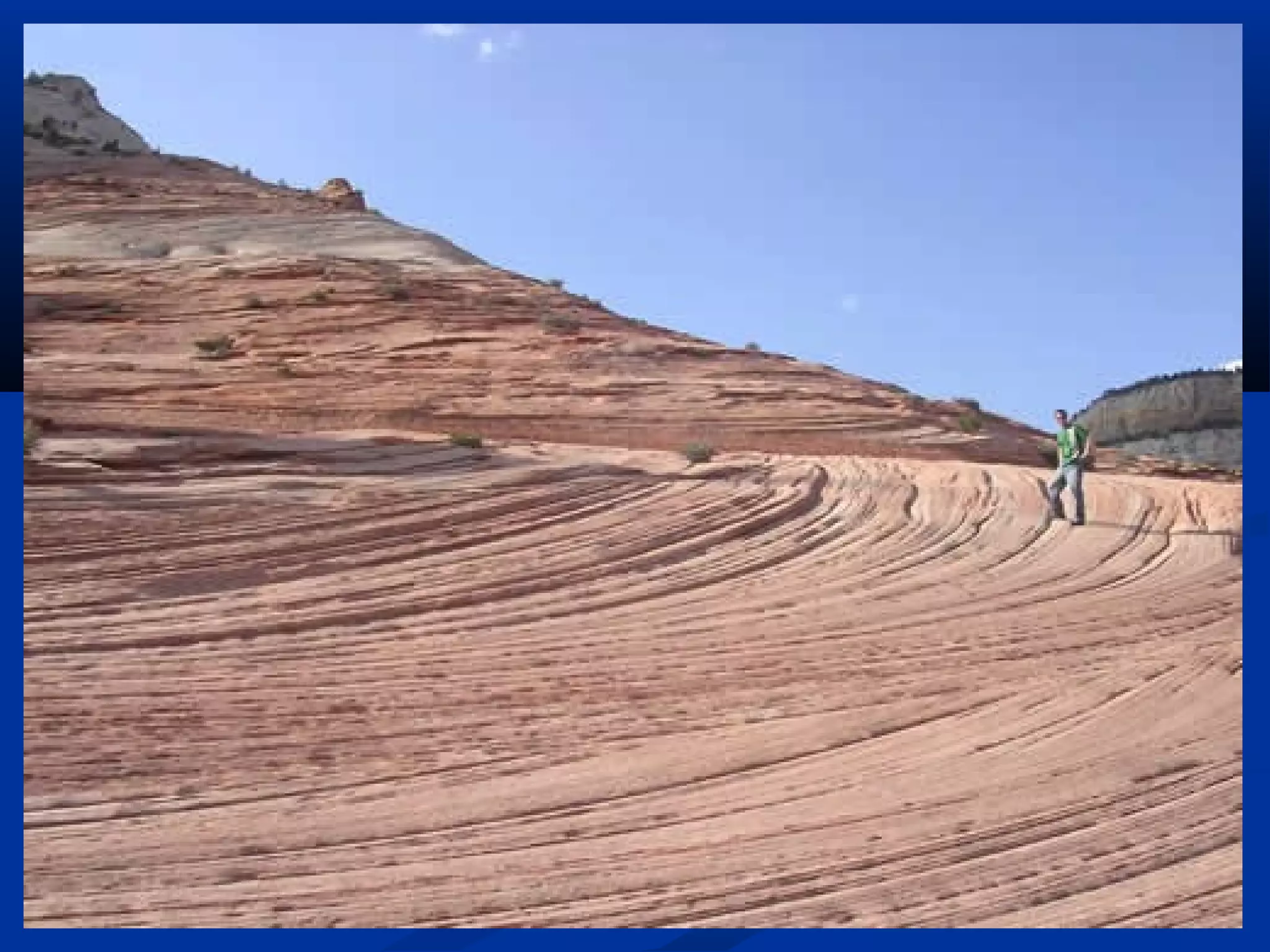
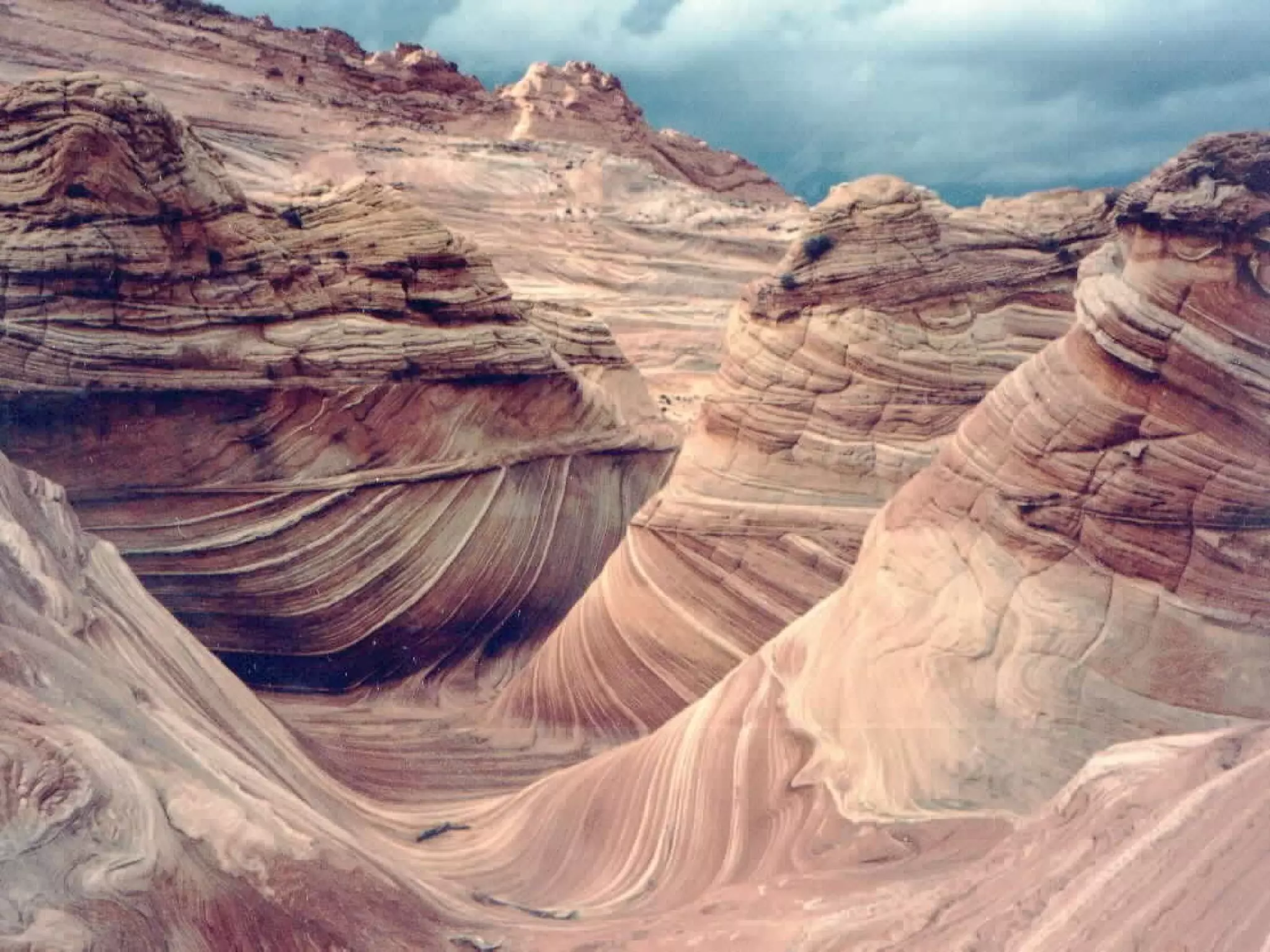
Consists of set of beds that are inclined relative to one another. The beds
are inclined in the direction that the wind or water was moving at the time of
deposition.
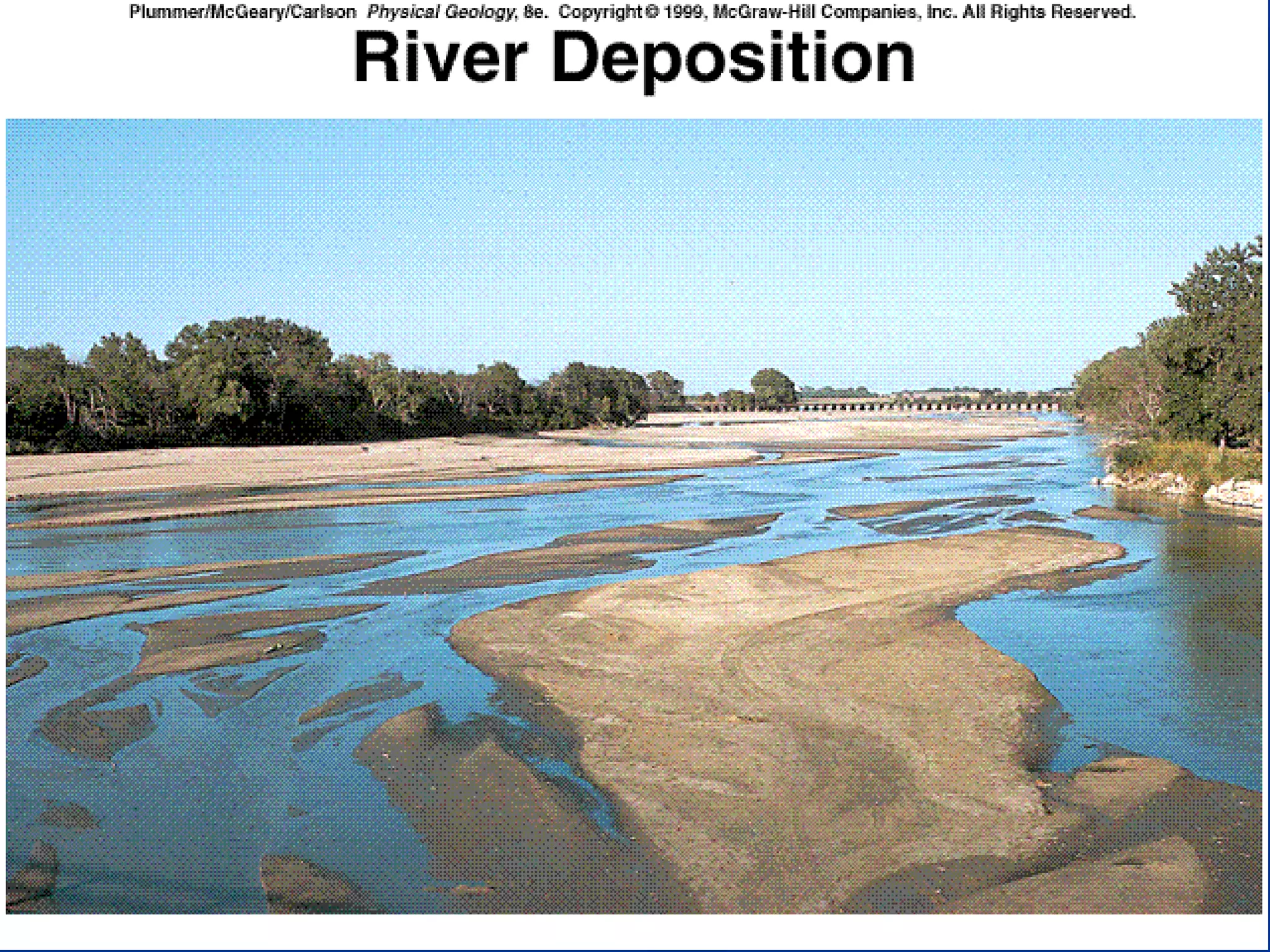
Crass bedding very common in beach deposits, sand dunes, river deposits.
SEDIMENTSEDIMENT
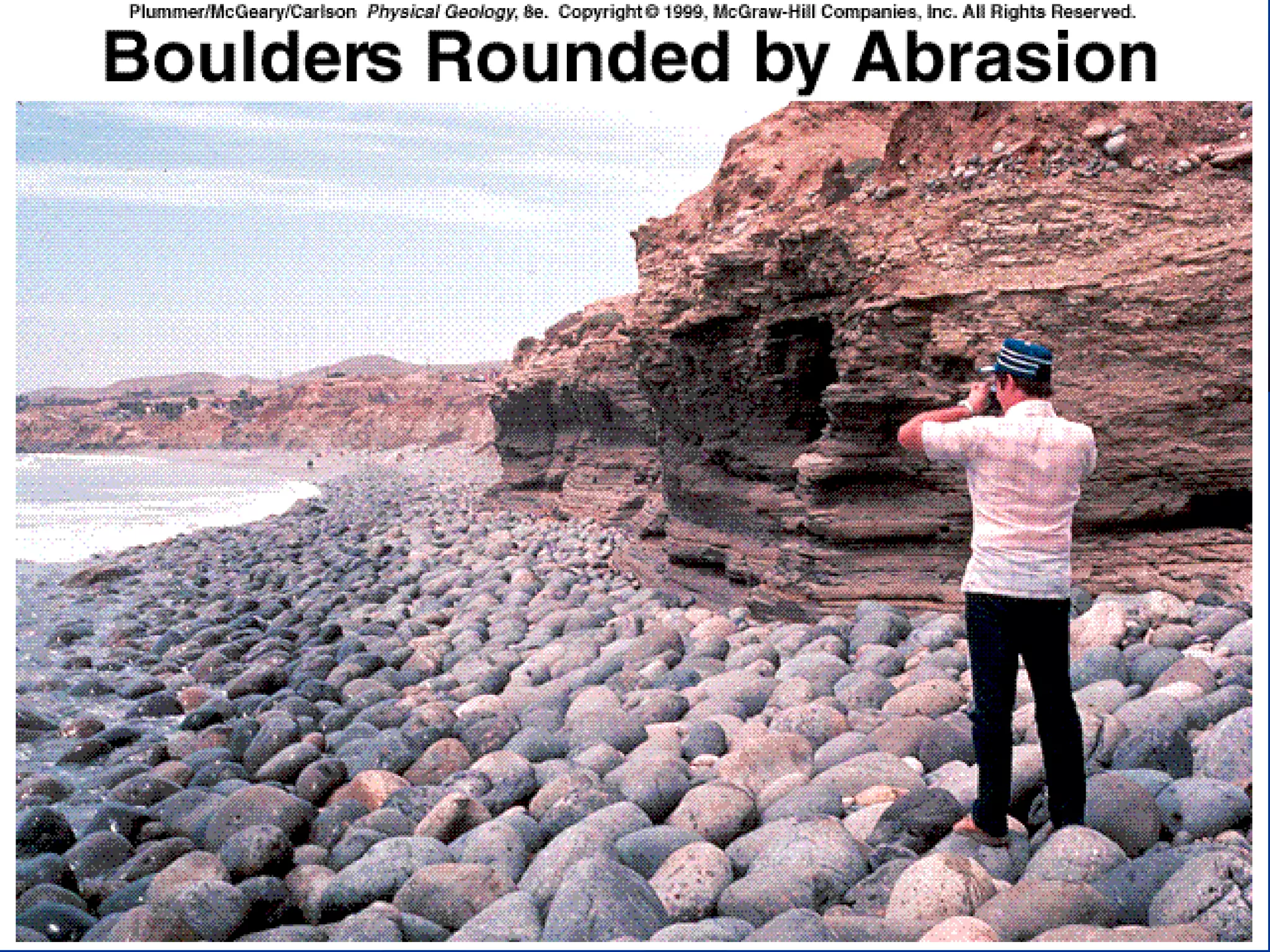
 TransportationTransportation
 AbrasionAbrasion
 RoundingRounding
 SortingSorting
 DepositionDeposition
 Environment of deposition- specificEnvironment of deposition- specific
 PreservationPreservation
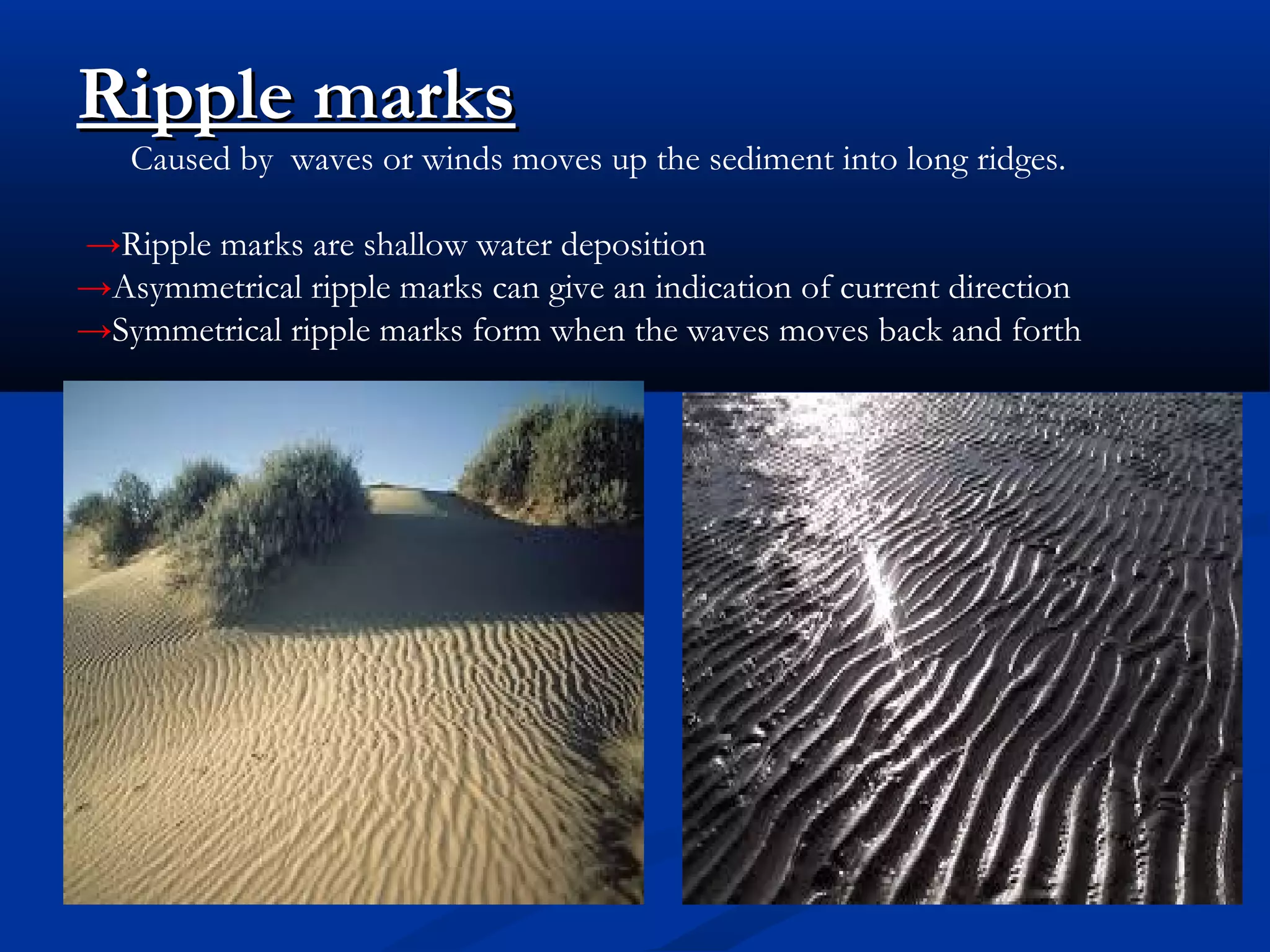
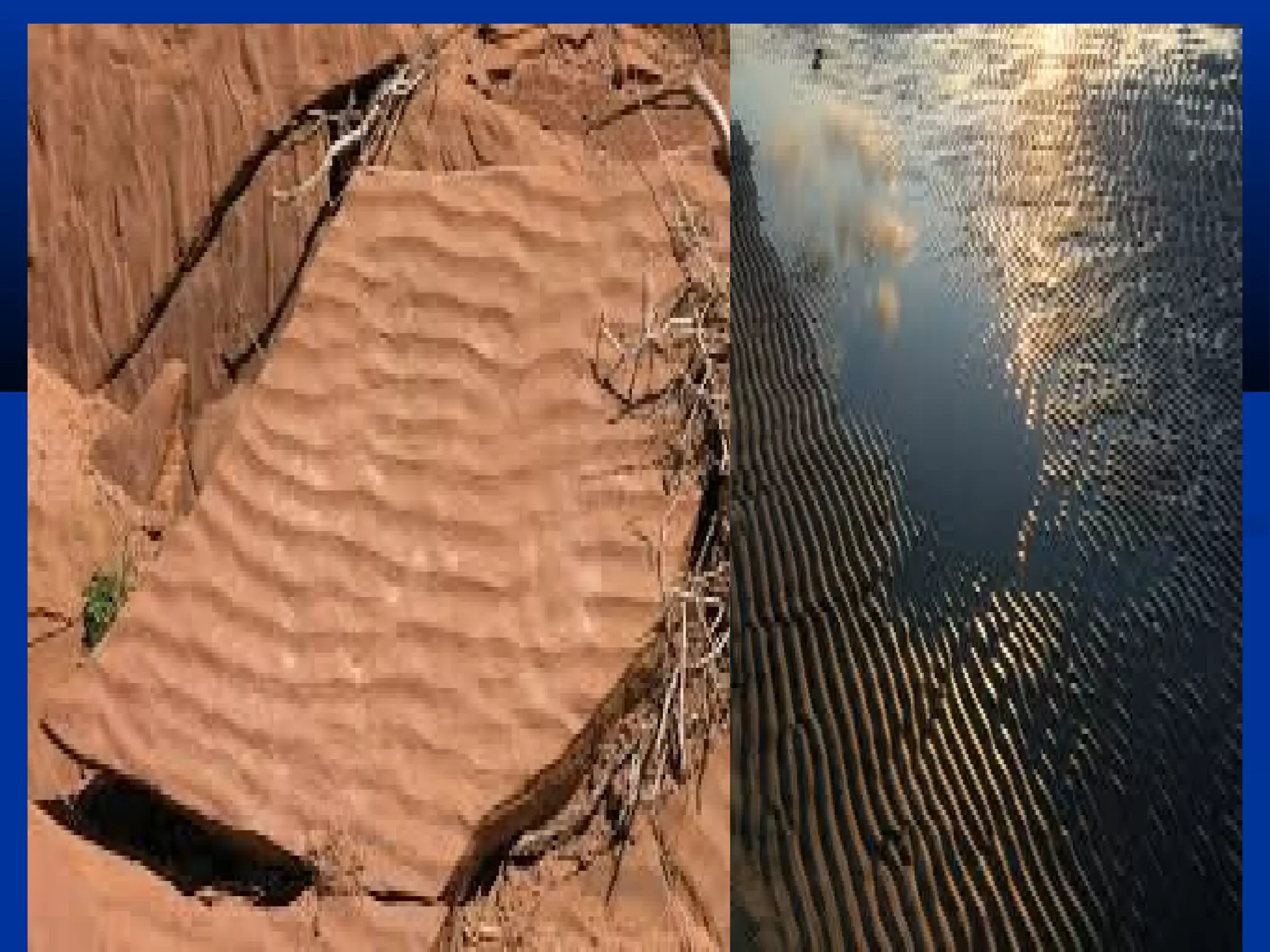
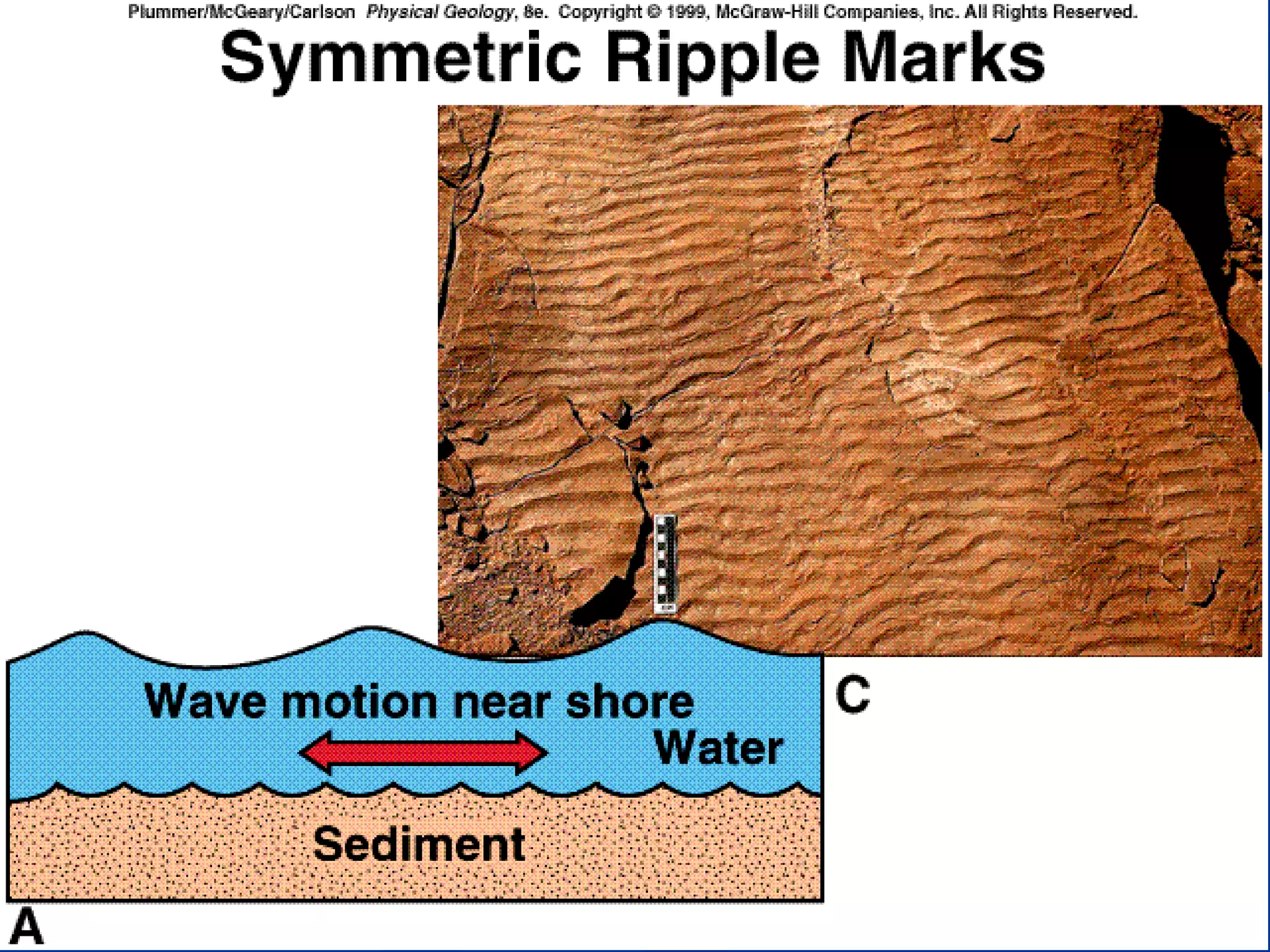
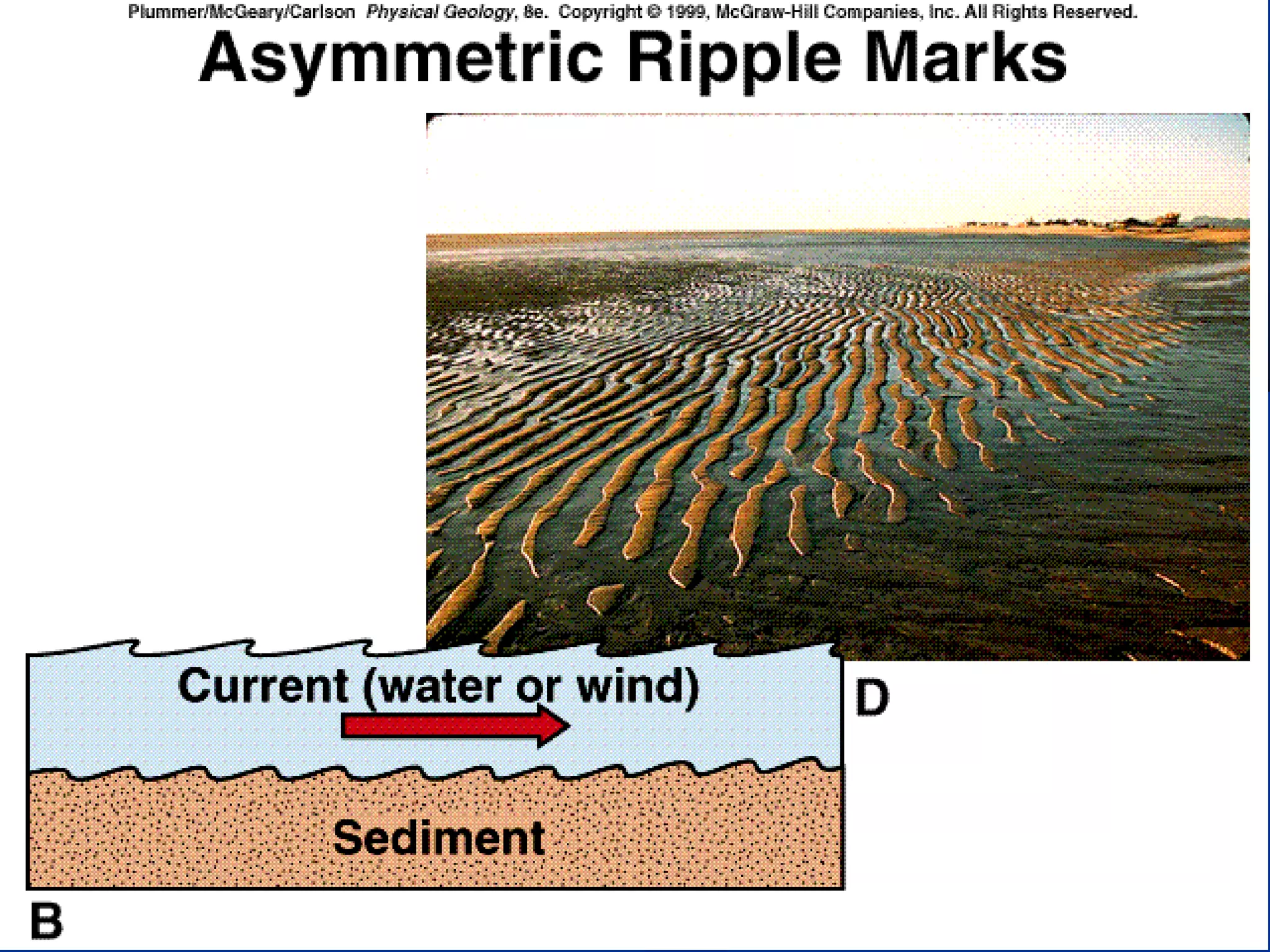
Ripple marksRipple marks
Caused by waves or winds moves up the sediment into long ridges.
→Ripple marks are shallow water deposition
→Asymmetrical ripple marks can give an indication of current direction
→Symmetrical ripple marks form when the waves moves back and forth
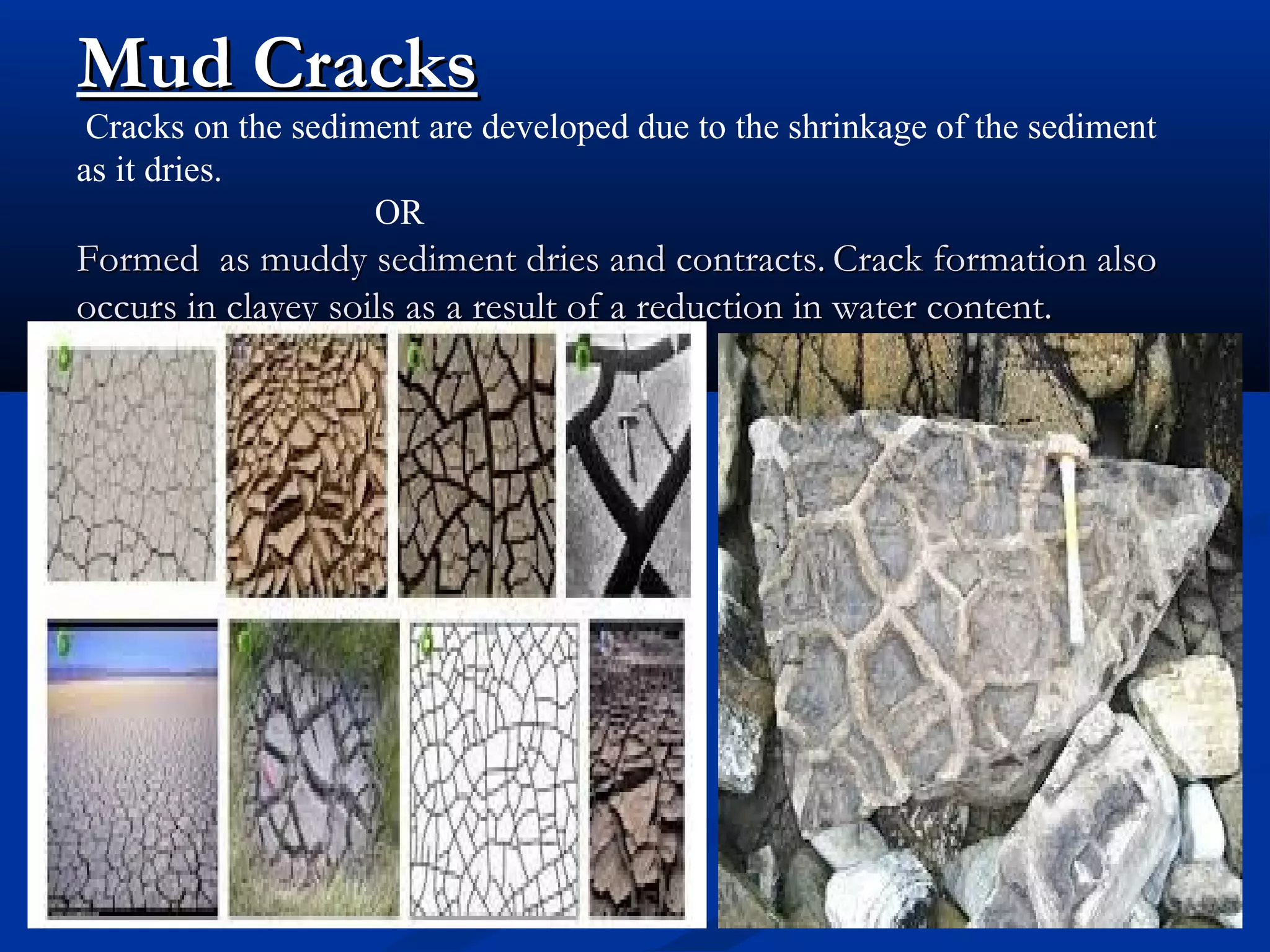
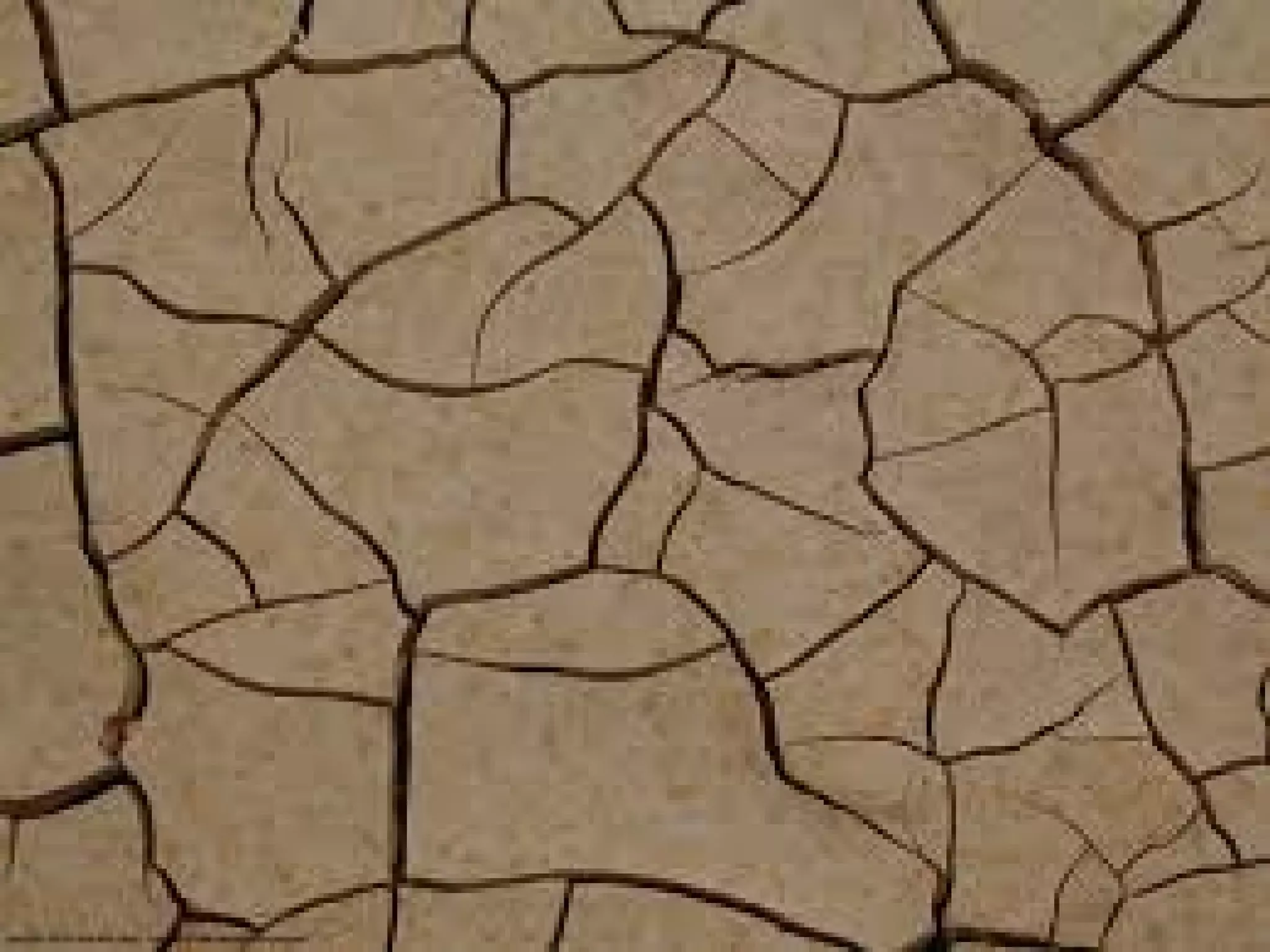
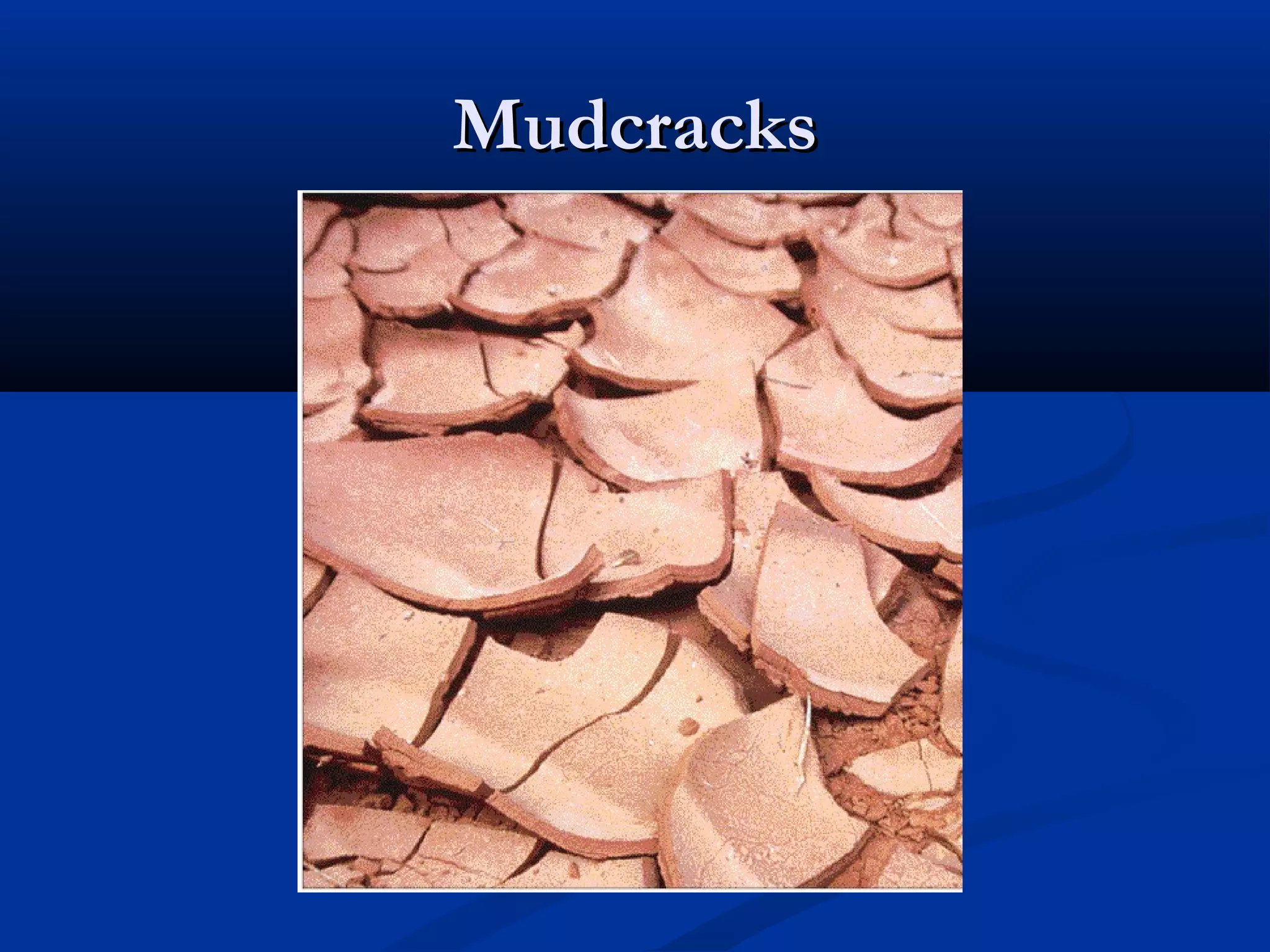
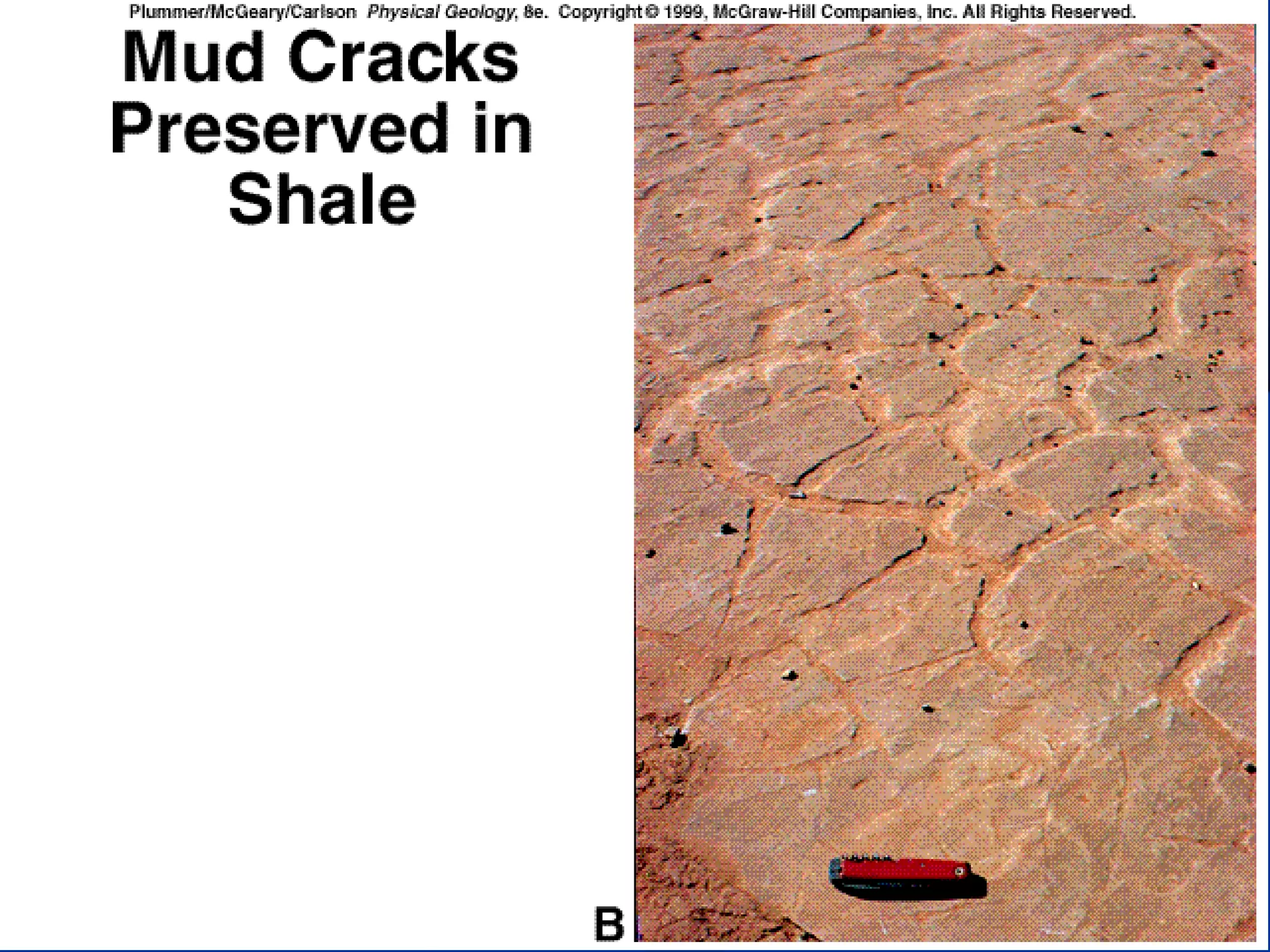
Mud CracksMud Cracks
Cracks on the sediment are developed due to the shrinkage of the sediment
as it dries.
OR
Formed as muddy sediment dries and contracts.Formed as muddy sediment dries and contracts. Crack formation alsoCrack formation also
occurs in clayey soils as a result of a reduction in water content. occurs in clayey soils as a result of a reduction in water content. 
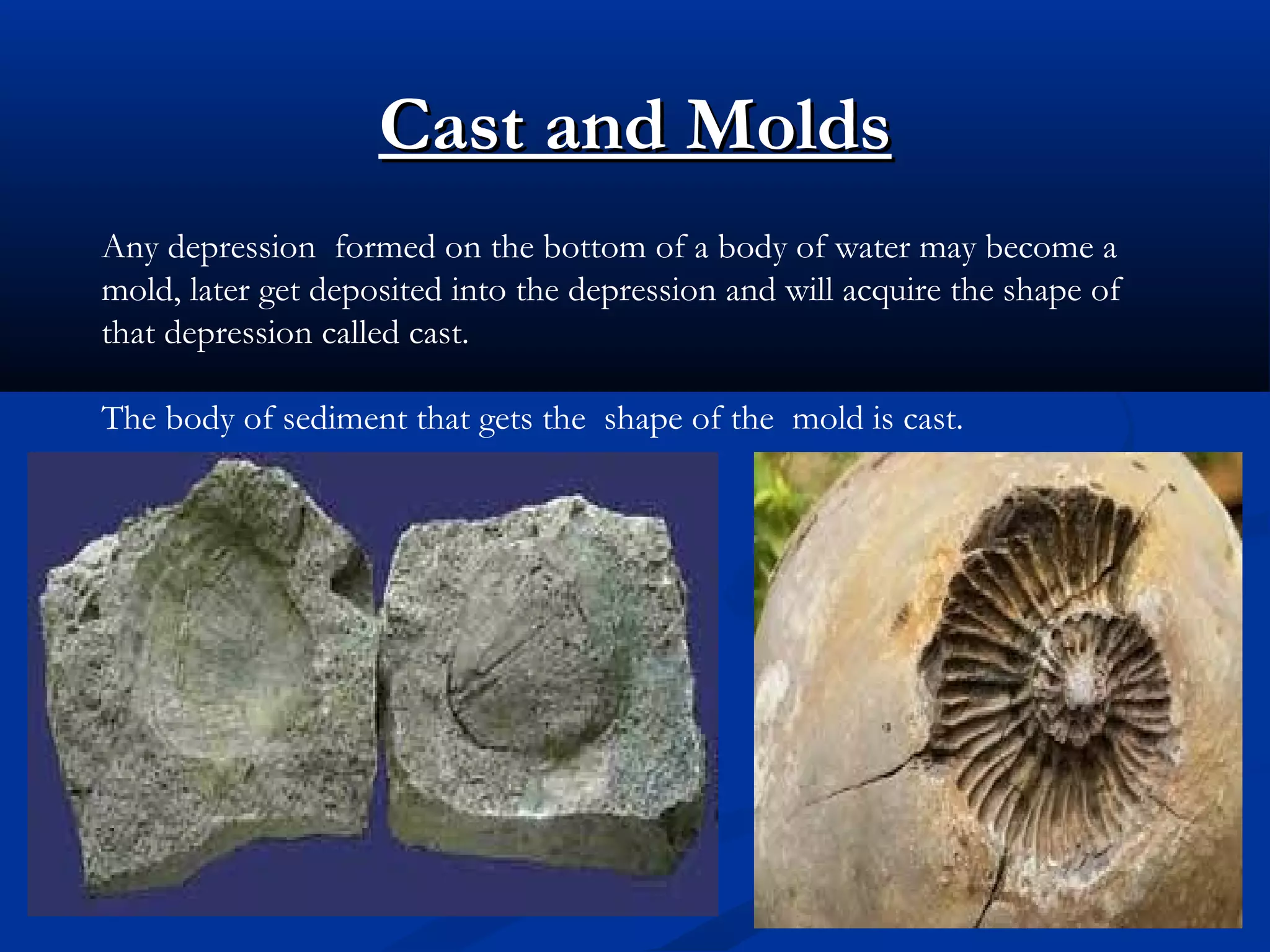
Cast and MoldsCast and Molds
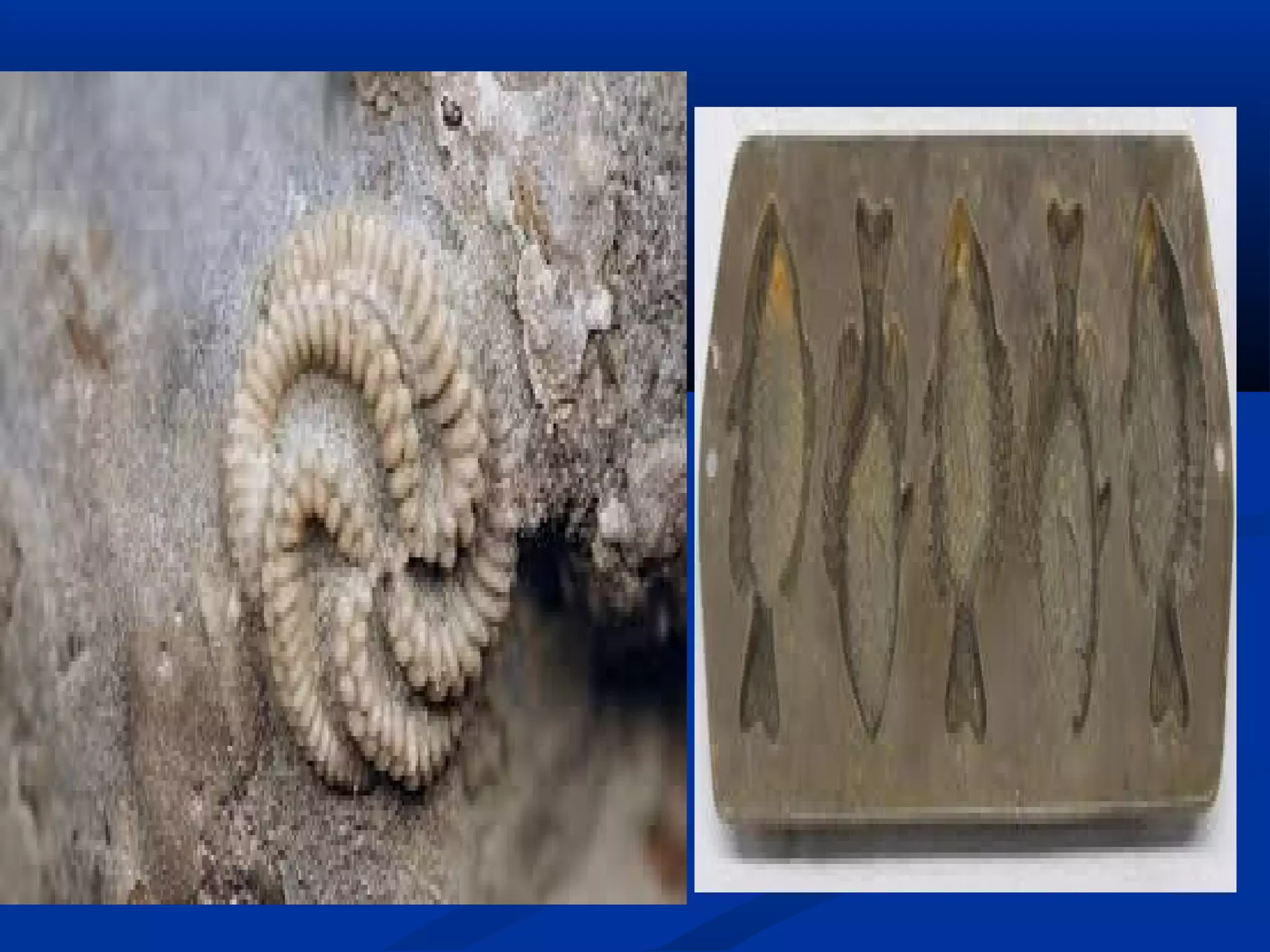
Any depression formed on the bottom of a body of water may become a
mold, later get deposited into the depression and will acquire the shape of
that depression called cast.
The body of sediment that gets the shape of the mold is cast.
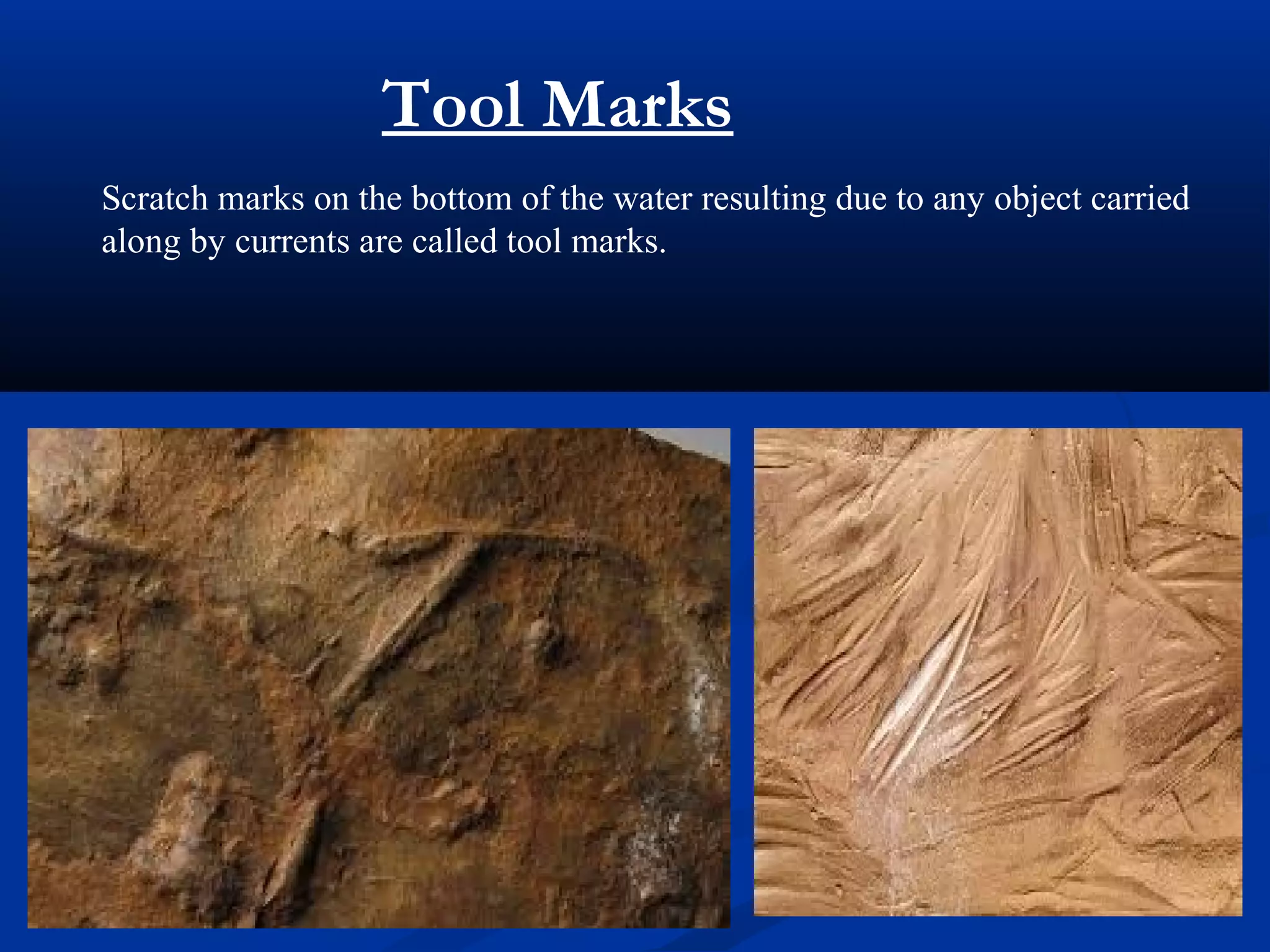
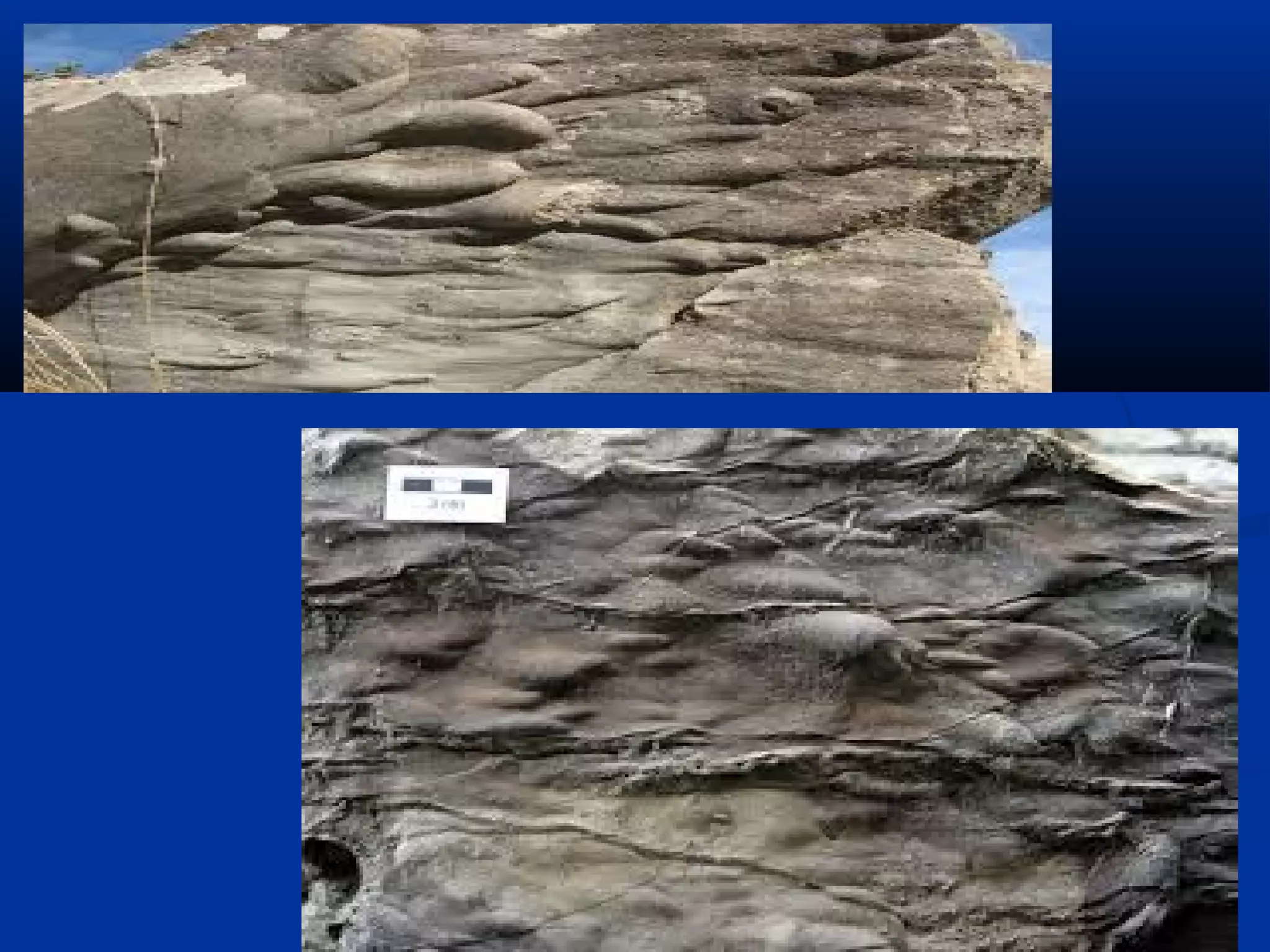
Tool Marks
Scratch marks on the bottom of the water resulting due to any object carried
along by currents are called tool marks.
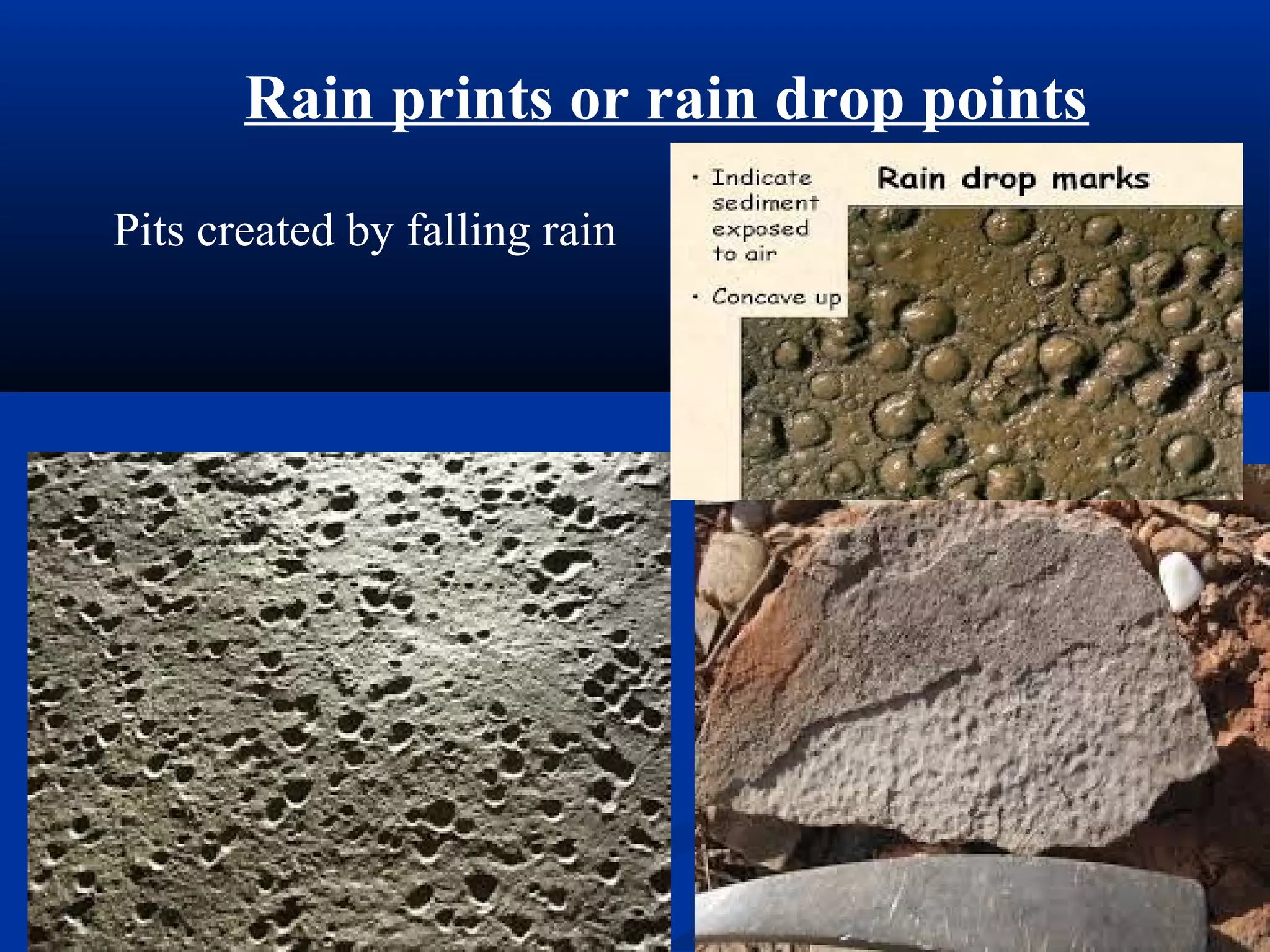
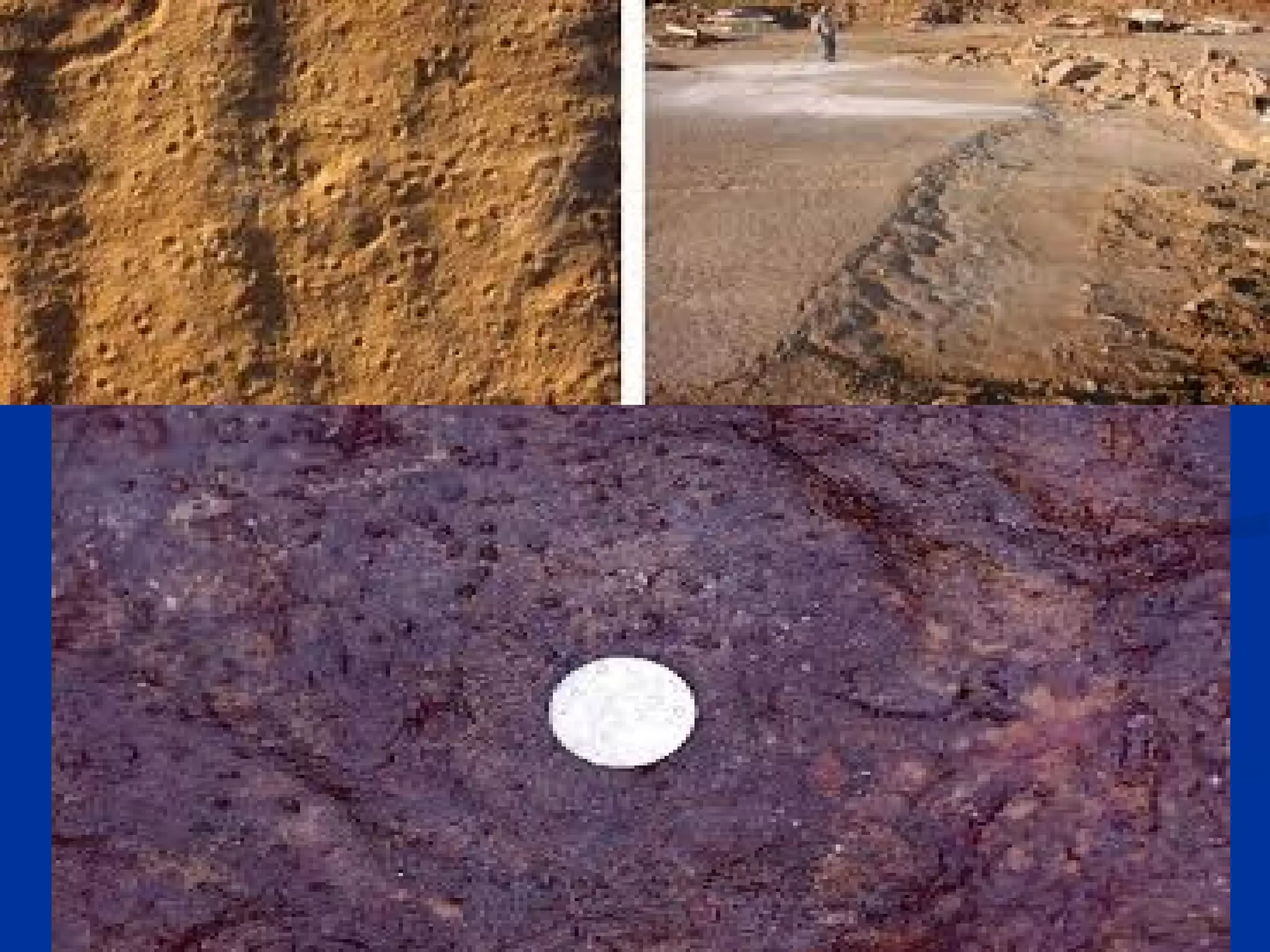
Rain prints or rain drop points
Pits created by falling rain
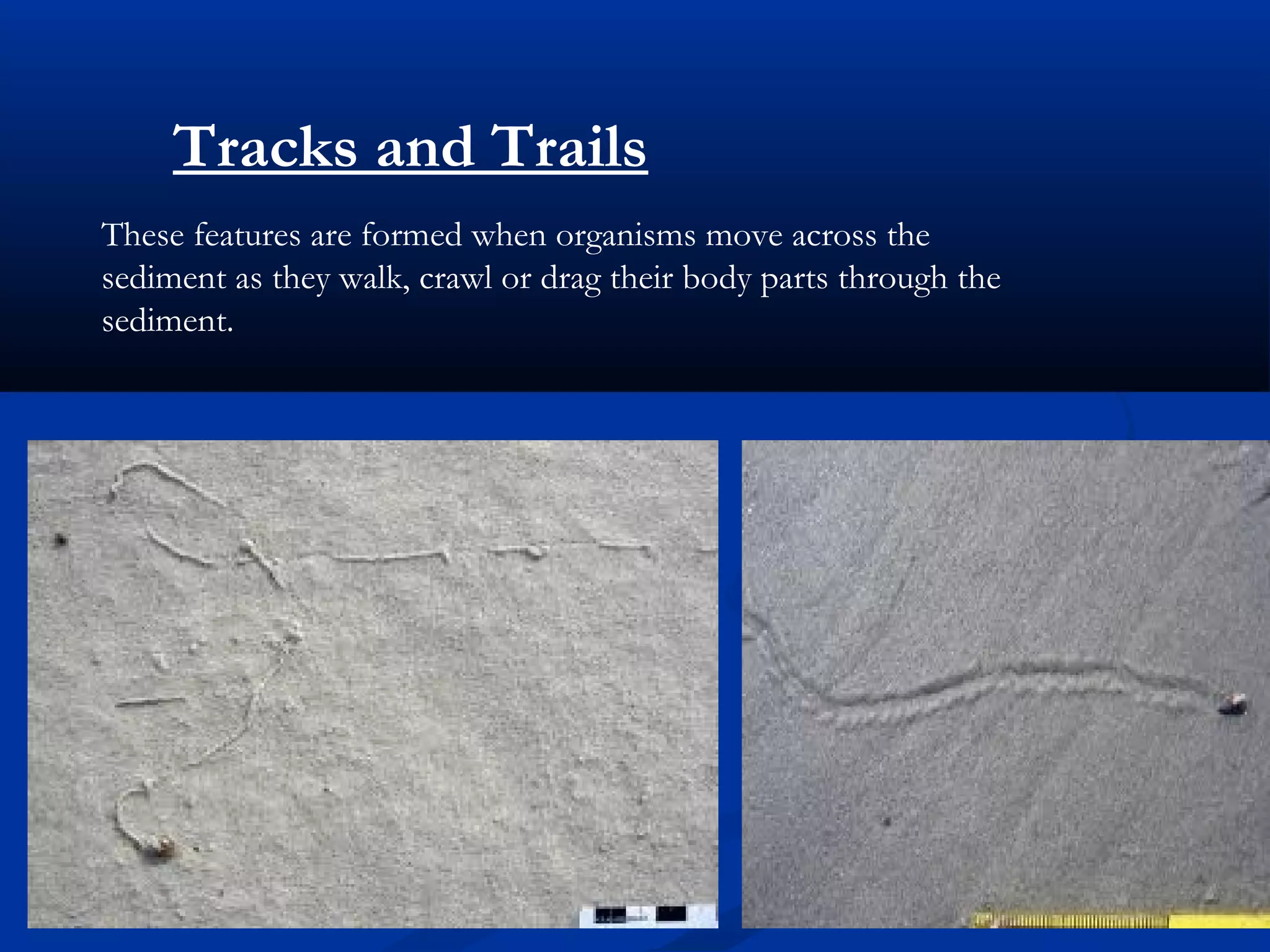
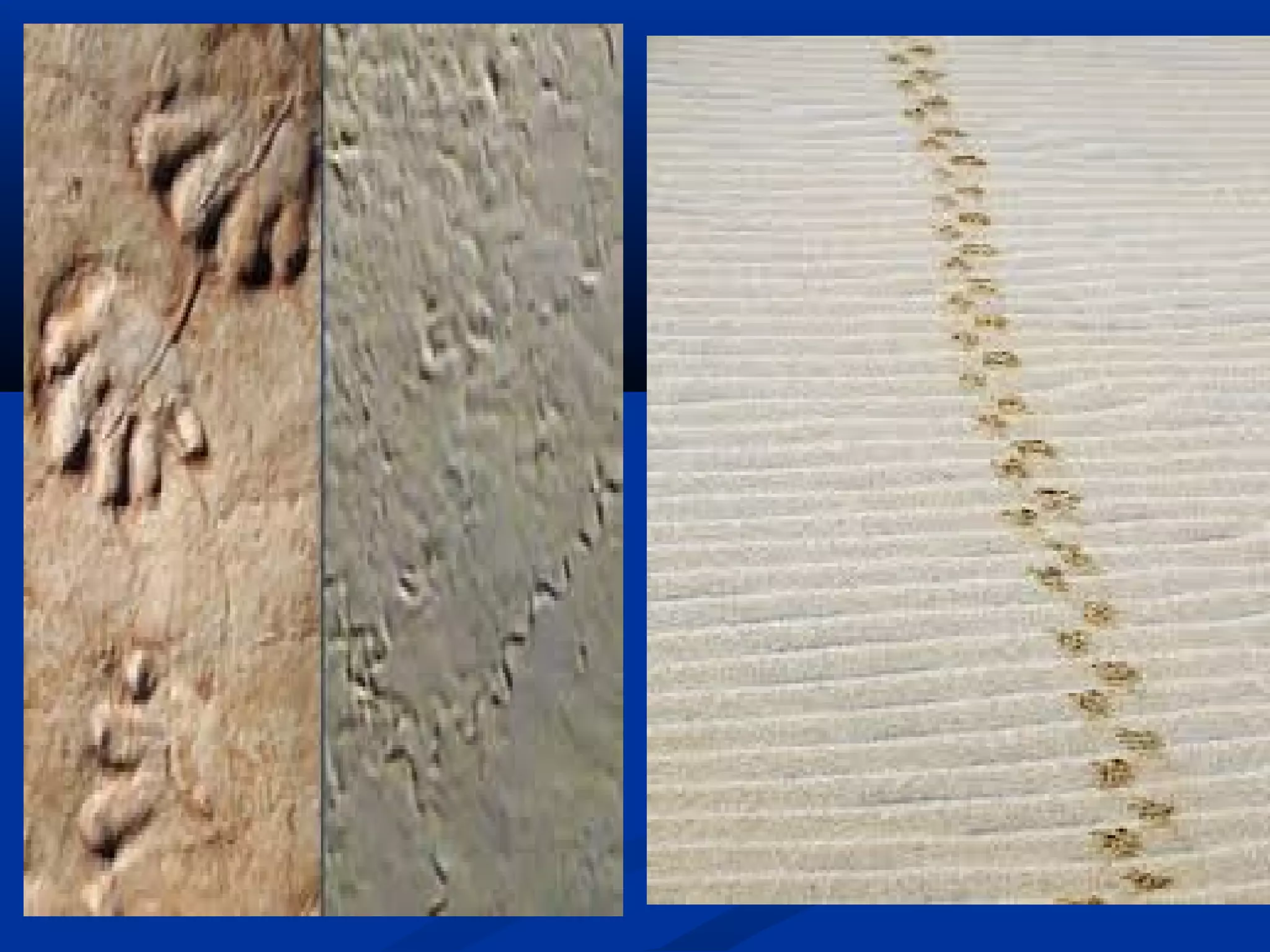
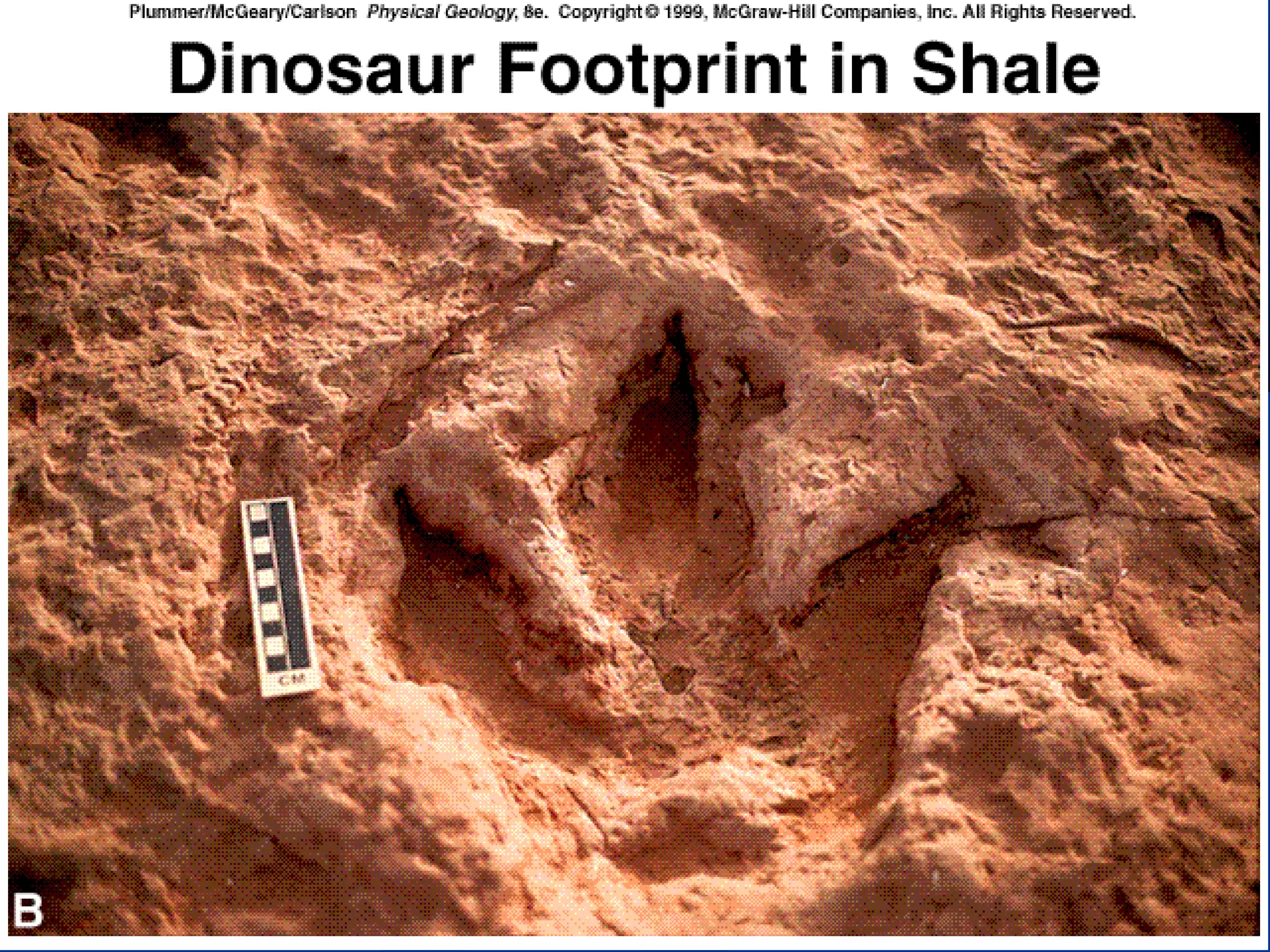
Tracks and Trails
These features are formed when organisms move across the
sediment as they walk, crawl or drag their body parts through the
sediment.
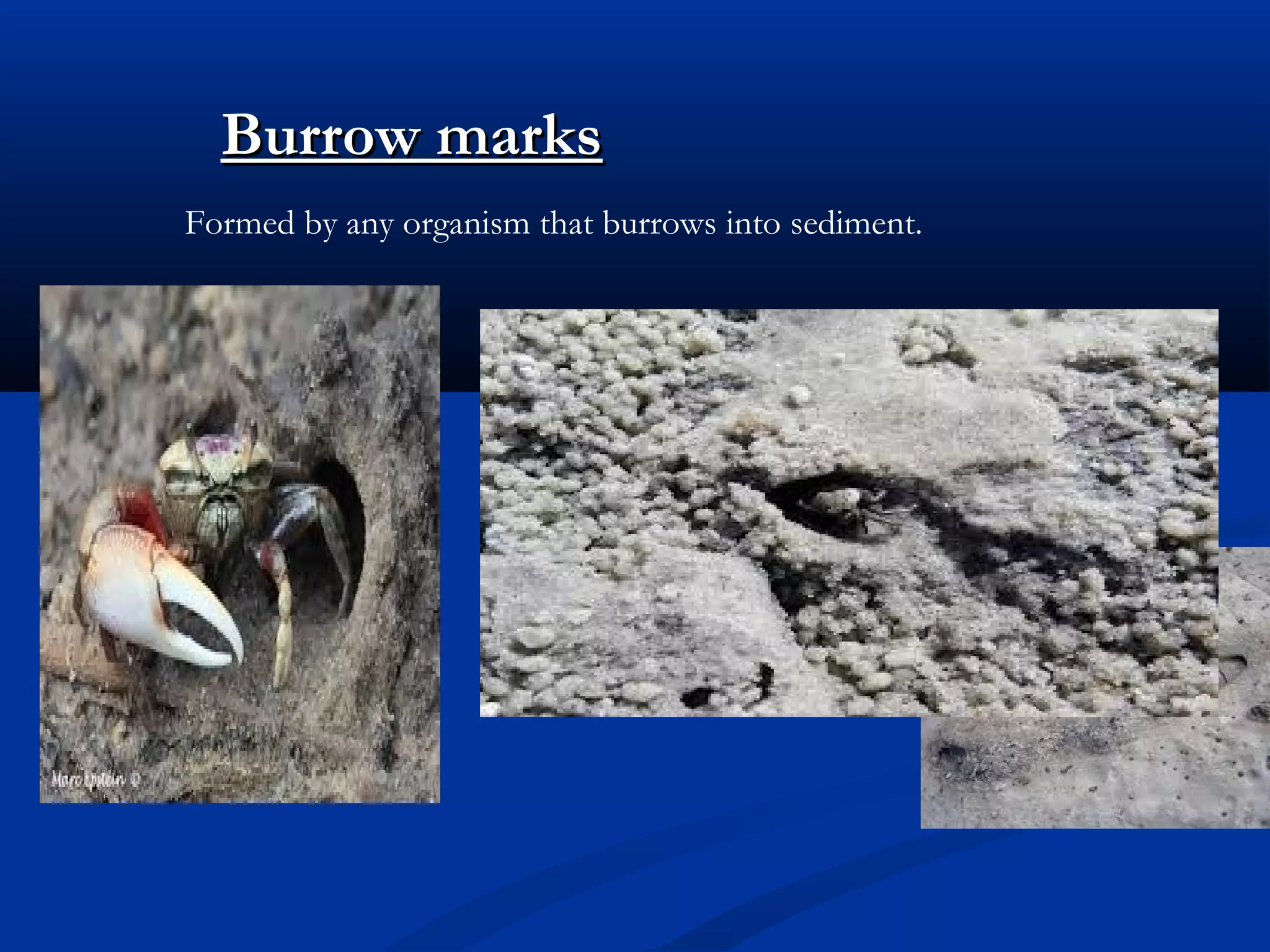
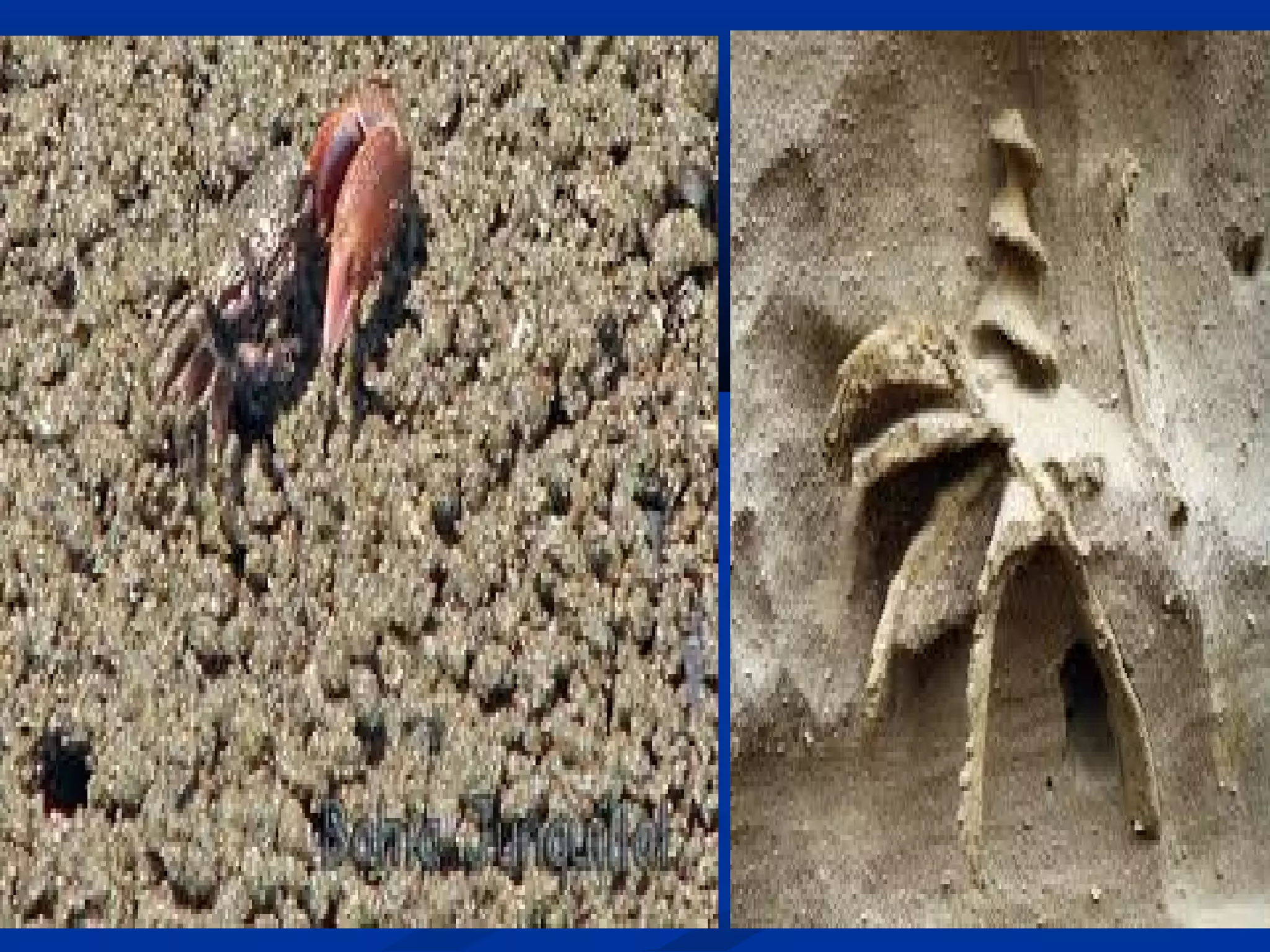
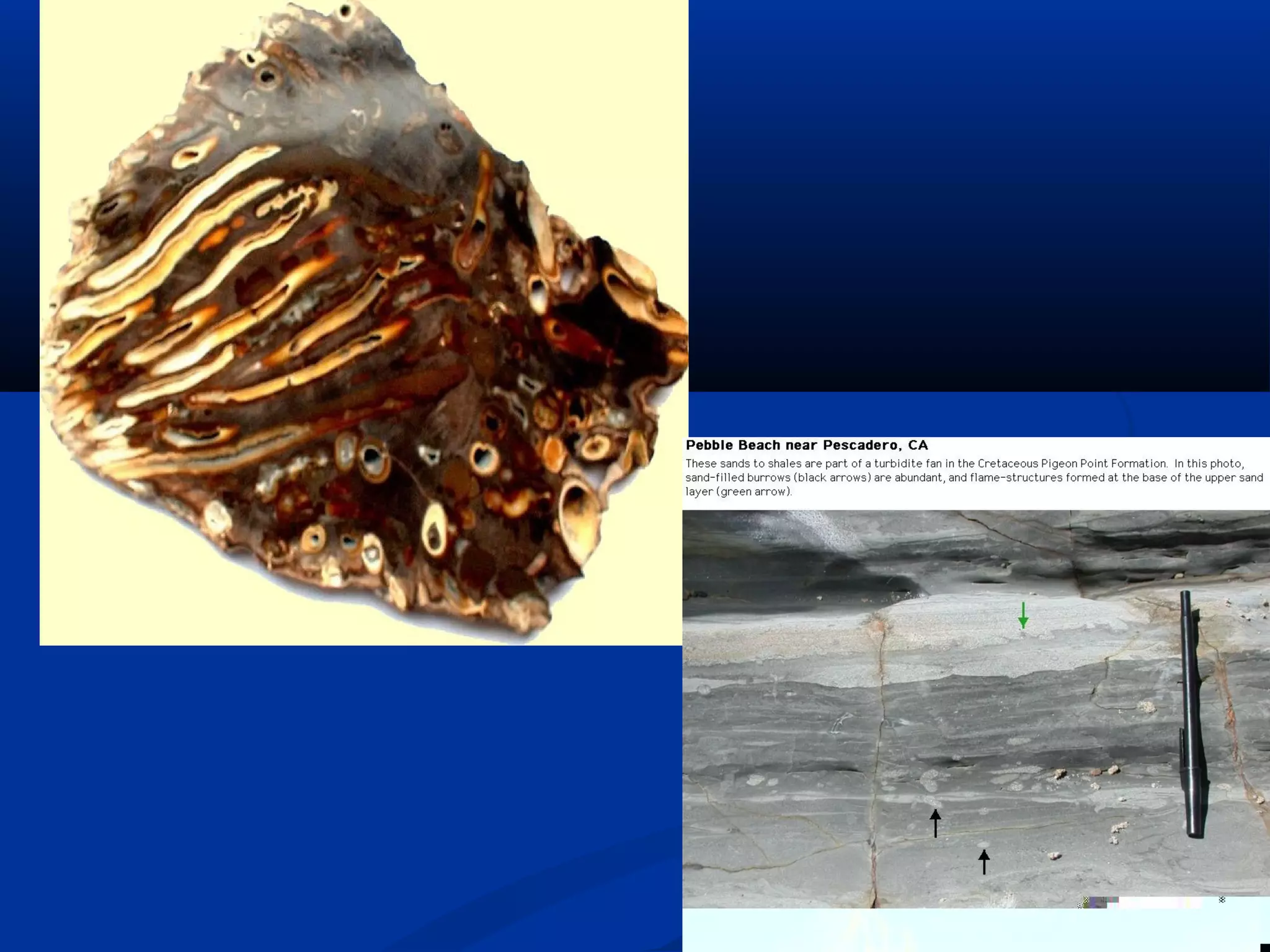
Burrow marksBurrow marks
Formed by any organism that burrows into sediment.
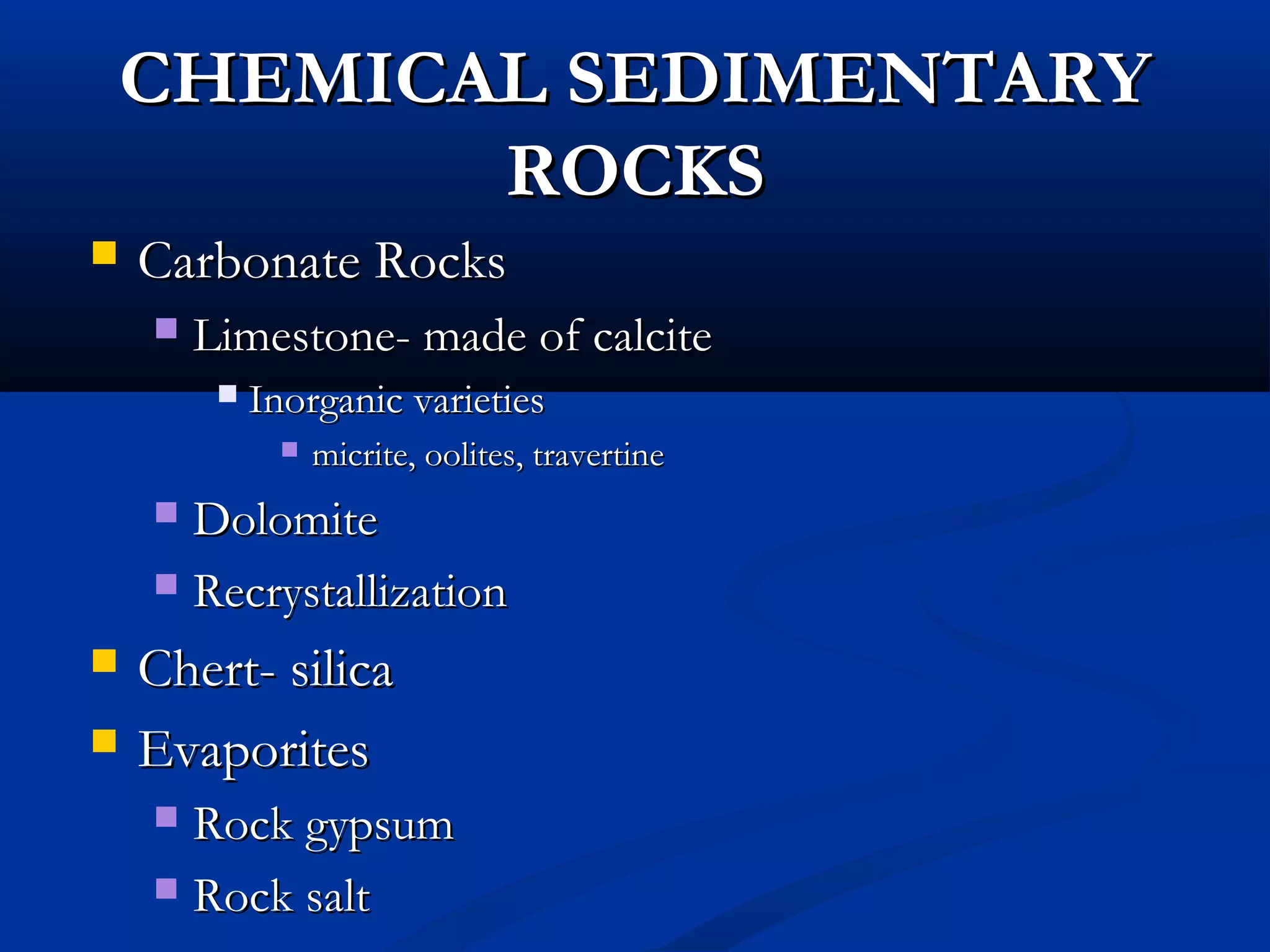
CHEMICAL SEDIMENTARYCHEMICAL SEDIMENTARY
ROCKSROCKS
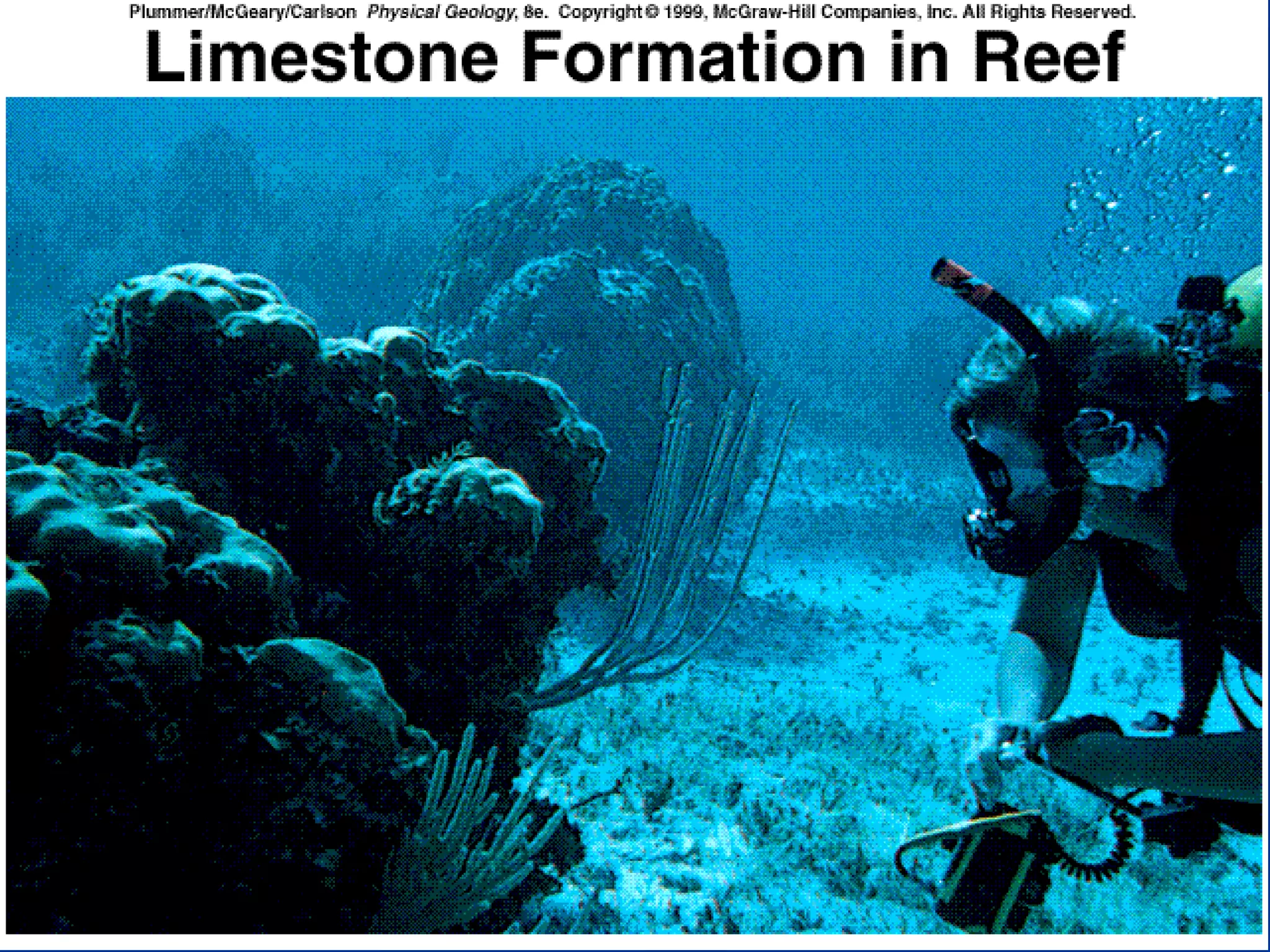
 Carbonate RocksCarbonate Rocks
 Limestone- made of calciteLimestone- made of calcite
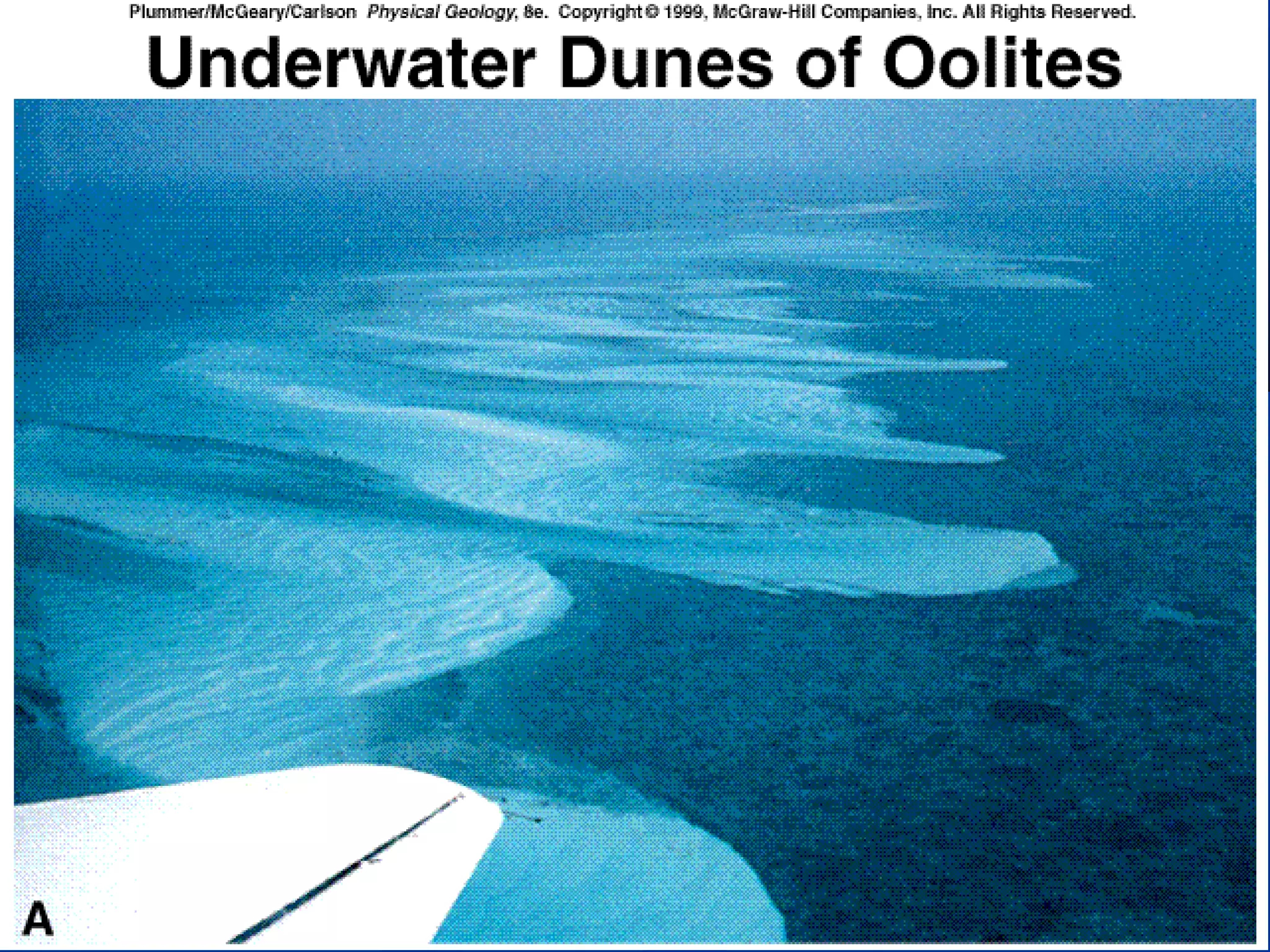
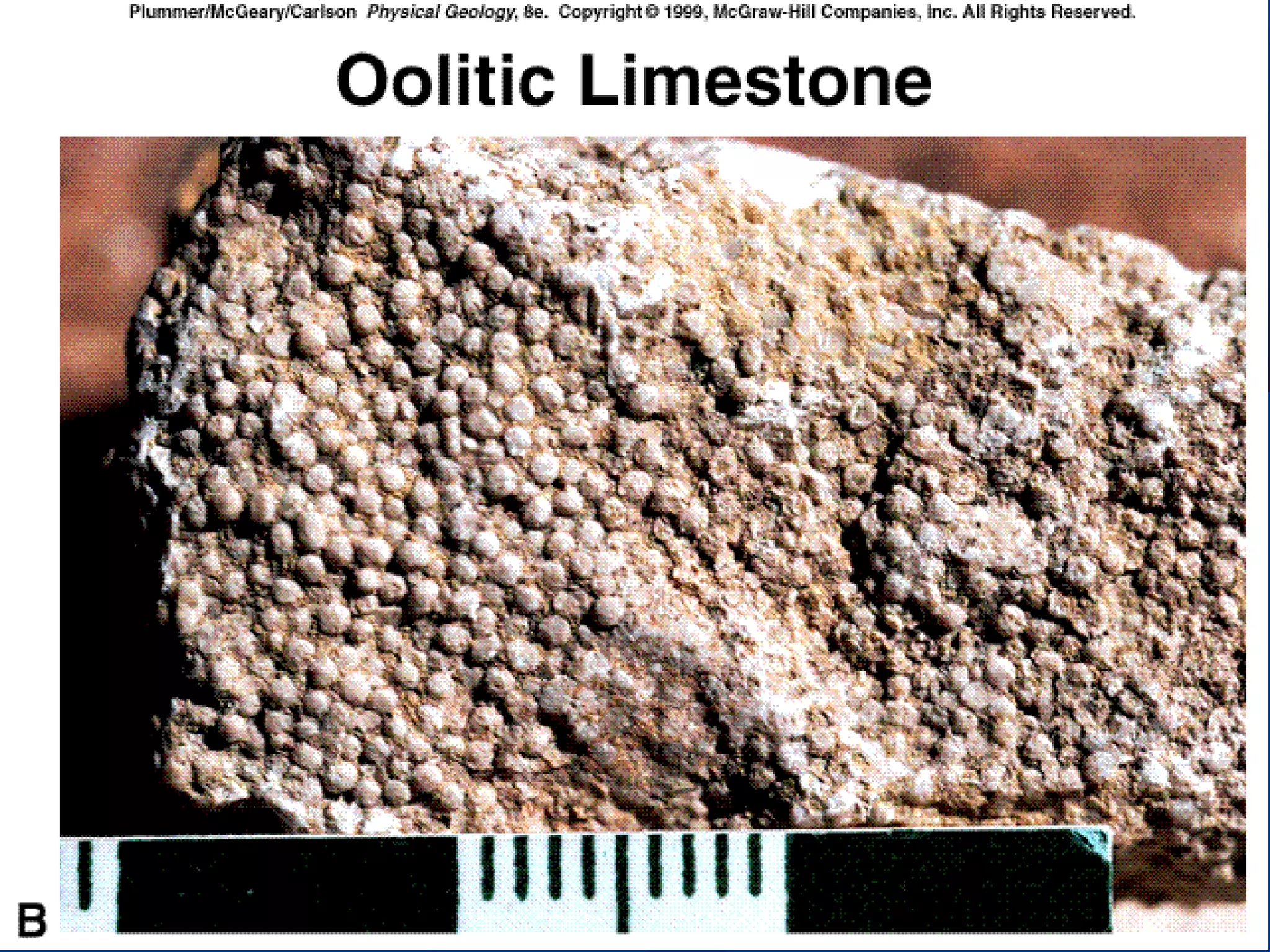
 Inorganic varietiesInorganic varieties
 micrite, oolites, travertinemicrite, oolites, travertine
 DolomiteDolomite
 RecrystallizationRecrystallization
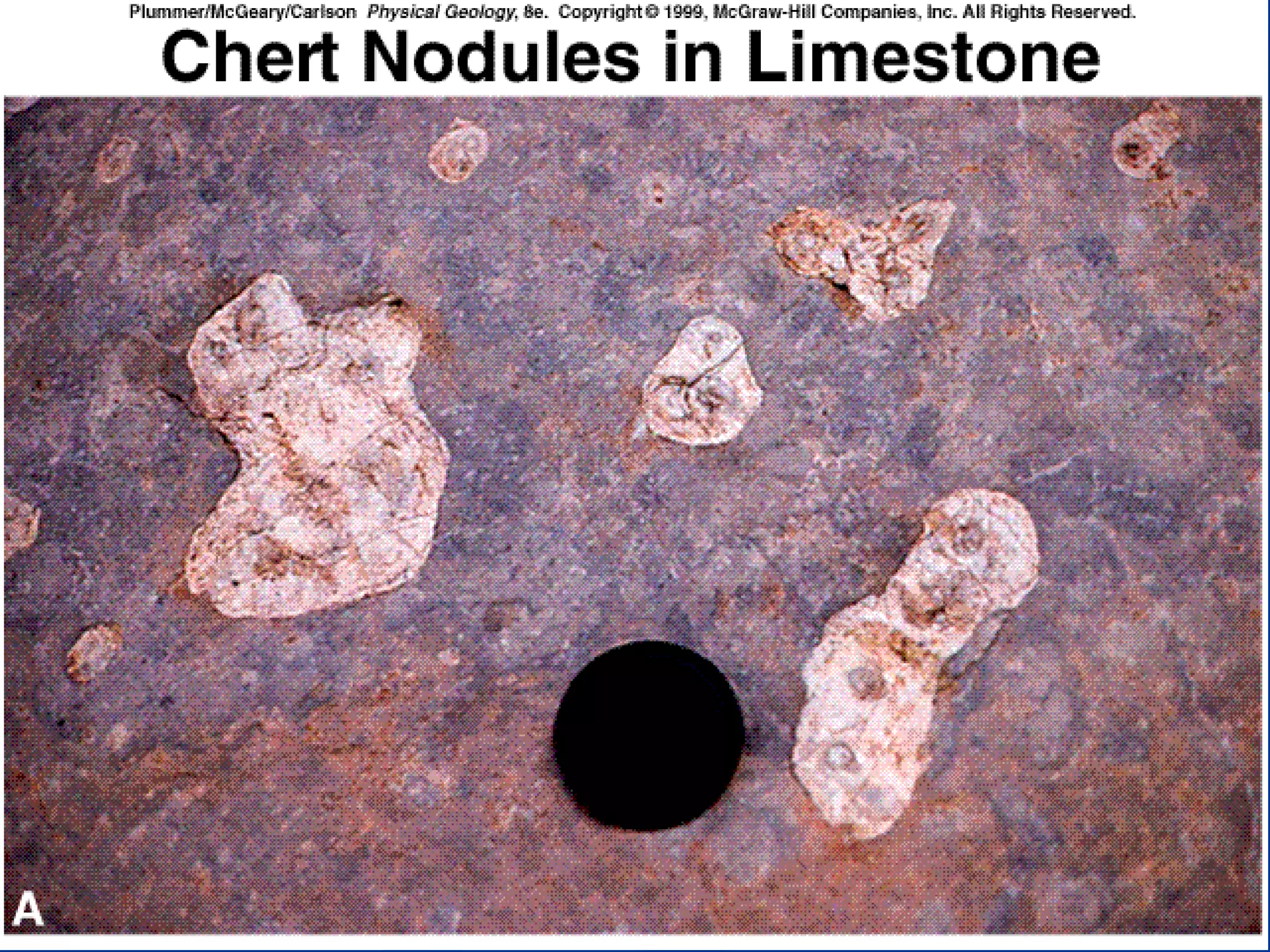
 Chert- silicaChert- silica
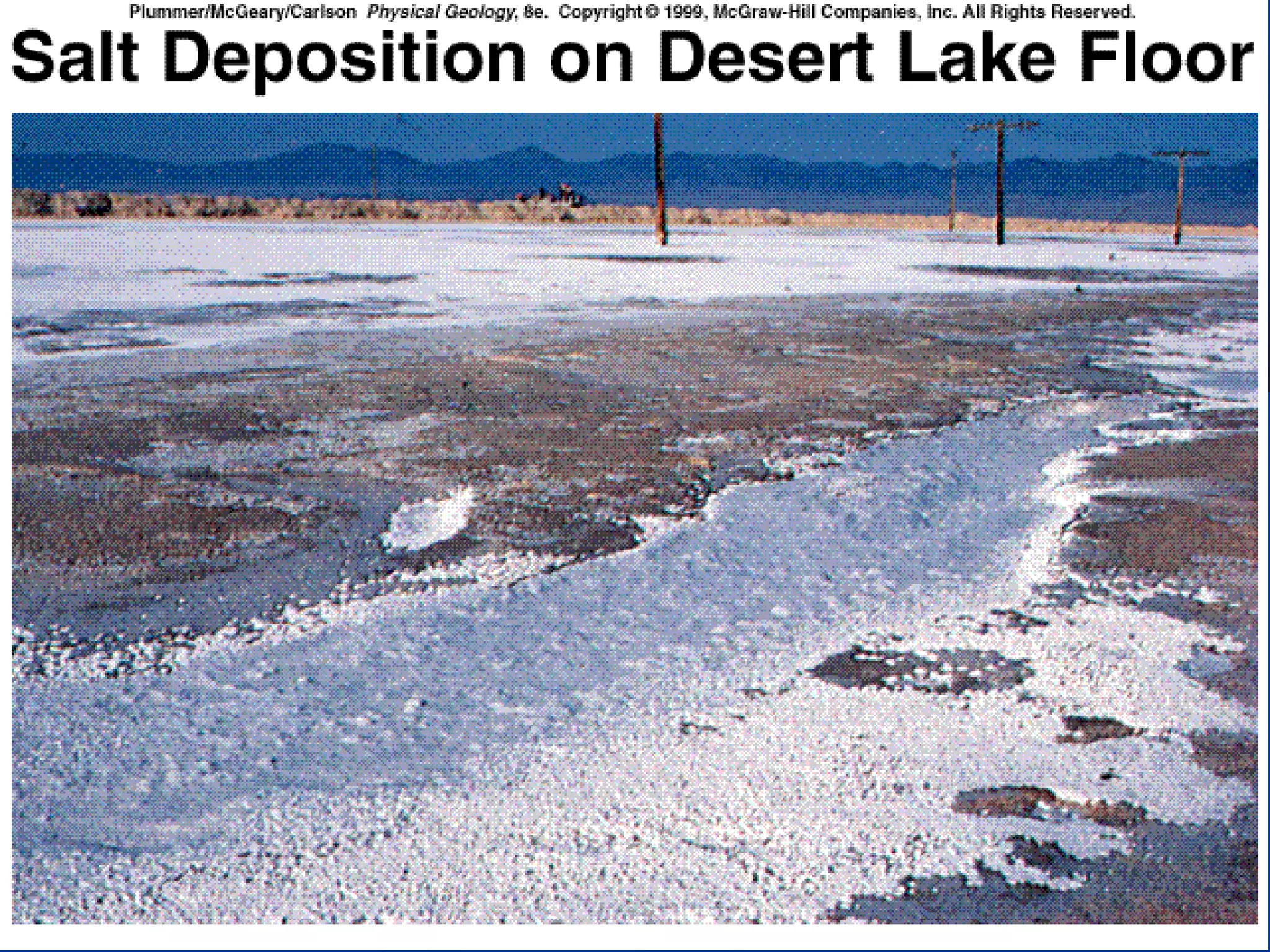
 EvaporitesEvaporites
 Rock gypsumRock gypsum
 Rock saltRock salt
BIOCHEMICALBIOCHEMICAL
SEDIMENTARY ROCKSSEDIMENTARY ROCKS
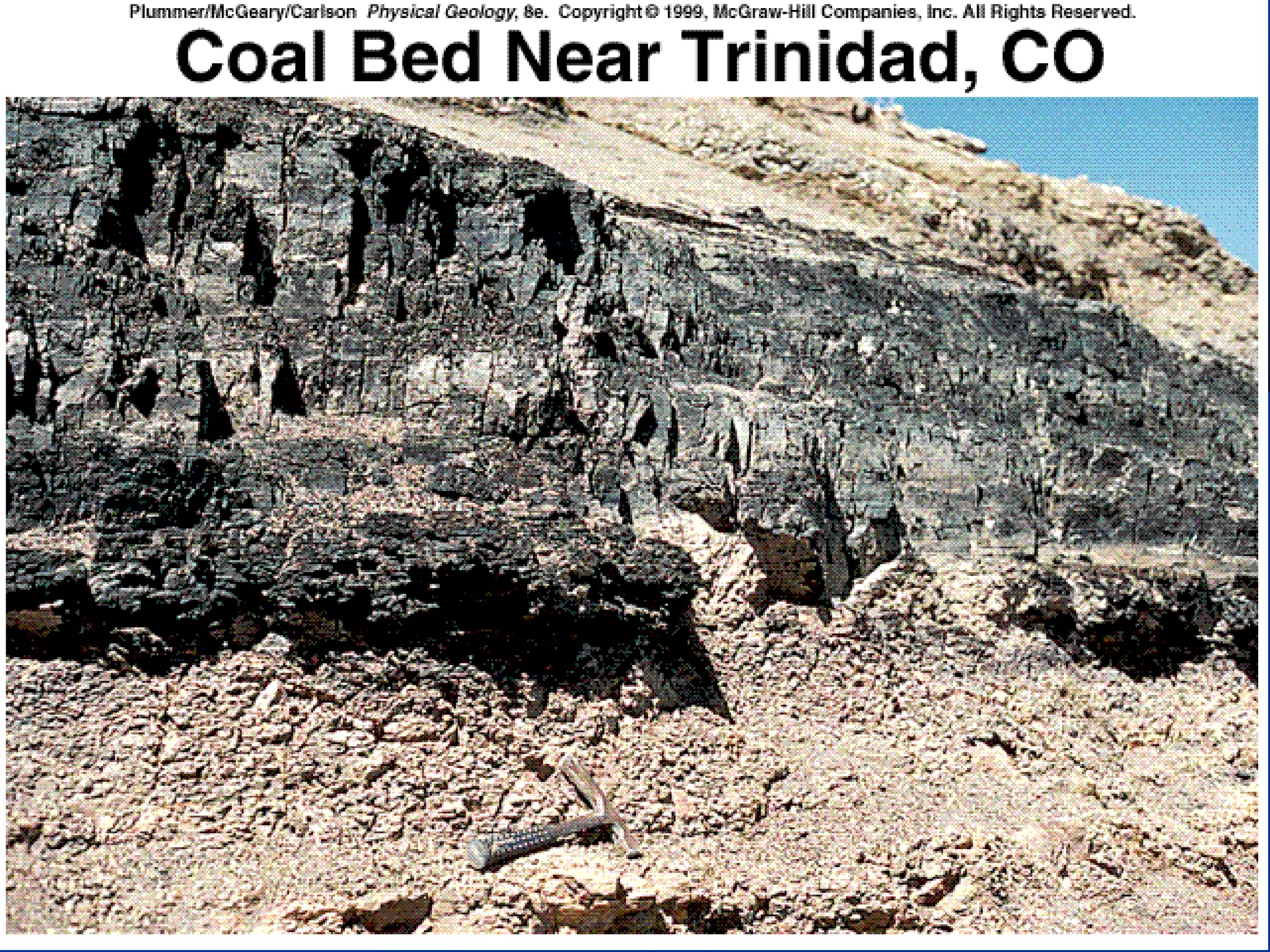
 CoalCoal
 Develops from peatDevelops from peat
 plant fragmentsplant fragments
 LigniteLignite
 Bituminous CoalBituminous Coal
 Carbonate RocksCarbonate Rocks
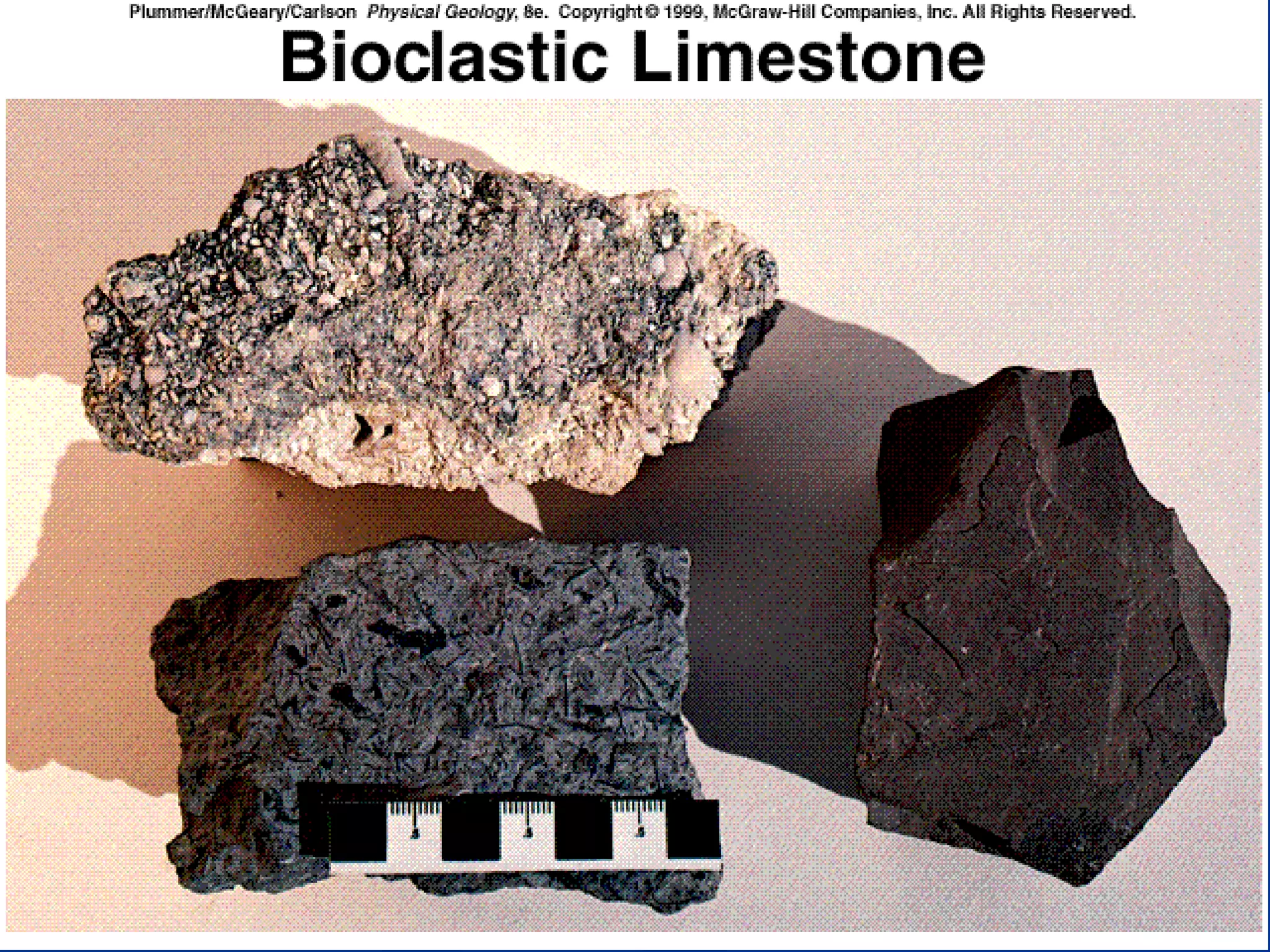
 Limestone- made of calciteLimestone- made of calcite
 organic varietiesorganic varieties
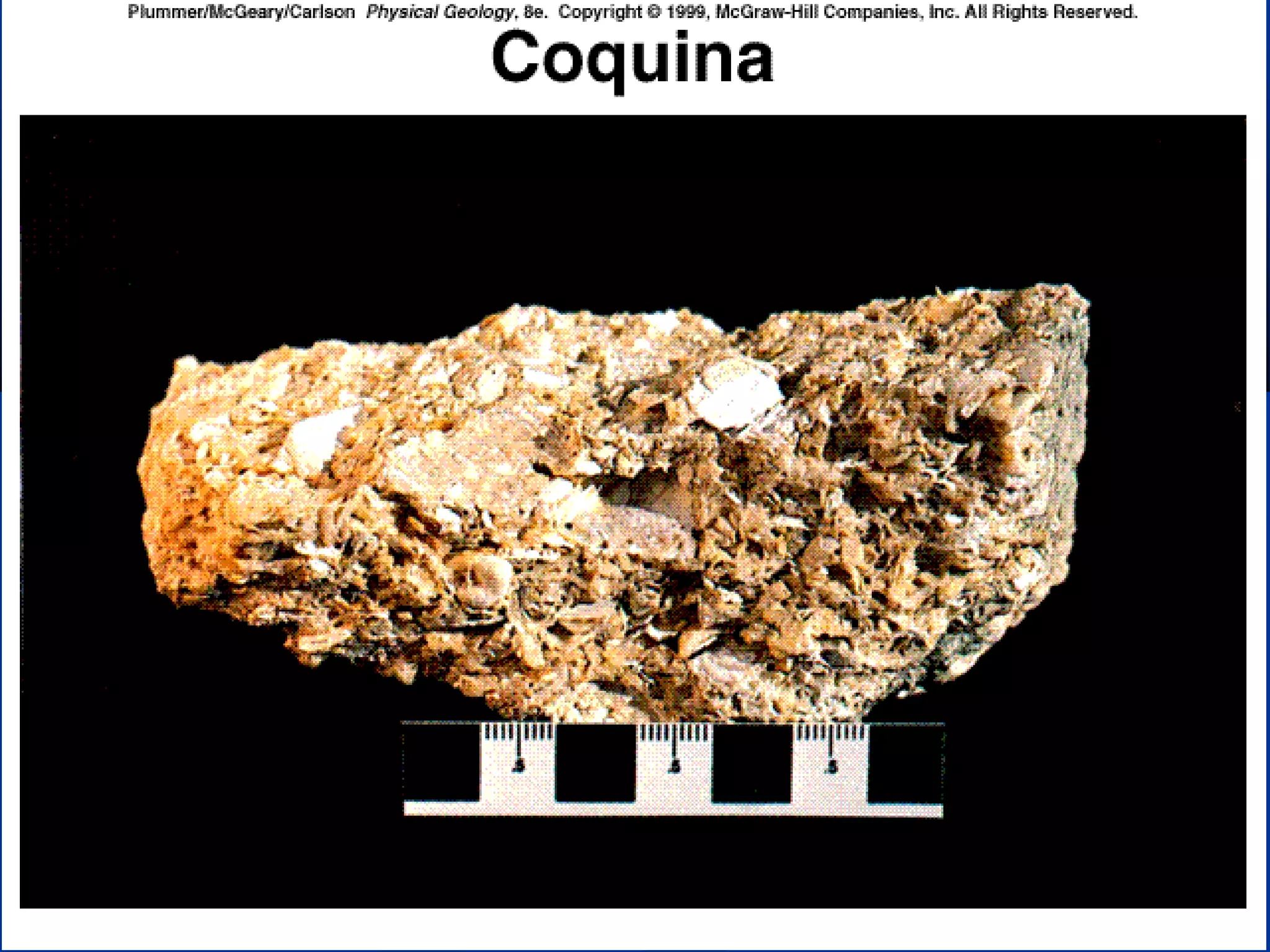
 CoquinaCoquina
 Fossiliferous LimestoneFossiliferous Limestone
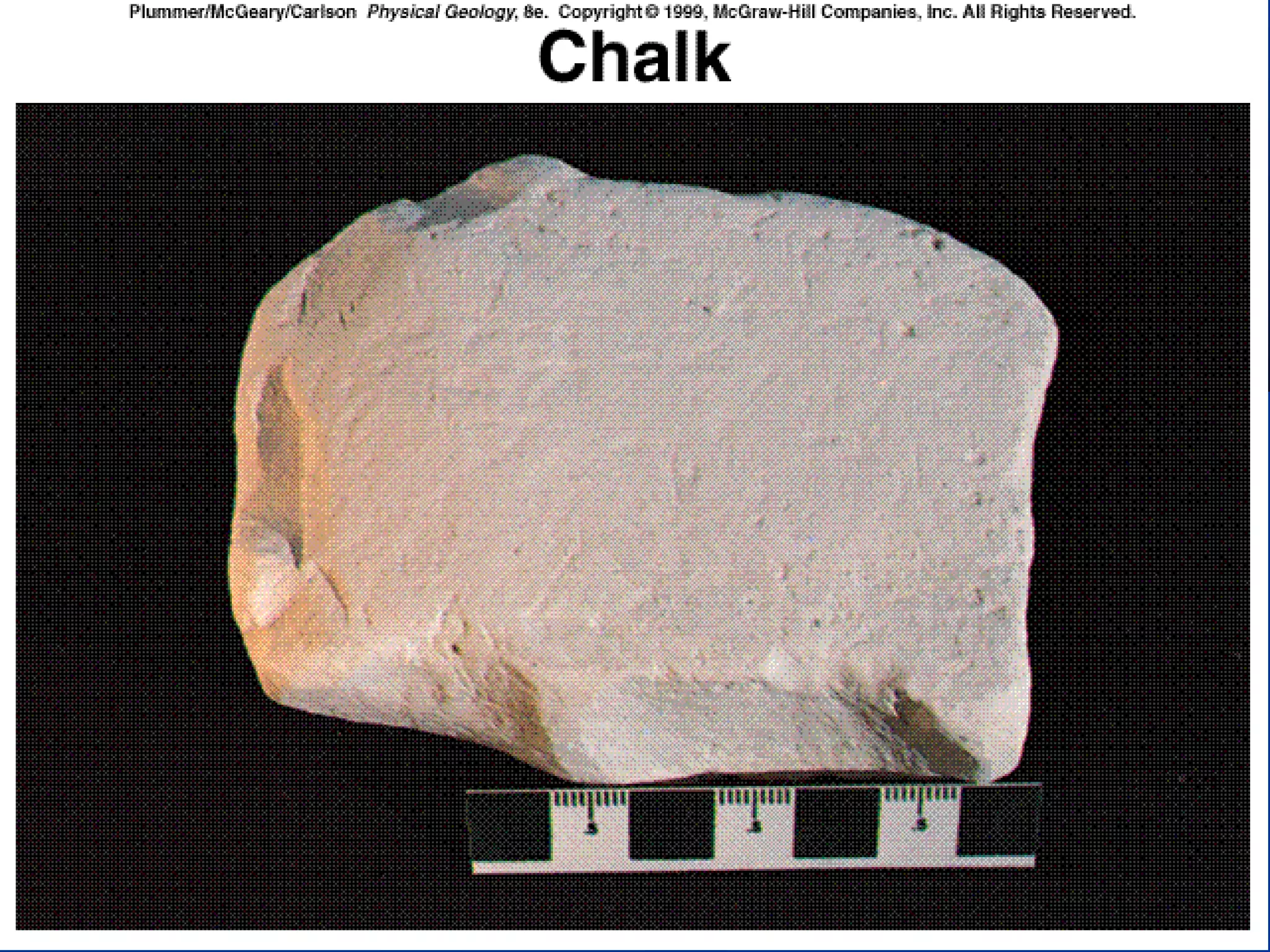
 ChalkChalk
BIOCHEMICALBIOCHEMICAL
SEDIMENTARY ROCKSSEDIMENTARY ROCKS
 CoalCoal
 Develops from peatDevelops from peat
 plant fragmentsplant fragments
 LigniteLignite
 Bituminous CoalBituminous Coal
 Carbonate RocksCarbonate Rocks
 Limestone- made of calciteLimestone- made of calcite
 organic varietiesorganic varieties
 CoquinaCoquina
 Fossiliferous LimestoneFossiliferous Limestone
 ChalkChalk
SEDIMENTARYSEDIMENTARY
STRUCTURESSTRUCTURES
 BEDDING-BEDDING-
 Principle of Original HorizontalityPrinciple of Original Horizontality
 Bedding planeBedding plane
 Cross-beddingCross-bedding
 Graded bedGraded bed
 Mud cracksMud cracks
 Ripple marksRipple marks
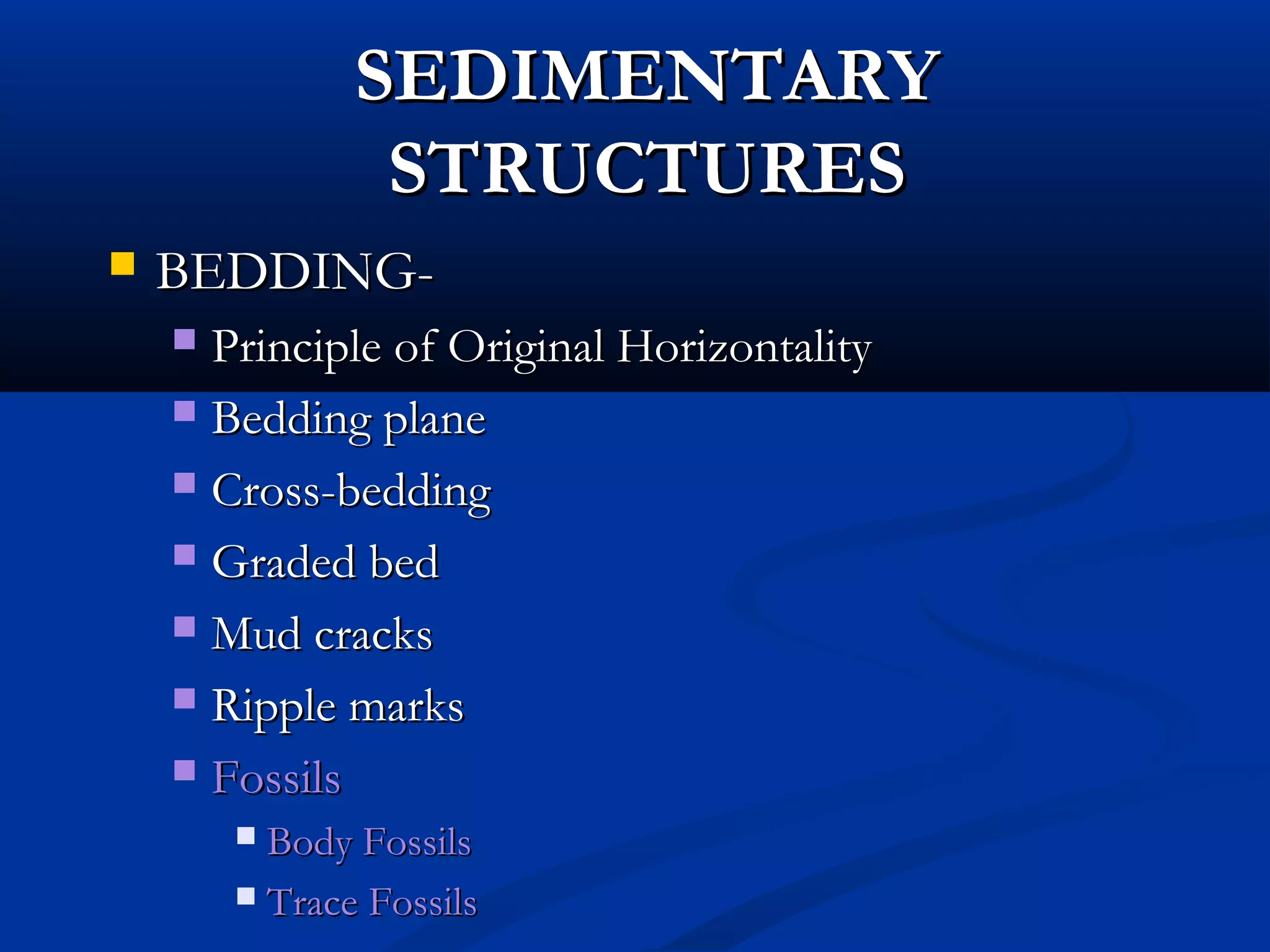
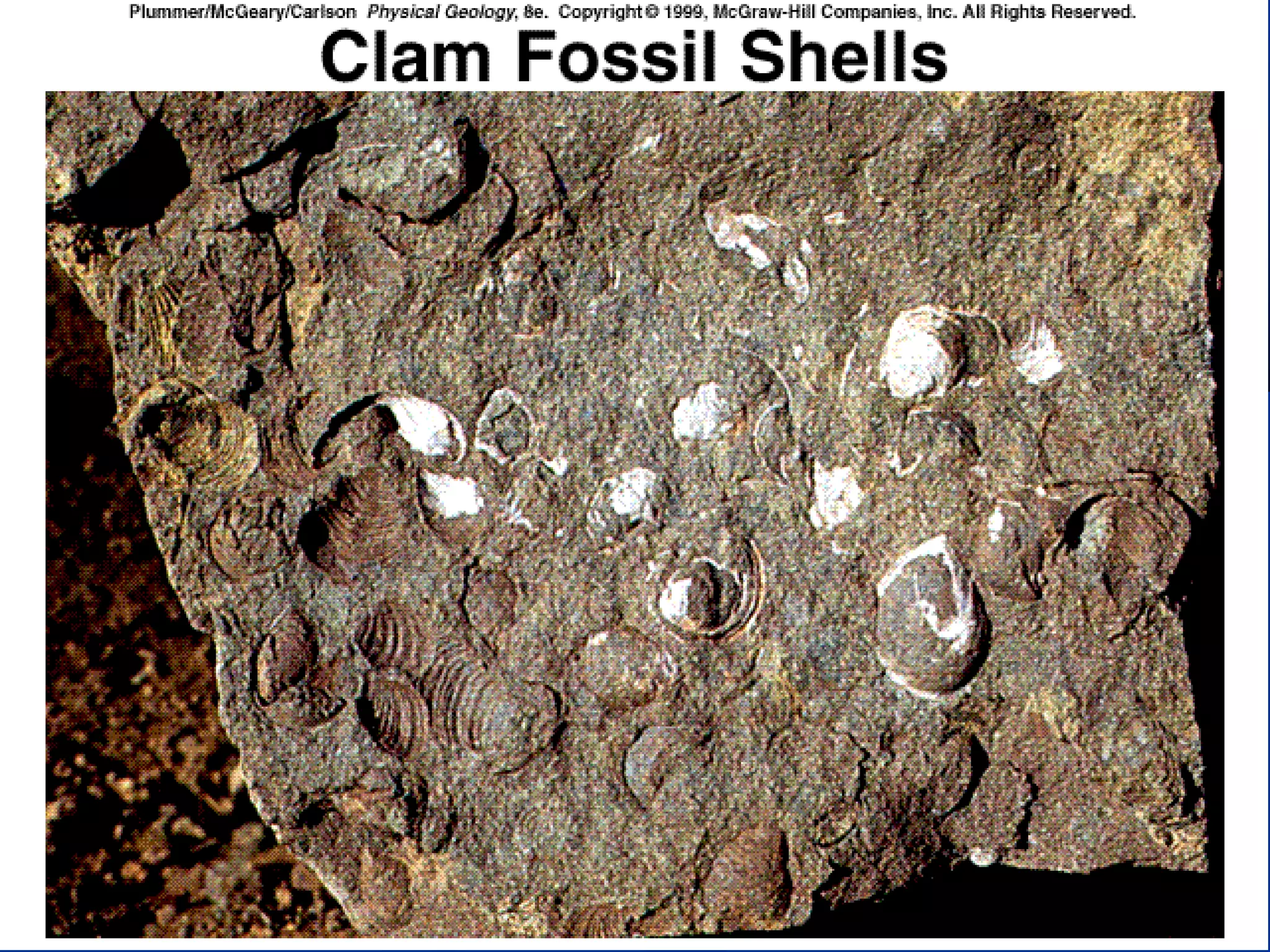
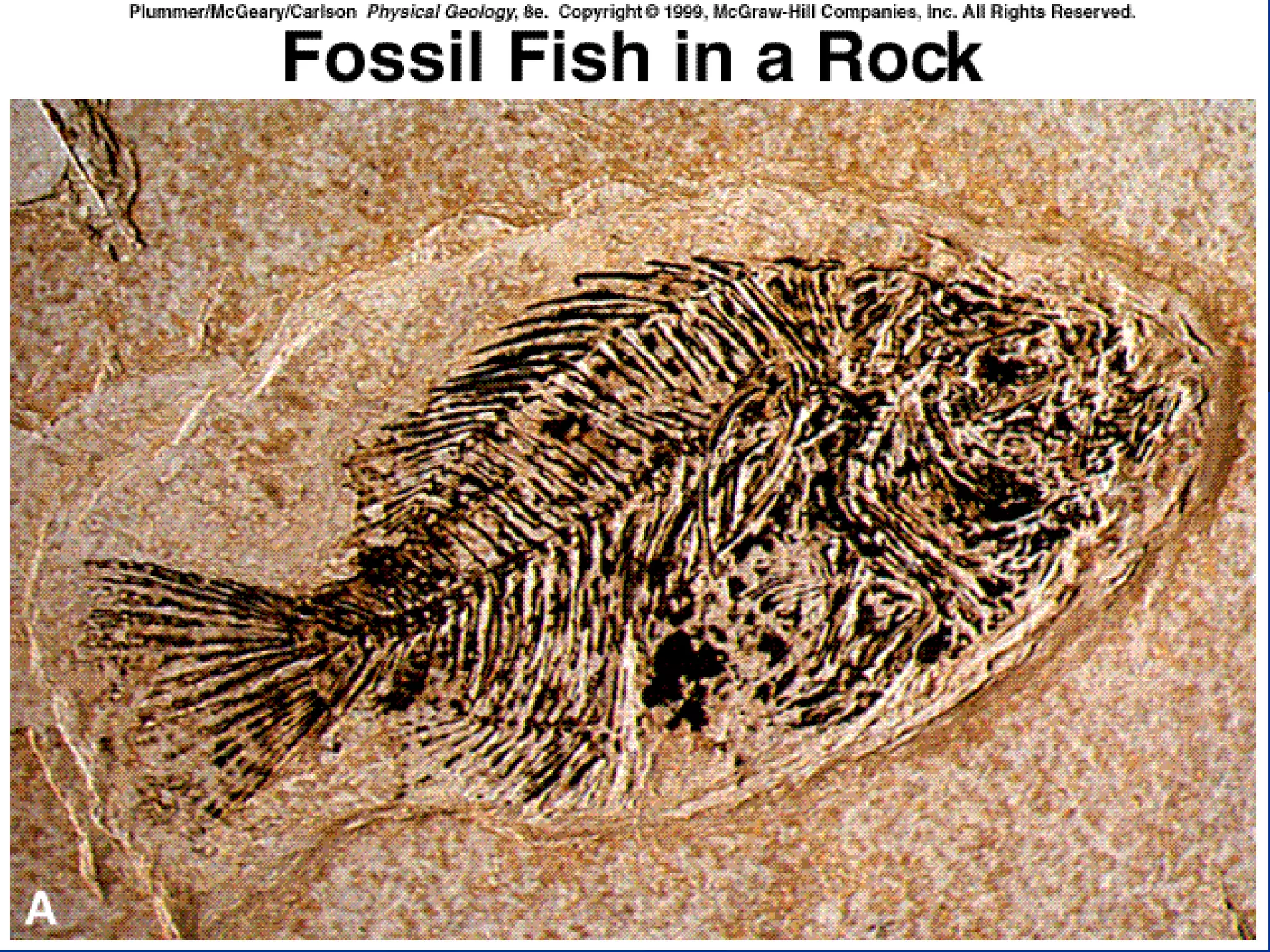
 FossilsFossils
SEDIMENTARYSEDIMENTARY
STRUCTURESSTRUCTURES
 BEDDING-BEDDING-
 Principle of Original HorizontalityPrinciple of Original Horizontality
 Bedding planeBedding plane
 Cross-beddingCross-bedding
 Graded bedGraded bed
 Mud cracksMud cracks
 Ripple marksRipple marks
 FossilsFossils
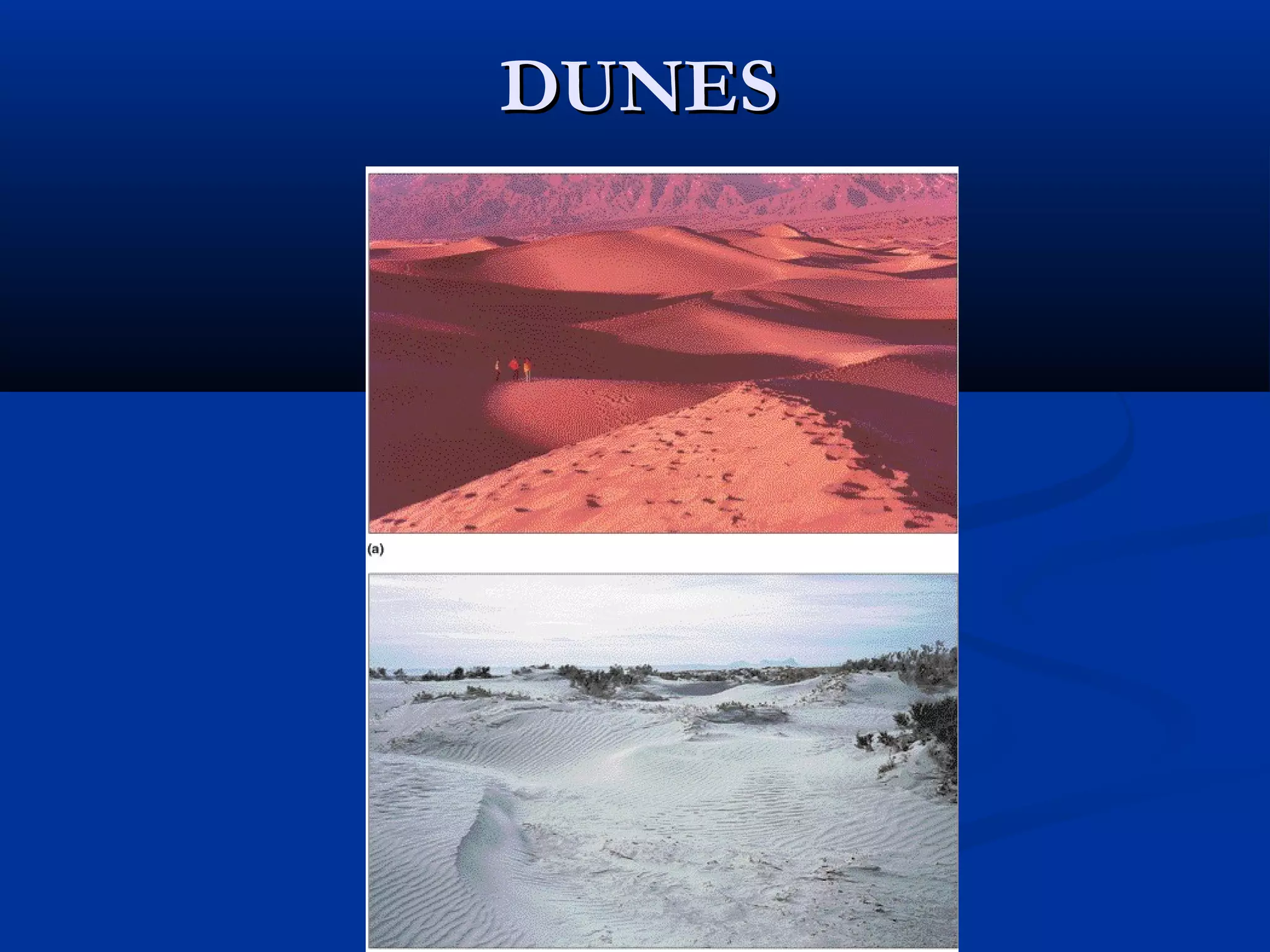
DUNESDUNES
SEDIMENTARYSEDIMENTARY
STRUCTURESSTRUCTURES
 BEDDING-BEDDING-
 Principle of Original HorizontalityPrinciple of Original Horizontality
 Bedding planeBedding plane
 Cross-beddingCross-bedding
 Graded bedGraded bed
 Mud cracksMud cracks
 Ripple marksRipple marks
 FossilsFossils
SEDIMENTARYSEDIMENTARY
STRUCTURESSTRUCTURES
 BEDDING-BEDDING-
 Principle of Original HorizontalityPrinciple of Original Horizontality
 Bedding planeBedding plane
 Cross-beddingCross-bedding
 Graded bedGraded bed
 Mud cracksMud cracks
 Ripple marksRipple marks
 FossilsFossils
MudcracksMudcracks
SEDIMENTARYSEDIMENTARY
STRUCTURESSTRUCTURES
 BEDDING-BEDDING-
 Principle of Original HorizontalityPrinciple of Original Horizontality
 Bedding planeBedding plane
 Cross-beddingCross-bedding
 Graded bedGraded bed
 Mud cracksMud cracks
 Ripple marksRipple marks
 FossilsFossils
 Body FossilsBody Fossils
 Trace FossilsTrace Fossils
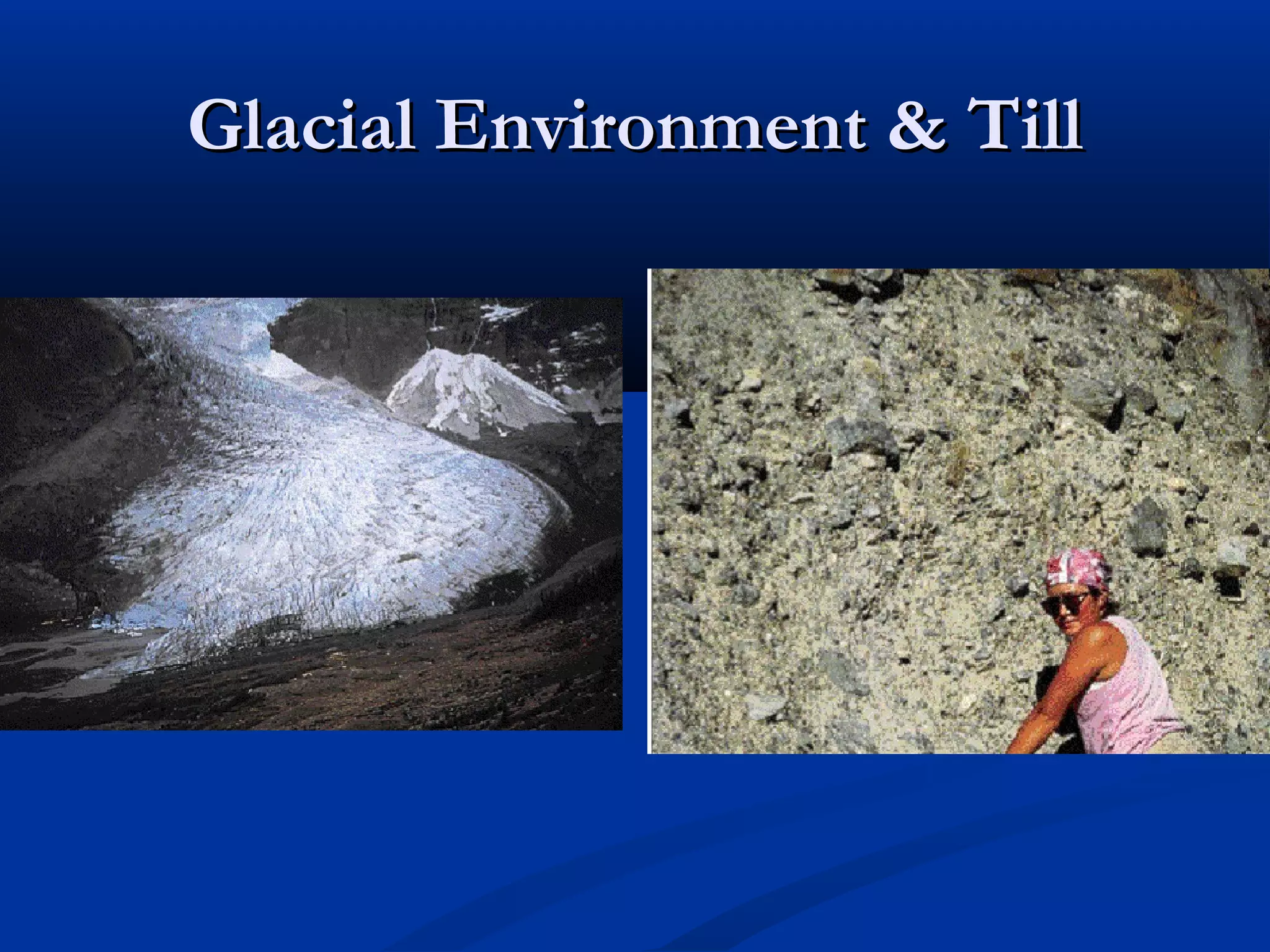
Glacial Environment & TillGlacial Environment & Till
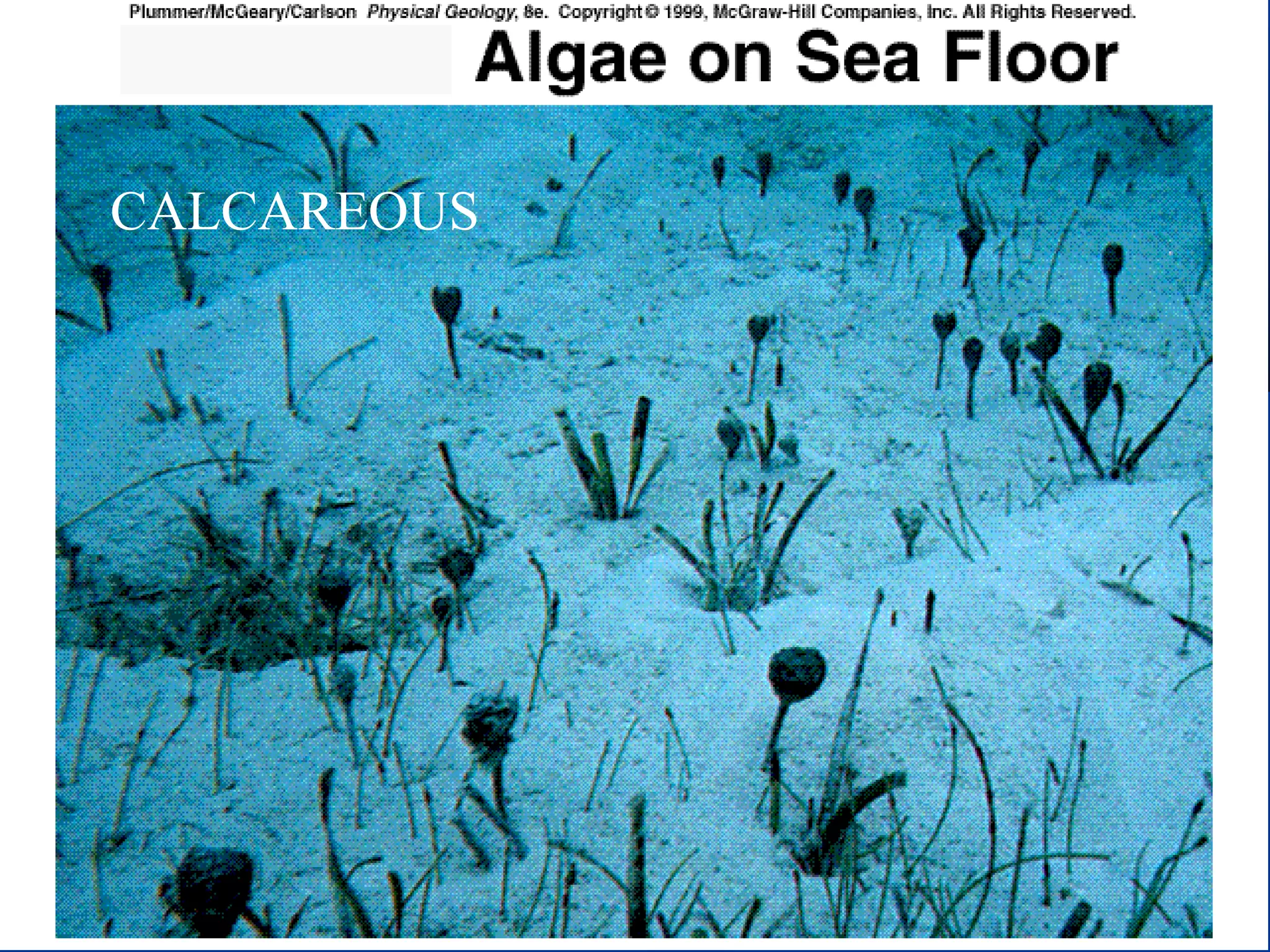
CALCAREOUS
Structures of sedimentary rocks

Structures of sedimentary rocks

  • 1.
    STRUCTURES OFSTRUCTURES OF SEDIMENTARYROCKSSEDIMENTARY ROCKS M.RAJASEKHAR ASST. PROFESSOR KUPPAM ENGINEERING COLLGE
  • 2.
    Structures ofStructures ofsedimentary rocks formed by the deposition of sediments orsedimentary rocks formed by the deposition of sediments or fragments by the process of ETDfragments by the process of ETD Sedimentary structures are classified into different types based upon theSedimentary structures are classified into different types based upon the deposition of sediments they aredeposition of sediments they are 1. Stratification 2. Graded bedding 3. Cross bedding 4. Ripple marks 5. Mud cracks 6. Rain drop marks 7. Cast and mould 8. Tool marks 9. Track and Trails 10. Burrow marks
  • 3.
    StratificationStratification Stratum- bed Strata-Series of beds Stratification is defined as the deposition of sediments or fragments in the series of beds. These beds having different in mineralogy, clast size, degree of sorting and color of the different layers. Thickness of beds are very less is called “Lamination”
  • 5.
    Graded BeddingGraded Bedding Thevelocity of the transporting agent decrease the larger or more dense particles are deposited first, followed by similar particles The bedding showing a decrease in grain size from the bottom of the bed to the top of the bed.
  • 9.
    Cross BeddingCross Bedding Consistsof set of beds that are inclined relative to one another. The beds are inclined in the direction that the wind or water was moving at the time of deposition. Crass bedding very common in beach deposits, sand dunes, river deposits.
  • 12.
    SEDIMENTSEDIMENT  TransportationTransportation  AbrasionAbrasion RoundingRounding  SortingSorting  DepositionDeposition  Environment of deposition- specificEnvironment of deposition- specific  PreservationPreservation
  • 15.
    Ripple marksRipple marks Causedby waves or winds moves up the sediment into long ridges. →Ripple marks are shallow water deposition →Asymmetrical ripple marks can give an indication of current direction →Symmetrical ripple marks form when the waves moves back and forth
  • 17.
    Mud CracksMud Cracks Crackson the sediment are developed due to the shrinkage of the sediment as it dries. OR Formed as muddy sediment dries and contracts.Formed as muddy sediment dries and contracts. Crack formation alsoCrack formation also occurs in clayey soils as a result of a reduction in water content. occurs in clayey soils as a result of a reduction in water content. 
  • 19.
    Cast and MoldsCastand Molds Any depression formed on the bottom of a body of water may become a mold, later get deposited into the depression and will acquire the shape of that depression called cast. The body of sediment that gets the shape of the mold is cast.
  • 21.
    Tool Marks Scratch markson the bottom of the water resulting due to any object carried along by currents are called tool marks.
  • 23.
    Rain prints orrain drop points Pits created by falling rain
  • 25.
    Tracks and Trails Thesefeatures are formed when organisms move across the sediment as they walk, crawl or drag their body parts through the sediment.
  • 27.
    Burrow marksBurrow marks Formedby any organism that burrows into sediment.
  • 31.
    CHEMICAL SEDIMENTARYCHEMICAL SEDIMENTARY ROCKSROCKS Carbonate RocksCarbonate Rocks  Limestone- made of calciteLimestone- made of calcite  Inorganic varietiesInorganic varieties  micrite, oolites, travertinemicrite, oolites, travertine  DolomiteDolomite  RecrystallizationRecrystallization  Chert- silicaChert- silica  EvaporitesEvaporites  Rock gypsumRock gypsum  Rock saltRock salt
  • 34.
    BIOCHEMICALBIOCHEMICAL SEDIMENTARY ROCKSSEDIMENTARY ROCKS CoalCoal  Develops from peatDevelops from peat  plant fragmentsplant fragments  LigniteLignite  Bituminous CoalBituminous Coal  Carbonate RocksCarbonate Rocks  Limestone- made of calciteLimestone- made of calcite  organic varietiesorganic varieties  CoquinaCoquina  Fossiliferous LimestoneFossiliferous Limestone  ChalkChalk
  • 36.
    BIOCHEMICALBIOCHEMICAL SEDIMENTARY ROCKSSEDIMENTARY ROCKS CoalCoal  Develops from peatDevelops from peat  plant fragmentsplant fragments  LigniteLignite  Bituminous CoalBituminous Coal  Carbonate RocksCarbonate Rocks  Limestone- made of calciteLimestone- made of calcite  organic varietiesorganic varieties  CoquinaCoquina  Fossiliferous LimestoneFossiliferous Limestone  ChalkChalk
  • 40.
    SEDIMENTARYSEDIMENTARY STRUCTURESSTRUCTURES  BEDDING-BEDDING-  Principleof Original HorizontalityPrinciple of Original Horizontality  Bedding planeBedding plane  Cross-beddingCross-bedding  Graded bedGraded bed  Mud cracksMud cracks  Ripple marksRipple marks  FossilsFossils
  • 43.
    SEDIMENTARYSEDIMENTARY STRUCTURESSTRUCTURES  BEDDING-BEDDING-  Principleof Original HorizontalityPrinciple of Original Horizontality  Bedding planeBedding plane  Cross-beddingCross-bedding  Graded bedGraded bed  Mud cracksMud cracks  Ripple marksRipple marks  FossilsFossils
  • 44.
  • 47.
    SEDIMENTARYSEDIMENTARY STRUCTURESSTRUCTURES  BEDDING-BEDDING-  Principleof Original HorizontalityPrinciple of Original Horizontality  Bedding planeBedding plane  Cross-beddingCross-bedding  Graded bedGraded bed  Mud cracksMud cracks  Ripple marksRipple marks  FossilsFossils
  • 50.
    SEDIMENTARYSEDIMENTARY STRUCTURESSTRUCTURES  BEDDING-BEDDING-  Principleof Original HorizontalityPrinciple of Original Horizontality  Bedding planeBedding plane  Cross-beddingCross-bedding  Graded bedGraded bed  Mud cracksMud cracks  Ripple marksRipple marks  FossilsFossils
  • 51.
  • 55.
    SEDIMENTARYSEDIMENTARY STRUCTURESSTRUCTURES  BEDDING-BEDDING-  Principleof Original HorizontalityPrinciple of Original Horizontality  Bedding planeBedding plane  Cross-beddingCross-bedding  Graded bedGraded bed  Mud cracksMud cracks  Ripple marksRipple marks  FossilsFossils  Body FossilsBody Fossils  Trace FossilsTrace Fossils
  • 61.
    Glacial Environment &TillGlacial Environment & Till
  • 64.