 Casting defects may be defined – Those 
characteristics that create a deficiency or 
imperfection to quality specifications 
imposed by design and service 
requirements. 
 Reduces total output, increases the cost of 
production. 
 Even in modern foundries the rejection rate as 
high up to 20% of the number of casting produced.
Casting Defects 
Surface defects Internal defects 
Incorrect chemical compo. Unsatisfactory mech. 
properties
 Surface defects : May be visible on surface, 
including incorrect shape & size, flashes, poor 
surface finish. 
Internal defects : These are present in interior of 
cast. Can be revealed through NDT techniques. 
Incorrect chemical composition – Formation of 
undesirable microstructure. 
Unsatisfactory mechanical properties – These 
are due to low quality, poor percent of usage.
 SWELL 
 FIN 
 Gas HOLES 
 SHRINKAGE CAVITY 
 HOT TEAR 
MISRUN AND COLD SHUT
 Swell - enlargement of the mould cavity by metal 
pressures, results – localized or overall enlargement of 
castings 
Causes 
 Insufficient ramming of the sand. 
 Rapid pouring of molten metal. 
 Also due to insufficient weighting of mould. 
Remedies – 
 Avoid rapid pouring. 
 provide sufficient ram on sands. 
 proper weighting of moulds.
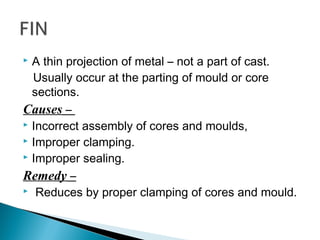
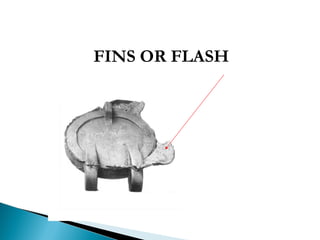
 A thin projection of metal – not a part of cast. 
Usually occur at the parting of mould or core 
sections. 
Causes – 
 Incorrect assembly of cores and moulds, 
 Improper clamping. 
 Improper sealing. 
Remedy – 
 Reduces by proper clamping of cores and mould.
FINS OR FLASH
Gas Holes 
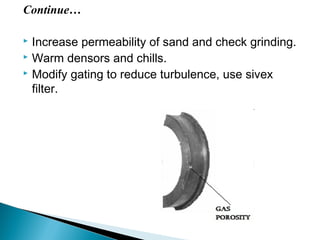
Clean, smooth walled rounded holes of varying size 
from pin heads to full section thickness, often 
exposed during machining. 
Causes 
 Low pouring temperature. 
 Gases blowing from the mould. 
 Excessive turbulence during pouring. 
 Moisture condensed on densors and chills. 
Remedies 
 Use correct pouring temperature and check with 
pyrometer.
Continue… 
 Increase permeability of sand and check grinding. 
 Warm densors and chills. 
 Modify gating to reduce turbulence, use sivex 
filter.
Gas HOLE
Next Member 
Waqar Sarwar
It is a void or depression in the casting caused 
mainly by uncontrolled solidification. 
Causes: 
1. Pouring temperature is too high causing liquid 
shrinkage. 
2. Failure to supply liquid feed metal. 
3. Pre mature solidification. 
Remedies : 
Apply principles of casting, reduce the 
pouring temperature and provide adequate 
risers, feeders, which supply the molten metal to 
compensate the shrinkage.
Shrinkage cavity
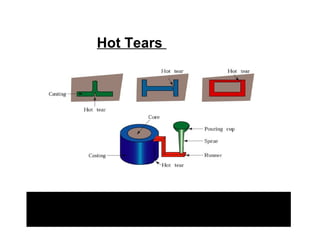
 One of the main defects is hot tearing or hot 
cracking, or hot shortness. Irrespective of the name, 
this phenomenon represents the formation of an 
“irreversible failure (crack) in the still 
semisolid casting.” 
 Cause: 
The inadequate compensation of solidification 
shrinkage by melt flow in the presence of thermal 
stresses. 
 Remedy 
 Avoid excessive ramming. 
 Controlled ramming should be done.
Hot Tears 
ME 6222: Manufacturing Processes and Systems 7 
Prof. J.S. Colton
Castings not fully form heaving lines or seam of 
discontinuity or holes with rounded edges through 
casting walls. 
Causes: 
 Incomplete fusion where two streams of metal 
meat. 
 Metal freezes before mold is filled. 
 Die too cold. 
Remedies: 
 Increase pouring temperature. 
 Increase die temperature or improve venting. 
 Increase permeability of sand.
Casting Defects 
ME 6222: Manufacturing Processes and Systems 6 
Prof. J.S. Colton

Casting defects

  • 1.
     Casting defectsmay be defined – Those characteristics that create a deficiency or imperfection to quality specifications imposed by design and service requirements.  Reduces total output, increases the cost of production.  Even in modern foundries the rejection rate as high up to 20% of the number of casting produced.
  • 2.
    Casting Defects Surfacedefects Internal defects Incorrect chemical compo. Unsatisfactory mech. properties
  • 3.
     Surface defects: May be visible on surface, including incorrect shape & size, flashes, poor surface finish. Internal defects : These are present in interior of cast. Can be revealed through NDT techniques. Incorrect chemical composition – Formation of undesirable microstructure. Unsatisfactory mechanical properties – These are due to low quality, poor percent of usage.
  • 4.
     SWELL FIN  Gas HOLES  SHRINKAGE CAVITY  HOT TEAR MISRUN AND COLD SHUT
  • 5.
     Swell -enlargement of the mould cavity by metal pressures, results – localized or overall enlargement of castings Causes  Insufficient ramming of the sand.  Rapid pouring of molten metal.  Also due to insufficient weighting of mould. Remedies –  Avoid rapid pouring.  provide sufficient ram on sands.  proper weighting of moulds.
  • 6.
     A thinprojection of metal – not a part of cast. Usually occur at the parting of mould or core sections. Causes –  Incorrect assembly of cores and moulds,  Improper clamping.  Improper sealing. Remedy –  Reduces by proper clamping of cores and mould.
  • 7.
  • 8.
    Gas Holes Clean,smooth walled rounded holes of varying size from pin heads to full section thickness, often exposed during machining. Causes  Low pouring temperature.  Gases blowing from the mould.  Excessive turbulence during pouring.  Moisture condensed on densors and chills. Remedies  Use correct pouring temperature and check with pyrometer.
  • 9.
    Continue…  Increasepermeability of sand and check grinding.  Warm densors and chills.  Modify gating to reduce turbulence, use sivex filter.
  • 10.
  • 11.
  • 12.
    It is avoid or depression in the casting caused mainly by uncontrolled solidification. Causes: 1. Pouring temperature is too high causing liquid shrinkage. 2. Failure to supply liquid feed metal. 3. Pre mature solidification. Remedies : Apply principles of casting, reduce the pouring temperature and provide adequate risers, feeders, which supply the molten metal to compensate the shrinkage.
  • 13.
  • 14.
     One ofthe main defects is hot tearing or hot cracking, or hot shortness. Irrespective of the name, this phenomenon represents the formation of an “irreversible failure (crack) in the still semisolid casting.”  Cause: The inadequate compensation of solidification shrinkage by melt flow in the presence of thermal stresses.  Remedy  Avoid excessive ramming.  Controlled ramming should be done.
  • 15.
    Hot Tears ME6222: Manufacturing Processes and Systems 7 Prof. J.S. Colton
  • 16.
    Castings not fullyform heaving lines or seam of discontinuity or holes with rounded edges through casting walls. Causes:  Incomplete fusion where two streams of metal meat.  Metal freezes before mold is filled.  Die too cold. Remedies:  Increase pouring temperature.  Increase die temperature or improve venting.  Increase permeability of sand.
  • 17.
    Casting Defects ME6222: Manufacturing Processes and Systems 6 Prof. J.S. Colton