Systemic Inflammatory
         Response
Syndrome     (SIRS)


           Dr. Madhu Aryal
SEPSIS and It’s Disease
spectrum
 Various stages of disease
     Bacteremia
     SIRS
     Sepsis syndrome
     Sepsis shock : early and refractory
Definition
            Infection
                   Presence of microorganisms in a normally
                    sterile site.
            Bacteremia
                   Cultivatable bacteria in the blood stream.
            Sepsis
                   SIRS criteria + suspected or proven infection


American College of Chest Physicians/Society of Critical Care Medicine Consensus
Conference Committee. Crit Care Med. 1992;20:864-874.
SIRS
              (Systemic Inflammatory Response Syndrome)
             The systemic response to a wide range of stresses.
                   Temperature >38°C (100.4°) or <36°C (96.8°F).
                   Heart rate >90 beats/min.
                   Respiratory rate >20 breaths/min or
                    PaCO2 <32 mmHg.
                   White blood cells > 12,000 cells/ml or < 4,000 cells/ml or
                    >10% immature (band) forms.
             Note
                   Two or more of the following must be present.
                   These changes should be represent acute alterations from
                    baseline in the absence of other known cause for the
                    abnormalities.

American College of Chest Physicians/Society of Critical Care Medicine Consensus
Conference Committee. Crit Care Med. 1992;20:864-874.
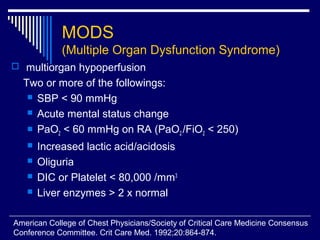
MODS
             (Multiple Organ Dysfunction Syndrome)
 multiorgan hypoperfusion
  Two or more of the followings:
    SBP < 90 mmHg

    Acute mental status change

    PaO < 60 mmHg on RA (PaO /FiO < 250)
         2                       2 2

      Increased lactic acid/acidosis
      Oliguria
      DIC or Platelet < 80,000 /mm3
      Liver enzymes > 2 x normal
American College of Chest Physicians/Society of Critical Care Medicine Consensus
Conference Committee. Crit Care Med. 1992;20:864-874.
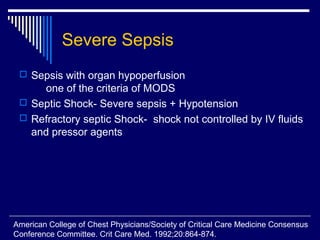
Severe Sepsis
  Sepsis with organ hypoperfusion
      one of the criteria of MODS
  Septic Shock- Severe sepsis + Hypotension
  Refractory septic Shock- shock not controlled by IV fluids
   and pressor agents


American College of Chest Physicians/Society of Critical Care Medicine Consensus
Conference Committee. Crit Care Med. 1992;20:864-874.
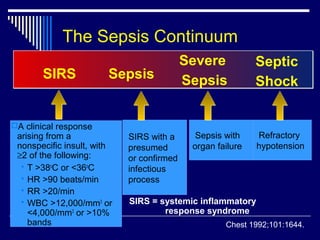
The Sepsis Continuum
                                           Severe           Septic
       SIRS             Sepsis             Sepsis           Shock

A clinical response
 arising from a             SIRS with a      Sepsis with    Refractory
 nonspecific insult, with   presumed        organ failure   hypotension
 ≥2 of the following:       or confirmed
   T >38oC or <36oC        infectious
   HR >90 beats/min        process
   RR >20/min
   WBC >12,000/mm3 or      SIRS = systemic inflammatory
    <4,000/mm3 or >10%              response syndrome
    bands                                           Chest 1992;101:1644.
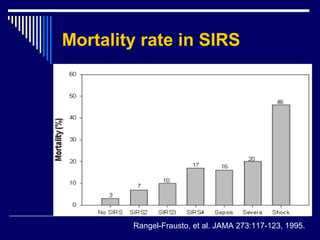
Mortality rate in SIRS


        Rangel-Frausto, et al. JAMA 273:117-123, 1995.
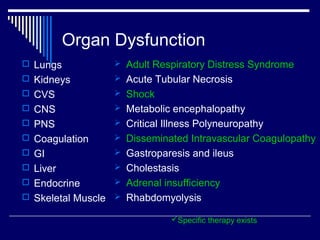
Organ Dysfunction
 Lungs           Adult Respiratory Distress Syndrome
 Kidneys         Acute Tubular Necrosis
 CVS             Shock
 CNS             Metabolic encephalopathy
 PNS             Critical Illness Polyneuropathy
 Coagulation     Disseminated Intravascular Coagulopathy
 GI              Gastroparesis and ileus
 Liver           Cholestasis
 Endocrine       Adrenal insufficiency
 Skeletal Muscle  Rhabdomyolysis

                             Specific therapy exists
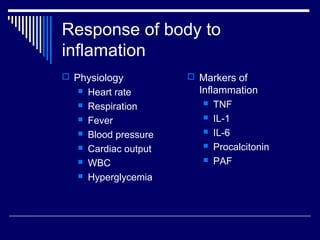
Response of body to
inflamation
 Physiology             Markers of
      Heart rate         Inflammation
                            TNF
      Respiration
                            IL-1
      Fever
                            IL-6
      Blood pressure
                            Procalcitonin
      Cardiac output
                            PAF
      WBC
      Hyperglycemia
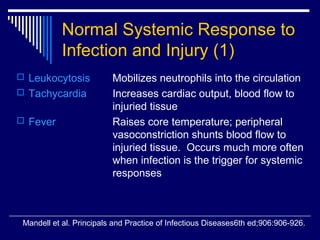
Normal Systemic Response to
            Infection and Injury (1)
 Leukocytosis            Mobilizes neutrophils into the circulation
 Tachycardia             Increases cardiac output, blood flow to
                          injuried tissue
 Fever                   Raises core temperature; peripheral
                          vasoconstriction shunts blood flow to
                          injuried tissue. Occurs much more often
                          when infection is the trigger for systemic
                          responses


 Mandell et al. Principals and Practice of Infectious Diseases6th ed;906:906-926.
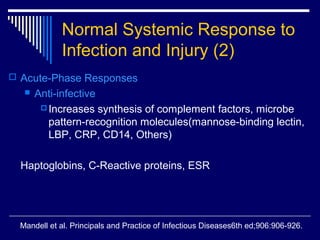
Normal Systemic Response to
             Infection and Injury (2)
 Acute-Phase Responses
      Anti-infective
         Increases synthesis of complement factors, microbe
          pattern-recognition molecules(mannose-binding lectin,
          LBP, CRP, CD14, Others)

  Haptoglobins, C-Reactive proteins, ESR


  Mandell et al. Principals and Practice of Infectious Diseases6th ed;906:906-926.
Normal Systemic Response to
            Infection and Injury (3)
 Anti-inflammatory
      Releases anti-inflammatory neuroendocrine hormones
       (cortisol, ACTH, epinephrine, α-MSH)
         Increases synthesis of proteins that help prevent
          inflammation within the systemic compartment
         Cytokine antagonists (IL-1Ra, sTNF-Rs)
         Anti-inflammatory mediators (e.g.,IL-4, IL-6, IL-6R,
          IL-10, IL-13, TGF-β)
         Protease inhibitors (e.g.,α1-antiprotease)
         Antioxidants (haptoglobin)
      Reprograms circulating leukocytes (epinephrine,
       cortisol, PGE2, ?other)
 Mandell et al. Principals and Practice of Infectious Diseases6th ed;906:906-926.
Normal Systemic Response to
             Infection and Injury (4)
          Procoagulant
                Walls off infection, prevents systemic spread
            Increases synthesis or release of fibrinogen, PAI-1, C4b
            Decreases synthesis of protein C, anti-thrombin III
            Metabolic
               Preserves euglycemia, mobilizes fatty acids, amino acids

                   Epinephrine, cortisol, glucagon, cytokines

            Thermoregulatory
               Inhibits microbial growth

                   Fever


Mandell et al. Principals and Practice of Infectious Diseases6th ed;906:906-926.
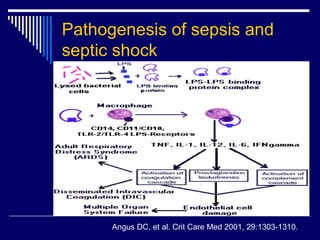
Pathogenesis of sepsis and
septic shock


      Angus DC, et al. Crit Care Med 2001, 29:1303-1310.
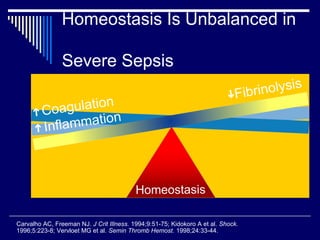
Homeostasis Is Unbalanced in

                Severe Sepsis


Carvalho AC, Freeman NJ. J Crit Illness. 1994;9:51-75; Kidokoro A et al. Shock.
1996;5:223-8; Vervloet MG et al. Semin Thromb Hemost. 1998;24:33-44.
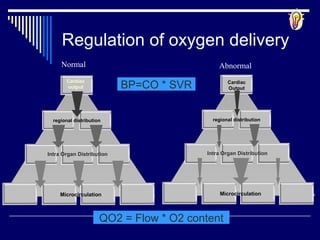
Regulation of oxygen delivery
     Normal                                   Abnormal
        Cardiac
        output             BP=CO * SVR            Cardiac
                                                  Output


  regional distribution                     regional distribution


Intra Organ Distribution                  Intra Organ Distribution


     Microcirculation                          Microcirculation


                      QO2 = Flow * O2 content
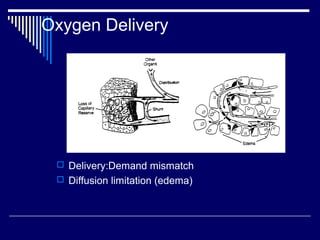
Oxygen Delivery


  Delivery:Demand mismatch
  Diffusion limitation (edema)
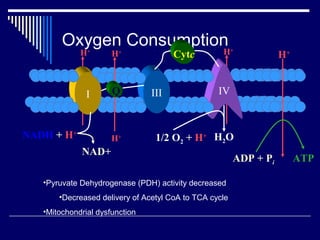
Oxygen Consumption
             H+       H+              Cytc         H+              H+


               I      Q         III               IV


NADH + H+             H+         1/2 O2 + H+ H2O
             NAD+
                                                        ADP + Pi        ATP

   •Pyruvate Dehydrogenase (PDH) activity decreased
       •Decreased delivery of Acetyl CoA to TCA cycle
   •Mitochondrial dysfunction
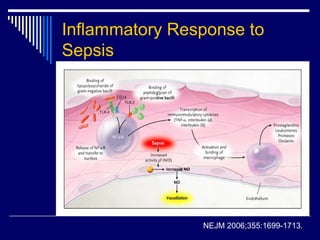
Inflammatory Response to
Sepsis


                NEJM 2006;355:1699-1713.
Risk factors of sepsis

 aggressive oncological chemotherapy and radiation therapy
 use of corticosteroid and immunosuppressive therapies for organ
    transplants and inflammatory diseases
   longer lives of patients predisposed to sepsis, the elderly, diabetics,
    cancer patients, patients with major organ failure, and with
    granulocyopenia.
   Neonates are more likely to develop sepsis (ex. group B
    Streptococcal infections).
   increased use of invasive devices such as surgical protheses,
    inhalation equipment, and intravenous and urinary catheters.
   indiscriminate use of antimicrobial drugs that create conditions of
    overgrowth, colonization, and subsequent infection by aggressive,
    antimicrobial-resistant organisms.


                         Angus DC, et al. Crit Care Med 2001, 29:1303-1310.
Patients at increased risks of
developing sepsis
 Underlying diseases: neutropenia, solid tumors,
    leukemia, dysproteinemias, cirrhosis of the liver, di
    abetes, AIDS, serious chronic conditions.
   Surgery or instrumentation: catheters.
   Prior drug therapy: Immuno-suppressive drugs,
    especially with broad-spectrum antibiotics.
   Age: males, above 40 y; females, 20-45 y.
   Miscellaneous conditions: childbirth, septic
    abortion, trauma and widespread burns, intestinal u
    lceration.
            Angus DC, et al. Crit Care Med 2001, 29:1303-1310.
Source
(usually an endogenous source of infection)

 intestinal tract
 oropharynx
 instrumentation sites
 contaminated inhalation therapy equipment
 IV fluids.
 Most frequent sites of infection: Lungs,
  abdomen, and urinary tract.
 Other sources include the skin/soft tissue and
  the CNS.

               Angus DC, et al. Crit Care Med 2001, 29:1303-1310.
Specific Infectious agents
 Splenectomy (traumatic or functional)
    S pneumoniae, H influenzae, N meningitidis
 Neutropenia (<500 neutrophil/ml)
    Gram-negative, including P aeruginosa, gram-
     positives, including S aureus
    Fungi, especially Candida species

 Hypogammaglobulinemia (e.g.,CLL)
    S pneumoniae, E coli

 Burns
    MRSA, P aeruginosa, resistant gram-negatives
                                      MacArthur RD, et al. Mosby, 2001:3-10.
                                 Wheeler AP, et al. NEJM 1999;340:207-214.
                            Chaowagul W, et al. J Infect Dis 1989;159:890-899.
Specific Infectious agents
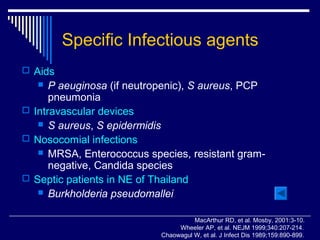
 Aids
     P aeuginosa (if neutropenic), S aureus, PCP
      pneumonia
 Intravascular devices
    S aureus, S epidermidis
 Nosocomial infections
    MRSA, Enterococcus species, resistant gram-
      negative, Candida species
 Septic patients in NE of Thailand
    Burkholderia pseudomallei


                                      MacArthur RD, et al. Mosby, 2001:3-10.
                                 Wheeler AP, et al. NEJM 1999;340:207-214.
                            Chaowagul W, et al. J Infect Dis 1989;159:890-899.
Surviving Sepsis Campaign


Guidelines for Management of
Severe Sepsis and Septic Shock


            Dellinger RP, et al. Crit Care Med 2004; 32:858-873.
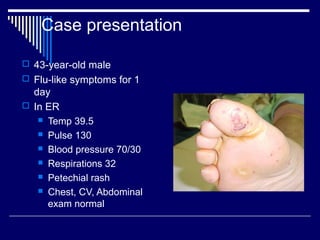
Case presentation

 43-year-old male
 Flu-like symptoms for 1
  day
 In ER
    Temp 39.5

    Pulse 130

    Blood pressure 70/30

    Respirations 32

    Petechial rash

    Chest, CV, Abdominal
     exam normal
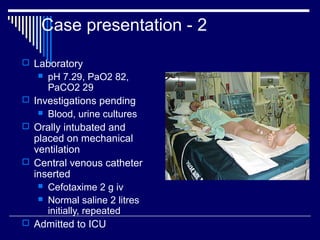
Case presentation - 2

 Laboratory
      pH 7.29, PaO2 82,
       PaCO2 29
   Investigations pending
      Blood, urine cultures

   Orally intubated and
    placed on mechanical
    ventilation
   Central venous catheter
    inserted
      Cefotaxime 2 g iv
      Normal saline 2 litres
       initially, repeated
   Admitted to ICU
Case presentation - 3

 In ICU:
    Noradrenaline started to
     support blood pressure
    Additional fluid (saline
     and pentastarch) given
     based on low CVP
    Pulmonary artery
     catheter inserted to aid
     further hemodynamic
     management
 Despite therapy patient
  remained anuric
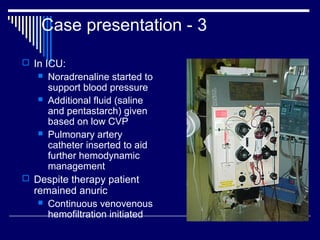
    Continuous venovenous
     hemofiltration initiated
Case presentation - 4

 Early gram stain on blood revealed gram
  negative rods
 Patient started on:
     Hydrocortisone 100 mg iv q8h
     Recombinant activated protein C
      24µg/kg/hour for 96 hours
     Enrolled in RCT (double-blind) of
      vasopressin vs norepinephrine for BP
      support
     Enteral nutrition via nasojejunal feeding
      tube
Case Presentation -
       Resolution
 Patient gradually stabilized and improved with
  complete resolution of organ dysfunction over 5
  days
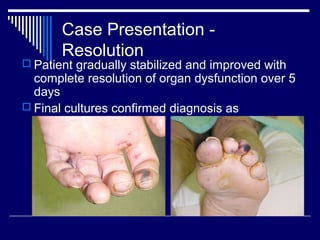
 Final cultures confirmed diagnosis as
  meningococcemia
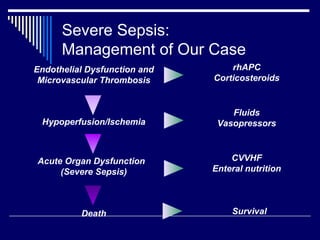
Severe Sepsis:
      Management of Our Case
Endothelial Dysfunction and       rhAPC
 Microvascular Thrombosis     Corticosteroids


                                  Fluids
 Hypoperfusion/Ischemia        Vasopressors


Acute Organ Dysfunction           CVVHF
     (Severe Sepsis)          Enteral nutrition


          Death                   Survival
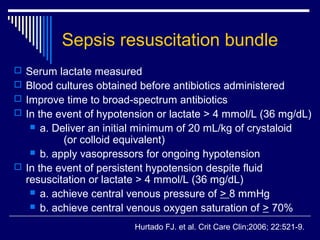
Sepsis resuscitation bundle
 Serum lactate measured
 Blood cultures obtained before antibiotics administered
 Improve time to broad-spectrum antibiotics
 In the event of hypotension or lactate > 4 mmol/L (36 mg/dL)
     a. Deliver an initial minimum of 20 mL/kg of crystaloid
           (or colloid equivalent)
    b. apply vasopressors for ongoing hypotension
 In the event of persistent hypotension despite fluid
  resuscitation or lactate > 4 mmol/L (36 mg/dL)
    a. achieve central venous pressure of > 8 mmHg
    b. achieve central venous oxygen saturation of > 70%

                          Hurtado FJ. et al. Crit Care Clin;2006; 22:521-9.
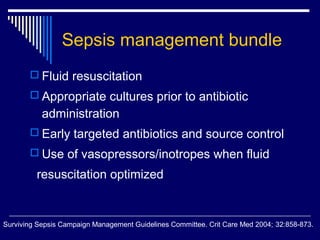
Sepsis management bundle
        Fluid resuscitation
        Appropriate cultures prior to antibiotic
           administration
        Early targeted antibiotics and source control
        Use of vasopressors/inotropes when fluid

         resuscitation optimized


Surviving Sepsis Campaign Management Guidelines Committee. Crit Care Med 2004; 32:858-873.
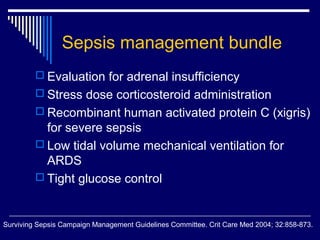
Sepsis management bundle
          Evaluation for adrenal insufficiency
          Stress dose corticosteroid administration
          Recombinant human activated protein C (xigris)
           for severe sepsis
          Low tidal volume mechanical ventilation for
           ARDS
          Tight glucose control


Surviving Sepsis Campaign Management Guidelines Committee. Crit Care Med 2004; 32:858-873.
Infection Control

        Appropriate cultures prior to antibiotic
        administration
        Early targeted antibiotics and source control


Surviving Sepsis Campaign Management Guidelines Committee. Crit Care Med 2004; 32:858-873.
Antibiotic use in Sepsis (1)
 The drugs used depends on the source of the sepsis
 Community acquired pneumonia
    third (ceftriaxone) or fourth (cefepime) generation
     cephalosporin is given with an aminoglycoside (usually
     gentamicin)
 Nosocomial pneumonia
    Cefipime or Imipenem-cilastatin and an aminoglycoside

 Abdominal infection
    Imipenem-cilastatin or Pipercillin-tazobactam and
     aminoglycoside
                 Angus DC, et al. Crit Care Med 2001, 29:1303-1310.
Antibiotic use in Sepsis (2)
 Nosocomial abdominal infection
    Imipenem-cilastatin and aminoglycoside or
     Pipercillin-tazobactam and Amphotericin B
 Skin/soft tissue
    Vancomycin and Imipenem-cilastatin or Piperacillin-
     tazobactam
 Nosocomial skin/soft tissue
    Vancomycin and Cefipime
 Urinary tract infection
    Ciprofloxacin and aminoglycoside


                  Angus DC, et al. Crit Care Med 2001, 29:1303-1310.
Antibiotic use in Sepsis (3)
 Nosocomial urinary tract infection:
    Vancomycin and Cefipime
 CNS infection:
    Vancomycin and third generation cephalosporin or
     Meropenem
 Nosocomial CNS infection:
    Meropenem and Vancomycin
 Drugs will change depending on the most likely cause of the
  patient's sepsis
 Single drug regimens are usually only indicated when the organism
  causing sepsis has been identified and antibiotic sensitivity testing

                       Angus DC, et al. Crit Care Med 2001, 29:1303-1310.
New Drug in Treating Severe
           Sepsis
 It is the first agent approved by the FDA effective
  in the treatment of severe sepsis proven to reduce
  mortality. Activated Protein C (Xigris) mediates
  many actions of body homeostasis. It is a potent
  agent for the:
      suppression of inflammation
      prevention of microvascular coagulation
      reversal of impaired fibrinolysis


                    Angus DC, et al. Crit Care Med 2001, 29:1303-1310.
Sirs

Sirs

  • 1.
    Systemic Inflammatory Response Syndrome (SIRS) Dr. Madhu Aryal
  • 2.
    SEPSIS and It’sDisease spectrum  Various stages of disease  Bacteremia  SIRS  Sepsis syndrome  Sepsis shock : early and refractory
  • 3.
    Definition  Infection  Presence of microorganisms in a normally sterile site.  Bacteremia  Cultivatable bacteria in the blood stream.  Sepsis  SIRS criteria + suspected or proven infection American College of Chest Physicians/Society of Critical Care Medicine Consensus Conference Committee. Crit Care Med. 1992;20:864-874.
  • 4.
    SIRS (Systemic Inflammatory Response Syndrome)  The systemic response to a wide range of stresses.  Temperature >38°C (100.4°) or <36°C (96.8°F).  Heart rate >90 beats/min.  Respiratory rate >20 breaths/min or PaCO2 <32 mmHg.  White blood cells > 12,000 cells/ml or < 4,000 cells/ml or >10% immature (band) forms.  Note  Two or more of the following must be present.  These changes should be represent acute alterations from baseline in the absence of other known cause for the abnormalities. American College of Chest Physicians/Society of Critical Care Medicine Consensus Conference Committee. Crit Care Med. 1992;20:864-874.
  • 5.
    MODS (Multiple Organ Dysfunction Syndrome)  multiorgan hypoperfusion Two or more of the followings:  SBP < 90 mmHg  Acute mental status change  PaO < 60 mmHg on RA (PaO /FiO < 250) 2 2 2  Increased lactic acid/acidosis  Oliguria  DIC or Platelet < 80,000 /mm3  Liver enzymes > 2 x normal American College of Chest Physicians/Society of Critical Care Medicine Consensus Conference Committee. Crit Care Med. 1992;20:864-874.
  • 6.
    Severe Sepsis Sepsis with organ hypoperfusion one of the criteria of MODS  Septic Shock- Severe sepsis + Hypotension  Refractory septic Shock- shock not controlled by IV fluids and pressor agents American College of Chest Physicians/Society of Critical Care Medicine Consensus Conference Committee. Crit Care Med. 1992;20:864-874.
  • 7.
    The Sepsis Continuum Severe Septic SIRS Sepsis Sepsis Shock A clinical response arising from a SIRS with a Sepsis with Refractory nonspecific insult, with presumed organ failure hypotension ≥2 of the following: or confirmed  T >38oC or <36oC infectious  HR >90 beats/min process  RR >20/min  WBC >12,000/mm3 or SIRS = systemic inflammatory <4,000/mm3 or >10% response syndrome bands Chest 1992;101:1644.
  • 8.
    Mortality rate inSIRS Rangel-Frausto, et al. JAMA 273:117-123, 1995.
  • 9.
    Organ Dysfunction  Lungs  Adult Respiratory Distress Syndrome  Kidneys  Acute Tubular Necrosis  CVS  Shock  CNS  Metabolic encephalopathy  PNS  Critical Illness Polyneuropathy  Coagulation  Disseminated Intravascular Coagulopathy  GI  Gastroparesis and ileus  Liver  Cholestasis  Endocrine  Adrenal insufficiency  Skeletal Muscle  Rhabdomyolysis Specific therapy exists
  • 10.
    Response of bodyto inflamation  Physiology  Markers of  Heart rate Inflammation  TNF  Respiration  IL-1  Fever  IL-6  Blood pressure  Procalcitonin  Cardiac output  PAF  WBC  Hyperglycemia
  • 11.
    Normal Systemic Responseto Infection and Injury (1)  Leukocytosis Mobilizes neutrophils into the circulation  Tachycardia Increases cardiac output, blood flow to injuried tissue  Fever Raises core temperature; peripheral vasoconstriction shunts blood flow to injuried tissue. Occurs much more often when infection is the trigger for systemic responses Mandell et al. Principals and Practice of Infectious Diseases6th ed;906:906-926.
  • 12.
    Normal Systemic Responseto Infection and Injury (2)  Acute-Phase Responses  Anti-infective  Increases synthesis of complement factors, microbe pattern-recognition molecules(mannose-binding lectin, LBP, CRP, CD14, Others) Haptoglobins, C-Reactive proteins, ESR Mandell et al. Principals and Practice of Infectious Diseases6th ed;906:906-926.
  • 13.
    Normal Systemic Responseto Infection and Injury (3)  Anti-inflammatory  Releases anti-inflammatory neuroendocrine hormones (cortisol, ACTH, epinephrine, α-MSH)  Increases synthesis of proteins that help prevent inflammation within the systemic compartment  Cytokine antagonists (IL-1Ra, sTNF-Rs)  Anti-inflammatory mediators (e.g.,IL-4, IL-6, IL-6R, IL-10, IL-13, TGF-β)  Protease inhibitors (e.g.,α1-antiprotease)  Antioxidants (haptoglobin)  Reprograms circulating leukocytes (epinephrine, cortisol, PGE2, ?other) Mandell et al. Principals and Practice of Infectious Diseases6th ed;906:906-926.
  • 14.
    Normal Systemic Responseto Infection and Injury (4)  Procoagulant  Walls off infection, prevents systemic spread  Increases synthesis or release of fibrinogen, PAI-1, C4b  Decreases synthesis of protein C, anti-thrombin III  Metabolic  Preserves euglycemia, mobilizes fatty acids, amino acids  Epinephrine, cortisol, glucagon, cytokines  Thermoregulatory  Inhibits microbial growth  Fever Mandell et al. Principals and Practice of Infectious Diseases6th ed;906:906-926.
  • 15.
    Pathogenesis of sepsisand septic shock Angus DC, et al. Crit Care Med 2001, 29:1303-1310.
  • 16.
    Homeostasis Is Unbalancedin Severe Sepsis Carvalho AC, Freeman NJ. J Crit Illness. 1994;9:51-75; Kidokoro A et al. Shock. 1996;5:223-8; Vervloet MG et al. Semin Thromb Hemost. 1998;24:33-44.
  • 17.
    Regulation of oxygendelivery Normal Abnormal Cardiac output BP=CO * SVR Cardiac Output regional distribution regional distribution Intra Organ Distribution Intra Organ Distribution Microcirculation Microcirculation QO2 = Flow * O2 content
  • 18.
    Oxygen Delivery Delivery:Demand mismatch  Diffusion limitation (edema)
  • 19.
    Oxygen Consumption H+ H+ Cytc H+ H+ I Q III IV NADH + H+ H+ 1/2 O2 + H+ H2O NAD+ ADP + Pi ATP •Pyruvate Dehydrogenase (PDH) activity decreased •Decreased delivery of Acetyl CoA to TCA cycle •Mitochondrial dysfunction
  • 20.
    Inflammatory Response to Sepsis NEJM 2006;355:1699-1713.
  • 21.
    Risk factors ofsepsis  aggressive oncological chemotherapy and radiation therapy  use of corticosteroid and immunosuppressive therapies for organ transplants and inflammatory diseases  longer lives of patients predisposed to sepsis, the elderly, diabetics, cancer patients, patients with major organ failure, and with granulocyopenia.  Neonates are more likely to develop sepsis (ex. group B Streptococcal infections).  increased use of invasive devices such as surgical protheses, inhalation equipment, and intravenous and urinary catheters.  indiscriminate use of antimicrobial drugs that create conditions of overgrowth, colonization, and subsequent infection by aggressive, antimicrobial-resistant organisms. Angus DC, et al. Crit Care Med 2001, 29:1303-1310.
  • 22.
    Patients at increasedrisks of developing sepsis  Underlying diseases: neutropenia, solid tumors, leukemia, dysproteinemias, cirrhosis of the liver, di abetes, AIDS, serious chronic conditions.  Surgery or instrumentation: catheters.  Prior drug therapy: Immuno-suppressive drugs, especially with broad-spectrum antibiotics.  Age: males, above 40 y; females, 20-45 y.  Miscellaneous conditions: childbirth, septic abortion, trauma and widespread burns, intestinal u lceration. Angus DC, et al. Crit Care Med 2001, 29:1303-1310.
  • 23.
    Source (usually an endogenoussource of infection)  intestinal tract  oropharynx  instrumentation sites  contaminated inhalation therapy equipment  IV fluids.  Most frequent sites of infection: Lungs, abdomen, and urinary tract.  Other sources include the skin/soft tissue and the CNS. Angus DC, et al. Crit Care Med 2001, 29:1303-1310.
  • 24.
    Specific Infectious agents Splenectomy (traumatic or functional)  S pneumoniae, H influenzae, N meningitidis  Neutropenia (<500 neutrophil/ml)  Gram-negative, including P aeruginosa, gram- positives, including S aureus  Fungi, especially Candida species  Hypogammaglobulinemia (e.g.,CLL)  S pneumoniae, E coli  Burns  MRSA, P aeruginosa, resistant gram-negatives MacArthur RD, et al. Mosby, 2001:3-10. Wheeler AP, et al. NEJM 1999;340:207-214. Chaowagul W, et al. J Infect Dis 1989;159:890-899.
  • 25.
    Specific Infectious agents Aids  P aeuginosa (if neutropenic), S aureus, PCP pneumonia  Intravascular devices  S aureus, S epidermidis  Nosocomial infections  MRSA, Enterococcus species, resistant gram- negative, Candida species  Septic patients in NE of Thailand  Burkholderia pseudomallei MacArthur RD, et al. Mosby, 2001:3-10. Wheeler AP, et al. NEJM 1999;340:207-214. Chaowagul W, et al. J Infect Dis 1989;159:890-899.
  • 26.
    Surviving Sepsis Campaign Guidelinesfor Management of Severe Sepsis and Septic Shock Dellinger RP, et al. Crit Care Med 2004; 32:858-873.
  • 27.
    Case presentation  43-year-oldmale  Flu-like symptoms for 1 day  In ER  Temp 39.5  Pulse 130  Blood pressure 70/30  Respirations 32  Petechial rash  Chest, CV, Abdominal exam normal
  • 28.
    Case presentation -2  Laboratory  pH 7.29, PaO2 82, PaCO2 29  Investigations pending  Blood, urine cultures  Orally intubated and placed on mechanical ventilation  Central venous catheter inserted  Cefotaxime 2 g iv  Normal saline 2 litres initially, repeated  Admitted to ICU
  • 29.
    Case presentation -3  In ICU:  Noradrenaline started to support blood pressure  Additional fluid (saline and pentastarch) given based on low CVP  Pulmonary artery catheter inserted to aid further hemodynamic management  Despite therapy patient remained anuric  Continuous venovenous hemofiltration initiated
  • 30.
    Case presentation -4  Early gram stain on blood revealed gram negative rods  Patient started on:  Hydrocortisone 100 mg iv q8h  Recombinant activated protein C 24µg/kg/hour for 96 hours  Enrolled in RCT (double-blind) of vasopressin vs norepinephrine for BP support  Enteral nutrition via nasojejunal feeding tube
  • 31.
    Case Presentation - Resolution  Patient gradually stabilized and improved with complete resolution of organ dysfunction over 5 days  Final cultures confirmed diagnosis as meningococcemia
  • 32.
    Severe Sepsis: Management of Our Case Endothelial Dysfunction and rhAPC Microvascular Thrombosis Corticosteroids Fluids Hypoperfusion/Ischemia Vasopressors Acute Organ Dysfunction CVVHF (Severe Sepsis) Enteral nutrition Death Survival
  • 33.
    Sepsis resuscitation bundle Serum lactate measured  Blood cultures obtained before antibiotics administered  Improve time to broad-spectrum antibiotics  In the event of hypotension or lactate > 4 mmol/L (36 mg/dL)  a. Deliver an initial minimum of 20 mL/kg of crystaloid (or colloid equivalent)  b. apply vasopressors for ongoing hypotension  In the event of persistent hypotension despite fluid resuscitation or lactate > 4 mmol/L (36 mg/dL)  a. achieve central venous pressure of > 8 mmHg  b. achieve central venous oxygen saturation of > 70% Hurtado FJ. et al. Crit Care Clin;2006; 22:521-9.
  • 34.
    Sepsis management bundle  Fluid resuscitation  Appropriate cultures prior to antibiotic administration  Early targeted antibiotics and source control  Use of vasopressors/inotropes when fluid resuscitation optimized Surviving Sepsis Campaign Management Guidelines Committee. Crit Care Med 2004; 32:858-873.
  • 35.
    Sepsis management bundle  Evaluation for adrenal insufficiency  Stress dose corticosteroid administration  Recombinant human activated protein C (xigris) for severe sepsis  Low tidal volume mechanical ventilation for ARDS  Tight glucose control Surviving Sepsis Campaign Management Guidelines Committee. Crit Care Med 2004; 32:858-873.
  • 36.
    Infection Control  Appropriate cultures prior to antibiotic administration  Early targeted antibiotics and source control Surviving Sepsis Campaign Management Guidelines Committee. Crit Care Med 2004; 32:858-873.
  • 37.
    Antibiotic use inSepsis (1)  The drugs used depends on the source of the sepsis  Community acquired pneumonia  third (ceftriaxone) or fourth (cefepime) generation cephalosporin is given with an aminoglycoside (usually gentamicin)  Nosocomial pneumonia  Cefipime or Imipenem-cilastatin and an aminoglycoside  Abdominal infection  Imipenem-cilastatin or Pipercillin-tazobactam and aminoglycoside Angus DC, et al. Crit Care Med 2001, 29:1303-1310.
  • 38.
    Antibiotic use inSepsis (2)  Nosocomial abdominal infection  Imipenem-cilastatin and aminoglycoside or Pipercillin-tazobactam and Amphotericin B  Skin/soft tissue  Vancomycin and Imipenem-cilastatin or Piperacillin- tazobactam  Nosocomial skin/soft tissue  Vancomycin and Cefipime  Urinary tract infection  Ciprofloxacin and aminoglycoside Angus DC, et al. Crit Care Med 2001, 29:1303-1310.
  • 39.
    Antibiotic use inSepsis (3)  Nosocomial urinary tract infection: Vancomycin and Cefipime  CNS infection:  Vancomycin and third generation cephalosporin or Meropenem  Nosocomial CNS infection:  Meropenem and Vancomycin  Drugs will change depending on the most likely cause of the patient's sepsis  Single drug regimens are usually only indicated when the organism causing sepsis has been identified and antibiotic sensitivity testing Angus DC, et al. Crit Care Med 2001, 29:1303-1310.
  • 40.
    New Drug inTreating Severe Sepsis  It is the first agent approved by the FDA effective in the treatment of severe sepsis proven to reduce mortality. Activated Protein C (Xigris) mediates many actions of body homeostasis. It is a potent agent for the:  suppression of inflammation  prevention of microvascular coagulation  reversal of impaired fibrinolysis Angus DC, et al. Crit Care Med 2001, 29:1303-1310.

Editor's Notes

  • #11 These clinical and laboratory markers of inflammation have all been associated with SIRS or sepsis. Procalcitonin is claimed to have reasonable diagnostic value for infection. Combinations of response markers may also be able to distinguish between sepsis and SIRS.
  • #17 In simplified terms, sepsis can be conceptualized as a dysfunction of opposing mechanisms of coagulation/inflammation and fibrinolysis. In normal patients homeostasis is maintained because these mechanisms balance each other. Patients with severe sepsis have increased coagulation and increased inflammation. Manifestations of these include: Circulating proinflammatory mediators Endothelial injury Expression of tissue factor by monocytes and possibly a subset of endothelial cells Thrombin generation Patients with severe sepsis also have decreased fibrinolysis. Manifestations of these include: Increased levels of PAI-1 Increased levels of TAFI Carvalho AC, Freeman NJ. How coagulation defects alter outcome in sepsis: survival may depend on reversing procoagulant conditions. J Crit Illness. 1994;9:51-75. Kidokoro A, Iba T, Fukunaga M, et al. Alterations in coagulation and fibrinolysis during sepsis. Shock. 1996;5:223-8. Vervloet MG, Thijs LG, Hack CE. Derangements of coagulation and fibrinolysis in critically ill patients with sepsis and septic shock. Semin Thromb Hemost. 1998;24: 33-44.
  • #18 Abnormalities in oxygen delivery in sepsis have been described at all levels of the circulation. The parameters that can be measured clinically (cardiac output, blood pressure) are indicative of the central circulation, but distribution between and within organs is altered. There are no reliable methods to monitor the microcirculation.
  • #19 The result is a mismatch in oxygen delivery relative to tissue demand, similar to the mismatch that occurs in the lung between ventilation and perfusion. Factors that contribute to this mismatch include shunting (likely physiologic due to high flow rather than anatomic shunts). Decreased capillary perfusion and increased edema increase the diffusion distance for oxygen.
  • #20 Mitochondrial injury and dysfunction has also been described, so even if oxygen delivery is adequate, the cell may not use it effectively to generate ATP. In experimental models, this can be monitored by measuring NADH or cytochrome c fluorescence.
  • #33 Therapy that can interfere with this process has been described for each level. This combination of specific sepsis and general ICU treatment is expected to lead to better patient survival.