DVT PROPHYLAXIS
Dr. E M. Regis Jr.
Dept. Of Orthopaedics
10/08/15
Overview
Definition
Incidence
Aeitology/ Risk Factors
Pathophysiology
Signs/ Symptoms
Diagnosis
Complications
Prophylaxis
Conclusion
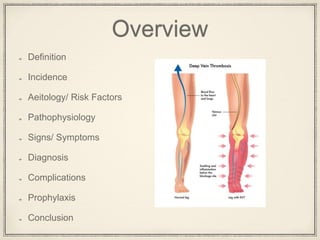
Definition
thrombus (clot) formation predominately in the
deep veins of the legs.
eg. femoral vein, popliteal vein
Incidence
1-2 per 1000 annually in the United States
60,000-100,000 die of DVT {10-30% within 1st
month of diagnosis}
Aeitology/ Risk Factors
Virchow’s Triad
a) stasis
b) hypercoagulability
c) vessel wall damage (intima)
INJURY TO VEIN;
fractures
severe muscle injury
major surgery (abdominal, pelvis, hip or legs)
SLOW BLOOD FLOW;
confinement to bed
limited movement
sitting for prolong periods with crossed legs
paralysis
INCREASED ESTROGEN;
birth control pills
HRT sometimes used after menopause
Pregnancy, up to 6 weeks postpartum
OTHER FACTORS;
previous DVT or PE
family history of DVT or PE
age (risk increase as age increases)
obesity
catheter located in a central vein
inherited clotting disorders (protein c deficiency, antithrombin deficiency)
Signs & Symptoms
pain or tenderness
warmth
swelling
redness or discoloration
distention of surface veins
difficulty breathing (S.O.B)
tachycardia or irregular heart beat
chest pain or discomfort
anxiety
haemoptysis
hypotension/ lightheadedness
Diagnosis
HISTORY & PHYSICAL EXAMINATION
CHEST X-RAY
ECG
Labs including D-dimers
DUPLEX ULTRASOUND
VENOGRAPHY
spiral CT chest
V:Q scan (ventilation/perfusion)
pulmonary angiogram
Complications
Pulmonary Embolism
Death
Post-thrombotic Syndrome
Prophylaxis
Mechanical
compression stockings
intermittent pneumatic compression devices
ivc filters
Pharmacological
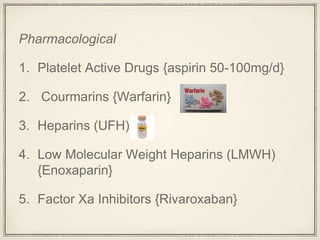
1. Platelet Active Drugs {aspirin 50-100mg/d}
2. Courmarins {Warfarin}
3. Heparins (UFH)
4. Low Molecular Weight Heparins (LMWH)
{Enoxaparin}
5. Factor Xa Inhibitors {Rivaroxaban}
DVT Prophylaxis Based on Risk
Stratification Levels
1 point assigned to following:
age 41-60yrs
minor surgery
history of major surgery within 1 month
pregnancy or postpartum within 1 month
varicose veins
inflammatory bowel disease
swelling of legs
obesity
oral contraceptives, patch or HRT
2 points assigned to the following:
age >60yrs
malignancy or current chemo or radiation therapy
major surgery (>45min)
laparoscopic surgery (>45min)
confined to bed > 72hrs
immobilizing cast shorter than 1 month
central venous access <1month
tourniquet time >45mins
3 points assigned to the following:
age >75yrs
history of DVT or PE
family history of thrombosis
Factor V Leiden/activated protein C resistance
medical patient with risk factors of MI, CHF or COPD
congenital or acquired thrombophillia
5 points assigned to the following:
major, elective lower extremity arthoplasty, total knee
replacement, total hip replacement
hip, pelvis or leg fracture within 1 month
stroke within 1 month
multiple trauma within 1 month
acute spinal cord injury with paralysis within 1 month
Risk Group Classification for Orthopaedic
Patients
Low Risk Patients;
no specific prophylaxis is required other than early and
aggressive mobilisation
Moderate Risk Patients;
low dose UFH {LDUF q12hrs}, LMWH {<3,400 U qd}, and
IPC
High Risk Patients;
low dose UFH q8h, LMWH {>3400 U qd}, with or without IPC
Very High Risk Patients;
LMWH {>3400 U qd}, fondaparinux, and coumarins (INR 2-3).
Dose-adjusted low-dose UFH or LMWH may be used with or
without IPC.
Conclusion
Based on history and physical examination findings, there should
be a high index of suspicion in diagnosing DVT confirmed with
labs and necessary investigations.
Aim should be geared towards prevention than treatment.
Prophylaxis is tailored independently based on numerous of
patient factors.
Treatment is a multidisciplinary approach involving chest
physicians and primary surgical team.
References
www.google.com/images
Deep Venous Thrombosis Prophylaxis In Orthopedic
Surgery, DAVID A FORSH MD. August 15, 2014
www.sages.org/publications/guidelines
Venous thromboembolism prophylaxis.- National
Guideline
Antithrombotic Guidelines, 9th ED| Guidelines &
Consensus. American College of Chest Physicians

dvt prophylaxis

  • 1.
    DVT PROPHYLAXIS Dr. EM. Regis Jr. Dept. Of Orthopaedics 10/08/15
  • 2.
    Overview Definition Incidence Aeitology/ Risk Factors Pathophysiology Signs/Symptoms Diagnosis Complications Prophylaxis Conclusion
  • 3.
    Definition thrombus (clot) formationpredominately in the deep veins of the legs. eg. femoral vein, popliteal vein
  • 4.
    Incidence 1-2 per 1000annually in the United States 60,000-100,000 die of DVT {10-30% within 1st month of diagnosis}
  • 5.
    Aeitology/ Risk Factors Virchow’sTriad a) stasis b) hypercoagulability c) vessel wall damage (intima)
  • 7.
    INJURY TO VEIN; fractures severemuscle injury major surgery (abdominal, pelvis, hip or legs) SLOW BLOOD FLOW; confinement to bed limited movement sitting for prolong periods with crossed legs paralysis
  • 8.
    INCREASED ESTROGEN; birth controlpills HRT sometimes used after menopause Pregnancy, up to 6 weeks postpartum OTHER FACTORS; previous DVT or PE family history of DVT or PE age (risk increase as age increases) obesity catheter located in a central vein inherited clotting disorders (protein c deficiency, antithrombin deficiency)
  • 10.
    Signs & Symptoms painor tenderness warmth swelling redness or discoloration distention of surface veins difficulty breathing (S.O.B) tachycardia or irregular heart beat chest pain or discomfort anxiety haemoptysis hypotension/ lightheadedness
  • 11.
    Diagnosis HISTORY & PHYSICALEXAMINATION CHEST X-RAY ECG Labs including D-dimers DUPLEX ULTRASOUND VENOGRAPHY spiral CT chest V:Q scan (ventilation/perfusion) pulmonary angiogram
  • 12.
  • 13.
  • 15.
    Pharmacological 1. Platelet ActiveDrugs {aspirin 50-100mg/d} 2. Courmarins {Warfarin} 3. Heparins (UFH) 4. Low Molecular Weight Heparins (LMWH) {Enoxaparin} 5. Factor Xa Inhibitors {Rivaroxaban}
  • 16.
    DVT Prophylaxis Basedon Risk Stratification Levels 1 point assigned to following: age 41-60yrs minor surgery history of major surgery within 1 month pregnancy or postpartum within 1 month varicose veins inflammatory bowel disease swelling of legs obesity oral contraceptives, patch or HRT
  • 17.
    2 points assignedto the following: age >60yrs malignancy or current chemo or radiation therapy major surgery (>45min) laparoscopic surgery (>45min) confined to bed > 72hrs immobilizing cast shorter than 1 month central venous access <1month tourniquet time >45mins
  • 18.
    3 points assignedto the following: age >75yrs history of DVT or PE family history of thrombosis Factor V Leiden/activated protein C resistance medical patient with risk factors of MI, CHF or COPD congenital or acquired thrombophillia
  • 19.
    5 points assignedto the following: major, elective lower extremity arthoplasty, total knee replacement, total hip replacement hip, pelvis or leg fracture within 1 month stroke within 1 month multiple trauma within 1 month acute spinal cord injury with paralysis within 1 month
  • 20.
    Risk Group Classificationfor Orthopaedic Patients
  • 21.
    Low Risk Patients; nospecific prophylaxis is required other than early and aggressive mobilisation Moderate Risk Patients; low dose UFH {LDUF q12hrs}, LMWH {<3,400 U qd}, and IPC High Risk Patients; low dose UFH q8h, LMWH {>3400 U qd}, with or without IPC Very High Risk Patients; LMWH {>3400 U qd}, fondaparinux, and coumarins (INR 2-3). Dose-adjusted low-dose UFH or LMWH may be used with or without IPC.
  • 24.
    Conclusion Based on historyand physical examination findings, there should be a high index of suspicion in diagnosing DVT confirmed with labs and necessary investigations. Aim should be geared towards prevention than treatment. Prophylaxis is tailored independently based on numerous of patient factors. Treatment is a multidisciplinary approach involving chest physicians and primary surgical team.
  • 25.
    References www.google.com/images Deep Venous ThrombosisProphylaxis In Orthopedic Surgery, DAVID A FORSH MD. August 15, 2014 www.sages.org/publications/guidelines Venous thromboembolism prophylaxis.- National Guideline Antithrombotic Guidelines, 9th ED| Guidelines & Consensus. American College of Chest Physicians