Downloaded 70 times

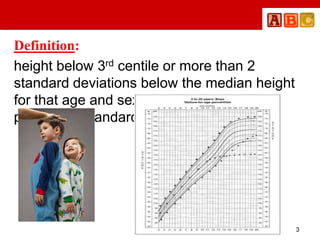


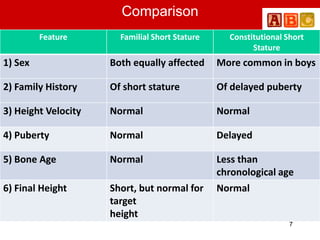


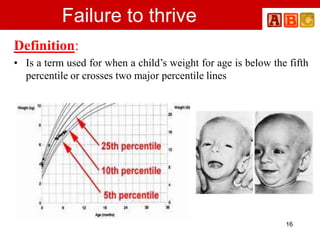

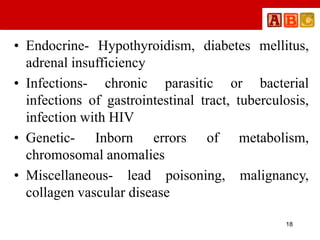


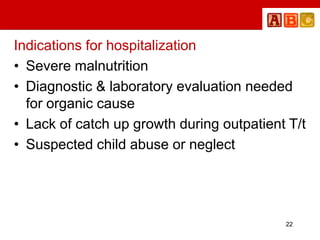


Short stature, also known as growth failure, can be caused by physiological or pathological factors. Physiological short stature includes familial or constitutional variants, while pathological causes include undernutrition, chronic illness affecting organs like the kidneys or lungs, endocrine disorders that impact growth hormone or thyroid function, genetic syndromes, and skeletal dysplasias. Failure to thrive refers to weight below the 5th percentile and can stem from organic medical issues or non-organic psychosocial factors like poverty, poor parenting, or abuse/neglect. Evaluation of short stature involves a thorough history, exam, growth measurements, bone age assessment, and lab tests to identify the underlying etiology and guide treatment.


