
Systemic Inflammatory  Response Syndrome  (SIRS) Lu Ning, MD Assistant Professor of Surgery
SEPSIS and It’s Disease spectrum Various stages of disease Bacteremia SIRS Sepsis syndrome Sepsis shock : early and refractory
Definition Infection   Presence of microorganisms in a normally sterile site.  Bacteremia Cultivatable bacteria in the blood stream.  Sepsis The systemic response to infection.  If associated with proven or clinically suspected infection, SIRS is called “sepsis”. American College of Chest Physicians/Society of Critical Care Medicine Consensus  Conference Committee. Crit Care Med. 1992;20:864-874.
SIRS  (Systemic Inflammatory Response Syndrome) The systemic response to a wide range of stresses. Temperature >38 °C (100.4°) or <36°C (96.8°F). Heart rate >90 beats/min. Respiratory rate >20 breaths/min or  PaCO 2  <32 mmHg. White blood cells > 12,000   cells/ml or < 4,000  cells/ml or  >10% immature (band) forms. Note Two or more of the following must be present. These changes should be represent acute alterations from baseline in the absence of other known cause for the abnormalities. American College of Chest Physicians/Society of Critical Care Medicine Consensus  Conference Committee. Crit Care Med. 1992;20:864-874.
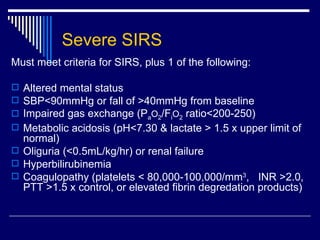
Severe SIRS Must meet criteria for SIRS, plus 1 of the following: Altered mental status SBP<90mmHg or fall of >40mmHg from baseline Impaired gas exchange (P a O 2 /F i O 2  ratio<200-250) Metabolic acidosis (pH<7.30 & lactate > 1.5 x upper limit of normal) Oliguria (<0.5mL/kg/hr) or renal failure  Hyperbilirubinemia Coagulopathy (platelets < 80,000-100,000/mm 3 ,  INR >2.0, PTT >1.5 x control, or elevated fibrin degredation products)
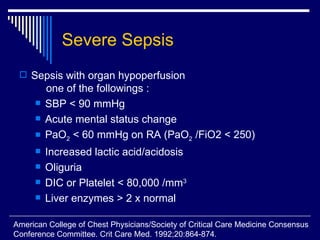
Severe Sepsis Sepsis with organ hypoperfusion      one of the followings : SBP < 90 mmHg Acute mental status change PaO 2  < 60 mmHg on RA (PaO 2  /FiO2 < 250) Increased lactic acid/acidosis Oliguria DIC or Platelet < 80,000 /mm 3 Liver enzymes > 2 x normal  American College of Chest Physicians/Society of Critical Care Medicine Consensus  Conference Committee. Crit Care Med. 1992;20:864-874.
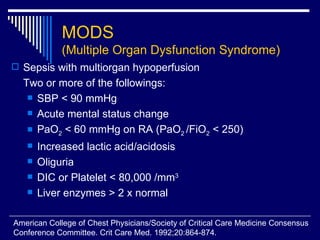
MODS (Multiple Organ Dysfunction Syndrome) Sepsis with multiorgan hypoperfusion  Two or more of the followings: SBP < 90 mmHg Acute mental status change PaO 2  < 60 mmHg on RA (PaO 2  /FiO 2  < 250) Increased lactic acid/acidosis Oliguria DIC or Platelet < 80,000 /mm 3 Liver enzymes > 2 x normal  American College of Chest Physicians/Society of Critical Care Medicine Consensus  Conference Committee. Crit Care Med. 1992;20:864-874.
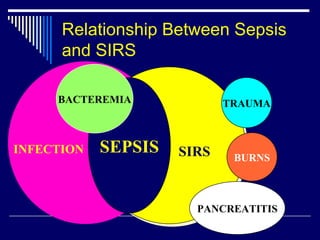
Relationship Between Sepsis and SIRS TRAUMA BURNS PANCREATITIS SEPSIS SIRS INFECTION SEPSIS BACTEREMIA
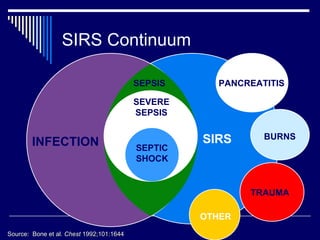
SIRS Continuum Source:  Bone et al.  Chest  1992;101:1644 SIRS OTHER INFECTION PANCREATITIS BURNS TRAUMA SEPSIS SEVERE SEPSIS SEPTIC SHOCK
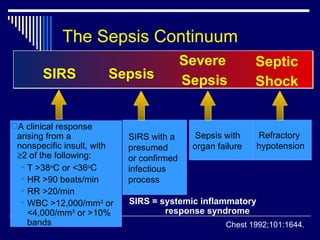
The Sepsis Continuum A clinical response arising from a nonspecific insult, with   2 of the following: T >38 o C or <36 o C HR >90 beats/min RR >20/min WBC >12,000/mm 3  or <4,000/mm 3  or >10% bands SIRS = systemic inflammatory  response syndrome SIRS with a presumed or confirmed  infectious process Chest 1992;101:1644. Sepsis with  organ failure Refractory hypotension Sepsis SIRS Severe  Sepsis Septic Shock
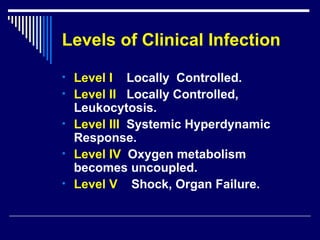
Levels of Clinical Infection Level I   Locally  Controlled. Level II   Locally Controlled, Leukocytosis. Level III   Systemic Hyperdynamic Response. Level IV   Oxygen metabolism becomes uncoupled. Level V   Shock, Organ Failure.
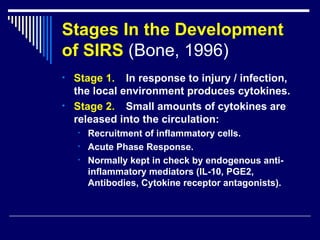
Stages In the Development of SIRS  (Bone, 1996) Stage 1. In response to injury / infection, the local environment produces cytokines. Stage 2. Small amounts of cytokines are released into the circulation: Recruitment of inflammatory cells. Acute Phase Response. Normally kept in check by endogenous anti-inflammatory mediators (IL-10, PGE2, Antibodies, Cytokine receptor antagonists).
Stages In the Development of SIRS Stage 3. Failure to control inflammatory cascade: Loss of capillary integrity. Stimulation of Nitric Oxide Production. Maldistribution of  microvascular blood flow. Organ injury and dysfunction.
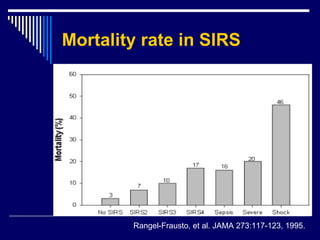
Mortality rate in SIRS   Rangel - Frausto, et al. JAMA 273:117-123, 1995.
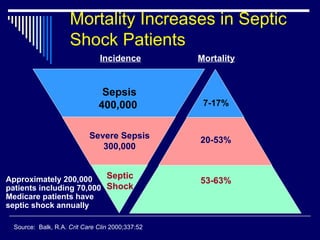
Mortality Increases in Septic Shock Patients Mortality Incidence Source:  Balk, R.A.  Crit Care Clin  2000;337:52 Approximately 200,000 patients including 70,000 Medicare patients have septic shock annually Septic Shock 53-63% 20-53% Severe Sepsis 300,000 7-17% Sepsis 400,000
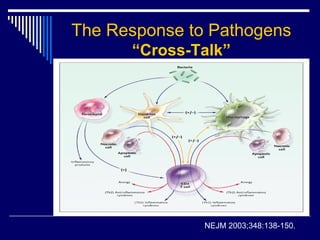
The Response to Pathogens  “Cross-Talk” NEJM 2003;348:138-150.
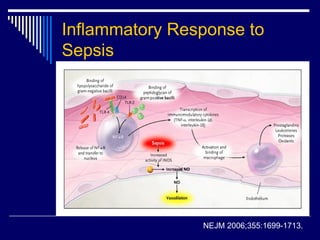
Inflammatory Response to Sepsis NEJM 2006;355:1699-1713.
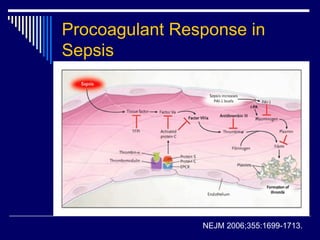
Procoagulant Response in Sepsis NEJM 2006;355:1699-1713.
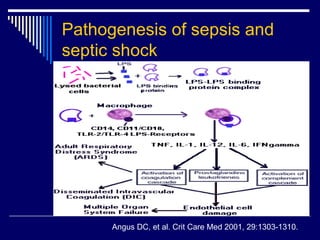
Pathogenesis of sepsis and septic shock Angus DC, et al .  Crit Care Med 2001, 29:1303-1310.
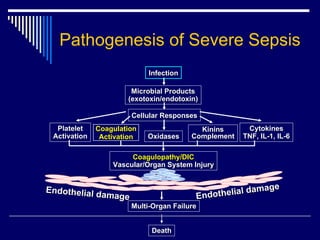
Pathogenesis of Severe Sepsis Infection Microbial Products (exotoxin/endotoxin) Cellular Responses Oxidases Platelet Activation Kinins Complement Coagulopathy/DIC Vascular/Organ System Injury Multi-Organ Failure Death Endothelial   damage Endothelial damage Coagulation Activation Cytokines TNF, IL-1, IL-6
Normal Systemic Response to Infection and Injury   (1) Leukocytosis Mobilizes neutrophils into the circulation Tachycardia   Increases cardiac output, blood flow to  injuried tissue Fever Raises core temperature; peripheral  vasoconstriction shunts blood flow to  injuried tissue.  Occurs much more often  when infection is the trigger for systemic  responses Mandell et al. Principals and Practice of Infectious Diseases6th ed;906:906-926.
Normal Systemic Response to Infection and Injury   (2) Acute-Phase Responses   Anti-infective Increases synthesis of complement factors, microbe pattern-recognition molecules(mannose-binding lectin, LBP, CRP, CD14, Others) Sequesters iron (lactoferrin) and zinc (metallothionein) Mandell et al. Principals and Practice of Infectious Diseases6th ed;906:906-926.
Normal Systemic Response to Infection and Injury   (3) Anti-inflammatory Releases anti-inflammatory neuroendocrine hormones (cortisol, ACTH, epinephrine,  α -MSH) Increases synthesis of proteins that help prevent inflammation within the systemic compartment Cytokine antagonists (IL-1Ra, sTNF-Rs) Anti-inflammatory mediators (e.g.,IL-4, IL-6, IL-6R, IL-10, IL-13, TGF- β ) Protease inhibitors (e.g., α 1-antiprotease) Antioxidants (haptoglobin) Reprograms circulating leukocytes (epinephrine, cortisol, PGE 2 , ?other) Mandell et al. Principals and Practice of Infectious Diseases6th ed;906:906-926.
Normal Systemic Response to Infection and Injury   (4) Procoagulant Walls off infection, prevents systemic spread Increases synthesis or release of fibrinogen, PAI-1, C4b Decreases synthesis of protein C, anti-thrombin III Metabolic Preserves euglycemia, mobilizes fatty acids, amino acids Epinephrine, cortisol, glucagon, cytokines Thermoregulatory Inhibits microbial growth Fever Mandell et al. Principals and Practice of Infectious Diseases6th ed;906:906-926.
Risk factors of sepsis   aggressive oncological chemotherapy and radiation therapy  use of corticosteroid and immunosuppressive therapies for organ transplants and inflammatory diseases  longer lives of patients predisposed to sepsis, the elderly, diabetics, cancer patients, patients with major organ failure, and with granulocyopenia.  Neonates are more likely to develop sepsis  ( ex .  group B Streptococcal infections ).  increased use of invasive devices such as surgical protheses, inhalation equipment, and intravenous and urinary catheters.  indiscriminate use of antimicrobial drugs that create conditions of overgrowth, colonization, and subsequent infection by aggressive, antimicrobial - resistant organisms .  Angus DC, et al .  Crit Care Med 2001, 29:1303-1310.
Patients at increased risks of developing sepsis Underlying diseases :  neutropenia, solid tumors, leukemia, dysproteinemias, cirrhosis of the liver, diabetes, AIDS, serious chronic conditions.  Surgery or instrumentation :  catheters .  Prior drug therapy :  Immuno-suppressive drugs, especially with broad-spectrum antibiotics.  Age :  males, above 40 y; females, 20-45 y .  Miscellaneous conditions :  childbirth, septic abortion, trauma and widespread burns, intestinal ulceration.  Angus DC, et al .  Crit Care Med 2001, 29:1303-1310.
Source   ( usually an endogenous source of infection ) intestinal tract  oropharynx  instrumentation sites  contaminated inhalation therapy equipment  IV fluids.  Most frequent sites of infection :  Lungs, abdomen, and urinary tract.  Other sources include the skin/soft tissue and the CNS.  Angus DC, et al .  Crit Care Med 2001, 29:1303-1310.
Diagnosis History   community or nosocomially acquired  infection immunocompromised  patient   exposure to animals, travel, tick bites, occupational hazards, alcohol use, seizures, loss of consciousness, medications underlying diseases  ;  specific infectious agents  Some clues to a septic event include  Fever or unexplained signs with malignancy or instrumentation  Hypotension  Oliguria or anuria  Tachypnea or hyperpnea  Hypothermia without obvious cause  Bleeding  Angus DC, et al .  Crit Care Med 2001, 29:1303-1310.
Specific Infectious agents Splenectomy   (traumatic or functional) S pneumoniae, H influenzae, N meningitidis Neutropenia (<500 neutrophil/ml) Gram-negative, including  P aeruginosa , gram-positives, including  S aureus Fungi, especially Candida species Hypogammaglobulinemia (e.g.,CLL) S pneumoniae, E coli Burns MRSA,  P aeruginosa , resistant gram-negatives MacArthur RD, et al. Mosby, 2001:3-10. Wheeler AP, et al. NEJM 1999;340:207-214. Chaowagul W, et al. J Infect Dis 1989;159:890-899.
Specific Infectious agents Aids P aeuginosa  (if neutropenic),  S aureus , PCP pneumonia Intravascular devices S aureus ,  S epidermidis Nosocomial infections MRSA, Enterococcus species, resistant gram-negative, Candida species Septic patients in NE of Thailand Burkholderia   pseudomallei MacArthur RD, et al. Mosby, 2001:3-10. Wheeler AP, et al. NEJM 1999;340:207-214. Chaowagul W, et al. J Infect Dis 1989;159:890-899.
Diagnosis Physical Examination essential  In all neutropenic patients and in patients with as suspected pelvic infection the physical exam should include rectal, pelvic, and genital examinations perirectal, and/or perineal abscesses  pelvic inflammatory disease and/or abscesses, or prostatitis  Angus DC, et al .  Crit Care Med 2001, 29:1303-1310.
Signs and Symptoms Nonspecific symptoms of sepsis : not pathognomonic fever chills  constitutional symptoms of fatigue, malaise  anxiety or confusion absent symptoms in serious infections, especially in elderly individuals   Angus DC, et al .  Crit Care Med 2001, 29:1303-1310.
Complications   Adult respiratory distress syndrome ( ARDS ) Disseminated Intravascular Coagulation  ( DIC ) Acute Renal failure ( ARF ) Intestinal bleeding  Liver failure  Central Nervous System dysfunction Heart failure  Death Angus DC, et al .  Crit Care Med 2001, 29:1303-1310.
Surviving Sepsis Campaign Guidelines for Management of  Severe Sepsis and Septic Shock Dellinger RP, et al. Crit Care Med 2004; 32:858-873.
Before the initiation of antimicrobial therapy, at least two blood cultures should be obtained At least one drawn percutaneously  At least one drawn through each vascular access device if inserted longer than 48 hours Other cultures such as urine, cerebrospinal fluid, wounds, respiratory secretions or other body fluids should be obtained as the clinical situation dictates Other diagnostic studies such as imaging and sampling should be performed promptly to determine the source and causative organism of the infection  may be limited by patient stability Weinstein MP. Rev Infect  Dis  1983;5:35-53 Blot F.  J  Clin   Microbiol  1999; 36: 105-109. Diagnosis Dellinger, et. al.  Crit Care Med 2004, 32: 858-873.
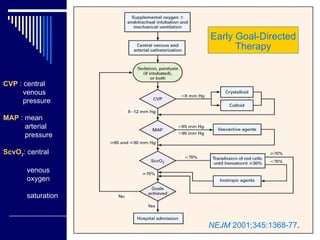
Sepsis resuscitation bundle Serum lactate measured Blood cultures obtained before antibiotics administered Improve time to broad-spectrum antibiotics In the event of hypotension or lactate > 4 mmol/L (36 mg/dL) a. Deliver an initial minimum of 20 mL/kg of crystaloid  (or colloid equivalent) b. apply vasopressors for ongoing hypotension In the event of persistent hypotension despite fluid resuscitation or lactate > 4 mmol/L (36 mg/dL) a. achieve central venous pressure of  >  8 mmHg b. achieve central venous oxygen saturation of  >  70% Hurtado FJ. et al. Crit Care Clin;2006;   22:521-9.
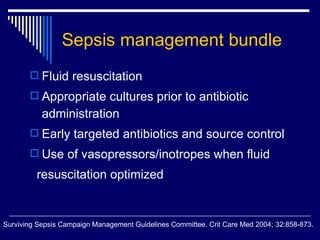
Sepsis management bundle Fluid resuscitation Appropriate cultures prior to antibiotic administration Early targeted antibiotics and source control Use of vasopressors/inotropes when fluid  resuscitation optimized  Surviving Sepsis Campaign Management Guidelines Committee. Crit Care Med 2004;   32:858-873.
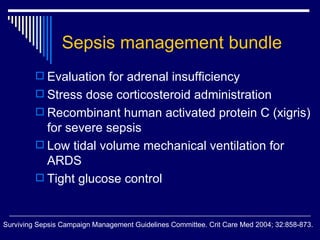
Sepsis management bundle Evaluation for adrenal insufficiency Stress dose corticosteroid administration Recombinant human activated protein C (xigris) for severe sepsis Low tidal volume mechanical ventilation for ARDS Tight glucose control Surviving Sepsis Campaign Management Guidelines Committee. Crit Care Med 2004; 32:858-873.
Infection Control Appropriate cultures prior to antibiotic  administration Early targeted antibiotics and source control Surviving Sepsis Campaign Management Guidelines Committee. Crit Care Med 2004; 32:858-873.
Early Goal-Directed Therapy CVP  : central  venous  pressure MAP  : mean  arterial  pressure ScvO 2 : central  venous  oxygen  saturation NEJM  2001;345:1368-77 .
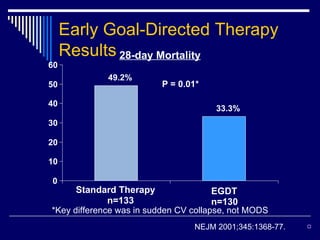
Early Goal-Directed Therapy Results 49.2% 33.3% 0 10 20 30 40 50 60 Standard Therapy n=133 EGDT n=130 P = 0.01* *Key difference was in sudden CV collapse, not MODS 28-day Mortality NEJM 2001;345:1368-77.
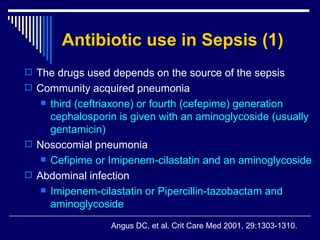
Antibiotic use in Sepsis (1) The drugs used depends on the source of the sepsis   Community acquired pneumonia   third  ( ceftriaxone )  or fourth  ( cefepime )  generation cephalosporin is given with an aminoglycoside  ( usually gentamicin )  Nosocomial pneumonia   Cefipime or Imipenem-cilastatin and an aminoglycoside  Abdominal infection   Imipenem - cilastatin or Pipercillin - tazobactam and aminoglycoside   Angus DC, et al .  Crit Care Med 2001, 29:1303-1310.
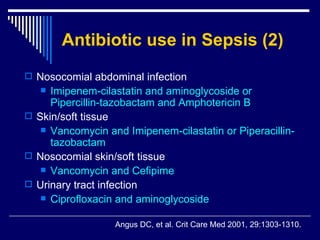
Antibiotic use in Sepsis (2) Nosocomial abdominal infection  Imipenem-cilastatin and aminoglycoside or Pipercillin-tazobactam and Amphotericin B Skin / soft tissue   Vancomycin and Imipenem - cilastatin or Piperacillin - tazobactam  Nosocomial skin/soft tissue  Vancomycin and Cefipime  Urinary tract infection   Ciprofloxacin and aminoglycoside  Angus DC, et al .  Crit Care Med 2001, 29:1303-1310.
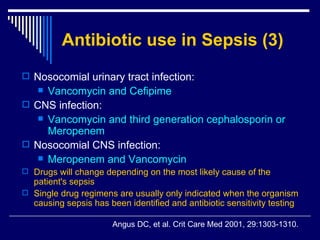
Antibiotic use in Sepsis (3) Nosocomial urinary tract infection:  Vancomycin and Cefipime  CNS infection :  Vancomycin and third generation cephalosporin or Meropenem  Nosocomial CNS infection:  Meropenem and Vancomycin  Drugs will change depending on the most likely cause of the patient's sepsis  Single drug regimens are usually only indicated when the organism causing sepsis has been identified and antibiotic sensitivity testing Angus DC, et al .  Crit Care Med 2001, 29:1303-1310.
New Drug in Treating Severe Sepsis   It is the first agent  approved by the FDA  effective in the treatment of  severe sepsis  proven to reduce mortality .  Activated Protein C  ( Xigris )   mediates many actions of body homeostasis .  It is a potent agent for the : suppression of  inflammation     prevention of microvascular coagulation   reversal of impaired fibrinolysis   Angus DC, et al .  Crit Care Med 2001, 29:1303-1310.
Multiple Organ Dysfunction Syndrome   (MODS)
Definition Dysfunction or failure of multiple organ or system happened simultaneously or sequentially due to various etiological factors.
Etiology Infection:  Gram positive/negative bacteria, fungal, Virus   Shock : hemorrhage, etc . Allergy  Burns  Trauma  Severe acute pancreatitis
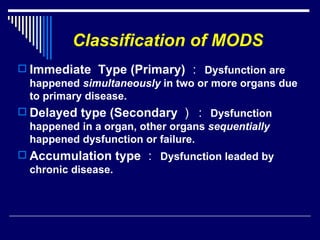
Classification of MODS Immediate  Type (Primary) : Dysfunction are happened  simultaneously  in two or more organs due to primary disease.  Delayed type (Secondary ): Dysfunction happened in a organ, other organs  sequentially  happened dysfunction or failure. Accumulation type : Dysfunction leaded by chronic disease.
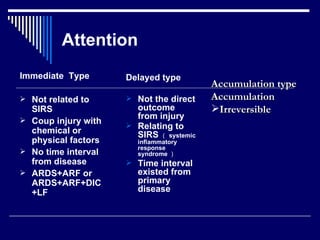
Attention Immediate  Type Not related to SIRS Coup injury with chemical or physical factors No time interval from disease ARDS+ARF or ARDS+ARF+DIC+LF Delayed type Not the direct outcome from injury Relating to SIRS ( systemic inflammatory response syndrome ) Time interval existed from primary disease Accumulation type Accumulation Irreversible
Mechanism
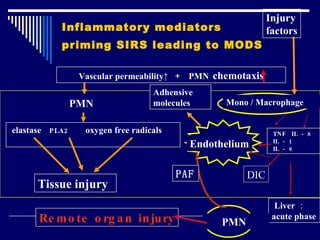
Inflammatory mediators priming SIRS leading to MODS   Vascular permeability ↑ +  PMN   chemotaxis Mono / Macrophage PMN elastase   PLA2  oxygen free radicals TNF  IL - 8  IL - 1 IL - 6 Liver :  acute phase  Remote organ injury Tissue injury   Endothelium Injury factors PMN PAF Adhensive molecules DIC
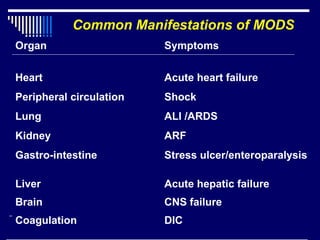
Common Manifestations of MODS DIC Coagulation  CNS failure  Brain  Acute hepatic failure Liver  Stress ulcer/enteroparalysis Gastro-intestine ARF Kidney  ALI /ARDS Lung Shock Peripheral circulation Acute heart failure Heart Symptoms Organ
Diagnosis of Criteria
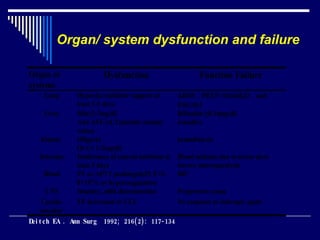
Organ/ system dysfunction and failure
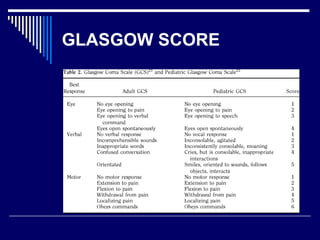
GLASGOW SCORE
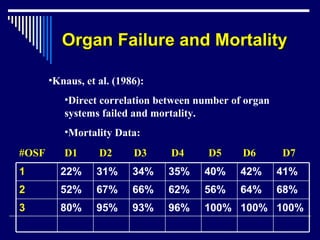
Organ Failure and Mortality Knaus, et al. (1986): Direct correlation between number of organ systems failed and mortality. Mortality Data: #OSF D1    D2   D3   D4   D5  D6  D7 100% 100% 100% 96% 93% 95% 80% 3 68% 64% 56% 62% 66% 67% 52% 2 41% 42% 40% 35% 34% 31% 22% 1
Treatments of MODS
Combined therapy Correction of ischemia:  fluid resuscitation, mechanical  ventilation  Prevention of infection : drainage, antibiotics   Interruption of pathological reaction : hemofiltration Stabilization of internal enviroment : water, electrolyte, acid-base imbalance   Regulation of immunity : cellular and humor
Support  of organ function Ventilator  Artificial kidney Artificial liver Protection of enteral mucosa Drugs of protection of heart

Sirs Mods

  • 1.
    Systemic Inflammatory Response Syndrome (SIRS) Lu Ning, MD Assistant Professor of Surgery
  • 2.
    SEPSIS and It’sDisease spectrum Various stages of disease Bacteremia SIRS Sepsis syndrome Sepsis shock : early and refractory
  • 3.
    Definition Infection Presence of microorganisms in a normally sterile site. Bacteremia Cultivatable bacteria in the blood stream. Sepsis The systemic response to infection. If associated with proven or clinically suspected infection, SIRS is called “sepsis”. American College of Chest Physicians/Society of Critical Care Medicine Consensus Conference Committee. Crit Care Med. 1992;20:864-874.
  • 4.
    SIRS (SystemicInflammatory Response Syndrome) The systemic response to a wide range of stresses. Temperature >38 °C (100.4°) or <36°C (96.8°F). Heart rate >90 beats/min. Respiratory rate >20 breaths/min or PaCO 2 <32 mmHg. White blood cells > 12,000 cells/ml or < 4,000 cells/ml or >10% immature (band) forms. Note Two or more of the following must be present. These changes should be represent acute alterations from baseline in the absence of other known cause for the abnormalities. American College of Chest Physicians/Society of Critical Care Medicine Consensus Conference Committee. Crit Care Med. 1992;20:864-874.
  • 5.
    Severe SIRS Mustmeet criteria for SIRS, plus 1 of the following: Altered mental status SBP<90mmHg or fall of >40mmHg from baseline Impaired gas exchange (P a O 2 /F i O 2 ratio<200-250) Metabolic acidosis (pH<7.30 & lactate > 1.5 x upper limit of normal) Oliguria (<0.5mL/kg/hr) or renal failure Hyperbilirubinemia Coagulopathy (platelets < 80,000-100,000/mm 3 , INR >2.0, PTT >1.5 x control, or elevated fibrin degredation products)
  • 6.
    Severe Sepsis Sepsiswith organ hypoperfusion one of the followings : SBP < 90 mmHg Acute mental status change PaO 2 < 60 mmHg on RA (PaO 2 /FiO2 < 250) Increased lactic acid/acidosis Oliguria DIC or Platelet < 80,000 /mm 3 Liver enzymes > 2 x normal American College of Chest Physicians/Society of Critical Care Medicine Consensus Conference Committee. Crit Care Med. 1992;20:864-874.
  • 7.
    MODS (Multiple OrganDysfunction Syndrome) Sepsis with multiorgan hypoperfusion Two or more of the followings: SBP < 90 mmHg Acute mental status change PaO 2 < 60 mmHg on RA (PaO 2 /FiO 2 < 250) Increased lactic acid/acidosis Oliguria DIC or Platelet < 80,000 /mm 3 Liver enzymes > 2 x normal American College of Chest Physicians/Society of Critical Care Medicine Consensus Conference Committee. Crit Care Med. 1992;20:864-874.
  • 8.
    Relationship Between Sepsisand SIRS TRAUMA BURNS PANCREATITIS SEPSIS SIRS INFECTION SEPSIS BACTEREMIA
  • 9.
    SIRS Continuum Source: Bone et al. Chest 1992;101:1644 SIRS OTHER INFECTION PANCREATITIS BURNS TRAUMA SEPSIS SEVERE SEPSIS SEPTIC SHOCK
  • 10.
    The Sepsis ContinuumA clinical response arising from a nonspecific insult, with  2 of the following: T >38 o C or <36 o C HR >90 beats/min RR >20/min WBC >12,000/mm 3 or <4,000/mm 3 or >10% bands SIRS = systemic inflammatory response syndrome SIRS with a presumed or confirmed infectious process Chest 1992;101:1644. Sepsis with organ failure Refractory hypotension Sepsis SIRS Severe Sepsis Septic Shock
  • 11.
    Levels of ClinicalInfection Level I Locally Controlled. Level II Locally Controlled, Leukocytosis. Level III Systemic Hyperdynamic Response. Level IV Oxygen metabolism becomes uncoupled. Level V Shock, Organ Failure.
  • 12.
    Stages In theDevelopment of SIRS (Bone, 1996) Stage 1. In response to injury / infection, the local environment produces cytokines. Stage 2. Small amounts of cytokines are released into the circulation: Recruitment of inflammatory cells. Acute Phase Response. Normally kept in check by endogenous anti-inflammatory mediators (IL-10, PGE2, Antibodies, Cytokine receptor antagonists).
  • 13.
    Stages In theDevelopment of SIRS Stage 3. Failure to control inflammatory cascade: Loss of capillary integrity. Stimulation of Nitric Oxide Production. Maldistribution of microvascular blood flow. Organ injury and dysfunction.
  • 14.
    Mortality rate inSIRS Rangel - Frausto, et al. JAMA 273:117-123, 1995.
  • 15.
    Mortality Increases inSeptic Shock Patients Mortality Incidence Source: Balk, R.A. Crit Care Clin 2000;337:52 Approximately 200,000 patients including 70,000 Medicare patients have septic shock annually Septic Shock 53-63% 20-53% Severe Sepsis 300,000 7-17% Sepsis 400,000
  • 16.
    The Response toPathogens “Cross-Talk” NEJM 2003;348:138-150.
  • 17.
    Inflammatory Response toSepsis NEJM 2006;355:1699-1713.
  • 18.
    Procoagulant Response inSepsis NEJM 2006;355:1699-1713.
  • 19.
    Pathogenesis of sepsisand septic shock Angus DC, et al . Crit Care Med 2001, 29:1303-1310.
  • 20.
    Pathogenesis of SevereSepsis Infection Microbial Products (exotoxin/endotoxin) Cellular Responses Oxidases Platelet Activation Kinins Complement Coagulopathy/DIC Vascular/Organ System Injury Multi-Organ Failure Death Endothelial damage Endothelial damage Coagulation Activation Cytokines TNF, IL-1, IL-6
  • 21.
    Normal Systemic Responseto Infection and Injury (1) Leukocytosis Mobilizes neutrophils into the circulation Tachycardia Increases cardiac output, blood flow to injuried tissue Fever Raises core temperature; peripheral vasoconstriction shunts blood flow to injuried tissue. Occurs much more often when infection is the trigger for systemic responses Mandell et al. Principals and Practice of Infectious Diseases6th ed;906:906-926.
  • 22.
    Normal Systemic Responseto Infection and Injury (2) Acute-Phase Responses Anti-infective Increases synthesis of complement factors, microbe pattern-recognition molecules(mannose-binding lectin, LBP, CRP, CD14, Others) Sequesters iron (lactoferrin) and zinc (metallothionein) Mandell et al. Principals and Practice of Infectious Diseases6th ed;906:906-926.
  • 23.
    Normal Systemic Responseto Infection and Injury (3) Anti-inflammatory Releases anti-inflammatory neuroendocrine hormones (cortisol, ACTH, epinephrine, α -MSH) Increases synthesis of proteins that help prevent inflammation within the systemic compartment Cytokine antagonists (IL-1Ra, sTNF-Rs) Anti-inflammatory mediators (e.g.,IL-4, IL-6, IL-6R, IL-10, IL-13, TGF- β ) Protease inhibitors (e.g., α 1-antiprotease) Antioxidants (haptoglobin) Reprograms circulating leukocytes (epinephrine, cortisol, PGE 2 , ?other) Mandell et al. Principals and Practice of Infectious Diseases6th ed;906:906-926.
  • 24.
    Normal Systemic Responseto Infection and Injury (4) Procoagulant Walls off infection, prevents systemic spread Increases synthesis or release of fibrinogen, PAI-1, C4b Decreases synthesis of protein C, anti-thrombin III Metabolic Preserves euglycemia, mobilizes fatty acids, amino acids Epinephrine, cortisol, glucagon, cytokines Thermoregulatory Inhibits microbial growth Fever Mandell et al. Principals and Practice of Infectious Diseases6th ed;906:906-926.
  • 25.
    Risk factors ofsepsis aggressive oncological chemotherapy and radiation therapy use of corticosteroid and immunosuppressive therapies for organ transplants and inflammatory diseases longer lives of patients predisposed to sepsis, the elderly, diabetics, cancer patients, patients with major organ failure, and with granulocyopenia. Neonates are more likely to develop sepsis ( ex . group B Streptococcal infections ). increased use of invasive devices such as surgical protheses, inhalation equipment, and intravenous and urinary catheters. indiscriminate use of antimicrobial drugs that create conditions of overgrowth, colonization, and subsequent infection by aggressive, antimicrobial - resistant organisms . Angus DC, et al . Crit Care Med 2001, 29:1303-1310.
  • 26.
    Patients at increasedrisks of developing sepsis Underlying diseases : neutropenia, solid tumors, leukemia, dysproteinemias, cirrhosis of the liver, diabetes, AIDS, serious chronic conditions. Surgery or instrumentation : catheters . Prior drug therapy : Immuno-suppressive drugs, especially with broad-spectrum antibiotics. Age : males, above 40 y; females, 20-45 y . Miscellaneous conditions : childbirth, septic abortion, trauma and widespread burns, intestinal ulceration. Angus DC, et al . Crit Care Med 2001, 29:1303-1310.
  • 27.
    Source ( usually an endogenous source of infection ) intestinal tract oropharynx instrumentation sites contaminated inhalation therapy equipment IV fluids. Most frequent sites of infection : Lungs, abdomen, and urinary tract. Other sources include the skin/soft tissue and the CNS. Angus DC, et al . Crit Care Med 2001, 29:1303-1310.
  • 28.
    Diagnosis History community or nosocomially acquired infection immunocompromised patient exposure to animals, travel, tick bites, occupational hazards, alcohol use, seizures, loss of consciousness, medications underlying diseases ; specific infectious agents Some clues to a septic event include Fever or unexplained signs with malignancy or instrumentation Hypotension Oliguria or anuria Tachypnea or hyperpnea Hypothermia without obvious cause Bleeding Angus DC, et al . Crit Care Med 2001, 29:1303-1310.
  • 29.
    Specific Infectious agentsSplenectomy (traumatic or functional) S pneumoniae, H influenzae, N meningitidis Neutropenia (<500 neutrophil/ml) Gram-negative, including P aeruginosa , gram-positives, including S aureus Fungi, especially Candida species Hypogammaglobulinemia (e.g.,CLL) S pneumoniae, E coli Burns MRSA, P aeruginosa , resistant gram-negatives MacArthur RD, et al. Mosby, 2001:3-10. Wheeler AP, et al. NEJM 1999;340:207-214. Chaowagul W, et al. J Infect Dis 1989;159:890-899.
  • 30.
    Specific Infectious agentsAids P aeuginosa (if neutropenic), S aureus , PCP pneumonia Intravascular devices S aureus , S epidermidis Nosocomial infections MRSA, Enterococcus species, resistant gram-negative, Candida species Septic patients in NE of Thailand Burkholderia pseudomallei MacArthur RD, et al. Mosby, 2001:3-10. Wheeler AP, et al. NEJM 1999;340:207-214. Chaowagul W, et al. J Infect Dis 1989;159:890-899.
  • 31.
    Diagnosis Physical Examinationessential In all neutropenic patients and in patients with as suspected pelvic infection the physical exam should include rectal, pelvic, and genital examinations perirectal, and/or perineal abscesses pelvic inflammatory disease and/or abscesses, or prostatitis Angus DC, et al . Crit Care Med 2001, 29:1303-1310.
  • 32.
    Signs and SymptomsNonspecific symptoms of sepsis : not pathognomonic fever chills constitutional symptoms of fatigue, malaise anxiety or confusion absent symptoms in serious infections, especially in elderly individuals Angus DC, et al . Crit Care Med 2001, 29:1303-1310.
  • 33.
    Complications Adult respiratory distress syndrome ( ARDS ) Disseminated Intravascular Coagulation ( DIC ) Acute Renal failure ( ARF ) Intestinal bleeding Liver failure Central Nervous System dysfunction Heart failure Death Angus DC, et al . Crit Care Med 2001, 29:1303-1310.
  • 34.
    Surviving Sepsis CampaignGuidelines for Management of Severe Sepsis and Septic Shock Dellinger RP, et al. Crit Care Med 2004; 32:858-873.
  • 35.
    Before the initiationof antimicrobial therapy, at least two blood cultures should be obtained At least one drawn percutaneously At least one drawn through each vascular access device if inserted longer than 48 hours Other cultures such as urine, cerebrospinal fluid, wounds, respiratory secretions or other body fluids should be obtained as the clinical situation dictates Other diagnostic studies such as imaging and sampling should be performed promptly to determine the source and causative organism of the infection may be limited by patient stability Weinstein MP. Rev Infect Dis 1983;5:35-53 Blot F. J Clin Microbiol 1999; 36: 105-109. Diagnosis Dellinger, et. al. Crit Care Med 2004, 32: 858-873.
  • 36.
    Sepsis resuscitation bundleSerum lactate measured Blood cultures obtained before antibiotics administered Improve time to broad-spectrum antibiotics In the event of hypotension or lactate > 4 mmol/L (36 mg/dL) a. Deliver an initial minimum of 20 mL/kg of crystaloid (or colloid equivalent) b. apply vasopressors for ongoing hypotension In the event of persistent hypotension despite fluid resuscitation or lactate > 4 mmol/L (36 mg/dL) a. achieve central venous pressure of > 8 mmHg b. achieve central venous oxygen saturation of > 70% Hurtado FJ. et al. Crit Care Clin;2006; 22:521-9.
  • 37.
    Sepsis management bundleFluid resuscitation Appropriate cultures prior to antibiotic administration Early targeted antibiotics and source control Use of vasopressors/inotropes when fluid resuscitation optimized Surviving Sepsis Campaign Management Guidelines Committee. Crit Care Med 2004; 32:858-873.
  • 38.
    Sepsis management bundleEvaluation for adrenal insufficiency Stress dose corticosteroid administration Recombinant human activated protein C (xigris) for severe sepsis Low tidal volume mechanical ventilation for ARDS Tight glucose control Surviving Sepsis Campaign Management Guidelines Committee. Crit Care Med 2004; 32:858-873.
  • 39.
    Infection Control Appropriatecultures prior to antibiotic administration Early targeted antibiotics and source control Surviving Sepsis Campaign Management Guidelines Committee. Crit Care Med 2004; 32:858-873.
  • 40.
    Early Goal-Directed TherapyCVP : central venous pressure MAP : mean arterial pressure ScvO 2 : central venous oxygen saturation NEJM 2001;345:1368-77 .
  • 41.
    Early Goal-Directed TherapyResults 49.2% 33.3% 0 10 20 30 40 50 60 Standard Therapy n=133 EGDT n=130 P = 0.01* *Key difference was in sudden CV collapse, not MODS 28-day Mortality NEJM 2001;345:1368-77.
  • 42.
    Antibiotic use inSepsis (1) The drugs used depends on the source of the sepsis Community acquired pneumonia third ( ceftriaxone ) or fourth ( cefepime ) generation cephalosporin is given with an aminoglycoside ( usually gentamicin ) Nosocomial pneumonia Cefipime or Imipenem-cilastatin and an aminoglycoside Abdominal infection Imipenem - cilastatin or Pipercillin - tazobactam and aminoglycoside Angus DC, et al . Crit Care Med 2001, 29:1303-1310.
  • 43.
    Antibiotic use inSepsis (2) Nosocomial abdominal infection Imipenem-cilastatin and aminoglycoside or Pipercillin-tazobactam and Amphotericin B Skin / soft tissue Vancomycin and Imipenem - cilastatin or Piperacillin - tazobactam Nosocomial skin/soft tissue Vancomycin and Cefipime Urinary tract infection Ciprofloxacin and aminoglycoside Angus DC, et al . Crit Care Med 2001, 29:1303-1310.
  • 44.
    Antibiotic use inSepsis (3) Nosocomial urinary tract infection: Vancomycin and Cefipime CNS infection : Vancomycin and third generation cephalosporin or Meropenem Nosocomial CNS infection: Meropenem and Vancomycin Drugs will change depending on the most likely cause of the patient's sepsis Single drug regimens are usually only indicated when the organism causing sepsis has been identified and antibiotic sensitivity testing Angus DC, et al . Crit Care Med 2001, 29:1303-1310.
  • 45.
    New Drug inTreating Severe Sepsis It is the first agent approved by the FDA effective in the treatment of severe sepsis proven to reduce mortality . Activated Protein C ( Xigris ) mediates many actions of body homeostasis . It is a potent agent for the : suppression of inflammation prevention of microvascular coagulation reversal of impaired fibrinolysis Angus DC, et al . Crit Care Med 2001, 29:1303-1310.
  • 46.
  • 47.
    Definition Dysfunction orfailure of multiple organ or system happened simultaneously or sequentially due to various etiological factors.
  • 48.
    Etiology Infection: Gram positive/negative bacteria, fungal, Virus Shock : hemorrhage, etc . Allergy Burns Trauma Severe acute pancreatitis
  • 49.
    Classification of MODSImmediate Type (Primary) : Dysfunction are happened simultaneously in two or more organs due to primary disease. Delayed type (Secondary ): Dysfunction happened in a organ, other organs sequentially happened dysfunction or failure. Accumulation type : Dysfunction leaded by chronic disease.
  • 50.
    Attention Immediate Type Not related to SIRS Coup injury with chemical or physical factors No time interval from disease ARDS+ARF or ARDS+ARF+DIC+LF Delayed type Not the direct outcome from injury Relating to SIRS ( systemic inflammatory response syndrome ) Time interval existed from primary disease Accumulation type Accumulation Irreversible
  • 51.
  • 52.
    Inflammatory mediators primingSIRS leading to MODS Vascular permeability ↑ + PMN chemotaxis Mono / Macrophage PMN elastase PLA2 oxygen free radicals TNF IL - 8 IL - 1 IL - 6 Liver : acute phase Remote organ injury Tissue injury Endothelium Injury factors PMN PAF Adhensive molecules DIC
  • 53.
    Common Manifestations ofMODS DIC Coagulation CNS failure Brain Acute hepatic failure Liver Stress ulcer/enteroparalysis Gastro-intestine ARF Kidney ALI /ARDS Lung Shock Peripheral circulation Acute heart failure Heart Symptoms Organ
  • 54.
  • 55.
  • 56.
  • 57.
    Organ Failure andMortality Knaus, et al. (1986): Direct correlation between number of organ systems failed and mortality. Mortality Data: #OSF D1 D2 D3 D4 D5 D6 D7 100% 100% 100% 96% 93% 95% 80% 3 68% 64% 56% 62% 66% 67% 52% 2 41% 42% 40% 35% 34% 31% 22% 1
  • 58.
  • 59.
    Combined therapy Correctionof ischemia: fluid resuscitation, mechanical ventilation Prevention of infection : drainage, antibiotics Interruption of pathological reaction : hemofiltration Stabilization of internal enviroment : water, electrolyte, acid-base imbalance Regulation of immunity : cellular and humor
  • 60.
    Support oforgan function Ventilator Artificial kidney Artificial liver Protection of enteral mucosa Drugs of protection of heart