
Muscular System
Types of muscle and types of contraction
Lloyd Dean
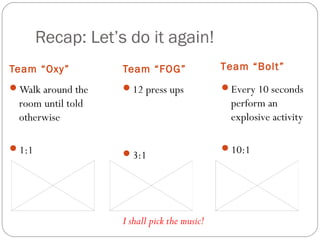
Recap: Let’s do it again!
Team “Oxy”

Team “FOG”

Team “Bolt”

Walk around the

12 press ups

Every 10 seconds

perform an
explosive activity

room until told
otherwise
1:1

3:1

I shall pick the music!

10:1
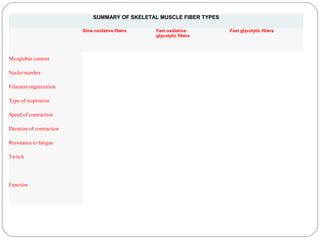
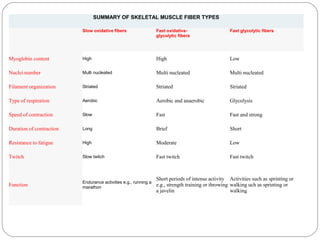
SUMMARY OF SKELETAL MUSCLE FIBER TYPES
Slow oxidative fibers

Myoglobin content
Nuclei number
Filament organization
Type of respiration
Speed of contraction
Duration of contraction
Resistance to fatigue
Twitch

Function

Fast oxidativeglycolytic fibers

Fast glycolytic fibers
SUMMARY OF SKELETAL MUSCLE FIBER TYPES
Slow oxidative fibers

Fast oxidativeglycolytic fibers

Fast glycolytic fibers

Myoglobin content

High

High

Low

Nuclei number

Multi nucleated

Multi nucleated

Multi nucleated

Filament organization

Striated

Striated

Striated

Type of respiration

Aerobic

Aerobic and anaerobic

Glycolysis

Speed of contraction

Slow

Fast

Fast and strong

Duration of contraction

Long

Brief

Short

Resistance to fatigue

High

Moderate

Low

Twitch

Slow twitch

Fast twitch

Fast twitch

Function

Endurance activities e.g., running a
marathon

Short periods of intense activity Activities such as sprinting or
e.g., strength training or throwing walking uch as sprinting or
a javelin
walking
Aims
By the end of the session you should be able to:
Describe the types of muscular contraction
State the terms; agonist, antagonist, fixator, synergist
Apply the first two aims to a table of various exercises
How do muscles contract?
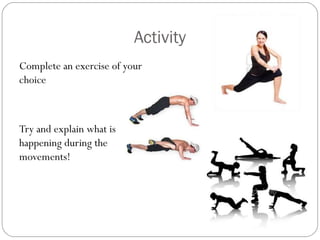
Activity
Complete an exercise of your
choice

Try and explain what is
happening during the
movements!
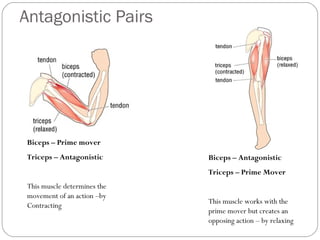
Antagonistic Pairs

Biceps – Prime mover
Triceps – Antagonistic

Biceps – Antagonistic
Triceps – Prime Mover

This muscle determines the
movement of an action –by
Contracting

This muscle works with the
prime mover but creates an
opposing action – by relaxing
Agonist, Antagonists and.......
Synergists

Fixators

Help to steady the

movement
In biceps curl the brachialis

helps the action

Assist in stabilising the

origin of the agonist to
ensure movement occurs
In biceps curl the fixators

would
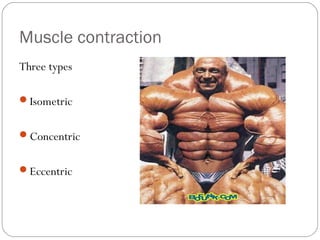
Muscle contraction
Three types
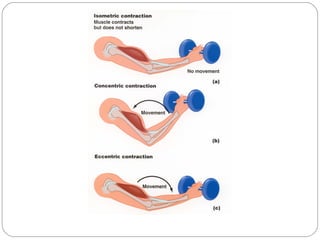
Isometric
Concentric
Eccentric
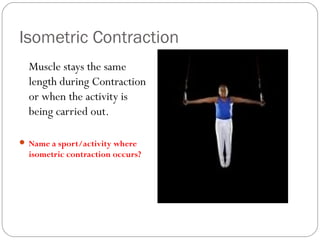
Isometric Contraction
Muscle stays the same
length during Contraction
or when the activity is
being carried out.
 Name a sport/activity where

isometric contraction occurs?
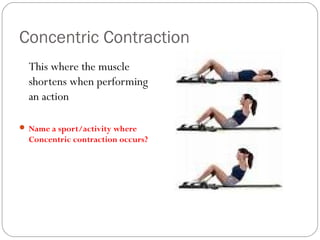
Concentric Contraction
This where the muscle
shortens when performing
an action
 Name a sport/activity where

Concentric contraction occurs?
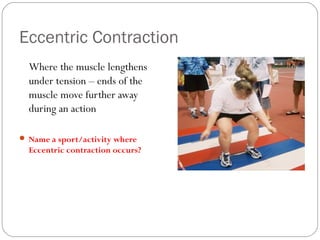
Eccentric Contraction
Where the muscle lengthens
under tension – ends of the
muscle move further away
during an action
 Name a sport/activity where

Eccentric contraction occurs?
Isokinetic Contraction
Similar to isotonic in that the muscle changes length during the

contraction
Isokinetic contractions produce movements of a constant speed

(Specialist equipment needed to measure this)
Examples of using isokinetic contractions in day-to-day and

sporting activities are rare. The best is breast stroke in swimming,
where the water provides a constant, even resistance to the
movement of adduction.
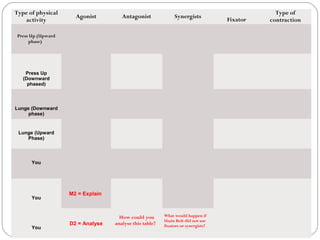
Time to practice…….
Type of physical
activity

Agonist

Antagonist

Synergists


Type of
contraction

Fixator
 

Press Up (Upward
phase) 


Press Up
(Downward
phased)
 
Lunge (Downward
phase)
 
Lunge (Upward
Phase)
 
You

 
You
 
You


M2 = Explain
 
D2 = Analyse

How could you
analyse this table? 

What would happen if
Usain Bolt did not use
fixators or synergists? 
How do muscles contract?
Articulate!
Articulate!

Articulate!
Articulate!

Muscular contraction and muscle types

  • 1.
    Muscular System Types ofmuscle and types of contraction Lloyd Dean
  • 2.
    Recap: Let’s doit again! Team “Oxy” Team “FOG” Team “Bolt” Walk around the 12 press ups Every 10 seconds perform an explosive activity room until told otherwise 1:1 3:1 I shall pick the music! 10:1
  • 3.
    SUMMARY OF SKELETALMUSCLE FIBER TYPES Slow oxidative fibers Myoglobin content Nuclei number Filament organization Type of respiration Speed of contraction Duration of contraction Resistance to fatigue Twitch Function Fast oxidativeglycolytic fibers Fast glycolytic fibers
  • 4.
    SUMMARY OF SKELETALMUSCLE FIBER TYPES Slow oxidative fibers Fast oxidativeglycolytic fibers Fast glycolytic fibers Myoglobin content High High Low Nuclei number Multi nucleated Multi nucleated Multi nucleated Filament organization Striated Striated Striated Type of respiration Aerobic Aerobic and anaerobic Glycolysis Speed of contraction Slow Fast Fast and strong Duration of contraction Long Brief Short Resistance to fatigue High Moderate Low Twitch Slow twitch Fast twitch Fast twitch Function Endurance activities e.g., running a marathon Short periods of intense activity Activities such as sprinting or e.g., strength training or throwing walking uch as sprinting or a javelin walking
  • 5.
    Aims By the endof the session you should be able to: Describe the types of muscular contraction State the terms; agonist, antagonist, fixator, synergist Apply the first two aims to a table of various exercises
  • 6.
    How do musclescontract?
  • 7.
    Activity Complete an exerciseof your choice Try and explain what is happening during the movements!
  • 8.
    Antagonistic Pairs Biceps –Prime mover Triceps – Antagonistic Biceps – Antagonistic Triceps – Prime Mover This muscle determines the movement of an action –by Contracting This muscle works with the prime mover but creates an opposing action – by relaxing
  • 9.
    Agonist, Antagonists and....... Synergists Fixators Helpto steady the movement In biceps curl the brachialis helps the action Assist in stabilising the origin of the agonist to ensure movement occurs In biceps curl the fixators would
  • 11.
  • 12.
    Isometric Contraction Muscle staysthe same length during Contraction or when the activity is being carried out.  Name a sport/activity where isometric contraction occurs?
  • 13.
    Concentric Contraction This wherethe muscle shortens when performing an action  Name a sport/activity where Concentric contraction occurs?
  • 14.
    Eccentric Contraction Where themuscle lengthens under tension – ends of the muscle move further away during an action  Name a sport/activity where Eccentric contraction occurs?
  • 16.
    Isokinetic Contraction Similar toisotonic in that the muscle changes length during the contraction Isokinetic contractions produce movements of a constant speed (Specialist equipment needed to measure this) Examples of using isokinetic contractions in day-to-day and sporting activities are rare. The best is breast stroke in swimming, where the water provides a constant, even resistance to the movement of adduction.
  • 17.
  • 18.
    Type of physical activity Agonist Antagonist Synergists   Typeof contraction Fixator   Press Up (Upward phase)                                                              Press Up (Downward phased)   Lunge (Downward phase)   Lunge (Upward Phase)   You   You   You     M2 = Explain   D2 = Analyse How could you analyse this table?  What would happen if Usain Bolt did not use fixators or synergists? 
  • 19.
    How do musclescontract?
  • 20.