mr. s. sakala
MUSCLE CONTRACTIONS
• Through the process of muscle contraction,
tension is developed within muscle tissue, which
may or may not lead to movement of a part of the
body.
• The term contraction often means to shorten;
however, during a muscle contraction the tension
may cause muscle to stay the same, get longer or
become shorter.
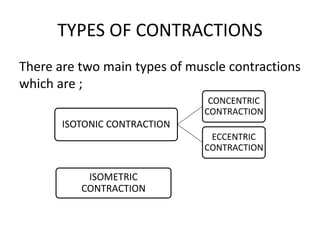
TYPES OF CONTRACTIONS
There are two main types of muscle contractions
which are ;
ISOTONIC CONTRACTION
CONCENTRIC
CONTRACTION
ECCENTRIC
CONTRACTION
ISOMETRIC
CONTRACTION
• Isotonic means same tension.
• Tension developed is constant and muscle
changes its length.
• Isotonic contraction is noted in movement of
limbs.
– E.g a man attempting to lift 25kg requires the use
of biceps.
– Before the muscle can shorten and move the 25kg
load, it must first develop slightly more than 25kg
of tension or it must overcome the 25kg weight
• In the isotonic system the muscle shortens
against the fixed load.
TWO TYPES OF ISOTONIC CONTRACTIONS
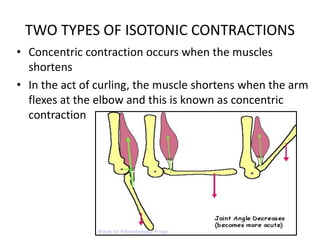
• Concentric contraction occurs when the muscles
shortens
• In the act of curling, the muscle shortens when the arm
flexes at the elbow and this is known as concentric
contraction
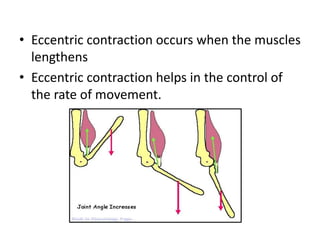
• Eccentric contraction occurs when the muscles
lengthens
• Eccentric contraction helps in the control of
the rate of movement.
ISOMETRIC CONTRACTION
• Isometric means ‘same length’ and in this case
it refers to the same length of muscles
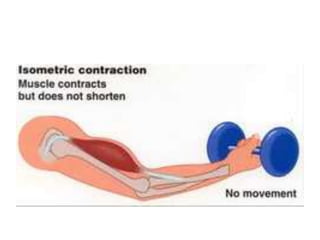
• During isometric contractions, the contraction
does not create any movement. Although the
muscle may increase in size(bulge)
• This is what happens when we attempt to lift
more than we can.
CONCLUSION
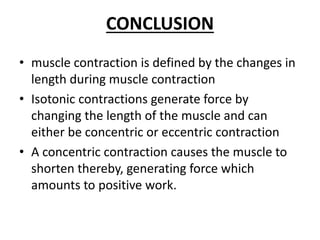
• muscle contraction is defined by the changes in
length during muscle contraction
• Isotonic contractions generate force by
changing the length of the muscle and can
either be concentric or eccentric contraction
• A concentric contraction causes the muscle to
shorten thereby, generating force which
amounts to positive work.
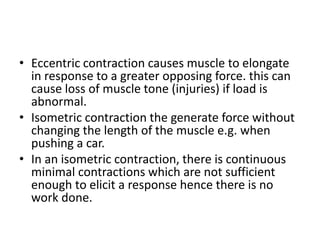
• Eccentric contraction causes muscle to elongate
in response to a greater opposing force. this can
cause loss of muscle tone (injuries) if load is
abnormal.
• Isometric contraction the generate force without
changing the length of the muscle e.g. when
pushing a car.
• In an isometric contraction, there is continuous
minimal contractions which are not sufficient
enough to elicit a response hence there is no
work done.

isotonic and isometric

  • 1.
  • 2.
    MUSCLE CONTRACTIONS • Throughthe process of muscle contraction, tension is developed within muscle tissue, which may or may not lead to movement of a part of the body. • The term contraction often means to shorten; however, during a muscle contraction the tension may cause muscle to stay the same, get longer or become shorter.
  • 3.
    TYPES OF CONTRACTIONS Thereare two main types of muscle contractions which are ; ISOTONIC CONTRACTION CONCENTRIC CONTRACTION ECCENTRIC CONTRACTION ISOMETRIC CONTRACTION
  • 4.
    • Isotonic meanssame tension. • Tension developed is constant and muscle changes its length. • Isotonic contraction is noted in movement of limbs. – E.g a man attempting to lift 25kg requires the use of biceps. – Before the muscle can shorten and move the 25kg load, it must first develop slightly more than 25kg of tension or it must overcome the 25kg weight
  • 5.
    • In theisotonic system the muscle shortens against the fixed load.
  • 6.
    TWO TYPES OFISOTONIC CONTRACTIONS • Concentric contraction occurs when the muscles shortens • In the act of curling, the muscle shortens when the arm flexes at the elbow and this is known as concentric contraction
  • 7.
    • Eccentric contractionoccurs when the muscles lengthens • Eccentric contraction helps in the control of the rate of movement.
  • 8.
    ISOMETRIC CONTRACTION • Isometricmeans ‘same length’ and in this case it refers to the same length of muscles • During isometric contractions, the contraction does not create any movement. Although the muscle may increase in size(bulge) • This is what happens when we attempt to lift more than we can.
  • 10.
    CONCLUSION • muscle contractionis defined by the changes in length during muscle contraction • Isotonic contractions generate force by changing the length of the muscle and can either be concentric or eccentric contraction • A concentric contraction causes the muscle to shorten thereby, generating force which amounts to positive work.
  • 11.
    • Eccentric contractioncauses muscle to elongate in response to a greater opposing force. this can cause loss of muscle tone (injuries) if load is abnormal. • Isometric contraction the generate force without changing the length of the muscle e.g. when pushing a car. • In an isometric contraction, there is continuous minimal contractions which are not sufficient enough to elicit a response hence there is no work done.