Types of Muscle
Contraction
Kinesiology
Two types of Contractions
 Isotonic Contraction
 Isometric Contractions
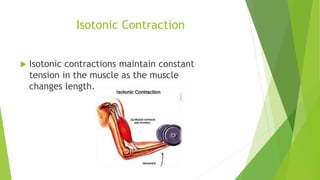
Isotonic Contraction
 Isotonic contractions maintain constant
tension in the muscle as the muscle
changes length.
Two type of Isotonic Contraction
Concentric Contractions
Eccentric Contractions
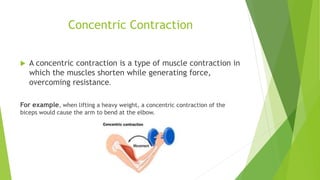
Concentric Contraction
 A concentric contraction is a type of muscle contraction in
which the muscles shorten while generating force,
overcoming resistance.
For example, when lifting a heavy weight, a concentric contraction of the
biceps would cause the arm to bend at the elbow.
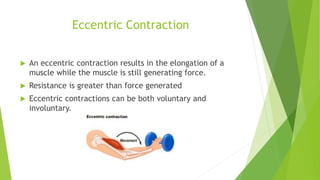
Eccentric Contraction
 An eccentric contraction results in the elongation of a
muscle while the muscle is still generating force.
 Resistance is greater than force generated
 Eccentric contractions can be both voluntary and
involuntary.
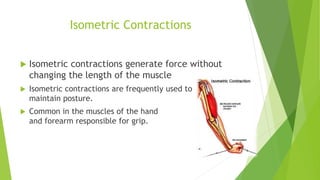
Isometric Contractions
 Isometric contractions generate force without
changing the length of the muscle
 Isometric contractions are frequently used to
maintain posture.
 Common in the muscles of the hand
and forearm responsible for grip.

Types of muscle contraction

  • 1.
  • 2.
    Two types ofContractions  Isotonic Contraction  Isometric Contractions
  • 3.
    Isotonic Contraction  Isotoniccontractions maintain constant tension in the muscle as the muscle changes length.
  • 4.
    Two type ofIsotonic Contraction Concentric Contractions Eccentric Contractions
  • 5.
    Concentric Contraction  Aconcentric contraction is a type of muscle contraction in which the muscles shorten while generating force, overcoming resistance. For example, when lifting a heavy weight, a concentric contraction of the biceps would cause the arm to bend at the elbow.
  • 6.
    Eccentric Contraction  Aneccentric contraction results in the elongation of a muscle while the muscle is still generating force.  Resistance is greater than force generated  Eccentric contractions can be both voluntary and involuntary.
  • 7.
    Isometric Contractions  Isometriccontractions generate force without changing the length of the muscle  Isometric contractions are frequently used to maintain posture.  Common in the muscles of the hand and forearm responsible for grip.