Dynamic Warmup
NSCA Essentials Chapter 16
Before we begin…
 A bit about stretching….a lot of
modern research has actually shown
that, at best, static stretching prior to
competition does nothing to improve
performance or prevent injury. At
worst, it can decrease the efficiency of
the SSC. Remember static stretching
is going to affect the PEC more than
the SEC.
With that in mind
 The NSCA currently recommends quite a bit
of stretching (8-12 min) prior to practice or
competition.
 There are hardly any modern strength and
speed programs which follow this
recommendation
 Most modern programs will use dynamic
and specific stretching programs to warm up
So anyways…types of
stretching
 Active stretching
 When the person being stretched
provides the force of the stretch
 Passive stretching
 When a partner or stretching machine
provides the stretch for the person
stretching
Types of stretching, continued
 Static Stretch
 Slow and constant with the end position held for
30s (NSCA)
 Ballistic Stretch
 Bouncing type stretching, triggers the stretch
reflex
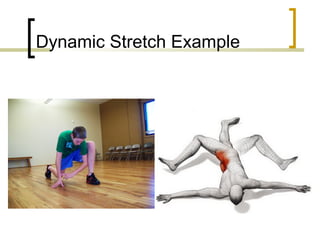
 Dynamic Stretch
 Stretches in sport specific movements that are
quick but avoid bouncing
Dynamic Stretch Example
PNF Stretching
 Proprioceptive Neuromuscular Facilitation
(PNF)
 A type of stretching originally designed for
rehabilitation which has expanded to athletic
programs.
 Three types of PNF stretching
 Hold-Relax
 Contract-Relax
 Hold-Relax with agonist contraction
Phases of PNF Stretching
(Hold Relax)
 First Phase
 Passive pre-stretch of up to 10 seconds
 Second Phase
 The athlete will push the agonist muscle in an
isometric contraction against the resistance for
up to 10 seconds
 Third Phase
 The athlete then relaxes and the muscle is
stretched for up to 30s. This stretch should be
farther than in the first phase. This happens
because of “autogenic inhibition”
Autogenic Inhibition
 Basis of “hold-relax” technique.
 Occurs when increases in muscular
tension cause the GTO to allow
greater levels of relaxation.
Contract Relax Technique
(PNF)
 First Phase
 Passive stretch to the point of mild discomfort for
up to 10sec.
 Second Phase
 The agonist muscle is then contracted against
resistance
 Third Phase
 The athlete then relaxes and the muscle is
stretched for up to 30s. This stretch should be
farther than in the first phase.
Hold-Relax with agonist
contraction
 Same first two phases as previous.
 After isometric hold, the athlete will contract
the antagonist muscle to the agonist to
assist in the stretch
 For example, if the hamstrings are being
stretched, the athlete will contract the
quads/hip flexors to help pull the leg back
and stretch the hamstrings more
Questions to ask about
stretching and warming up..
 With stretching as a warmup
 Can I prepare to move by standing still
for extended periods of time?
 Should I move slowly, or not at all, to
prepare myself to move quickly?
 Should I sit down and be still to prepare
to be on my feet and moving?
 Mike Boyle “Functional Training for
Sports”
Stretching and muscle pulls
 In 2002, Mike Boyle’s training facility
had 600 athletes training four times
per week for 11 weeks each summer
(26,400 workouts). None of their
athletes stretch before their workouts.
That summer no athlete had a serious
muscle pull that required treatment.
A Real Warmup
 Most modern warmups will involve the following:
 5-10 minutes of light aerobic work to promote blood flow
and wake up the nervous system
 Dynamic stretches that warm up the primary muscles of
the sport
 If the athlete has individual needs where increased joint
ROM is absolutely necessary, then specific static
stretching is implemented
 Specific sport activity that starts at low intensity and
progresses towards practice level intensity, i.e., 40m
sprints starting at 50% and increasing to 90%
An example warmup for linear
speed work
 20 yards each
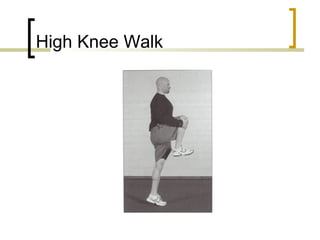
 High knee walk
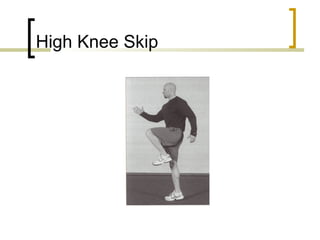
 High knee skip
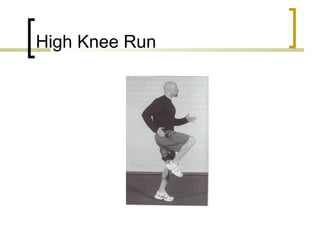
 High knee run
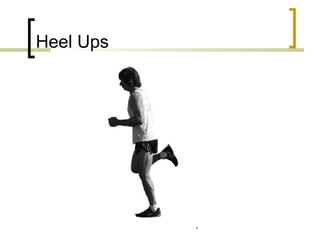
 Heel-ups
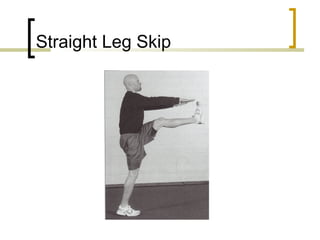
 Straight Leg Skip
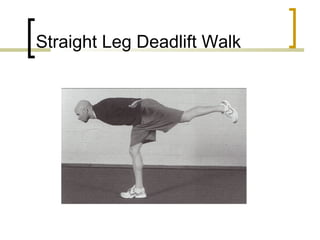
 Straight Leg Deadlift walk
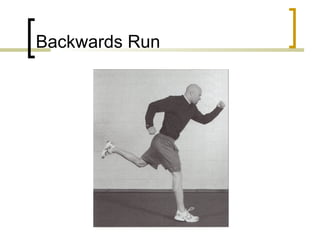
 Backward run
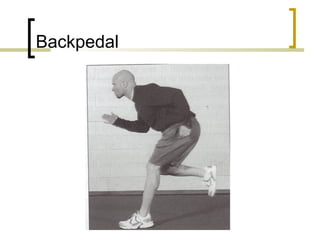
 Backpedal
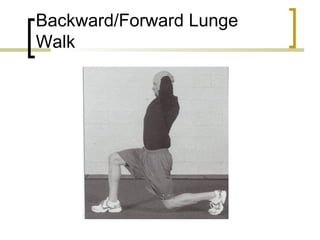
 Backward Lunge Walk
 Forward Lunge Walk
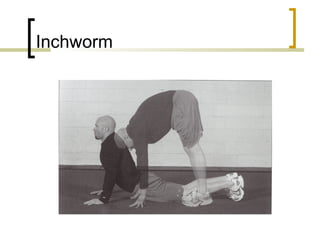
 Inchworm
High Knee Walk
High Knee Skip
High Knee Run
Heel Ups
Straight Leg Skip
Straight Leg Deadlift Walk
Backwards Run
Backpedal
Backward/Forward Lunge
Walk
Inchworm
Seagrave Warmup
 The seagrave warmup, named after
coach Loren Seagrave is a good
warmup that can be used for a lot of
sports.
 It is based on dynamic stretching and
sprints of increasing intensity
Seagrave Warmup
 10x prisoner squats + 50m acceleration
 20x scorpions + 50m acceleration
 10x hamstring rollback stretches + 50m acc
 20x speed skater + 50m acceleration
 10x lunges + 50m acceleration
 10x side lunges + 50m acceleration
 Sport specific dynamic flexibility and
activities of increasing intensity

Dynamic warmup considerations for sport

  • 1.
  • 2.
    Before we begin… A bit about stretching….a lot of modern research has actually shown that, at best, static stretching prior to competition does nothing to improve performance or prevent injury. At worst, it can decrease the efficiency of the SSC. Remember static stretching is going to affect the PEC more than the SEC.
  • 3.
    With that inmind  The NSCA currently recommends quite a bit of stretching (8-12 min) prior to practice or competition.  There are hardly any modern strength and speed programs which follow this recommendation  Most modern programs will use dynamic and specific stretching programs to warm up
  • 4.
    So anyways…types of stretching Active stretching  When the person being stretched provides the force of the stretch  Passive stretching  When a partner or stretching machine provides the stretch for the person stretching
  • 5.
    Types of stretching,continued  Static Stretch  Slow and constant with the end position held for 30s (NSCA)  Ballistic Stretch  Bouncing type stretching, triggers the stretch reflex  Dynamic Stretch  Stretches in sport specific movements that are quick but avoid bouncing
  • 6.
  • 7.
    PNF Stretching  ProprioceptiveNeuromuscular Facilitation (PNF)  A type of stretching originally designed for rehabilitation which has expanded to athletic programs.  Three types of PNF stretching  Hold-Relax  Contract-Relax  Hold-Relax with agonist contraction
  • 8.
    Phases of PNFStretching (Hold Relax)  First Phase  Passive pre-stretch of up to 10 seconds  Second Phase  The athlete will push the agonist muscle in an isometric contraction against the resistance for up to 10 seconds  Third Phase  The athlete then relaxes and the muscle is stretched for up to 30s. This stretch should be farther than in the first phase. This happens because of “autogenic inhibition”
  • 9.
    Autogenic Inhibition  Basisof “hold-relax” technique.  Occurs when increases in muscular tension cause the GTO to allow greater levels of relaxation.
  • 10.
    Contract Relax Technique (PNF) First Phase  Passive stretch to the point of mild discomfort for up to 10sec.  Second Phase  The agonist muscle is then contracted against resistance  Third Phase  The athlete then relaxes and the muscle is stretched for up to 30s. This stretch should be farther than in the first phase.
  • 11.
    Hold-Relax with agonist contraction Same first two phases as previous.  After isometric hold, the athlete will contract the antagonist muscle to the agonist to assist in the stretch  For example, if the hamstrings are being stretched, the athlete will contract the quads/hip flexors to help pull the leg back and stretch the hamstrings more
  • 12.
    Questions to askabout stretching and warming up..  With stretching as a warmup  Can I prepare to move by standing still for extended periods of time?  Should I move slowly, or not at all, to prepare myself to move quickly?  Should I sit down and be still to prepare to be on my feet and moving?  Mike Boyle “Functional Training for Sports”
  • 13.
    Stretching and musclepulls  In 2002, Mike Boyle’s training facility had 600 athletes training four times per week for 11 weeks each summer (26,400 workouts). None of their athletes stretch before their workouts. That summer no athlete had a serious muscle pull that required treatment.
  • 14.
    A Real Warmup Most modern warmups will involve the following:  5-10 minutes of light aerobic work to promote blood flow and wake up the nervous system  Dynamic stretches that warm up the primary muscles of the sport  If the athlete has individual needs where increased joint ROM is absolutely necessary, then specific static stretching is implemented  Specific sport activity that starts at low intensity and progresses towards practice level intensity, i.e., 40m sprints starting at 50% and increasing to 90%
  • 15.
    An example warmupfor linear speed work  20 yards each  High knee walk  High knee skip  High knee run  Heel-ups  Straight Leg Skip  Straight Leg Deadlift walk  Backward run  Backpedal  Backward Lunge Walk  Forward Lunge Walk  Inchworm
  • 16.
  • 17.
  • 18.
  • 19.
  • 20.
  • 21.
  • 22.
  • 23.
  • 24.
  • 25.
  • 26.
    Seagrave Warmup  Theseagrave warmup, named after coach Loren Seagrave is a good warmup that can be used for a lot of sports.  It is based on dynamic stretching and sprints of increasing intensity
  • 27.
    Seagrave Warmup  10xprisoner squats + 50m acceleration  20x scorpions + 50m acceleration  10x hamstring rollback stretches + 50m acc  20x speed skater + 50m acceleration  10x lunges + 50m acceleration  10x side lunges + 50m acceleration  Sport specific dynamic flexibility and activities of increasing intensity